Leitfaden zur Verpackung von Kaffee in Beuteln: Standbeutel, Beutel mit flachem Boden und wie man die richtige Wahl trifft

JINYI gibt Ihnen praktische Hilfestellungen für Ihre Verpackungsentscheidungen.

The pouch you choose for your coffee brand isn’t just a container — it shapes how buyers see your product on the shelf, how long your beans stay fresh, and how much your first order actually costs.

This guide breaks down the two most common formats — Standbodenbeutel and flat bottom bags — so you can make a clear decision before placing your first custom order.

Wichtigste Erkenntnisse

  • Pick stand-up pouches if you want a proven, cost-effective format that works for most coffee brands.
  • Choose flat bottom bags if shelf presence and premium positioning matter most to your brand.
  • Think about your barrier needs — coffee requires strong oxygen and moisture protection regardless of bag type.
  • Look at your MOQ before deciding — flat bottom bags typically require higher minimums.
  • Plan for a one-way degassing valve — it’s essential for freshly roasted coffee, and both bag types support it.
  • Use samples before committing to a full run — this protects your budget and your brand.
What Is a Stand-Up Pouch — and Is It Right for Your Coffee Brand?

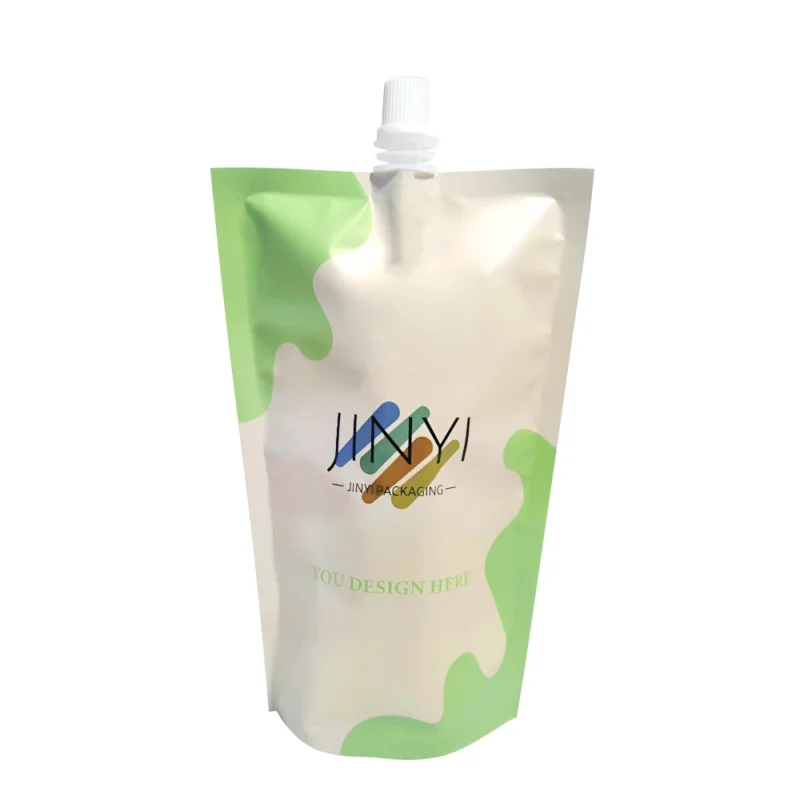
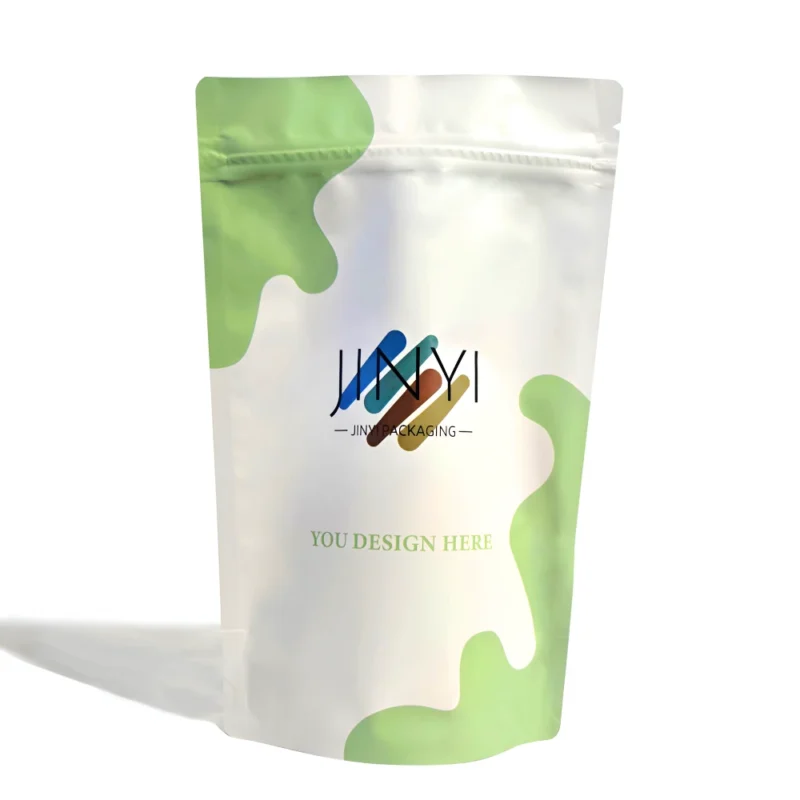
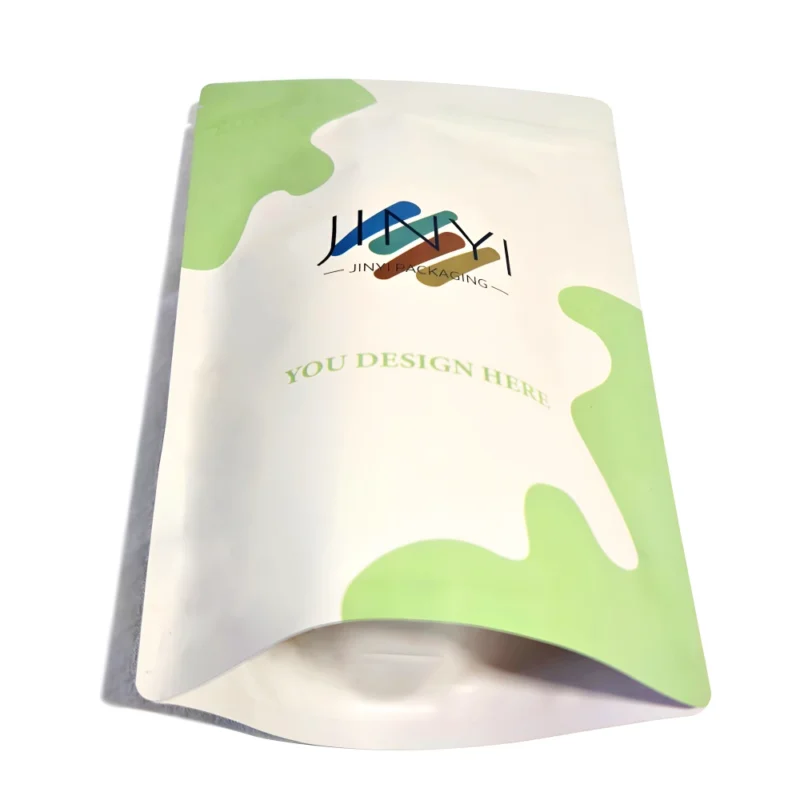
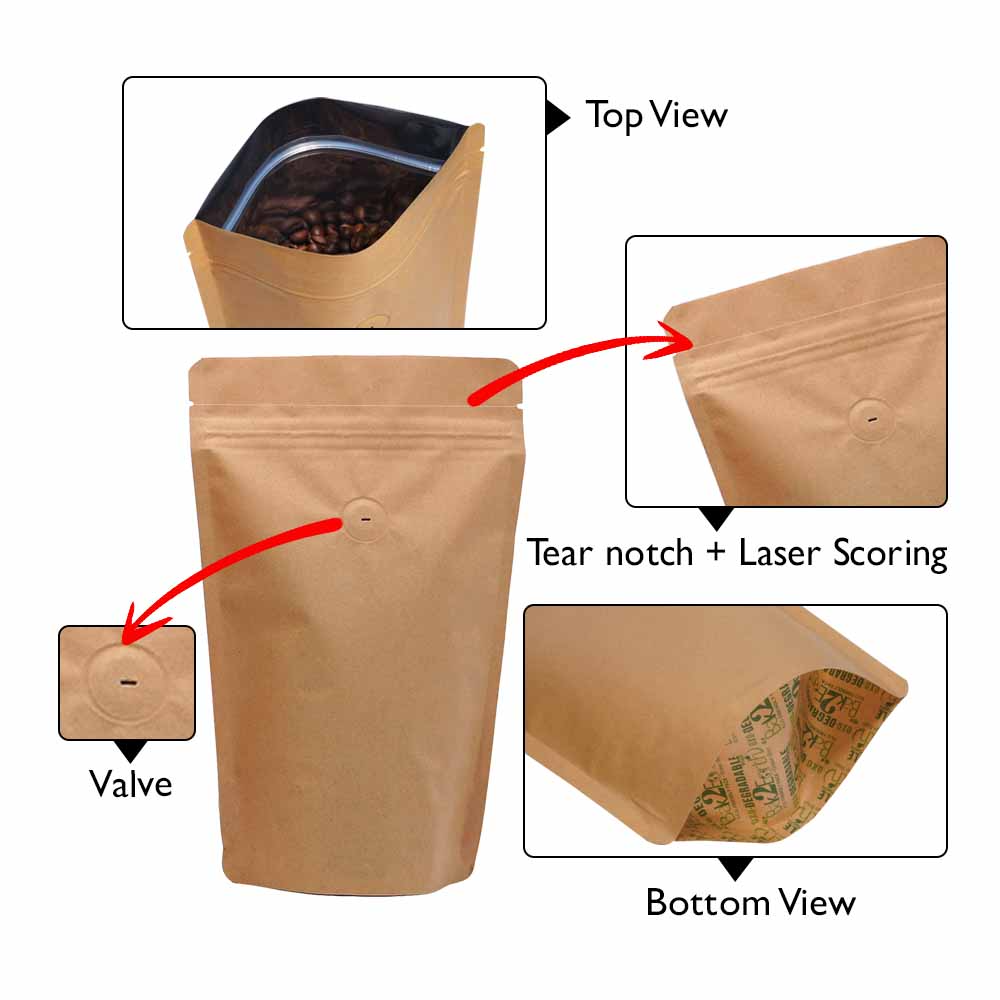
Stand-up pouches are the most widely used packaging format in the coffee industry. They hold their shape on the shelf, take up less space than rigid cans or boxes, and work across a wide range of order sizes — making them the default starting point for most new coffee brands.

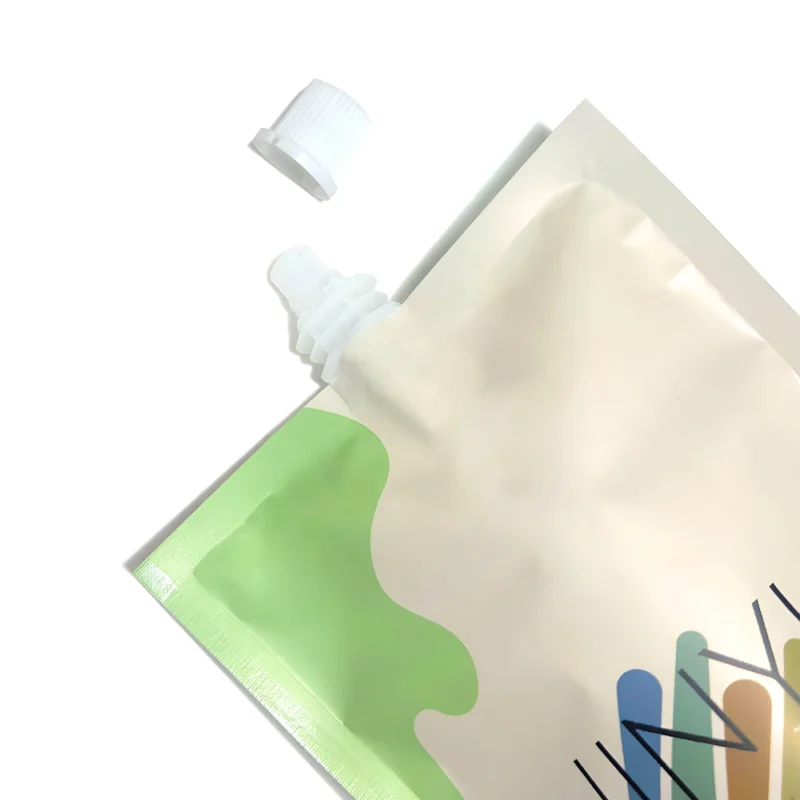
Standbeutel

Merkmal Einzelheiten
Struktur Flat front and back with a folded gusset bottom for standing
Common sizes 100g, 250g, 500g, 1kg
Rückschlagventil Supported — recommended for freshly roasted coffee
Wiederverschließbarer Reißverschluss Available
Print area Front, back, and side gussets
Pros Cons
Lower MOQ — easier to start small

Wide range of materials and finishes

Familiar format buyers are comfortable with

Cost-effective across most order volumes

Less premium feel vs flat bottom bags

Narrower base can tip when partially empty

Slightly smaller front display area

Tipp: Stand-up pouches are the right starting point for most first-time coffee brands. They give you flexibility on budget, order size, and material — without locking you into a premium format before you know your sales volume.

What Is a Flat Bottom Bag — and When Does It Make Sense?

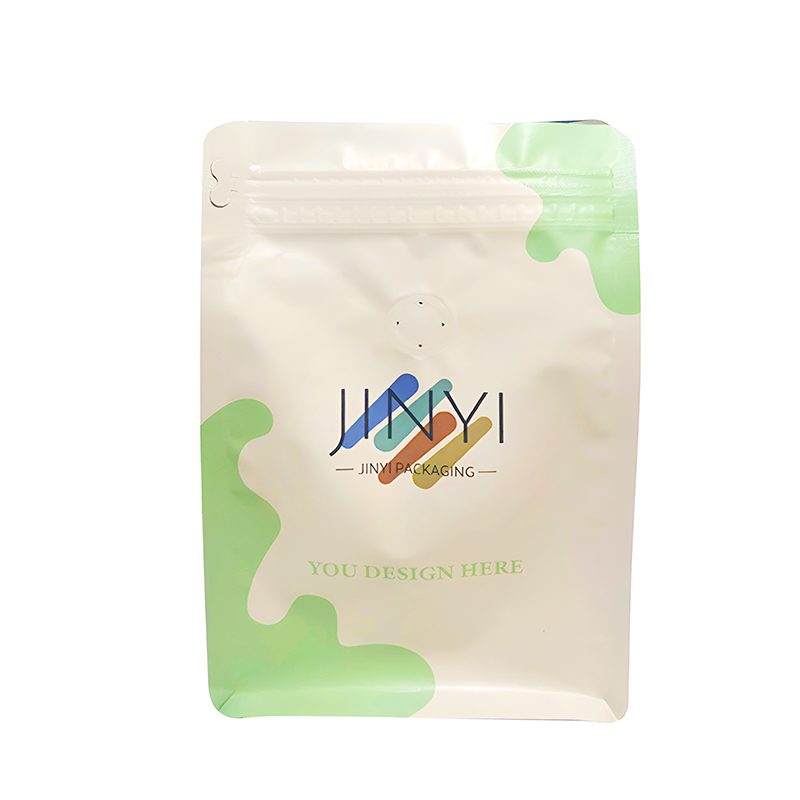
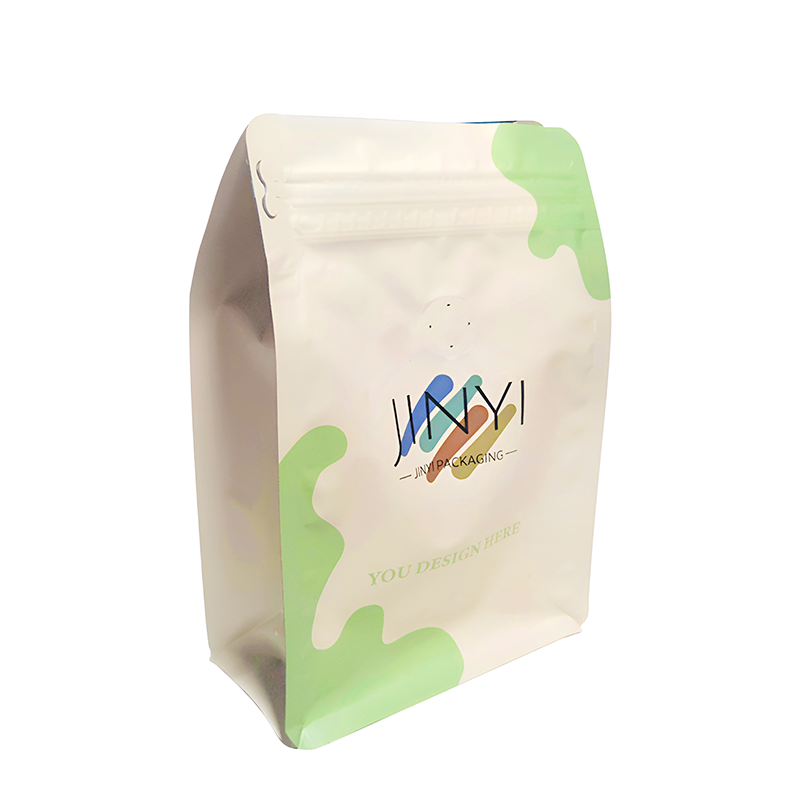
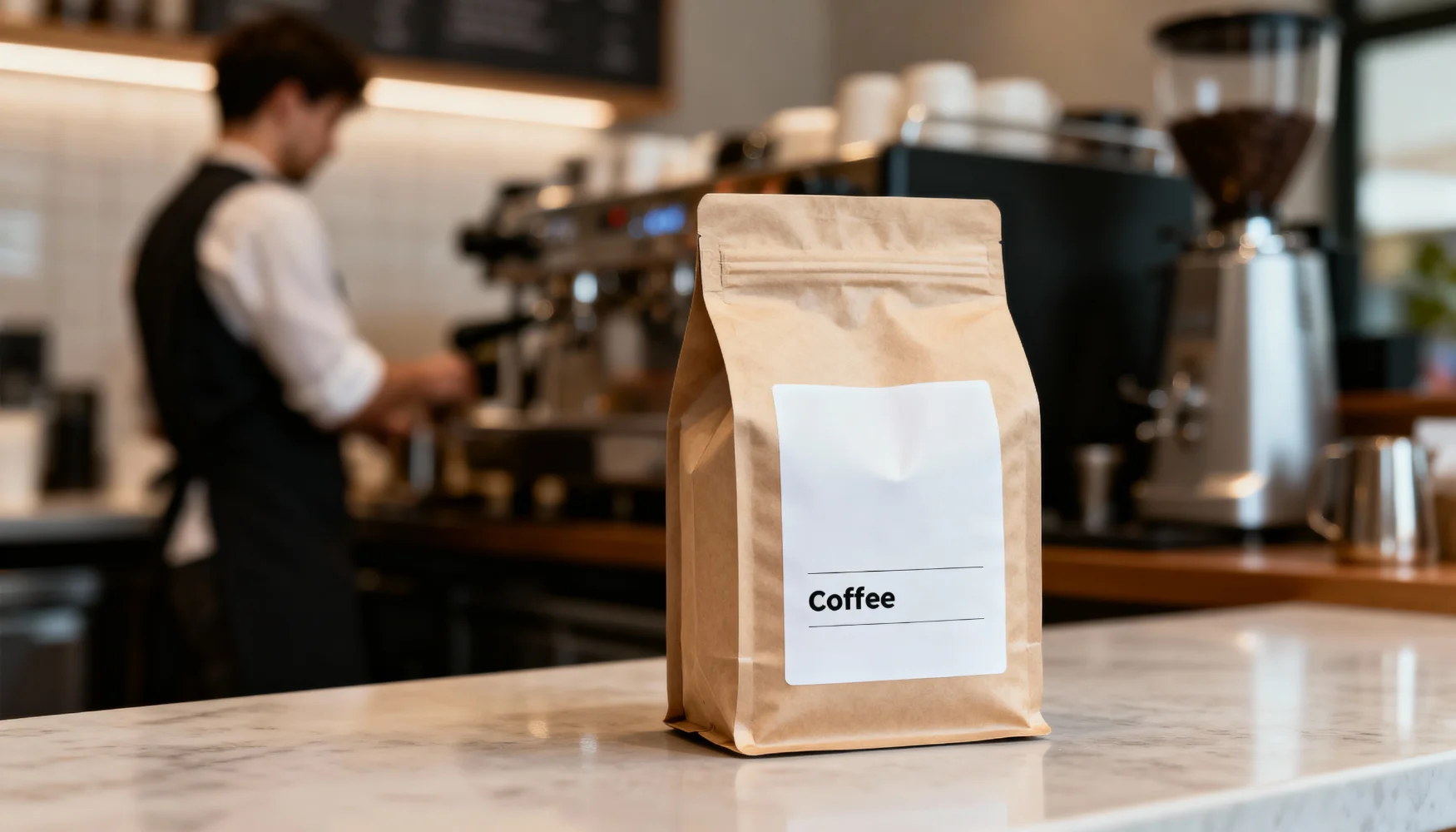
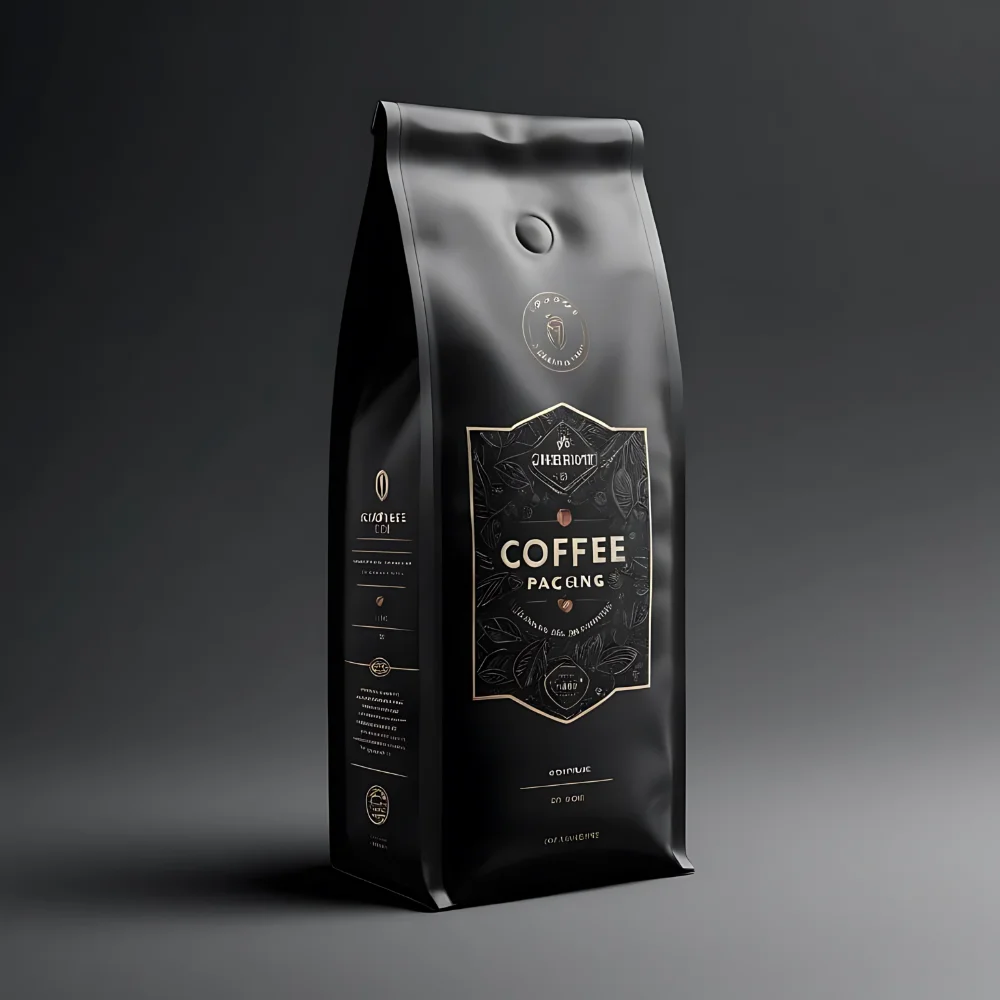
Flat bottom bags — also called box pouches or quad-seal bags — have a structured base that gives them a box-like shape when filled. They stand upright with a wider, more stable footprint, and the broad flat front panel gives your branding significantly more display space. You see them most often in specialty coffee shops and premium retail environments.

Kaffeebeutel mit flachem Boden

Merkmal Einzelheiten
Struktur Flat base with four sealed side gussets
Common sizes 250g, 500g, 1kg
Rückschlagventil Supported
Wiederverschließbarer Reißverschluss Available
Print area Front, back, and both side gussets — maximum branding space
Pros Cons
Strong shelf presence — stands out in retail

More branding surface area

Stable base — stays upright when partially empty

Premium look that supports higher price points

Higher unit cost

Usually requires higher MOQ

More complex structure — slightly longer lead time

Tipp: Flat bottom bags work best when your brand is positioned at a premium price point and retail shelf visibility is a priority. If you’re still testing market response, start with stand-up pouches and upgrade once you have traction.

Stand-Up Pouch vs Flat Bottom Bag: A Side-by-Side Comparison

Here’s a quick reference across the dimensions that matter most when placing your first order.

Dimension Stand-Up Pouch Flat Bottom Bag
Unit cost Nach unten Höher
MOQ Starts lower Usually higher
Shelf presence Good Excellent
Branding surface Front + back + gusset Front + back + 2 side gussets
Stability when full Good Excellent
Premium feel Moderate Hoch
Lead time Shorter Slightly longer
Rückschlagventil Ja Ja
Am besten für New brands, DTC, e-commerce Retail, specialty, premium positioning

Which One Should You Choose?

Your answer depends on three things: where you’re selling, what your brand positioning is, and what your first-order budget allows.

Your situation Recommended choice
Selling online (DTC or Amazon), want to manage first-order costs Standbodenbeutel
Entering specialty retail or café wholesale with a premium product Beutel mit flachem Boden
Still testing your product, not sure about volume yet Standbodenbeutel
Shelf visibility and brand differentiation are top priorities Beutel mit flachem Boden
Selling subscription boxes or gift sets Beutel mit flachem Boden
Launching a budget-friendly or everyday coffee line Standbodenbeutel
Anmerkung: If you’re genuinely unsure, stand-up pouches are the safer first step. You can always upgrade to flat bottom bags once your brand has traction and you’re ready to commit to higher volumes.

Material and Barrier Options for Coffee Packaging

Both bag types are available in a range of materials. Coffee is sensitive to oxygen, moisture, and light — so barrier performance isn’t optional. The right material depends on your shelf life target, your budget, and the finish you want your brand to have.

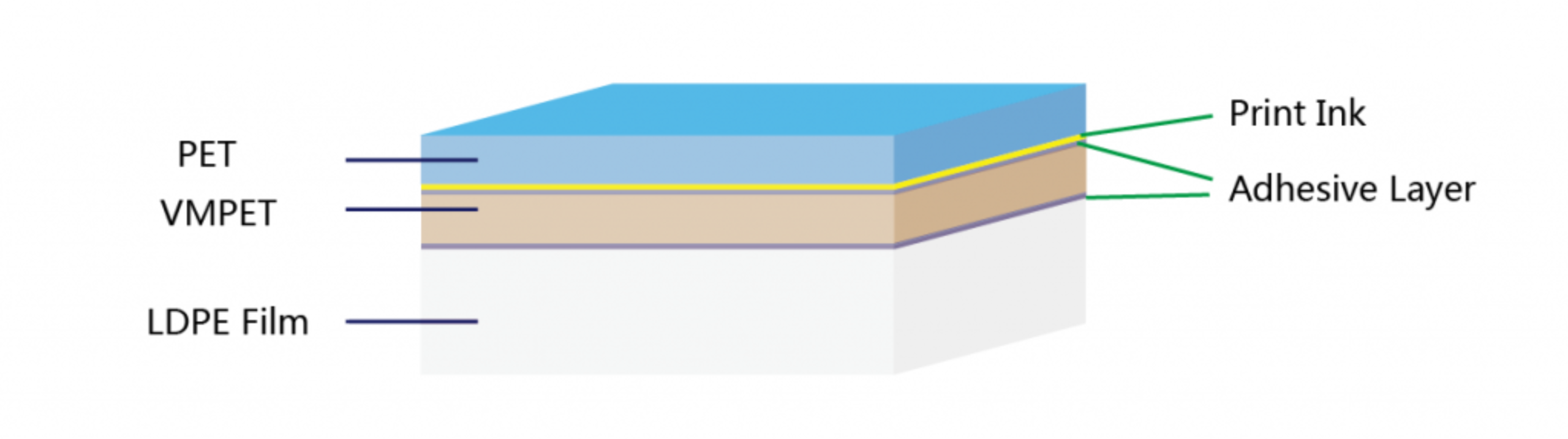
pet ink adhesive vmpet ldpe foil structure

Material Barriere Level Am besten für
Kraftpapier + Folieneinlage Hoch Specialty and artisan coffee brands, natural aesthetic
Full Foil (Aluminium) Höchster Long shelf life (12+ months), maximum freshness protection
VMPET (Metalized) Mittel-Hoch Brands wanting a metallic finish at lower cost
Mattes OPP Mittel Brands prioritising a soft-touch premium feel

Most coffee brands choose full foil or kraft + foil liner. If you’re selling freshly roasted beans with a 6–12 month shelf life target, these two options give you the protection you need without overcomplicating the decision.

Also don’t overlook the Einweg-Entgasungsventil. Freshly roasted coffee releases CO₂ gas, and without a valve, pressure builds up and can damage the seal. Both bag types support valve fitment — and it’s worth including from day one.

Tipp: Choose your material before finalising your artwork. The material affects print finish, colour output, and how the bag feels in hand — decisions that are much harder to change after production begins.

MOQ, Lead Time, and What to Expect on Your First Order

For most brands, the first custom packaging order raises the same questions: how many do I have to order, how long will it take, and what does the process actually look like?

Standbodenbeutel-Verpackungslösungen 6

Item Stand-Up Pouch Flat Bottom Bag
Typische MOQ 500 - 1.000 Stück 1.000 - 3.000 Stück
Sample lead time 7 – 10 days 10 – 15 days
Production lead time 15 – 20 days 20 – 25 days
Artwork format AI or PDF with bleed lines, CMYK colour mode

The process is straightforward: share your specs and artwork → receive a quote and dieline → approve the sample → production begins. Most brands receive their first order within 3–5 weeks from artwork approval.

Anmerkung: Always request a physical sample before committing to a full production run. A sample lets you check print colour accuracy, material feel, zipper function, and valve placement — all things that are much easier to adjust before production than after.

Ready to Choose Your Coffee Pouch?

Stand-up pouches give you flexibility and a lower barrier to entry. Flat bottom bags give you presence and a premium edge. Either way, the right choice comes down to where you’re selling and what your brand needs to communicate.

If you’re ready to get a quote, request a sample, or just want to talk through your options before committing, our team is here to help you make the right call — without the guesswork.

Kostenloses Angebot anfordern →

Über JINYI Packaging

JINYI ist auf maßgeschneiderte flexible Verpackungen für Marken aus den Bereichen Lebensmittel, Snacks, Kaffee, Tiernahrung und Konsumgüter spezialisiert. Mit über 15 Jahren Produktionserfahrung realisieren wir sowohl Großserien als auch kleine Sonderanfertigungen mithilfe unserer Tiefdruckanlagen und unseres HP-Digitaldrucksystems.

Von der Materialauswahl bis zur fertigen Verpackung – alles richtig gemacht. Erfahren Sie mehr unter jinyipackage.com.

Elsa – Autorin
Elsa

Business Development Manager - JINYI Packaging

Elsa leitet die Geschäftsentwicklung und das Kundenauftragsmanagement bei JINYI. Mit 8 Jahren Erfahrung im Außenhandel in Yiwu und Dongguan hat sie ein genaues Verständnis für die Marktnachfrage und die tatsächlichen Bedürfnisse der Käufer - sie setzt echte Kundeneinblicke in die richtigen Verpackungsentscheidungen um.
Bedürfnisse der Kunden
Verwaltung der Aufträge
Geschäftsentwicklung

FAQ

Which is better for coffee: stand-up pouches or flat bottom bags?

Both work well for coffee. Stand-up pouches are more cost-effective and easier to start with. Flat bottom bags offer stronger shelf presence and a premium look. Your choice depends on your sales channel and brand positioning.

Can I add a one-way degassing valve to both bag types?

Yes. Both stand-up pouches and flat bottom bags support one-way valve fitment. This is strongly recommended for freshly roasted coffee — it allows CO₂ to escape without letting oxygen in, protecting freshness and bag integrity.

Wie hoch ist die übliche Mindestbestellmenge für individuell bedruckte Kaffeebeutel?

MOQ varies by bag type, material, and size. Stand-up pouches typically start from 500–1,000 pieces. Flat bottom bags usually require 1,000–3,000 pieces. Contact us with your specs for a confirmed quote.

Which material is best for keeping coffee fresh?

Full aluminium foil provides the highest barrier against oxygen, moisture, and light — ideal for shelf life targets of 12 months or more. Kraft + foil liner is also a strong option and gives a more natural, artisan aesthetic.

How long does a first custom order take?

From artwork approval, most first orders are completed within 3–5 weeks. Sample production takes 7–15 days depending on the bag type. Plan ahead of your product launch date to avoid delays.

Can I get samples before placing a full order?

Yes — and we always recommend it. Samples let you check print colour accuracy, material feel, zipper function, and valve placement before committing to full production. Contact us to arrange a sample order.