Material de rolo de alto desempenho construído para velocidade, consistência e produção escalável de embalagens.
Saco de Mylar cortado
Presença de grande impacto nas prateleiras com uma forte barreira de proteção para manter os produtos frescos e em conformidade com as normas.
Bolsas planas
Um formato económico e economizador de espaço que proporciona um desempenho de selagem fiável para a venda a retalho e expedição diária.
Bolsas com bico para líquidos
Embalagem resistente a fugas e fácil de verter que aumenta a comodidade do utilizador e reduz a confusão na entrega.
Embalagem de sacos de almofadas
Embalagem tipo saqueta, leve e rápida de embalar, ideal para produtos de grande volume e para uma marca limpa.
Bolsa Quad Seal
Estabilidade semelhante à de uma caixa com um atrativo de prateleira de primeira qualidade - óptima para enchimentos mais pesados e um aspeto mais “vertical”.
Sacos com reforço lateral
Sacos de grande capacidade e eficientes em termos de espaço que maximizam o volume de enchimento, mantendo uma forma limpa e estruturada.
Bolsas de pé
Um dos formatos de crescimento mais rápido, que combina uma forte exposição nas prateleiras, um custo de transporte mais baixo e uma grande proteção da frescura.
Sacos de fundo plano
Caixa de jóias tipo gaveta
Caixas de jóias com gaveta para um desempacotamento de qualidade e uma proteção rígida.
Caixa de jóias com tampa flip-top
Caixas de jóias flip-top com construção rígida e apresentação de luxo.
Estojo rígido retrátil de duas peças
Caixas rígidas de duas peças para uma proteção e apresentação de luxo.
Caixas de correio
Caixas de correio em cartão canelado para um envio seguro e um desempacotamento com marca.
Caixas de exposição
Caixas de exposição personalizadas para vendas ao balcão e grande visibilidade nas prateleiras.
Caixas de oferta
Caixas de oferta personalizadas com estrutura e opções de acabamento premium.
Caixas de embalagem com manga
Caixas de manga com invólucros impressos para uma marca flexível.
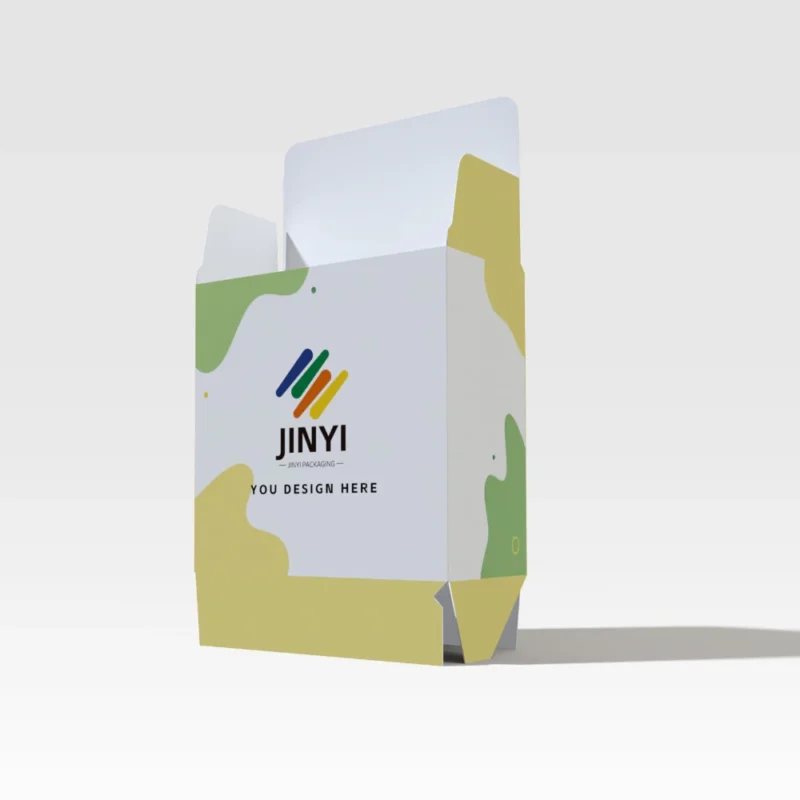
Caixa inferior com fecho automático
Caixas de fundo com fecho automático de montagem rápida para retalho e comércio eletrónico.
Caixa de fundo com fechadura
Caixas de fundo com fecho para uma embalagem rápida e um forte suporte de carga.
Caixas de extremidade de dobragem reta
Caixas com extremidades rectas para um fecho perfeito e exposição a retalho.
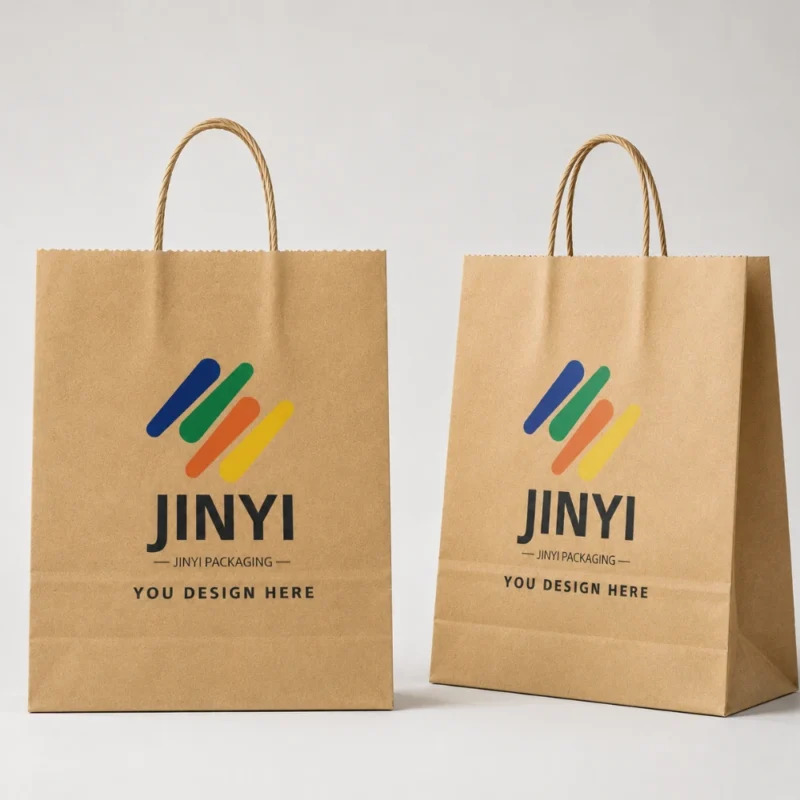
Saco de papel personalizado
Sacos de oferta de papel personalizados com pegas fortes e impressão nítida da marca.
Copos para frio em PET transparente
Copos frios PET transparentes para bebidas geladas - transparentes, robustos e resistentes a fugas.
Saco de oferta personalizado
Sacos de oferta de papel personalizados com pegas fortes e impressão nítida da marca.
Copo de papel
Copos de papel para bebidas quentes com fixação confortável e impressão limpa e consistente.
Bolsas planas para cannabis
Bolsas planas para cannabis com barreira elevada e espaço livre para rotulagem.
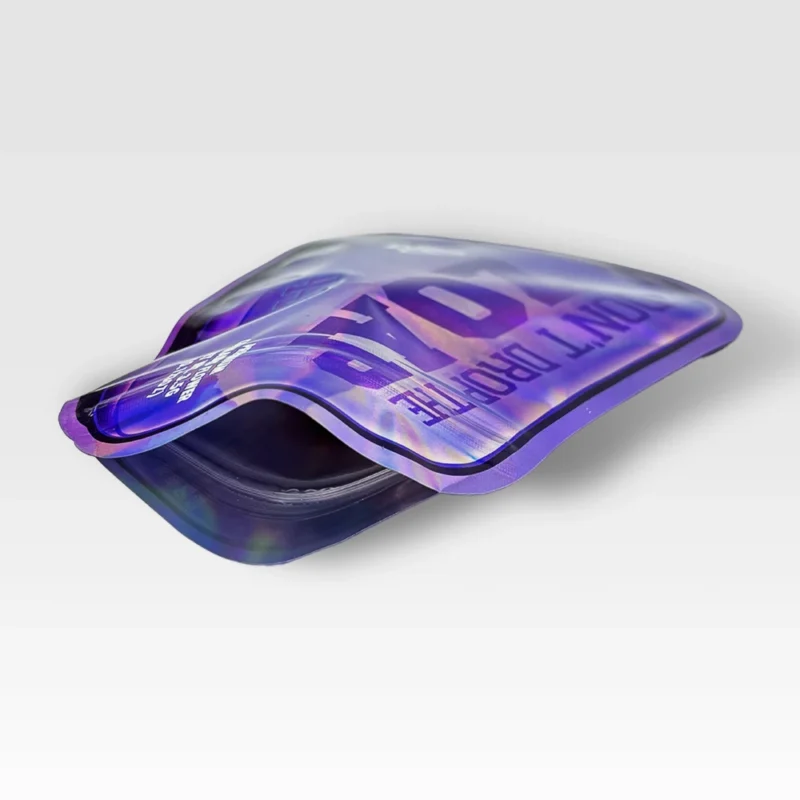
Sacos Mylar para ervas daninhas
Sacos de mylar para ervas daninhas com barreira forte, fechos de correr e opções de controlo de odores.
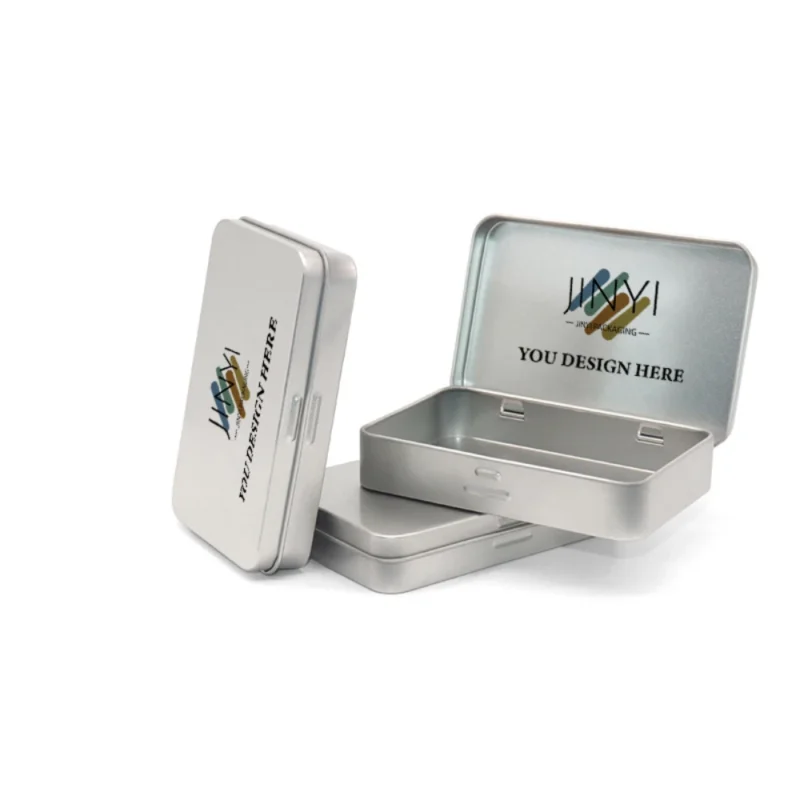
Caixas de lata personalizadas
Caixas de estanho personalizadas para uma proteção premium, reutilização e impressão a cores.
Etiquetas de manga retrátil
Etiquetas de manga retrátil com cobertura de 360° e impacto na prateleira.
Etiquetas em rolo personalizadas
Rótulos em rolo personalizados para uma aplicação rápida e uma rotulagem consistente da marca.
Autocolante cortado
Autocolantes cortados com arestas limpas e opções de materiais duradouros.
Folhas de autocolantes Kiss Cut
Folhas de autocolantes cortadas à mão para desenhos flexíveis e fáceis de descolar.
A JINYI partilha orientações práticas sobre embalagens para as suas decisões.
Several flavours and sizes can make your first pouch order feel expensive before anything sells. I’ll help you organise the range and keep your launch budget working.
To plan your first custom pouch order across multiple SKUs, define each product’s specifications, agree MOQ by design and size, allocate quantities around demand, and compare digital printing with gravure. At JINYI, we help you organise artwork, samples, costs, approvals, and reorders into one clear buying plan.
I’m Elsa from JINYI Packaging. You may have three flavours ready, two more under development, and a trial size that suddenly became everyone’s favourite idea. That is a normal starting point. I’ll help you decide what to order together, what can share a specification, and where digital printing can make a smaller launch more practical.
You can start with our custom stand-up pouches and share your product list, planned sizes, and approximate quantities. I can help you turn that first enquiry into a workable order.
Give every launch SKU a purpose. Separate established sellers, test products, and seasonal designs before committing quantities.
Group specifications where they genuinely fit. Check product capacity and performance before sharing dimensions, materials, or closures.
Confirm MOQ at the right level. Ask how it applies to each design, size, material, and finished pouch format.
Match the printing method to each SKU. Digital printing avoids printing plate fees for smaller runs. I usually recommend gravure from 10,000 pouches per SKU when you need dedicated spot colours.
Allocate quantities around demand. Your strongest seller and your newest experiment rarely need identical stock levels.
Compare the complete order cost. Include samples, finishing, delivery, and the cash tied up in unused pouches.
Keep each artwork version traceable. Match product names, quantities, barcodes, and approved files to a clear SKU list.
Approve the order before production starts. Confirm samples, specifications, final artwork, and commercial terms together.
Plan replenishment by SKU. Use actual sales and the complete replenishment timeline to adjust the next order.
How Many SKUs Should You Include in Your First Order?
A full range looks exciting. If too many untested variants absorb the budget, your best product may end up waiting for its next order.
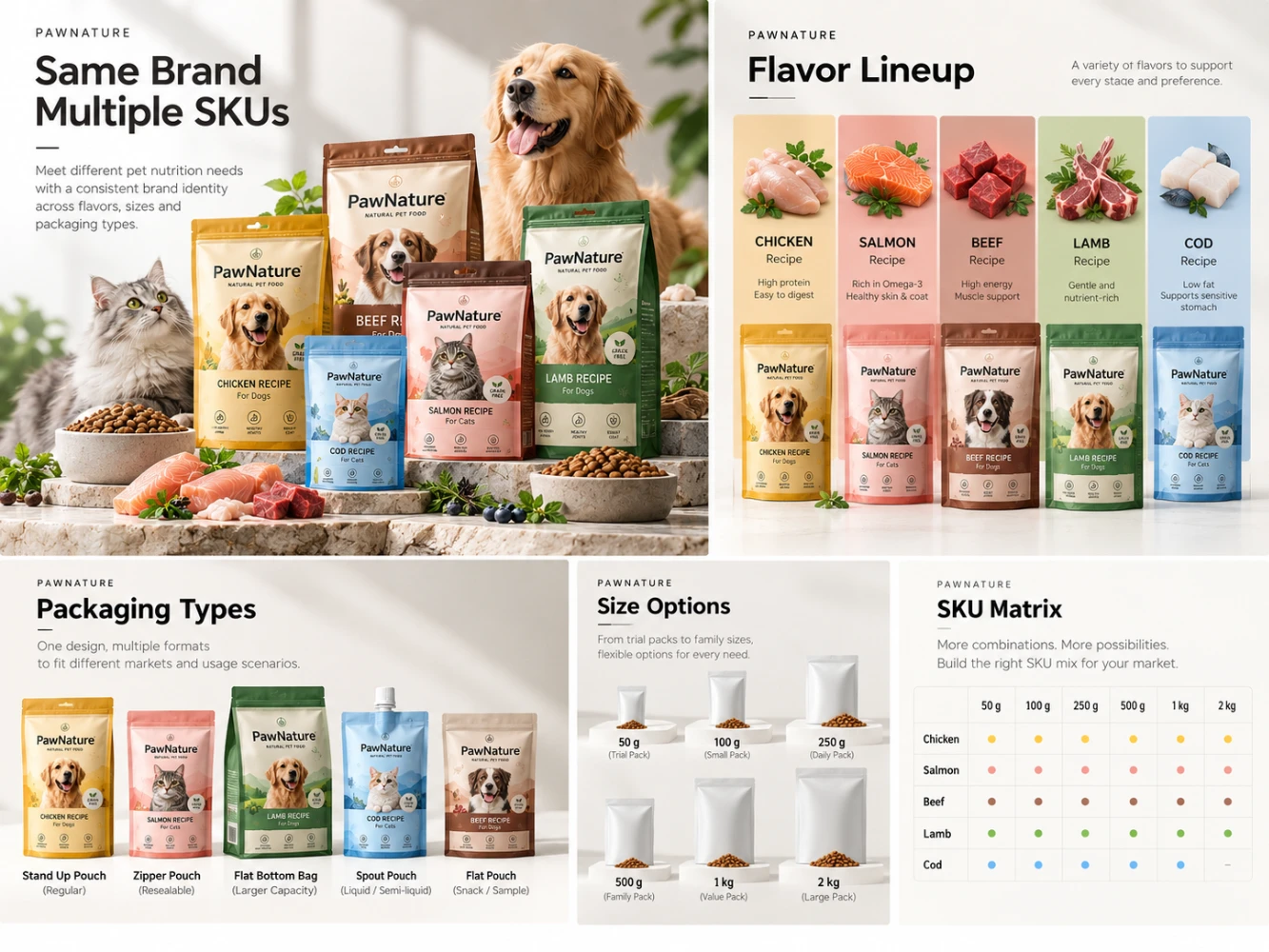
I suggest choosing the first-order range around your launch plan, confirmed demand, and available budget. Give each SKU a role: a main seller, a controlled test, or a seasonal offer. We can then decide which products should launch together and which can follow later.
Give each product a reason to join the first order
I start by asking which products you can actually sell when the packaging arrives. A finished recipe, confirmed filling arrangement, and realistic sales channel are useful signals. A lovely design for a product that is still changing can wait until its details are ready. That keeps your first order easier to approve and easier to manage.
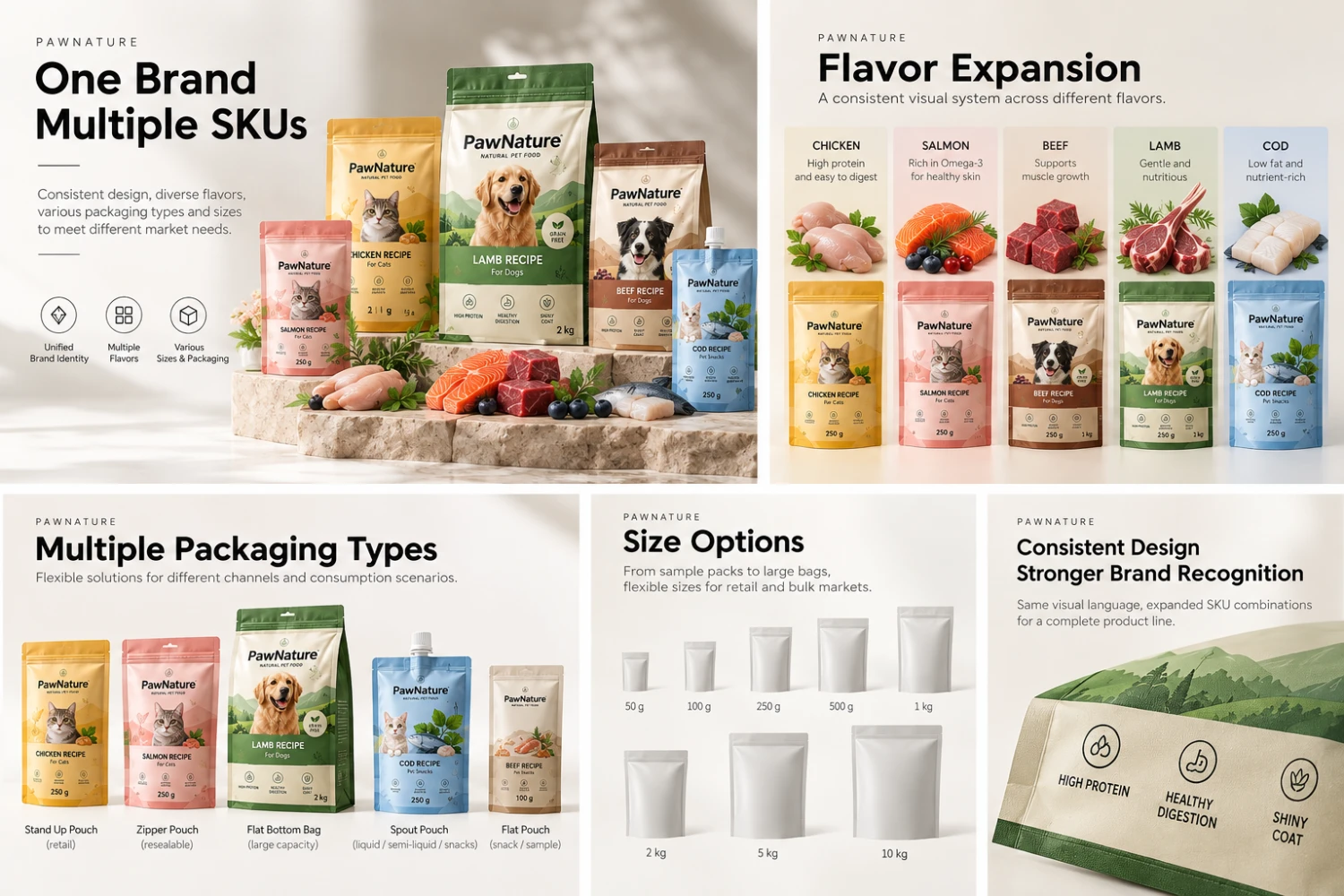
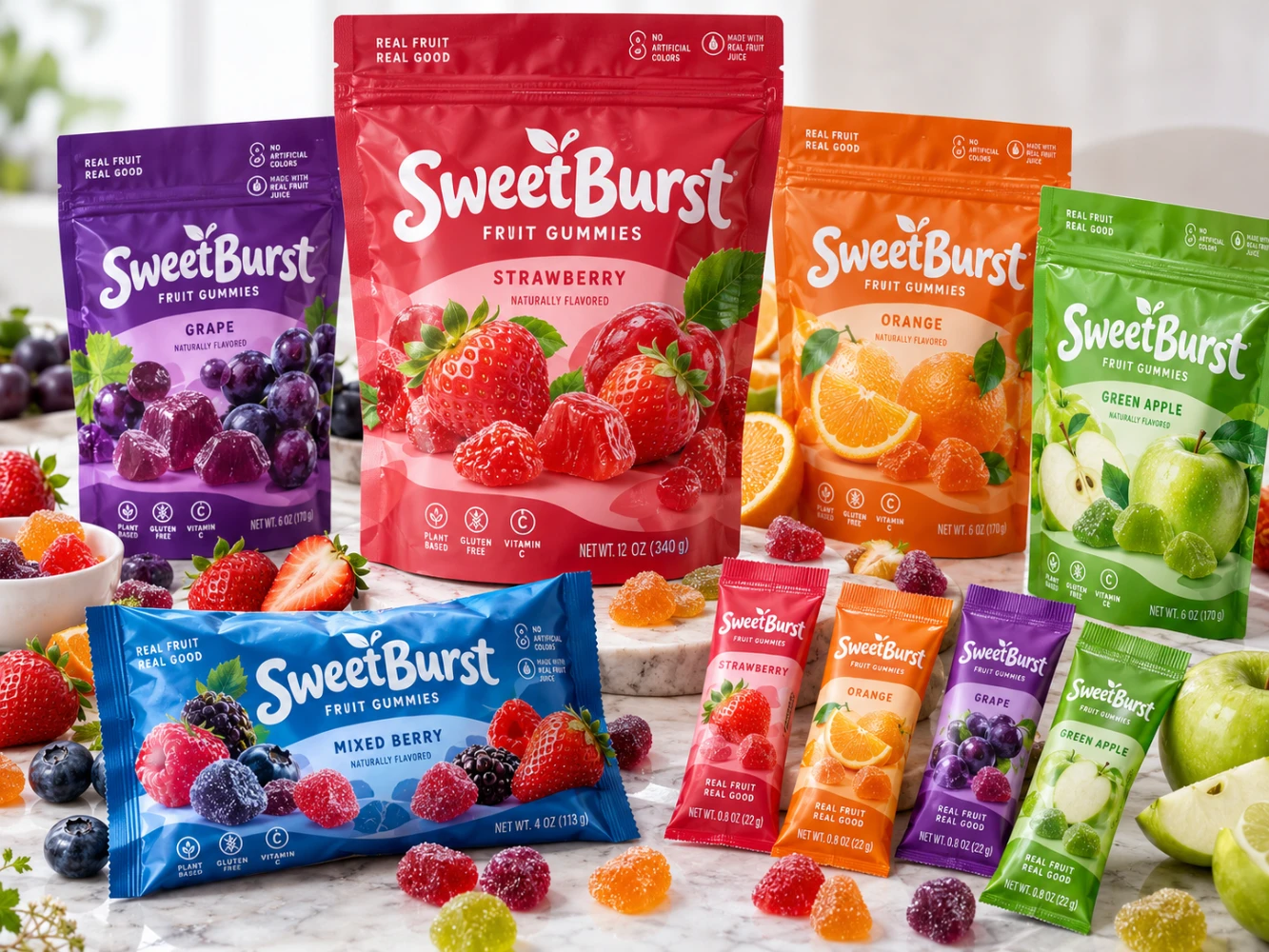
Next, I separate a product SKU from a packaging design. One flavour sold in two pack sizes may need two finished pouch specifications. Three flavours in the same size may share dimensions but still need separate artwork and quantities. Once we list those differences, the order becomes much clearer. You can see what each addition asks of your budget.
You can also stage the launch. We might start with the strongest products and a smaller test allocation, then add another flavour after the first sales results. If your retailer requires the complete range together, we plan around that commitment instead. I want your launch to feel organised. A first order is allowed to be a first step; it does not have to contain every future idea.
SKU role
What I ask you to confirm
Quantity planning approach
Main seller
Existing demand or committed orders
Prioritise enough stock for the launch and replenishment period
Test product
What the trial needs to establish
Agree a controlled quantity within workable production limits
Seasonal variant
Sales window and final selling date
Plan around the useful selling period
Which Packaging Specifications Can Your SKUs Share?
Sharing one pouch specification can simplify the order. If it does not fit every product, the saving can disappear in filling problems or wasted packaging.
We can group SKUs by compatible pouch format, dimensions, material structure, closure, and finish. I check the actual product and use conditions before recommending shared specifications. Your flavours may share one bag, while trial packs, bulk sizes, or products with different protection needs require separate options.
I can help you choose the size and performance requirements
If you are unsure about pouch sizes, materials, or which format suits your industry, I can help you work through those choices. Start with your product, target fill weight, sales channel, and the sizes or flavours you want to launch. At JINYI, we can recommend suitable formats, explain performance options, and share relevant packaging samples and examples.
I also help you identify which specifications your SKUs can share and which deserve separate attention. We can confirm fit through actual filling trials and coordinate the performance checks your application needs. Your first order already comes with enough decisions. You can bring the questions; we will help you organise the answers.
For size, I ask about the space your product occupies, filling access, and the closure position. The same net weight of a dense powder and a light snack can need different pouch volumes. A sample measured in the showroom gives us a starting reference. Your real product still needs to fit comfortably, with the required sealing area available.
For performance, we discuss moisture, oxygen, oils, handling, and the intended storage period. We can compare suitable structures such as PET/PE, PET/VMPET/PE, or PET/AL/PE where the application calls for them. Those structures are candidates for evaluation, not interchangeable promises of shelf life. Our soluções de embalagem para a indústria give you a starting point for the relevant application.
Specification
When sharing can help
What we confirm first
Dimensions and pouch format
Similar fill volumes and customer use
Actual product fit and filling access
Material structure
Compatible protection and process needs
Product behaviour, storage, and applicable trials
Closure and finish
The same opening and presentation needs
Customer use, equipment compatibility, and cost
How Does MOQ Apply to an Order with Multiple Designs?
One total quantity can hide several separate minimums. A clear breakdown helps us avoid surprises when designs, sizes, or pouch formats change.
I confirm MOQ against the actual specification list, including each design, size, structure, and finish. Digital printing can make smaller multi-SKU orders practical, including different sizes. We still need to agree the workable quantity for each specification and how compatible designs can be scheduled.
Separate artwork variety from changes to the finished pouch
When you ask for a quotation, send a line for each design and size. Include the material or product requirements, closure, finish, and quantity. If you have not chosen the material yet, describe the product and its intended use. I can help complete that part. The list gives us a useful basis for discussing flexible MOQ.
Several artworks using one size and structure may be easier to organise together. A different width, gusset, zipper position, or material can change the converting setup. Digital printing removes the need for engraved printing cylinders, but the film still has to become the finished pouch you approved. That is why we review the whole order rather than only the printed design count.
Multiple sizes are welcome in the enquiry. You do not need to force a sample pack and a family pack into one dimension just to ask about small quantities. I’ll check the suitable production arrangement and show you where sharing helps. If one specification needs a higher quantity or different schedule, we can assess whether to adjust it or launch it later.
Sugestão: Ask us to state MOQ and quantities against each specification. A combined order total should come with a clear explanation of how it is divided.
How Should You Divide Quantities Between Your SKUs?
Equal quantities are easy to calculate. They can also leave you with slow-moving stock while the flavour customers actually want sells out.
I allocate the first order using committed demand, likely sales, test objectives, and replenishment time. Give stronger products a larger share and keep trial variants controlled. We then check that the allocation works with the agreed MOQ and your available budget.
Use a demand estimate that you can explain
Start with what you know: retailer commitments, existing product sales, advance orders, or a planned sampling campaign. If you have none of those yet, decide what your first launch needs to test. A small brand can use a careful estimate without pretending it has years of sales history. I just want the quantity choice to have a reason.
For illustration, the table below compares two ways to divide 4,000 pouches across four designs. Both totals are identical. The second plan gives more stock to the core products and less to the test variants. These are planning figures only. They are not a JINYI MOQ offer or a prediction of what your products will sell.
We would then compare that split with the quotation and replenishment window. If one design falls below a workable production quantity, we can review the total, range, or launch sequence. I also ask whether you need spare pouches for filling trials, photography, or samples. A sensible allowance should reflect your filling process and launch activity, with the quantity written into the plan.
Illustrative SKU
Equal allocation
Demand-based allocation
Core flavour A
1,000
1,600
Core flavour B
1,000
1,200
New flavour C
1,000
700
Trial flavour D
1,000
500
Total
4,000
4,000
How Can Digital Printing Make Your First Multi-SKU Order Easier?
Printing plate costs and large commitments can make a small product range expensive to launch. Digital printing gives us a more flexible starting option.
HP Indigo digital printing needs no engraved printing cylinders, so your designs do not require gravure plate fees. It supports practical short runs and artwork changes between orders. At JINYI, we can assess multiple designs and sizes, then plan quantities around your products and budget.
Keep more of the launch budget available for the products
The first advantage is straightforward: no printing plate fee. With gravure, new artwork may require new cylinders, and a collection of designs can increase the initial investment. Digital printing works from prepared files, which makes a varied first order easier to assess. We still agree any sample, prepress, tooling, or special finishing charges in the quotation.
The second advantage is quantity flexibility. You can ask us to evaluate several flavours in smaller runs, rather than committing the same large quantity to every design. Different sizes can also be assessed for small-batch production. We check their materials, layout, and converting requirements before confirming the quantities. A smaller pouch and a larger pouch each deserve a workable plan.
The third advantage is easier artwork updates between orders. If you refine a flavour name, improve product information, or add a new variant, we prepare the revised file without making new gravure cylinders. You still approve the correct version before printing. Once the production run starts, the order proceeds through its agreed workflow. File flexibility belongs in the planning stage and future orders.
Our HP Indigo digital printing matrix includes the 200K, 25K, 6K, and 6900. You can see the equipment in our HP Indigo printing capability overview. I mention the matrix because it supports a useful buying conversation: we can review the appropriate digital route for your packaging specifications and planned volumes. We select the suitable press and workflow for the job.
At JINYI, I usually recommend gravure when you are ordering 10,000 pouches or more per SKU and need dedicated spot colours. I check the quantity for each design, rather than adding several small SKUs together to reach 10,000. That gives us a useful starting point for comparing the cylinder investment with your colour requirements.
We can also produce fewer than 10,000 pouches per SKU with gravure. The reason I often suggest digital printing at that stage is cost: the plate fees are spread over fewer pouches, so the overall value is usually less attractive. Ten thousand is our buying recommendation, rather than a fixed technical minimum. I compare both quotations with you before we choose.
Your buying situation
What digital printing helps with
What we still agree
Several launch designs
No gravure cylinder fee for each new artwork
Files, proofing, and complete first-order costs
Small quantities across sizes
A flexible short-run route to evaluate
MOQ and converting requirements by specification
Artwork still evolving
Updates between orders without new cylinders
Final approval and version control
10,000+ pouches per SKU with dedicated spot colours
A digital alternative for cost comparison
We usually recommend gravure; confirm cylinder fees and colour approval
What Should Your First-Order Budget Include Beyond the Pouch Price?
A low price per pouch can look attractive while the complete order absorbs more cash than planned. I compare the full commitment with you.
Your budget should cover the agreed pouch quantities, samples, applicable setup or tooling, finishes, and delivery. I also consider unused stock and future changes. We compare quotations using the same specifications, quantities, and delivery terms so the total gives you a meaningful decision.
Compare what you pay and what you can actually use
Ask for a breakdown that matches your SKU list. Each design and size should show its quantity and relevant cost. You should also see whether any sample charge, printing cylinder, special finish, packing arrangement, or shipping cost is separate. Digital printing avoids printing plate fees, while the rest of the project still needs a clear quotation.
A higher total quantity may lower a unit price and increase the cash required upfront. That can suit a product with reliable demand. For an untested flavour, the extra inventory may sit for months or become unusable after an artwork change. I prefer to discuss the amount of packaging you expect to use during a reasonable launch period.
Delivery terms matter too. We confirm where the goods need to arrive and which charges the quotation includes. If you want a delivered total, we state its scope and any relevant conditions. I’ll also help you compare simpler and more decorative finishes. A useful first-order budget leaves room for selling the product, paying for filling, and placing the next order when your strongest SKU needs it.
Budget item
What to confirm in the quotation
Pouches
Quantity and price for each design and size
Samples and proofs
Type, charges, and what each approval establishes
Setup, tooling, and finishing
Applicable separate charges; digital printing has no printing plate fee
Packing and delivery
Carton identification, destination, and included delivery charges
Inventory commitment
How much stock each SKU needs before the next order
How Can You Keep Artwork Consistent Without Mixing Up Your SKUs?
Similar designs make a range feel connected. A wrong product name, barcode, or file version can turn that consistency into an expensive mix-up.
We use a SKU artwork checklist to match each design with its product name, size, quantity, barcode, and approved file. Keep shared brand elements consistent while making variant details easy to identify. I also ask you to nominate the person who gives final artwork approval.
Build one recognisable range with clearly identified products
I recommend a simple master list before the final files arrive. Give each SKU a short reference and use it in the artwork filename, quotation, approval record, and packing instructions. That helps your designer, our team, and your filling partner work from the same information. It also makes a future reorder easier to check.
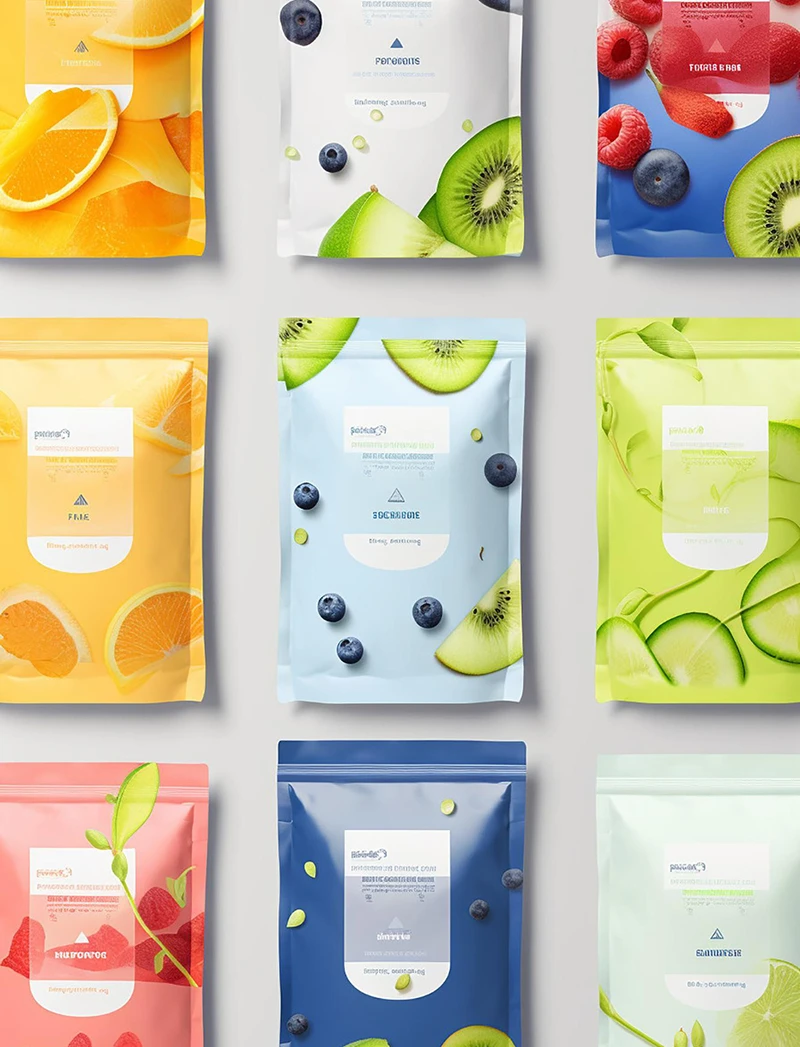
You can keep the logo, font system, and main layout consistent while changing a flavour colour, product name, or clearly marked size. Our review of Intelligentsia’s packaging design system gives a coffee-focused example for thinking about a recognisable product range. You can use the decision logic to develop your own brand identity. Your customers should be able to find the variant they want.
I check that the supplied files correspond to the order, but you remain responsible for approving product information and required label content. Net contents, ingredients, claims, and barcodes need the appropriate review. GS1’s GTIN guidance for product variants explains how differences such as flavours and sizes affect identification. We also review barcode placement and arrange appropriate verification for the finished print.
What Should You Approve Before We Start Production?
A missed approval becomes harder to fix once the order is printing. I bring the final specifications, files, and quantities together before that stage.
Approve the specification and quantity for each SKU, the final artwork, the agreed samples or proofs, and the commercial terms before production starts. We also confirm the delivery plan and packing identification. I keep those approvals together so everyone knows exactly which order is proceeding.
Know what each sample or proof actually confirms
An existing pouch sample helps you assess a format, material feel, or closure. A custom sample can address agreed aspects of your own specification. An electronic artwork proof helps confirm the file layout and content. I explain what each option covers and which charges apply. We choose the approval steps around your project’s actual uncertainties.
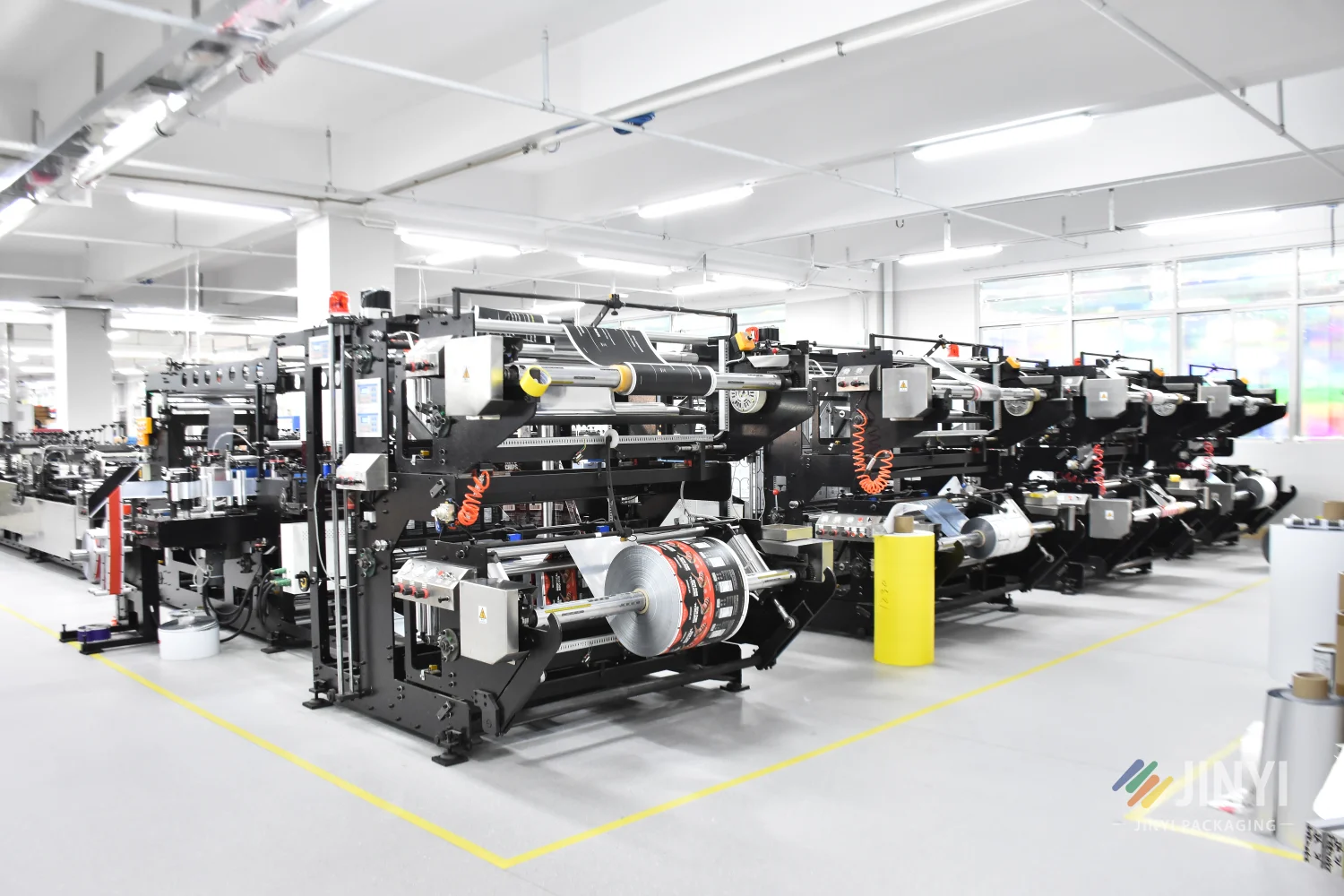
Linha de produção de sacos JINYI — conformação, selagem e corte de saquinhos verticais personalizados com parâmetros de selagem validados para cada lote
For dimensions and functional fit, use your real product and the intended filling arrangement where possible. For a finish or colour that matters to the launch, agree the reference and acceptance criteria. Our complete guide to how custom stand-up pouches are made explains the stages after approval, including printing, lamination, curing, and pouch making. That makes the schedule easier to understand.
Once printing starts, production runs through the order. We cannot make one finished pouch, pause for your approval, and then resume the remainder as if nothing has begun. We therefore settle the required sample and proof approvals in advance. I also confirm the agreed quantity tolerance and how cartons identify each design and size. Those small details help your receiving and filling teams keep the range organised.
Approval
What we record
Specification
Dimensions, structure, closure, finish, and intended use
Obra de arte
Correct final file and named approval contact for each SKU
Quantity and terms
SKU split, applicable tolerance, costs, and payment terms
Delivery and packing
Destination, schedule, and carton identification
How Should You Plan Reorders Before Your First Stock Runs Out?
Your total stock may look comfortable while one popular SKU is almost gone. Tracking each variant separately helps you act in time.
I recommend monitoring pouch usage and sales by SKU, then ordering against the complete replenishment timeline. Include approval, production, shipping, and receiving time. We can adjust the next quantity split using your actual demand and review whether the printing method still fits.
Let the first order improve the second one
Keep a record of the pouches you received, used, reserved, and still have available for each SKU. Product sales help you judge demand, while your filling plan shows when packaging will actually be needed. We can discuss the next order before a popular design becomes urgent. That is easier than discovering the gap on the day you want to fill.
The replenishment period covers more than printing. Artwork approval, material preparation, converting, inspection, transport, and receiving can all affect when your stock becomes usable. I confirm the applicable schedule with you for the next order. You can then set a reorder point around expected usage during that period and a sensible allowance for uncertainty.
Use the first launch results to change the allocation. Your second order can contain more of the main seller, fewer of a slow variant, or a new test design. Digital printing makes those planned artwork changes easier to organise without new cylinders. If volumes become larger and the designs settle, we can also compare gravure. I want each reorder to reflect what your business has learned.
Provas: HP identifies short runs and on-demand production as key uses of its digital flexible packaging solutions. That supports the printing approach discussed here; your finished-pouch quantities, specification, and schedule are confirmed in the JINYI quotation. HP Indigo flexible packaging solutions
Conclusão
Plan your first multi-SKU pouch order around product fit, realistic quantities, digital printing options, and clear approvals. I’ll help you turn those choices into a practical JINYI order.
A JINYI é uma fábrica de embalagens flexíveis personalizadas com mais de 15 anos de experiência de produção, servindo marcas de alimentos, suplementos, café, alimentos para animais de estimação e bens de consumo em mais de 70 países. Produzimos stand-up pouches, sacos de fundo plano, sacos de almofada e sacos de reforço lateral em PET/AL/PE, PET/VMPET/PE e outras especificações de barreira - através de impressão digital HP Indigo a partir de 500 unidades e impressão de rotogravura em volume - com documentação completa do material incluída como padrão em cada encomenda.
É isso que Do filme ao acabamento - feito corretamente significa na prática.
Elsa
Gestor de Desenvolvimento Comercial - Embalagens JINYI
A Elsa lidera o desenvolvimento comercial e a gestão de encomendas de clientes na JINYI. Com 8 anos de experiência em comércio externo em Yiwu e Dongguan, tem um conhecimento profundo da procura do mercado e do que os compradores realmente precisam - transformando a visão real do cliente nas decisões corretas de embalagem.
Necessidades dos clientes Gestão de encomendas Desenvolvimento de negócios
Can I order several pouch sizes and designs in one project?
Yes, we can assess them together. Send the quantity, size, product requirements, and artwork for each SKU. We will confirm the production arrangement and applicable MOQ for each specification.
Does digital printing mean there are no printing plate fees?
Yes. HP Indigo digital printing does not require engraved gravure cylinders for your artwork. We still agree any applicable sample, prepress, tooling, finishing, and delivery charges in the quotation.
Do I need to order the same quantity for every SKU?
No. I can help you plan different quantities around expected demand and launch goals. The final split needs to work with the agreed MOQ and production requirements.
Can you recommend dimensions if I only know the product weight?
Yes. Share the product type, target weight, intended use, and any size references. We can propose suitable dimensions and samples, then confirm fit with the actual product.
Can I change artwork or SKU quantities on my next order?
Yes, we can review the next order using your sales results and current specifications. Digital printing allows artwork updates without new gravure cylinders. You still approve the revised files and quantities before production starts.