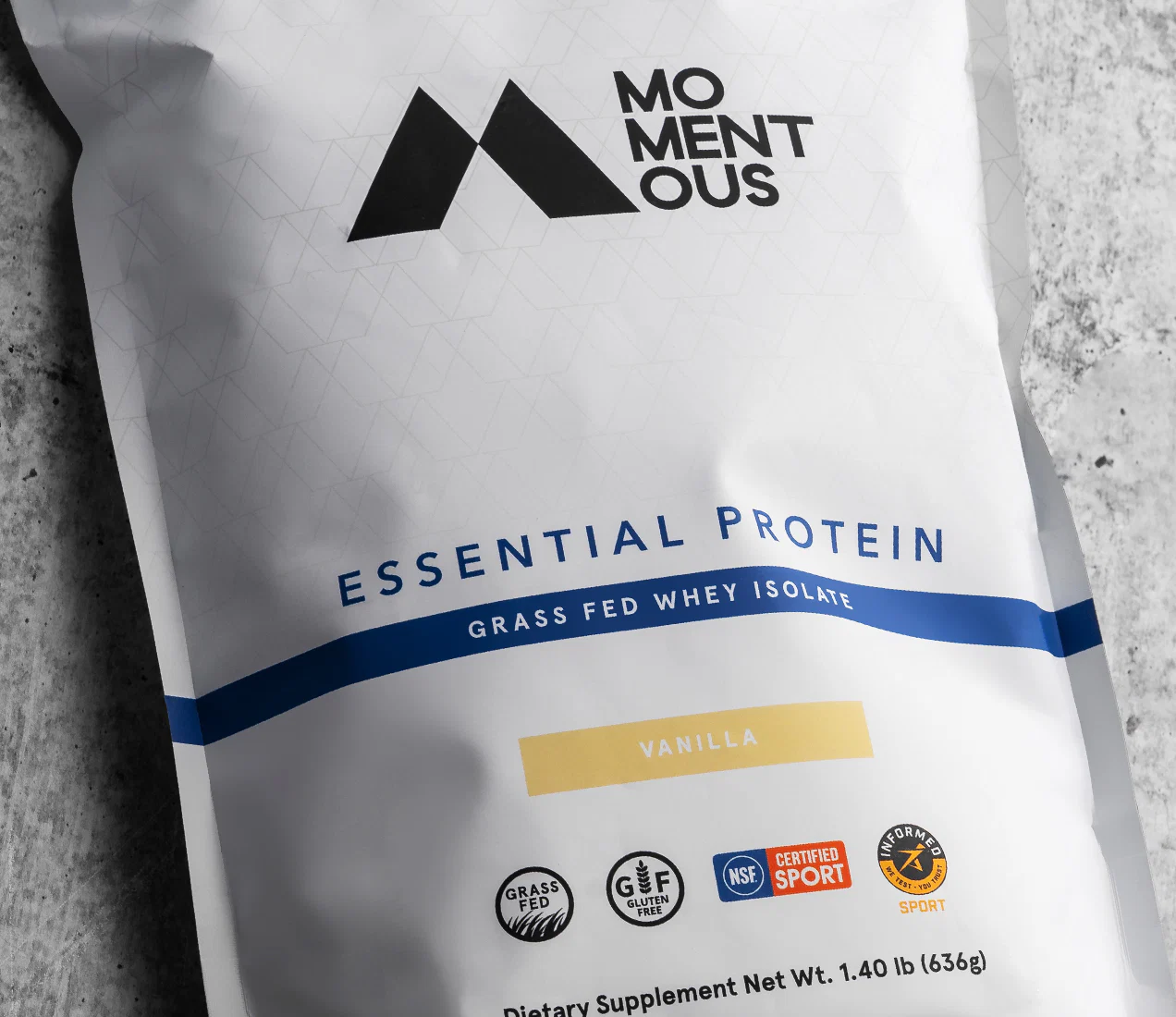
Momentous é uma marca de suplementos de desempenho fundada em 2018 e construída em torno de um único princípio operacional: cada produto deve atender ao padrão NSF Certified for Sport, e cada lote deve ser testado independentemente antes de ser enviado. A marca começou como fornecedora de organizações desportivas profissionais de elite - mais de 60 equipas da NFL, NBA, MLB e olímpicas usam produtos Momentous - e desde então se expandiu para um público mais amplo de alto desempenho por meio de parcerias, incluindo o Huberman Lab, onde Andrew Huberman referiu consistentemente Momentous como sua fonte de suplemento recomendada. A linha de produtos abrange a pilha fundamental a que a marca chama “The Momentous Three”: proteína isolada de soro de leite, creatina monohidratada e ácidos gordos ómega 3, juntamente com uma gama crescente de suplementos cognitivos e de recuperação.
O que distingue a Momentous num mercado de suplementos muito concorrido não é apenas a certificação - muitas marcas têm NSF Certified for Sport - mas a infraestrutura de transparência construída em torno dela. A marca publica Certificados de Análise (COAs) para cada lote em páginas de produtos individuais, verificáveis através de testes de terceiros do Light Labs. Este nível de transparência da documentação tem implicações na embalagem: a camada interna de contacto com os alimentos de cada formato de embalagem flexível tem de cumprir a mesma norma de limpeza verificada que o próprio produto. Numa categoria em que a superfície interior do saco está em contacto direto com um suplemento consumido por atletas profissionais sujeitos a testes antidoping, a especificação da película de embalagem não é uma decisão de aquisição de rotina.

O que é Momentous e porque é que a certificação NSF altera o resumo da embalagem
O NSF Certified for Sport é um programa de certificação independente que verifica três coisas para cada lote certificado: que o produto contém exatamente o que o rótulo indica, que não contém substâncias proibidas pelas principais organizações desportivas (WADA, USADA, NFL, MLB, NBA, NHL e outras) e que as instalações de fabrico cumprem as normas de Boas Práticas de Fabrico. Para um atleta profissional que enfrenta testes antidoping aleatórios, a certificação é uma ferramenta de gestão de riscos - fornece uma cadeia de custódia documentada de que um suplemento foi testado e aprovado antes de o atleta o consumir.
O padrão Momentous vai além dos requisitos básicos da NSF. Cada lote acabado é testado pela NSF, mas a Momentous publica adicionalmente o COA de cada lote na página do produto, que pode ser visualizado por qualquer comprador. O COA documenta os resultados de testes específicos - teor de proteínas, análise de contaminantes, painel de substâncias proibidas - para essa produção. Se um lote falhar, não é enviado. Isto é declarado explicitamente no sítio Web da marca e é verificável através dos números de lote em cada produto.
Esta norma de documentação tem uma implicação direta na especificação da embalagem. O programa de certificação da NSF inclui auditorias às instalações que abrangem os materiais de embalagem - especificamente, a camada interna em contacto com os alimentos de qualquer embalagem flexível deve ser verificada como isenta de substâncias que possam migrar para o produto e desencadear uma descoberta de substância proibida. Não se trata de um risco hipotético: aditivos de película de embalagem, auxiliares de processamento e resíduos de adesivos podem migrar para produtos em pó em condições específicas e, num suplemento consumido por atletas sujeitos a protocolos antidopagem, qualquer contaminação de materiais de embalagem é uma responsabilidade. Uma fábrica que produza embalagens para suplementos com certificação NSF tem de fornecer documentação de conformidade de contacto com alimentos para a camada interior de PE - não como uma melhor prática, mas como um requisito do quadro de certificação sob o qual a marca opera.
Isto coloca a Momentous numa categoria diferente da maioria das marcas de suplementos que selecionam as embalagens com base no custo e na estética. A especificação da embalagem parte de um requisito de certificação e trabalha a partir daí. Para contextualizar a forma como outras marcas de suplementos de alta qualidade abordam as suas decisões de embalagem de um ângulo diferente, a repartição de Sistema de embalagem da AG1 abrange a lógica de especificação de um tipo diferente de formato de pó de qualidade superior.
Do ponto de vista da produção: As marcas que operam ao abrigo da certificação NSF Certified for Sport ou de programas semelhantes de certificação de terceiros têm de solicitar documentação de conformidade de contacto com alimentos ao seu fornecedor de embalagens como parte normal do processo de aquisição - e não como uma reflexão posterior. O certificado de conformidade da camada interior de PE deve especificar os regulamentos aplicáveis ao contacto com alimentos (FDA 21 CFR, EU 10/2011 ou equivalente), a metodologia de teste e as substâncias específicas analisadas. Uma alegação genérica de “grau alimentar” de um fornecedor não é documentação suficiente para uma marca de suplemento certificada.
Dois formatos, dois casos de utilização: Bolsa de mão e mala de viagem
A Momentous utiliza dois formatos de embalagem primários em toda a sua linha de suplementos em pó, cada um deles adaptado a um contexto de consumo específico. A divisão é clara e deliberada - não se trata de uma marca que oferece uma bolsa e uma embalagem de viagem como complemento de uma estratégia que privilegia o recipiente. A embalagem flexível é o formato principal em toda a gama.
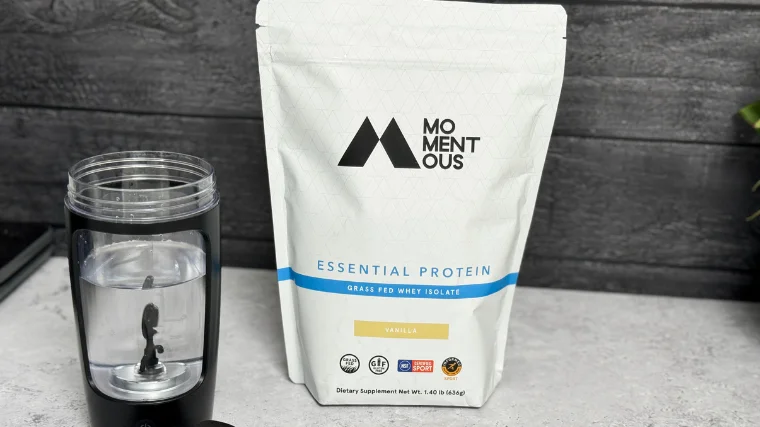
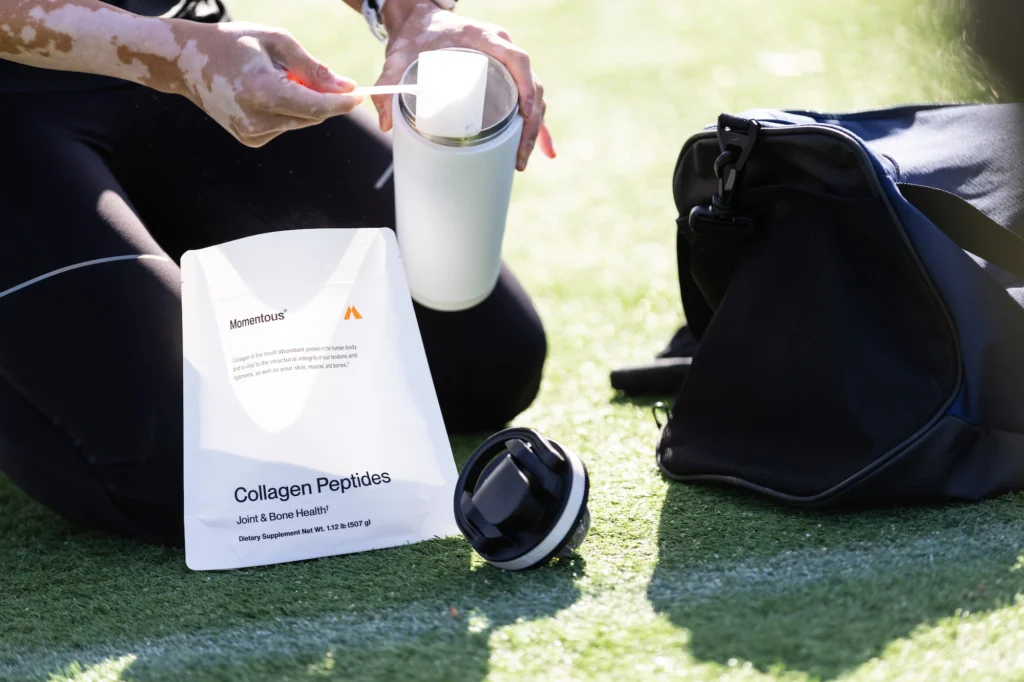
O stand-up pouch - o formato de compra padrão. Os principais tamanhos de produtos da Momentous - 25 doses de proteína de soro de leite, 90 doses de creatina, 22 doses de proteína vegetal - são todos embalados em stand-up pouches. Este é o formato que fica num armário de cozinha, numa bolsa de ginástica ou numa prateleira de suplementos. A escolha de um stand-up pouch em vez de uma lata rígida é uma decisão deliberada de posicionamento, tanto quanto uma decisão de custo: uma lata comunica volume e permanência, enquanto um pouch comunica eficiência e foco. Para uma marca cujo comprador é um profissional de alto desempenho que optimiza o seu protocolo de suplementos e não um consumidor casual de bem-estar que constrói um armário de suplementos, o minimalismo funcional da bolsa é consistente com a identidade da marca.
O stand-up pouch também faz sentido em termos logísticos para o principal canal DTC da Momentous. As bolsas são mais leves e compactas do que os recipientes para a mesma quantidade de doses, o que reduz o peso de transporte e os encargos de peso dimensional - um fator de custo significativo para uma marca que movimenta um volume significativo de DTC. Também geram menos resíduos de embalagens por dose do que os recipientes rígidos, o que se alinha com a comunicação da marca em torno de uma suplementação limpa e eficiente.
O Travel Pack - o formato de portabilidade. A Momentous oferece embalagens de viagem em várias linhas de produtos: Pacotes de viagem de 10 doses de proteína de soro de leite, pacotes de viagem de 14 doses de proteína de recuperação, pacotes de viagem de 15 doses de creatina e pacotes de viagem de cápsulas de gelatina mole Omega-3. Trata-se de saquetas individuais de dose única - embalagens de stick para os produtos em pó - agrupadas num conjunto especificamente concebido para atletas e pessoas de alto rendimento que viajam frequentemente para competições, treinos ou trabalho. O formato de embalagem de viagem resolve um problema específico: uma saqueta de 25 doses de proteína em pó não é prática para viajar, mas deixar o protocolo de suplementos para trás durante uma semana de viagem ou uma viagem de competição não é aceitável para um atleta sério. A embalagem de viagem reúne exatamente o número certo de doses num formato que passa sem problemas pela segurança do aeroporto e cabe no bolso de uma mala.
As embalagens individuais em stick pack dentro do pacote de viagem têm a mesma certificação NSF e documentação COA que o produto principal - cada lote é a mesma produção, testada segundo o mesmo padrão. Trata-se de um requisito de coordenação da produção não trivial: o processo de enchimento da embalagem em stick precisa de manter os mesmos controlos de contaminação e rastreio de lotes que o enchimento da embalagem principal, e a própria película da embalagem em stick precisa de ter a mesma conformidade de contacto alimentar interior que a película da embalagem stand-up pouch. Para uma abordagem comparável ao formato de dose única na categoria de pó funcional, a Discriminação das embalagens de líquidos IV abrange a lógica da especificação do stick pack do ponto de vista do eletrólito de hidratação.
| Formato |
Contagem de doses |
Caso de utilização principal |
Lógica de embalagem chave |
| Bolsa de pé |
22-90 porções |
Base, protocolo diário, reabastecimento DTC |
Peso de transporte DTC eficiente; minimalismo funcional em detrimento da permanência do recipiente; laminado de alta barreira para a frescura do pó |
| Pacote de viagem (pacote de stick pack) |
10-15 porções |
Viagem, competição, campo de treino, ensaio |
Contagem exacta de doses para a duração da viagem; compatível com a segurança aeroportuária; mesma certificação NSF e COA que o produto principal |
| Saqueta com selo de três lados |
Porção única |
Dose diária de suplementos em cápsulas/comprimidos (Sleep Pouch, cognitivo, recuperação) |
Formato de saqueta plana para produtos em cápsulas e cápsulas de gelatina mole; cor de base branca com marca a laranja; a mesma linguagem de design minimalista da linha de pós; conveniência da dose diária individual |

Para as marcas que estão a construir um sistema semelhante de embalagem de suplementos em dois formatos, a JINYI produz ambos bolsas stand-up e formatos de saco de almofada e pacote de pauzinhos em especificações de laminado de barreira apropriadas para produtos de suplementos certificados - com documentação de conformidade de contacto alimentar para a camada interior de PE fornecida como padrão em cada encomenda.
Que película de barreira é que uma proteína em pó certificada pela NSF realmente requer?
A Momentous não publicou uma especificação formal do material para a sua película de embalagem. A análise que se segue baseia-se no perfil dos ingredientes do produto, nos seus requisitos de certificação e nas normas de desempenho de barreira aplicáveis ao isolado de proteína de soro de leite e à creatina mono-hidratada com um prazo de validade padrão de 12 a 24 meses.
O isolado proteico de soro de leite é higroscópico - absorve facilmente a humidade atmosférica, o que provoca aglomeração, redução da solubilidade e, em caso de exposição prolongada, degradação acelerada das proteínas. O produto também contém um componente de gordura pequeno mas significativo (a proteína isolada de soro de leite é tipicamente uma proteína 90%+ com gordura residual da fração de soro de leite) que é suscetível à rancidez oxidativa. Para um produto posicionado com base na pureza verificada, qualquer desenvolvimento de sabor desagradável devido à oxidação da gordura representa uma falha na qualidade do produto que é particularmente prejudicial para uma marca que construiu a sua identidade com base em testes e transparência.
A creatina monohidratada apresenta um desafio de especificação diferente, mas relacionado: é um pó cristalino com higroscopicidade moderada que pode absorver humidade e converter-se em creatinina - o produto de degradação - sob exposição prolongada à humidade. A barreira da embalagem tem de manter a exclusão da humidade durante todo o prazo de validade, particularmente nas condições de armazenamento húmido comuns em sacos de ginásio, vestiários e mercados tropicais.
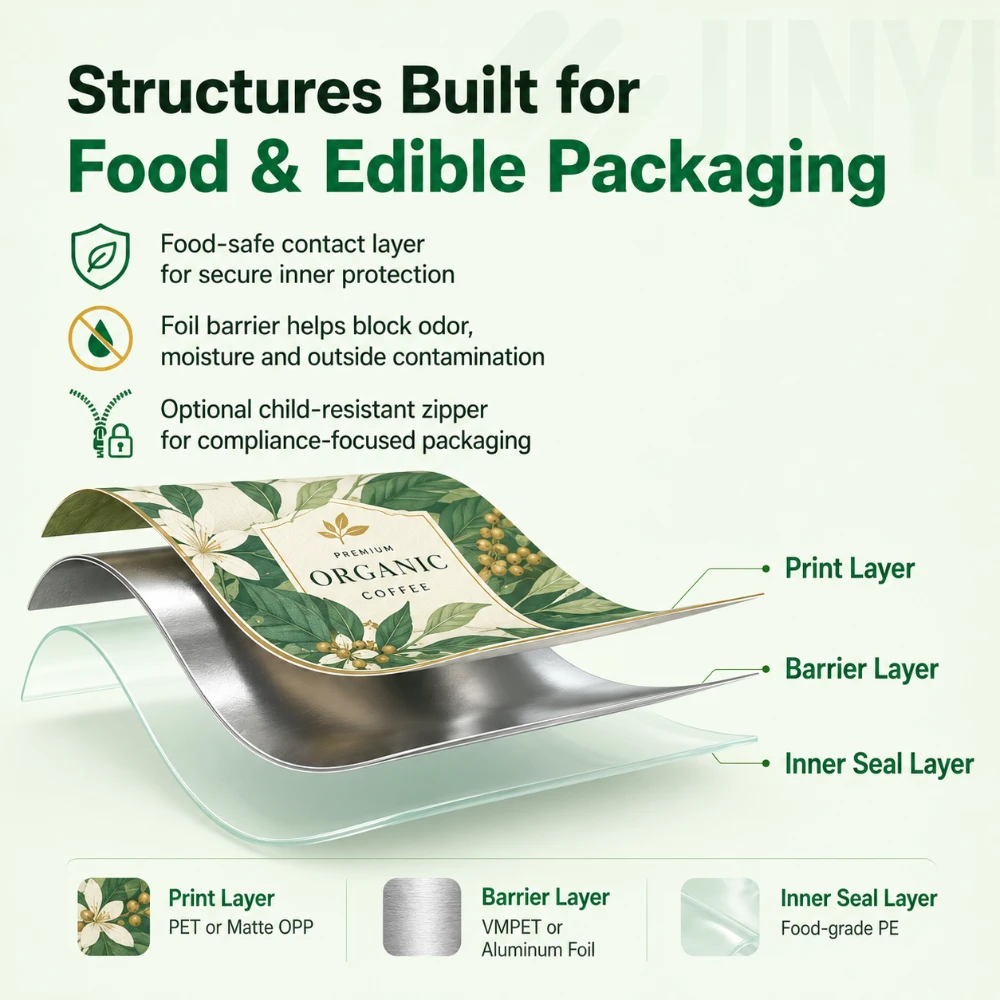
A estrutura de película estimada para os formatos stand-up pouch e stick pack da Momentous é um laminado normal de três camadas:
| Camada (Exterior → Interior) |
Material estimado |
Função |
| Camada de impressão (exterior) |
PET, 12–15 μm |
Substrato de impressão reversa para gráficos a preto e branco sólidos; rigidez estrutural para a formação de saquetas verticais; resistência à abrasão para o envio direto ao consumidor (DTC) e manuseamento em sacos de ginástica |
| Camada de barreira (meio) |
AL (folha de alumínio), 7–9 μm |
OTR quase nulo (estimado em ≤0,01 cc/m²/dia); MVTR quase nulo; bloqueio total dos raios UV e da luz — protegendo a fração lipídica da proteína de soro de leite contra o ranço oxidativo e os componentes higroscópicos do pó contra a penetração de humidade ao longo de um prazo de validade de 12 a 24 meses |
| Camada de vedação interna (interior) |
PE de qualidade alimentar, 60–80 μm |
Superfície de selagem a quente; conformidade com os requisitos do quadro de certificação da NSF em matéria de contacto com alimentos; comprovadamente isenta de substâncias incluídas nas listas de substâncias proibidas da WADA/USADA, através da documentação do fornecedor relativa ao contacto com alimentos |
Nota: A estrutura do filme é estimada com base nos requisitos de barreira do produto, no quadro de certificação e nas especificações padrão do setor para a embalagem de isolado de proteína de soro de leite. A Momentous não publicou documentação oficial sobre os materiais utilizados no seu filme de embalagem.
A camada de barreira de folha de alumínio é a especificação adequada para o perfil do produto da Momentous e para o prazo de validade pretendido. Com um OTR próximo de zero, a camada de folha de alumínio restringe a entrada de oxigénio a níveis que mantêm a taxa de oxidação da gordura abaixo do limiar de alteração percetível da qualidade ao longo de um prazo de validade de 12 a 24 meses, mesmo sob condições variáveis de humidade e temperatura ambientes durante o transporte e armazenamento DTC. O VMPET apresenta um desempenho de barreira inferior — OTR na faixa de 0,5 a 2,0 cc/m²/dia —, o que pode ser adequado para produtos em pó com menor teor de gordura e objetivos de prazo de validade mais curtos, mas introduz um risco significativo para a qualidade de um isolado de soro de leite com uma fração residual de gordura, tendo em conta a especificação de um prazo de validade de 24 meses.
A documentação relativa à conformidade da camada interna de PE para contacto com alimentos reveste-se de particular importância no contexto da certificação NSF. A auditoria às instalações realizada pela NSF abrange os materiais de embalagem — nomeadamente, a garantia de que as superfícies da embalagem em contacto com os alimentos não introduzem riscos de contaminação no produto certificado. O certificado de contacto com alimentos relativo à camada interna de PE deve constar dos registos da marca e estar disponível para auditoria. Uma fábrica que não consiga apresentar esta documentação não é um fornecedor adequado para uma marca de suplementos certificada, independentemente de outras capacidades.

O sistema de design minimalista: Porque é que a Momentous coloca os dados à frente da estética
O design da embalagem da Momentous assenta num único princípio: a informação mais importante na embalagem é o número. Não é a história da marca, nem uma imagem de estilo de vida, nem o nome do sabor em letras grandes — é o teor de proteína por porção, indicado em gramas e apresentado no tamanho máximo. “20 g” na embalagem de proteína de soro de leite. “5 g” na embalagem de creatina. O design foi concebido para apresentar esse número da forma mais rápida e legível possível a um comprador que já sabe o que quer e está a verificar se tem o produto certo.
Esta é uma filosofia de conceção fundamentalmente diferente da da maioria das marcas de suplementos para o consumidor. Compare a abordagem de Nutrição Bloom, que recorre a gradientes de cores vibrantes, imagens de estilo de vida e uma linguagem de design baseada na estética das redes sociais — a embalagem foi concebida para ser fotografada e partilhada. Ou As embalagens da Huel, que recorre a uma hierarquia de informação densa, com várias notas explicativas, alegações nutricionais e descritores de formato que competem pela atenção visual. O design a preto e branco da Momentous, que dá prioridade aos números, transmite uma mensagem diferente: este produto destina-se a pessoas que já sabem o que procuram e não precisam que lhes seja vendido um estilo de vida.
A cor de base preta é um sinal deliberado de qualidade superior numa categoria em que o branco e as cores vivas dominam as prateleiras. A embalagem preta transmite autoridade, precisão e seriedade — associações que se alinham com a base de clientes da marca, composta por equipas desportivas profissionais, e com o seu posicionamento de transparência clínica. Um produto utilizado por equipas da NFL e verificado de forma independente pela NSF não precisa de um rótulo colorido para transmitir qualidade. A embalagem preta transmite que o argumento de qualidade da marca assenta na documentação, e não no design.
Neste quadro minimalista, a diferenciação das SKUs é gerida através de subtis toques de cor — uma cor específica utilizada para o nome do produto e elementos de destaque que variam consoante a linha de produtos e o sabor. O soro de leite com chocolate utiliza uma cor de destaque, a baunilha outra. O sistema foi concebido para facilitar a navegação ao cliente existente que conhece a gama de produtos, e não para atrair um novo comprador através da diferenciação visual. Isto é adequado para uma marca cujo principal canal de aquisição é a promoção em podcasts (Huberman Lab) e a recomendação de equipas profissionais, em vez da descoberta nas prateleiras do retalho.
Do ponto de vista da produção gráfica, o design minimalista não é mais simples de executar do que o design complexo — é, pelo contrário, mais difícil. Um campo preto sólido num substrato PET mate revelará todas as inconsistências de densidade de impressão, todas as variações de cor entre as tiragens e todos os erros de registo que um design gráfico mais complexo esconderia no seu próprio ruído visual. Uma marca cuja identidade depende de um campo preto perfeitamente consistente necessita de um sistema de gestão de cor que avalie o resultado final em relação a um valor-alvo de densidade definido em cada tiragem e sinalize qualquer desvio antes do envio do trabalho. A consistência entre tiragens é o requisito técnico que o design minimalista impõe à fábrica — não é a criatividade, mas sim a precisão.
Sobre a impressão de áreas pretas sólidas: O preto sólido em película de embalagem flexível é normalmente obtido através de uma combinação de preto de processo (CMYK) ou de uma mistura de tintas de preto intenso, dependendo do processo de impressão. No PET mate, a absorção da tinta e a interação com a superfície afetam a profundidade e a consistência do preto. A impressão por gravura proporciona a densidade mais consistente para trabalhos de grandes tiragens em cor sólida. Para tiragens digitais mais curtas, o valor-alvo da densidade do preto tem de ser confirmado na amostra física de pré-produção — as provas em ecrã não representam com precisão a forma como o preto fica num substrato laminado mate.
A embalagem de viagem: Porque é que o formato do stick pack é importante para uma marca de desempenho
O Travel Pack é o produto com a funcionalidade mais específica do portfólio de embalagens da Momentous — e aquele que reflete mais diretamente a compreensão que a marca tem do seu cliente-alvo. Um atleta profissional ou uma pessoa com um desempenho de alto nível que viaja para competições, estágios de treino ou em negócios não quer ter de lidar com uma embalagem de 25 porções quando está em viagem. Quer exatamente o número certo de porções para a viagem, num formato que caiba numa mala e passe pela segurança, com a mesma qualidade de produto que utiliza em casa.

O formato em saquetas individuais é a solução ideal para este caso de utilização. As saquetas individuais — saquetas seladas de dose única — cabem facilmente num bolso do saco, pesam quase nada por dose, não requerem colher nem medição e passam pela segurança do aeroporto sem infringir as restrições relativas a líquidos. O formato em pacote — 10 ou 15 stick packs individuais embalados em conjunto num saco ou manga exterior leve — proporciona ao comprador uma quantidade definida de porções para a duração específica da viagem, sem que seja necessário transportar um saco a granel aberto.
Do ponto de vista da produção, a embalagem em stick é um formato tecnicamente exigente para a proteína em pó. A proteína em pó fina apresenta uma distribuição granulométrica que cria dois desafios específicos de produção. Em primeiro lugar, as partículas finas migram para as zonas de selagem do stick pack durante o enchimento a alta velocidade — um fenómeno denominado “powder-in-seal” —, o que compromete a integridade da selagem hermética da embalagem final. Tanto a camada selante interna do filme como a configuração das mandíbulas de selagem da máquina de enchimento têm de ser adaptadas ao tamanho específico das partículas e às características de fluxo do pó, para minimizar a contaminação da selagem. Em segundo lugar, o processo de enchimento de alta velocidade em várias faixas utilizado para as embalagens tipo stick exige que a temperatura de início da selagem do filme e o tempo de permanência sejam calibrados para a camada interna específica de PE — um detalhe da especificação que precisa de ser confirmado no ensaio de produção antes de se avançar para a produção em série.

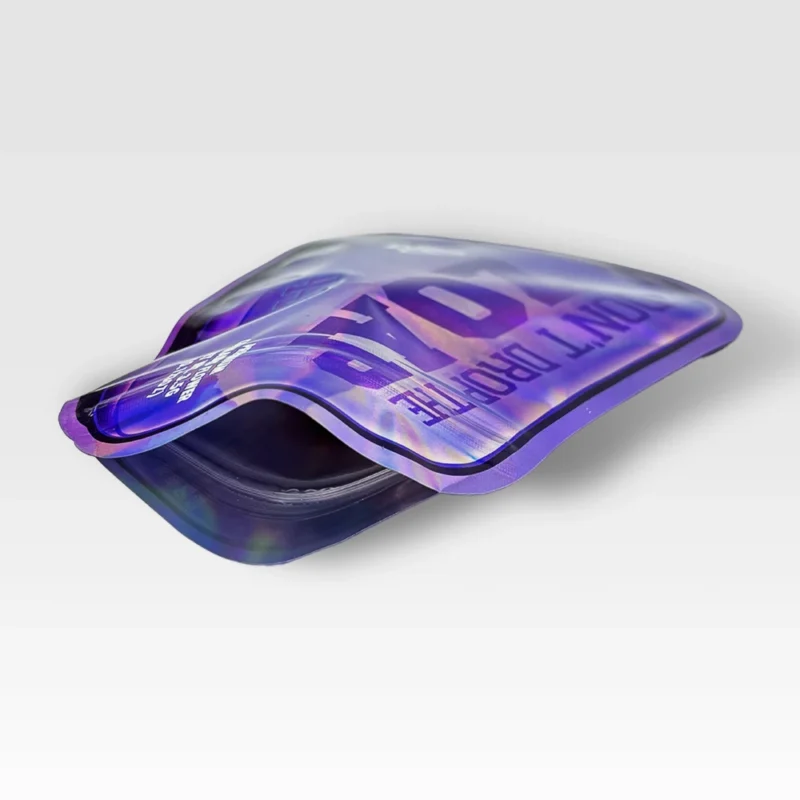
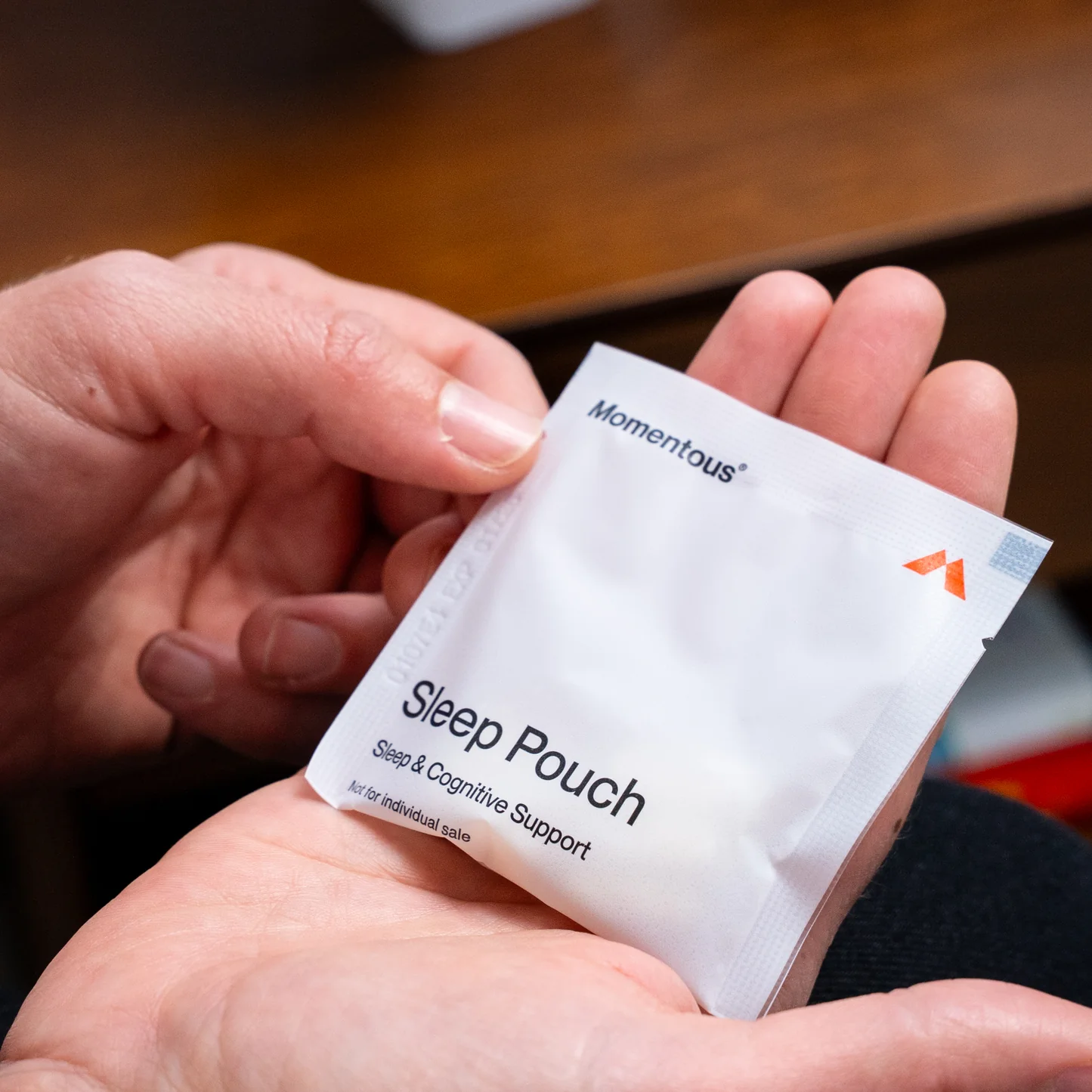
A saqueta selada em três lados — em dose individual para produtos em cápsulas e comprimidos. Para além dos formatos em pó, a Momentous utiliza uma saqueta plana selada em três lados para os seus suplementos em cápsulas e comprimidos — sendo a «Sleep Pouch» o exemplo mais visível. A saqueta é uma embalagem plana de dose única, selada em três lados, que contém as cápsulas ou cápsulas moles individuais para uma dose diária. O formato é branco, com a marca Momentous e o nome do produto impressos no mesmo estilo tipográfico sóbrio da linha de saquetas — a linguagem de design é consistente nos três formatos, apesar da diferença significativa na estrutura física. A saqueta selada em três lados é particularmente adequada para produtos de apoio ao sono e às funções cognitivas que são tomados a uma hora específica do dia, em que o formato de saqueta individual reforça o ritual da dose diária e elimina a necessidade de abrir e fechar um frasco maior todas as noites. Desempenha também a mesma função de portabilidade que a embalagem de viagem para produtos em cápsulas — uma semana de suplementos para o sono em saquetas individuais quase não ocupa espaço numa mala de viagem.
acrescenta mais um requisito de produção: o processo de enchimento das embalagens tipo stick pack tem de manter os mesmos controlos de contaminação, documentação de lotes e rastreabilidade que a produção principal das embalagens tipo stand-up. Cada lote de stick packs tem o seu próprio Certificado de Análise (COA), associado à mesma série de produção que o produto da bolsa principal. Isto significa que a fábrica que produz o filme para os stick packs tem de fornecer a mesma documentação de conformidade para contacto com alimentos que o fornecedor do filme para as bolsas verticais — a camada interna de PE do stick pack está em contacto direto com o mesmo produto certificado pela NSF.
O que as marcas que constroem embalagens de suplementos com certificação NSF precisam de uma fábrica
O sistema de embalagem da Momentous ilustra o que uma especificação de embalagem de suplementos verdadeiramente alinhada com a certificação exige — e por que razão não pode ser obtida junto de um fornecedor que considere a documentação relativa ao contacto com alimentos como opcional. A especificação parte do quadro de certificação, estabelece os requisitos relativos ao material da camada interior, seleciona o laminado de barreira adequado e, em seguida, integra o sistema de design. O design é a última decisão, não a primeira.
Para as marcas que operam ao abrigo da certificação NSF Certified for Sport, Informed Sport ou programas de certificação equivalentes, os requisitos de documentação da fábrica são específicos e não são passíveis de negociação. Os certificados de conformidade de contacto com alimentos relativos à camada interna de PE devem fazer referência aos quadros regulamentares aplicáveis (FDA 21 CFR §177.1520 para o polietileno, Regulamento (UE) n.º 10/2011 ou equivalente), aos ensaios específicos de migração realizados e às substâncias analisadas. O certificado deve constar dos registos da marca e estar disponível para apresentação em qualquer auditoria às instalações realizada pela NSF. Um fornecedor que não consiga apresentar esta documentação no formato exigido não é um parceiro viável para uma marca de suplementos certificada, independentemente do preço ou da capacidade de produção.

Para além da documentação, os requisitos de capacidade de produção para a embalagem de suplementos certificados são: especificação do laminado de barreira confirmada com dados OTR e MVTR publicados; impressão consistente em fundo preto com objetivos de densidade mensuráveis e gestão da cor de lote para lote; testes de compatibilidade de enchimento das embalagens tipo «stick pack» para o tamanho das partículas e as características de fluxo específicas do pó; e amostras físicas de pré-produção tanto para o formato de bolsa vertical como para o formato «stick pack», onde a integridade da selagem, a contaminação do pó na zona de selagem e a consistência da impressão possam ser avaliadas na embalagem efetivamente formada antes de se avançar com o volume de produção.
A JINYI produz bolsas stand-up e formatos de saco de almofada e pacote de pauzinhos em especificações de barreira PET/AL/PE e PET/VMPET/PE, com documentação de conformidade para contacto com alimentos relativa à camada interna de PE fornecida de série com cada encomenda. A reprodução de cores em toda a nossa linha de impressoras digitais HP Indigo é gerida através do ESKO Automation Engine — o mesmo perfil de cor é aplicado a todos os trabalhos, tornando a consistência dos campos pretos sólidos mensurável ao longo das séries de produção. Para uma explicação detalhada de como funciona o processo de produção, desde as especificações do filme até ao saco acabado, o guia para a produção de bolsas personalizadas abrange todas as etapas que antecedem a primeira conversa com a fábrica.
Está a criar embalagens para uma marca de suplementos certificada?
A JINYI produz saquetas verticais e embalagens tipo stick pack em laminados de barreira PET/AL/PE — com documentação de conformidade para contacto com alimentos, dados publicados de OTR e MVTR e impressão com gestão de cor como padrão. Se a sua marca estiver certificada pela NSF, Informed Sport ou certificação equivalente, a discussão sobre a documentação tem início antes da discussão sobre o design.
Fale com a JINYI sobre a embalagem dos seus suplementos →
Sobre a JINYI
A JINYI é uma fábrica de embalagens flexíveis personalizadas com mais de 15 anos de experiência em produção, que fornece marcas dos setores alimentar, de suplementos, de café, de alimentos para animais de estimação e de bens de consumo em mais de 150 países. Produzimos saquetas verticais, sacos de fundo plano, sacos tipo almofada e sacos com reforço lateral em PET/AL/PE, PET/VMPET/PE e outras especificações de barreira — através de impressão digital HP Indigo a partir de 500 unidades e impressão por gravura em grandes quantidades — com documentação completa dos materiais incluída de série em todas as encomendas.
É isso que Do filme ao acabamento - feito corretamente significa na prática.

Elsa
Gestor de Desenvolvimento Comercial - Embalagens JINYI
A Elsa lidera o desenvolvimento comercial e a gestão de encomendas de clientes na JINYI. Com 8 anos de experiência em comércio externo em Yiwu e Dongguan, tem um conhecimento profundo da procura do mercado e do que os compradores realmente precisam - transformando a visão real do cliente nas decisões corretas de embalagem.
Necessidades dos clientes
Gestão de encomendas
Desenvolvimento de negócios
Perguntas mais frequentes
Que formatos de embalagem utiliza a Momentous?
A Momentous utiliza dois formatos principais: saquetas verticais para produtos com quantidades padrão de porções (proteína de soro de leite com 25 porções, creatina com 90 porções, proteína vegetal com 22 porções) e embalagens de viagem — conjuntos de saquetas individuais de dose única — para facilitar o transporte e a experimentação. Ambos os formatos possuem a mesma certificação NSF Certified for Sport que o produto principal, com certificados de análise (COA) publicados por lote. A marca não utiliza embalagens rígidas como formato principal, refletindo um posicionamento deliberado em torno da eficiência e do minimalismo funcional, em detrimento da presença nas prateleiras.
Que tipo de estrutura de película é mais provável que a embalagem da Momentous utilize?
A Momentous ainda não publicou uma especificação oficial do filme. Com base nos requisitos de barreira do produto — pó higroscópico, fração de gordura residual na proteína de soro de leite, prazo de validade de 12 a 24 meses —, a estrutura estimada é um laminado padrão de três camadas PET/AL/PE: camada de impressão em PET no exterior, camada de barreira em folha de alumínio no meio (OTR estimado ≤ 0,01 cc/m²/dia) e camada de selagem interior em PE de qualidade alimentar. A documentação relativa à conformidade da camada interior de PE para contacto com alimentos é particularmente significativa, tendo em conta o quadro de certificação da NSF ao abrigo do qual a marca opera.
O que é que a certificação NSF Certified for Sport exige de um fornecedor de embalagens?
As auditorias às instalações desportivas com certificação NSF abrangem os materiais de embalagem — mais concretamente, garantem que as superfícies das embalagens em contacto com os alimentos (a camada interior de qualquer película flexível) não representam um risco de contaminação para o produto certificado. Um fornecedor de embalagens para uma marca certificada pela NSF tem de apresentar documentação comprovativa da conformidade em matéria de contacto com alimentos para a camada interior, especificando os quadros regulamentares aplicáveis (FDA 21 CFR, UE 10/2011 ou equivalente), os ensaios de migração realizados e as substâncias analisadas. Esta documentação deve constar dos registos da marca e estar disponível para apresentação em qualquer auditoria às instalações realizada pela NSF.
Por que é que a Momentous opta por um design minimalista a preto e branco em vez de embalagens coloridas?
A filosofia de design da Momentous dá prioridade aos dados em detrimento da estética — o elemento mais destacado em cada embalagem é o valor nutricional principal (20 g de proteína, 5 g de creatina), em vez de imagens da marca ou fotografias relacionadas com o estilo de vida. A cor de fundo preta transmite precisão, autoridade e seriedade — associações alinhadas com a base de clientes da marca, composta por equipas desportivas profissionais, e com o seu posicionamento de transparência clínica. Para uma marca cujo argumento de qualidade se baseia em testes independentes realizados por terceiros e em certificados de análise (COAs) publicados, a embalagem não precisa de vender o produto a nível estético. Tem de confirmar que o comprador está a adquirir o produto certo.
Que desafios de produção coloca o enchimento de embalagens tipo stick de proteína em pó?
O pó proteico fino apresenta dois desafios específicos no enchimento de saquetas. Em primeiro lugar, as partículas finas migram para as zonas de selagem durante o enchimento a alta velocidade — um fenómeno denominado «pó na selagem» —, o que compromete a integridade da selagem hermética. A camada selante interna da película e a configuração das mandíbulas de selagem da máquina de enchimento têm de ser adaptadas ao tamanho das partículas do pó e às suas características de fluxo. Em segundo lugar, a temperatura de início da selagem e o tempo de permanência da camada interna de PE do filme têm de ser calibrados de acordo com a configuração específica da máquina de enchimento. Ambos são confirmados no ensaio de produção antes de se avançar para a produção em série — não se baseiam apenas nas especificações do filme.
Por que é que a Momentous opta por saquetas em vez de frascos para a sua proteína em pó?
A escolha de uma embalagem tipo «stand-up pouch» em vez de um recipiente rígido reflete uma lógica tanto comercial como de posicionamento. As embalagens «stand-up pouch» são mais leves e compactas do que os recipientes para o mesmo número de porções, reduzindo o peso de envio direto ao consumidor (DTC) e as taxas de peso volumétrico — um fator de custo significativo em grande escala. Geram menos resíduos de material de embalagem por porção. Além disso, transmitem um minimalismo funcional, em vez da presença permanente nas prateleiras que uma lata sugere — uma associação que se alinha com um posicionamento da marca centrado na suplementação de precisão, em vez do bem-estar como estilo de vida.
Como é que a abordagem da Momentous em matéria de embalagem se compara à de outras marcas de suplementos de gama alta?
O design da Momentous, que privilegia os dados e aposta no preto e branco, distingue-se da maioria das embalagens de suplementos premium. A Bloom Nutrition utiliza gradientes de cores vibrantes e uma estética inspirada nas redes sociais, concebida para partilha visual. A Huel recorre a hierarquias de informação densas com múltiplas indicações nutricionais. A AG1 utiliza um formato de bolsa premium com um sistema de fecho de correr distinto. O design da Momentous comunica-se através da contenção — a qualidade do produto é comprovada externamente através da certificação NSF e dos certificados de análise (COAs) publicados, pelo que a embalagem não precisa de argumentar visualmente a qualidade do produto. Para uma análise detalhada destas abordagens alternativas, consulte as nossas análises de Embalagens da Bloom Nutrition e Embalagem da Huel.