تشارك JINYI إرشادات عملية للتغليف والتعبئة والتغليف من أجل قراراتك.
Packaging education: This content is for packaging education. We do not sell any regulated products. Confirm packaging requirements in the destination market.
Your new flavor needs a pouch. Your holiday version needs another. Then a label changes. A cheap unit quote can quickly become an expensive pile of yesterday’s artwork.
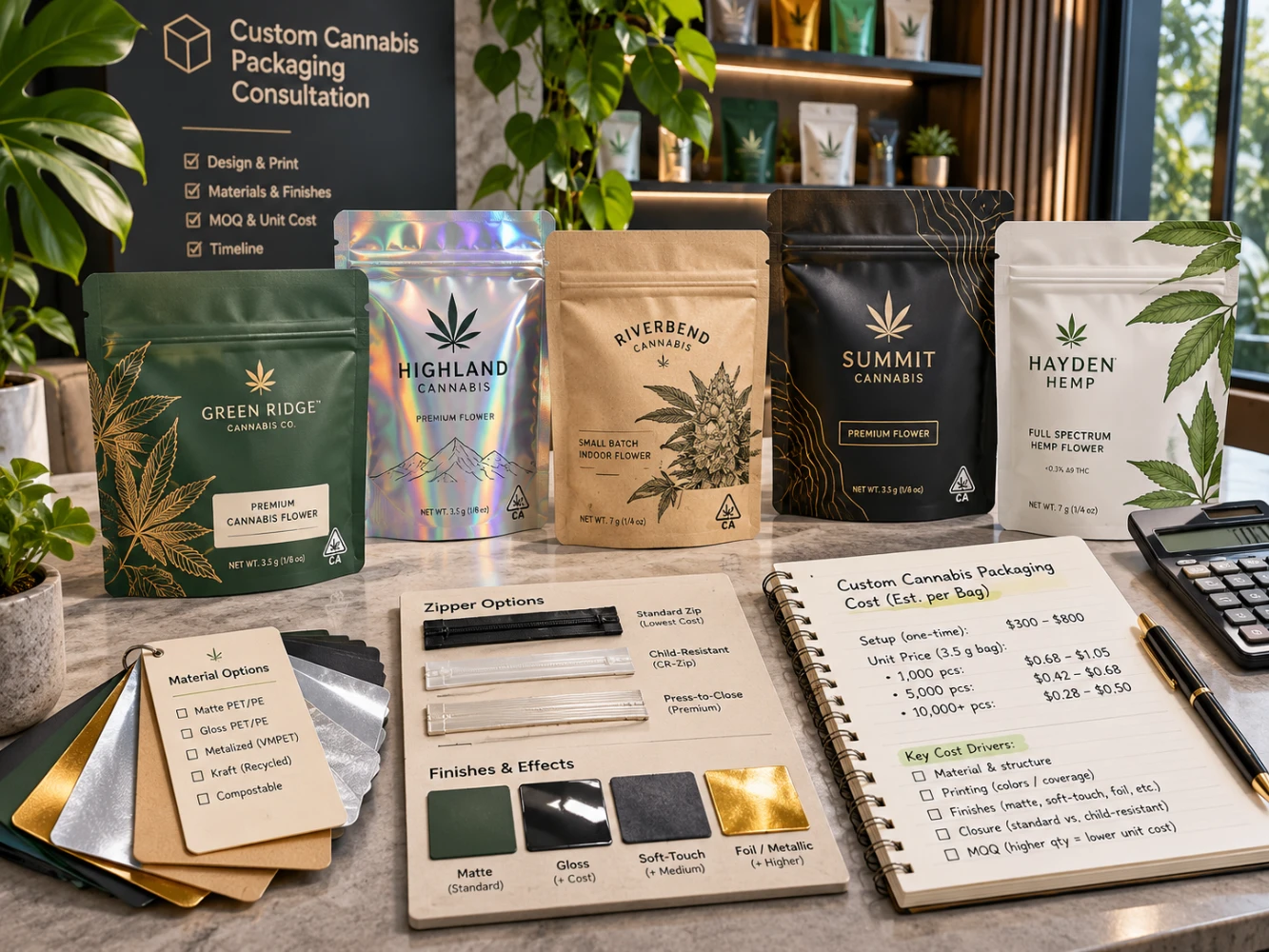
Custom cannabis packaging cost depends on pouch format, materials, closure, print method, SKU quantity, finishes, and delivery. For small, changing designs, digital printing can reduce cylinder charges and excess stock. Compare the complete order and usable inventory, not only the price per pouch.
I’m Elsa at JINYI. I like a good shelf display as much as anyone, but I also want your packaging budget to survive the next campaign. If you are still choosing a format, our حلول تغليف القنب show the options we can help you plan. Then we can build a quote around your actual launch calendar.
Quote by SKU, not just total quantity. Ten designs of 2,000 bags are a different purchasing decision from one design of 20,000.
Start with digital for changing artwork. It avoids customer-specific gravure cylinders, but materials and conversion still have setup and minimums.
Compare gravure for a stable bestseller. Around 10,000 units per unchanged SKU, especially with dedicated colors, is when I would ask for a comparison.
Price the pouch you will actually fill. Size, gusset, barrier, seal, closure, and market requirements change the specification.
Reverse printing is construction, not a luxury label. Ask for the complete laminate before judging its cost.
Give each decorative finish a separate price. Holographic effects, spot UV, and hot foil involve different routes and setup.
Protect cash tied up in obsolete bags. A lower unit price is useful only if the artwork remains current and the bags get used.
Approve a physical sample and written quote. Confirm the printed effect, finished opening, quantity per SKU, and delivery basis.
Why Do Two Similar Cannabis Pouches Receive Different Quotes?
A photo shows the front of a bag. It does not reveal its material layers, closure, print run, or the number of artworks you will order. I start by putting those missing details on one sheet.
First, list the product form, market, target fill weight, finished size, barrier need, opening, and quantity for each design. Then list your desired appearance and the date on which the artwork may change. That last date matters. If you plan a short festival run, a quote based on twelve months of identical printing is answering the wrong question.
I also ask what the supplier includes in “unit price”: samples, printing setup, finishing, packing, freight, and any one-time charges. One proposal may cover a basic zipper while another includes an enhanced closure and a physical sample. Both numbers can be honest and still be impossible to compare. Our OEM cannabis packaging sourcing guide gives you the wider format and sourcing checklist; here I am focusing on the cost choices inside it.
Quote variable
Why it changes the total
What to ask
Quantity per artwork
Each version has its own production and inventory risk
How are 6 designs × 2,000 priced?
Format and closure
Size, gusset, zipper and sealing differ
Which finished construction is included?
Print and finish
Digital, gravure and added effects have different setups
What is charged once and what repeats?
Delivery basis
Freight and packing can change the landed figure
Is the same destination and term used?
Which Pouch Format and Size Should You Budget For?
The bag should fit your product, required information, and display plan. A generous pouch looks impressive in a mockup, but air and empty shelf space do not help a brand’s margin.
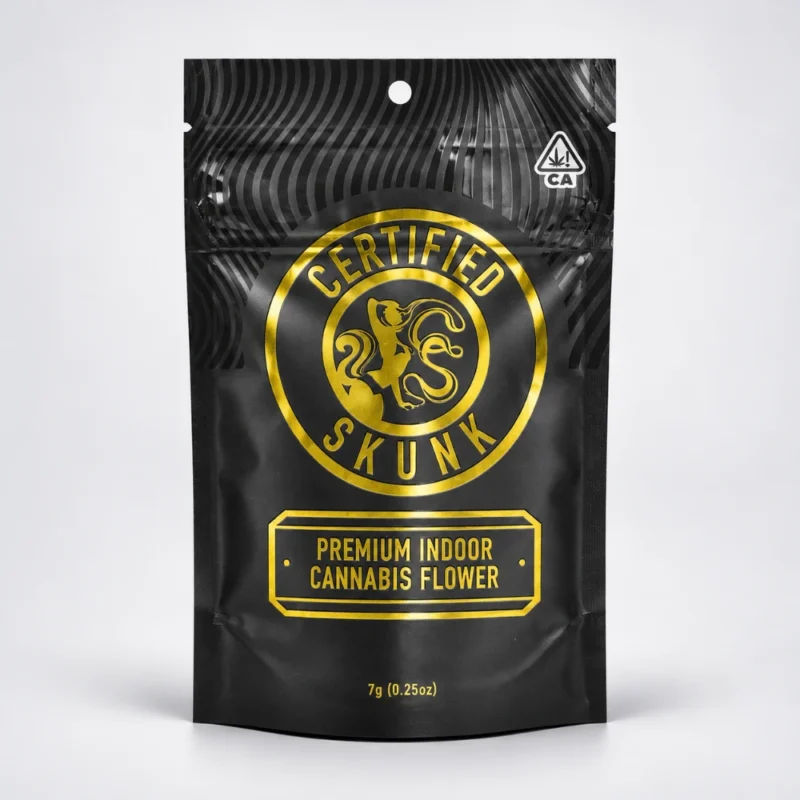
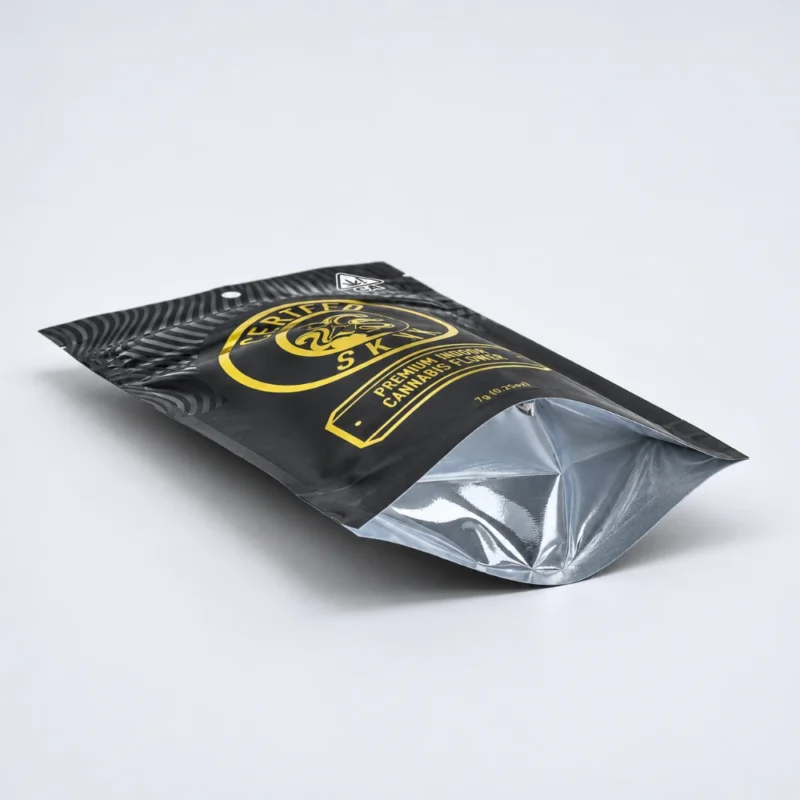
A flat cannabis pouch can work where a compact pack or hanging display makes sense. A cannabis stand-up pouch gives the pack its own shelf footprint. I would compare both with the actual fill and the correct label space, then test how the bag behaves after closing. Different weights or bulky contents can make the same nominal pouch size look quite different.
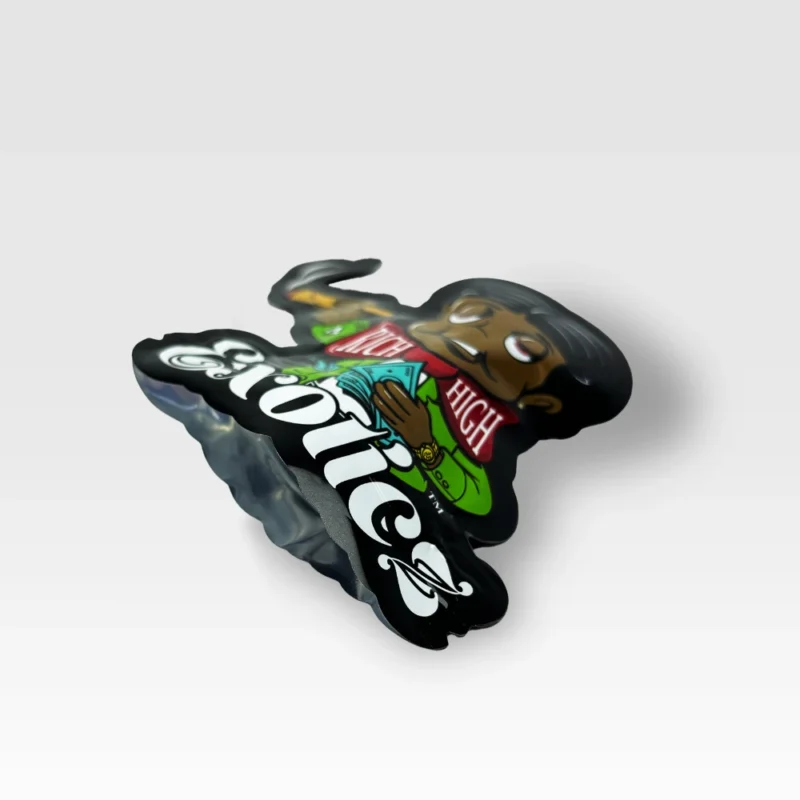
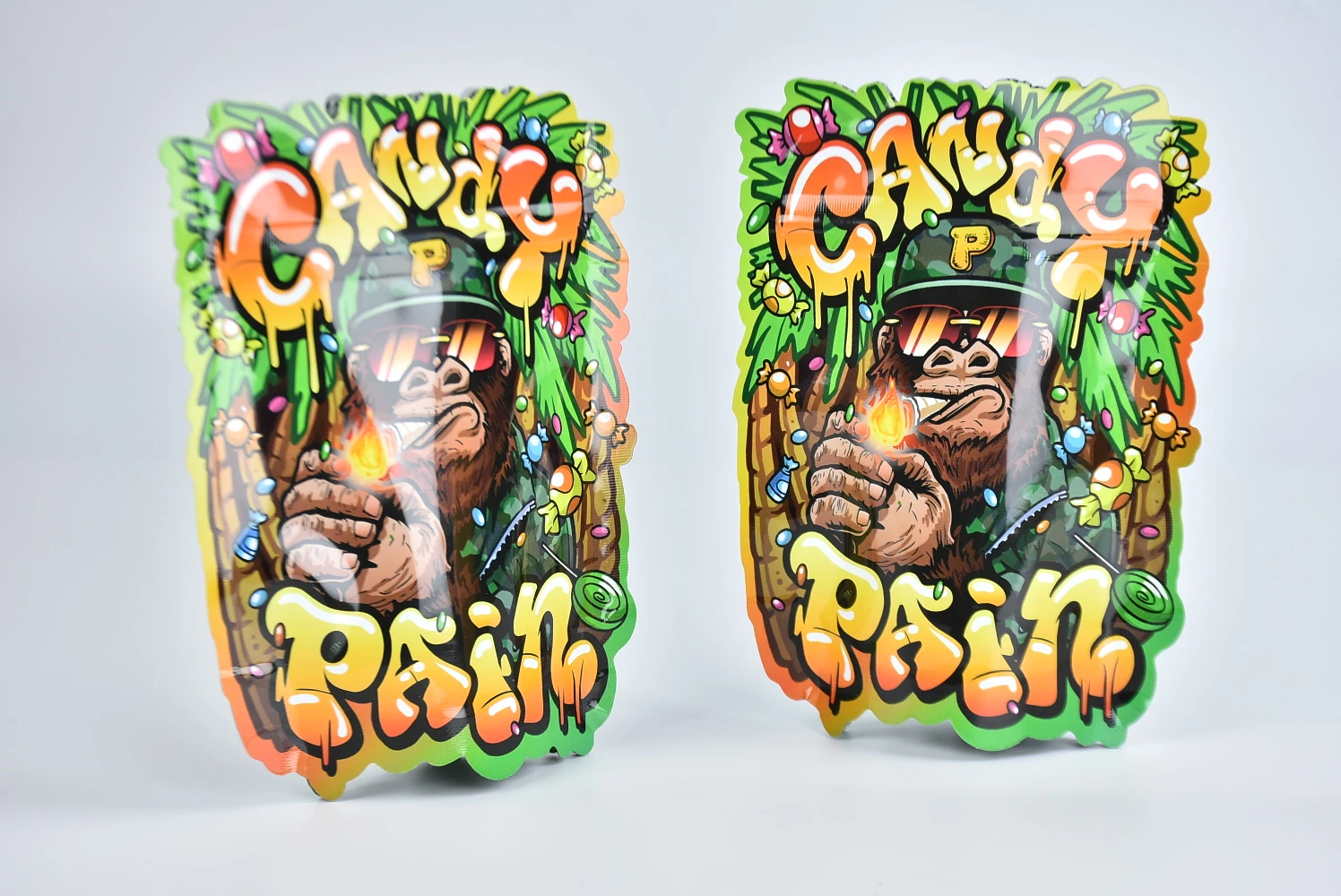
JINYI cannabis packaging case: Custom die-cut outlines give these two pouches a distinctive shape beyond a standard rectangular bag.
A shaped bag, custom cut, or extra carton can be a strong campaign choice. Each also changes tooling, material usage, packing, or shipping. When a new strain is still being tested, I often suggest using an established size and changing the artwork first. If the product takes off, we can invest in a distinctive shape with better evidence that it will earn its keep.
What I would check: Send us a filled sample or dimensions of the real product. We can compare format options before your designer commits to a dieline.
Why Does Digital Printing Fit Multi-SKU Cannabis Launches?
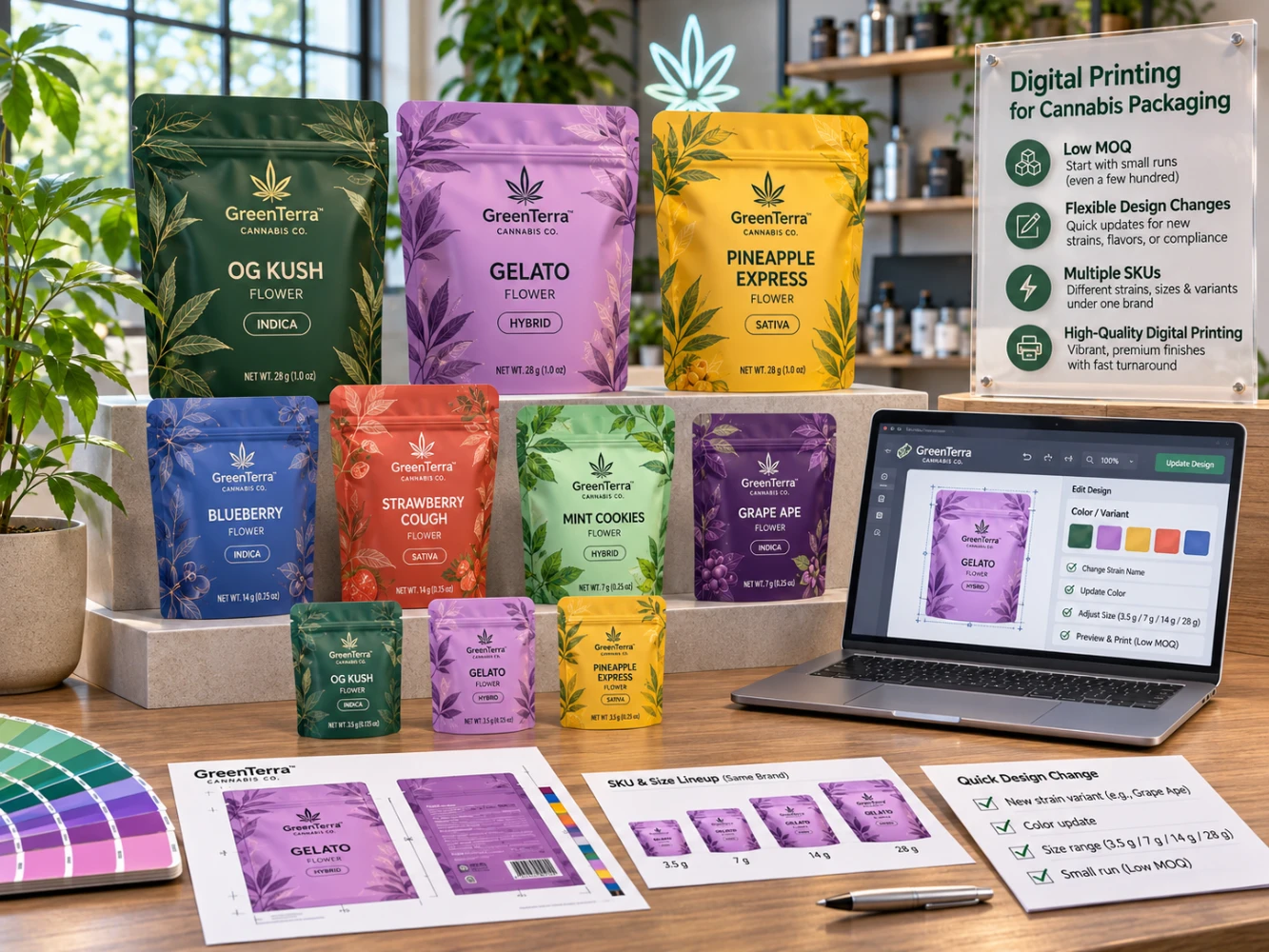
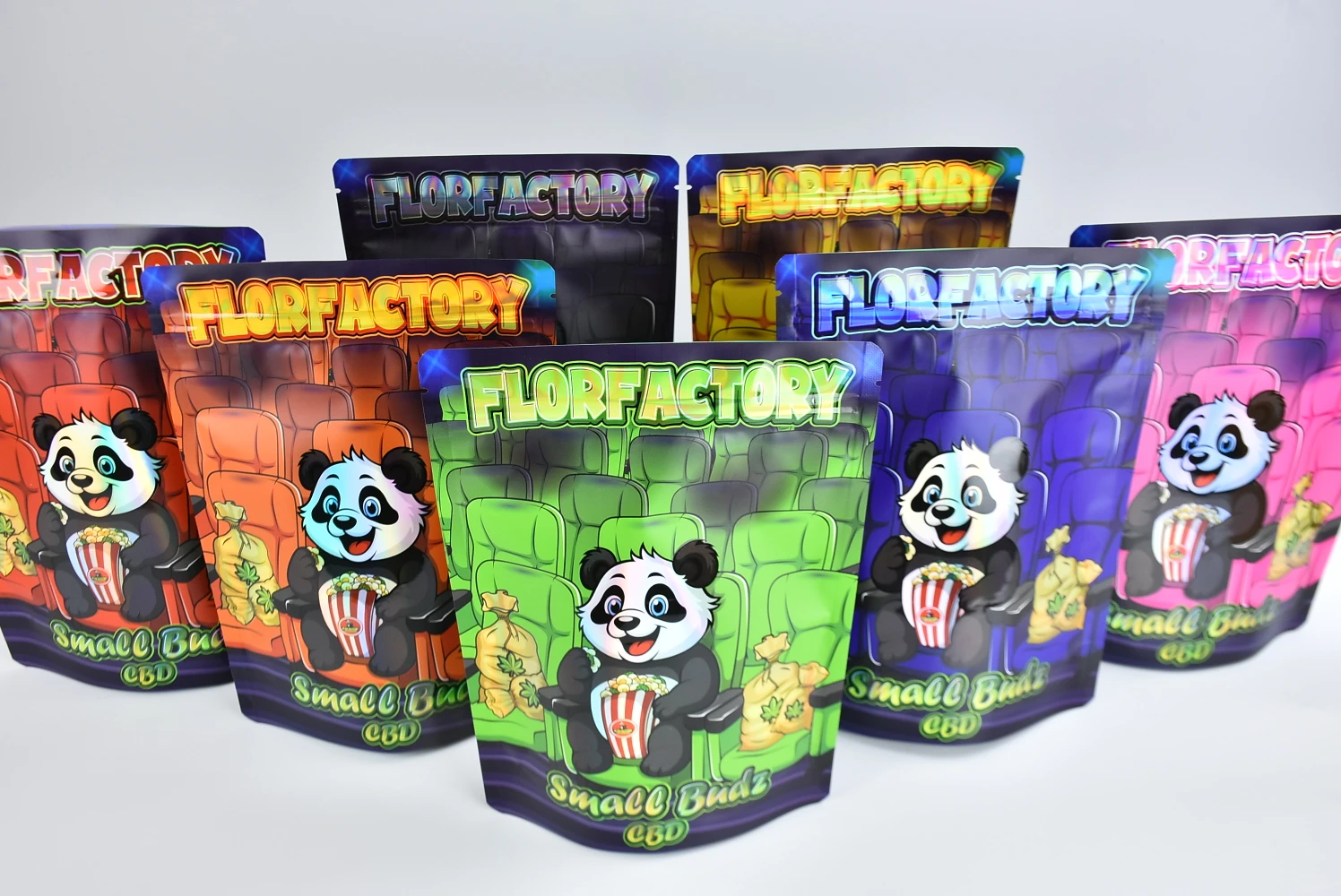
Cannabis brands rarely promise to keep the same bag design forever. There are flavors, strain names, holiday editions, promotions, and market-specific information. Digital printing lets us plan those versions without buying customer-specific gravure cylinders for every change.
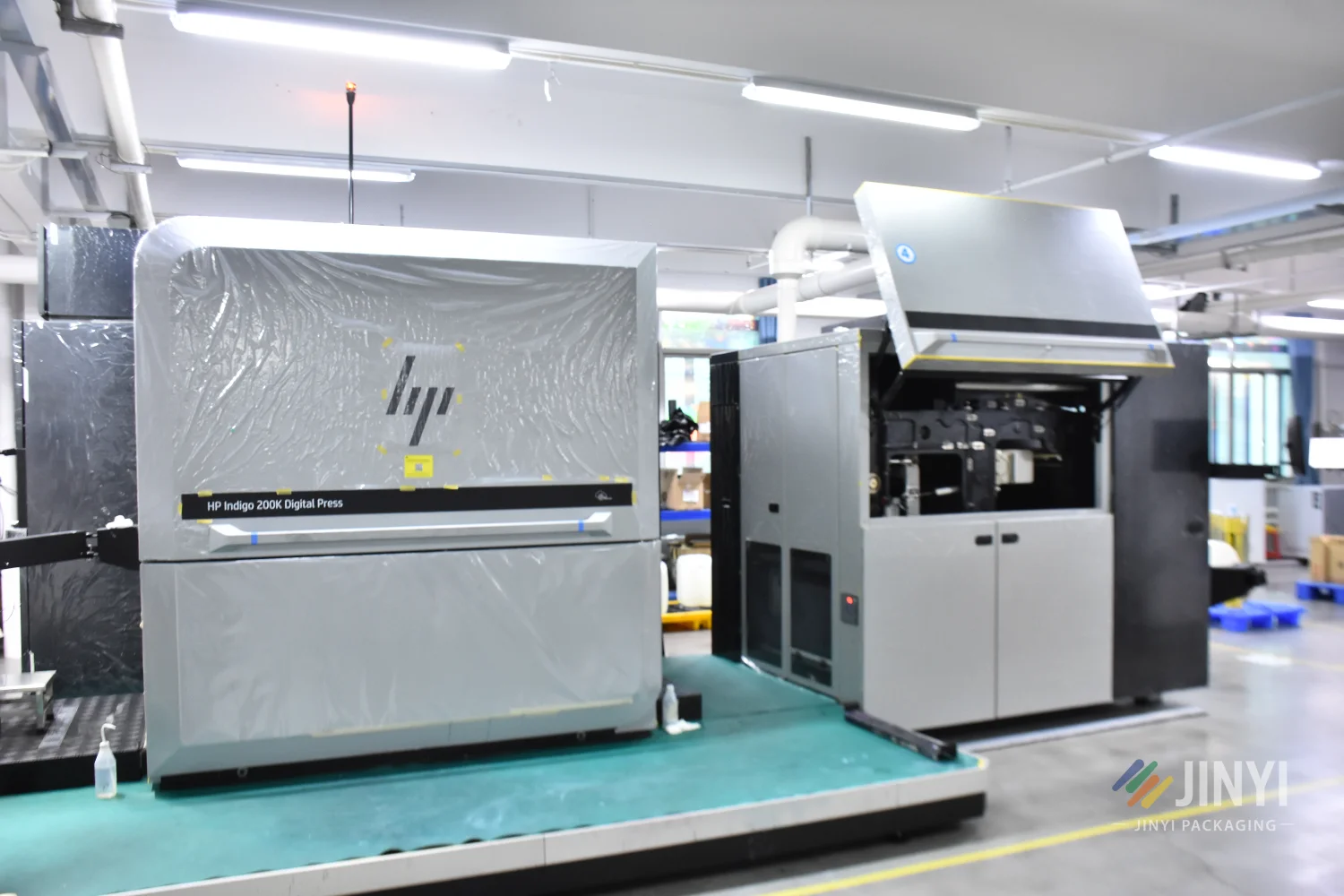
That is the main attraction for smaller runs: the ability to test demand and reorder closer to what is actually selling. JINYI can discuss HP Indigo digital printing for a lineup that has several SKUs, low quantities per artwork, or a lively design calendar. You can keep the brand system consistent while giving each variety its own personality. The party can change; the whole warehouse need not change with it.
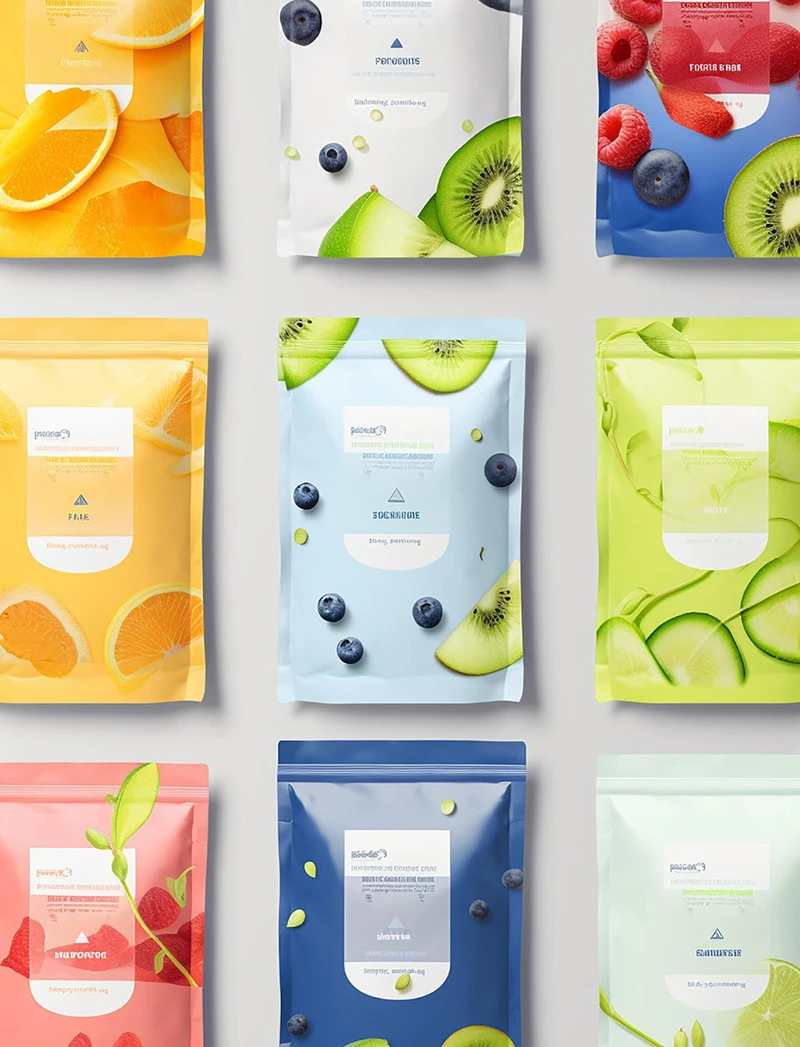
JINYI cannabis packaging case: Coordinated pouch designs give multiple SKUs their own colors while keeping the product line visually consistent.
Digital does not mean that every size and special material is free to mix. Bag-making, lamination, closure supply, and finishing still have their own setup, lead time, and practical minimums. I would request quantities by SKU and group the designs that share dimensions, film, and opening. Then we can show you where a coordinated run saves work and where a new structure creates a new cost.
A useful comparison includes the first order, a small reorder, and the expected date of the next artwork revision. It also includes the value of stock that might never be used. HP describes on-demand digital production as useful for multiple SKUs and inventory flexibility; the saving for your brand still needs a real quote and sales forecast.
If one design has become a dependable bestseller, the lowest setup cost is no longer the only question. Gravure can become attractive when a stable SKU repeats at volume and needs tight color consistency, including dedicated spot colors.
At JINYI, I would normally start comparing gravure when one unchanged SKU is around 10,000 units or more, especially if you have specific brand colors and repeat orders. That is a purchasing recommendation, not a universal minimum. We can discuss smaller quantities, but cylinder charges can make them less economical. A combined order of 40,000 bags across ten short-lived designs is not the same as 40,000 of one permanent design.
Ask for the cylinder charge, first-order total, and repeat-order price side by side. Tell me when the next warning text, barcode, or flavor name may change. I might recommend gravure for your evergreen SKU and digital for the rotating releases. You do not have to make one machine govern your whole catalog.
Does Reverse Printing Add a Premium Finish Charge?
“Printed on the inside” can sound like an exotic upgrade. For many laminated flexible pouches, reverse printing is a normal construction route: graphics are printed on the inner face of an outer film before the films are laminated.
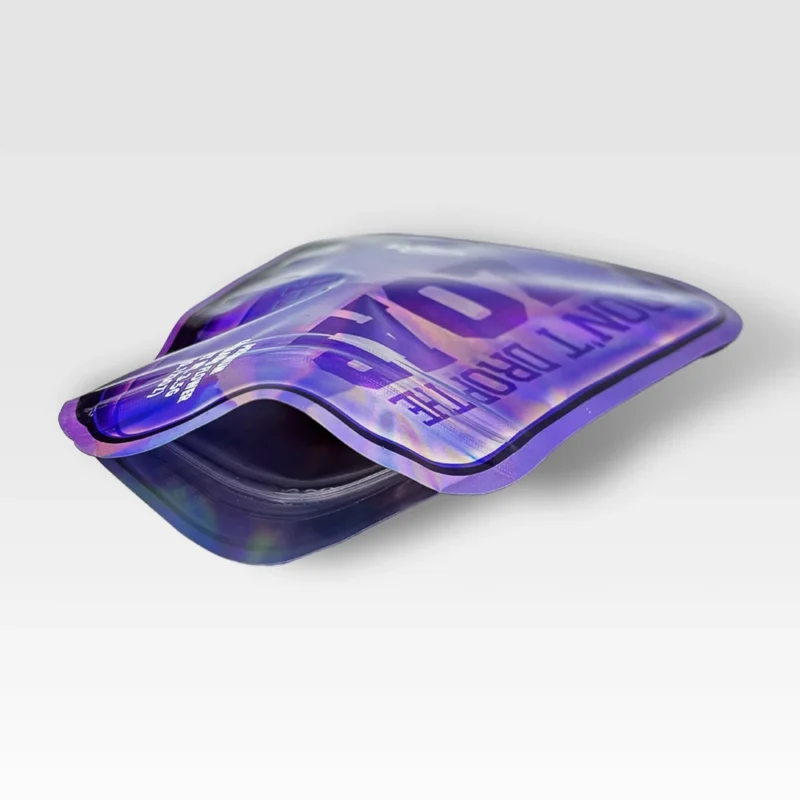
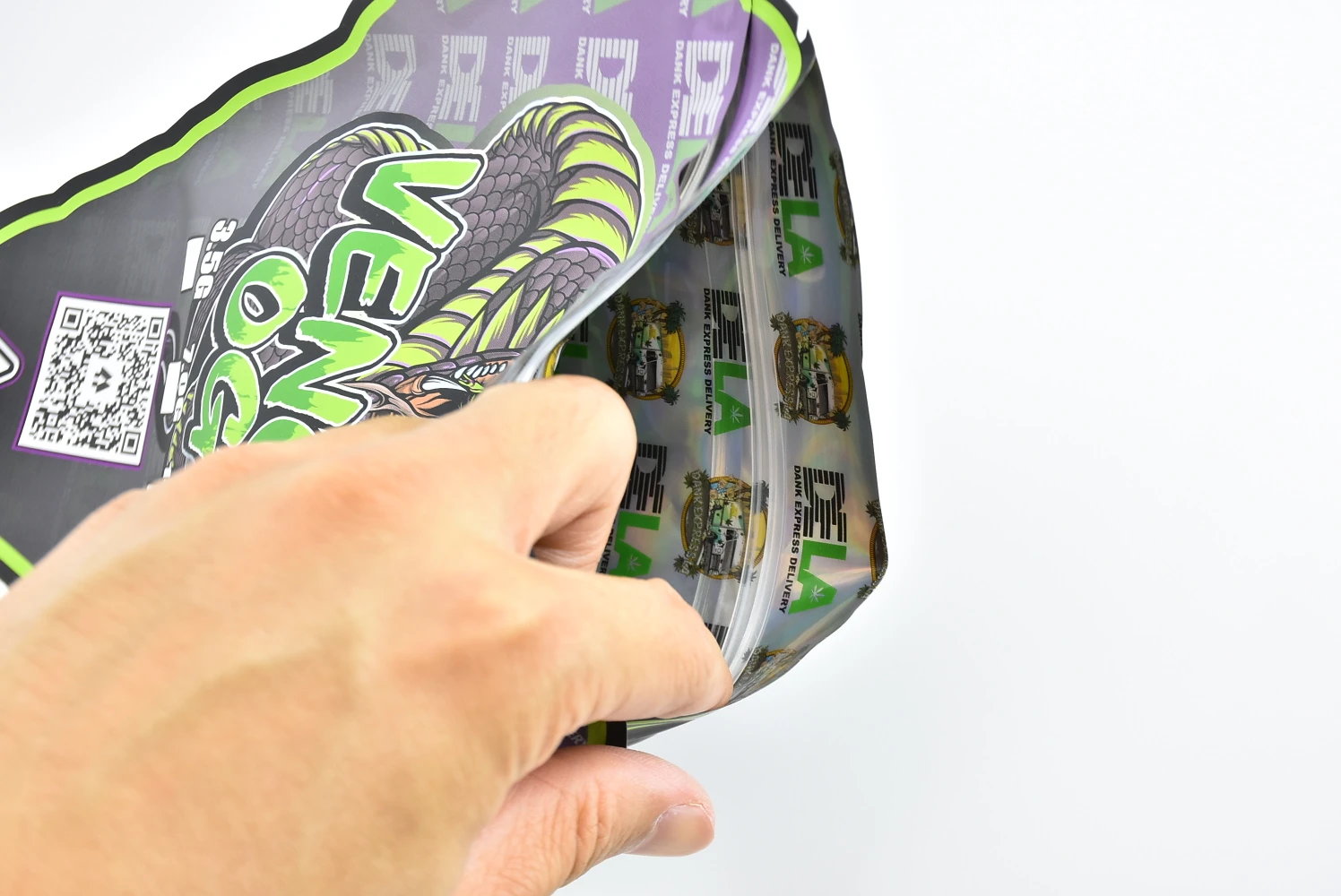
JINYI cannabis packaging case: This opened pouch shows how reverse-printed graphics sit within a laminated film structure.
This customer-case photo shows the printed face and the layers around the opening. It is a useful reason to ask for the complete film structure, not a stand-alone price for “inside printing.” The number of colors, white ink coverage, laminate, barrier layer, and printing method can all affect the quote. The visible interior alone does not tell you the full material specification.
When a design uses transparent or metallic areas, white ink can determine which colors stay vivid and which parts let the substrate show through. I would review the artwork and a physical proof with you before we agree on that effect. If a quote calls ordinary reverse printing a premium decoration, ask what extra operation is actually being charged. Our pouch production guide explains how printing, lamination, and bag-making fit together.
When Is a Holographic Effect Worth Its Cost?
A little rainbow movement can make a launch pouch hard to ignore. The budget question is whether you need it across the whole bag, on one feature, or only on a short promotion.
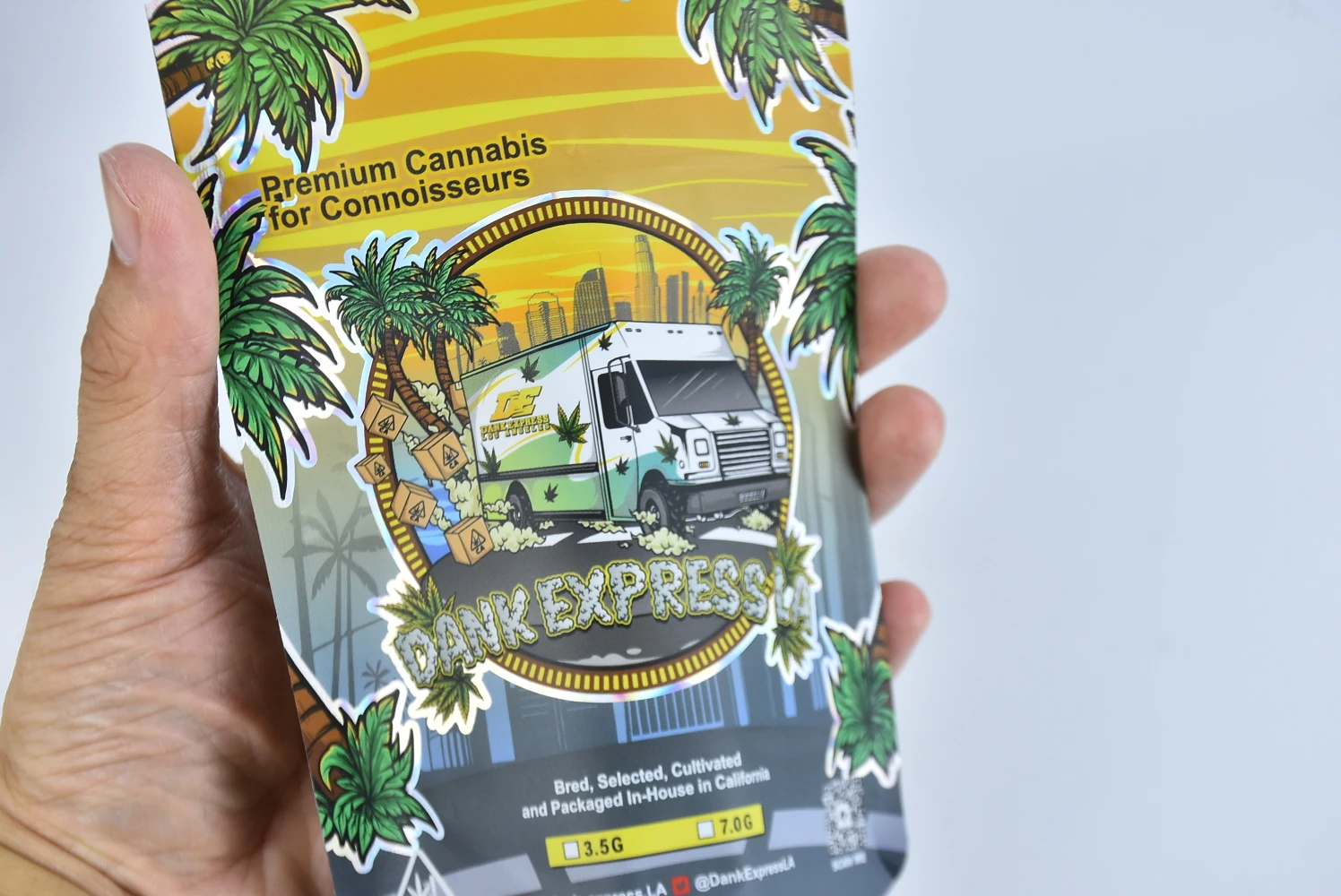
JINYI cannabis packaging case: A holographic effect brings changing color and light to the pouch artwork as the bag moves.
In this customer example, light catches different parts of the printed pouch as it moves. For your quote, I would ask whether the approved effect comes from a holographic substrate or a localized decorative transfer. Those routes differ in material, setup, registration, and how much of the bag they cover. A photograph cannot identify the exact production stack by itself, so the written specification and approved sample should settle it.
If you are releasing ten designs for a short event, an all-over special substrate can multiply the material decision across every SKU. A localized highlight may be a better fit, or a clever metallic print may get you close enough for the shelf. I can price a plain version and the desired upgrade separately. Then your team can decide what the extra sparkle is worth, without letting it quietly become the default for every reorder.
Can Spot UV Make One Detail Do More Work?
You do not need a glossy surface everywhere to get contrast. Spot UV is a selective coating applied to chosen areas; it can make a logo, pattern, or graphic stand out against a matte background. It is different from calling all UV-curable printing “spot UV.”
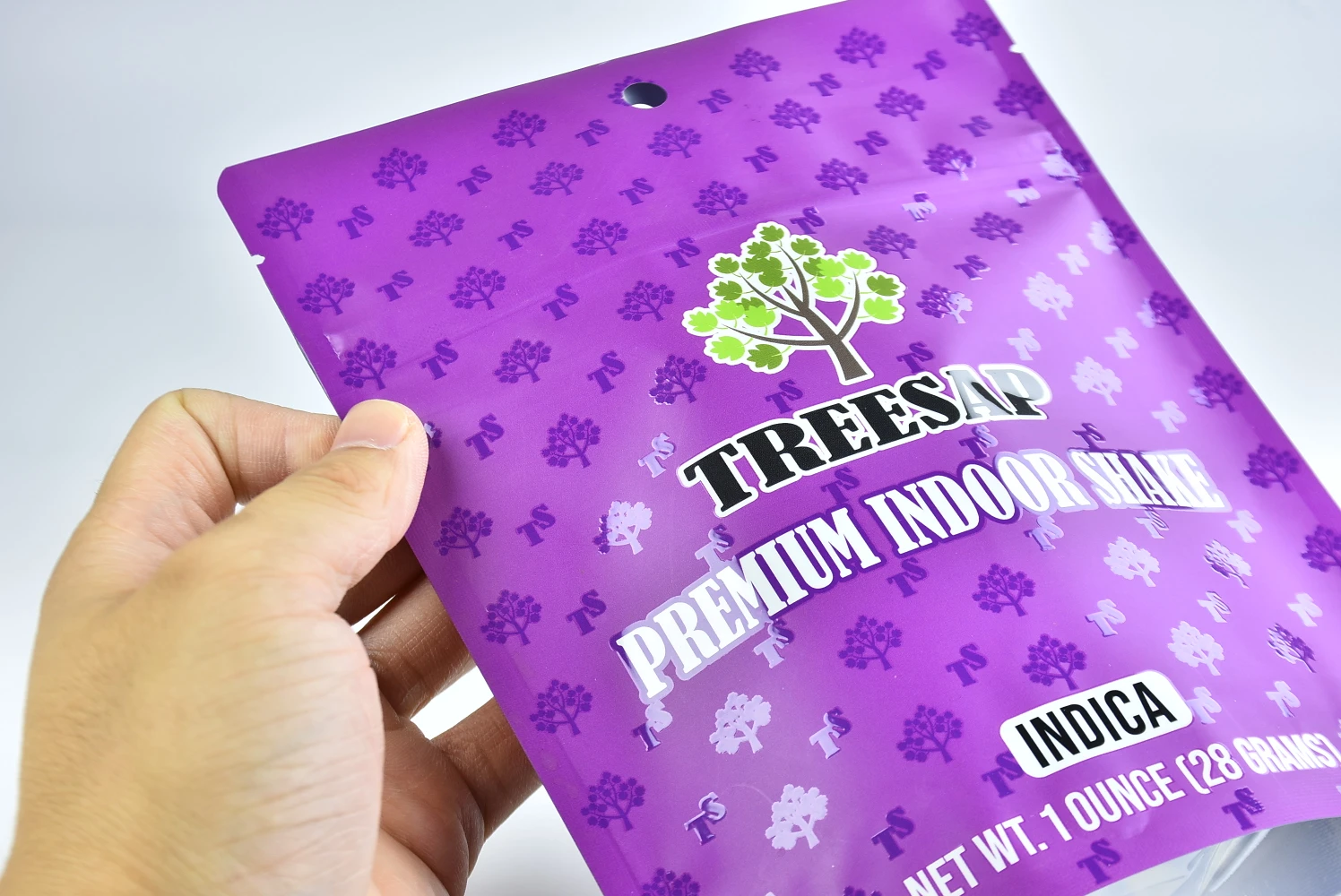
JINYI cannabis packaging case: Selective UV gloss adds contrast to the purple pouch by drawing attention to chosen printed details.
This black customer pouch uses contrast and a bright focal element to show why selective shine can be more effective than coating every inch. Before I put spot UV on the quote, I would mark the exact areas in the artwork and check the coating, film surface, registration tolerance, and finishing sequence with production. I would also approve a physical sample under the sort of light your customers will actually see.
The added operation can bring setup and reject risk, particularly when tiny shiny elements must line up with fine printed details. If your brand changes its entire graphic every month, the finish files may need revising too. My advice is to use the coating where it changes what a shopper notices, not simply because an effects menu has another box to tick.
How Should You Budget for Hot Foil Stamping?
Gold can signal a premium tier quickly. Hot foil stamping, however, is a separate application with its own material, tooling, setup, and suitable surface. It deserves its own optional line in the quote.
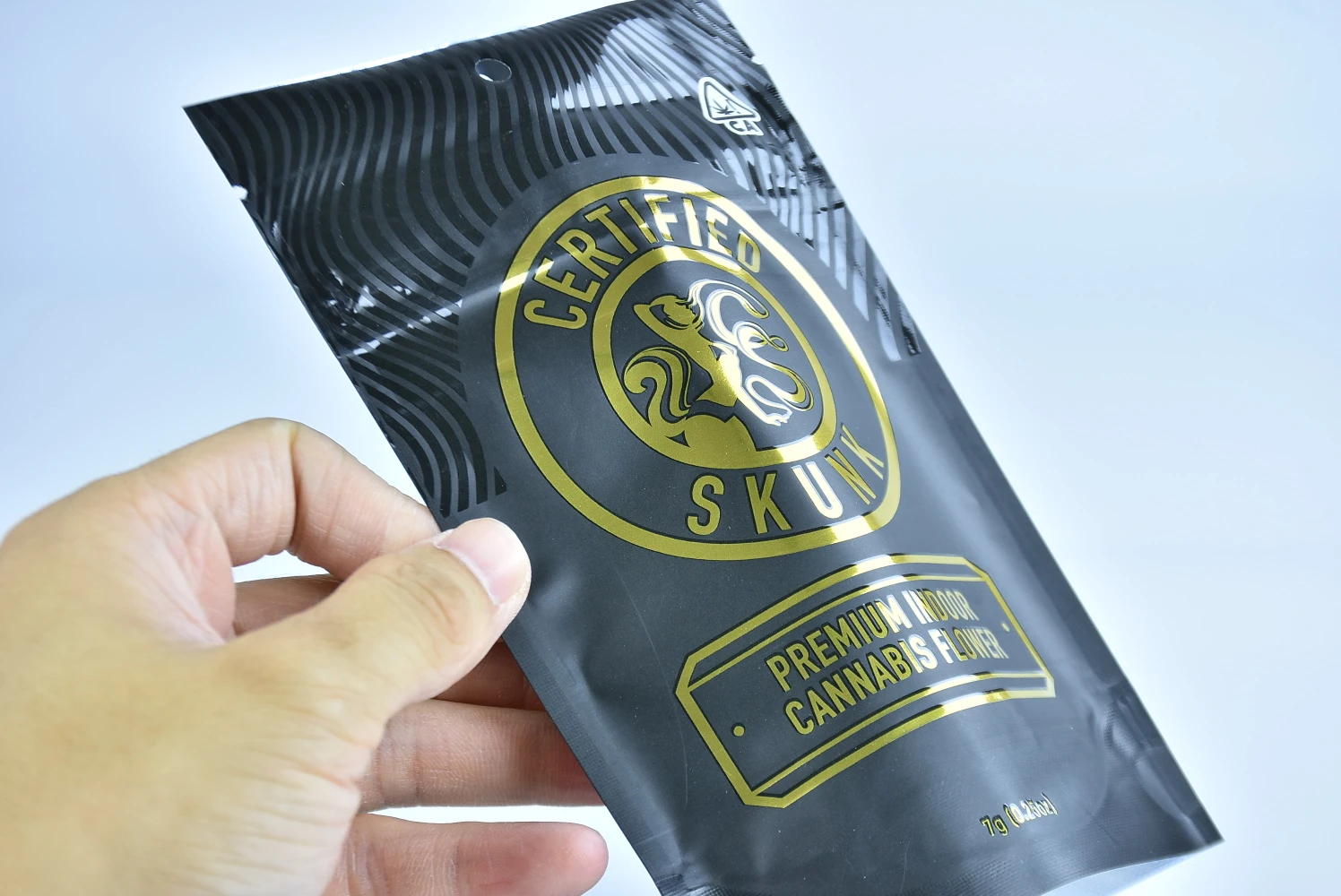
JINYI cannabis packaging case: Gold foil details highlight the logo and key information against a black pouch background.
This black-and-gold customer design shows how a restrained metallic focal point can carry the front panel. For an equivalent result, I would confirm whether the approved production method is hot foil on the pouch, a decorated label, or another metallic route. A gold color in a photograph does not prove its manufacturing method; our production sample and written spec must do that work.
The location and size of the foil matter. So do the number of changing artworks and whether the same foil tool can be reused. If the gold area changes for every flavor, the setup plan may change as well. We can compare a small foil accent against metallic ink or a compatible film effect. The objective is a premium impression that you can afford to repeat, not a gorgeous first sample followed by an awkward second-order invoice.
What Do Materials, Closures, and Compliance Add to Cost?
The appearance gets attention, but the product and destination market decide what the pouch must do. Flower, edibles, and pre-rolls have different exposure and handling risks. Film thickness or a shiny barrier layer should be chosen for a defined need, not copied from another bag.
I ask about moisture and aroma concerns, fill process, expected storage, transport, and the required opening. Then we can propose a laminate and test it with the actual product. A standard zipper, heat seal, and child-resistant design are different specifications. Please tell us the intended sales jurisdictions before we quote a closure; a buyer’s legal team should confirm the finished package and labeling against applicable rules. For example, California’s regulator makes the licensee responsible for ensuring child-resistant packaging meets its requirements. That example does not set the rule for every market.
A quote should identify the full laminate, inner contact layer, closure, intended test or documentation, and any sample approval. I would rather discuss a practical construction with evidence than sell the most expensive barrier by reflex. If a protection feature is genuinely necessary, it belongs in the base specification, not in the “nice-to-have” decoration column.
How Can You Compare the Real Cost of Each Quote?
The lowest unit price can win a spreadsheet and lose money in the stockroom. I use a simple question: how much will you spend for each usable, current bag during this product’s selling window?
طابعة HP Indigo 200K - أحدث طابعة من إنتاج شركة JINYI، التي تم تشغيلها في عام 2025، لتوسيع سعة الطباعة الرقمية وتقليل فترات الإنتاج
Include bags, one-time cylinders or tools, samples, optional finish setups, freight, and the cost of artwork that may be outdated before you use it. Compare the same delivery term and the same quantity per SKU. A quote for 30,000 bags of one design should not be set against a quote for six designs of 5,000 as if the jobs were identical.
السيناريو
Likely cost pressure
Better buying question
Many changing SKUs
Artwork setup and obsolete stock
Can a shared size and digital run cover the launch?
Stable core SKU
First-run cylinders versus repeat unit cost
When do the repeat orders repay setup?
Premium seasonal SKU
Special film or finishing and short selling window
Which one effect earns a separate budget?
Different markets
Artwork and closure requirements
Which specifications are truly shared?
For a useful RFQ, send the product form, sales market, target size, estimated quantity for every SKU, sample artwork, desired finish, and expected reorder date. I will help you separate must-haves from optional effects, then we can compare a base quote and upgrades. You will know where the money goes before you approve the design.
Packaging education: This content is for packaging education. We do not sell any regulated products. Have the finished pack and artwork reviewed for the target market.
الأدلة:HP Indigo describes digital print flexibility for multiple SKUs. California DCC explains child-resistant packaging responsibility in California. Neither source establishes a universal price or worldwide compliance rule.
الخاتمة
Custom cannabis packaging cost makes sense when each SKU’s format, print run, finish, and closure fit its actual sales plan. Let’s price the version you can use and reorder.
JINYI develops custom flexible packaging for brands that need reliable structures, clear specifications, and practical print options. We help buyers compare materials, closures, digital and gravure printing, and production plans across short launches and established lines. We focus on how the finished packaging works in filling, shipping, display, and daily use.
من فيلم إلى فيلم منتهي الصلاحية.
إلسا
مدير تطوير الأعمال - شركة جيني للتغليف والتعبئة والتغليف
تقود إلسا تطوير الأعمال وإدارة طلبات العملاء في شركة جيني. وبفضل عملها لمدة 8 سنوات في التجارة الخارجية في ييوو ودونغقوان، فإنها تتمتع بفهم حاد للطلب في السوق وما يحتاجه المشترون بالفعل - مما يحول رؤية العملاء الحقيقية إلى قرارات التغليف الصحيحة.
Is digital printing always cheaper for cannabis pouches?
No. It often makes sense for small, changing SKUs because it avoids customer-specific gravure cylinders. A stable, higher-volume SKU may favor gravure after you compare first and repeat orders.
Can several flavors share one packaging order?
Often, yes. Tell us the quantity per artwork and which sizes, materials, and closures are shared. Each different size or finish can still affect setup and minimums.
Does digital printing remove every minimum order?
No. Film, lamination, closures, bag-making, and optional finishes still have practical minimums. We quote a specific construction and SKU plan.
Is reverse printing the same as spot UV?
No. Reverse printing places graphics on the inner side of a film before lamination. Spot UV adds selective gloss to a compatible outer surface.
Can I use holographic film, spot UV, and hot foil together?
Some combinations may be feasible, but the film, surface, application sequence, registration, and quantity need review. Ask for separate upgrade prices and a physical sample.
What should I send for an accurate custom cannabis packaging quote?
Does a child-resistant zipper guarantee compliance?
No. The complete finished package and its use must be evaluated against the applicable market requirements. Have your compliance team review the proposed specification and documentation.