تشارك JINYI إرشادات عملية للتغليف والتعبئة والتغليف من أجل قراراتك.
A resealable cookie pack feels like an easy upgrade. Then its price lands beside your filling costs, and you wonder whether customers will ever close it twice.
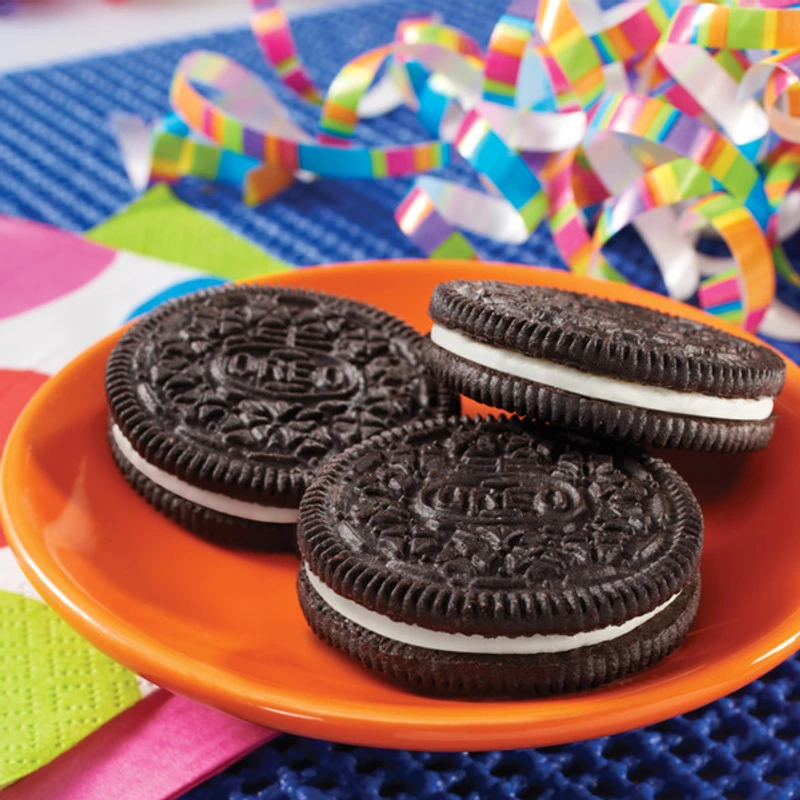
OREO cookie packaging shows why resealing can suit a multi-serving family pack, but it is not an automatic upgrade for every cookie brand. Choose by serving size, how often people reopen the pack, filling equipment, protection needs, and the complete cost of the finished product.
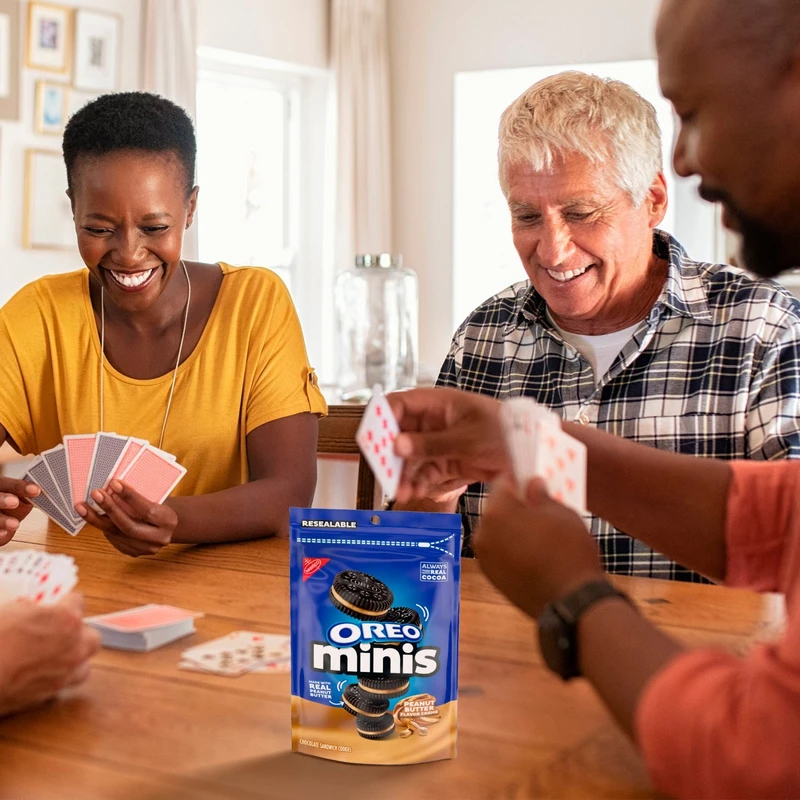
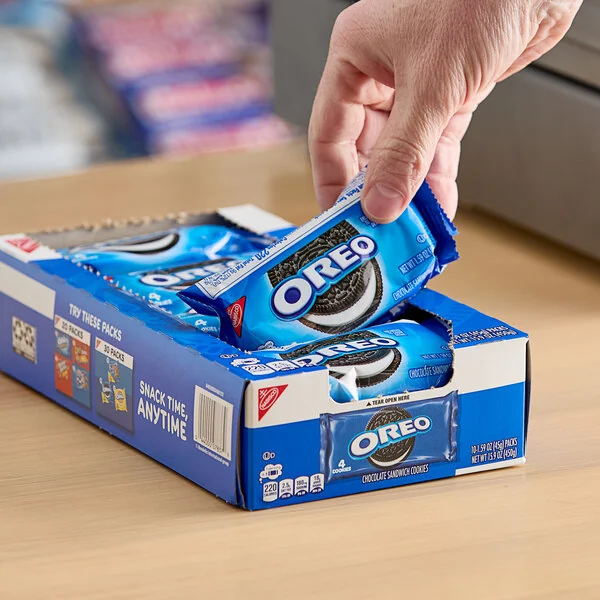
OREO sells a family-size sandwich-cookie pack with an easy-pull resealable opening in the US. Mondelez China has also documented a different OREO sandwich-cookie pillow pack with a metallized PP-based film. Those are different products and markets, so I will use each for the decision it can actually explain. I am Elsa at JINYI, and I will also show you our own snack and cookie-related pouch examples. JINYI does not make the OREO packs discussed here.
If you are comparing formats for your own launch, start with our حلول تغليف المواد الغذائية. You can tell me what is inside the pack and how your customer will use it; we can work backward from there.
Define the eating occasion. A pack eaten in one sitting and a family pack opened over several days need different closures.
Separate OREO’s examples. The US resealable family pack and the documented China metallized pillow pack are not one verified specification.
Choose the format before the finish. Compare flow wrap, portion packs, and stand-up pouches against your filling line and shelf plan.
Pay for resealing only when it helps. Include the opening feature, pack-making, filling, waste, and repeat-use performance in the comparison.
Check protection in two stages. The sealed film protects before opening; the reclosure affects how the remaining cookies are stored afterward.
Do not identify a laminate by its shine. A metallized coating is different from a separate aluminum-foil layer; ask for the written structure.
Test real cookies in the proposed size. Check fit, crumbs, seal contamination, breakage, and carton performance.
Keep cold-chain examples in context. A pouch for frozen, ready-to-bake dough does not establish a specification for shelf-stable finished cookies.
Quote the entire SKU plan. Provide quantities by flavor and size so print method, tooling, and reorders make commercial sense.
What Problem Does OREO’s Resealable Family Pack Solve?
A package can protect cookies perfectly until the customer wrestles it open and leaves the rest exposed. That is a very expensive moment to forget.
OREO’s US family-size product page describes a resealable pack with an easy-pull tab for sharing and later snacking. Mondelez says its Snack’n Seal work addressed consumer frustration with broken cookies and difficult-to-open packs. The public information tells us the problem and the visible feature; it does not give us a comparable supplier quotation or the complete film recipe for that US pack.
Look at what happens after the first cookie
A family pack usually stays in the kitchen after its first opening. Someone takes two cookies, someone else takes a few later, and the package may be handled many times before it is empty. In that setting, a convenient opening and a usable reclosure can earn their place. The consumer does not need to find a clip or transfer the cookies into a container. That is an observable use benefit, even though we cannot calculate OREO’s return on the feature from public information.
For a small brand, I would begin with a simpler question: How many servings will your buyer actually get from one pack? If the answer is one, the same opening feature may only raise costs. If the answer is several, show a sample to customers and ask them to open, take a portion, close, and repeat. Watch whether crumbs collect at the closure and whether the remaining cookies are easy to reach without crushing them. A reclosure that looks lovely in a mockup still has to survive an ordinary Tuesday in a busy kitchen.
I would also ask you to distinguish a repeatable user experience from a guarantee of original shelf life after opening. Once the initial factory seal is broken, storage conditions and how carefully a person recloses the pack matter. That difference belongs in your packaging brief and your consumer instructions.
Elsa’s buyer take: OREO’s easy-pull reseal makes sense as a reference for a shared, repeatedly opened pack. If your customers finish one portion at a time, I would not add a closure just to resemble OREO.
Which Cookie Format Fits Your Product and Filling Line?
Two cookie bags can look similar on a sales sheet while requiring very different filling equipment and customer behavior.
Start with the product’s shape, portion size, pack count, and route to market. A conventional pillow pack, a wrapped portion inside a carton, and a stand-up pouch each solve a different buying problem. None becomes the best option simply because a large brand uses it.
Compare the package your customer will hold
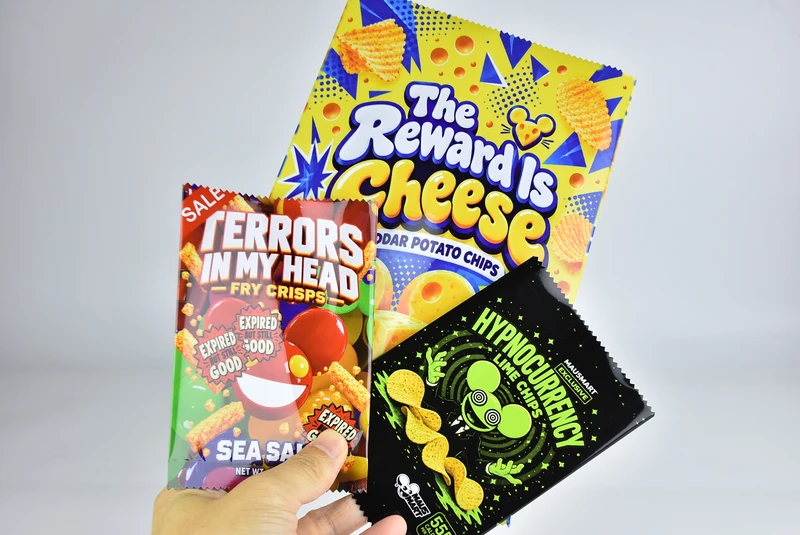
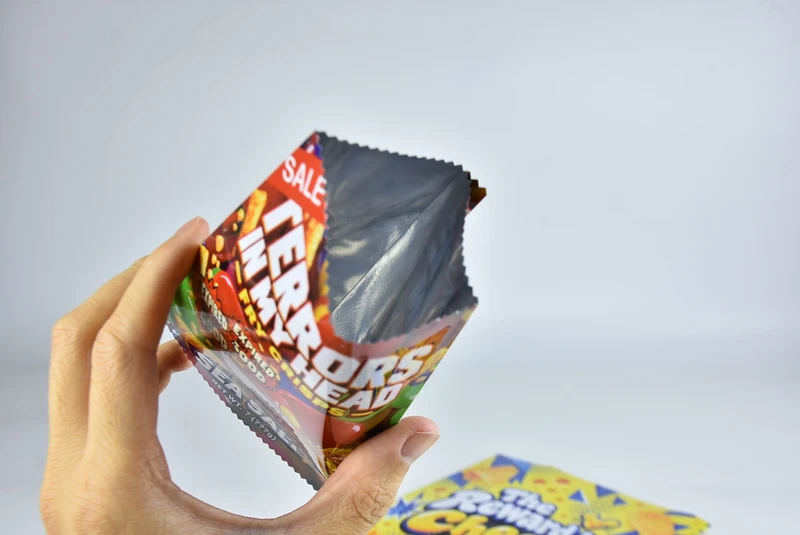
Our photo shows three JINYI customer pillow-style snack bags in different formats and sizes. They are chip and crisp projects, not OREO or cookie packs. Their relevance is the format: a flexible pack with a back seal and end seals can serve a range of snack presentations. If your cookies are stacked or presented in a fixed count, your filling partner needs to check how the product is guided into the film. Loose pieces create another handling problem. A pouch that looks efficient on a table can slow a line when cookies enter at the wrong angle.
Three snack pillow bags from JINYI customer projects. Their compact format and broad print area offer a useful reference when planning individually packed cookies.
Format to compare
When it may fit
What you must check
Pillow pack / flow wrap
A defined count or portion with an appropriate automated line
Film width, feeding, seals, product fit, opening method
Several smaller inner packs
Separate portions inside a carton or larger multipack
Additional wrapping steps, carton, total material and labor
Stand-up pouch with zipper
Loose or multi-serve products intended to be reopened
Filling method, zipper clearance, standing stability, repeated use
A closer look at a finished JINYI customer snack pillow bag. Its shape helps buyers assess the pack’s proportions and presentation beyond a flat artwork preview.
If you already have an automated flow-wrapper, send us its film and sealing requirements before requesting a bag quotation. If you fill a pre-made pouch, tell me that too. I can discuss custom pillow bag packaging or a different pouch format against your actual process. Changing the pack can also mean changing the line, and that cost deserves a place in the comparison.
When Is a Resealable Stand-Up Pouch Worth the Added Cost?
A zipper can be useful for customers and still be the wrong purchase for a cookie that disappears in one coffee break.
Consider a stand-up pouch when the product is sold in multiple servings, the shopper expects it to remain in the original bag, and upright presentation helps it sell. Compare the extra convenience with how your product is filled, priced, and used.
Pay for the behavior, not the zipper alone
A zipper gives a buyer a familiar way to close the pouch after opening. The first heat seal above it still needs to protect the product before purchase. We would review the zipper position, tear opening, filling clearance, and usable space below the zipper together. If the filled pack forces the cookies into the closure, it may be hard to shut properly. If the bag is too large, it may stand beautifully while the cookies shake around inside. Neither outcome makes the zipper feel like a good investment.
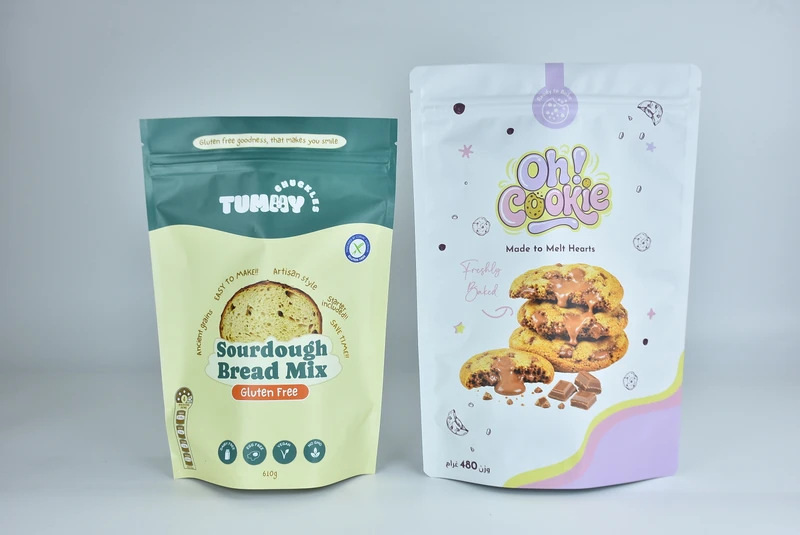
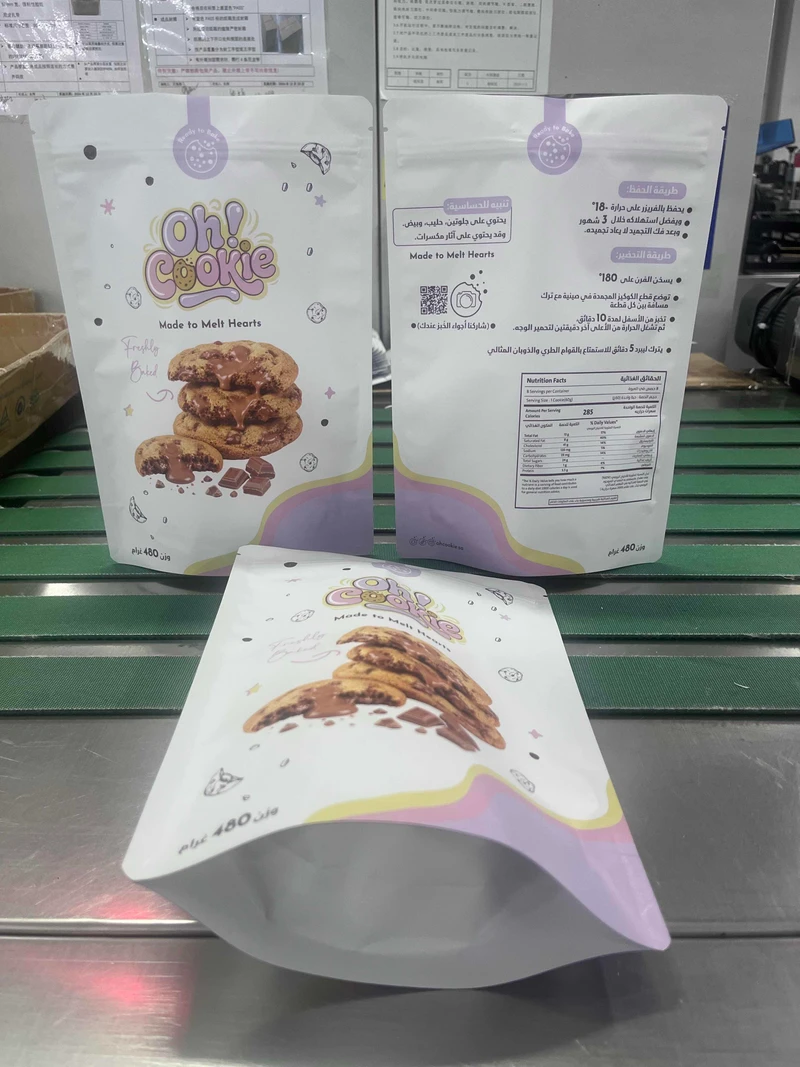
The left pouch in our JINYI customer photo is an Oh! Cookie ready-to-bake cookie product. The right pouch is a sourdough bread mix, not cookies. Both show how a printed, zippered stand-up format can carry different food stories and leave room for product information. They are examples of JINYI’s work; they do not prove that the same laminate, shelf life, or filling setup fits both products. A finished cookie, frozen dough, and a bread mix all deserve separate specifications.
JINYI customer examples: a ready-to-bake cookie pouch and a sourdough bread-mix pouch. These stand-up formats show how packaging can be tailored to different products and storage needs.
My practical test is to fill the proposed resealable stand-up pouch with your real product and ask several people to open and close it without instructions. Do the cookies remain easy to reach? Does the zipper close despite crumbs? Does the pouch stay upright as its contents decrease? A yes to all three is a stronger argument than a mockup that only looks premium.
For the full comparison, add pouch conversion, filling changes, shipping cartons, and expected selling price to your unit-cost calculation. A simple heat-sealed format may remain the better commercial answer. There is no prize for putting a zipper on a bag your customers never reopen.
What Does OREO’s Metallized China Pack Tell Us About Film?
A silver-looking interior can prompt the familiar question: Is it aluminum foil? The visible shine cannot give you that answer.
For a specific OREO sandwich-cookie pillow pack in China, a Mondelez China case study names BOPP/Met CPP as the primary film. It says the project replaced an earlier PET/PP laminate with a PP/PP design and reached production in the first quarter of 2022. That is evidence for this documented Chinese application, not a bill of materials for OREO’s US easy-pull family pack.
Ask for the complete structure and the line trial
Here, “Met CPP” means metallized cast polypropylene. Its thin deposited metal coating is different from a separate aluminum-foil sheet in a laminate. The case study is interesting because the team had to make the PP-based design work on a high-speed biscuit packaging line. According to the case, work on the sealing layer improved its processing performance. Buyers can learn from that sequence: a promising material direction still has to run, seal, and protect the real product at the intended speed.
For your cookies, I would first ask what failure you are preventing. Do you need stronger protection against humidity, light, aroma change, or grease? How long must the unopened product remain acceptable, and where will it travel? We can compare candidates after we have that brief, then request the full laminate specification and test results relevant to your application. I would not describe a foil laminate as the only safe choice, nor promise that a metallized PP pack can enter every local recycling stream. Collection rules and the complete pack design matter.
The case also reports a reduction in excess headspace. That is another useful question for a buyer: are you paying to transport a large empty volume, or does the space protect fragile cookies and help your line run? The right answer comes from product and transit trials, not from copying a percentage out of someone else’s project.
How Can You Reduce Breakage Without Buying Empty Space?
A slim bag can save film until your customer opens a box of crumbs. A roomy bag can protect nothing if the cookies bounce freely.
Test the cookie count, orientation, pack dimensions, and shipping carton as one system. There is no reliable universal headspace percentage for every recipe or distribution route.
Measure the filled pack, then test its journey
A sandwich cookie stacked in a row is not the same handling problem as a thin wafer, a soft cookie, or loose bite-size pieces. Cookie diameter, thickness, edge strength, and filling type influence how the product sits and moves. Before you lock a finished pouch dimension, give us the physical product and intended count. We can review usable width and length, seal allowance, the opening path, and the room needed for the customer to reach the last cookie. A size chosen from a photograph may leave too little space at the seals or too much space around the product.
Distribution completes the picture. A retail carton may be stacked for weeks. An e-commerce pack may meet many more impacts and orientations. You may decide that an insert, tray, secondary carton, or different packing arrangement is worth its cost. You may decide against it after a trial. I would ask your filling and logistics teams to inspect samples immediately after packing and again after a route that resembles your real shipping conditions. Count cracked units and look for seal damage, rather than judging the bag only by how it looks on a desk.
If you want a deeper technical discussion of moisture and flavor changes, our existing article on flow wrap versus resealable pouches for cookies covers that question. Here, my buying advice is to approve one actual filled-and-shipped pack, not an empty bag on its own.
What Can JINYI’s Oh! Cookie Case Show a Cookie Buyer?
A photo of a cookie pouch can be persuasive. It can also be misleading if the product inside needs a freezer rather than a pantry.
Our Oh! Cookie customer pouch is for a ready-to-bake frozen cookie product. The factory-line photo shows the finished JINYI pouches, including the printed front and Arabic information panel. It demonstrates a real custom food pouch and the space needed for instructions. It does not prove a shelf-stable cookie’s barrier or shelf life.
Use the case to improve your brief
The Oh! Cookie example is helpful because the product demands much more from its printed information than a simple snack wrap. Its back panel carries Arabic preparation and storage content alongside a nutrition table. The pack pictured at the JINYI line is a printed, zippered stand-up pouch. What the photograph cannot tell you is the verified material construction or the results of a shelf-life test. I would never borrow those specifications for your dry sandwich cookies just because the front shows a delicious stack of chocolate-filled cookies.
A real JINYI customer packaging case photographed after pouch production. The front, back, and standing base show how the finished cookie pouch looks before filling.
Instead, tell me whether you sell ready-to-eat cookies, chilled dough, frozen dough, or a dry baking mix. Give me the intended storage temperature, serving size, languages on pack, and the information your retailer requires. We can then reserve the correct print area before the artwork is finalized. For a frozen product, the packaging and filling teams must confirm performance under the actual storage and handling conditions. For a shelf-stable biscuit, humidity and physical protection may drive a different decision. The brand picture is the beginning of a conversation, not the specification.
If you already have a cookie sample but no bag dimensions, send us the cookie count and a photograph of how you plan to arrange it. I can help narrow down practical pouch sizes, then you can test the filled version. That usually saves more time than asking five suppliers to guess what “family size” means.
How Should Multiple Flavors Change Your Print and Cost Plan?
One seasonal cookie looks easy on a design screen. Six flavors and two pack sizes can turn the first order into a very busy spreadsheet.
Plan print method by quantity per design and size, how often artwork changes, and the cost of stock you might never sell. A larger brand’s production approach may not be economical for your first launch.
Compare the total launch, not one pouch price
For a trial range, digital printing can let you print several designs without paying a separate gravure cylinder charge for each artwork. That makes it useful when flavors are uncertain, artwork changes often, or you want to test a seasonal run. The absence of plate fees does not mean every size, material, or bag format can be combined into one interchangeable production setup. We still need the quantity and specification for every SKU. A promotional color change and a different pouch width are not the same kind of change.
Once an individual SKU reaches a stable, high volume, gravure may improve the per-unit economics and offer tighter control for dedicated colors. At JINYI, I normally start a gravure cost comparison around 10,000 bags per SKU when repeat demand and specific color requirements justify the cylinders. A smaller run can still be made, but the plate charge often makes its economics less attractive. Your actual break-even point depends on the bag dimensions, number of colors, order mix, and forecast. I would quote both routes against the same complete specification instead of declaring one process cheaper in every circumstance.
Our first custom pouch order guide for multiple SKUs goes further into quantities and artwork planning. For this article, remember one simple question: if a holiday flavor sells only half its forecast, how much finished packaging would you still have on the shelf?
What Should You Approve Before Ordering Cookie Packaging?
A beautiful sample without your cookies is only half an approval. The other half shows up on the filling line and in the delivery carton.
Agree one written specification and test the intended product, opening, filling process, and distribution route before mass production. Ask for a quotation that lists what is included, not just the price of an empty pouch.
Give every supplier the same buying brief
I would ask you for the product type, cookie dimensions and count, filling method, storage conditions, target shelf life, destination market, planned quantity by SKU, and any required secondary packaging. If you want a repeated-use closure, tell us how many times people are likely to open it and whether the product will remain in the original bag. With those details, JINYI can suggest candidate sizes and construction for your trial. Without them, two quotations may describe completely different packs while looking comparable on a spreadsheet.
بند للموافقة عليه
Buyer question
Useful evidence
Size and arrangement
Do real cookies fit without crushing or excessive movement?
Filled physical sample
Film and seal
Does the written laminate match the product and storage plan?
Full structure, relevant test data, line trial
Opening and reclosure
Can users open and close the pack after crumbs and repeated use?
Repeat-use trial with real product
Transport and cost
Will the complete delivered pack protect the product within budget?
Route trial and itemized scope
For food contact, request documentation applicable to the actual material and destination market. Ask who will confirm shelf life with the real recipe and filling conditions. A printed mockup can approve graphics, but it cannot prove seal integrity or transport performance. I would rather give you a clear test list now than a very confident apology after your launch.
Finally, put the approved bag size, material, seal and closure details, artwork version, quantity per SKU, and delivery terms in one order record. That record lets the first production run become a repeatable order instead of a mystery your next buyer has to solve again.
الخاتمة
OREO’s resealable cookie pack is worth learning from when customers reopen a larger pack. For your brand, approve the format, film, and total cost against real product trials.
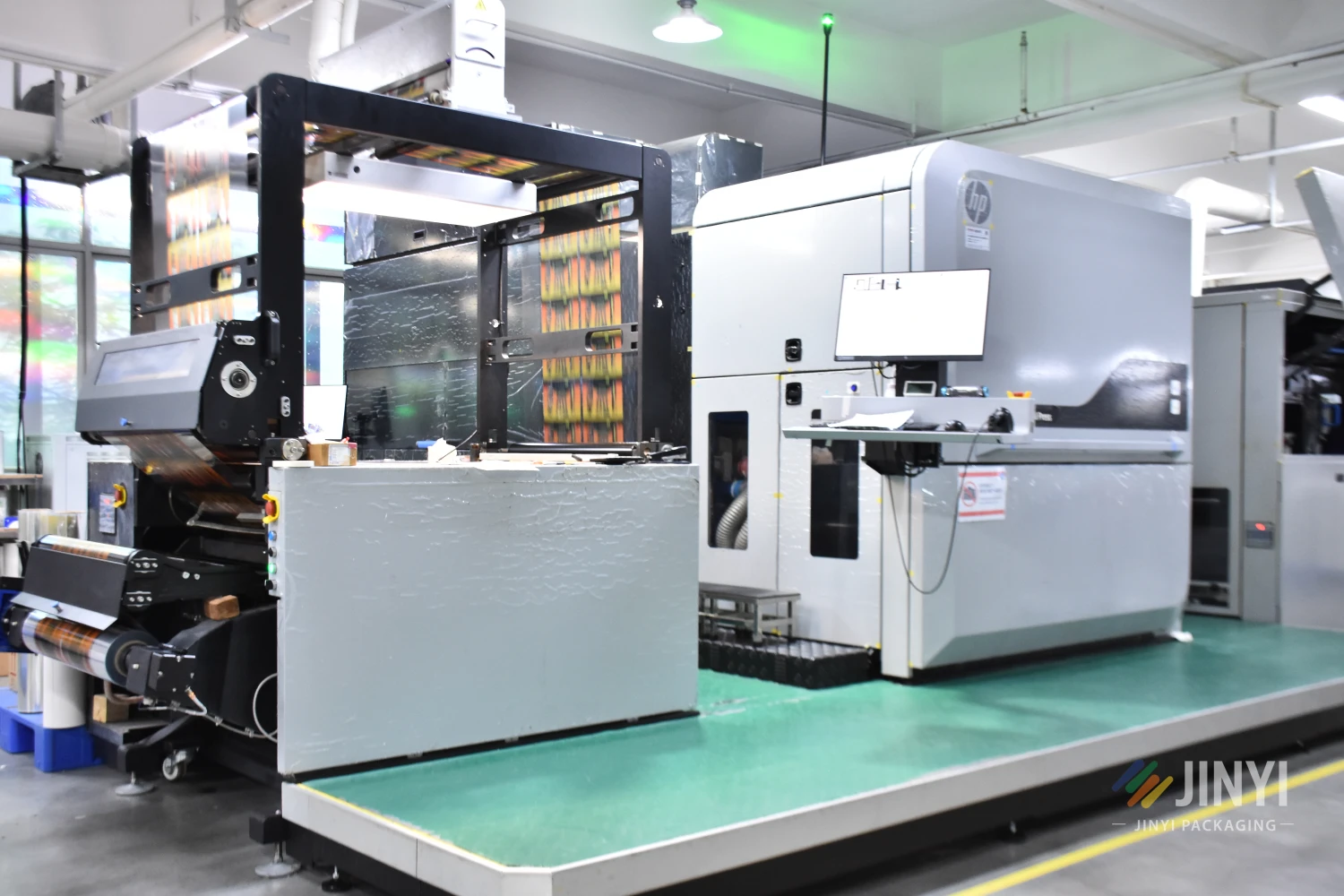
JINYI هي مصنع مصدر للتغليف المرن المخصص مع أكثر من 15 عامًا من الخبرة في الإنتاج، حيث تقدم خدمات الأغذية والمكملات الغذائية والقهوة وأغذية الحيوانات الأليفة والعلامات التجارية للسلع الاستهلاكية في أكثر من 70 دولة. نحن ننتج أكياسًا قائمة وأكياسًا ذات قاع مسطح وأكياس وسائد وأكياس مجمعة جانبية من PET/AL/PE وPET/VMPET/PE وغيرها من مواصفات الحواجز - عبر الطباعة الرقمية من HP Indigo من 500 وحدة وطباعة الحفر بكميات كبيرة - مع تضمين وثائق المواد الكاملة كمعيار قياسي مع كل طلب.
هذا ما من الفيلم إلى النهاية - تم إنجازه بشكل صحيح يعني في الممارسة العملية.
إلسا
مدير تطوير الأعمال - شركة جيني للتغليف والتعبئة والتغليف
تقود إلسا تطوير الأعمال وإدارة طلبات العملاء في شركة جيني. وبفضل عملها لمدة 8 سنوات في التجارة الخارجية في ييوو ودونغقوان، فإنها تتمتع بفهم حاد للطلب في السوق وما يحتاجه المشترون بالفعل - مما يحول رؤية العملاء الحقيقية إلى قرارات التغليف الصحيحة.
Does OREO use metallized film in every cookie pack?
No universal structure is established by the sources used here. A Mondelez China case documents BOPP/Met CPP for one OREO sandwich-cookie pillow pack. The US family-size product page describes its resealable opening but does not disclose the complete laminate.
Is a zipper pouch better than flow wrap for cookies?
It depends on serving size, customer behavior, and filling equipment. A single-session pack may need only a good initial seal and easy opening. A larger pack that customers revisit may justify a tested zipper or other reclosure.
Can a regular pillow bag close again after opening?
A conventional heat-sealed pillow bag does not automatically include a repeatable closure. A resealable opening is an additional design that must be specified and tested. Do not assume a standard snack pillow bag will behave like OREO’s easy-pull family pack.
Are the JINYI Oh! Cookie pouches for finished shelf-stable cookies?
The photographed Oh! Cookie case is for a frozen ready-to-bake cookie product. It is a useful example of pouch format and printed instructions, but it does not validate material or shelf life for a finished cookie kept at room temperature.
What information should I send for a cookie packaging quote?
Send your actual product or dimensions, count or fill weight, intended bag format, filling method, storage conditions, destination market, artwork, and quantity by SKU. Tell us whether you need a reclosure. JINYI can then suggest a practical sample and a quotation for the same agreed scope.
Can I choose a recyclable-looking film from a silver sample?
No. Appearance does not identify the complete film structure or local collection route. Request the written laminate, performance information, and market-specific recyclability assessment before making a claim.