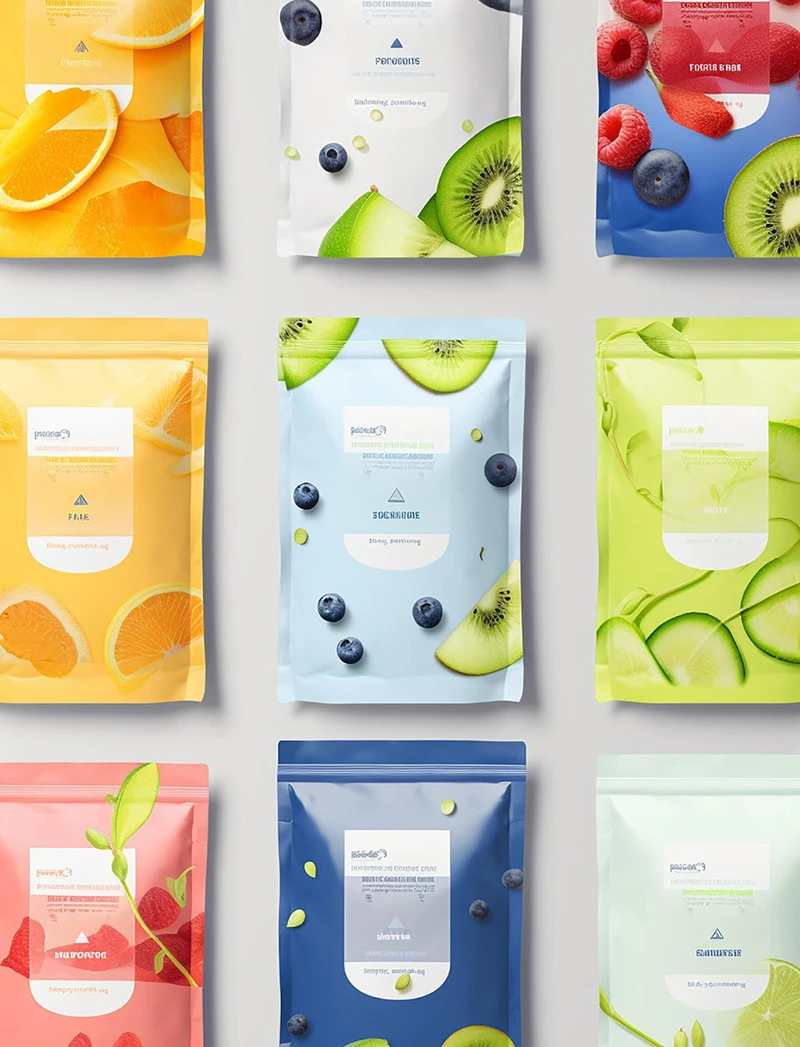
JINYI gibt Ihnen praktische Hilfestellungen für Ihre Verpackungsentscheidungen.
A greener pouch can fail before it reaches the bin. Choose a label before checking the food, filling line, and collection route, and you may redesign the order.
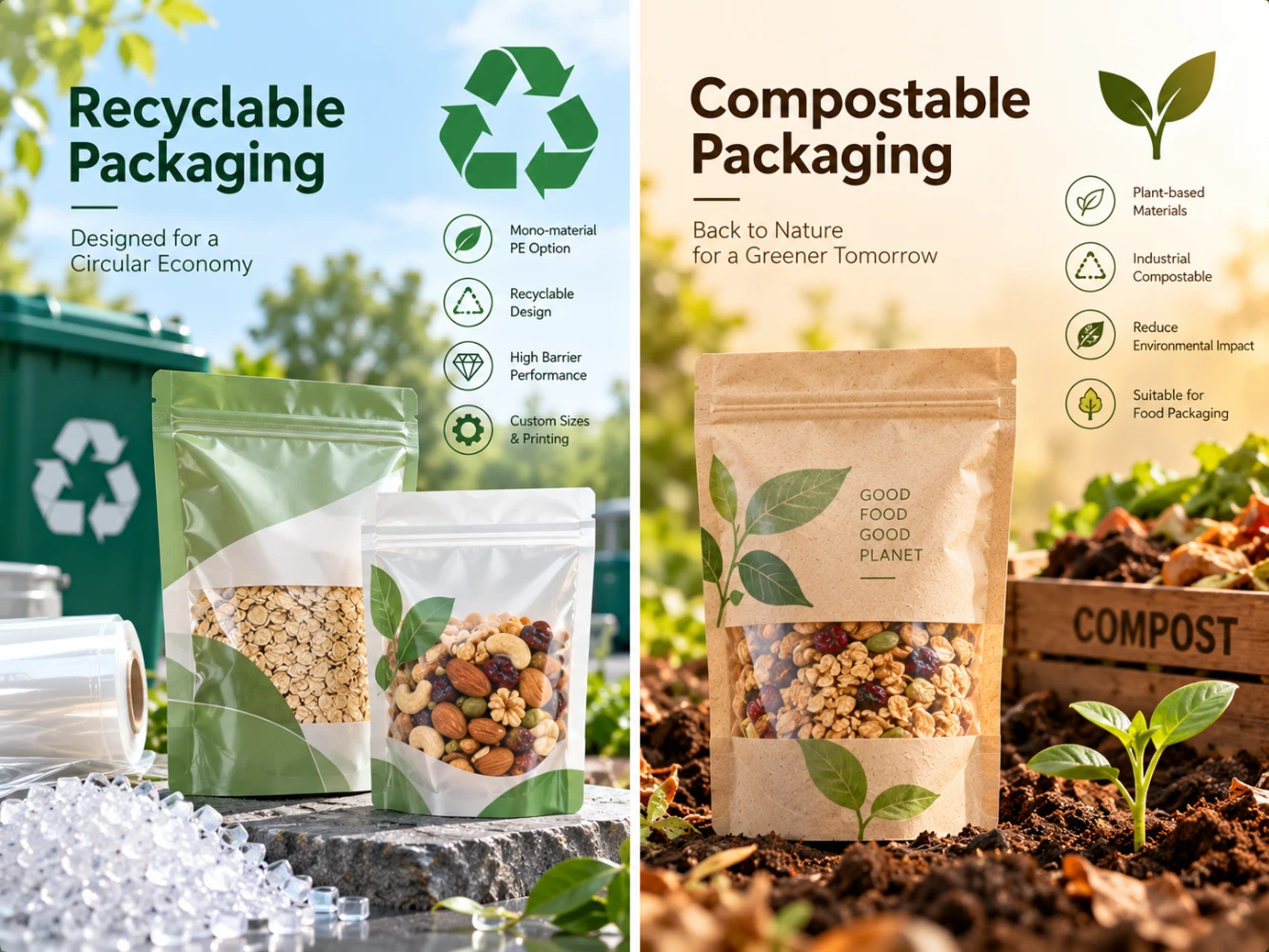
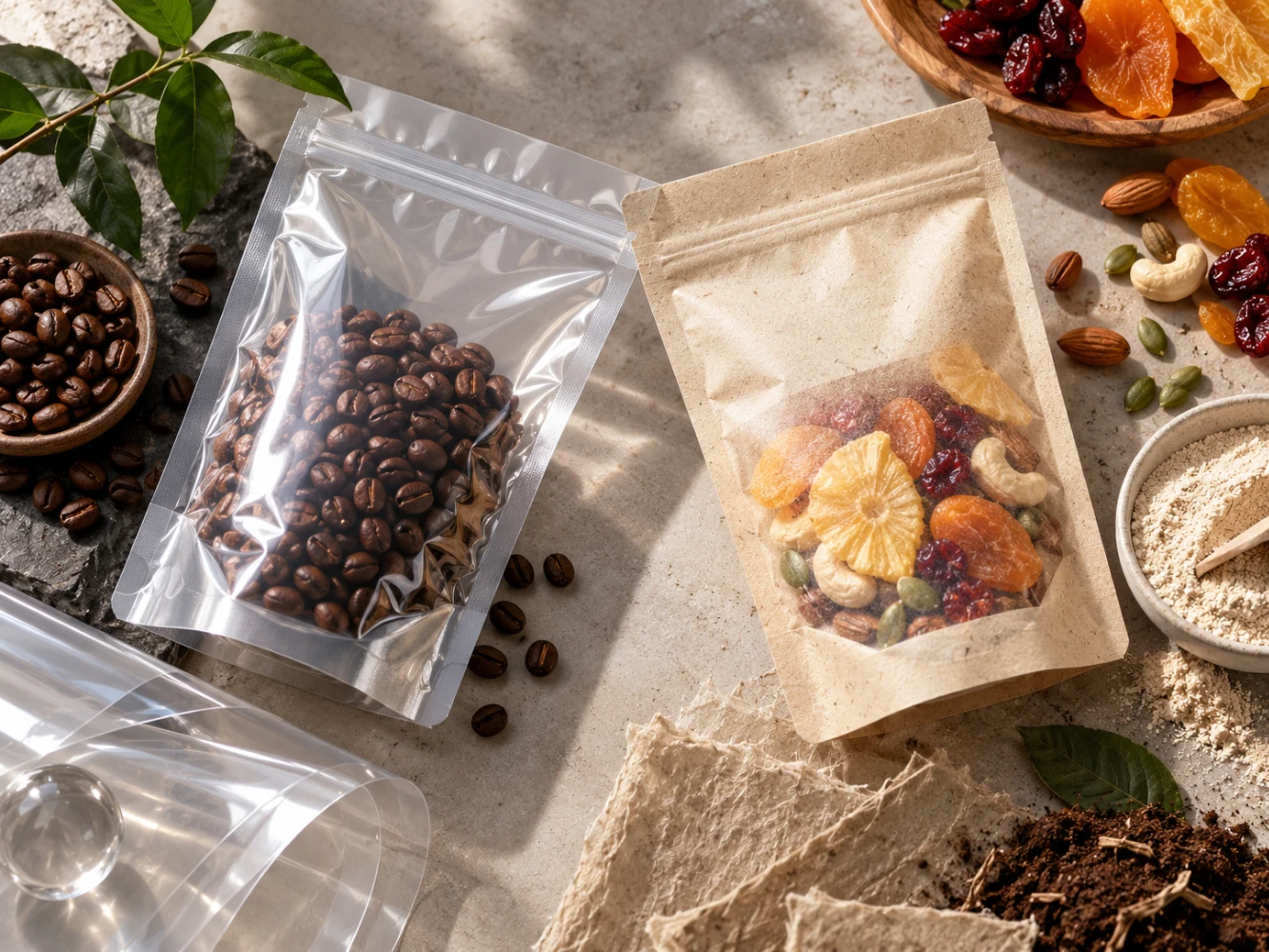
Recyclable vs compostable pouches is a choice between two different end-of-life routes. I favor a recyclable design when the finished pouch performs and fits a real recycling stream; I consider compostable packaging when it performs and an accepting composting route exists.
At JINYI, I start with the product and the packing line. Then I check the destination market, the finished bag construction, and the evidence behind the claim. A promising film on a sample table is useful. A pouch that fails at the seal, loses shelf life, or has nowhere to go after use is not ready for production.
Start with the filled product. Shelf life, filling heat, sealing, and transport set the minimum performance either material must meet.
Choose a real destination. A recyclable design needs a suitable collection and recycling route; a compostable design needs an accepting composting route.
Check the finished pouch. Film, inks, adhesive, zipper, label, and coating can change the result.
Read the exact claim. Commercial compostability and home compostability are different; a raw-film document does not automatically cover a printed pouch.
Approve the converted bag. Run the filling and storage checks before committing to a sustainability message or mass production.
What Is the Difference Between Recyclable and Compostable Pouches?
A buyer may use “recyclable,” “biodegradable,” and “compostable” as if they describe the same destination. They do not.
A recyclable pouch is designed to be collected, sorted, and reprocessed in a defined material stream. A compostable pouch is designed to break down under specified biological treatment conditions. Neither label tells me whether the local system will actually accept that finished pouch.
I decide where the empty pouch is supposed to go
In our production discussions, the two routes lead to different material decisions. A PE-dominant stand-up pouch can be designed around a PE film recycling stream. A compostable pouch must be evaluated against a named composting scheme and its conditions. I cannot put both words on a specification and ask the factory to make “something green.” The intended route changes the film, components, artwork, and evidence we need.
Frage
Recyclable Design
Compostable Design
Intended destination
A specified material recycling stream
An accepting commercial or home composting route, as applicable
Design evidence
Complete pouch compatibility with the relevant stream
Claim and certificate scope for the complete item and treatment conditions
Practical check
Can that type of flexible pouch be collected and accepted there?
Does the local composting operator accept that type of package?
“Biobased” tells us something about feedstock, not a guaranteed disposal route. “Biodegradable” without stated conditions is too broad for a pouch approval. The US EPA explains the difference between biobased, biodegradable, and compostable plastics, and also warns that compostable plastic should not be placed in ordinary plastic recycling. I use the destination and the finished design, not the feel of the film, to decide which discussion we are having.
What Must the Pouch Protect Before I Choose a Material?
Changing material before fixing the product requirement can trade a better label for more damaged goods.
Both routes must first meet the product’s shelf life, seal integrity, filling conditions, and distribution demands. I identify what spoils or damages the product, then set the pouch performance around that risk.
I ask what will fail first inside the bag
A dry snack can go soft when moisture gets in. A fat-rich product can develop off-flavors when oxygen enters. A strongly aromatic ingredient can lose flavor. A powder can contaminate the seal before the jaws close. Those are different problems, and the same material will not solve them all in the same way. “Food pouch” alone is not enough for us to select a structure.
I write down the fill weight, desired shelf life, storage temperature and humidity, light exposure, headspace, sealing method, and how the cartons travel. If the brand already has a working pouch, its current structure and real failure history give us a useful starting point. We change one specification for a reason, not because a sample looks more sustainable on a desk.
For oxygen-sensitive or moisture-sensitive food, I compare oxygen transmission rate (OTR) and water vapor transmission rate (WVTR) under stated test conditions. The numbers are useful only when we know what was tested and how the complete package behaves after conversion. I will not insert a universal OTR or WVTR target here: product, pack size, headspace, and storage conditions change what an acceptable value means.
Our mono-material PE high-barrier guide goes deeper into film structure and barrier testing. This decision article keeps the point practical: neither a recyclable claim nor a compostable claim can excuse a pouch that no longer protects the food.
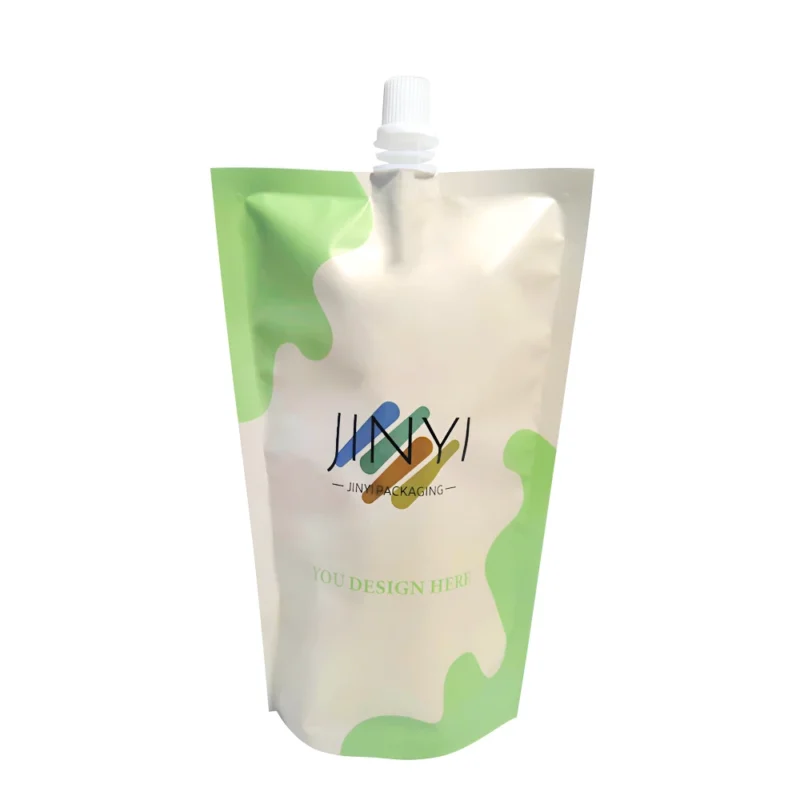
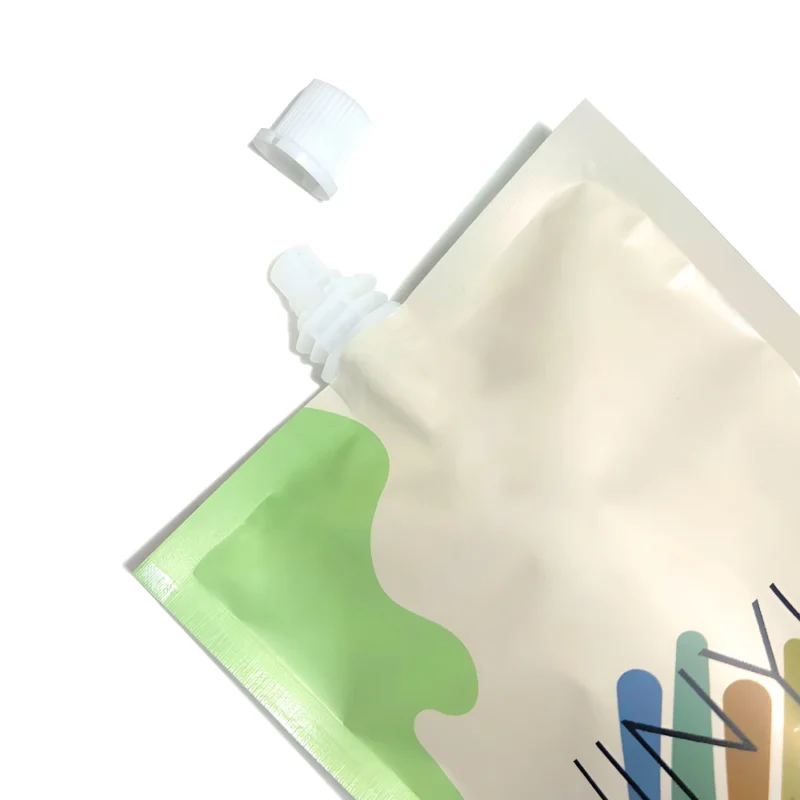
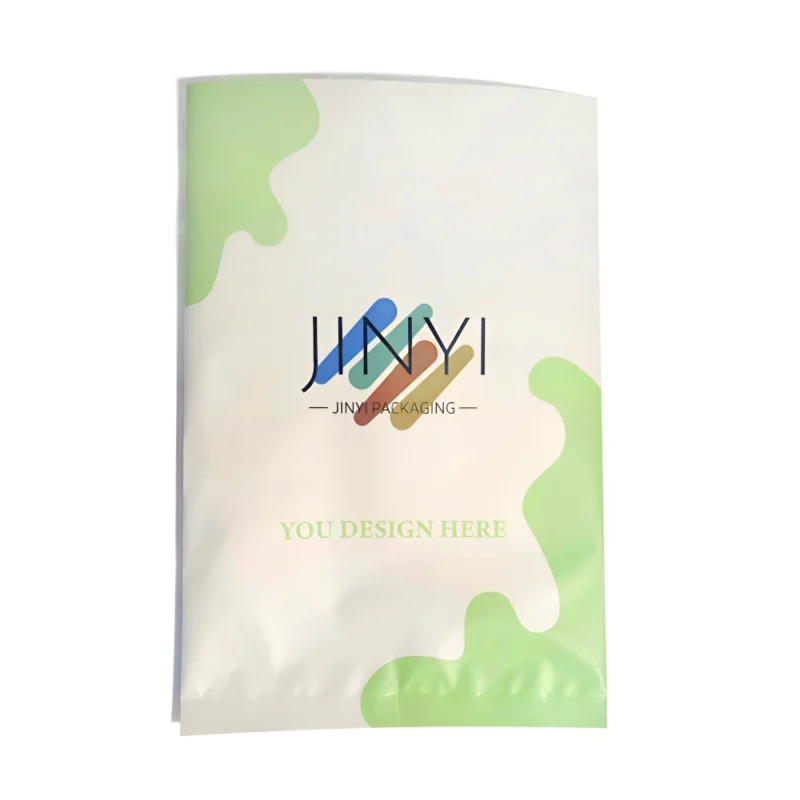
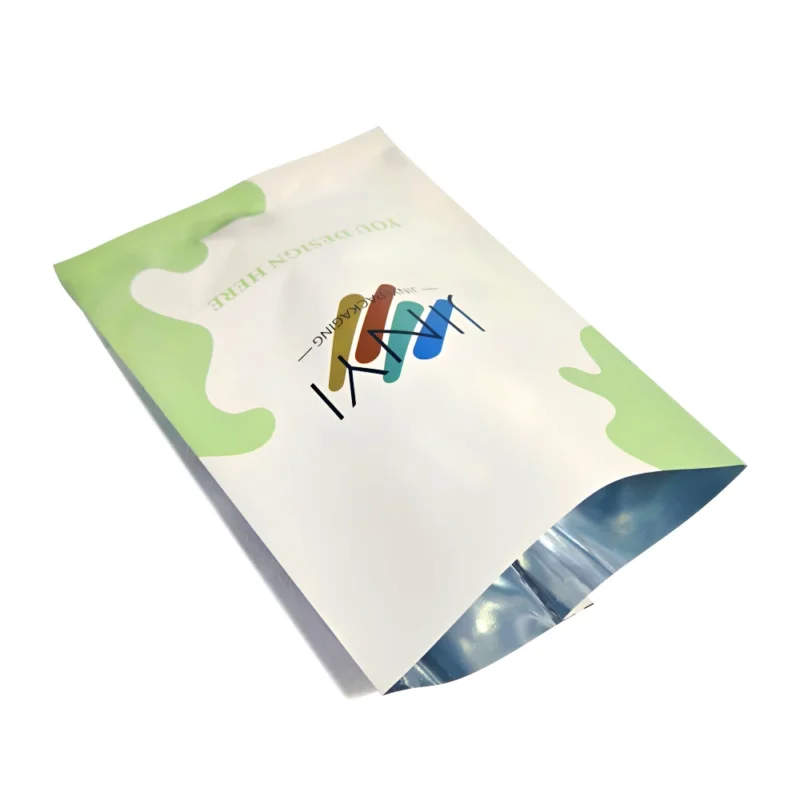
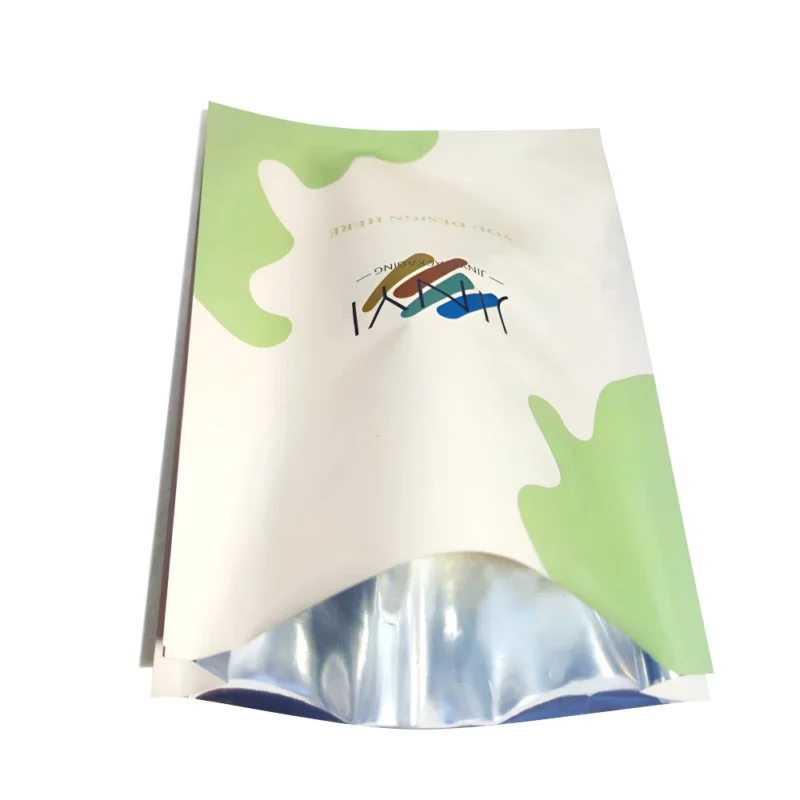
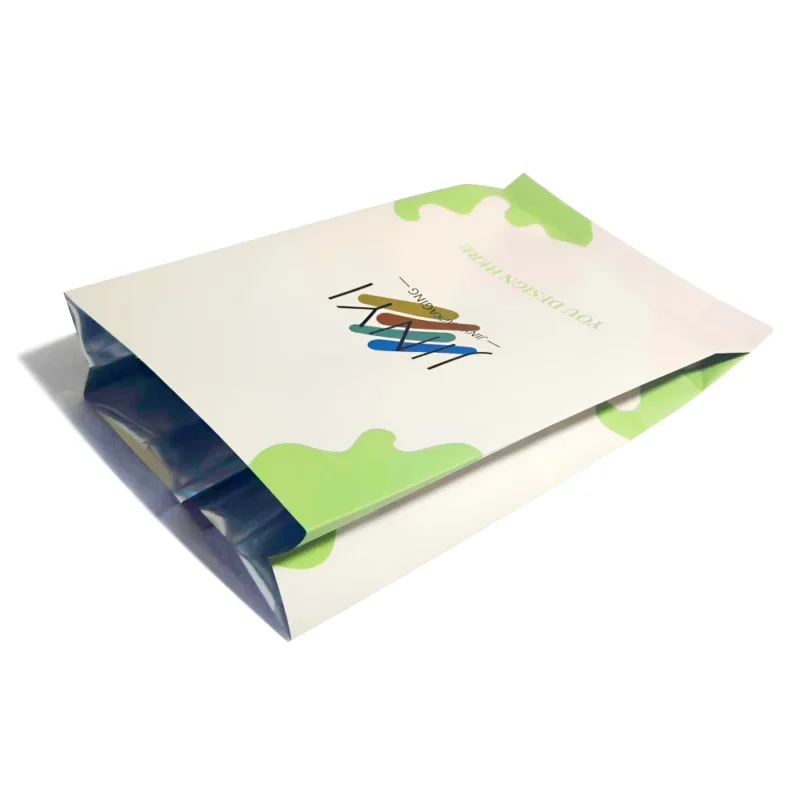
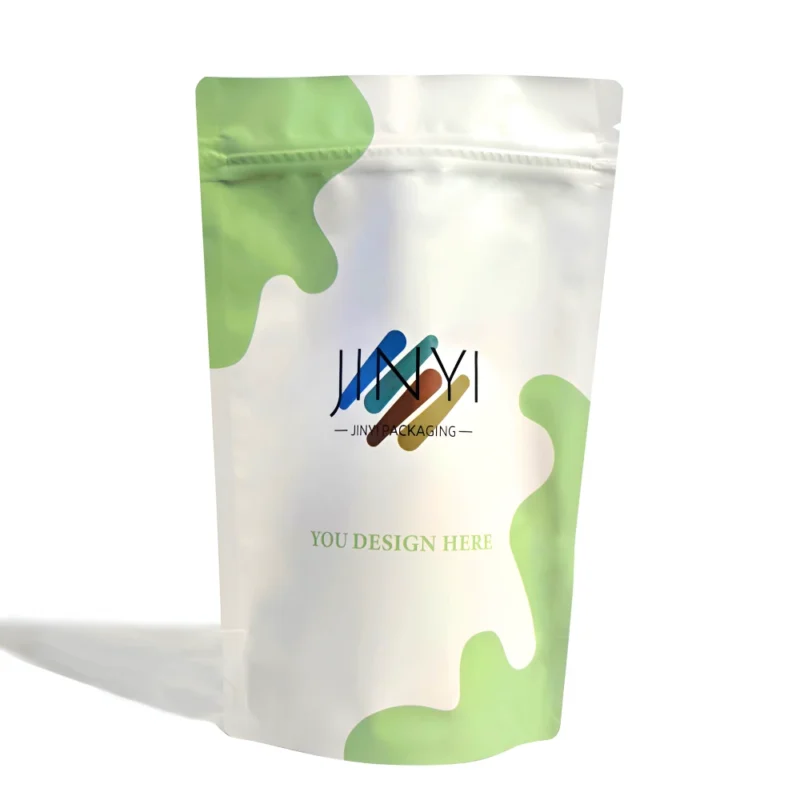
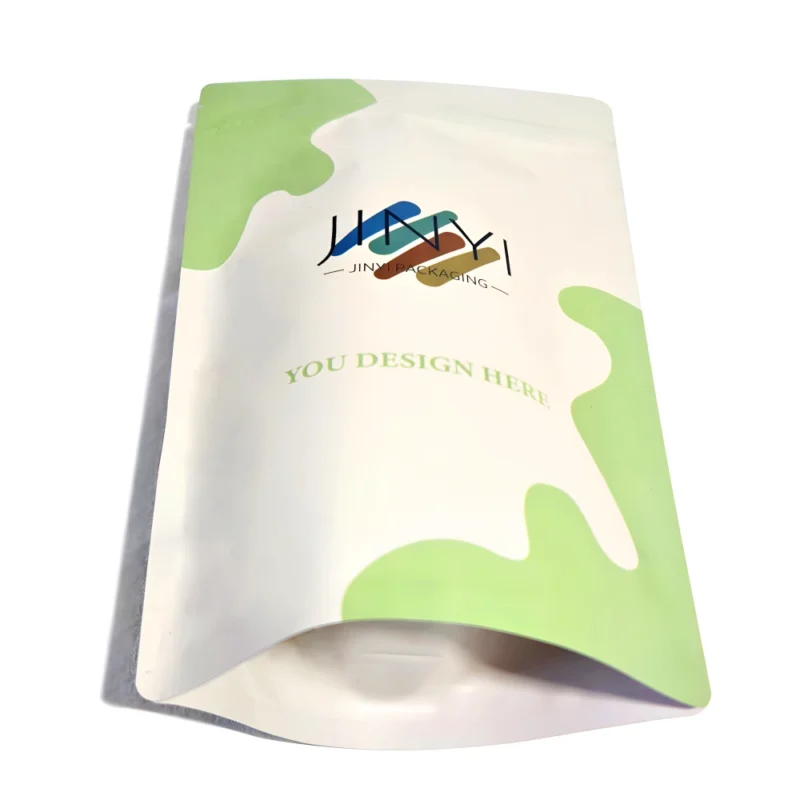
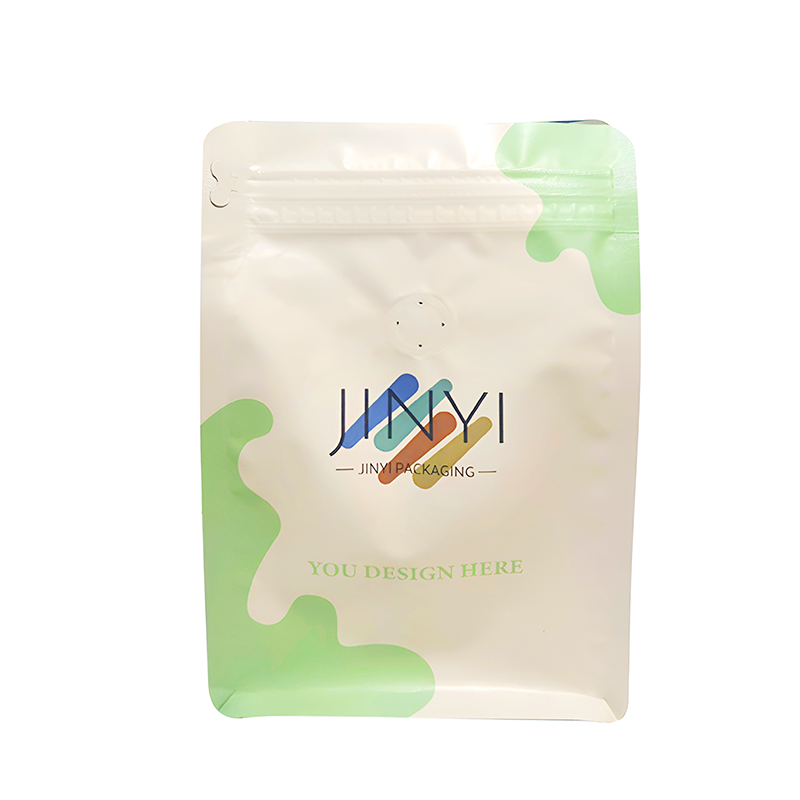
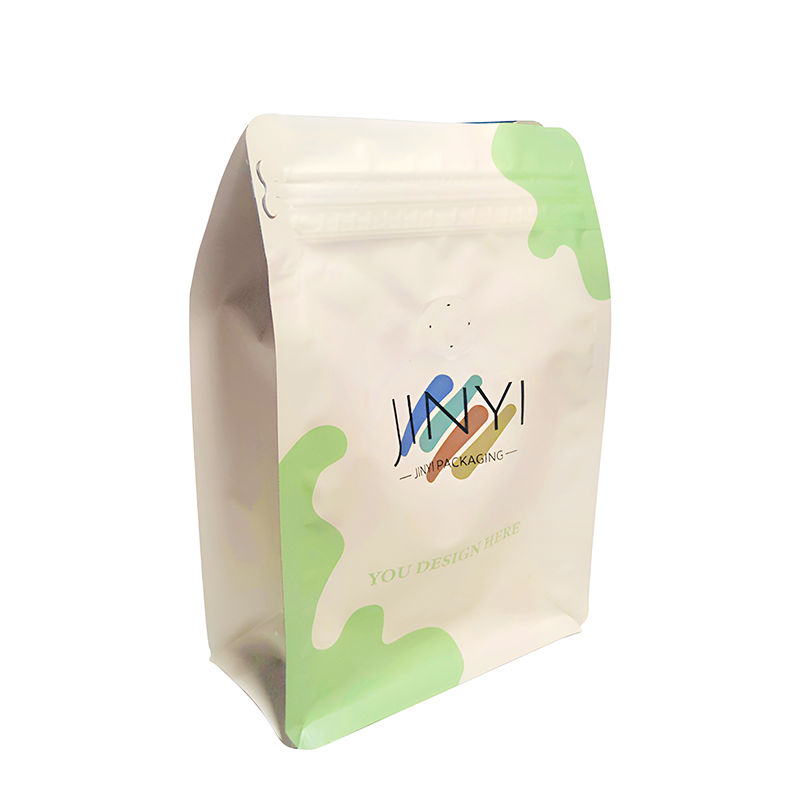
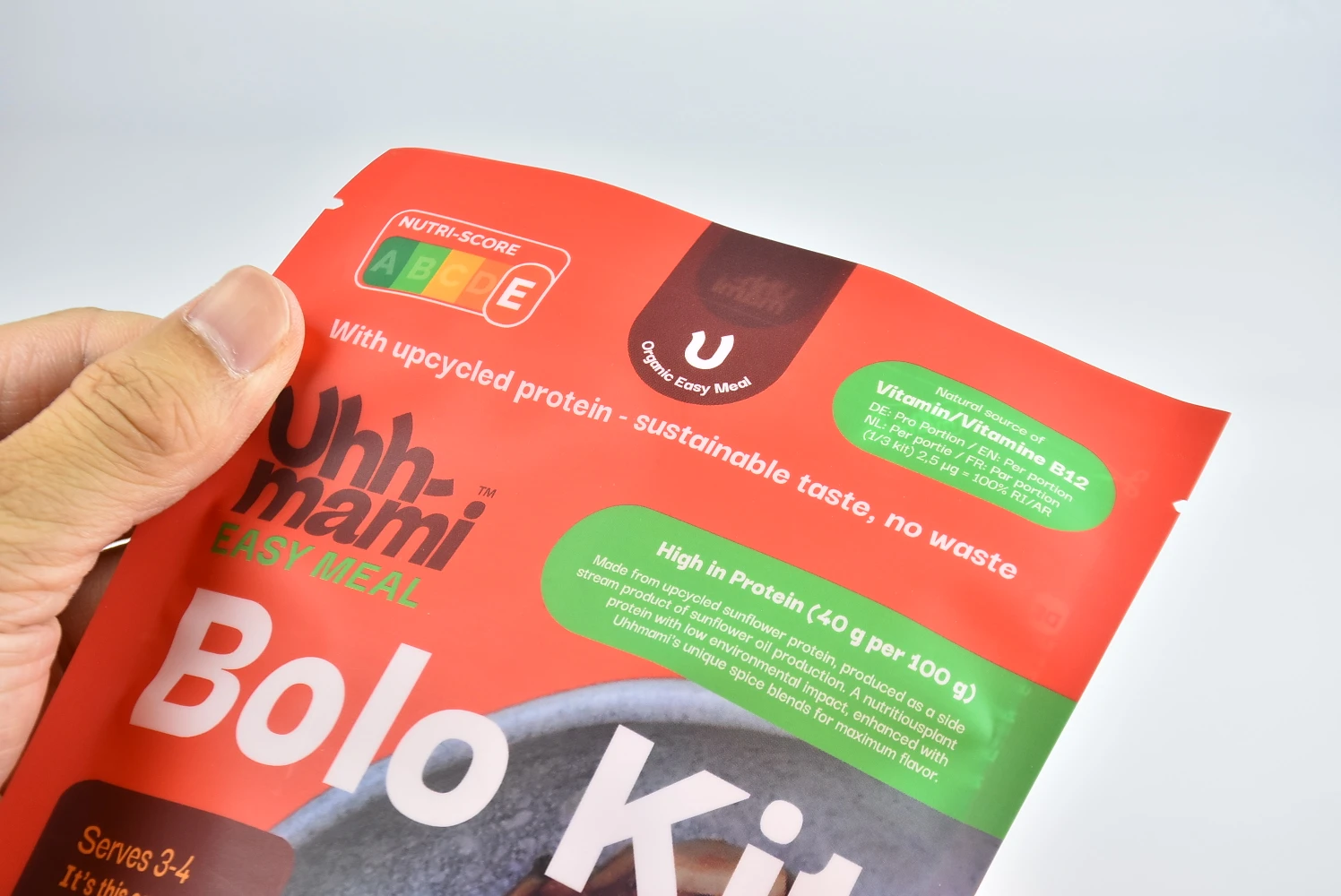
The real JINYI PE pouch shown here is a useful example of the recyclable-design route. It is a soft, PE-based stand-up pouch made for a dry food application. I can show the physical pouch and discuss the engineering questions it raises. I will not assign it an oxygen-barrier value, a layer percentage, or a recycling certificate from its appearance. Those claims need the specific construction and documents for that order.
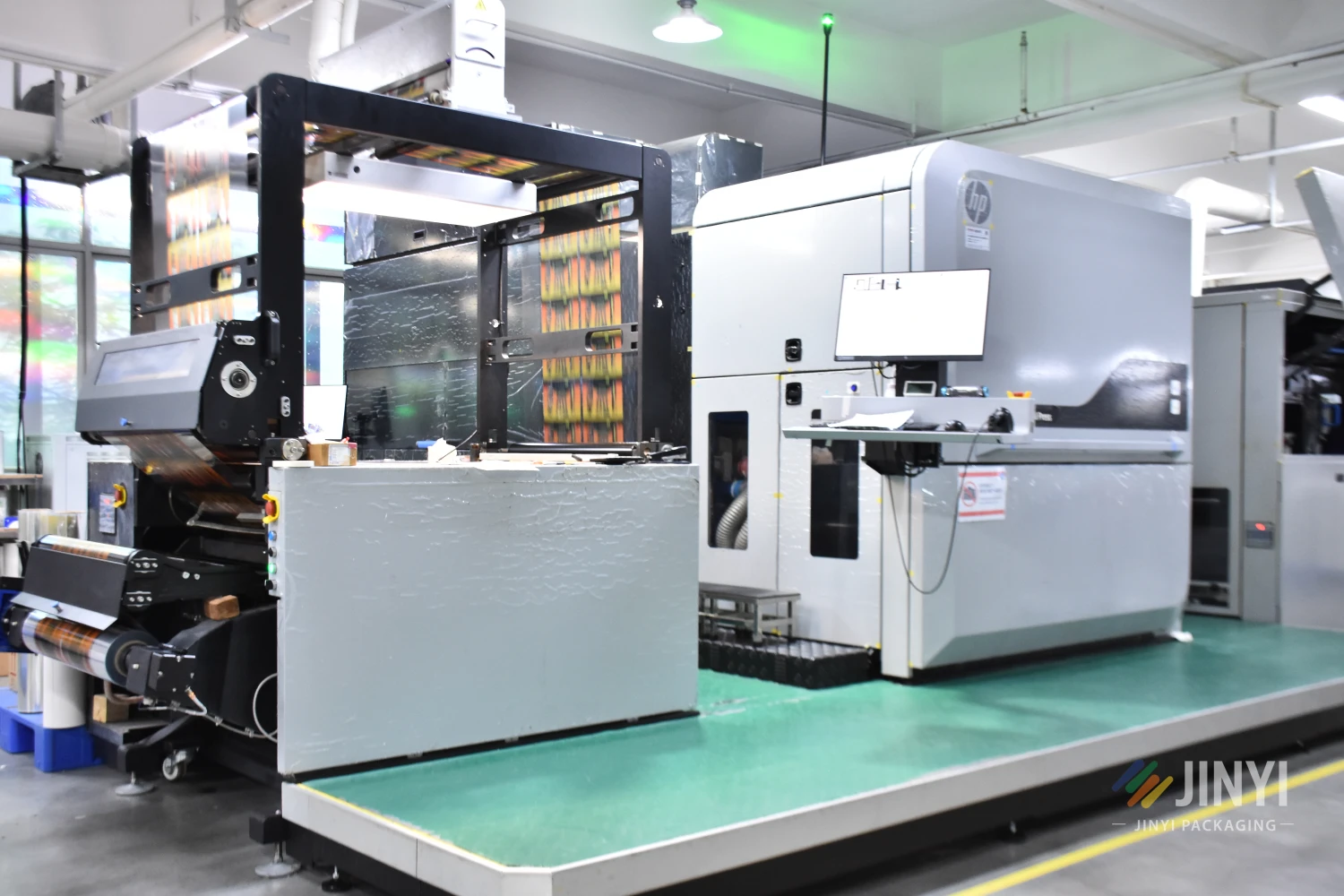
JINYI prüft den Druck- und Versiegelungsbereich aus nächster Nähe, bevor der Beutel freigegeben wird. Eine recycelbare Struktur muss während des gesamten Produktionsprozesses eine präzise Druckpassung, eine stabile Folienhandhabung und eine gleichmäßige Versiegelung gewährleisten.
Can the Used Pouch Reach the Right Recycling or Composting System?
A material can meet a laboratory rule and still have no useful collection route where the product is sold.
I specify the country and collection route before I approve a recycling or composting message. The question is whether the actual flexible pouch can enter an available system, not whether a different rigid package is collected nearby.
I check the operator that will receive the package
With recyclable PE, I ask whether the target market collects flexible PE film or pouches, how the item should be emptied, and whether features such as a large label or a different-polymer closure change acceptance. Curbside collection for plastic bottles does not prove that a printed stand-up pouch belongs in the same bin. The answer can differ between cities and between collection programs in the same country.
With compostable packaging, I ask a different question: does the commercial composting service accept packaging, or only food scraps and yard waste? Some facilities restrict compostable plastic items even when those items have a valid certification. If a brand wants a home-compostable claim, I check that exact claim separately. A commercial-compostability document does not establish home compostability.
Evidence · BPI Compostability Certification
BPI distinguishes Commercial Only from Commercial & Home certification. The test conditions and claim scope differ, and acceptance still depends on the receiving program. Review BPI certification questions →
For a multi-country launch, the same printed message may not fit every market. I ask the brand to name the first countries, target channels, and any retailer instructions. That gives us a route to evaluate, and it keeps the artwork from promising a disposal option the buyer cannot explain to customers.
Does the Whole Pouch Meet the Recycling or Composting Requirements?
The sample film is only one part of the package the consumer throws away.
I review the printed, laminated, converted pouch, including every attachment, against the named recycling guideline or compostability claim. A film certificate cannot automatically cover a zipper, ink, adhesive, coating, label, and changed thickness.
I put every added part on the same specification sheet
A stand-up pouch may use one film for the front and back, a different gusset construction, a zipper, a valve, a patch, a label, or a window. Printing adds inks; lamination adds adhesive; a functional barrier may add a coating or a thin non-PE layer. Each addition has a job in production. Each can also affect the intended end-of-life route.
For a recyclable-design PE pouch, I look beyond the PE percentage. I check the complete film and attachments against the relevant PE flexible-film design rules for that market. Our separate factory guide to every layer of a recyclable pouch explains this step in detail. RecyClass provides separate guidance for PE flexible films and evaluates features such as labels and adhesives; a compatible main film does not grant every added feature a free pass.
Nachweis · RecyClass-Leitlinien für recyclinggerechtes Design
The guidelines evaluate packaging features against a specified recycling stream, including components such as caps, labels, and adhesives. I use the current relevant PE-film route for the actual design. Review RecyClass packaging guidelines →
For compostability, I ask for the certificate holder, scheme, document validity, named product or material, thickness range, print and adhesive coverage, and all other components. A certified base film may be an excellent starting point. If the final printed pouch differs from the certified item, the claim needs its own scope check and, where required, further assessment. Food-contact suitability is a separate question; compostability does not establish that the inner layer can safely contact a given food in a given market.
What Must I Test Before Changing the Packaging Material?
A sample that looks good on a table can fail during filling, stacking, or storage.
I approve a material change only after the converted pouch runs on the intended equipment and meets agreed protection and strength checks with the real product. The test plan follows the use case, not a generic “eco pouch” checklist.
I move from film to the filled bag in steps
First I confirm the approved print, structure, dimensions, gusset, and components. Then I check the film through printing, lamination if used, slitting, and bag making. The output must remain flat enough for registration and consistent enough for repeatable bag dimensions. If a new material curls, stretches, or gives us weak seals, the line has to be adjusted and sampled again before release.
The filling trial is where we learn whether the customer’s machine can open the pouch, fill it cleanly, and close it at a stable temperature, pressure, and dwell time. Those settings belong to that material and machine combination. I do not borrow a number from a different pouch or present a single sealing temperature as a universal answer.
Überprüfen
Failure It Can Catch
Evidence Before Approval
Print and conversion trial
Curl, poor registration, unstable gusset or dimensions
Approved converted sample and recorded structure
Real-product filling and sealing
Poor opening, powder in the seal, weak or leaking seams
Documented machine settings and agreed seal or leak checks
Transit and handling
Puncture, corner damage, bottom-gusset failure
Relevant drop, compression, or shipment trial
Product storage
Moisture gain, oxidation, odor change, loss of shelf life
Agreed barrier and product-specific shelf-life assessment
A film report can help us screen options. It cannot tell us whether the bottom corner of the filled pouch leaks after a drop, whether a zipper weld survives handling, or whether product dust stops a seal from closing. I want the acceptance method written down: test sample, conditions, method, and pass criteria. If the brand needs a long shelf life, we agree on a relevant study using its real product rather than promising months from a film brochure.
How Do Cost, Storage, and Production Affect the Choice?
The cheapest sample can become an expensive production order if it runs slowly or wastes product.
I compare the delivered, usable pack—not only the price of an empty pouch. Material availability, printing, minimum order quantity, storage, machine speed, reject rate, shelf-life validation, and evidence for the claim all affect the real decision.
I include the extra work the new material creates
The brand may need a new film supplier, artwork change, sampling round, press setup, and filling trial. If the pouch runs at a lower acceptable line speed, or the seal window is narrower, the unit price alone hides the cost. If the new barrier changes storage life, the cost of product loss can exceed the saving on packaging. We make those questions visible before we approve the purchase order.
Storage of unfilled pouches matters too. The correct condition and usable life come from the selected film, adhesives, print, and supplier documentation. I would ask how long bags sit between delivery and filling, whether they wait in heat or humidity, and whether the brand rotates inventory. The answer can be different for two compostable formulations and for two PE laminates. There is no honest blanket rule that every compostable pouch costs more or every PE pouch is a direct drop-in replacement.
At JINYI, we can review pouch format, material direction, printing route, and the planned order volume together. A simple sample may be enough to reject an unsuitable option early; a promising option then earns a proper production and filling trial. That sequence keeps an attractive sustainability claim from causing avoidable delays at bag making or on the customer’s line.
Our custom stand-up pouch page shows the formats we can discuss. Format comes into the calculation because a gusset, zipper, window, and seal width all have practical effects. I ask the buyer to keep the current pack and filling data available so we can compare like with like.
When Would I Choose a Recyclable Pouch—and When a Compostable One?
There is no useful winner without a product, a finished pouch, and a place for it to go.
I choose the route that meets product and production requirements, has a credible destination in the sales market, and supports the exact claim the brand wants to print. If either route is missing one of those pieces, I keep it in development.
I release one specified pouch, not a category slogan
For a dry food in a PE-dominant stand-up pouch, I would first examine whether the PE design meets the product’s protection and seal requirements and fits the market’s flexible-film route. Our existing JINYI PE pouch gives us a physical starting point for that conversation. It does not make every PE pouch recyclable everywhere, and it does not tell us how a different filling line will run.
For compostable packaging, I need a formulation and complete bag construction that work for the product and line. I also need the certificate or assessment to cover the claimed item and an accepting commercial or home composting route, as appropriate. The proof must match the actual proposed structure and target market.
Situation
My Next Decision
What Must Be Shown
PE design protects the product and has a suitable flexible-film route
Advance a recyclable-design pouch
Complete design review, finished-bag trial, and market claim check
Compostable design protects the product and an accepting route exists
Advance a compostable pouch
Applicable certification scope, receiving-program acceptance, and filling trial
Only a base-film certificate or broad supplier claim is available
Hold the printed claim
Evidence covering the complete structure and exact wording
Neither new structure meets shelf-life or seal targets
Redesign and retest; retain a validated pack meanwhile
Product protection and stable production before launch
To move this from discussion to a sample, send us the product type, fill weight, current bag, required shelf life, filling and sealing equipment, target countries, desired claim, pouch features, and any existing performance or certification documents. Our team can compare the relevant routes, identify the tests, and set a written specification before production. That is a more useful starting point than choosing a material from a label.
Schlussfolgerung
Choose recyclable or compostable only when the finished pouch protects the product, runs reliably, and has a verified end-of-life route in its sales market.
JINYI ist ein Hersteller von kundenspezifischen flexiblen Verpackungen mit mehr als 15 Jahren Produktionserfahrung und beliefert Marken aus den Bereichen Lebensmittel, Nahrungsergänzungsmittel, Kaffee, Tiernahrung und Konsumgüter in mehr als 70 Ländern. Wir produzieren Standbodenbeutel, Flachbodenbeutel, Kissenbeutel und Seitenfaltenbeutel aus PET/AL/PE, PET/VMPET/PE und anderen Barrierespezifikationen - mittels HP Indigo-Digitaldruck ab 500 Stück und Tiefdruck bei Großserien - mit vollständiger Materialdokumentation als Standard bei jeder Bestellung.
Das ist es, was Vom Film zum fertigen Produkt - richtig gemacht in der Praxis bedeutet.
Mark
Leiter der Produktionsleitung - JINYI Packaging
Mark leitet die Produktionsplanung und Auftragskoordination bei JINYI. Mit seinem betriebswirtschaftlichen Hintergrund und seiner praktischen Erfahrung in der Fertigung konzentriert er sich darauf, Qualität, Vorlaufzeit und Ausführung bei kundenspezifischen Verpackungsaufträgen stabil zu halten.
Planung der Produktion Pünktliche Lieferung Teamübergreifende Koordination
Is compostable packaging always better than recyclable packaging?
No. Compare product protection, filling performance, the complete pouch, and actual local collection or treatment. The better route is the one that works for the product and has evidence for its stated destination.
Can compostable pouches go into plastic recycling?
No. Compostable plastics are not intended for ordinary plastic recycling and can disrupt that stream. Check whether a local composting program accepts the specific item; commercial certification alone does not mean home composting is appropriate.
Can recyclable PE pouches still provide high barrier?
Yes, a suitably designed PE-dominant structure can meet demanding oxygen and moisture requirements for some applications. The target, complete structure, production trials, and finished-pouch results must be checked for the real product.
Does a film certificate cover the finished printed pouch?
Not automatically. Check the certificate’s named product, thickness, printing, adhesives, and components against the final design. If the pouch differs from the documented item, verify the scope and arrange any additional assessment before making the claim.
What should I send JINYI to compare recyclable and compostable pouches?
Send the product type, fill weight, current pouch, shelf-life target, filling equipment, destination markets, closure and print requirements, desired claim, and available test or certification documents. We can then identify suitable sample and validation routes.