Rouleaux de haute performance conçus pour la vitesse, la cohérence et la production d'emballages évolutifs.
Sac en Mylar découpé à l'emporte-pièce
Présence en rayon à fort impact avec une forte protection de la barrière pour garder les produits frais et prêts pour la conformité.
Pochettes plates
Un format peu encombrant et rentable qui offre des performances de scellage fiables pour la vente au détail et l'expédition au quotidien.
Pochettes à bec liquide
Emballage résistant aux fuites, facile à verser, qui améliore le confort de l'utilisateur et réduit le désordre lors de la livraison.
Emballage des sacs d'oreillers
Emballage léger, rapide à emballer, de type sachet, idéal pour les produits en grande quantité et les marques propres.
Pochette Quad Seal
Stabilité semblable à celle d'une boîte avec un attrait de premier ordre en rayon - idéal pour les remplissages plus lourds et un aspect plus “droit”.
Sacs à soufflets latéraux
Sacs de grande capacité, peu encombrants, qui maximisent le volume de remplissage tout en conservant une forme propre et structurée.
Sacs à dos
L'un des formats à la croissance la plus rapide - combinant une forte présentation en rayon, des frais de transport réduits et une grande protection de la fraîcheur.
Sacs à fond plat
Boîte à bijoux à tiroir
Boîtes à bijoux à tiroir pour un déballage de première qualité et une protection rigide.
Boîte à bijoux à couvercle rabattable
Boîtes à bijoux à couvercle rabattable, de construction rigide et de présentation luxueuse.
Étui rigide rétractable en deux parties
Boîtes rigides en deux parties pour une protection et une présentation de luxe.
Boîtes postales
Boîtes d'expédition en carton ondulé pour une expédition sécurisée et un déballage à l'effigie de la marque.
Boîtes d'exposition
Boîtes de présentation personnalisées pour les ventes au comptoir et une bonne visibilité en rayon.
Boîtes cadeaux
Boîtes-cadeaux personnalisées avec structure et options de finition haut de gamme.
Boîtes d'emballage à manchons
Boîtes à pochettes avec enveloppes imprimées pour un marquage flexible.
Boîte de fond à verrouillage automatique
Boîtes à fermeture automatique à montage rapide pour le commerce de détail et le commerce électronique.
Boîte de fond de serrure
Boîtes à fond verrouillé pour un emballage rapide et un support de charge solide.
Boîtes d'extrémité droites
Boîtes à couvercle droit pour une fermeture nette et une présentation au détail.
Sac en papier personnalisé
Sacs cadeaux en papier personnalisés avec des poignées solides et une impression nette de la marque.
Gobelets à froid en PET transparent
Gobelets en PET transparent pour boissons glacées - transparents, robustes et étanches.
Sac cadeau personnalisé
Sacs cadeaux en papier personnalisés avec des poignées solides et une impression nette de la marque.
Gobelet en papier
Gobelets en papier pour boissons chaudes avec une prise en main confortable et une impression propre et cohérente.
Sachets plats de cannabis
Sachets plats pour le cannabis avec une barrière élevée et un espace d'étiquetage clair.
Sacs Mylar pour le désherbage
Sacs de désherbage en mylar avec une barrière solide, des fermetures éclair et des options de contrôle des odeurs.
Boîtes en fer blanc personnalisées
Boîtes en fer blanc personnalisées pour une protection optimale, une réutilisation et une impression en quadrichromie.
Étiquettes à manchon thermorétractable
Étiquettes pour manchons thermorétractables avec couverture à 360° et impact en rayon.
Étiquettes en rouleau personnalisées
Étiquettes en rouleau personnalisées pour une application rapide et un étiquetage cohérent de la marque.
Autocollant découpé
Autocollants découpés à l'emporte-pièce avec des bords nets et des options de matériaux durables.
Feuilles d'autocollants Kiss Cut
Feuilles d'autocollants découpées pour un décollage facile et des motifs flexibles.
JINYI donne des conseils pratiques en matière d'emballage pour vous aider à prendre vos décisions.
Les Cheetos ont été inventés en 1948 par Charles Elmer Doolin - l'homme qui est à l'origine de la première chips de maïs Fritos - pour utiliser la farine de maïs dans un nouveau format de snack extrudé. Le produit a rejoint le portefeuille de Frito-Lay à la suite d'une fusion et fait aujourd'hui partie de PepsiCo, aux côtés de Lay's, Doritos et Ruffles, comme l'une des marques principales de la plus grande entreprise de snacks salés au monde. Cheetos est vendu dans plus de 36 pays et est le snack aromatisé au fromage le plus vendu au monde, avec des ventes au détail annuelles dépassant $4 milliards. Aux États-Unis, la variété Flamin’ Hot est devenue l'une des marques d'en-cas les plus visibles culturellement dans le pays - le sujet d'un long métrage, un phénomène de médias sociaux, et une gamme de produits qui s'est étendue à des versions aromatisées de presque toutes les autres marques de Frito-Lay.
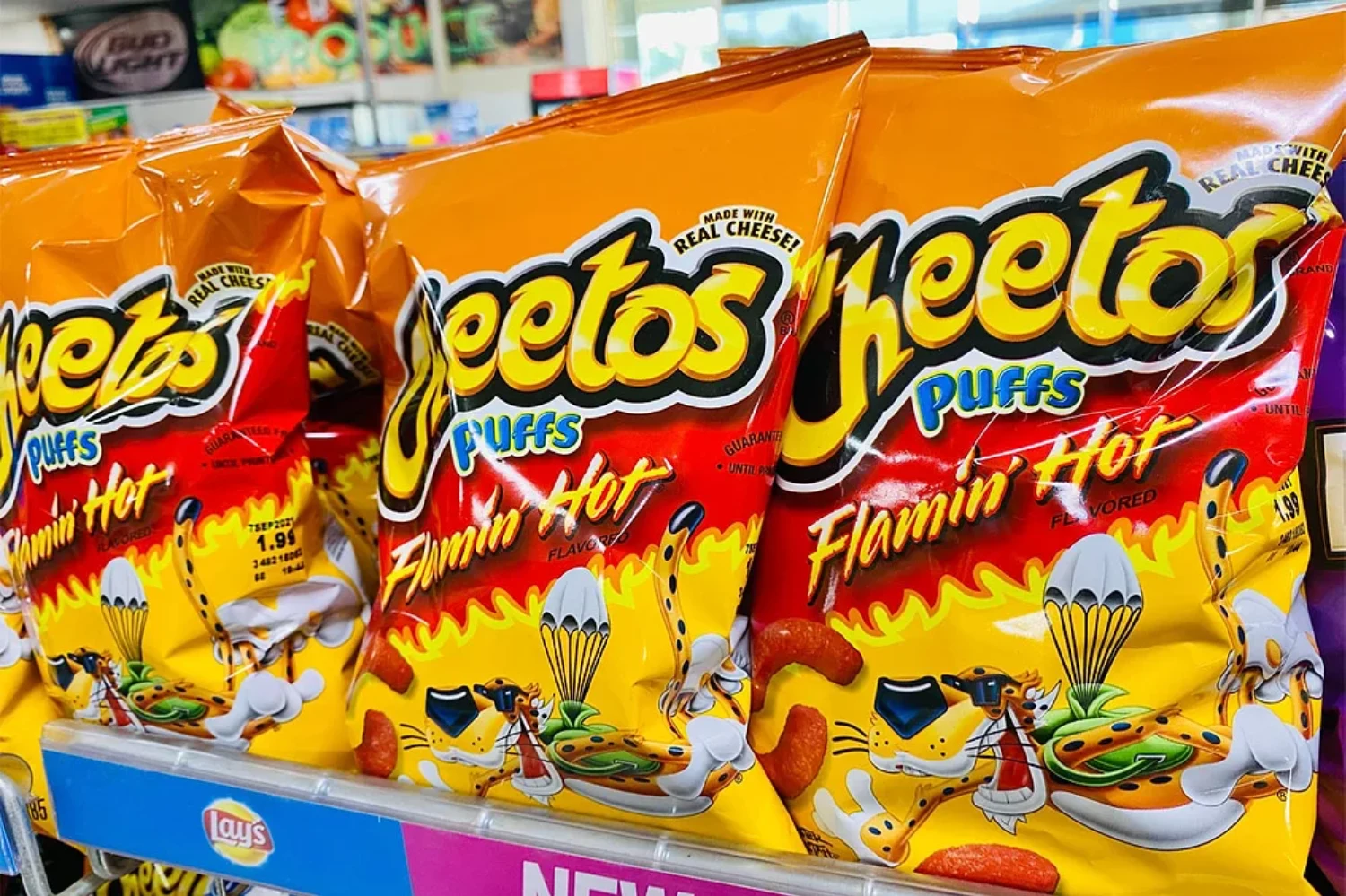
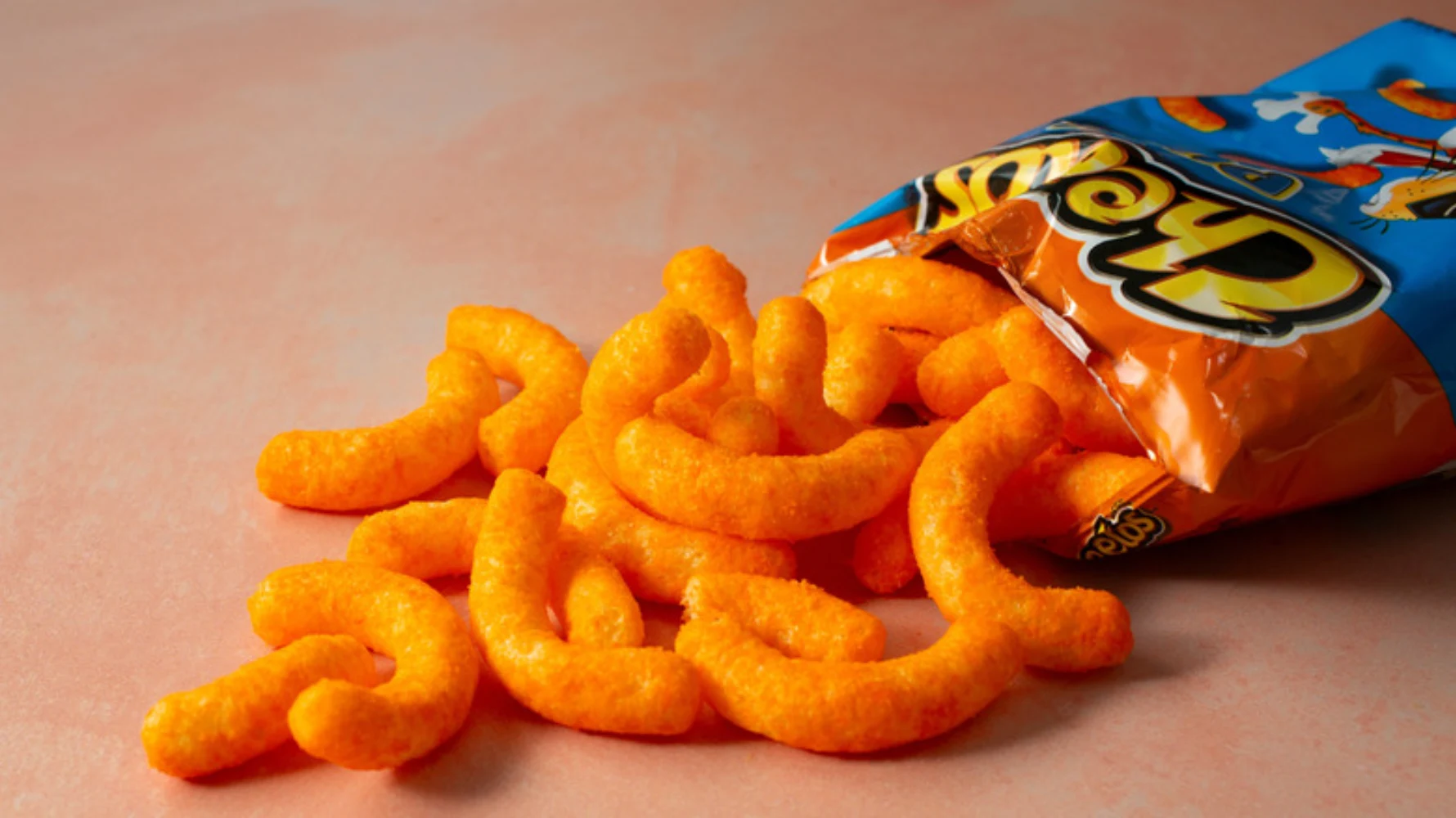
Le sac est immédiatement reconnaissable : orange vif, guépard de Chester sur le devant, un coussin d'azote avec une poignée de puffs ou de bâtonnets croustillants orange poussiéreux à l'intérieur. Cette poussière orange - l'assaisonnement au fromage qui définit le produit et tache chaque doigt qu'il touche - est aussi ce qui rend le sac de Cheetos techniquement plus exigeant qu'un simple sac de chips. La poudre de fromage est hygroscopique : elle absorbe l'humidité de son environnement, s'agglomère et perd ainsi l'intensité de sa saveur. Le sachet qui conserve les Cheetos pendant des mois doit bloquer l'humidité de manière plus agressive qu'un sachet protégeant une simple chips frite, et le film intérieur doit empêcher la poudre d'adhérer à la surface d'une manière qui compromette le scellage ou les propriétés de contact avec l'aliment.
Cet article analyse le sac Cheetos du point de vue de l'usine : quel format il utilise, pourquoi la poussière de fromage crée des exigences spécifiques en matière de film, à quoi ressemble la structure multicouche, comment fonctionne l'impression orange et ce que le sac blanc Simply NKD late-2025 de la marque signale sur l'évolution de la conception des emballages de snacks. Pour les marques qui s'approvisionnent en emballages de snacks aromatisés au fromage ou assaisonnés de poudre, les décisions techniques sont directement applicables - à une échelle différente, mais avec la même physique.
Formats d'emballage des Cheetos : Sacs coussins, tailles et le changement de Simply NKD
Comme toutes les autres marques de Frito-Lay, le principal emballage des Cheetos est la boîte de conserve. sac d'oreiller - un tube de film scellé à l'arrière, formé, rempli, rincé au gaz et scellé sur une machine verticale de formage-remplissage-scellage (VFFS). Le format couvre toute la gamme de tailles : sachets individuels de 1 oz pour la distribution automatique et les achats impulsifs, sachets standard de 3,25 oz, sachets de taille moyenne de 8 oz et 8,5 oz, et formats Party Size jusqu'à 15 oz ou plus. Chaque format cible une occasion de consommation spécifique - distribution automatique, boîte à lunch, garde-manger, partage - et tous utilisent le même format de sachet coussin avec des poids de remplissage et des dimensions de sachet différents.
Les Cheetos apparaissent également dans le format Frito-Lay Minis introduit en 2022 - des versions de taille réduite dans un tube en plastique rigide, similaire au format Pringles. Cette ligne se situe entièrement en dehors de l'emballage flexible et ne représente qu'une petite partie du portefeuille Cheetos. Le sachet principal représente l'écrasante majorité du volume et c'est le format qui définit les exigences techniques de la marque en matière d'emballage.
L'évolution la plus importante des emballages de la gamme Cheetos au cours des dernières années a été lancée en décembre 2025 : la ligne Simply NKD. PepsiCo Foods a lancé des versions sans colorant des Cheetos Puffs et des Cheetos Flamin’ Hot sous la marque Simply NKD, en utilisant un sac d'un blanc immaculé avec un marquage rouge ou orange - une rupture visuelle totale avec l'orange saturé qui a défini l'emballage des Cheetos pendant des décennies. Le sac blanc communique la mention “sans colorants artificiels” comme une déclaration de design plutôt que comme une mention d'étiquetage, en inversant le repère visuel le plus reconnaissable de la marque pour en signaler l'absence. Pour les marques qui envisagent de procéder à un changement d'emballage “clean label” similaire, l'approche de Simply NKD est une étude de cas utile sur la manière de communiquer un changement d'ingrédient par le biais du design de l'emballage sans perdre la reconnaissance de la marque. Pour les marques qui souhaitent bénéficier de la présence en rayon et de la souplesse de format d'un emballage de type pochette de rangement plutôt qu'un sachet coussin, la même logique de conception s'applique - le format modifie l'encombrement en rayon, mais le système d'impression est identique.
Note de format : Le sachet coussin est le format de snack le plus rapide et le moins cher, mais il ne peut pas tenir en rayon. Si votre marque a besoin d'une présence en rayon, le format stand-up est la solution. Les spécifications du film et les exigences en matière de barrière sont identiques ; le changement de format a une incidence sur l'espace en rayon, et non sur la protection de la fraîcheur.
Le problème de la poussière de fromage : pourquoi la pellicule intérieure est plus importante que d'habitude
La poussière orange qui recouvre chaque Cheeto - et chaque doigt qui en touche un - est un mélange d'assaisonnement au fromage sec, appliqué sur la feuille de maïs extrudée dans un tambour rotatif après la friture. Contrairement à l'assaisonnement d'un Dorito, qui est transporté par l'huile et adhère grâce à un mécanisme de liaison de l'huile, l'assaisonnement des Cheetos repose sur la surface poreuse et légèrement huileuse de la feuille de maïs elle-même pour maintenir la poudre en place. Il en résulte un produit contenant une quantité importante de poudre fine et lâche qui migre librement à l'intérieur du sac pendant le transport et la manipulation.
Cette poudre pose deux problèmes d'emballage auxquels un simple sac de chips n'est pas confronté avec la même intensité. Le premier est l'humidité. L'assaisonnement au fromage est hygroscopique - il attire et absorbe la vapeur d'eau de son environnement. Si l'humidité pénètre dans le sachet à travers le film, la poudre l'absorbe, s'agglomère et perd de son intensité gustative. Un sachet qui laisse passer ne serait-ce qu'une petite quantité de vapeur d'eau au cours d'une durée de conservation de trois à six mois donnera un produit dont la saveur et la texture seront nettement moins bonnes que celles d'un sachet fraîchement produit. Le taux de transmission de la vapeur d'eau (MVTR) du film est une spécification plus critique pour un produit saupoudré de fromage que pour une chips nature, et il doit être validé en fonction de la durée de conservation visée et de l'environnement de distribution - en particulier dans les climats humides où les niveaux d'humidité ambiante sont élevés.
Le deuxième défi est l'adhésion de la poudre à la surface interne du film. Dans un sac qui est manipulé, expédié et exposé pendant des mois, la poudre de fromage s'accumule sur les parois intérieures du sac, en particulier autour des soudures. Un film intérieur sur lequel la poudre adhère fortement peut nuire à l'intégrité du thermoscellage au niveau du fond et des ailettes, créant des points faibles où le scellage est contaminé par des particules de poudre. La couche intérieure en PE de qualité alimentaire utilisée dans les sachets de chips standard gère raisonnablement bien ce problème, mais pour une marque dont la teneur en poudre est très élevée - les Cheetos Puffs, par exemple, qui répandent plus de poussière que la variété croustillante - la spécification du film intérieur mérite plus d'attention que la désignation générique “PE de qualité alimentaire”. Un film à faible énergie de surface réduit l'adhérence de la poudre et maintient l'intégrité du scellage de manière plus fiable tout au long de la durée de conservation du produit.
Structure du film : La composition d'un sac de Cheetos
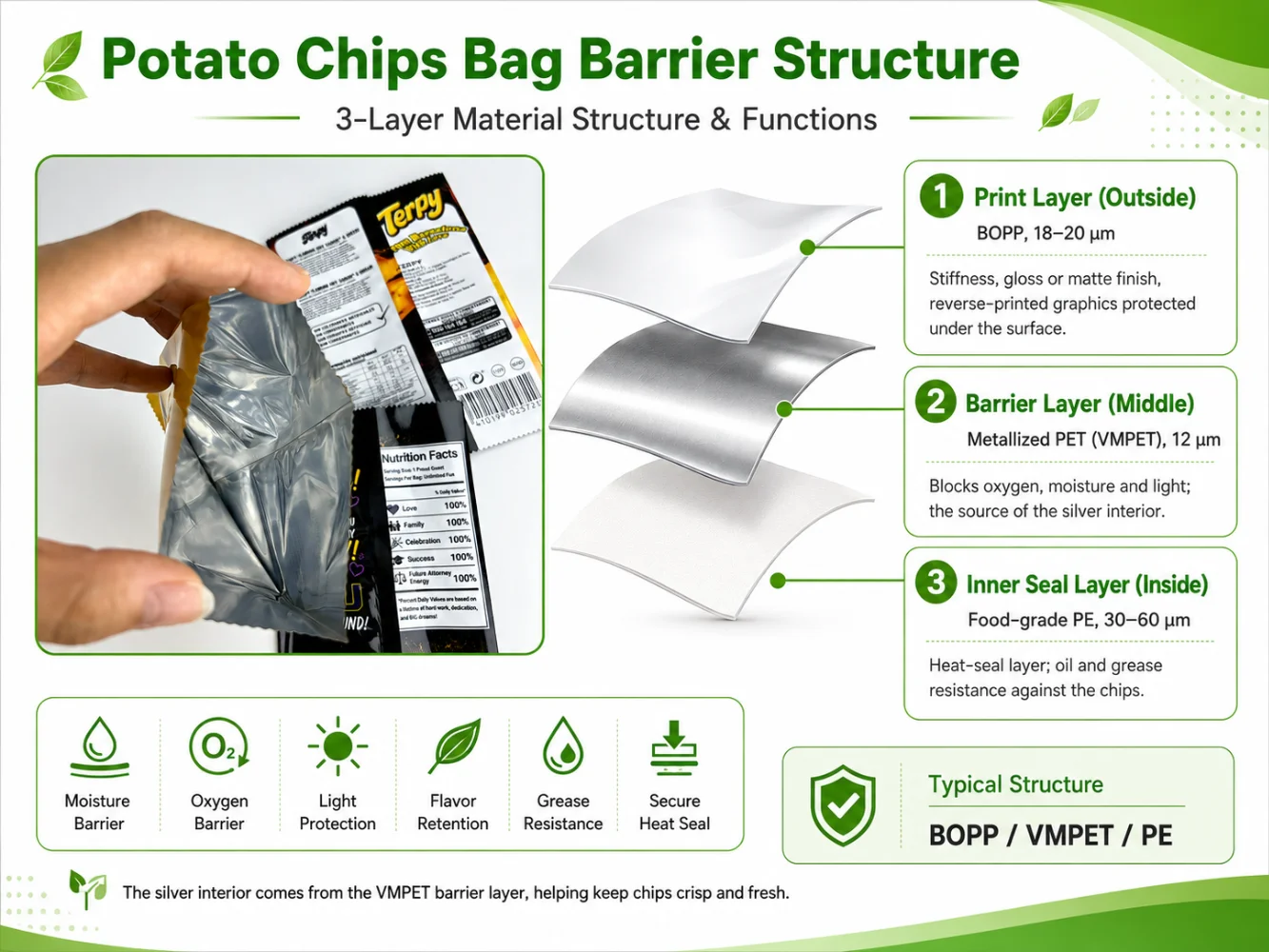
Un sac Cheetos est un film laminé multicouche - deux ou trois couches collées ensemble, chacune remplissant une fonction spécifique. La couche extérieure est un film imprimable en polypropylène orienté (BOPP), choisi pour sa rigidité, sa brillance et sa capacité à porter les graphiques orange à haute saturation qui définissent la marque. Les graphiques sont imprimés sur la face inférieure du film extérieur avant le pelliculage, ce qui permet de sceller l'encre entre les couches afin qu'elle ne puisse pas être rayée lors de la manipulation dans le commerce de détail. La couche intermédiaire est un film PET ou polypropylène métallisé, qui constitue la barrière contre l'oxygène, l'humidité et la lumière qui permet de conserver la fraîcheur de l'assaisonnement du fromage. La couche intérieure est constituée de polyéthylène de qualité alimentaire - la couche thermoscellée qui forme la soudure de l'ailette et des extrémités du sac, et la surface qui est en contact direct avec le produit.
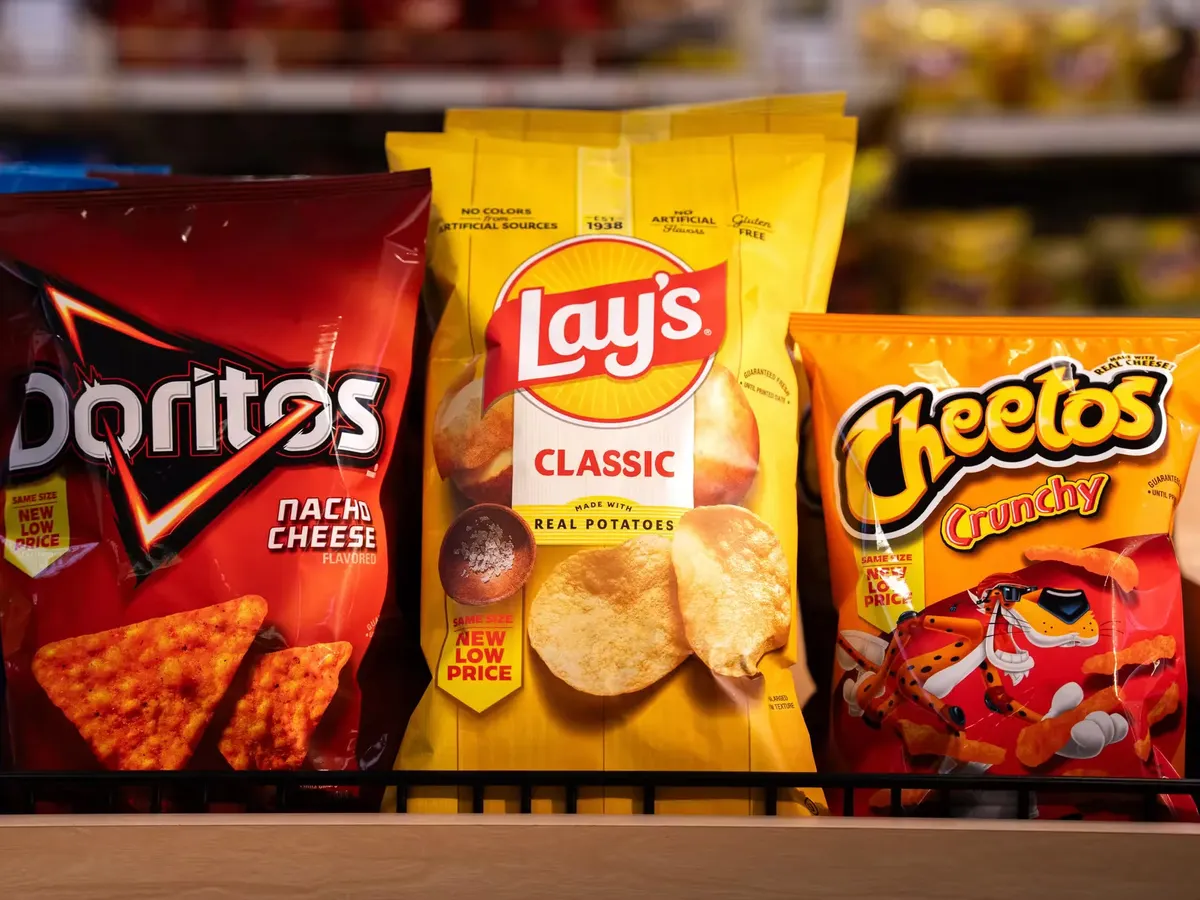
Par rapport à un Sac de chips Lay's ou un Sac de Doritos, La structure des Cheetos est fonctionnellement similaire - la même logique de laminage à trois couches - mais la spécification relative à la barrière contre l'humidité est plus stricte, et la sélection du film intérieur nécessite une plus grande prise en compte des facteurs d'adhérence de la poudre décrits ci-dessus. Frito-Lay n'a pas publié de spécifications officielles pour l'emballage des Cheetos, et la structure ci-dessous est estimée sur la base des exigences du produit et des spécifications standard de l'industrie pour l'emballage des snacks assaisonnés au fromage.
Couche (extérieure → intérieure)
Estimation du matériel
Fonction
Couche d'impression (extérieure)
BOPP, 18-20 μm
Rigidité, finition brillante, graphisme orange à haute saturation imprimé à l'envers et protégé sous la surface.
Couche barrière (milieu)
PET métallisé (VMPET), 12 μm
Bloque l'oxygène, l'humidité et la lumière ; barrière critique contre l'hygroscopicité de la poudre de fromage
Couche d'étanchéité interne (à l'intérieur)
PE de qualité alimentaire, 40-60 μm
Performance du thermoscellage ; conformité au contact alimentaire ; gestion de l'adhérence des poudres dans les zones de scellage
Note : La structure du film est estimée sur la base des exigences du produit Cheetos et des spécifications standard de l'industrie pour les emballages de snacks assaisonnés au fromage. Frito-Lay n'a pas publié de documentation officielle sur les matériaux couche par couche. Les spécifications varient selon le marché et la ligne de production.
Le processus complet d'impression, de collage, de séchage et de transformation des couches de film laminé en sac fini - y compris la validation de l'intégrité du scellage contre la contamination par des produits en poudre - est couvert en détail dans notre guide sur les comment les sachets sur mesure sont fabriqués, du film au sac fini.
Structure de barrière BOPP / VMPET / PE - une construction standard de sac à puce JINYI.
L'orange : Imprimer la couleur la plus connue au monde pour les snacks - et la briser
L'orange Cheetos est l'une des couleurs les plus régulièrement reproduites dans l'industrie mondiale des snacks. La teinte spécifique - un orange chaud à haute teneur en chrome qui se lit comme “arôme de fromage” avant que le consommateur ne traite le texte - apparaît sur les sachets de Cheetos essentiellement sous la même forme depuis des dizaines d'années. Cette constance n'est pas accidentelle. Le maintien d'une couleur sur des milliards de sachets, sur plusieurs sites de production, sur des années de production, exige une gestion rigoureuse de la couleur : des valeurs LAB définies, des tolérances Delta E et une discipline des opérateurs de presse qui empêche la dérive de s'insinuer dans le signal visuel le plus fondamental de la marque.
Pour une marque qui imprime en héliogravure sur des cylindres de production dédiés, l'homogénéité des couleurs est gérée par des formulations d'encre contrôlées et des gravures de cylindres fixes qui reproduisent la même couche d'encre à chaque tirage. Pour les petites marques produisant des emballages de snacks similaires à forte teneur en orange, la difficulté réside dans le fait que la constance de l'héliogravure a un coût : les cylindres gravés représentent un investissement initial important en termes d'outillage et ils verrouillent la conception jusqu'à ce que de nouveaux cylindres soient fabriqués. Une marque qui doit tester si son orange cible se lit correctement sur le support film choisi - mat ou brillant, métallisé ou transparent - ne peut pas le faire de manière abordable avec les tirages minimums de l'héliogravure.
La ligne Simply NKD, lancée en décembre 2025, représente la décision d'emballage la plus frappante de l'histoire récente de la marque Cheetos : le remplacement du fond orange caractéristique par du blanc. Le produit est sans colorant - pas de couleurs artificielles dans l'assaisonnement - et l'emballage communique ce fait par le design plutôt que par une allégation sur le panneau arrière. Un sac blanc avec une typographie rouge et orange dit “propre” dans le même vocabulaire visuel qu'un sac noir dit “premium” ou qu'un sac kraft brun dit “naturel”. Cette décision est une réponse directe à la pression croissante exercée par les consommateurs et la réglementation sur les colorants alimentaires artificiels sur le marché américain. Pour toute marque qui s'engage dans une démarche similaire de transparence des ingrédients, la leçon à tirer de Simply NKD est que le changement d'emballage doit faire la communication - une mention sur l'étiquette enfouie dans la liste des ingrédients ne modifie pas la perception du consommateur comme le fait une refonte complète du sac.
Conseil en matière de cohérence des couleurs : Avant de vous engager dans un tirage en héliogravure pour un sac à goûter aux couleurs vives, demandez un échantillon physique de préproduction sur votre support film réel. La même encre orange n'a pas le même aspect sur un laminé brillant que sur un film mat, et encore moins sur un film métallisé que sur un film transparent. Un échantillon d'impression numérique est le moyen le plus rapide de valider la couleur avant d'engager les coûts d'outillage.
Azote, croquant et pourquoi les Cheetos ont besoin de plus de rembourrage que les chips
Comme tous les snacks de Frito-Lay, les sachets de Cheetos sont rincés à l'azote avant d'être scellés. L'azote déplace l'oxygène - éliminant le gaz qui oxyderait les graisses de l'assaisonnement au fromage et rendrait le produit rance - et fournit un coussin pressurisé qui protège le contenu pendant l'expédition et la manutention au détail. Pour les Cheetos Puffs en particulier, le coussin d'azote est plus important que pour une chips frite dense. Un Cheetos Puff est une structure creuse de maïs extrudé - légère, aérienne et extrêmement fragile par rapport à la structure solide et rigide d'une chips. Les mêmes forces de distribution qui laissent intact un sac de Lay's réduiront en fragments un sac de Cheetos Puffs mal rembourré.
Le calibrage de l'espace de tête d'un sachet de Cheetos reflète cette fragilité : le rapport entre le volume de gaz et le volume de produit est plus élevé que pour une chips plus dense, ce qui donne aux bouffées plus d'espace pour se déplacer sans entrer en contact avec les parois du sachet sous l'effet de la compression. Le sac qui semble comiquement trop rempli par rapport à son contenu n'est pas un gaspillage d'espace - il crée une zone tampon cinétique spécifique autour d'un produit qui, sinon, arriverait sous forme de poussière. Pour les marques produisant des snacks extrudés aérés, creux ou fragiles, la spécification de l'espace de tête en azote est aussi importante que celle du film, et toutes deux doivent être validées par rapport au taux de rupture spécifique observé lors des tests de simulation d'expédition avant qu'une série de production ne soit engagée.
La fonction de barrière à l'oxygène du rinçage à l'azote est également plus importante pour les Cheetos que pour les chips ordinaires. L'assaisonnement au fromage contient des graisses dérivées des produits laitiers qui sont susceptibles de rancir par oxydation - la même voie de détérioration que celle qui affecte le beurre ou le fromage râpé exposés à l'air. En maintenant un taux d'oxygène proche de zéro à l'intérieur du sac, le rinçage à l'azote prolonge efficacement la durée de conservation sans conservateurs artificiels, en s'appuyant sur le film barrière et la gestion des gaz plutôt que sur la chimie pour maintenir le produit stable.
Approvisionnement en sachets de fromage à grignoter personnalisés : Ce qu'il faut spécifier au-delà de la qualité alimentaire“
Le sac Cheetos est une référence utile pour toute marque produisant un snack assaisonné de poudre - non pas parce qu'il faut copier les spécifications de Frito-Lay, mais parce qu'il illustre ce qui se passe lorsqu'une spécification générique rencontre un produit aux exigences spécifiques. La mention “film intérieur en PE de qualité alimentaire” est correcte pour tous les sachets de Cheetos jamais produits. Elle est également insuffisante en tant que spécification pour une marque produisant un produit à base de fromage, très sensible à l'humidité, à une échelle où les défauts d'étanchéité ou la dégradation de la saveur entraîneraient de véritables pertes commerciales.
Pour une marque qui s'approvisionne en emballages de fromages ou de snacks assaisonnés de poudre, la conversation sur les spécifications doit porter sur quatre points qui sont souvent laissés en suspens. Premièrement, le taux de transmission de la vapeur d'eau (MVTR) du film, validé en fonction de la sensibilité à l'humidité du produit et de la durée de conservation visée dans le climat de distribution prévu. Deuxièmement, les caractéristiques d'adhérence de la poudre du film intérieur aux zones de scellage, en particulier si le produit présente un fort taux d'empoussièrement au stade du remplissage. Troisièmement, le volume d'azote et le rapport d'espace de tête, calibrés en fonction de la fragilité de la structure spécifique du snack plutôt que copiés à partir d'une spécification générique pour les sacs de snack. Quatrièmement, le système de gestion des couleurs pour l'impression extérieure - qu'il s'agisse d'héliogravure ou de numérique, les valeurs LAB cibles, la tolérance Delta E et le substrat sur lequel la couleur est validée.
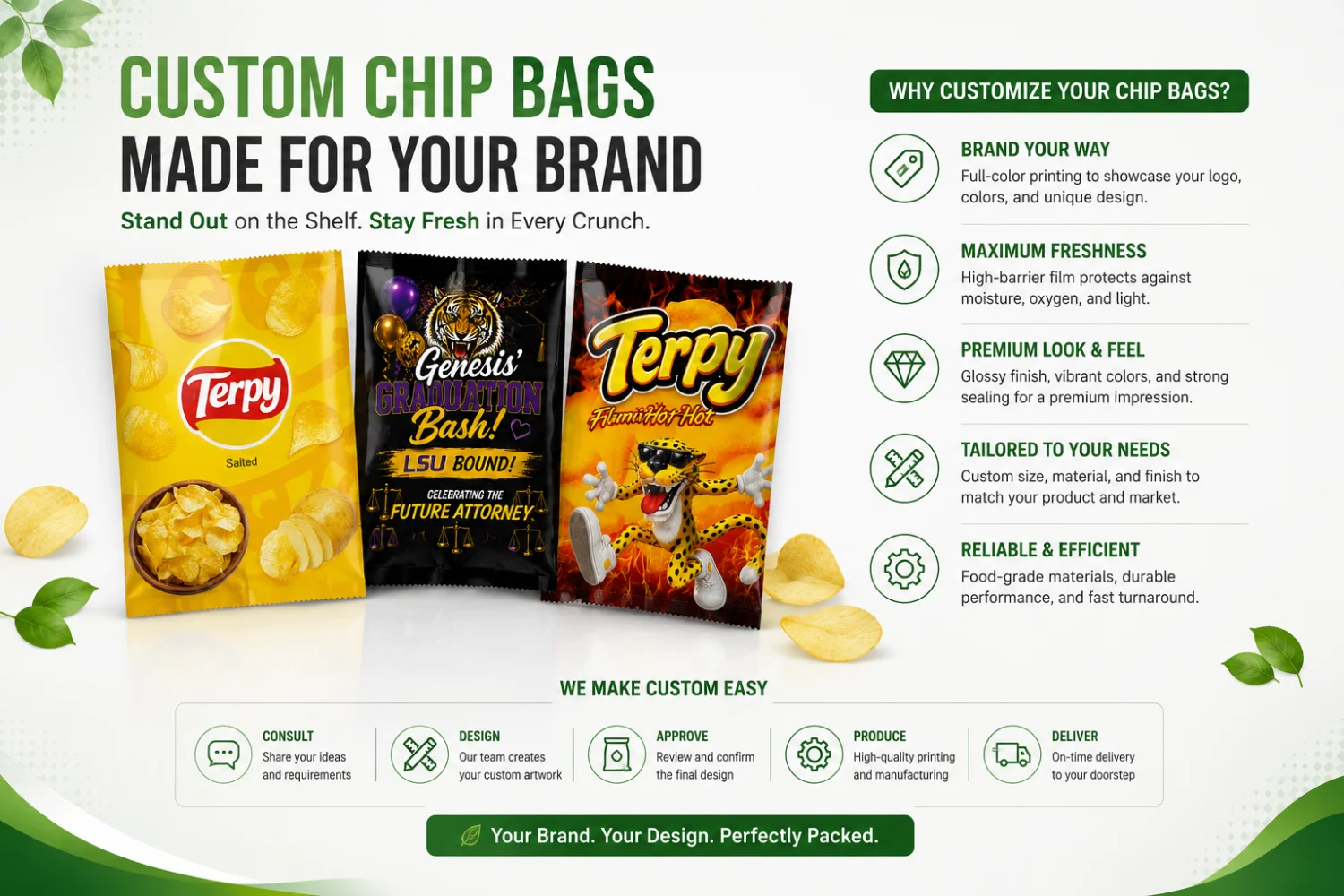
Le service de sacs à puce personnalisés de JINYI, de la conception à la livraison.
Chez JINYI, le parc d'impression numérique - y compris HP Indigo 25K pour la production de courts tirages à grande vitesse et HP Indigo 6K pour la validation rapide de la conception - répond aux exigences de gestion des couleurs pour les sacs de snacks aux couleurs vives avec la même précision que l'héliogravure, sans l'engagement des cylindres. Une marque peut produire 500 unités d'un nouveau modèle de sachet de fromage sur son substrat de film actuel, valider l'orange par rapport aux valeurs LAB cibles sur un échantillon physique, et passer à l'héliogravure uniquement lorsque le modèle est confirmé et que le volume justifie l'outillage. La ligne d'héliogravure 10 couleurs avec ESKO Automation Engine et un repérage de ±0,1 mm gère la fin de la production en volume une fois que la conception a été prouvée. Pour les marques produisant de multiples variantes d'arômes - original, Flamin’ Hot, Puffs, Crunchy - la possibilité d'exécuter chaque variante de conception numériquement à 500 unités avant d'engager des cylindres d'héliogravure pour chacune d'entre elles constitue un contrôle des coûts significatif au stade du développement du produit.
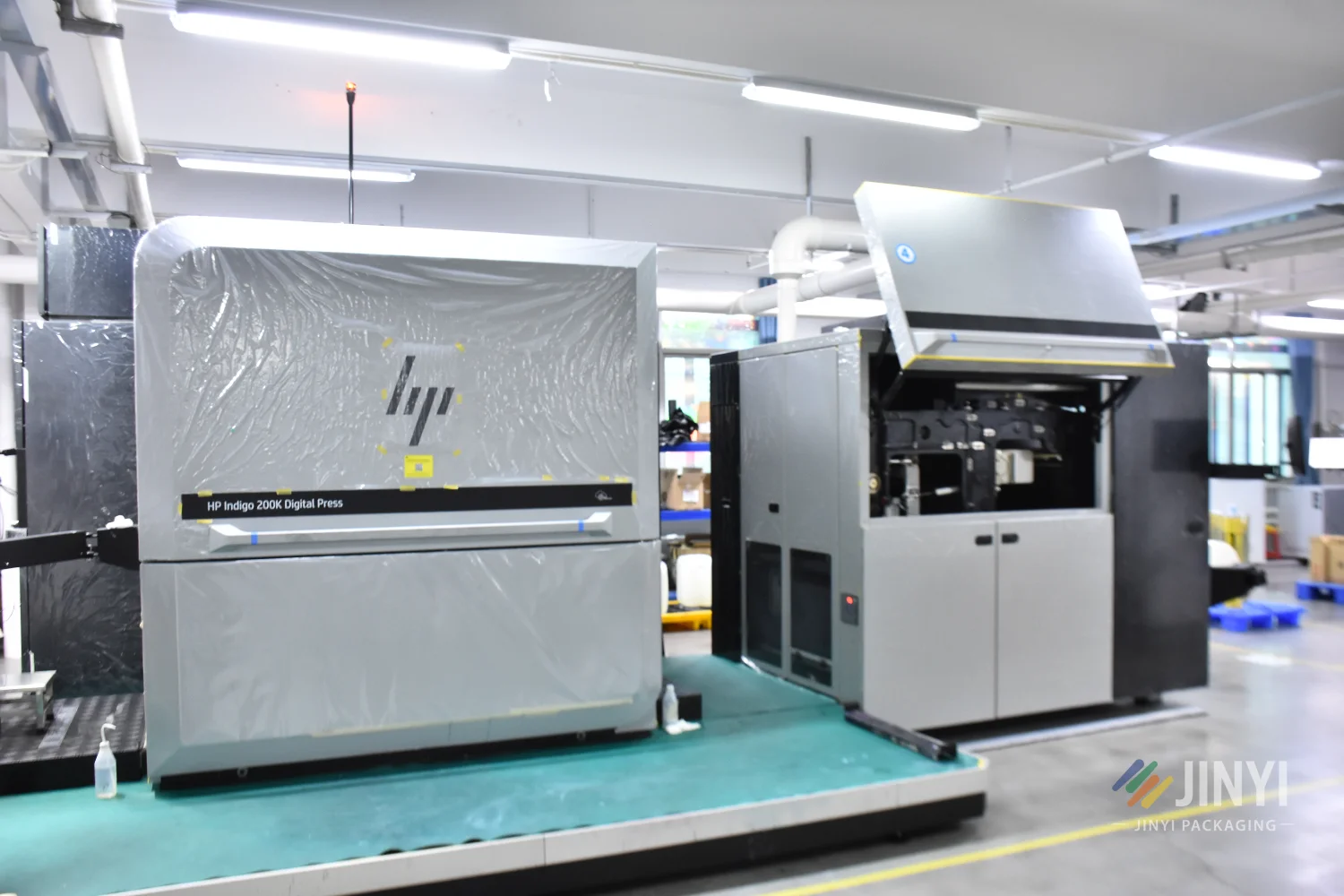
HP Indigo 200K - la presse la plus récente de JINYI, mise en service en 2025, augmentant la capacité d'impression numérique et réduisant les délais de livraison
Vous recherchez des emballages personnalisés pour des fromages ou des snacks assaisonnés en poudre ?
JINYI produit des sacs pour oreillers, des sachets à fond plat et des emballages pour snacks à haute barrière, avec des spécifications strictes en matière de barrière à l'humidité et une impression numérique ou par héliogravure en couleur - à partir de 500 unités, avec des échantillons physiques de préproduction et de la documentation sur les matériaux en standard. Parlez-nous de votre produit et nous vous recommanderons le film et le format adéquats.
JINYI est une usine de production d'emballages flexibles sur mesure, avec plus de 15 ans d'expérience dans la production, au service de marques de produits alimentaires, de compléments alimentaires, de café, d'aliments pour animaux de compagnie et de biens de consommation dans plus de 70 pays. Nous produisons des sachets à fond plat, des sachets coussins et des sachets à soufflets latéraux en PET/AL/PE, PET/VMPET/PE et autres spécifications de barrière - via l'impression numérique HP Indigo à partir de 500 unités et l'impression hélio en volume - avec une documentation complète sur les matériaux incluse en standard dans chaque commande.
C'est ce que Du film au produit fini - bien fait dans la pratique.
Elsa
Responsable du développement commercial - JINYI Packaging
Elsa dirige le développement commercial et la gestion des commandes des clients chez JINYI. Avec 8 ans d'expérience dans le commerce extérieur à Yiwu et Dongguan, elle a une connaissance approfondie de la demande du marché et des besoins réels des acheteurs, ce qui lui permet de prendre les bonnes décisions en matière d'emballage sur la base d'une connaissance réelle du client.
Besoins des clients Gestion des commandes Développement des entreprises
Un sac de Cheetos est un film laminé multicouche - généralement une couche extérieure imprimée en BOPP, une couche barrière en PET métallisé au milieu et un scellant intérieur en PE de qualité alimentaire. La couche barrière est essentielle pour bloquer l'humidité qui ferait s'agglutiner l'assaisonnement au fromage et lui ferait perdre sa saveur. Frito-Lay n'a pas publié de spécifications officielles, et les matériaux exacts varient en fonction du marché et de la production.
Pourquoi la poussière de fromage colle-t-elle à l'intérieur du sachet de Cheetos ?
L'assaisonnement Cheetos est une poudre sèche qui migre librement à l'intérieur du sac pendant la manipulation et le transport. Une certaine adhérence au film intérieur est normale. Pour les producteurs de produits similaires, l'énergie de surface du film intérieur influe sur la quantité de poudre qui adhère aux zones de scellage - un film à faible énergie de surface réduit l'adhérence et aide à maintenir l'intégrité du scellage pendant la durée de conservation du produit.
Pourquoi les sachets de Cheetos sont-ils si remplis d'air ?
L'espace de tête est constitué d'azote - et non d'air - et remplit deux fonctions. Il déplace l'oxygène pour empêcher les graisses du fromage de s'oxyder et de rancir, et il crée un tampon qui protège les fragiles structures de maïs soufflé contre l'écrasement pendant le transport. Les Cheetos Puffs ont besoin de plus d'espace que les chips plus denses car la structure extrudée creuse est nettement plus fragile.
Qu'est-ce que l'emballage des Cheetos Simply NKD ?
Simply NKD est une gamme de Cheetos sans colorant lancée en décembre 2025, disponible dans les variantes Puffs et Flamin’ Hot. L'emballage utilise un fond blanc avec un marquage rouge ou orange - une rupture visuelle totale avec le sac orange caractéristique - pour communiquer l'absence de colorants artificiels par le design plutôt que par une mention sur l'étiquette. Le produit a été lancé chez Walmart dans les formats 8 oz et 8,5 oz.
Puis-je commander des sachets à fromage personnalisés en quantités minimales ?
Oui. Grâce à l'impression numérique HP Indigo, il est possible de produire à partir de 500 unités des sachets à grignoter personnalisés avec des spécifications de barrière strictes - ce qui convient pour tester un nouveau goût, valider un design sur un échantillon physique ou lancer une édition limitée sans tirage minimum en héliogravure. JINYI propose l'impression numérique à partir de 500 unités avec une documentation complète sur les matériaux.