Material de rolo de alto desempenho construído para velocidade, consistência e produção escalável de embalagens.
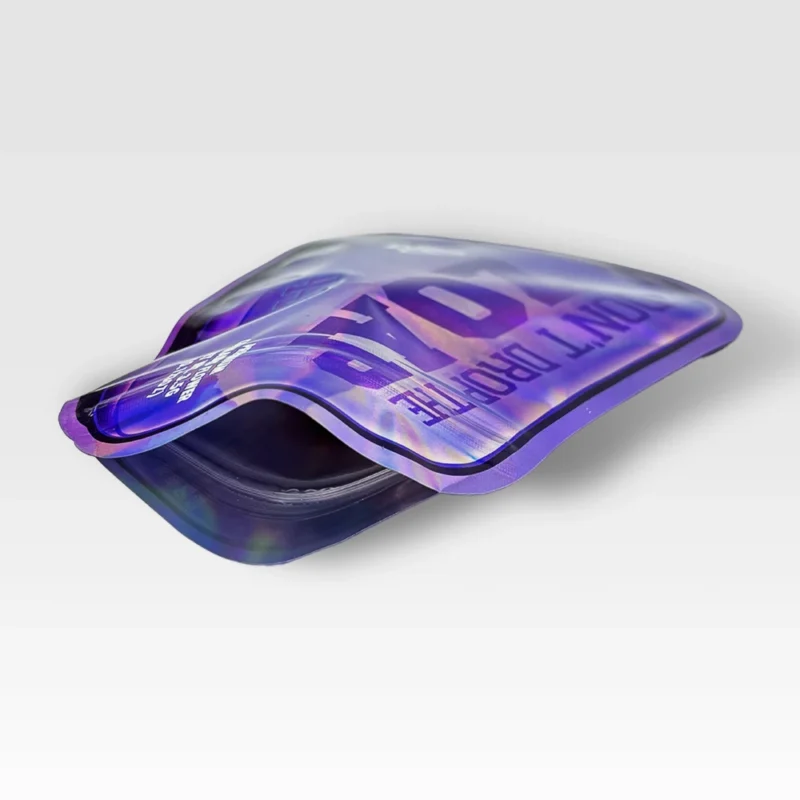
Saco de Mylar cortado
Presença de grande impacto nas prateleiras com uma forte barreira de proteção para manter os produtos frescos e em conformidade com as normas.
Bolsas planas
Um formato económico e economizador de espaço que proporciona um desempenho de selagem fiável para a venda a retalho e expedição diária.
Bolsas com bico para líquidos
Embalagem resistente a fugas e fácil de verter que aumenta a comodidade do utilizador e reduz a confusão na entrega.
Embalagem de sacos de almofadas
Embalagem tipo saqueta, leve e rápida de embalar, ideal para produtos de grande volume e para uma marca limpa.
Bolsa Quad Seal
Estabilidade semelhante à de uma caixa com um atrativo de prateleira de primeira qualidade - óptima para enchimentos mais pesados e um aspeto mais “vertical”.
Sacos com reforço lateral
Sacos de grande capacidade e eficientes em termos de espaço que maximizam o volume de enchimento, mantendo uma forma limpa e estruturada.
Bolsas de pé
Um dos formatos de crescimento mais rápido, que combina uma forte exposição nas prateleiras, um custo de transporte mais baixo e uma grande proteção da frescura.
Sacos de fundo plano
Caixa de jóias tipo gaveta
Caixas de jóias com gaveta para um desempacotamento de qualidade e uma proteção rígida.
Caixa de jóias com tampa flip-top
Caixas de jóias flip-top com construção rígida e apresentação de luxo.
Estojo rígido retrátil de duas peças
Caixas rígidas de duas peças para uma proteção e apresentação de luxo.
Caixas de correio
Caixas de correio em cartão canelado para um envio seguro e um desempacotamento com marca.
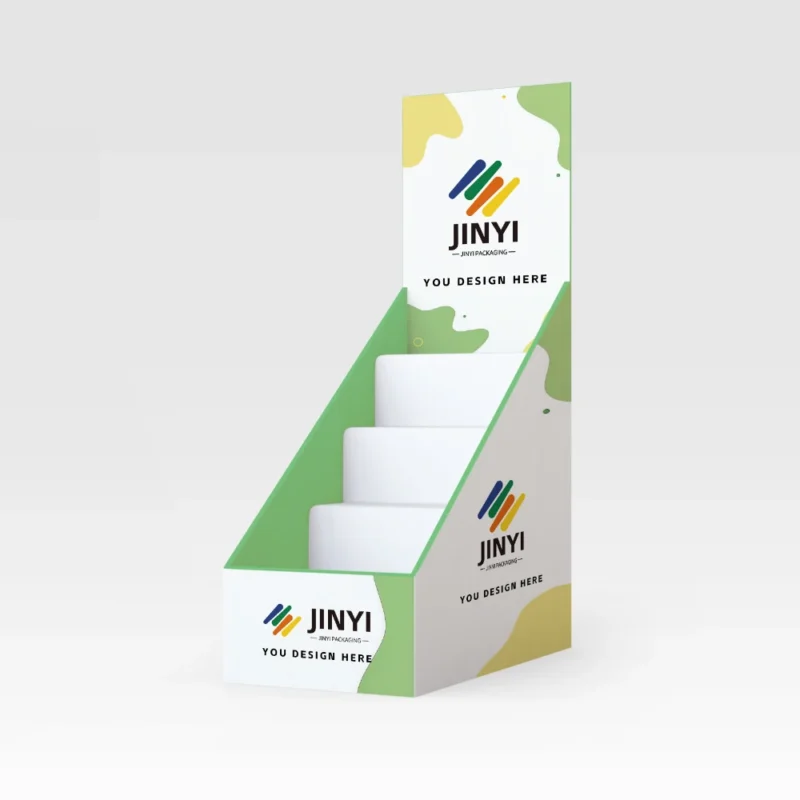
Caixas de exposição
Caixas de exposição personalizadas para vendas ao balcão e grande visibilidade nas prateleiras.
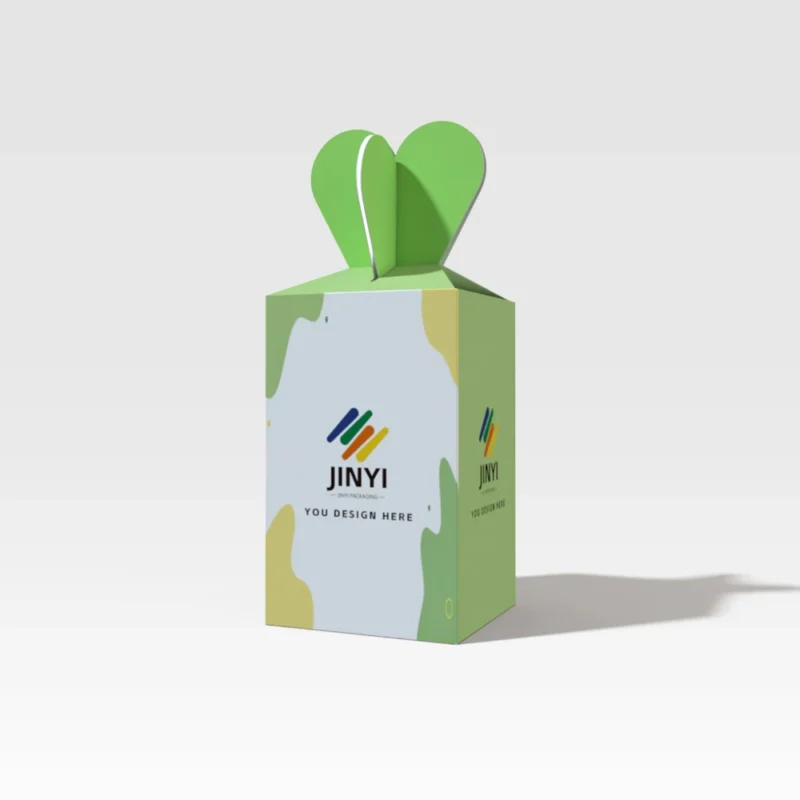
Caixas de oferta
Caixas de oferta personalizadas com estrutura e opções de acabamento premium.
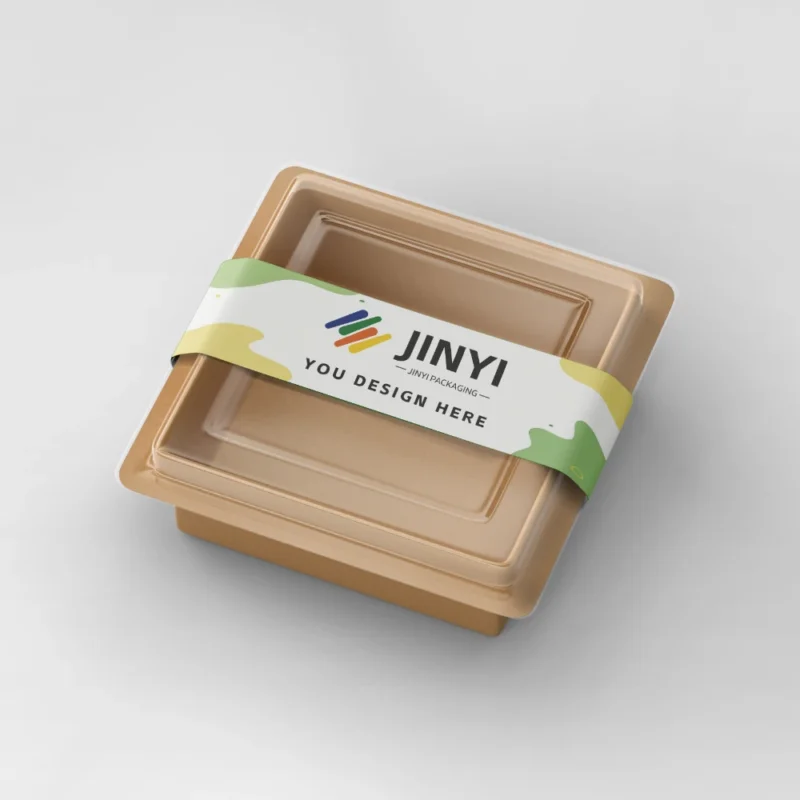
Caixas de embalagem com manga
Caixas de manga com invólucros impressos para uma marca flexível.
Caixa inferior com fecho automático
Caixas de fundo com fecho automático de montagem rápida para retalho e comércio eletrónico.
Caixa de fundo com fechadura
Caixas de fundo com fecho para uma embalagem rápida e um forte suporte de carga.
Caixas de extremidade de dobragem reta
Caixas com extremidades rectas para um fecho perfeito e exposição a retalho.
Saco de papel personalizado
Sacos de oferta de papel personalizados com pegas fortes e impressão nítida da marca.
Copos para frio em PET transparente
Copos frios PET transparentes para bebidas geladas - transparentes, robustos e resistentes a fugas.
Saco de oferta personalizado
Sacos de oferta de papel personalizados com pegas fortes e impressão nítida da marca.
Copo de papel
Copos de papel para bebidas quentes com fixação confortável e impressão limpa e consistente.
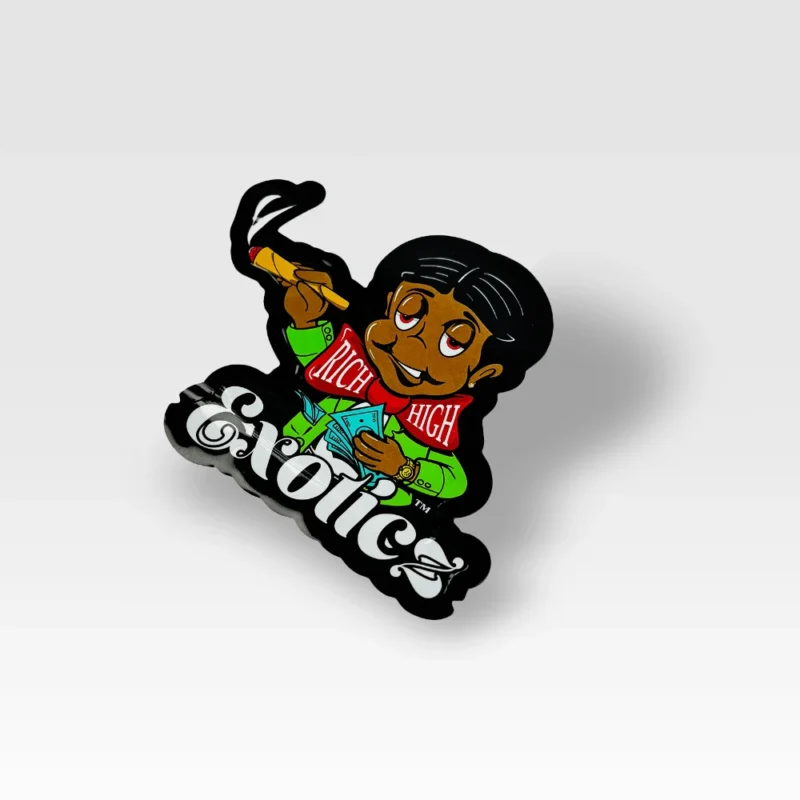
Bolsas planas para cannabis
Bolsas planas para cannabis com barreira elevada e espaço livre para rotulagem.
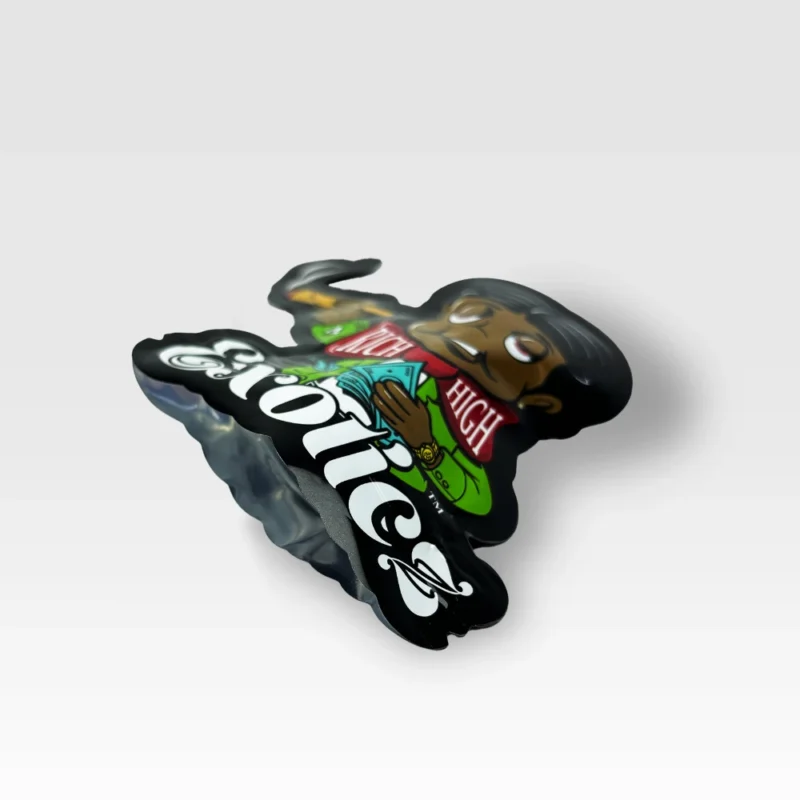
Sacos Mylar para ervas daninhas
Sacos de mylar para ervas daninhas com barreira forte, fechos de correr e opções de controlo de odores.
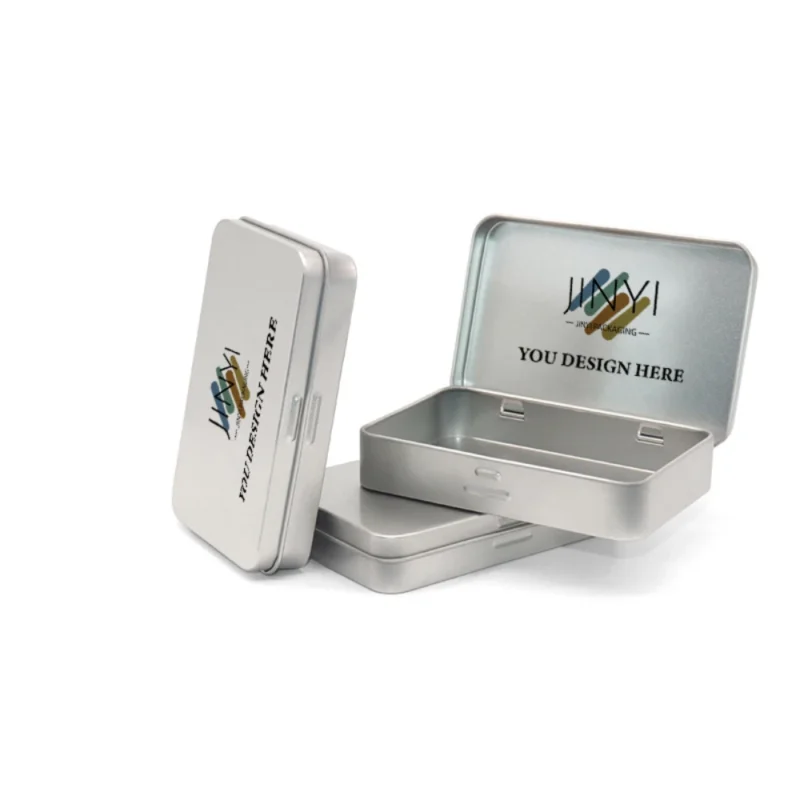
Caixas de lata personalizadas
Caixas de estanho personalizadas para uma proteção premium, reutilização e impressão a cores.
Etiquetas de manga retrátil
Etiquetas de manga retrátil com cobertura de 360° e impacto na prateleira.
Etiquetas em rolo personalizadas
Rótulos em rolo personalizados para uma aplicação rápida e uma rotulagem consistente da marca.
Autocolante cortado
Autocolantes cortados com arestas limpas e opções de materiais duradouros.
Folhas de autocolantes Kiss Cut
Folhas de autocolantes cortadas à mão para desenhos flexíveis e fáceis de descolar.
A JINYI partilha orientações práticas sobre embalagens para as suas decisões.
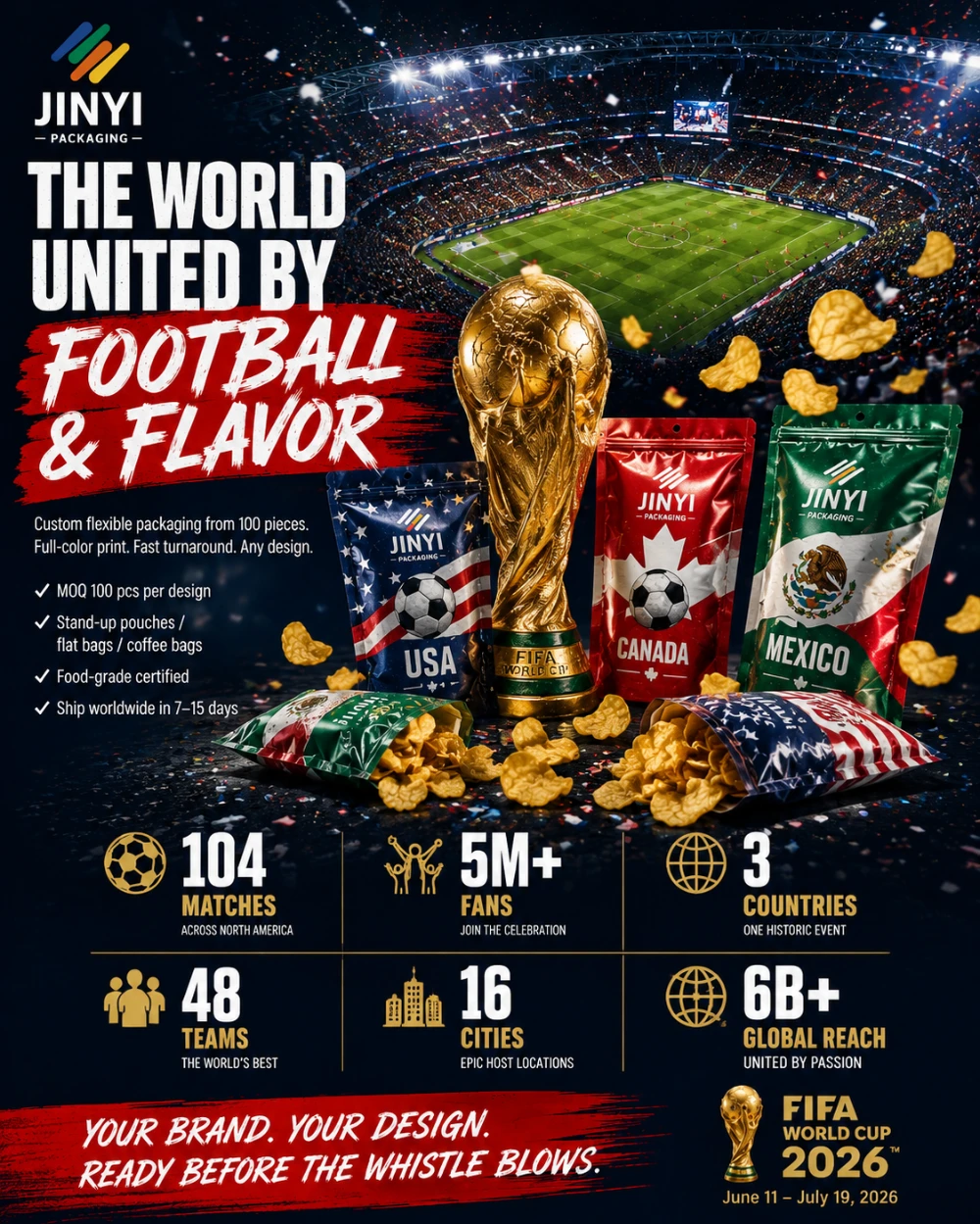
The 2026 FIFA World Cup opens on June 11 in Mexico City and closes on July 19 at MetLife Stadium in New Jersey. In between, 104 matches will be played across 16 venues in 16 cities spanning three countries — the United States, Mexico, and Canada. It is the largest World Cup in history by match count, by number of teams (48), and by geographic footprint. Total stadium attendance is projected to exceed 3.5 million, potentially breaking the all-time record set by the 1994 US World Cup. Total tourist expenditures in the US alone are projected at $6.4 billion, with food and beverage representing the single largest spending category at approximately $2.4 billion.
Every dollar of that food and beverage spending flows through a physical package. A cup, a bag, a box, a sachet, a pouch. None of those packages appear spontaneously — they are designed, specified, produced, and distributed months before the first ball is kicked. The packaging decision cycle for a major sporting event runs well ahead of the event itself, and for the brands that have not yet finalized their World Cup packaging, the window is closing.
This article is not about the football. It is about the packaging demand that a tournament of this scale generates — the formats involved, the brands already activating through limited-edition packaging, the production logistics that determine whether a brand can actually get product to market before the final whistle, and what flexible packaging manufacturers need to offer to serve this market effectively.
The Numbers: What 104 Matches Across 16 Cities Actually Mean for Packaging
Start with the stadium attendance figure. The combined official seating capacity across all 16 World Cup venues totals approximately 1.01 million seats. With 104 matches scheduled and stadiums expected to operate at or near 90 percent capacity, the total stadium attendance figure — 3.5 million plus — becomes concrete. That is 3.5 million individual game attendances, each representing one person entering a stadium and spending money on food and beverages during a match that runs approximately two hours.
Working through a conservative per-person consumption estimate gives a sense of the packaging volume involved. A stadium attendee at a summer outdoor event in North America will typically consume two to four beverages during a match — water, soft drinks, beer. Each beverage arrives in a cup, a can, or a bottle. They will likely purchase one to three snack items — chips, popcorn, nachos — each arriving in some form of flexible or rigid packaging. Many will buy a meal item — a hot dog, a burger, tacos — each in a wrapper, a box, or a tray with accompanying sauce sachets. Conservatively, each stadium attendee generates five to ten individual packaging touchpoints per match.
At 3.5 million total attendances and a conservative five packaging items per person, that is 17.5 million individual packaging units consumed inside stadiums across the tournament. At ten items per person, the number approaches 35 million. These numbers do not include the packaging consumed in the Fan Festivals — free public outdoor screenings held in every host city throughout the tournament, expected to draw millions more. They do not include the packaging generated by the surge in home viewing, bar and restaurant consumption, or retail sales of World Cup themed products across all 16 host cities and beyond.
The historical benchmark is instructive. The 1994 World Cup — the last time the US hosted — generated $623 million in economic activity in Los Angeles alone. Food and beverage sales across US host cities rose 15 percent compared to the previous year. That was a 32-team tournament. The 2026 edition has 48 teams, 104 matches instead of 52, and three host countries instead of one. The scale multiplier is not linear — it is structural.
The packaging implication: Every projection about attendance, spending, and consumption is a packaging demand forecast. The $2.4 billion food and beverage figure for the US alone is not abstract economic activity — it is cups, bags, boxes, sachets, and pouches, each of which was sourced, produced, filled, and distributed by a supply chain that was set in motion months before the opening match. The brands that planned early are already in position. The question for everyone else is whether there is still a window.
Three Packaging Categories That Will See the Biggest Surge
The packaging demand generated by a World Cup is not uniform — it clusters into three distinct categories, each with its own lead time, format requirements, and supply chain logic. Understanding which category a brand is operating in determines what the packaging decisions look like and when they needed to happen.
Category one — stadium and fan zone concessions. This is the highest-volume, most operationally complex category. McDonald’s, Coca-Cola, Lay’s (Frito-Lay), and Anheuser-Busch InBev collectively manage the majority of the food and beverage experience inside stadiums and at the official FIFA Fan Festivals in every host city. Coca-Cola’s partnership with FIFA spans nearly five decades. Lay’s is the Official Snack of FIFA World Cup 2026. These are not last-minute packaging decisions — the cups, bags, and boxes consumed at venues were specified, produced, and delivered through industrial-scale supply chains that were finalized months in advance. For smaller food vendors and local concessionaires contracted to operate within fan zones and host city events, the packaging window is tighter but the format requirements are simpler: cups, bags, and basic flexible packaging in unbranded or lightly branded formats.
Category two — retail and e-commerce packaging surge. Every major grocery retailer across the US, Mexico, and Canada will see elevated food and beverage sales for the six-week tournament period. The packaging surge here is not a new format requirement — it is a volume increase against existing packaging. But it also creates opportunity for brands that can introduce World Cup themed packaging in time for the retail window. Brands that secured official FIFA licensing or national federation partnerships have been activating through retail-specific limited edition packs since early in the year. Brands that did not pursue licensing but want to participate in the World Cup retail environment can do so through football-adjacent design themes, team color references, and promotional packaging that does not require official authorization.
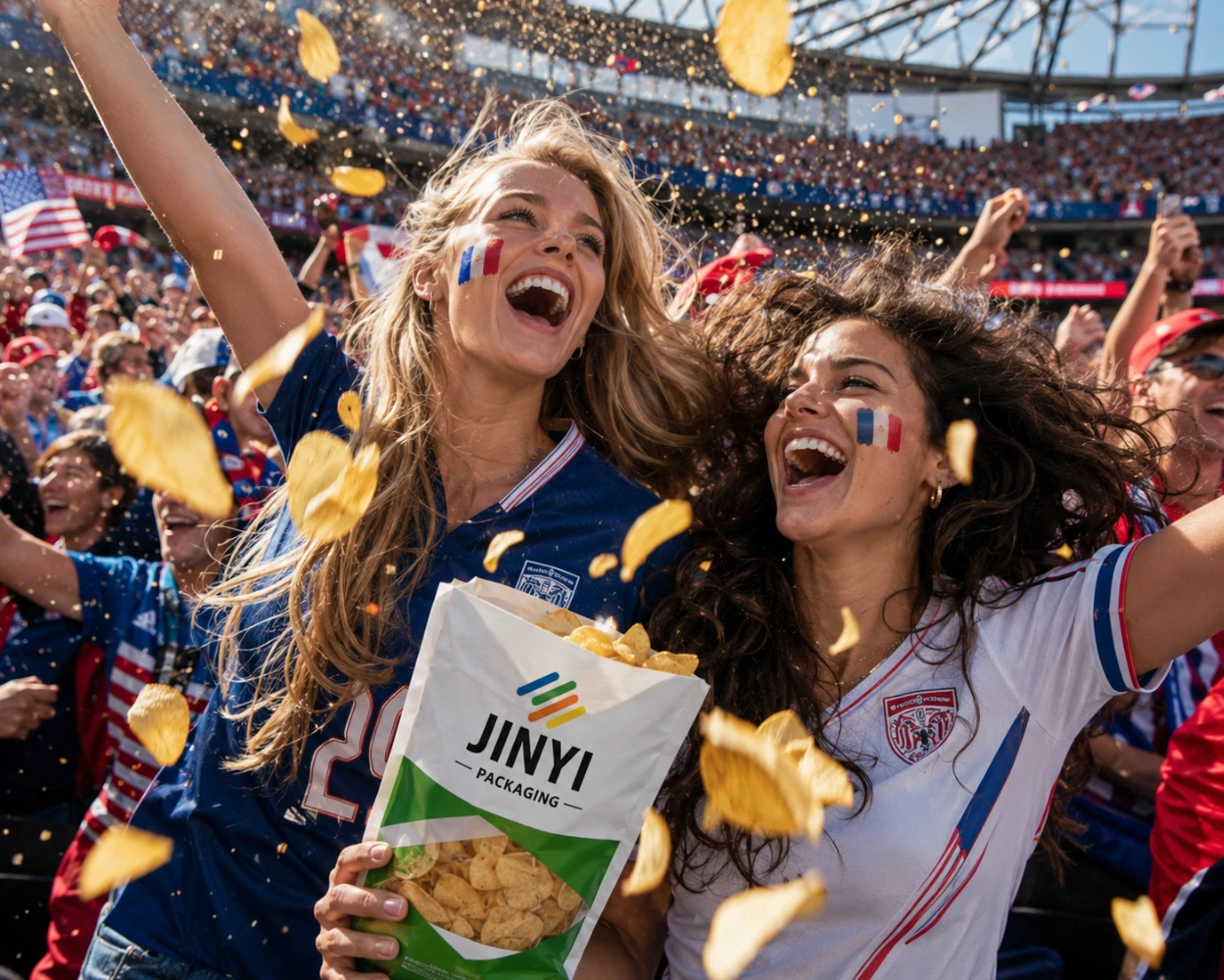
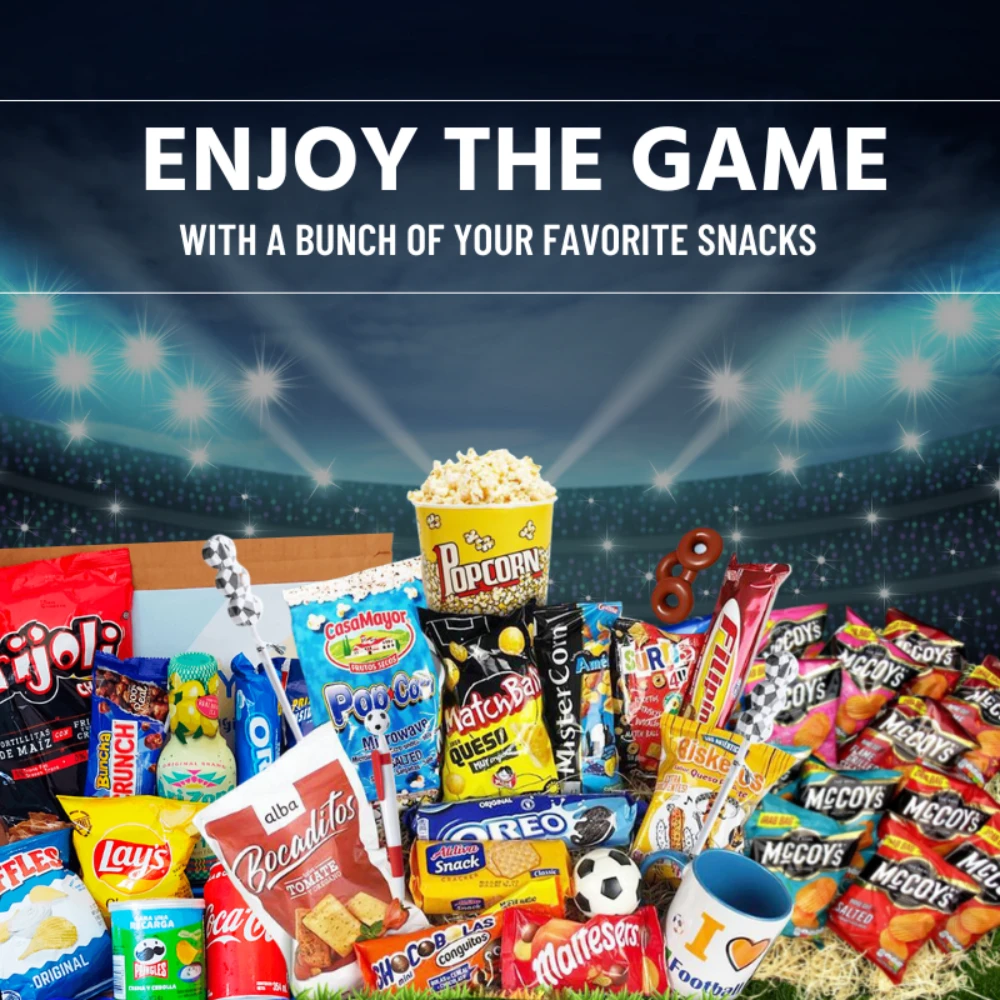
jinyi packaging world cup 2026 stadium fans snack pouch
Category three — functional beverages and performance nutrition. This is the category most directly relevant to the flexible packaging formats that brands in the supplement, electrolyte, and functional beverage space use. World Cup viewing creates a specific consumption context for sports nutrition and hydration products: fans watching matches at home or in bars will consume sports drinks, electrolyte powders, and energy products at elevated rates during the tournament period. The stick pack and single-serve sachet formats used by brands like Líquido IV e LMNT are well-positioned for this consumption context — portable, single-dose, and easy to consume during a viewing session. Brands in this category that have not already produced World Cup themed packaging are looking at a post-tournament activation window rather than an in-tournament one — but that window is real.
What Flexible Packaging Formats Are Most In Demand at World Cup Scale
The flexible packaging formats that see the highest demand during a major sporting event map directly onto the consumption contexts the event creates. Understanding the format logic helps brands make faster specification decisions when the window is short.
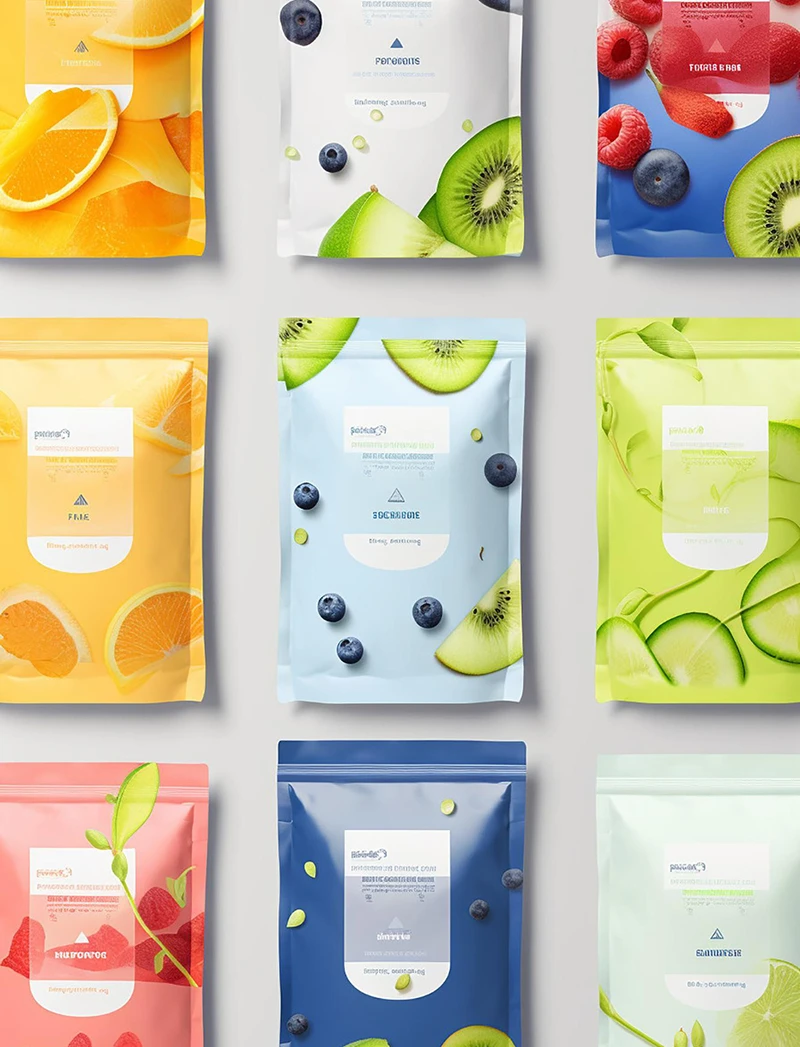
Bolsas de pé are the primary retail format for snacks, powdered beverages, coffee, and nutritional supplements. Their retail shelf presence, resealable closure, and compatibility with high-speed filling lines make them the default choice for brands selling through grocery and e-commerce channels. For World Cup retail activations, the stand-up pouch is the format where limited-edition graphics are most visible — the large front panel gives maximum space for team-themed graphics, national color schemes, and event-specific design elements. JINYI’s stand-up pouch production covers this format in barrier laminate specifications appropriate for food, supplement, and beverage powder products.
Pillow bags and stick packs are the portable single-serve format — the packaging consumed during a match, at a fan zone, in a stadium seat, or during a viewing session at home. The stick pack is purpose-built for the on-the-go consumption context that a World Cup creates: light, compact, single-dose, and easy to open without looking down. For electrolyte and hydration brands, the stick pack is the natural World Cup format. For snack brands, the pillow bag single-serve sachet serves the same function. JINYI’s formatos de saco de almofada e pacote de pauzinhos cover this range with barrier laminate options and food contact documentation as standard.
Side gusset bags serve the large-format snack and bulk coffee market — the bags stocked on retail shelves in the weeks leading up to the tournament, purchased by consumers loading up for home viewing parties and bar screenings. For brands supplying food service accounts serving fan zones and unofficial viewing events, the side gusset bag is also the bulk supply format. JINYI’s side gusset bag production covers large-format snack and dry goods packaging.
Flat-bottom bags serve the premium end of the retail and gifting market — limited-edition collector packaging, premium snack and confectionery brands, and the specialty food and beverage products that position themselves as World Cup premium experiences rather than commodity concessions. The flat-bottom bag’s structural presence on a retail shelf communicates premium quality before the design is read. For World Cup limited-edition products targeting gift purchase occasions, the flat-bottom bag format is the natural choice. The full range of format options across JINYI’s production capability is available through the custom pouches product category.
Formato
World Cup Use Case
Key Requirement
Brand Type
Bolsa de pé
Retail limited edition, home viewing stock-up
Large print surface for event graphics; resealable zipper
Snack, supplement, beverage powder, coffee
Stick pack / sachet
Stadium, fan zone, on-the-go single serve
Portable; easy tear; consistent seal integrity at high speed
Electrolyte, hydration, single-serve food
Saco com reforço lateral
Bulk retail, food service supply, home party packs
Large fill capacity; structural integrity under stack weight
How Food and Beverage Brands Are Activating Through Packaging Right Now
The 2026 World Cup has already generated a wave of limited-edition packaging activations from both official sponsors and non-sponsor brands finding their own angle. The examples are instructive — not just for what they look like, but for what they reveal about the production timeline and design logic that successful World Cup packaging requires.
Budweiser — the 40-year anniversary collector pack. Budweiser, celebrating its 40th consecutive year as the Official Beer Sponsor of the FIFA World Cup, launched what it describes as its largest-ever limited-edition collectible pack — 11 commemorative aluminum can and bottle designs, each paying tribute to a different World Cup from Mexico 1986 through 2026. The pack was developed in partnership with global branding agency Jones Knowles Ritchie (JKR) and includes QR codes on each design linking to digital content tied to that tournament era. The pack launched in international markets including Brazil, China, and selected European countries — not the US — months ahead of the tournament. This is a packaging project that would have been in development for at least 12 to 18 months before launch. The collector packaging mechanic — multiple designs in a numbered series — creates purchase incentive beyond the product itself.
Lay’s — official snack activation.As the Official Snack of FIFA World Cup 2026, Lay’s is running its “No Lay’s, No Game” campaign with packaging that carries the official FIFA World Cup 2026 mark and features campaign imagery with Lionel Messi, Alexia Putellas, David Beckham, and others. The campaign includes a WhatsApp group chat activation for fans and sweepstakes tied to the packaging. Official FIFA licensing on flexible snack packaging is the most direct form of World Cup packaging activation — the bag itself becomes a piece of tournament merchandise. For brands without official sponsorship, the design logic is still applicable: event-adjacent graphics, national color schemes, and football imagery can activate consumer associations without requiring a licensing agreement.
Michelob ULTRA — national team packaging. Michelob ULTRA, as another AB InBev brand activating around the tournament, launched a US Soccer Jersey Pack — bottles and cans designed to mirror the USMNT kit colors and aesthetic. The activation anchors to American national identity rather than the tournament broadly, which consumer research suggests reads as patriotic rather than purely football-adjacent. This is a useful lesson for non-beer brands: the World Cup creates an opportunity to activate around national identity and sporting pride, not just football fandom. Packaging that uses the host country’s colors and visual language can participate in the World Cup cultural moment without requiring FIFA authorization.
BuzzBallz — the non-sponsor activation. BuzzBallz, a ready-to-drink cocktail brand without official FIFA sponsorship, launched a “SoccerBallz” limited edition — eight flavors, six of them inspired by participating countries, in their signature ball-shaped packaging. The activation earned the highest distinctiveness score in consumer testing among all tested World Cup products, ahead of official sponsors. The lesson: packaging format innovation and product concept can outperform official branding if the idea is strong enough. BuzzBallz did not need the FIFA logo — the ball-shaped container was the concept, and the limited-edition flavor-to-country mapping did the cultural work.
The pattern across these activations is consistent: limited-edition World Cup packaging works best when the design concept does something the standard pack cannot — a collector series, a national identity reference, a format innovation, a cultural connection. Slapping a football on an existing bag is the weakest execution. Redesigning the pack around the event’s cultural energy is the strongest. For brands in the functional supplement and beverage category, the World Cup creates a specific opportunity: the performance and endurance associations of football are directly aligned with what electrolyte, protein, and recovery brands are already selling. Bloom Nutrition’s social-media-driven limited edition approach, AG1’s premium single-format system, and MUD\WTR’s multi-format architecture are all frameworks that could be adapted to a World Cup limited edition without requiring a complete design rebuild.
The Packaging Window Is Shorter Than Most Brands Think — and the Platform Model Will Not Save You
The tournament opens June 11. If you are reading this and your World Cup packaging has not been produced, the in-tournament window for the group stage and round of 16 is largely gone for a full production run from a manufacturing factory. But the window is not closed — it has shifted.
The knockout stages run from late June through the final on July 19. Quarter-finals, semi-finals, and the final generate the highest individual match viewership of the tournament — these are the matches that non-football fans watch. A brand that can produce and ship packaging within a 15 to 25 day production window from now can still reach retail shelves and DTC customers for the knockout stage peak. That requires a factory with digital print capability and a low minimum order quantity — not a platform with fixed templates and no physical sampling.
The platform model — ordering through Noissue, Sticker Mule, Packhelp, or similar services — has specific structural limitations that make it unsuitable for event-driven packaging with a real deadline. Platforms offer fixed format options, limited material specifications, no physical pre-production sample, and pricing that does not improve meaningfully at the volume levels relevant to a test run or a short-run limited edition. For a brand that needs 500 custom pouches in a specific barrier laminate with a unique graphic, produced and delivered within three weeks, the platform cannot execute. The comparison of Noissue vs direct factory e Sticker Mule vs direct factory covers these limitations in detail — the core issue is that platforms optimize for simplicity at low volume, not for specification flexibility at event speed.
The production timeline for a factory-direct custom flexible packaging order breaks down as follows: artwork finalization and dieline approval (1 to 3 days), pre-production physical sample production and approval (3 to 7 days), production run (7 to 15 days), and shipping (3 to 7 days depending on destination). End-to-end, a well-managed factory-direct order can be completed in 15 to 25 business days from artwork sign-off. For brands that have artwork ready or nearly ready, the knockout stage window is achievable. For brands starting from scratch, the post-tournament window — activating on the cultural momentum of the World Cup through late July and August — is the realistic target.
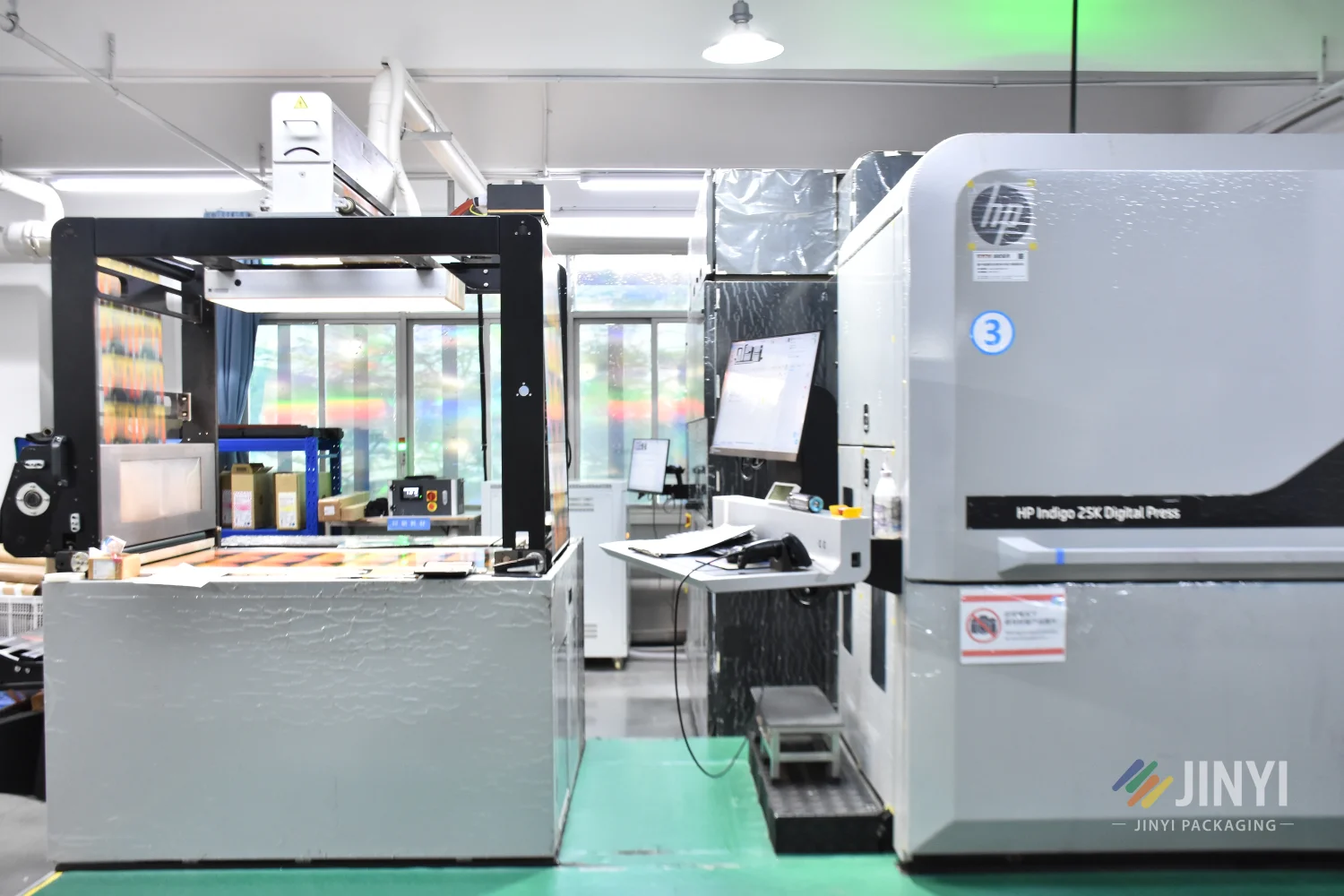
HP Indigo 25K na JINYI — resultados de cor consistentes em todos os sistemas de impressão através do ESKO Automation Engine
HP Indigo digital printing changes the economics of short-run event packaging in a specific way: minimum order quantities drop to 500 units or fewer, color accuracy is managed digitally rather than through plate-based processes, and design changes between runs are a file update rather than a tooling cost. For a World Cup limited edition that needs to be produced, tested, and shipped in a compressed window, digital print at low minimum order quantity is the correct production model. The alternative — gravure printing, which produces lower per-unit costs at volume but requires engraved cylinders, significant setup costs, and minimum runs of tens of thousands — is designed for the annual production cycle, not for the six-week tournament window.
The timeline reality: Budweiser’s collector pack was in development for 12 to 18 months before launch. Lay’s secured official FIFA sponsorship and activated through a major celebrity campaign. These are 18-month projects, not 18-day ones. Brands entering the World Cup packaging space now are not competing with Budweiser — they are activating for the knockout stage and the post-tournament cultural window. That is a real and underserved opportunity, but it requires a production partner who can move at event speed, not platform speed.
What Brands and Suppliers Need to Do to Capture the Remaining Window
The practical action list for a brand trying to get packaging to market before the World Cup final on July 19 is short and sequential. Every day of delay reduces the options.
Finalize the concept and artwork first. The most common delay in short-run packaging production is not the factory — it is the brand’s internal approval process. A design that requires three rounds of stakeholder review and two legal clearances will miss the window regardless of how fast the factory moves. For a World Cup activation, the concept needs to be simple enough to produce quickly and clear enough to approve without extensive iteration. National colors, football visual language, and event-adjacent graphics that do not require official FIFA authorization are the fastest path to production-ready artwork.
Choose the format before the design. The packaging format determines the dieline, and the dieline determines how the design is adapted. Trying to fit a design to a format after the design is completed adds iteration cycles. The format choice — stand-up pouch, stick pack, flat-bottom bag — should be made first, based on the product and the activation context, and the design should be developed within that format’s constraints from the start.
Request a physical pre-production sample before committing the full run. For a World Cup activation, the physical sample is not optional — it is the checkpoint that confirms the print color, the bag structure, the zipper function, and the overall quality before production volume is committed. A digital proof does not tell you how the national team’s color reads on a matte laminate substrate. The physical sample does. At JINYI, pre-production samples are a standard step in the production process — not an additional cost or a special request. For a detailed walkthrough of how the process works from artwork through finished bag, the guia para a produção de bolsas personalizadas covers each stage.
Plan for the post-tournament window. The World Cup final is July 19. The cultural conversation around the tournament — the winning team, the standout matches, the viral moments — will continue through August and into September. Brands that activate in August with packaging that references the tournament’s outcome or celebrates the host country experience are not late to the World Cup — they are early to the post-tournament moment, which has almost no packaging competition. A 500-unit limited edition produced in August with a “2026 World Cup Champion” or “Host Nation” design theme, distributed through DTC and gifting channels, can capture genuine consumer interest in a window where the big brands have moved on to the next campaign.
A JINYI produz bolsas stand-up, stick pack and pillow bag formats, sacos com reforço lateral, e flat-bottom bags via HP Indigo digital print from 500 units — with physical pre-production samples, barrier laminate specifications, and complete material documentation as standard. For brands that need event-speed packaging production, the conversation starts with the format and the deadline, not the design file.
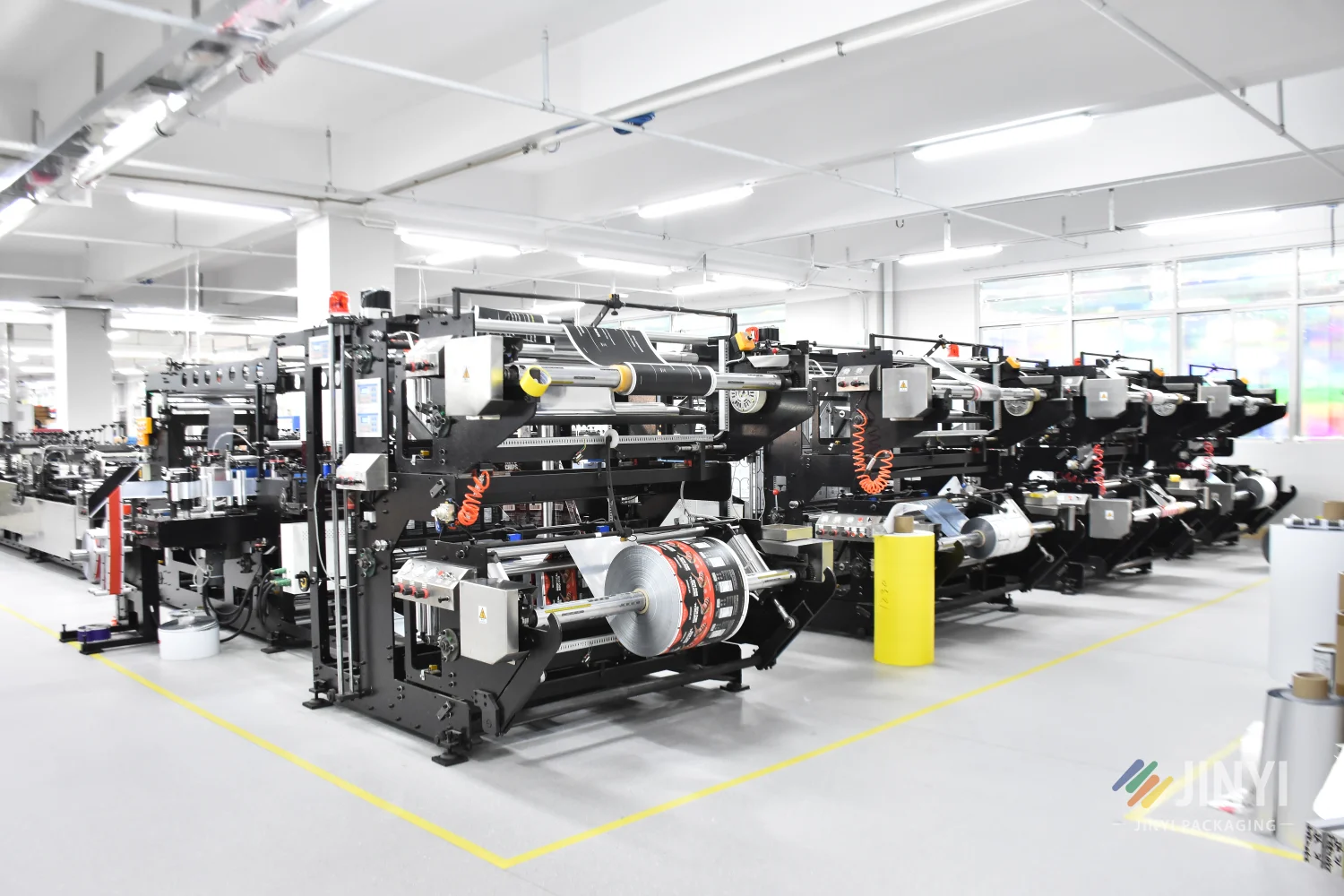
Linha de produção de sacos JINYI — conformação, selagem e corte de saquinhos verticais personalizados com parâmetros de selagem validados para cada lote
Need World Cup Packaging Produced at Event Speed?
JINYI produces custom flexible packaging from 500 units via HP Indigo digital print — with physical pre-production samples, barrier laminate specifications, and 15 to 25 business day production timelines. If the knockout stage window is your target, the conversation needs to start now.
A JINYI é uma fábrica de embalagens flexíveis personalizadas com mais de 15 anos de experiência em produção, que fornece marcas dos setores alimentar, de suplementos, de café, de alimentos para animais de estimação e de bens de consumo em mais de 150 países. Produzimos saquetas verticais, sacos de fundo plano, sacos tipo almofada e sacos com reforço lateral em PET/AL/PE, PET/VMPET/PE e outras especificações de barreira — através de impressão digital HP Indigo a partir de 500 unidades e impressão por gravura em grandes quantidades — com documentação completa dos materiais incluída de série em todas as encomendas.
É isso que Do filme ao acabamento - feito corretamente significa na prática.
Elsa
Gestor de Desenvolvimento Comercial - Embalagens JINYI
A Elsa lidera o desenvolvimento comercial e a gestão de encomendas de clientes na JINYI. Com 8 anos de experiência em comércio externo em Yiwu e Dongguan, tem um conhecimento profundo da procura do mercado e do que os compradores realmente precisam - transformando a visão real do cliente nas decisões corretas de embalagem.
Necessidades dos clientes Gestão de encomendas Desenvolvimento de negócios
How much food and beverage spending is expected at FIFA World Cup 2026?
Food and beverage is projected to be the single largest spending category for the 2026 World Cup, with US host cities alone expected to see approximately $2.4 billion in food and beverage expenditure. Total US visitor spending is projected at $6.4 billion. Across all three host countries, the tournament’s economic impact is estimated at $40.9 billion. These figures represent a significantly larger scale than any previous World Cup due to the expanded 48-team format and the three-country hosting arrangement.
What flexible packaging formats are most in demand for World Cup food and beverage brands?
Stand-up pouches are the primary retail limited-edition format, offering maximum print surface for event graphics. Stick packs and pillow bag sachets are the portable single-serve format for stadium, fan zone, and on-the-go consumption. Side gusset bags serve bulk retail and food service supply. Flat-bottom bags are appropriate for premium limited-edition and collector packaging. The right format depends on the product type, the consumption context, and the distribution channel — retail shelf, DTC, food service, or gifting.
Which brands have already launched World Cup 2026 limited-edition packaging?
Several major brands have activated through limited-edition packaging ahead of the 2026 tournament. Budweiser launched its largest-ever collectible pack — 11 commemorative designs covering every World Cup from 1986 to 2026. Lay’s, as the Official Snack of FIFA World Cup 2026, is running event-marked packaging with its “No Lay’s, No Game” campaign. Michelob ULTRA introduced a US Soccer Jersey Pack mirroring the USMNT kit. BuzzBallz launched a non-sponsor “SoccerBallz” limited edition with country-inspired flavors. Most of these activations were in development 12 to 18 months before the tournament opened.
Is it too late to produce World Cup packaging for the 2026 tournament?
The group stage window has largely passed for a full factory production run. However, the knockout stages — quarter-finals, semi-finals, and the final on July 19 — represent the tournament’s peak viewership, and a brand with production-ready artwork can reach market within 15 to 25 business days through a factory with digital print capability and low minimum order quantities. The post-tournament window through August also represents an underserved opportunity for brands that can activate on the tournament’s cultural momentum after the final whistle.
Do brands need official FIFA licensing to produce World Cup themed packaging?
No. Official FIFA licensing is required to use the FIFA World Cup trademark, logo, or official marks. However, football-adjacent design themes — national colors, football imagery, sporting event visual language — do not require official licensing. BuzzBallz activated successfully without official sponsorship by using a concept (country-inspired flavors in ball-shaped packaging) that was culturally resonant without requiring FIFA marks. National team color references, football-related graphics, and host country imagery can all be used without licensing, subject to standard trademark and copyright considerations for any specific imagery used.
What is the minimum order quantity for a World Cup limited-edition flexible packaging run?
At JINYI, custom flexible packaging via HP Indigo digital print is available from 500 units. This makes short-run World Cup limited editions economically viable for brands that do not have the volume to justify a gravure printing minimum run. A 500-unit run of custom stand-up pouches with a World Cup design can be produced, sampled, and shipped within a 15 to 25 business day window from artwork approval — sufficient to reach the knockout stage retail and DTC window if the process starts immediately.
Why can’t brands use platforms like Noissue or Sticker Mule for World Cup packaging?
Platform-based packaging services optimize for simplicity and accessibility at low volume, not for specification flexibility at event speed. Platforms offer fixed format options, limited material specifications, no physical pre-production sample, and pricing that does not scale efficiently for short-run custom production. A brand needing a specific barrier laminate, a custom format, a physical pre-production sample, and delivery within a three-week window cannot execute that through a platform model. For detailed comparisons of what platforms provide versus direct factory production, see our breakdowns of Noissue vs direct factory e Sticker Mule vs direct factory.