Material de rolo de alto desempenho construído para velocidade, consistência e produção escalável de embalagens.
Saco de Mylar cortado
Presença de grande impacto nas prateleiras com uma forte barreira de proteção para manter os produtos frescos e em conformidade com as normas.
Bolsas planas
Um formato económico e economizador de espaço que proporciona um desempenho de selagem fiável para a venda a retalho e expedição diária.
Bolsas com bico para líquidos
Embalagem resistente a fugas e fácil de verter que aumenta a comodidade do utilizador e reduz a confusão na entrega.
Embalagem de sacos de almofadas
Embalagem tipo saqueta, leve e rápida de embalar, ideal para produtos de grande volume e para uma marca limpa.
Bolsa Quad Seal
Estabilidade semelhante à de uma caixa com um atrativo de prateleira de primeira qualidade - óptima para enchimentos mais pesados e um aspeto mais “vertical”.
Sacos com reforço lateral
Sacos de grande capacidade e eficientes em termos de espaço que maximizam o volume de enchimento, mantendo uma forma limpa e estruturada.
Bolsas de pé
Um dos formatos de crescimento mais rápido, que combina uma forte exposição nas prateleiras, um custo de transporte mais baixo e uma grande proteção da frescura.
Sacos de fundo plano
Caixa de jóias tipo gaveta
Caixas de jóias com gaveta para um desempacotamento de qualidade e uma proteção rígida.
Caixa de jóias com tampa flip-top
Caixas de jóias flip-top com construção rígida e apresentação de luxo.
Estojo rígido retrátil de duas peças
Caixas rígidas de duas peças para uma proteção e apresentação de luxo.
Caixas de correio
Caixas de correio em cartão canelado para um envio seguro e um desempacotamento com marca.
Caixas de exposição
Caixas de exposição personalizadas para vendas ao balcão e grande visibilidade nas prateleiras.
Caixas de oferta
Caixas de oferta personalizadas com estrutura e opções de acabamento premium.
Caixas de embalagem com manga
Caixas de manga com invólucros impressos para uma marca flexível.
Caixa inferior com fecho automático
Caixas de fundo com fecho automático de montagem rápida para retalho e comércio eletrónico.
Caixa de fundo com fechadura
Caixas de fundo com fecho para uma embalagem rápida e um forte suporte de carga.
Caixas de extremidade de dobragem reta
Caixas com extremidades rectas para um fecho perfeito e exposição a retalho.
Saco de papel personalizado
Sacos de oferta de papel personalizados com pegas fortes e impressão nítida da marca.
Copos para frio em PET transparente
Copos frios PET transparentes para bebidas geladas - transparentes, robustos e resistentes a fugas.
Saco de oferta personalizado
Sacos de oferta de papel personalizados com pegas fortes e impressão nítida da marca.
Copo de papel
Copos de papel para bebidas quentes com fixação confortável e impressão limpa e consistente.
Bolsas planas para cannabis
Bolsas planas para cannabis com barreira elevada e espaço livre para rotulagem.
Sacos Mylar para ervas daninhas
Sacos de mylar para ervas daninhas com barreira forte, fechos de correr e opções de controlo de odores.
Caixas de lata personalizadas
Caixas de estanho personalizadas para uma proteção premium, reutilização e impressão a cores.
Etiquetas de manga retrátil
Etiquetas de manga retrátil com cobertura de 360° e impacto na prateleira.
Etiquetas em rolo personalizadas
Rótulos em rolo personalizados para uma aplicação rápida e uma rotulagem consistente da marca.
Autocolante cortado
Autocolantes cortados com arestas limpas e opções de materiais duradouros.
Folhas de autocolantes Kiss Cut
Folhas de autocolantes cortadas à mão para desenhos flexíveis e fáceis de descolar.
A JINYI partilha orientações práticas sobre embalagens para as suas decisões.
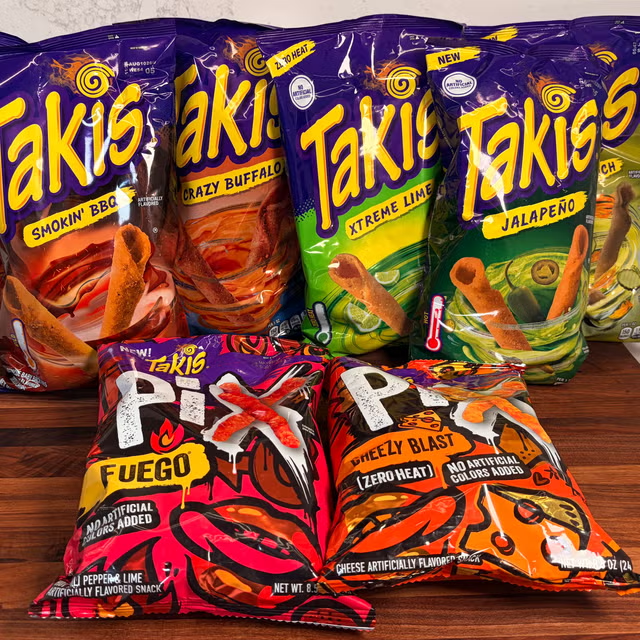
Takis is not a Frito-Lay brand. That distinction matters more than it might seem. In a North American snack aisle dominated by PepsiCo’s Frito-Lay portfolio — Lay’s, Doritos, Cheetos, Ruffles — Takis is the product that broke through from outside that system, built a devoted following without the infrastructure of one of the world’s largest food companies, and became a cultural phenomenon among Gen Z consumers largely through word of mouth and social media before any major marketing campaign caught up with the reality. Takis is made by Barcel, a snack division of Grupo Bimbo — the Mexican multinational that is the largest baking company in the world by volume, better known outside Mexico for owning Sara Lee, Entenmann’s, and Thomas’ English Muffins. Within Mexico, Barcel is the primary competitor to Frito-Lay’s Sabritas brand, and Takis is its flagship product.
The product was invented in 1999 by Morgan Sanchez, working within Barcel’s product development team. The brief was a rolled tortilla chip with an intense, polarizing flavor — the kind of snack that generates strong opinions rather than mild acceptance. The result was a tightly rolled corn tube, coated in a chili-lime powder so aggressively seasoned that it became its own category of eating experience. The original Fuego flavor — hot chili pepper and lime — remains the defining product. It launched in Mexico as Taquis, was renamed Takis in 2004, entered the United States that same year targeting the Hispanic demographic, and then expanded far beyond that initial audience. Today Takis sells in more than 36 countries, and the brand’s growth trajectory over the past decade has been driven as much by TikTok reaction videos and schoolyard word-of-mouth as by conventional retail strategy.
The Takis bag looks superficially similar to any other chip bag in the snack aisle — a pillow of metallized film with a bold graphic. But the product inside makes different demands on the packaging than a plain potato chip does, and Barcel’s packaging history includes at least one milestone that none of the major Frito-Lay brands can claim. This article breaks down the Takis bag from a factory perspective: the format, how the rolled chip shape changes the packaging requirements, what the film is made of, how Barcel became the first snack company in the world to use degradable metallic packaging, and what the brand’s visual system communicates through its deep purple and black bags.
Takis Packaging Format: A Pillow Bag Built for an Unusual Chip
Like every other major chip brand, Takis’ primary packaging format is the saco de almofada — a back-sealed film tube formed on a vertical form-fill-seal (VFFS) machine, filled with a weighed portion of chips, nitrogen-flushed, and end-sealed. The format runs from 1oz single-serve bags through 3.25oz snack size, 9.9oz sharing bags, and Party Size bags up to 24.7oz. Each size targets a different consumption occasion, and all of them use the same pillow bag format scaled to the fill weight.
Takis also appears in multipack box formats — 14-bag cases sold through club stores and Amazon — where the individual pillow bags are the primary packaging unit enclosed in a printed carton. There is no canister or rigid format in the Takis range, which makes the packaging story simpler than Lay’s or Doritos: one format, one film specification, across the full product line. For brands evaluating their own snack packaging, the absence of format complexity is itself a useful signal: a strong product identity does not require format variety to communicate it. Takis uses one bag shape and relies entirely on print, color, and flavor branding to differentiate within the range.
Brands that want more shelf presence than a pillow bag delivers — a format that stands upright without a clip strip or shelf support — can achieve that through a bolsa de pé, which uses more film per unit but creates a self-standing retail footprint. The film specification for a rolled tortilla chip in a stand-up format is identical to the pillow bag; the format change affects how the bag behaves on shelf, not how it protects the product.
Nota de formato: Takis demonstrates that a single bag format — the pillow bag — is sufficient to build one of the world’s most recognizable snack brands. Format complexity is a cost driver, not a brand signal. Strong print design and a clearly differentiated product do the recognition work that multiple bag formats cannot.
The Rolled Shape and What It Does to the Seasoning — and the Bag
The Takis tube shape is not a styling choice. It is an engineering decision made at the product development stage: a rolled tortilla chip has a significantly higher surface-area-to-volume ratio than a flat chip of equivalent size. More surface area relative to mass means more seasoning contact per bite — which is precisely the point for a product built around flavor intensity. A flat Doritos-style chip delivers seasoning across two faces and four edges. A Takis tube delivers seasoning across a continuously curved surface plus the hollow interior, coating every part of the chip that the mouth contacts. The format is the delivery mechanism for the flavor, not just the shape.
That same high surface area creates specific packaging considerations. The Fuego seasoning is a dry powder blend of chili pepper and lime — which means it contains citric acid and other acidic flavor compounds in addition to the oils and spice components. Citric acid is mildly corrosive over time. In a sealed bag with high powder contact against the inner film, an inner sealant that reacts with acidic seasoning compounds over a months-long shelf life creates a risk of flavor migration and film degradation at the contact zones. Compared to Lay’s plain potato chips, which require oil-resistant inner film, or Cheetos cheese puffs, which require moisture-blocking inner film for hygroscopic cheese powder, Takis requires an inner film specified for acid-resistant food contact — a requirement that a generic “food-grade PE” designation covers in principle, but which deserves explicit validation in the sourcing conversation for any brand producing a citric-acid-heavy seasoned snack.
The tube shape also affects how the chips pack inside the bag. Rolled chips have a less predictable packing geometry than flat chips — they orient randomly, interlock with each other, and create uneven load distribution inside a nitrogen-pressurized pillow. A flat tortilla chip like Doritos tends to settle into a more consistent stack geometry during transport. Rolled chips shift and re-orient continuously, which means the nitrogen headspace cushion needs to accommodate a more dynamic internal load. The headspace calibration for a Takis bag is a more variable engineering problem than it is for a flat chip, and breakage rates from crush damage are sensitive to the ratio of gas volume to fill weight in a way that plain chip bags are not.
Film Structure: What a Takis Bag Is Actually Made Of
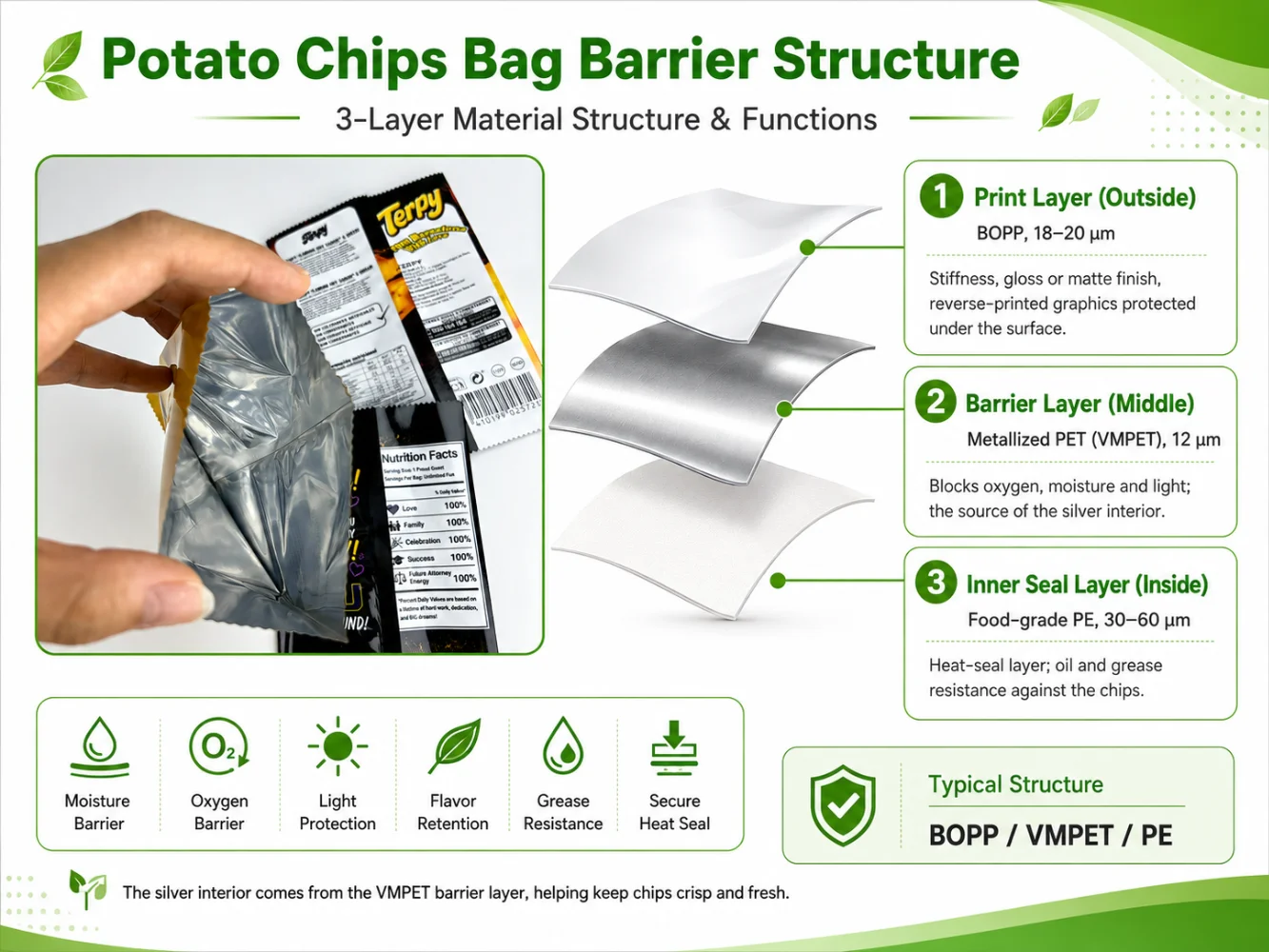
A Takis bag is a multilayer laminated film constructed on the same functional logic as any other chip bag: a printable outer film, a barrier layer in the middle, and a sealant inner film. The outer layer is an oriented polypropylene or polyester film — stiff enough to run reliably on a VFFS machine at speed, smooth enough to carry the deep purple and black reverse-printed graphics that define the Takis visual identity. Reverse printing means the ink is applied to the underside of the outer film before lamination, sealing it between layers so the graphics cannot be abraded off in retail handling — critical for a bag that is moved, squeezed, and handled frequently by consumers checking out the product.
The middle layer provides the barrier against oxygen, moisture, and light. As with other snack bags in this category, the standard choice is a metallized film — a polymer substrate with an ultra-thin aluminum layer vacuum-deposited onto it — rather than true aluminum foil. Metallized film delivers the barrier performance needed for a seasoned chip at lower cost and weight than foil, and flexes without the pinholing that thin foil develops under repeated flexion. The inner layer is food-grade polyethylene — the heat-seal layer that forms the bag’s seals and contacts the product directly. Barcel has not published official film specifications for Takis packaging. The structure below is estimated on the basis of the product’s requirements and industry-standard specifications for spicy seasoned snack packaging.
Camada (Exterior → Interior)
Material estimado
Função
Camada de impressão (exterior)
BOPP ou PET, 15-20 μm
Stiffness, VFFS runnability, reverse-printed deep purple and black full-bleed graphics
Camada de barreira (meio)
PET metalizado (VMPET), 12 μm
Blocks oxygen, moisture and light; source of the silver interior; degradable variant introduced 2009
Camada de vedação interna (interior)
PE de qualidade alimentar, 40-60 μm
Heat-seal performance; acid-resistant food contact for citric-acid-heavy chili-lime seasoning
Note: Film structure is estimated based on Takis’ product requirements and industry-standard specifications for spicy seasoned rolled chip packaging. Barcel has not published official layer-by-layer material documentation. Specifications vary by market and production run.
Estrutura de barreira BOPP / VMPET / PE - uma construção normalizada de sacos de aparas da JINYI.
The 2009 Milestone: How Takis Became the First Snack Brand to Use Degradable Metallic Packaging
In 2009, Grupo Bimbo and Barcel announced that Takis would become the first snack product in the world to use degradable metallic packaging — a technology developed in partnership with CONACYT, Mexico’s national science and technology council, and Symphony Environmental, a UK-based materials company. The innovation was the incorporation of a pro-oxidant additive into the metallized film that causes the material to break down into smaller fragments through oxidation after the bag’s useful life, rather than persisting as intact plastic for decades. The announcement positioned Takis as a sustainability pioneer in the snack category, at a time when most snack brands were not publicly engaging with the recyclability or degradability of their flexible packaging.
The approach taken by Barcel in 2009 is different from the direction most brands are pursuing today. The current industry consensus has moved toward mono-material recyclable films — structures made from a single polymer family, typically all-PE or all-PP, that can enter existing recycling streams without separation. The oxo-degradable approach that Barcel pioneered produces smaller plastic fragments rather than eliminating plastic — a distinction that has become increasingly significant as understanding of microplastic behavior has developed. Some regulatory bodies in the EU have moved to restrict oxo-degradable plastics on these grounds. The 2009 Takis initiative was genuine innovation for its time and context; the sustainability conversation has evolved considerably in the decade and a half since. Brands navigating packaging sustainability decisions today are looking at a more complex set of options than were available in 2009, and the right choice depends on where the product is sold, what recycling infrastructure exists there, and what claims the brand can make credibly in its specific market — a point we explored in depth when examining how Lavazza navigated its own recyclable film transition.
Nota sobre a sustentabilidade no abastecimento: “Degradable,” “compostable,” and “recyclable” are not interchangeable claims. Each requires a specific film structure, certification, and end-of-life pathway that has to match the waste infrastructure where the product is sold. Before making any sustainability claim on your packaging, confirm what the film actually does after disposal — and what the regulatory environment in your target market permits you to state.
The Purple Bag and How Takis Uses Color as a Brand System
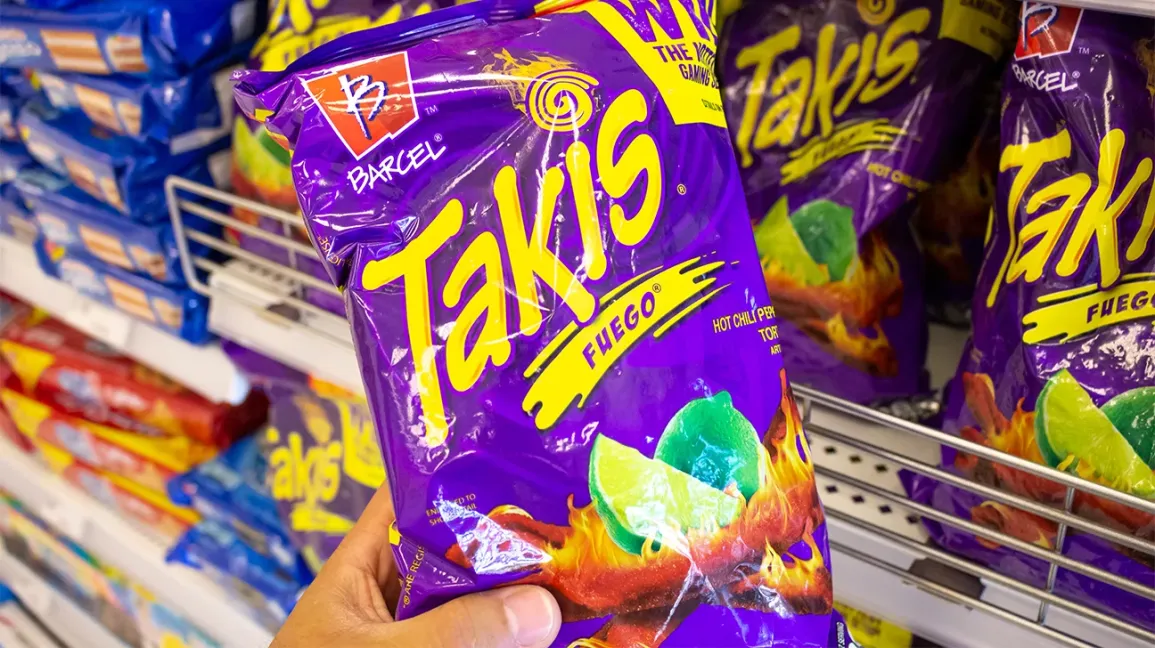
Takis Fuego’s signature packaging is a deep purple-to-black gradient bag — a deliberate departure from the warm oranges, yellows, and reds that dominate the snack aisle. The choice of purple-black is not a flavor signal in the conventional sense; it is a brand positioning statement. Dark, intense packaging in a category of bright, warm colors reads as “other” — as the product that is not trying to be friendly or approachable, but polarizing and intense. For a snack built entirely around the proposition of extreme heat, the bag’s color before the product is tasted is already communicating the experience inside.
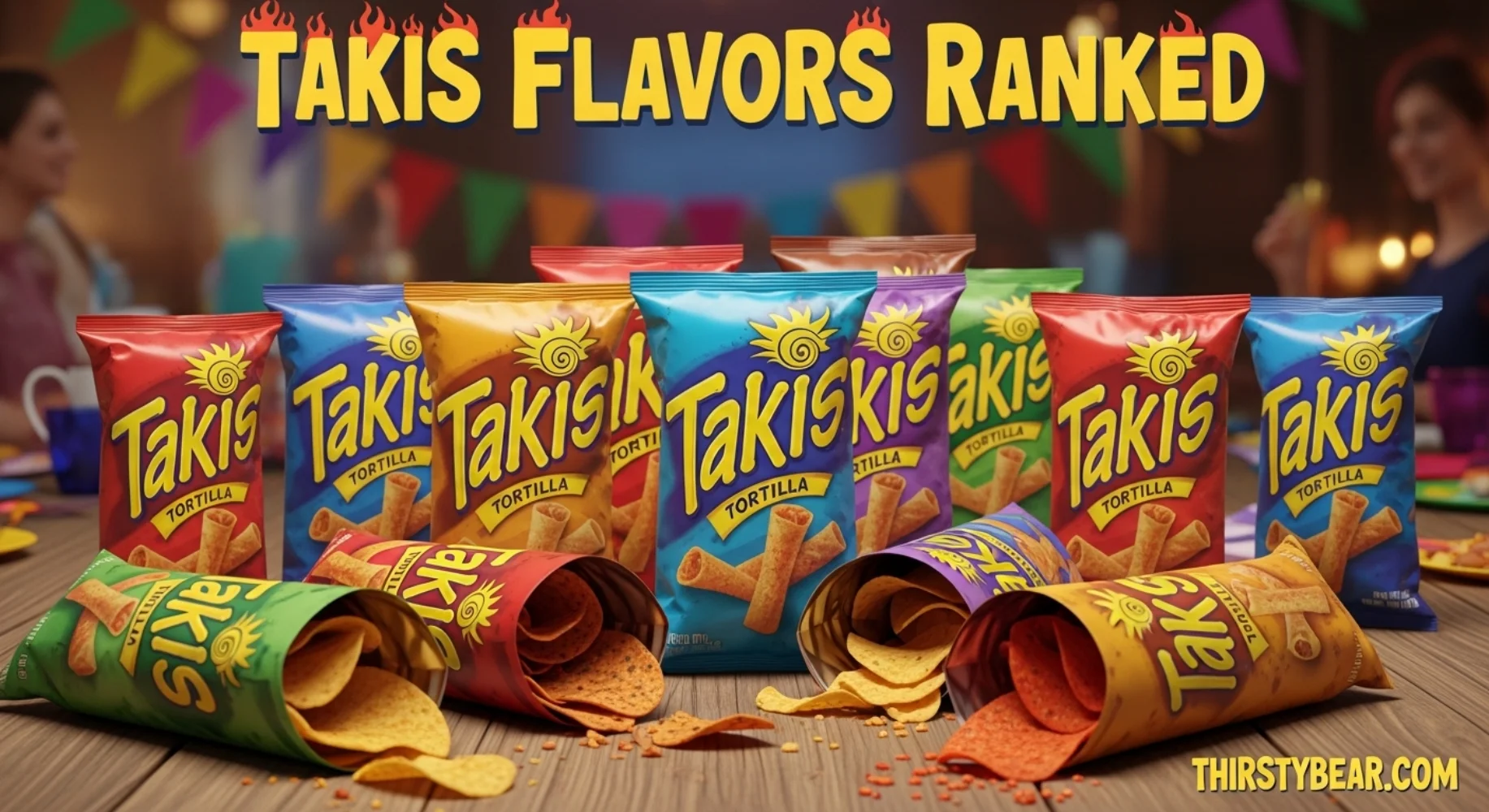
Barcel extends this color system across the Takis flavor range. Fuego is the deep purple-black flagship. Nitro — habanero and lime, marketed as hotter than Fuego — uses black with red accents, escalating the intensity signal. Zombie — cucumber and chili, the mildest flavor — uses green, signaling something different within the range without breaking the dark, high-contrast visual language. Crunchy Fajitas uses a warm red-brown palette. The color system allows a consumer to navigate the flavor range by visual intensity — darker and more muted means more intense, lighter means milder — without reading any text on the bag. That is a sophisticated brand design system for a product that built much of its following among young consumers who process visual information fast and at distance, on shelves and on phone screens.
The deep, full-bleed purple printing on the Fuego bag is also a demanding print job — similar in ink coverage to Doritos’ deep reds and blues, requiring tight color management to maintain consistency across production runs. For brands developing their own spicy snack packaging, the Takis visual system offers a useful counter-example to the snack industry default: bold color does not have to mean warm color. A dark, high-contrast palette communicates intensity as effectively as red or orange, and positions the product as something distinct from the Frito-Lay majority. This is particularly relevant for brands targeting the growing market for bold, globally-inspired snack flavors — a category that the World Cup 2026’s three host nations, including Takis’ home country of Mexico, have brought significant consumer attention to in the snack packaging conversation around the tournament.
Sourcing Custom Spicy Snack Bags: What Takis Gets Right That Most Brands Miss
Takis built a global brand on a single bag format, a tightly defined flavor identity, and packaging design that communicates brand character before the consumer reads a word. The engineering behind the bag — the inner film acid resistance, the nitrogen headspace calibrated to a rolling chip geometry, the deep-color print discipline — is invisible to the consumer and essential to the product’s commercial performance. For a brand sourcing its own spicy or acidic-seasoned snack packaging, each of those engineering decisions translates directly into a conversation with a packaging supplier.
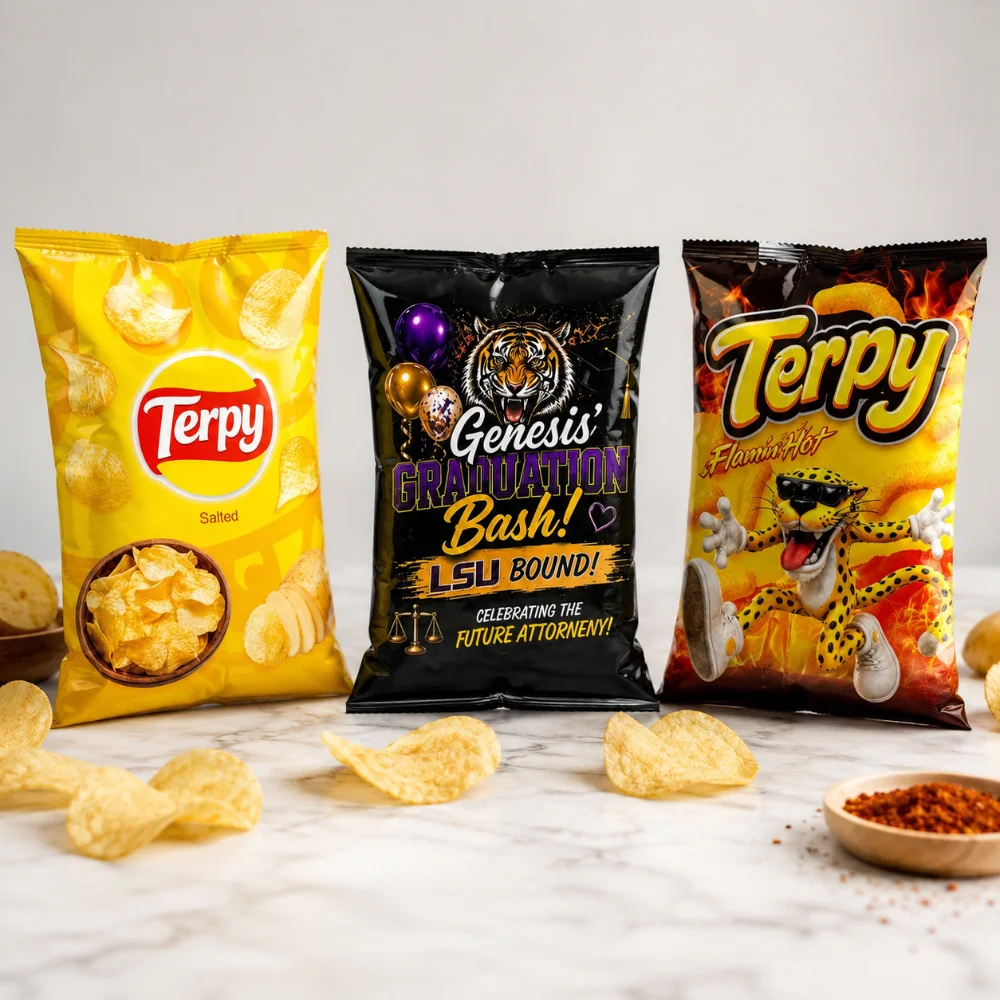
Custom chip bags produced by JINYI for client brands — printing, film and bag-making done in-house.
The inner film conversation is the one most brands have too late. A generic food-grade PE inner film is a correct starting point. But for a product with citric acid, chili pepper oil, or other reactive seasoning compounds, the sourcing question is whether the inner film has been validated against those specific compounds over the target shelf life — not whether it meets food contact standards in general. The difference between a generic spec and a validated spec shows up in the form of flavor tainting, seal weakening, or film discoloration at the contact zones, typically discovered after a production run rather than before it.
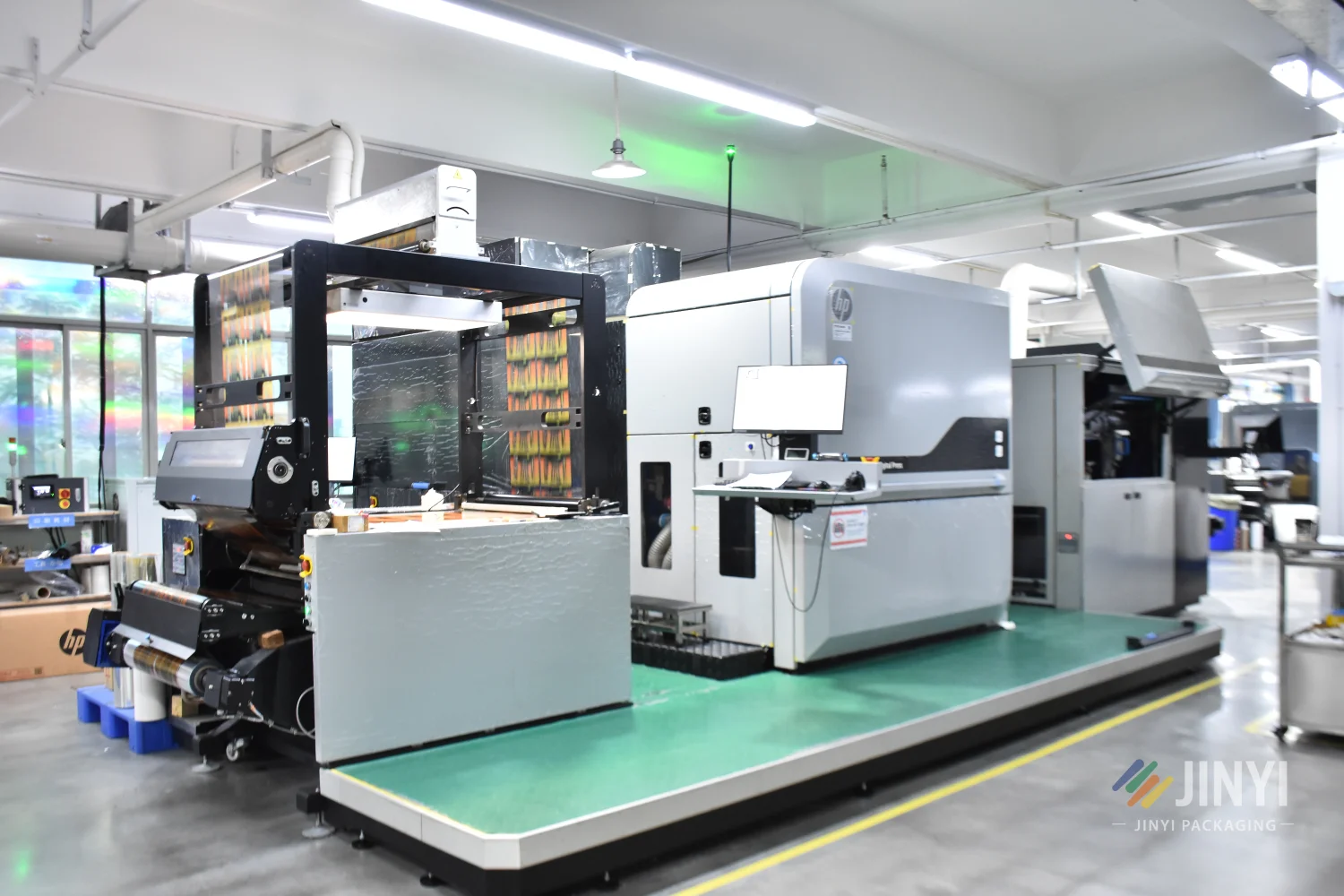
At JINYI, the digital print capability — running on HP Indigo 25K and HP Indigo 6K presses alongside the 10-color gravure line with ESKO Automation Engine — handles both the prototyping and the volume production requirements for bold, full-bleed dark color snack packaging. A brand can produce 500 units of a deep purple or black spicy snack bag on its actual film substrate, validate color, seal integrity, and material compatibility with a physical sample, and move to gravure at volume only when those validations are complete. For a multi-flavor range where each variant needs its own color palette — the way Takis runs Fuego, Nitro, Zombie, and Crunchy Fajitas as four distinct visual identities — the HP Indigo digital presses handle each design file independently without cylinder tooling, making a four-variant launch a digital print project rather than a four-cylinder gravure commitment. Post-processing options — digital foiling, spot UV, embossing — are available as standard additions for brands that want the tactile premium finish that Takis achieves through print quality alone.
Sourcing custom spicy or acidic-seasoned snack packaging?
JINYI produces pillow bags and stand-up pouches with inner film validated for acid-resistant food contact, full-bleed dark color digital or gravure printing, and low minimums for multi-flavor range testing — from 500 units, with material documentation as standard. Tell us your product and we will recommend the right film and format.
A JINYI é uma fábrica de embalagens flexíveis personalizadas com mais de 15 anos de experiência de produção, servindo marcas de alimentos, suplementos, café, alimentos para animais de estimação e bens de consumo em mais de 70 países. Produzimos stand-up pouches, sacos de fundo plano, sacos de almofada e sacos de reforço lateral em PET/AL/PE, PET/VMPET/PE e outras especificações de barreira - através de impressão digital HP Indigo a partir de 500 unidades e impressão de rotogravura em volume - com documentação completa do material incluída como padrão em cada encomenda.
É isso que Do filme ao acabamento - feito corretamente significa na prática.
Elsa
Gestor de Desenvolvimento Comercial - Embalagens JINYI
A Elsa lidera o desenvolvimento comercial e a gestão de encomendas de clientes na JINYI. Com 8 anos de experiência em comércio externo em Yiwu e Dongguan, tem um conhecimento profundo da procura do mercado e do que os compradores realmente precisam - transformando a visão real do cliente nas decisões corretas de embalagem.
Necessidades dos clientes Gestão de encomendas Desenvolvimento de negócios
A Takis bag is a multilayer laminated film — typically a printed BOPP or PET outer layer, a metallized PET barrier layer in the middle, and a food-grade PE inner sealant. The inner layer is selected for acid-resistant food contact to handle the citric acid in the chili-lime seasoning. Barcel has not published official material specifications.
Who makes Takis?
Takis is made by Barcel, a snack subsidiary of Grupo Bimbo — the Mexican multinational that is the largest baking company in the world. Takis is not a Frito-Lay or PepsiCo product. It was invented in 1999 in Mexico by Morgan Sanchez and entered the US market in 2004.
Why are Takis rolled into a tube shape?
The tube shape gives each chip a higher surface-area-to-volume ratio than a flat chip. More surface area means more seasoning contact per bite — which is the design intent for a product built around flavor intensity. The rolled shape is not decorative; it is the delivery mechanism for the extreme heat and lime flavor.
Were Takis the first snack to use degradable packaging?
Yes, according to Grupo Bimbo’s 2009 announcement. Barcel partnered with Mexico’s CONACYT research council and Symphony Environmental to introduce a pro-oxidant additive into Takis’ metallized packaging, making it the first snack brand in the world to use degradable metallic packaging. The oxo-degradable approach used then differs from today’s recyclable mono-material direction.
Can I order custom spicy snack bags at low minimum quantities?
Yes. Through HP Indigo digital printing, custom spicy snack bags with dark full-bleed color and acid-resistant inner film can be produced from 500 units. This allows a brand to validate film compatibility and print color on a physical sample before committing to a large gravure production run. JINYI offers digital print from 500 units with material documentation included.