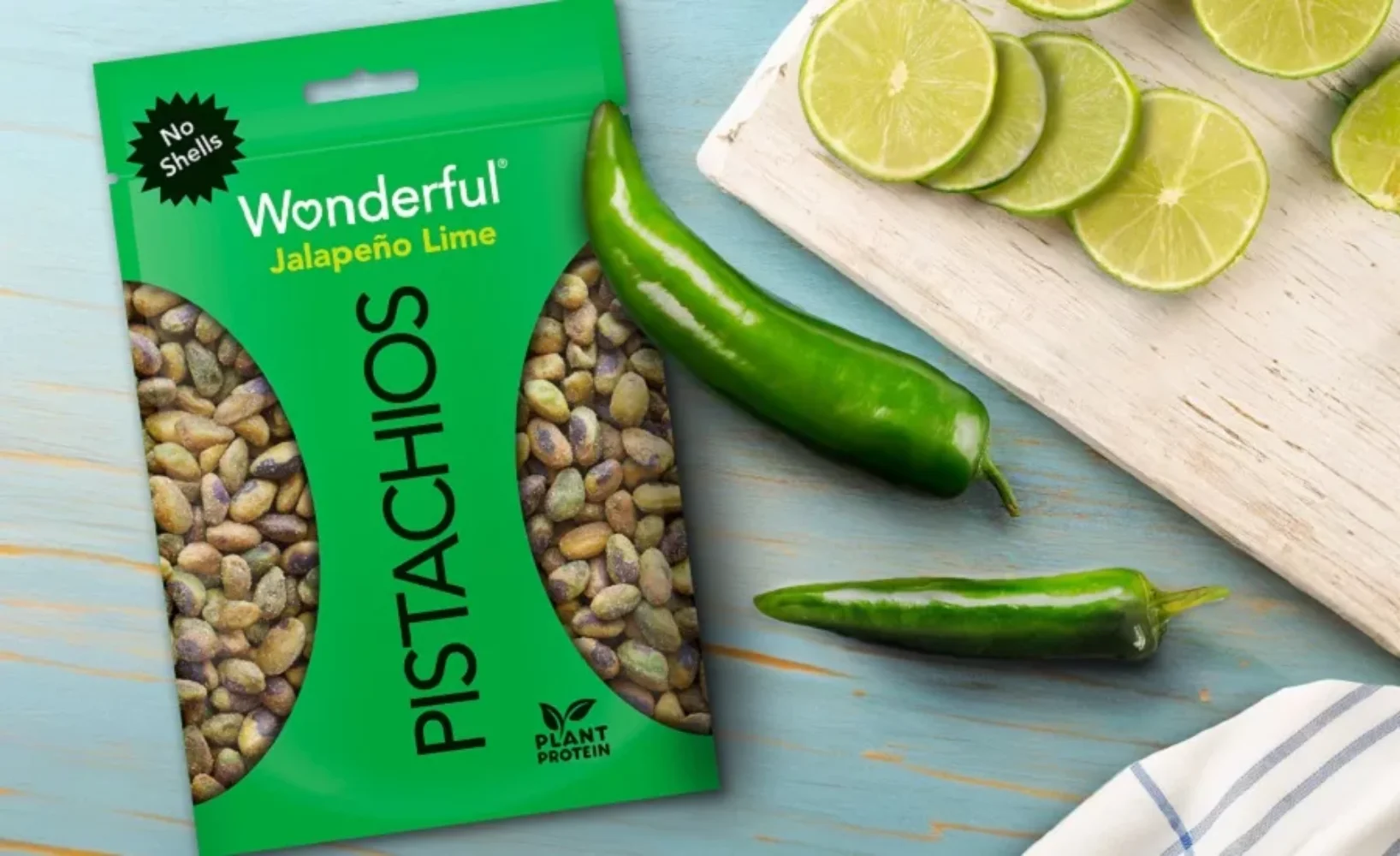
A Wonderful Pistachios é a marca de frutos secos para petiscar mais vendida nos Estados Unidos — uma posição que mantém há mais de uma década, apoiada por uma das campanhas publicitárias mais reconhecíveis do setor dos petiscos. A campanha “Get Crackin'”, que contou com a participação de celebridades desde Stephen Colbert até Heidi Klum, transformou os pistácios de uma simples noz de consumo em um produto de marca para o consumidor. Por trás dessa marca está a The Wonderful Company, um conglomerado privado avaliado em $4,6 mil milhões, proprietário da Fiji Water, da POM Wonderful e das clementinas Halos, para além das suas atividades relacionadas com pistácios e amêndoas. Só o negócio das nozes — a Wonderful Pistachios and Almonds — é o maior produtor e transformador verticalmente integrado de pistácios e amêndoas do mundo, cultivando mais de 75 000 acres no Vale de San Joaquin, na Califórnia, e fornecendo mais de 350 milhões de libras de nozes a nível global todos os anos.
Essa escala significa que a Wonderful Pistachios pensou cuidadosamente na embalagem de uma forma que a maioria das marcas de frutos secos não precisou de fazer. A marca comercializa duas linhas de produtos fundamentalmente diferentes — pistácios com casca e pistácios «No Shells» — que parecem semelhantes nas prateleiras, mas impõem exigências muito diferentes ao filme de embalagem, ao sistema de fecho e à abordagem de design. Se acrescentarmos uma gama de extensão de sabores com variedades temperadas como «Chili Roasted», «Jalapeño Lime» e «Sweet Cinnamon», o sistema de embalagem tem de acomodar temperos à base de óleo, pó higroscópico e uma noz a nu com exposição direta à gordura — tudo isto dentro do que parece ser um simples saco que se pode voltar a fechar.
Este artigo analisa o sistema de embalagem da Wonderful Pistachios do ponto de vista da fábrica: os formatos utilizados, a razão pela qual as duas linhas de produtos têm requisitos de barreira diferentes, a razão pela qual não existe nenhuma janela transparente em toda a gama, apesar de ser a norma na categoria, a forma como a marca utiliza a impressão para garantir o apelo nas prateleiras sem sacrificar a integridade da barreira e o que a transição da marca para película de polipropileno reciclável na Europa, prevista para 2026, indica sobre o rumo que as embalagens flexíveis para frutos secos estão a tomar.

Formatos de embalagem da Wonderful Pistachios: um formato de saco, duas linhas de produtos
Em toda a gama da Wonderful Pistachios — com casca, sem casca, variedades aromatizadas, embalagens individuais e sacos a granel para partilhar — o formato principal é o saco vertical com fecho reutilizável. O formato é consistente desde o saco individual de 0,75 oz para lanches, passando pelo pacote para levar consigo de 1,5 oz, o tamanho para despensa de 5,5 oz, os sacos de retalho padrão de 11 oz e 12 oz, aos tamanhos familiares de 22 oz e 24 oz e ao saco a granel de 48 oz para hipermercados. Em todos os tamanhos, o saco mantém-se de pé na prateleira, fecha-se após a abertura e protege o conteúdo com uma película laminada de alta barreira.
A escolha do formato é deliberada. Os pistácios não são um petisco que a maioria dos consumidores consuma de uma só vez — especialmente a variedade com casca, em que o esforço manual de partir cada casca prolonga naturalmente a sessão de consumo. Um saco que não possa ser fechado novamente após a abertura expõe as nozes restantes ao oxigénio e à humidade ambiente, acelerando o ranço e a degradação da textura. O fecho não é uma característica de luxo; é um requisito funcional para um produto que será aberto, parcialmente consumido e armazenado durante dias ou semanas antes de o saco ser esvaziado. A saco tipo almofada sem fecho reduziria os custos, mas proporcionaria também uma experiência de produto estruturalmente inferior para esta categoria específica de snacks.
Os saquinhos individuais de 0,75 oz são a única exceção — trata-se de saquinhos individuais, não reutilizáveis, em formato de almofada, concebidos para serem consumidos na totalidade numa única porção, normalmente vendidos em embalagens múltiplas de nove unidades. Com esse tamanho e esse padrão de consumo previsto, o fecho de correr acrescenta custos sem acrescentar valor funcional. O resto da gama, desde o saco de despensa mais pequeno em diante, é reutilizável.
Nota sobre o formato da decisão: Um fecho de correr acrescenta cerca de 10–15% ao custo de uma embalagem vertical e requer um painel superior mais largo para acomodar o mecanismo de fecho. No caso de produtos que são consumidos em várias sessões — frutos secos, frutas desidratadas, granola, guloseimas para animais de estimação —, a justificação funcional para a utilização de um fecho de correr é forte. No caso de snacks de dose única consumidos na totalidade de uma só vez, o custo não se justifica.
Por que é que o fecho de correr é mais importante para os frutos secos do que para as batatas fritas
Os pistácios — especialmente a variedade “No Shells” — são altamente suscetíveis à ranço oxidativo assim que expostos ao ar. O teor de gordura da noz é predominantemente composto por gorduras monoinsaturadas e poliinsaturadas, que reagem com o oxigénio para produzir os sabores desagradáveis e a textura rançosa que a maioria dos consumidores reconhece como uma «noz estragada». No caso de um pistácio com casca, a própria casca constitui uma barreira natural parcial entre a polpa da noz e a atmosfera no interior do saco — a casca não é hermética, mas retarda significativamente a exposição ao oxigénio. No caso de um pistácio «No Shells», essa proteção desaparece por completo. A noz descascada fica em contacto direto com a atmosfera interna do saco, desde o momento do embalamento até ao momento do consumo.

Antes de um saco da Wonderful Pistachios ser selado na linha de produção, o espaço livre no interior do saco é preenchido com azoto — o oxigénio é substituído por gás azoto inerte, de modo a criar um ambiente com teor de oxigénio quase nulo no interior do saco selado. É essa atmosfera controlada que confere ao produto a sua vida útil de vários meses à temperatura ambiente. No momento em que o consumidor abre o saco pela primeira vez, a injeção de azoto é interrompida e o oxigénio atmosférico começa a entrar. Se o saco não puder ser selado novamente de forma eficaz, a taxa de oxidação após a abertura é determinada inteiramente pela quantidade de produto original que permanece no saco e pelo tempo que este fica exposto — o que, no caso de um saco de tamanho familiar de 24 oz, pode ser de semanas.
A função do fecho após a abertura é minimizar a troca de oxigénio entre sessões. Um fecho de pressão bem concebido reduz — embora não consiga eliminar — a entrada de oxigénio atmosférico, proporcionando às nozes restantes dias ou semanas adicionais de qualidade aceitável. No caso das variedades «No Shells» com sabor, a entrada de humidade constitui uma preocupação adicional: as misturas de temperos utilizadas nos sabores «Chili Roasted», «Jalapeño Lime» e «Sweet Cinnamon» contêm componentes higroscópicos que absorvem a humidade ambiente e fazem com que o pó se aglomere e as nozes amoleçam. O fecho de correr protege tanto a estabilidade da gordura como a textura de um produto temperado — um desafio mais exigente do que no caso de uma noz simplesmente torrada.

Estrutura do filme: De que é, na verdade, feito um saco de pistácios maravilhoso
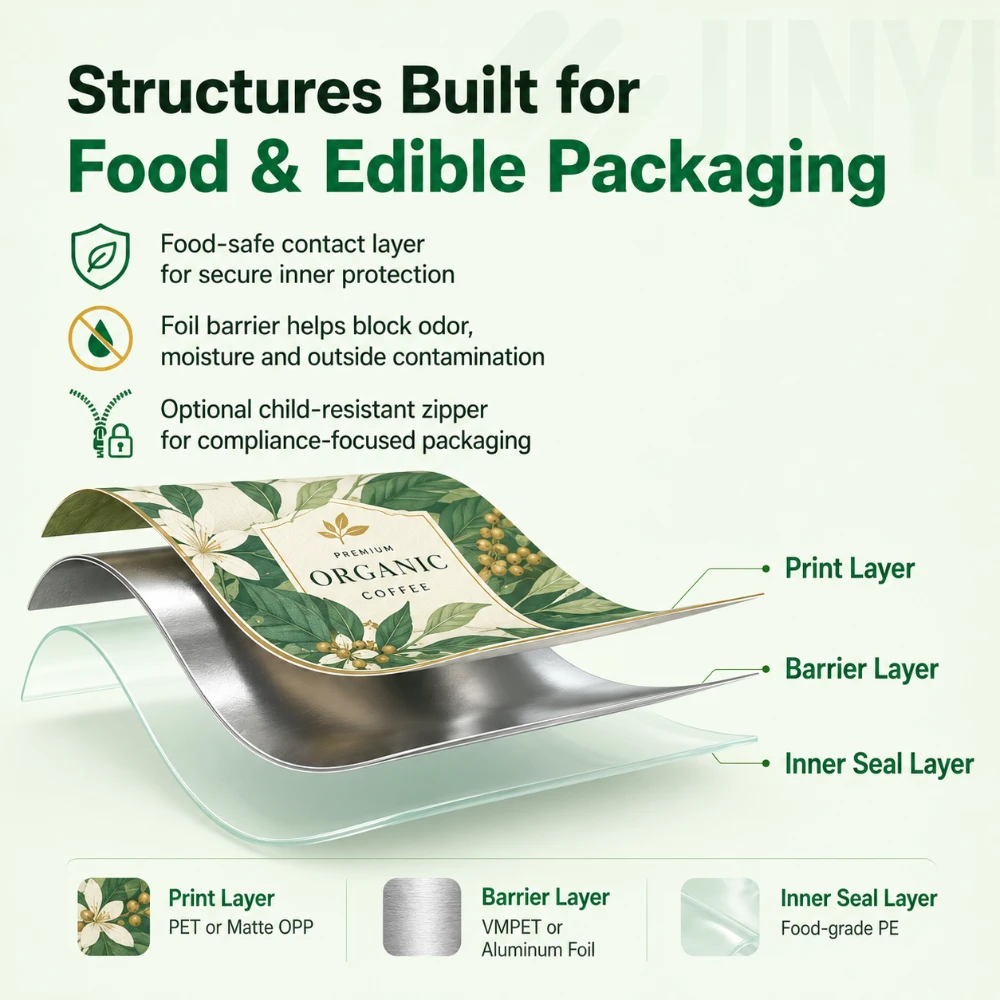
Um saco da Wonderful Pistachios é constituído por um filme laminado de várias camadas — duas ou três camadas unidas entre si, cada uma com uma função específica. A camada exterior é um filme de polipropileno orientado (OPP ou BOPP) imprimível, que proporciona rigidez para a estabilidade na prateleira, uma superfície lisa para a fotografia do produto em alta resolução e os elementos gráficos da marca impressos no saco, e a estrutura de suporte que permite que o fecho funcione corretamente ao longo de ciclos repetidos de abertura e fecho. A camada intermédia é um filme metalizado — normalmente PET metalizado ou OPP metalizado — que proporciona a barreira contra o oxigénio, a humidade e a luz, mantendo os frutos secos frescos ao longo de um prazo de validade de vários meses. A camada interior é de polietileno de qualidade alimentar, formando as selagens térmicas na base e nas laterais do saco e proporcionando a superfície de contacto com os alimentos sobre a qual as nozes repousam.
As linhas «In-shell» e «No Shells» partilham a mesma lógica básica de três camadas, mas as especificações relativas à barreira diferem entre si. Os pistácios «In-shell» possuem a sua própria barreira parcial sob a forma da casca, o que reduz o contacto direto entre a gordura e a película e diminui, em certa medida, os requisitos relativos à taxa de transmissão de oxigénio. Os pistácios «No Shells» não têm essa proteção — a polpa da noz fica em contacto direto com a película interior — e a especificação de OTR (taxa de transmissão de oxigénio) para o saco «No Shells» tem de ser mais rigorosa para garantir o mesmo prazo de validade. A estrutura completa é estimada abaixo, uma vez que a Wonderful Pistachios and Almonds não publicou especificações oficiais relativas à película.
| Camada (Exterior → Interior) |
Material estimado |
Função |
| Camada de impressão (exterior) |
BOPP, 18-20 μm |
Rigidez, estabilidade nas prateleiras, superfície adequada para fotografia de produtos de alta resolução e elementos gráficos da marca |
| Camada de barreira (meio) |
PET metalizado (VMPET), 12 μm |
Impede a passagem de oxigénio, humidade e luz; a linha «No Shells» apresenta especificações OTR mais rigorosas do que a linha com invólucro |
| Camada de vedação interna (interior) |
PE de qualidade alimentar, 60–80 μm |
Desempenho na selagem a quente; conformidade com os requisitos de contacto com alimentos; espessura superior para integração com fecho de correr e resistência da selagem da base sob o peso da porca |
Nota: A estrutura da película é estimada com base nos requisitos do produto da Wonderful Pistachios e nas especificações padrão do setor para embalagens de frutos secos de alta barreira. A Wonderful Pistachios and Almonds não publicou documentação oficial sobre os materiais, camada a camada. As especificações variam consoante a linha de produtos e o mercado.
Todo o processo de impressão, laminação, cura e transformação destas camadas de película numa bolsa vertical pronta a usar com fecho integrado — incluindo a forma como o reforço da base é moldado para garantir a estabilidade na prateleira — é abordado no nosso guia sobre como são fabricadas as bolsas personalizadas, desde a película até ao saco acabado.
O design sem janela: como a Wonderful Pistachios consegue atrair a atenção nas prateleiras sem comprometer a barreira de proteção
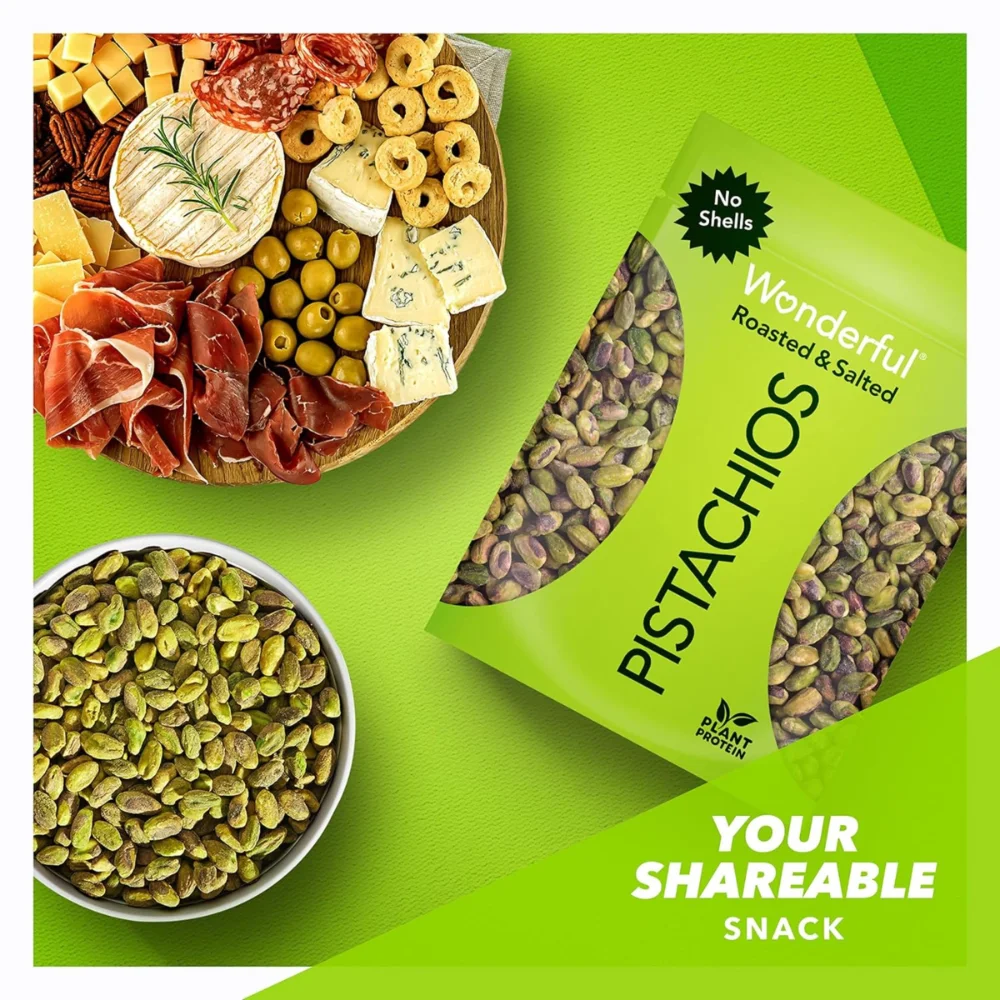
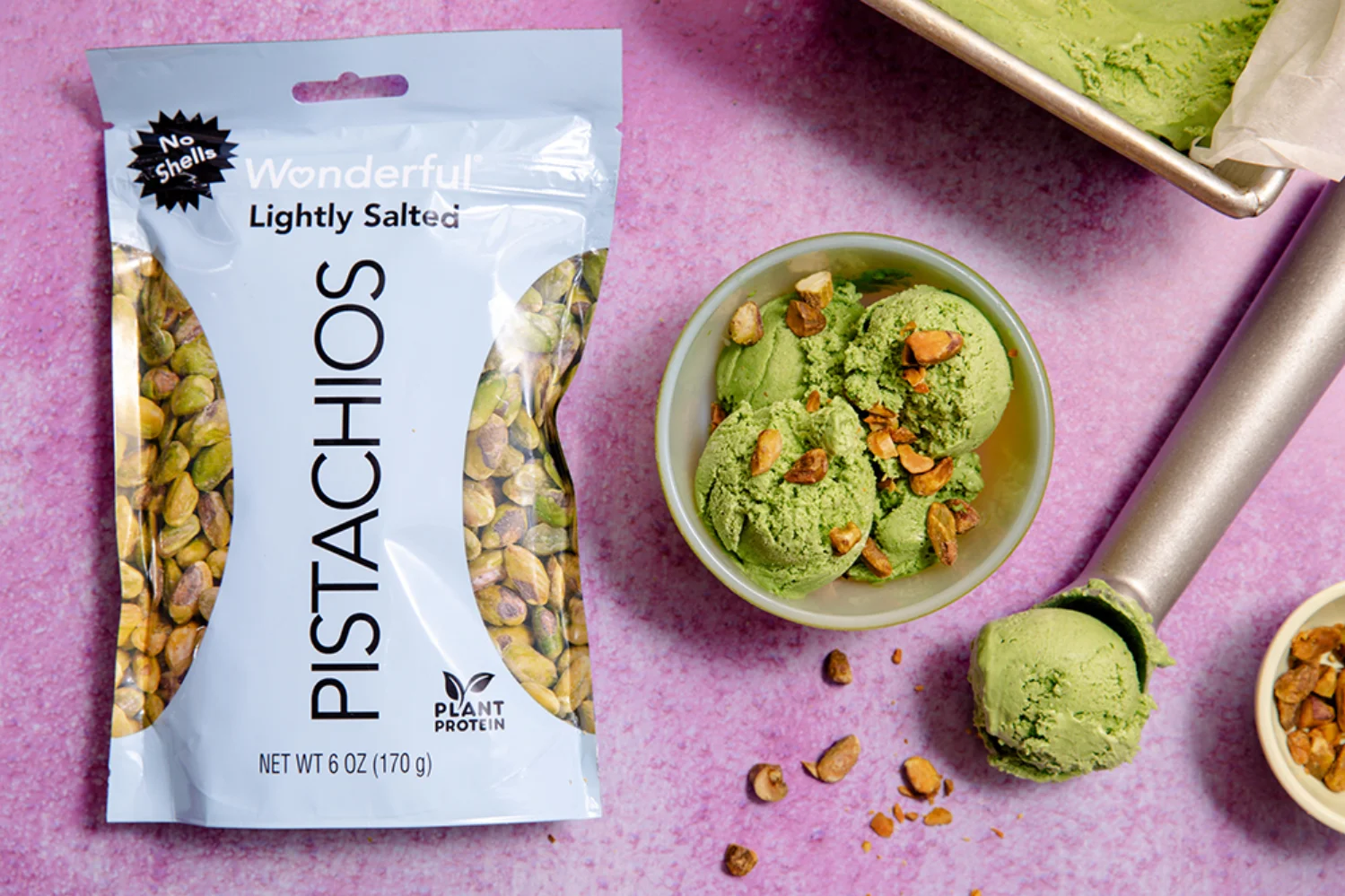
Olhe para a gama Wonderful Pistachios de qualquer ângulo — com casca, sem casca, variedades aromatizadas, todos os tamanhos, desde porções individuais até embalagens a granel — e não encontrará nenhuma janela transparente em nenhum saco. Trata-se de uma decisão de design deliberada e invulgar na categoria das nozes, onde muitas marcas utilizam um painel transparente para mostrar o produto no interior como um sinal de qualidade e frescura. A Wonderful Pistachios conquista a mesma confiança do consumidor através de um meio diferente: fotografias de alta resolução dos pistácios impressas diretamente na superfície opaca da embalagem, cobrindo as laterais e a parte frontal com imagens das próprias nozes com detalhes suficientes para que o consumidor possa avaliar o produto visualmente sem ver através do invólucro.
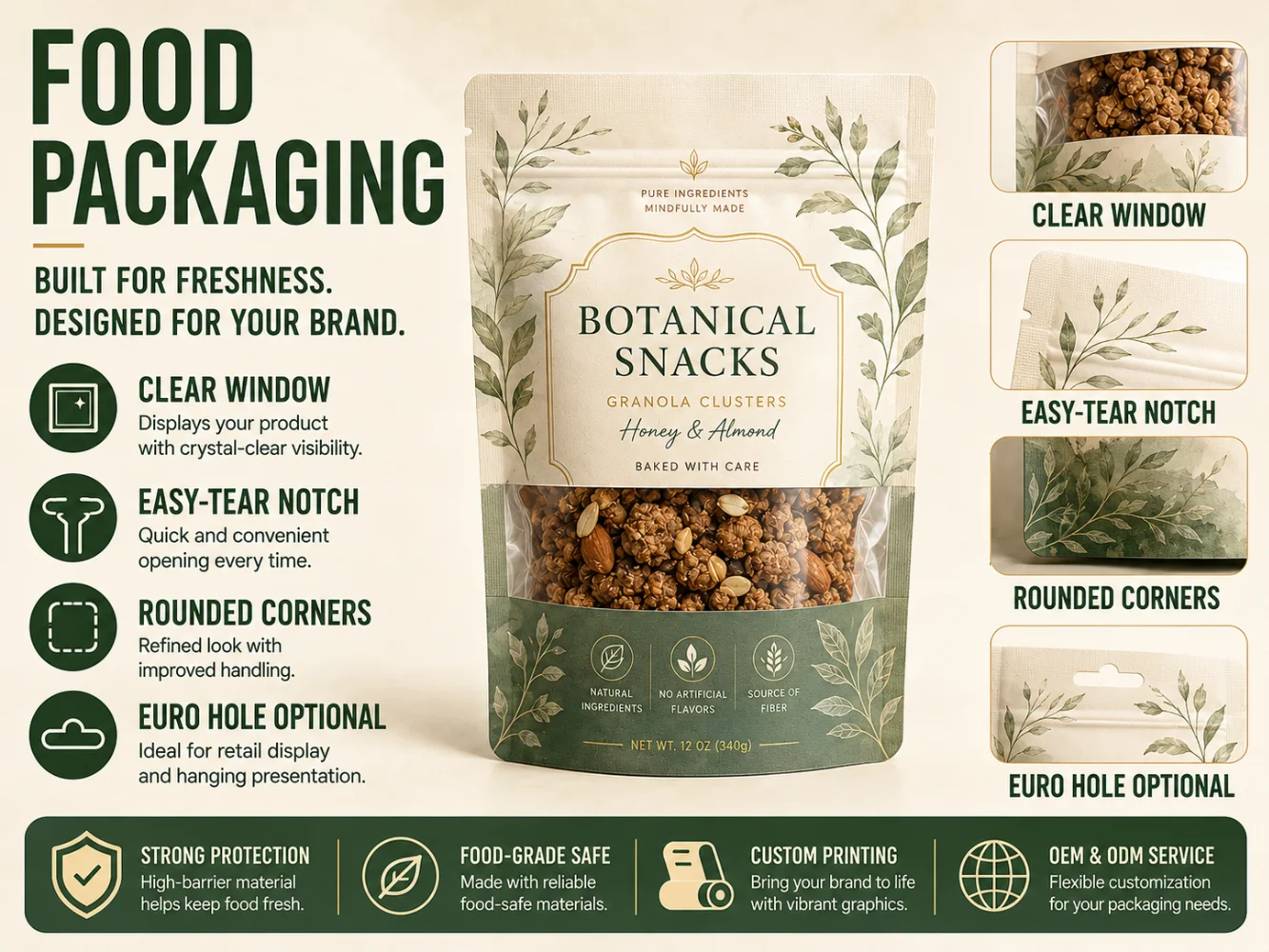
Do ponto de vista da engenharia de embalagens, esta é uma escolha tecnicamente mais sofisticada do que parece. Uma janela transparente requer uma ruptura estrutural na película de barreira — a camada metalizada que bloqueia o oxigénio, a humidade e a luz não pode ser tornada transparente sem remover o metal, pelo que um painel de janela utiliza, em vez disso, uma película transparente de OPP ou PET. Essa película transparente tem uma taxa de transmissão de oxigénio significativamente mais elevada do que a película metalizada que substitui. Num saco de frutos secos, em que a camada metalizada desempenha a maior parte da função de barreira, a introdução de uma janela cria um ponto fraco no sistema — o oxigénio e a humidade permeiam preferencialmente através do painel transparente, encurtando o prazo de validade efetivo do produto, independentemente do quão rigorosas sejam as restantes especificações da película. Para um produto tão sensível ao oxigénio como os pistácios descascados, essa compensação é difícil de justificar apenas com base na frescura.
A abordagem de «impressão em vez de janela» também apresenta vantagens comerciais. Um saco opaco com impressão em toda a superfície proporciona à marca mais espaço gráfico para explorar — os painéis laterais, que de outra forma seriam uma janela de película transparente, tornam-se superfícies adicionais para a fotografia do produto, descrições de sabores, informações nutricionais e mensagens da marca. A embalagem sazonal «Sweet Cinnamon» utiliza tons dourados em toda a superfície. A embalagem «Jalapeño Lime» utiliza um verde vivo. A embalagem «Chili Roasted» utiliza o vermelho. Cada cor transmite o sabor à distância, do outro lado do corredor, da mesma forma que as marcas de batatas fritas utilizam as suas embalagens como painéis publicitários. Nada disto é possível com um painel de janela transparente.

Para as marcas que adquirem as suas próprias embalagens para frutos secos ou snacks secos, esta lógica de design é diretamente aplicável. A decisão de incluir ou excluir uma janela transparente não é, em primeiro lugar, uma questão estética — trata-se de uma decisão de engenharia de barreira com consequências reais para o prazo de validade. Uma janela que comprometa a especificação OTR de uma estrutura de película, de resto bem especificada, anula o objetivo de um laminado de alta barreira. Antes de especificar uma janela, a questão a colocar é se a vantagem visual de mostrar o produto justifica a redução no desempenho da barreira — e se uma fotografia impressa de alta qualidade poderia proporcionar a mesma confiança ao consumidor sem o compromisso técnico.
Na janela vs. na impressão: Um painel de janela transparente num saco de película metalizada cria um ponto fraco na barreira — o OPP/PET transparente apresenta uma permeabilidade ao oxigénio (OTR) significativamente superior à da película metalizada. Para produtos sensíveis ao oxigénio, como frutos secos descascados, o impacto da janela na vida útil é real. A fotografia do produto em alta resolução numa superfície opaca proporciona uma confiança comparável por parte do consumidor, sem comprometer as características técnicas do produto.
A transição para o PP reciclável em 2026: o que significa a mudança da Wonderful na Europa
Em 2025, a Wonderful Pistachios and Almonds anunciou a conclusão da transição para embalagens recicláveis na sua gama europeia de sacos de conveniência e comprometeu-se a converter toda a sua linha europeia de frutos com casca para película de polipropileno (PP) reciclável até 2026 — substituindo mais de 25 toneladas de plástico não reciclável por ano. A transição surge na sequência de um programa de testes de vários anos destinado a encontrar um filme de PP monomaterial que cumprisse os requisitos de barreira da marca e, ao mesmo tempo, fosse compatível com os fluxos de reciclagem existentes. Tom Hazelof, vice-presidente de vendas da Wonderful Brands Europe, descreveu a empresa como empenhada em ser “pioneira na indústria dos snacks” no que diz respeito às embalagens sustentáveis.
O desafio técnico que a equipa da Wonderful teve de resolver é o mesmo que todas as marcas que estão a avançar para embalagens flexíveis recicláveis enfrentam: o laminado multicamadas convencional que oferece a melhor barreira combina diferentes famílias de polímeros — normalmente BOPP, PET e PE — que não podem ser separados nos fluxos de reciclagem padrão e, por isso, tornam toda a estrutura não reciclável. Uma estrutura monomaterial de PP utiliza polipropileno em toda a pilha de películas, sendo elegível para reciclagem de PP em mercados onde essa infraestrutura existe, mas proporcionando uma barreira ao oxigénio e à humidade inferior à do laminado multicamadas convencional que substitui. A questão é saber se a redução da barreira é aceitável para os requisitos de prazo de validade do produto — e o programa de testes plurianual da Wonderful sugere que, pelo menos para a linha de produtos com casca, um filme de PP monomaterial com especificações adequadas pode satisfazer esses requisitos.
Trata-se do mesmo dilema fundamental entre a barreira e a reciclabilidade que analisámos quando A Lavazza passou a utilizar embalagens de café em película monomaterial reciclável, e na mesma direção que A Lay’s está a apostar nas suas embalagens de batatas fritas. A tendência do setor é clara: as estruturas recicláveis monomateriais estão a tornar-se a especificação padrão exigida pelas principais marcas, e os fornecedores de películas têm investido significativamente na melhoria do desempenho de barreira das películas monomateriais de PP e PE, a fim de colmatar a diferença em relação aos laminados convencionais. Para uma marca que procura atualmente embalagens para nozes, solicitar uma opção reciclável de material único a par de um orçamento para um laminado convencional é uma parte razoável e cada vez mais comum da negociação de fornecimento.
Aquisição de embalagens personalizadas para nozes: as decisões que realmente importam
A Wonderful Pistachios opera numa escala que exige especificações de embalagem específicas, relações de longo prazo com fornecedores e programas plurianuais de testes de sustentabilidade. Para uma marca de frutos secos em crescimento — pistácios de marca própria, uma linha de amêndoas aromatizadas, uma mistura de frutos secos para o comércio eletrónico —, as mesmas decisões de engenharia aplicam-se a uma fração desse volume. O formato, as especificações da barreira, o fecho, a escolha entre embalagem com ou sem janela e o sistema de impressão são todas decisões que têm de ser tomadas antes da primeira produção, sendo significativamente mais difícil alterá-las depois de as embalagens estarem no mercado.
Para a maioria das marcas de frutos secos, o ponto de partida certo é um saco vertical com fecho de correr de pressão para qualquer tamanho que venha a ser consumido ao longo de várias sessões, e uma estrutura metalizada de BOPP ou PET/VMPET/PE para a barreira. A especificação de OTR deve ser definida em função do produto: as nozes descascadas requerem um OTR mais restrito do que as com casca; as variedades aromatizadas com temperos higroscópicos necessitam que tanto o OTR como o MVTR (taxa de transmissão de vapor de humidade) sejam especificados explicitamente, não devendo ser deixados como uma designação genérica de qualidade alimentar. Quanto à questão da janela, a abordagem da Wonderful Pistachios — fotografia impressa de alta resolução sobre uma superfície opaca — merece ser considerada seriamente para qualquer produto em que a vida útil seja uma prioridade. A decisão de adicionar uma janela deve ser tomada com plena consciência do seu custo em termos de barreira, e não como um padrão por ser o que se faz na categoria.
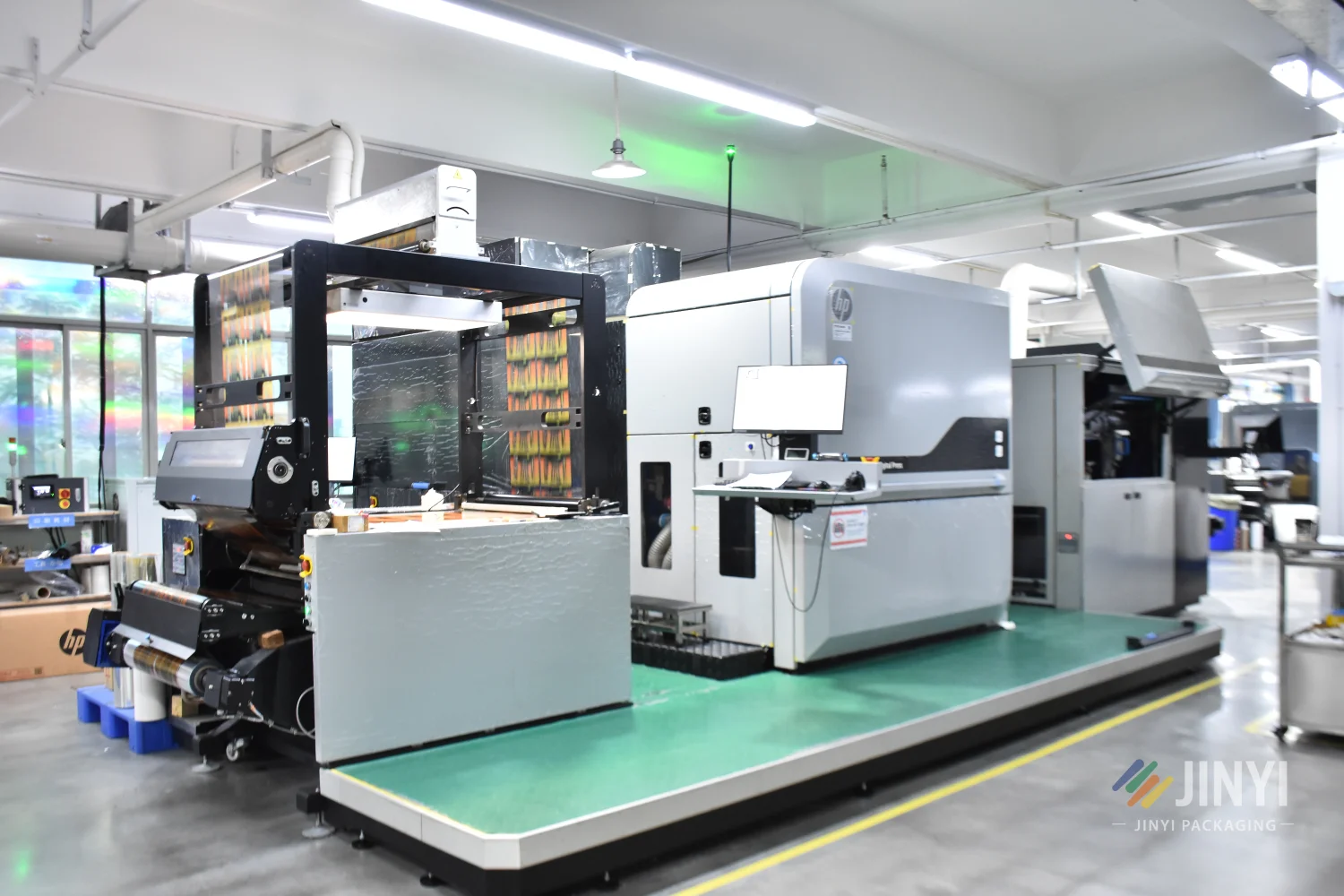
Na JINYI, a frota de impressoras digitais HP Indigo — incluindo a HP Indigo 25K para tiragens curtas de alta velocidade e a HP Indigo 6K para amostras de entrega rápida — trata da fotografia de produtos em cobertura total e dos sistemas de cores codificados por sabor de que uma marca de frutos secos necessita para se diferenciar nas prateleiras, a partir de 500 unidades. Uma marca que lance três sabores — original, malagueta e torrado com mel — pode produzir 500 unidades de cada um em três tiragens digitais separadas, validar o design e a aceitação no mercado e transferir as variantes comprovadas para a linha de rotogravura de 10 cores para produção em série, assim que a gama for confirmada. Os três serviços padrão incluídos em todas as encomendas da JINYI — renderização gratuita de maquete 3D antes da produção, atualizações sobre o progresso da produção em cada fase e fotografia gratuita para comércio eletrónico dos sacos acabados — reduzem o risco de aprovisionamento na fase de desenvolvimento, quando uma marca ainda está a decidir quais os sabores e designs a produzir em escala.

Está à procura de embalagens personalizadas para frutos secos ou snacks secos?
A JINYI produz saquetas verticais com fechos reutilizáveis, película metalizada de alta barreira e impressão digital ou em gravura com cobertura total — a partir de 500 unidades, com maquete 3D gratuita, atualizações sobre a produção e fotografia para comércio eletrónico incluídas de série. Diga-nos qual é o seu produto e recomendaremos o filme, o formato e o fecho adequados.
Obter um orçamento de embalagem →
Sobre a JINYI
A JINYI é uma fábrica de embalagens flexíveis personalizadas com mais de 15 anos de experiência de produção, servindo marcas de alimentos, suplementos, café, alimentos para animais de estimação e bens de consumo em mais de 70 países. Produzimos stand-up pouches, sacos de fundo plano, sacos de almofada e sacos de reforço lateral em PET/AL/PE, PET/VMPET/PE e outras especificações de barreira - através de impressão digital HP Indigo a partir de 500 unidades e impressão de rotogravura em volume - com documentação completa do material incluída como padrão em cada encomenda.
É isso que Do filme ao acabamento - feito corretamente significa na prática.

Elsa
Gestor de Desenvolvimento Comercial - Embalagens JINYI
A Elsa lidera o desenvolvimento comercial e a gestão de encomendas de clientes na JINYI. Com 8 anos de experiência em comércio externo em Yiwu e Dongguan, tem um conhecimento profundo da procura do mercado e do que os compradores realmente precisam - transformando a visão real do cliente nas decisões corretas de embalagem.
Necessidades dos clientes
Gestão de encomendas
Desenvolvimento de negócios