JINYI gibt Ihnen praktische Hilfestellungen für Ihre Verpackungsentscheidungen.
Jack Link’s ist die weltweit meistverkaufte Beef-Jerky-Marke – eine Position, die das Unternehmen in mehr als einem Jahrhundert als Familienbetrieb aufgebaut hat. Alles begann im Jahr 1885, als John “Jack” Link in Minong, Wisconsin, damit begann, Fleisch zu pökeln und zu räuchern. Was als regionale Spezialität begann, entwickelte sich unter der Führung nachfolgender Generationen der Familie Link zu einer der weltweit am weitesten verbreiteten Marken für Fleischsnacks. Heute werden die Produkte von Jack Link’s in mehr als 40 Ländern verkauft, in verschiedenen Produktionsstätten in Wisconsin, South Dakota, Minnesota, Iowa und Georgia hergestellt und durch die Markenplattform “Feed Your Wild Side” unterstützt – wobei das Maskottchen Sasquatch zu einer der bekanntesten Figuren in der Snackbranche geworden ist. Zu den charakteristischen Beef-Jerky-Sorten ’Original“ und „Teriyaki“ der Marke gesellt sich mittlerweile ein stetig wachsendes Sortiment an Protein-Snacks, darunter Fleischsticks, Steak-Bites, Rindersteaks sowie lizenzierte Kooperationen mit Doritos, Fritos und Flamin’ Hot.
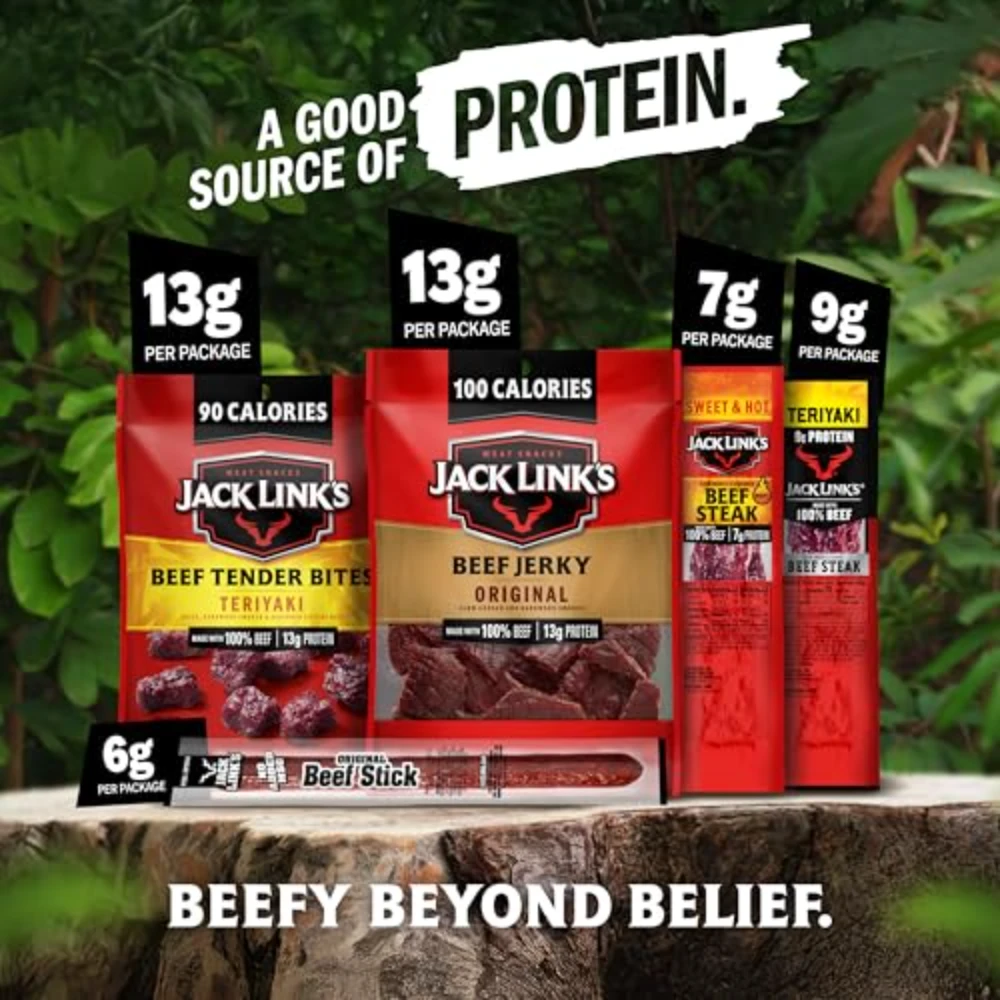
Diese Produktpalette nutzt eine größere Vielfalt an Verpackungsformaten als die meisten Snackmarken – nicht, weil Jack Link’s um der Komplexität willen komplizierte Verpackungen verwendet, sondern weil jedes Produktformat eine andere Verpackungslösung erfordert. Ein 16-Unzen-Großbeutel mit Trockenfleisch, ein 0,92-Unzen-Einzelportions-Fleischstäbchen, ein 2-Unzen-Einzelverpacktes Rindersteak und ein 0,625-Unzen-Multipack-Snackbeutel stehen alle vor derselben zentralen Herausforderung – den Schutz eines proteinreichen Produkts mit mäßig hoher Wasseraktivität vor Sauerstoff und Feuchtigkeit –, lösen diese jedoch mit unterschiedlichen Beutelstrukturen, unterschiedlichen Verschlusssystemen und unterschiedlichen Barriereanforderungen.
Dieser Artikel erläutert das Verpackungssystem von Jack Link’s aus Sicht der Produktion: die gesamte Bandbreite der verwendeten Formate und deren jeweilige Gründe, warum die Verpackung von Trockenfleisch komplexer ist als die von Kartoffelchips, wie die Hochbarrierefolienstruktur aussieht und welche Optionen es gibt, warum sich die Entwicklungskosten für das transparente Fenster lohnen und welche Funktion der Sauerstoffabsorber in jedem Beutel tatsächlich erfüllt. Für jede Marke, die ihre eigenen Verpackungen für Fleischsnacks beschafft, gelten dieselben Entscheidungen – nur in einem anderen Maßstab.
Verpackungsformate von Jack Link’s: Fünf Ausführungen für fünf verschiedene Anlässe
Im Gegensatz zu Chip-Marken, die sich in ihrem gesamten Sortiment fast ausschließlich auf ein einziges Kissenbeutel-Format stützen, setzt Jack Link’s fünf unterschiedliche Verpackungsformate ein – jedes davon ist auf einen bestimmten Produkttyp, einen bestimmten Verzehranlass und einen bestimmten Vertriebskanal abgestimmt. Zu verstehen, welches Format welchen Zweck erfüllt, ist der Ausgangspunkt für jede Marke, die ihre eigenen Verpackungen für Fleischsnacks beschafft.
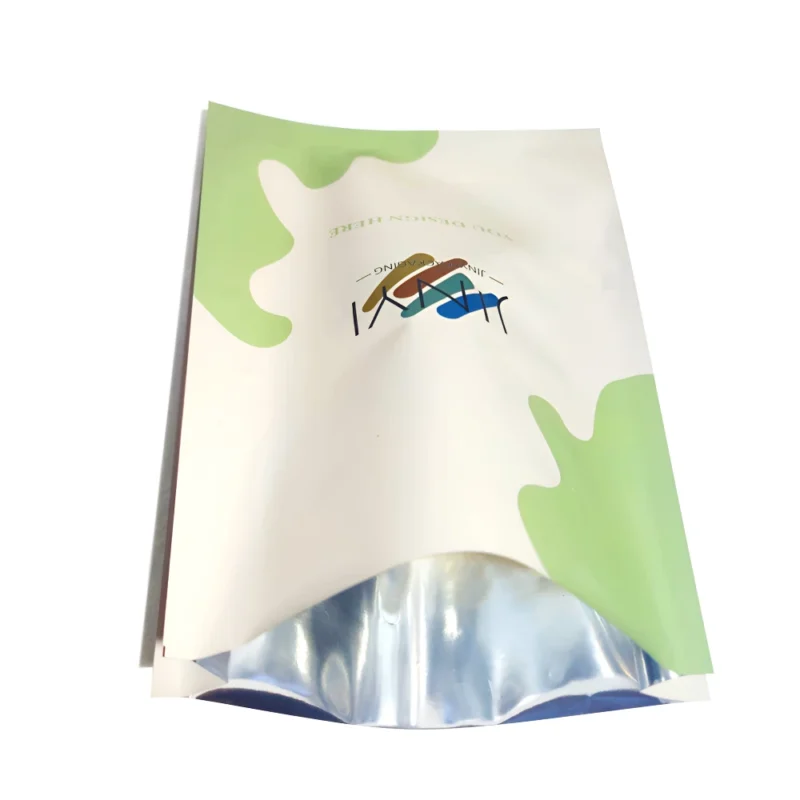
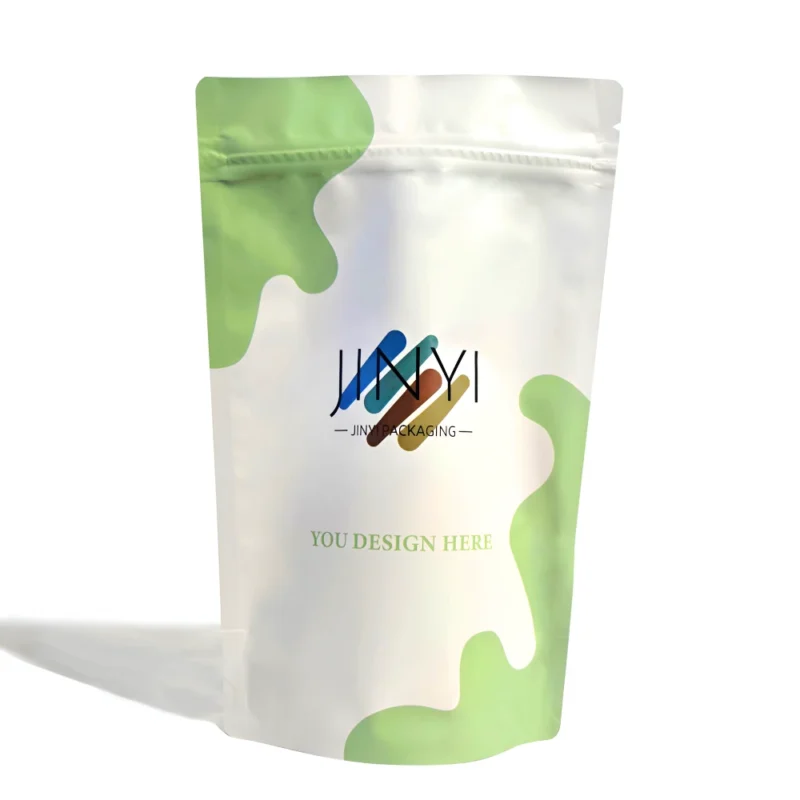
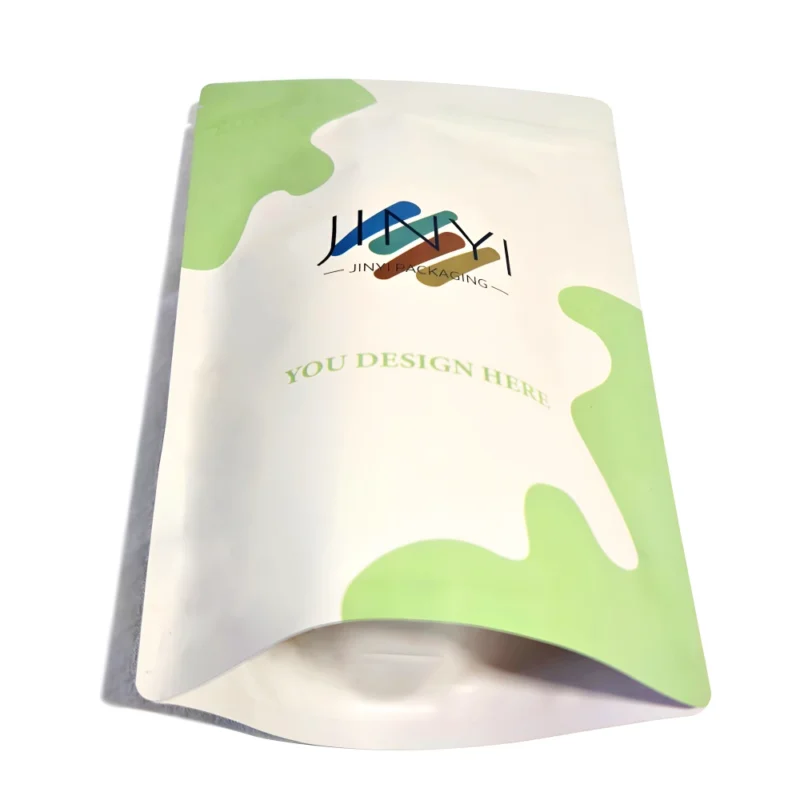
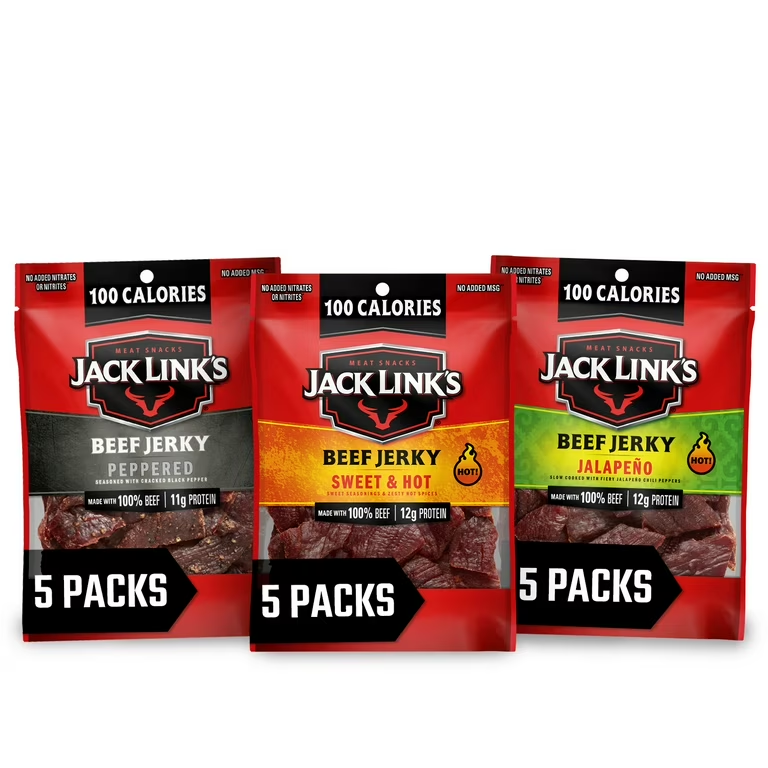
Standbeutel mit Reißverschluss und Sichtfenster. Dies ist das Hauptformat für das Kernsortiment an Trockenfleisch – Original, Teriyaki, Pfeffer, Sweet & Hot sowie die lizenzierten Kollaborationen mit Doritos, Fritos und Flamin’ Hot. Das Standbodenbeutel Die Produktpalette reicht von Standardbeuteln mit 2,85 oz über die Mitnahme-Größen 5,85 oz, 9 oz und 10 oz bis hin zum 16-oz-„Pounder“. Der wiederverschließbare Reißverschluss ist eine funktionale Anforderung für ein Produkt, das über mehrere Verzehrgelegenheiten hinweg konsumiert wird; das transparente Fenster ermöglicht es dem Verbraucher, das Fleisch vor dem Kauf zu sehen. Beide Merkmale werden in den folgenden Abschnitten ausführlich behandelt.
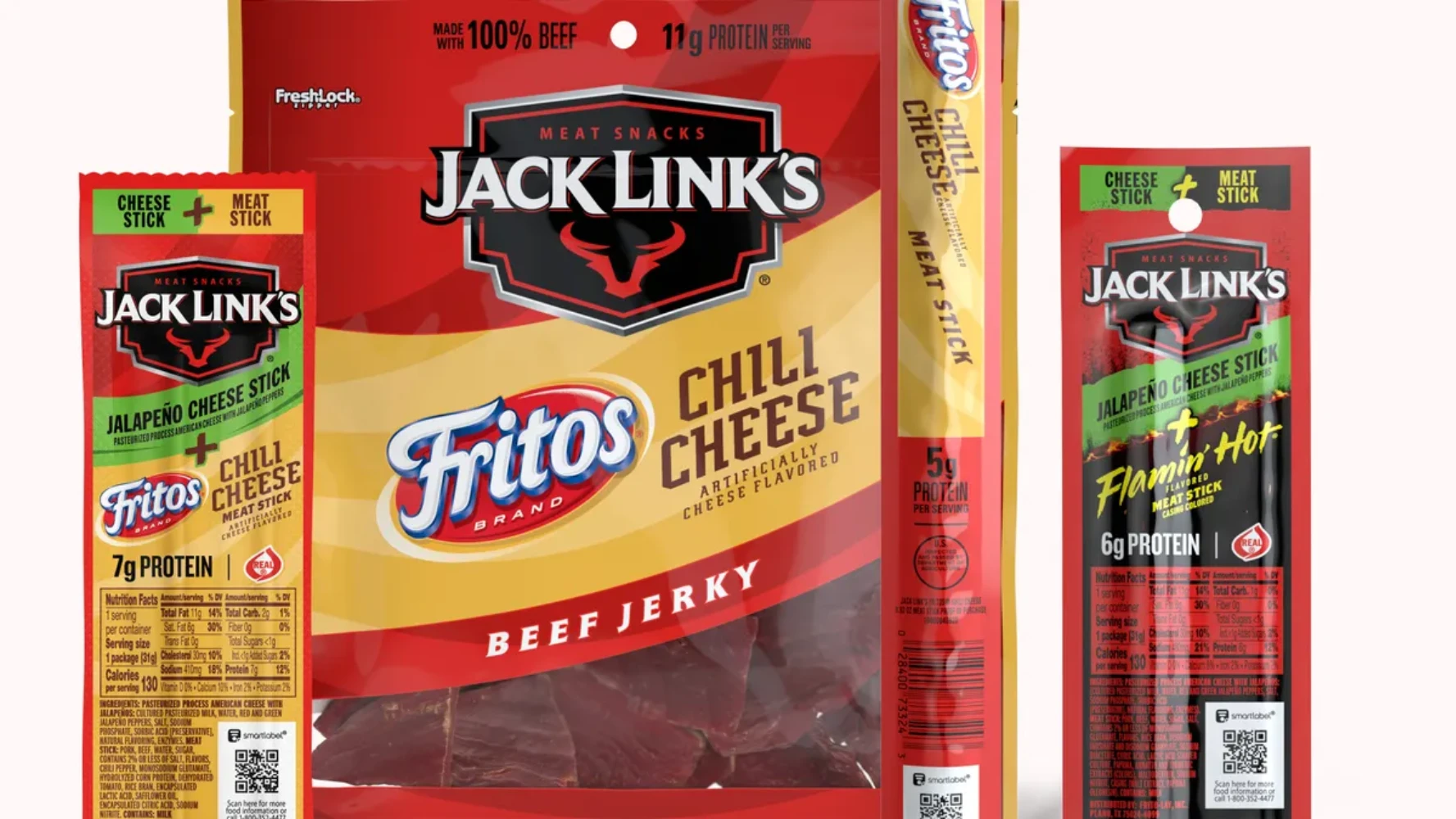
Fin-Seal-Stickpack (Fleischstangen). Jack Link’s Beef Sticks – die einzelnen Fleischsticks mit einem Gewicht von 0,92 oz – werden im Fin-Seal- oder Flow-Wrap-Verfahren verpackt: Dabei wird eine einzelne Folienbahn gefaltet und entlang der Rückseite sowie an beiden Enden um den Stick herum versiegelt. Diese Struktur unterscheidet sich grundlegend von der eines Standbeutels. Es gibt keinen Reißverschluss, kein Sichtfenster und keinen nennenswerten Kopfraum – die Folie umhüllt das Produkt fest. Der Stick ist für den Verzehr als Einzelportion unterwegs konzipiert, und die Verpackung spiegelt dies wider: leicht, kompakt, so gestaltet, dass sie aufgerissen und vollständig verzehrt werden kann. Die Anforderungen an die Barriereeigenschaften sind dieselben wie bei Trockenfleisch – hohe Sauerstoff- und Feuchtigkeitsbarriere –, doch die Wirtschaftlichkeit des Formats ist völlig anders, wobei die Flossen-Dichtungsstruktur unter Verwendung einer minimalen Folienmenge pro Einheit.
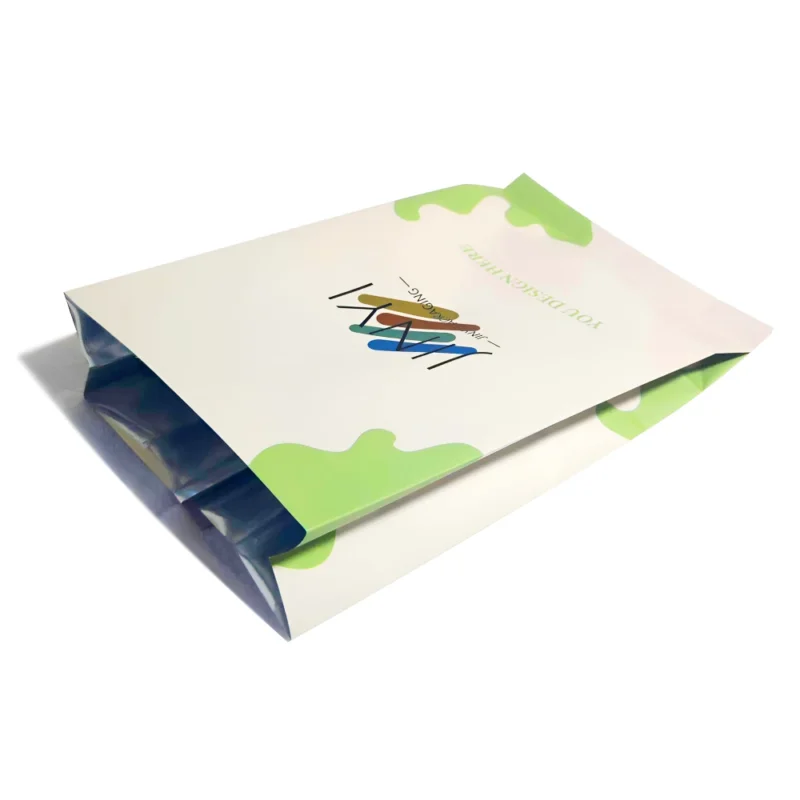
Kleiner Beutel mit dreiseitiger oder vierseitiger Versiegelung (Steak Bites, Premium Cuts). Die „Steak Bites“ und die einzeln verpackten Rindersteak-Produkte werden in einem kompakten, flachen Beutelformat angeboten – in der Regel handelt es sich dabei um einen an drei oder vier Seiten versiegelten Beutel, der an allen Kanten heißversiegelt ist und weder einen Reißverschluss noch einen Seitenfaltenbeutel aufweist. Es handelt sich um Einzelportionen oder kleine Mehrportionen, die einzeln oder in Multipack-Packungen zu je 12 Stück verkauft werden. Der flache Beutel ist eine einfache, kostengünstige Verpackung für ein Produkt, das dazu bestimmt ist, auf einmal vollständig verzehrt zu werden.
Kleiner Kissenbeutel (Snackbeutel im Mehrpack). Die Multipack-Beutel mit einem Gewicht von 0,625 oz und 1,25 oz – erhältlich in Packungen zu 9, 15 und 20 Stück – haben die Form kleiner Kissenbeutel, also das gleiche, an der Rückseite versiegelte Schlauchformat wie Chipstüten. Es handelt sich um Einzelbeutel innerhalb eines größeren Verkaufskartons, die dazu gedacht sind, in Brotdosen, Schreibtischschubladen oder Taschen für unterwegs verteilt zu werden. Jeder kleine Kissenbeutel ist einzeln versiegelt und ungekühlt haltbar; der Außenkarton dient als sekundäre Verkaufseinheit und nicht als Barriereverpackung.
Lizenzierte Kooperationsmodelle. Die Co-Branding-Produkte ’Doritos“, „Fritos“ und „Flamin’ Hot“ verwenden das Standardformat der Standbeutel aus dem Kernsortiment an Trockenfleischprodukten, wobei die visuelle Identität des Lizenzpartners die primären Jack-Link’s-Grafiken auf der gesamten Beuteloberfläche ersetzt. Die Verpackungstechnik entspricht der des Standard-Jerky-Beutels; geändert wurden lediglich das Druckdesign und die Markenarchitektur auf der Oberfläche.
Hinweis zur Formatauswahl: Jedes Jack-Link’s-Format ist auf einen bestimmten Verzehranlass zugeschnitten – wiederverschließbare Großbeutel für die Vorratshaltung, Stickpacks für unterwegs im Taschenformat, flache Beutel für Einzelportionen, kleine Kissenbeutel für Mehrfachpackungen in der Brotdose. Bevor Sie ein Format für Ihren eigenen Fleischsnack festlegen, sollten Sie zunächst den primären Verzehranlass ermitteln. Die Verpackungsform ergibt sich daraus, wie und wo das Produkt verzehrt wird, und nicht davon, was im Regal am vertrautesten aussieht.
Warum Jerky ein dreistufiges Frische-System benötigt – und nicht nur Stickstoff
Bei der Verpackung von Chips wird in erster Linie auf Stickstoffspülung gesetzt: Vor dem Verschließen wird der Sauerstoff verdrängt, und die Barrierefolie hält diese Atmosphäre während der gesamten Haltbarkeitsdauer des Produkts aufrecht. Bei der Verpackung von Jerky kann man sich aus zwei produktbedingten Gründen nicht allein auf die Stickstoffspülung verlassen. Erstens weist Beef Jerky eine höhere Wasseraktivität auf als frittierte Snacks – typischerweise im Bereich von 0,70 bis 0,85 –, was bedeutet, dass das Produkt biologisch aktiver und sowohl gegenüber Sauerstoff als auch gegenüber Feuchtigkeit empfindlicher ist. Das US-Landwirtschaftsministerium (USDA) schreibt vor, dass haltbares Beef Jerky in sauerstofffreier Verpackung eine Wasseraktivität von höchstens 0,88 aufweisen darf; oberhalb dieses Schwellenwerts wird das Risiko durch Krankheitserreger zu einem Problem der Lebensmittelsicherheit und nicht mehr nur zu einem Qualitätsproblem. Zweitens oxidieren der Protein- und Fettgehalt von Beef Jerky leichter als das Stärke- und Ölprofil eines Kartoffelchips, und ranziges Beef Jerky stellt einen Produktfehler dar, der das Vertrauen in die Marke in einer Kategorie untergräbt, in der Frische das zentrale Verkaufsargument ist.
Jack Link’s erfüllt diese Anforderungen mit einem dreiteiligen System. Das erste Element ist die Begasung – ein Verfahren, bei dem vor dem Verschließen wiederholt Gase in den Beutel eingeleitet und wieder entnommen werden, wodurch eine kontrollierte, nahezu sauerstofffreie Umgebung entsteht. Das zweite Element ist ein Sauerstoffabsorberpäckchen in jedem Beutel: ein kleines weißes Säckchen mit Eisenpulver, das mit dem nach dem Verschließen verbleibenden Restsauerstoff sowie mit dem Sauerstoff, der während der Haltbarkeitsdauer des Produkts langsam durch die Folie eindringt, reagiert und diesen chemisch bindet. Das dritte Element ist die Hochbarrierefolie selbst. Die drei Elemente sind voneinander abhängig – ein Absorber in einem Beutel mit niedriger Barriere erreicht seine Sättigung, sobald Sauerstoff eindringt; eine Hochbarrierefolie ohne Absorber lässt Restsauerstoff zurück, der über eine Haltbarkeitsdauer von zwölf Monaten zu Oxidation führt; das Begasen ohne eines der beiden Elemente verliert an Wirksamkeit, da Sauerstoff bei der Handhabung eindringt. Das System funktioniert, weil alle drei Elemente gleichzeitig vorhanden sind und jedes die Einschränkungen der anderen ausgleicht.
Filmstruktur: Woraus eine Jack-Link’s-Tüte bestehen könnte – und warum es darauf mehrere Antworten gibt
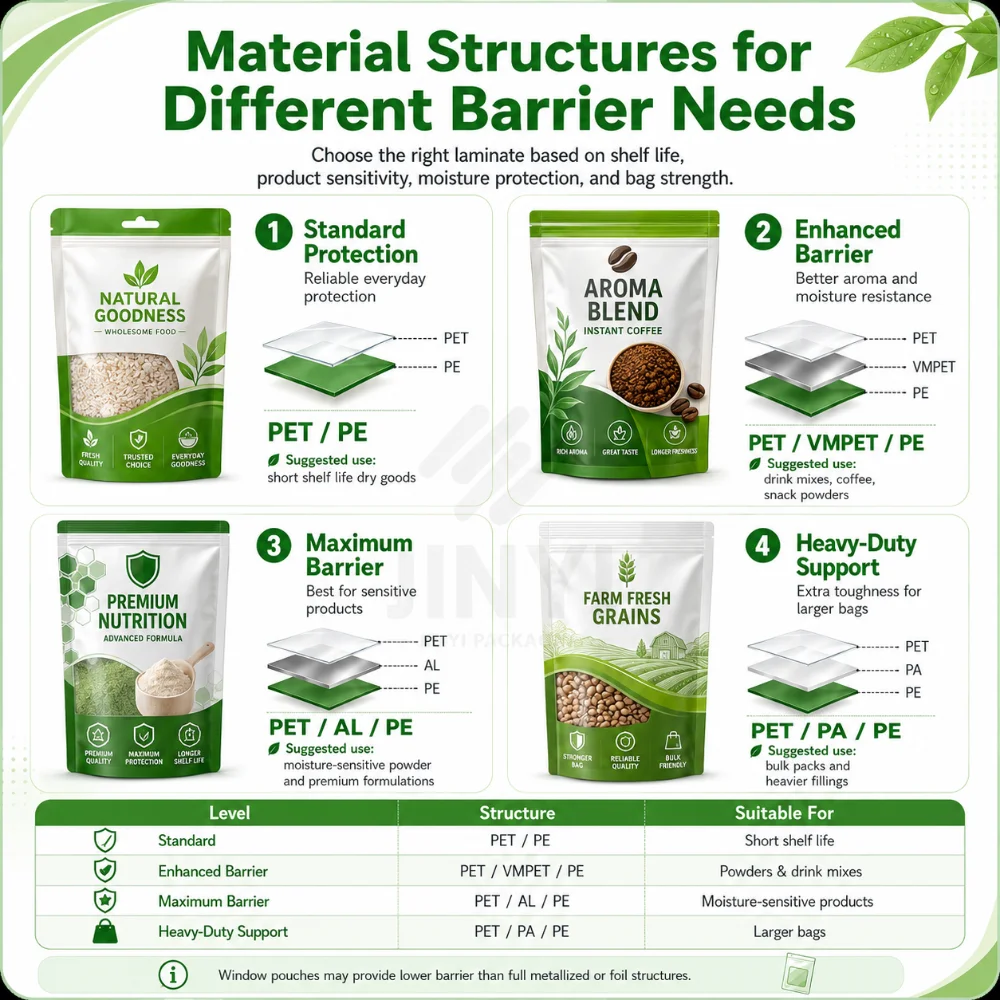
Verpackungen für Beef Jerky stellen höhere Anforderungen an die Barriereeigenschaften als Verpackungen für Chips oder Nüsse, und die Folienindustrie hat verschiedene strukturelle Ansätze entwickelt, um diesen Anforderungen gerecht zu werden. Im Gegensatz zu einer Standard-Chips-Tüte – bei der das dreischichtige BOPP/VMPET/PE-Laminat nahezu universell zum Einsatz kommt – gibt es für Jerky-Tüten verschiedene strukturelle Optionen mit deutlich unterschiedlichen Leistungs- und Kostenprofilen. Jack Link’s hat keine offiziellen Folienspezifikationen veröffentlicht, und die richtige Wahl für einen bestimmten Produktionslauf hängt von der angestrebten Haltbarkeitsdauer, den Vertriebsbedingungen und der Frage ab, ob ein transparentes Sichtfenster erforderlich ist. Die drei wichtigsten strukturellen Ansätze, die bei Verpackungen für Fleischsnacks mit hoher Barrierewirkung zum Einsatz kommen, sind die folgenden.
Variante A – PET / AL / PE (Folienstruktur): Aluminiumfolie als Barriereschicht bietet eine nahezu absolute Barriere gegen Sauerstoff, Feuchtigkeit und Licht – die stärkste, die bei flexiblen Verpackungen verfügbar ist. Sie wird für die längsten Haltbarkeitszeiten und anspruchsvollsten Anforderungen eingesetzt. Der Nachteil ist die Opazität: Aluminiumfolie lässt sich nicht transparent gestalten, sodass jedes Sichtfenster eine strukturelle Unterbrechung erfordert, bei der die Folie durch eine klare Folie ersetzt wird, wodurch im Bereich des Fensters eine schwächere Barrierezone entsteht.
Variante B – PET / VMPET / PE (metallisierte Struktur): Das gleiche dreischichtige Prinzip wie bei einer Chipstüte, wobei die Barriereeigenschaften durch die Wahl eines hochwertigeren metallisierten PET mit geringeren Sauerstoff- und Feuchtigkeitsdurchlässigkeitsraten verbessert wurden. Geringere Kosten als bei Folie, gute Barriereeigenschaften, gleiche Einschränkung im Fensterbereich – die metallisierte Schicht ist undurchsichtig und muss an Stellen, an denen ein Fenster erforderlich ist, durch eine transparente Folie ersetzt werden.
Route C – Konstruktionen mit EVOH-Anteil: EVOH (Ethylen-Vinylalkohol) ist ein spezielles Barrierepolymer, das transparent ist und eine außergewöhnliche Sauerstoffbarrierewirkung aufweist – unter trockenen Bedingungen ist seine Sauerstoffdurchlässigkeit geringer als bei den meisten metallisierten Folien und vergleichbar mit dünner Aluminiumfolie. Im Gegensatz zu Folie oder metallisierter Folie kann EVOH eine transparente Barriereschicht bilden, was bedeutet, dass bei einem Sichtfenster keine Abstriche bei der Barrierewirkung gemacht werden müssen. Der wesentliche Nachteil ist jedoch, dass sich die Barriereeigenschaften von EVOH verschlechtern, wenn es Feuchtigkeit aufnimmt – und in einem Beutel für Trockenfleisch herrscht ein relativ feuchtes Innenklima. Zum Schutz der EVOH-Schicht wird diese in der Regel zwischen feuchtigkeitsbeständige Schichten eingebettet, was zu einer komplexeren Struktur wie beispielsweise PET / EVOH / PE oder PET / VMPET / EVOH / PE führt. Dies erhöht zwar die Kosten und die Komplexität, kann jedoch im Sichtfensterbereich eine überlegene Barrierewirkung erzielen, verglichen mit dem einfachen Ersatz der metallisierten Schicht durch klares OPP oder PET.
Schicht (Außen → Innen)
Geschätztes Material
Funktion
Druckebene (außen)
PET, 12-15 μm
Steifigkeit, rückseitig bedruckte Markengrafiken; PET wird gegenüber BOPP bevorzugt, wenn das Produktgewicht höher ist und strengere Anforderungen an die Handhabung bestehen
Barriereschicht (Mitte)
AL oder VMPET, 7–12 μm
Primäre Sauerstoff-, Feuchtigkeits- und Lichtbarriere; Folie (AL) für maximale Haltbarkeit; metallisiertes PET (VMPET) zu geringeren Kosten; im Sichtfensterbereich können je nach Barriereanforderungen klares OPP/PET oder EVOH verwendet werden
Innere Dichtungsschicht (innen)
PE in Lebensmittelqualität, 60-80 μm
Heißsiegelbarkeit; Konformität mit den Vorschriften für den Kontakt mit Lebensmitteln; stärkere Materialstärke für den Bodenfalz und die Integration des Reißverschlusses unter dem vollen Produktgewicht
Hinweis: Die Folienstruktur wurde auf der Grundlage der Produktanforderungen von Jack Link’s und der branchenüblichen Spezifikationen für Hochbarriere-Verpackungen von Fleischsnacks geschätzt. Jack Link’s hat keine offiziellen Unterlagen zur Materialzusammensetzung der einzelnen Schichten veröffentlicht. Die tatsächliche Struktur kann je nach spezifischer Artikelnummer, Markt und angestrebter Haltbarkeitsdauer dem Schema A (Folie), Schema B (metallisiert), Schema C (EVOH-haltig) oder einer Kombination daraus entsprechen. Bei Stickpack-Formaten mit Fin-Seal-Verschluss wird eine schmalere Folienbahn mit derselben Barriereschichtanordnung bei reduzierter Dicke verwendet. Die Spezifikationen variieren je nach Produktionsstandort und Markt.
Das transparente Fenster: Warum Jack Link’s das Produkt zeigt – und was es kostet
Der Kauf von Beef Jerky ist stark vom Aussehen geprägt. Die Farbe des Fleisches – tiefes Mahagoni bei der geräucherten Originalvariante, dunkler und karamellisierter bei der Teriyaki-Variante – vermittelt dem Verbraucher bereits vor dem Öffnen der Verpackung einen Eindruck von Frische, Qualität und Geschmacksintensität. Die Textur, die durch das Sichtfenster sichtbar ist, bestätigt, ob die Streifen dick oder dünn geschnitten, trocken oder saftig, normal oder extragroß sind. Ein Verbraucher, der das Produkt nicht sehen kann, muss sich allein auf die Beschreibung auf dem Etikett verlassen; ein Verbraucher, der es sehen kann, erhält eine direkte sensorische Bestätigung der Qualität. In einer Produktkategorie, in der Frische und Qualität die wichtigsten Kaufmotive sind, ist dieser visuelle Zugang wirtschaftlich von großer Bedeutung – so sehr, dass Jack Link’s den technischen Kompromiss in Kauf nimmt, der erforderlich ist, um ein transparentes Fenster in einen Hochbarrierebeutel zu integrieren.
Dieser Zielkonflikt ist real. Wie wir bei der Untersuchung von … festgestellt haben, Die Entscheidung von ’Wonderful Pistachios“, auf ein Sichtfenster zu verzichten, Bei einem transparenten Fenster in einem metallisierten oder mit Folie ausgekleideten Barrierebeutel muss die Barriereschicht im Fensterbereich durch eine klare Folie ersetzt werden, die eine deutlich höhere Sauerstoff- und Feuchtigkeitsdurchlässigkeit aufweist. Das Fenster ist die schwächste Stelle im Barrieresystem des Beutels, und bei einem so sauerstoffempfindlichen Produkt wie Beef Jerky ist diese Schwachstelle nicht zu vernachlässigen. Jack Link’s gleicht dies durch das dreiteilige Frische-System aus: Die Begasung und der Sauerstoffabsorber müssen gerade wegen des Vorhandenseins des Fensters intensiver arbeiten. Die Alternative – die Verwendung einer transparenten EVOH-Barriere im Fensterbereich – bietet eine bessere Barrierewirkung, ist jedoch mit höheren Kosten und größerer Komplexität verbunden und kann bei bestimmten Premium- oder lang haltbaren Artikeln zum Einsatz kommen.
Diese Entscheidung für oder gegen ein Sichtfenster fällt bei den verschiedenen Fleischsnack-Formaten innerhalb des Jack-Link’s-Sortiments unterschiedlich aus. Die mit Fin-Seal-Verschluss versiegelten Fleischsticks haben kein Sichtfenster – das Produkt ist vollständig in einer undurchsichtigen Verpackung eingeschlossen, und der Verbraucher vertraut der Marke. Die Standbeutel mit Jerky haben Sichtfenster, da das Erscheinungsbild des Produkts für die Kaufentscheidung von zentraler Bedeutung ist. Die flachen Beutel der „Steak Bites“ haben oft kein Sichtfenster – kleines Format, Einzelportion, Verzehr ohne vorherige Sichtprüfung. Jede Entscheidung ist produktspezifisch und wirtschaftlich sinnvoll, es handelt sich nicht um eine pauschale Richtlinie, die auf alle Formate angewendet wird.
Entscheidungsrahmen für Fenster: Stellen Sie sich zwei Fragen, bevor Sie sich für ein transparentes Fenster entscheiden. Erstens: Steigert die Möglichkeit, das Produkt vor dem Kauf zu sehen, das Vertrauen der Verbraucher in Ihre Produktkategorie spürbar? Zweitens: Kann der Rest Ihres Verpackungssystems die verringerte Barrierewirkung im Fensterbereich ausgleichen, ohne die Haltbarkeit zu beeinträchtigen? Wenn beide Antworten „Ja“ lauten, ist ein Fenster gerechtfertigt. Wenn nicht, sorgt ein Fotodruck auf einer undurchsichtigen Oberfläche – wie bei „Wonderful Pistachios“ – für ein vergleichbares Verbrauchervertrauen, ohne dass technische Kompromisse eingegangen werden müssen.
Das weiße Päckchen darin: Was der Sauerstoffabsorber eigentlich bewirkt
Jede Jack-Link’s-Jerky-Tüte enthält ein kleines weißes Päckchen mit der Aufschrift “Nicht essen”. Bei diesem Päckchen handelt es sich um einen Sauerstoffabsorber – ein chemisch aktives Säckchen, nicht nur um einen einfachen Feuchtigkeitsfänger. Der Hauptwirkstoff ist Eisenpulver, das in Gegenwart von Feuchtigkeit mit Sauerstoffmolekülen reagiert und dabei Eisenoxid bildet. Die Reaktion ist irreversibel: Sobald das Eisenpulver Sauerstoff aufgenommen hat, kann dieser Sauerstoff nicht mehr in die Innenatmosphäre des Beutels zurückgelangt. Ein zweiter Bestandteil – in der Regel Ton oder Kieselsäure – absorbiert Feuchtigkeit im Beutel und reguliert so die Wasseraktivität, die erforderlich ist, damit das Produkt innerhalb der vom US-Landwirtschaftsministerium (USDA) festgelegten Sicherheitsparameter bleibt. Der Absorber ist auf das Kopfraumvolumen der jeweiligen Beutel-Artikelnummer sowie auf die erwartete Sauerstoffpermeation durch die Folie über die gesamte Haltbarkeitsdauer des Produkts abgestimmt.
Der Absorber ist kein Ersatz für eine Hochbarrierefolie – er ist eine Ergänzung dazu. In einem Beutel mit niedriger Barriere überfordert der Sauerstoffeintrag durch die Folie die Kapazität des Absorbers schnell. In einem Beutel mit hoher Barriere und ordnungsgemäßer Begasung bewältigt der Absorber die verbleibende und zusätzlich anfallende Sauerstoffbelastung, die die Folie und die anfängliche Begasung nicht beseitigen können. Auch das „Fin-Seal“-Fleischstangenformat verwendet trotz des geringeren Kopfraums einen Sauerstoffabsorber – das fest verpackte Format reduziert zwar die anfängliche Sauerstoffbelastung, doch die Oxidationsempfindlichkeit des Produkts rechtfertigt den Einsatz des Absorbers selbst in einer kompakten Einzelportionsverpackung.
Beschaffung von maßgeschneiderten Verpackungen für Trockenfleisch oder Fleischsnacks: Wo man das Gespräch beginnen sollte
Das Verpackungssystem hinter dem Sortiment von Jack Link’s ist das Ergebnis jahrzehntelanger Produktentwicklung, der Einhaltung gesetzlicher Vorschriften und der Zusammenarbeit mit Lieferanten im industriellen Maßstab. Für eine wachsende Jerky-Marke – ob Beef Jerky als Handelsmarke, eine „Clean-Label“-Fleischstangen-Produktlinie oder aromatisiertes Hirsch- oder Puten-Jerky – gelten dieselben technischen Anforderungen, allerdings bei einem Bruchteil des Volumens. Die Folienstruktur, die Spezifikation des Absorbers, die Entscheidung für ein Sichtfenster, die Wahl des Reißverschlusses und die Auswahl des Formats müssen alle vor dem ersten Produktionslauf festgelegt werden, und sie lassen sich deutlich schwerer ändern, sobald eine Marke auf dem Markt ist.
Die Diskussion über das Format sollte vor der Diskussion über den Film stattfinden. Eine Marke, die einen Fleischstick in Einzelportionsgröße für unterwegs und einen wiederverschließbaren Jerky-Beutel zum Teilen auf den Markt bringt, benötigt zwei grundlegend unterschiedliche Verpackungsstrukturen, die zufällig dasselbe Protein enthalten. Die richtige Spezifikation der Barriere, das richtige Verschlusssystem und die richtige Entscheidung bezüglich des Sichtfensters hängen alle vom Format ab. Die Entscheidung für die Folie vor der Entscheidung für das Format kehrt die korrekte Reihenfolge des Beschaffungsprozesses um.
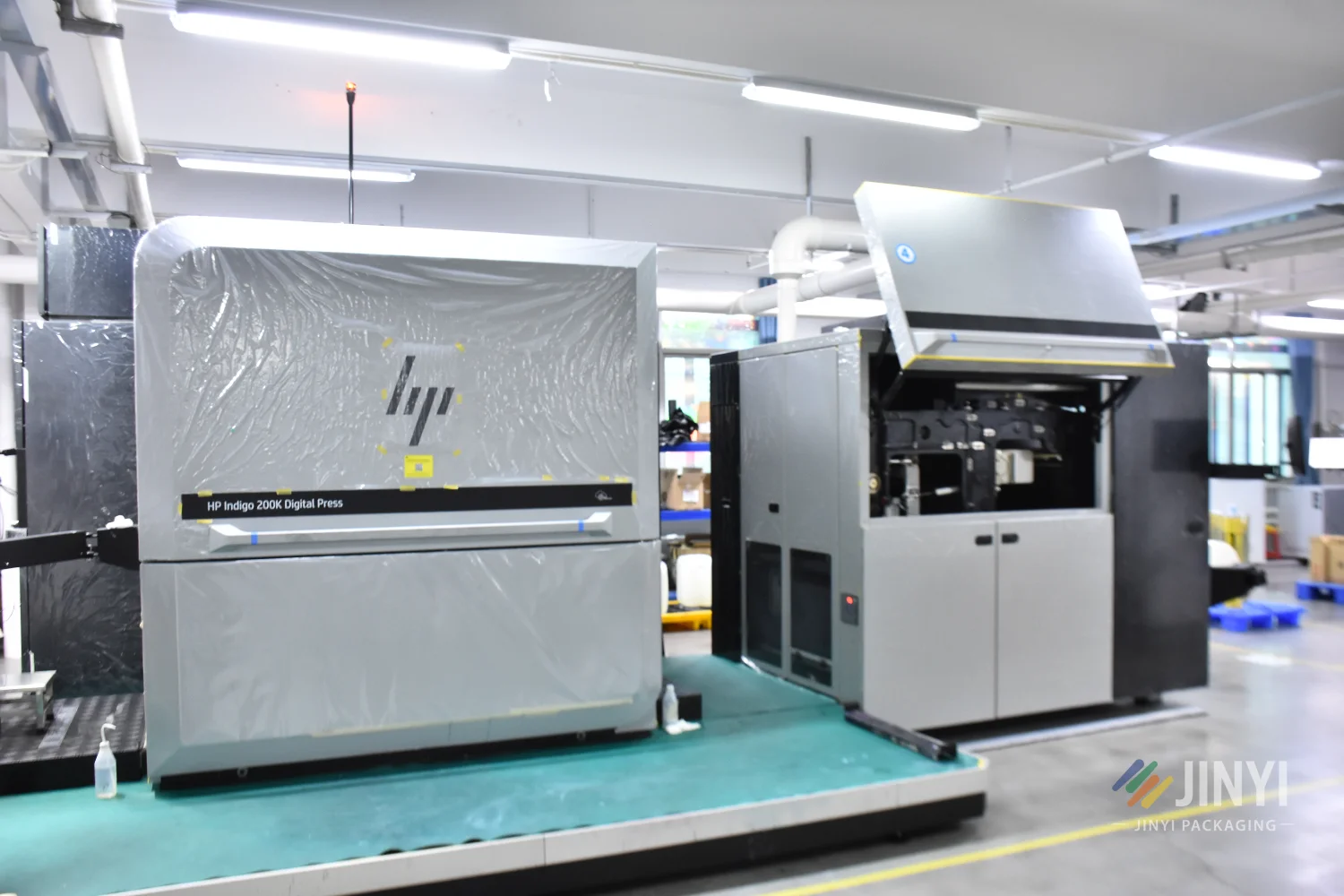
Bei JINYI bearbeitet der HP Indigo-Digitaldruckmaschinenpark – darunter die HP Indigo 25K für kleine Auflagen bei hoher Geschwindigkeit und die HP Indigo 6K für Muster mit kurzer Durchlaufzeit – vollflächige Markengrafiken auf Standbeuteln, Flachbeuteln und fin-seal-Rollmaterial ab einer Stückzahl von 500. Eine Markeneinführung mit den Varianten „Original“, „Teriyaki“ und „Peppered“ sowohl im Standbeutel- als auch im Stickpack-Format können jeweils 500 Stück als separate Digitaldruckauflagen auf dem entsprechenden Foliensubstrat produziert werden, um Design und Produktkompatibilität zu validieren und bewährte SKUs zur Serienproduktion auf die 10-Farben-Tiefdruckanlage mit ESKO Automation Engine zu übertragen. Jeder Auftrag bei JINYI umfasst eine kostenlose 3D-Mockup-Darstellung vor der Produktion, Foto- und Video-Updates zum Produktionsfortschritt in jeder Fertigungsphase sowie kostenlose E-Commerce-Fotografie der fertigen Beutel – was das Beschaffungsrisiko in der Entwicklungsphase verringert, wenn Folien- und Formatspezifikationen noch festgelegt werden.
HP Indigo 200K - die neueste Druckmaschine von JINYI, die 2025 in Betrieb genommen wird, erweitert die Digitaldruckkapazität und verkürzt die Lieferzeiten
Sind Sie auf der Suche nach maßgeschneiderten Verpackungen für Trockenfleisch oder Fleischsnacks?
JINYI produziert Standbeutel, Stickpacks mit Flossenversiegelung und Flachbeutel aus Hochbarrierefolie und metallisierten Strukturen – mit wiederverschließbaren Reißverschlüssen, transparenten Sichtfenstern sowie Vollfarbdruck im Digital- oder Tiefdruckverfahren ab 500 Stück. Kostenlose 3D-Mockups, Produktionsupdates und E-Commerce-Fotografie sind standardmäßig enthalten.
JINYI ist ein Hersteller von kundenspezifischen flexiblen Verpackungen mit mehr als 15 Jahren Produktionserfahrung und beliefert Marken aus den Bereichen Lebensmittel, Nahrungsergänzungsmittel, Kaffee, Tiernahrung und Konsumgüter in mehr als 70 Ländern. Wir produzieren Standbodenbeutel, Flachbodenbeutel, Kissenbeutel und Seitenfaltenbeutel aus PET/AL/PE, PET/VMPET/PE und anderen Barrierespezifikationen - mittels HP Indigo-Digitaldruck ab 500 Stück und Tiefdruck bei Großserien - mit vollständiger Materialdokumentation als Standard bei jeder Bestellung.
Das ist es, was Vom Film zum fertigen Produkt - richtig gemacht in der Praxis bedeutet.
Elsa
Business Development Manager - JINYI Packaging
Elsa leitet die Geschäftsentwicklung und das Kundenauftragsmanagement bei JINYI. Mit 8 Jahren Erfahrung im Außenhandel in Yiwu und Dongguan hat sie ein genaues Verständnis für die Marktnachfrage und die tatsächlichen Bedürfnisse der Käufer - sie setzt echte Kundeneinblicke in die richtigen Verpackungsentscheidungen um.
Bedürfnisse der Kunden Verwaltung der Aufträge Geschäftsentwicklung
Aus welchem Material bestehen die Tüten von Jack Link’s?
Die Verpackungen von Jack Link’s sind mehrschichtige Laminatbeutel mit hoher Barrierewirkung. Je nach Format, angestrebter Haltbarkeitsdauer und dem Vorhandensein eines transparenten Fensters kann die Folienstruktur Aluminiumfolie, metallisiertes PET oder EVOH-haltige Laminate als Barriereschicht enthalten. Jack Link’s hat keine offiziellen Folienspezifikationen veröffentlicht. Verschiedene Formate – Standbeutel für Trockenfleisch, Fleischsticks mit Flossenversiegelung, flache Steakbeutel – verwenden unterschiedliche Folienstrukturen, die auf die jeweiligen Produkt- und Verzehranforderungen zugeschnitten sind.
Was ist das weiße Päckchen in der Jack-Link’s-Tüte?
Das weiße Päckchen ist ein Sauerstoffabsorber, der Eisenpulver enthält, welches den Sauerstoff im Inneren des versiegelten Beutels chemisch bindet. Einige Formulierungen enthalten zudem Ton oder Kieselsäure als Trockenmittel. Es sorgt in Verbindung mit der Begasung und der Hochbarrierefolie für eine nahezu sauerstofffreie Umgebung. Es ist bei versehentlichem Verzehr in sehr geringen Mengen nicht gesundheitsschädlich, ist jedoch kein Lebensmittel und sollte nicht absichtlich verzehrt werden.
Warum braucht die Verpackung von Beef Jerky einen Sauerstoffabsorber, während bei Chips einfach Stickstoff zum Einsatz kommt?
Beef Jerky weist eine höhere Wasseraktivität sowie mehr oxidationsempfindliche Fette und Proteine auf als frittierte Chips. Eine Stickstoffspülung allein reicht nicht aus, um über eine Haltbarkeitsdauer von zwölf Monaten hinweg eine nahezu sauerstofffreie Umgebung aufrechtzuerhalten, insbesondere in einem Beutel mit transparentem Sichtfenster. Der Sauerstoffabsorber bindet Rest- und eindringenden Sauerstoff, den die Folie und die anfängliche Gasspülung allein nicht beseitigen können.
Warum haben die Jerky-Beutel von Jack Link’s ein durchsichtiges Fenster, die Fleischstangen aber nicht?
Die Entscheidung für ein Sichtfenster hängt vom jeweiligen Produkt und Format ab. Der Kauf von Trockenfleisch erfolgt vor allem aufgrund des Aussehens – die Verbraucher möchten vor dem Kauf die Farbe, die Konsistenz und die Menge des Fleisches sehen. Fleischstangen sind Einzelportionsprodukte zum Mitnehmen, deren Kauf eher auf dem Vertrauen in die Marke als auf einer visuellen Begutachtung beruht. Die Entwicklungskosten für ein Sichtfenster sind nur dann gerechtfertigt, wenn die visuelle Bestätigung die Kaufentscheidung maßgeblich beeinflusst.
Kann ich individuelle Verpackungen für Trockenfleisch oder Fleischstangen bereits ab geringen Mindestmengen bestellen?
Ja. Mit dem HP Indigo-Digitaldruck lassen sich maßgeschneiderte Standbeutel mit hoher Barrierewirkung, Flachbeutel und Rollmaterial mit Flossenversiegelung bereits ab einer Stückzahl von 500 Stück herstellen – so kann eine Marke Design, Folienspezifikation und Format testen, bevor sie sich für eine große Tiefdruck-Produktionsserie entscheidet. JINYI bietet bei jeder Bestellung kostenlose 3D-Modellrenderings, Updates zum Produktionsfortschritt und E-Commerce-Fotografie an.