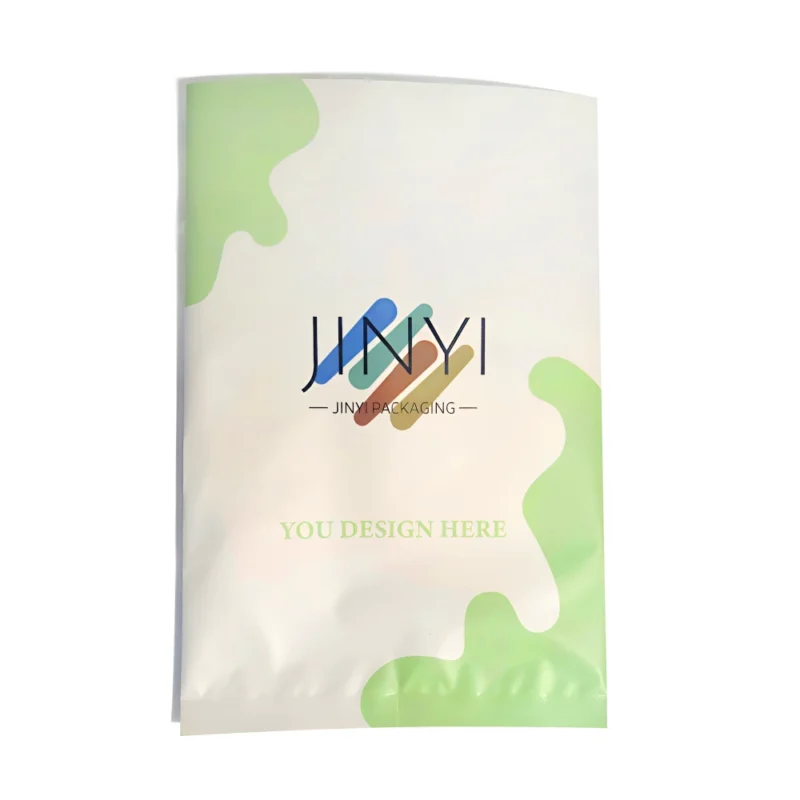
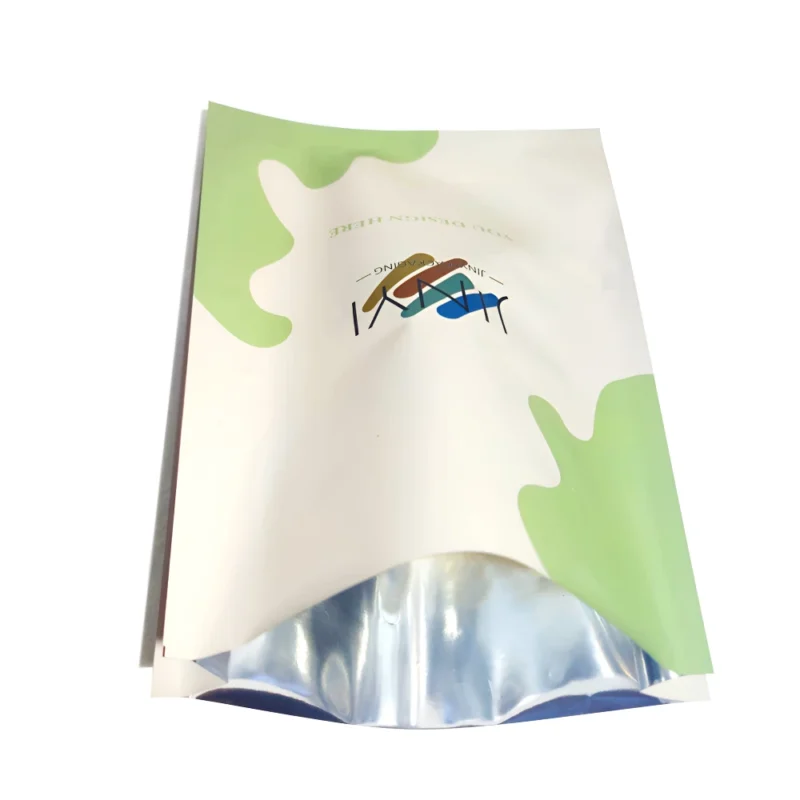
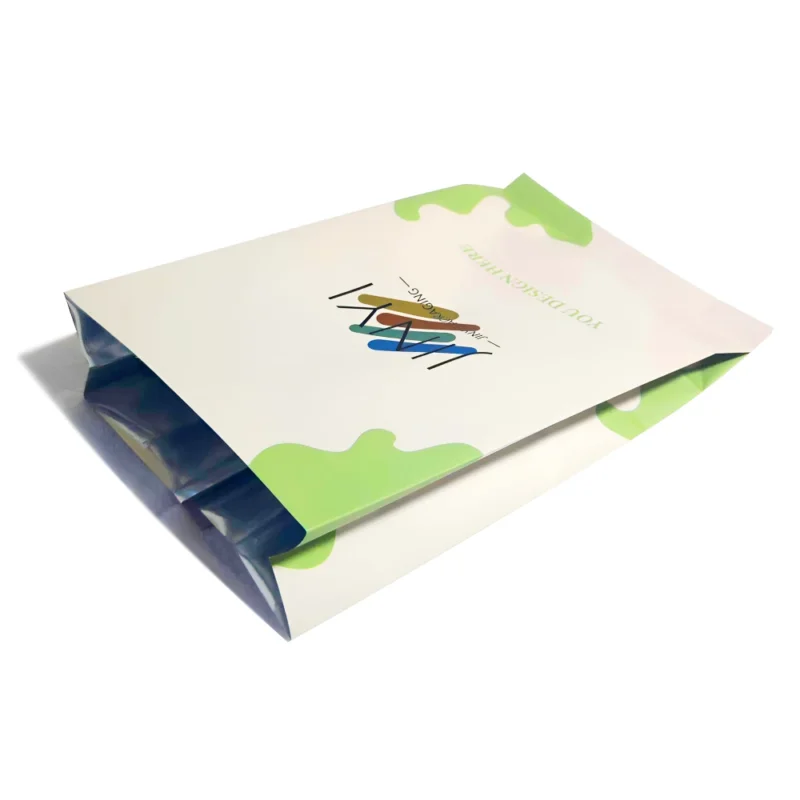
تشارك JINYI إرشادات عملية للتغليف والتعبئة والتغليف من أجل قراراتك.
A pouch can carry a recyclable claim and still fail when one barrier layer, coating, zipper, or local collection rule does not fit the recycling stream.
A flexible pouch is recyclable when its complete structure—not only the main film—can be collected, sorted, and reprocessed in a defined recycling stream. The base polymer, barrier, ink, adhesive, coating, closure, size, shape, and market infrastructure all affect that result.
When I review a recyclable pouch, I do not stop at the words “mono-material.” I check what every layer is doing, what the finished pouch must protect, and where the empty package goes after use. I approve the environmental claim only after the structure runs properly, seals consistently, protects the product, and matches the target recycling route.
Judge the complete pouch. A PE body does not automatically approve every barrier, ink, adhesive, coating, or closure.
Keep one polymer family where practical. Mono-PE and mono-PP structures give recycling systems a clearer material stream.
Do not remove protection blindly. The recyclable structure must still meet the product’s moisture, oxygen, aroma, seal, and transport needs.
Count the small components. Zippers, spouts, valves, labels, and heavy coatings can change the result.
Define the target market. Designed for recycling does not guarantee collection and recycling in every country or municipality.
Approve with evidence. I want a material bill, barrier data, sealing trials, finished-pouch tests, and market-specific claim wording before release.
What Does “Recyclable” Mean for a Flexible Pouch?
Many buyers start with one material name and assume the job is finished.
Recyclable means the finished pouch is compatible with a defined collection, sorting, and recycling route. It does not mean the pouch is made from one perfectly pure resin, and it does not mean every household can place it in the same bin.
I separate four questions before I approve the word
First, is the pouch designed around a recognized recycling stream such as flexible polyethylene (PE) or flexible polypropylene (PP)? Second, can sorting equipment identify and direct it correctly? Third, can the material be reprocessed without creating unacceptable gels, specks, odor, discoloration, or weak recyclate? Fourth, is that collection and recycling route available where the package will be sold?
These questions are connected, but they are not identical. A pouch can meet PE design-for-recycling requirements while the local collection route remains limited. I therefore separate the engineering conclusion from the disposal instruction: the specification states what the pouch is designed for, and the artwork states how consumers must dispose of it in the sales market.
سؤال
What It Proves
What It Does Not Prove
Is the body PE-based?
The main film is designed for a PE stream
That every added layer is compatible
Does it say “100% recyclable”?
The brand is making a whole-pack claim
The exact layer recipe or local collection rate
Is it mono-material?
One polymer family carries most of the structure
That no ink, adhesive, coating, or tie layer exists
I also keep recyclable and compostable separate. A compostable film follows a different material and end-of-life route. Mixing the terms makes the specification weaker, not greener.
Evidence · CEFLEX Designing for a Circular Economy Guidelines
CEFLEX recommends mono-PE and mono-PP structures where possible and evaluates barriers, inks, adhesives, coatings, construction, and sortability as part of the complete design. View the CEFLEX design principles →
A conventional laminate can assign each job to a different material. Recycling asks us to achieve those jobs with fewer material families.
I start with a PE-dominant or PP-dominant structure and select it around the product, pouch format, sealing process, and target recycling stream. I do not mix PE and PP casually just because both are polyolefins.
I assign every layer a job before I simplify it
The outer web has to carry the artwork, run through printing and lamination, resist heat during bag making, and give the pouch enough stiffness to stay controlled on the machine. The inner web has to contact the product, seal consistently, tolerate contamination at the seal where relevant, and carry impact without opening the side or bottom seam.
In a PE route, oriented PE such as MDO-PE or BOPE can provide the outer printing and stiffness function, while a PE-based sealant web handles sealing and impact. A PP route can use oriented PP with a PP sealant layer. The names sound simple, but the grades still have to work together on our printing, lamination, slitting, and bag-making lines.
Layer Function
PE-Focused Route
ما أتحقق منه
Print and stiffness
Oriented PE outer web
Registration, heat resistance, web control, appearance
الحاجز
Thin compatible barrier layer or coating when needed
Product risk, total percentage, recycling compatibility
Food contact and seal
PE-based sealant film
Seal window, contamination tolerance, impact strength
Before I specify “recyclable PE,” I require the product, fill weight, pouch size, filling temperature, sealing equipment, shelf-life target, and sales market. Those details show whether the PE route will remain stable through production, filling, transport, and storage.
How Much Barrier Can We Add Without Losing Recyclability?
Removing foil simplifies the material structure, but the redesign fails if the product softens, oxidizes, clumps, or loses aroma before the end of its shelf life.
I add only the barrier the product requires and keep it compatible with the target PE or PP recycling stream. I set the limit from the barrier technology, its total percentage, the surrounding layers, and the applicable design-for-recycling guideline.
I begin with the first product failure, not the lowest number
Oxygen transmission rate (OTR) tells us how quickly oxygen passes through a material under stated test conditions. Water vapor transmission rate (WVTR) tells us how quickly water vapor passes through it. These numbers are useful only when the product risk and test conditions are clear.
Crisp snacks lose texture through moisture pickup. High-fat foods develop rancid notes through oxidation. Powders clump when moisture enters, and coffee loses aroma while the bag can still look perfect. I do not specify the strongest barrier in every direction. I identify the first realistic product failure, protect against it, and verify the structure through storage and distribution.
Product Signal
First Barrier Question
Validation Needed
Crisp product softens
Is WVTR low enough?
Humidity-conditioned shelf test
Fat or flavor oxidizes
Is OTR low enough?
Product stability and oxygen-exposure review
Powder clumps
Is moisture control the main need?
Real-product storage and seal-integrity checks
When the oxygen target requires more protection, I use EVOH, a compatible coating, or another thin functional layer instead of returning automatically to a foil laminate. I then verify the functional-layer percentage, tie layers, adhesive, ink load, and recycling protocol as one complete structure.
Evidence · RecyClass Design for Recycling Guidelines
RecyClass provides stream-specific guidance for PE and PP flexible films and requires testing when a feature is not fully covered by the guideline. In production review, I approve the barrier from its full composition and assessment result—not from a material name alone. Review the RecyClass guidelines →
If the product risk is higher, I also compare the recyclable route with the conventional alternatives explained in Foil, VMPET, or EVOH: How I Choose the Right Pouch Structure. The buyer then sees the performance trade-off before approving the environmental claim.
Do Inks, Adhesives, and Matte Coatings Matter?
These materials are thin and easy to ignore. They still travel into the recycling process with the film.
Yes. Ink chemistry and loading, laminating adhesive, primer, coating, and varnish can change recyclate color, odor, filtration, extrusion stability, and final material quality. They must be checked as part of the structure, not treated as decoration.
I review the printed pouch by weight and chemistry, not only by appearance
A heavily printed red pouch and a mostly clear pouch can use the same PE base films and still produce different recycling results. White ink, dark pigments, matte varnish, and high print coverage all add material. I therefore assess the fully printed commercial pouch—not an unprinted film sample—before approving the structure.
The adhesive deserves the same attention. A recyclable laminate still has to stay bonded through printing, slitting, bag making, filling, transport, and consumer use. Reducing or changing adhesive without checking bond strength can create delamination before the pouch ever reaches a recycling facility.
Small Constituent
Production Job
Recycling Question
Ink and white ink
Color, opacity, artwork
Chemistry, loading, color and odor effect
Laminating adhesive
Keeps webs bonded
Compatibility, amount, cure and reprocessing behavior
Can Zippers, Spouts, Valves, and Labels Break the Design?
A correct body-film structure is not enough if one added component conflicts with the target recycling stream.
Every closure and attachment is part of the complete package and must follow the same recycling direction. I keep only the components that perform a necessary job and verify each material and seal interface before release.
I ask whether the component is necessary before I ask whether it is compatible
A zipper can protect an opened product and reduce food waste. A spout can make a liquid pouch usable. A coffee valve releases gas without leaving an open hole. These functions can justify the component. But adding them because competitors use them creates unnecessary material and another seal interface that must remain stable.
When the component is necessary, I check its polymer, weight, color, adhesive or weld interface, and behavior during pouch making. For a PE pouch, a PE zipper is the correct starting direction; I still verify the zipper grade, seal strength, and proportion in the complete pack. I apply the same review to spouts and valves, especially when a rigid fitment represents a meaningful part of a small pouch.
المكوّن
Why It Is Added
What I Verify
سحاب
Reclosure after opening
Polymer match, zipper seal, total weight
Spout and cap
Controlled filling and dispensing
Resin, weld area, cap system, stream compatibility
Valve
Gas release
Materials, adhesive, leak performance, necessity
Label
Variable information or decoration
Face stock, adhesive, coverage, separation behavior
Every added feature creates another material and another seal or adhesive interface. I keep the parts that protect or deliver the product and remove the parts with no necessary job. That gives me a cleaner structure and a recycling claim I can defend.
A Real JINYI Case: What Does This Recyclable PE Pouch Show?
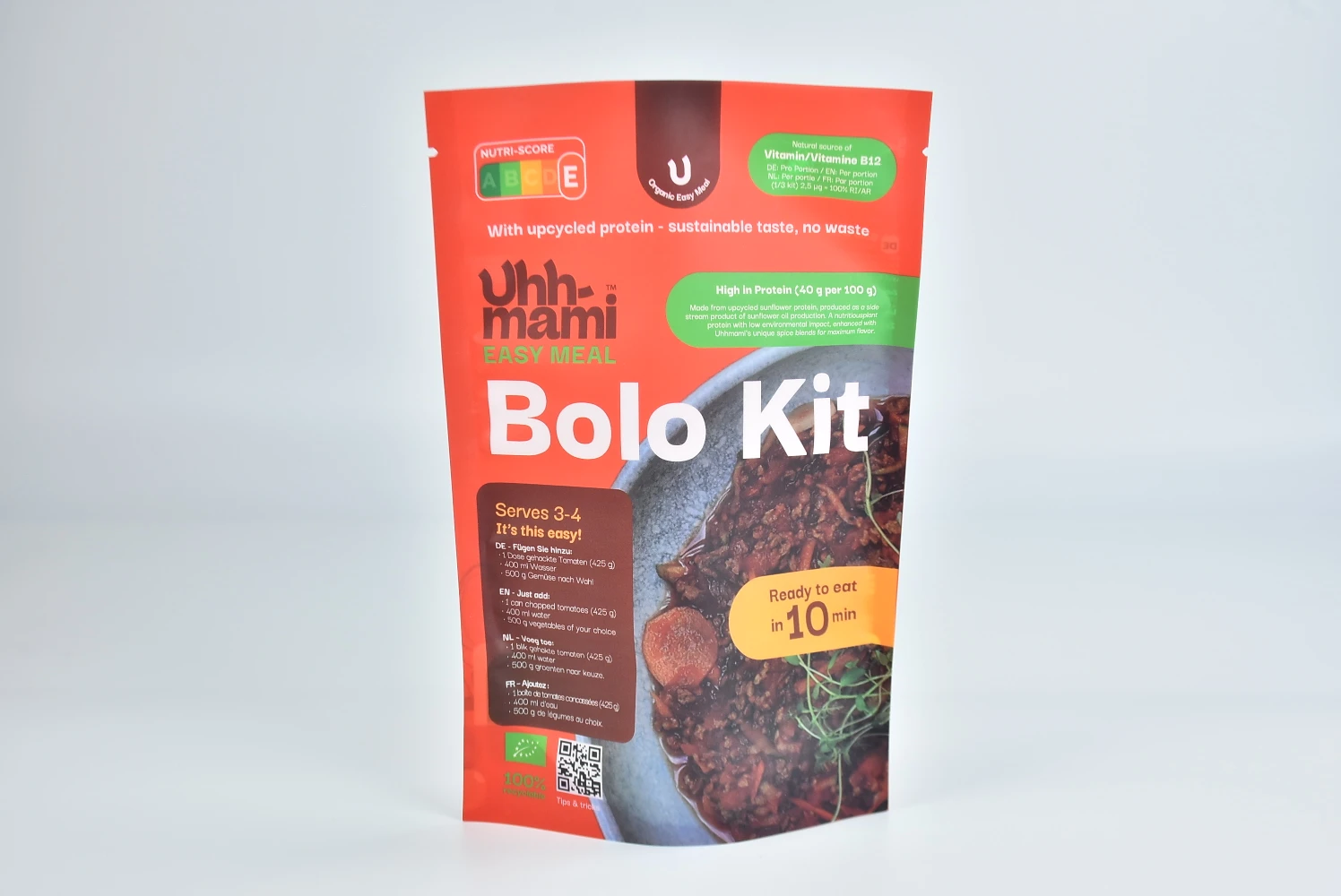
This pouch looks and runs like a normal printed food pack because recyclability comes from its structure, not an “eco” visual style.
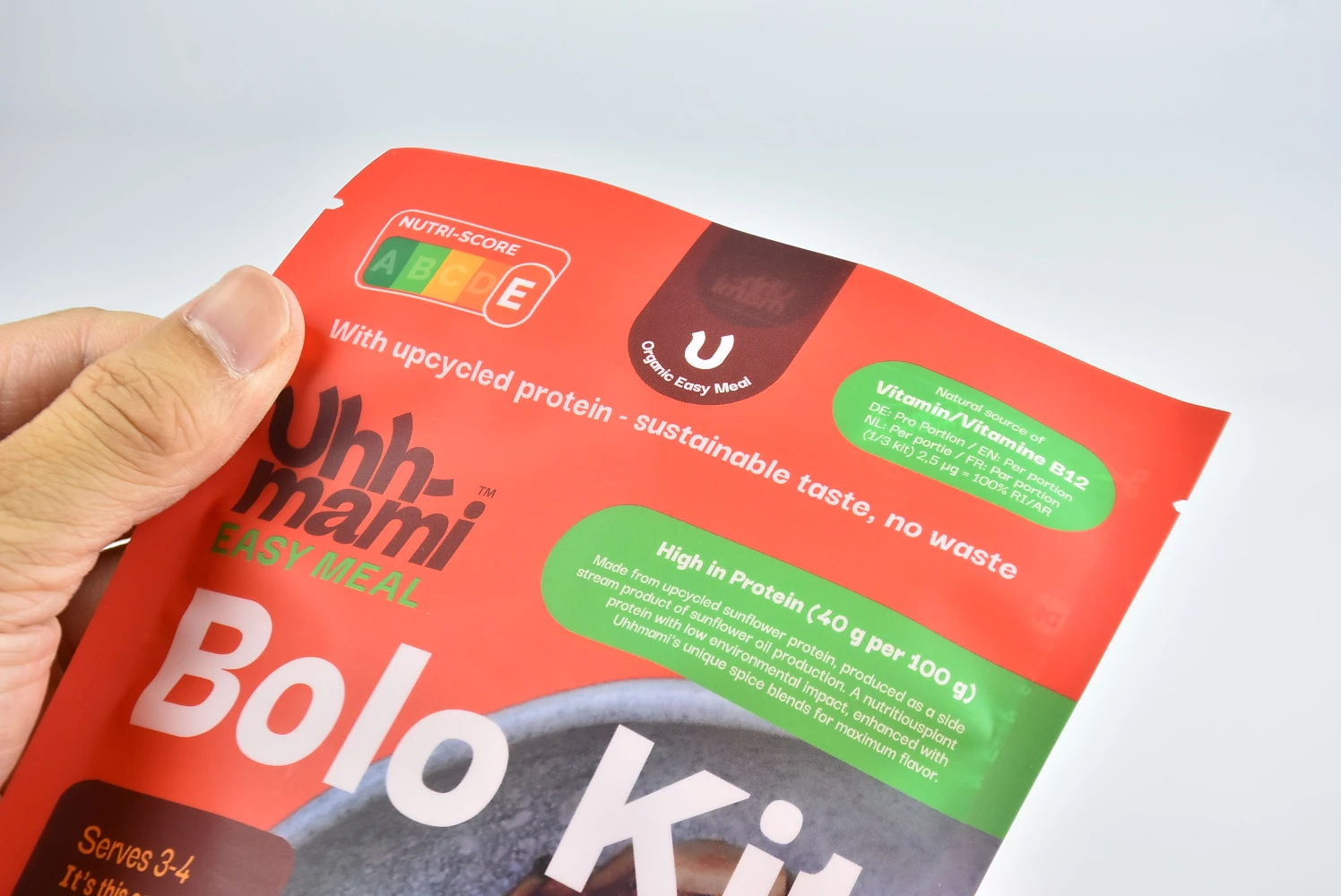
Our 80 g dry-meal pouch case uses a soft recyclable PE structure with a bottom gusset, full printed coverage, tear notches, and no zipper, spout, valve, paper, PET, foil, or metallized film. The complete pack stays within a PE-focused recycling route.
I use this case to show what simplification looks like in a real bag.
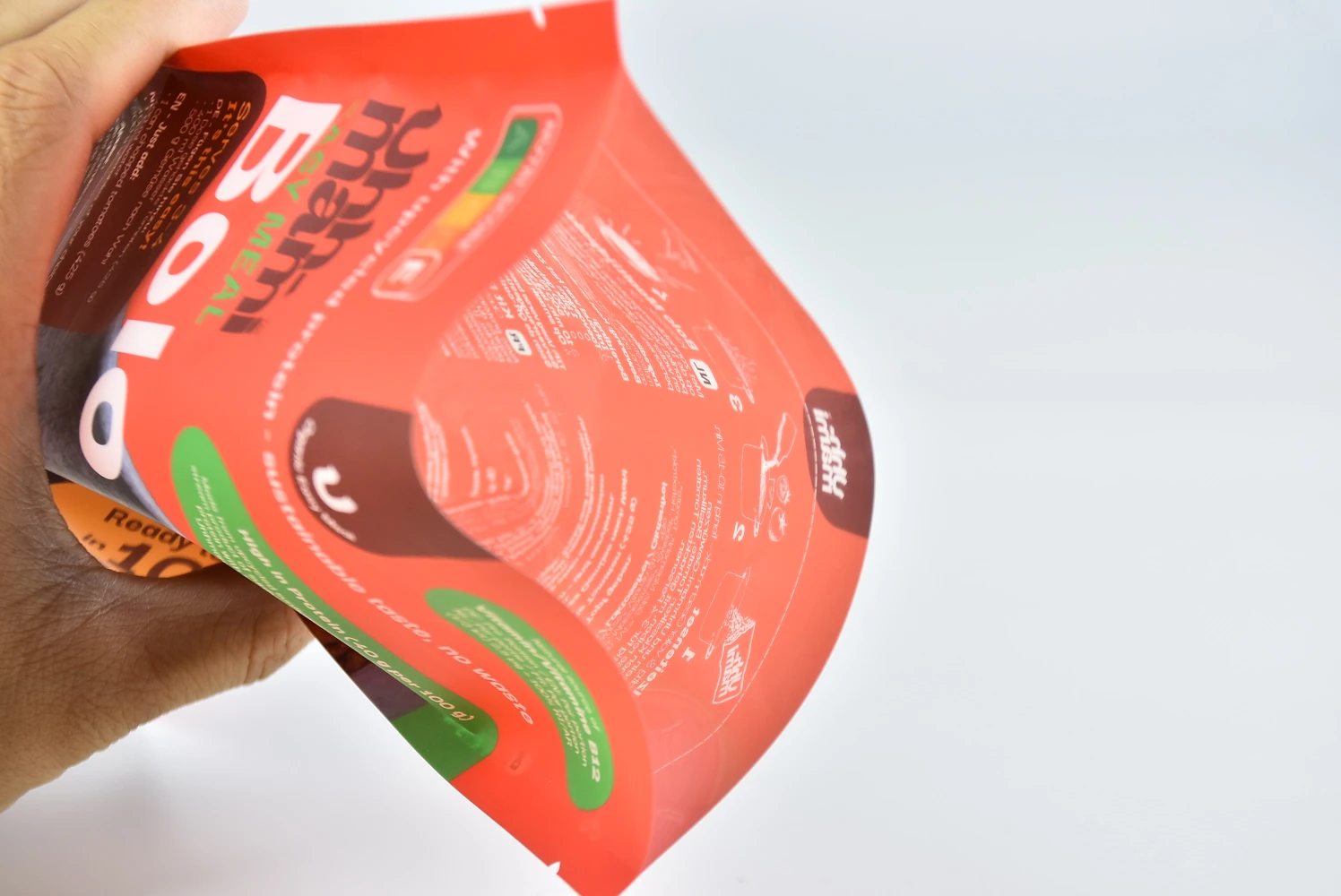
The pouch still has several jobs. Its outer PE layer carries the artwork and supports converting. The PE sealing side closes the top, side seals, and bottom gusset. The film remains soft enough to handle and fold, while the formed bottom allows the pack to stand. The two tear notches give the consumer a simple opening route without adding another component.
In production, “laminated” does not automatically mean several unrelated material families. We laminate or coextrude PE layers so printing, mechanical strength, barrier, and sealing each have a controlled function while the pouch remains within the PE system. I judge the pouch by the identity and proportion of those layers and by the behavior of the complete structure in the recycling stream—not by the number of physical layers.
This finished recyclable PE stand-up pouch is a real JINYI production case. Its printed body, tear notches, and bottom gusset are produced without PET, aluminum foil, metallized film, paper, zipper, spout, or valve.At JINYI, we use a hand-flex check to confirm the handling characteristics of this recyclable PE pouch. The soft PE structure remains flexible while providing the strength required for the seals and bottom gusset.
Engineering Data · Confirmed JINYI Case
Application: 80 g shelf-stable dry meal base. Format: bottom-gusset stand-up pouch. Structure: recyclable PE system. The PE film carries the printing, mechanical strength, gusset formation, and heat-sealing functions. The design uses no zipper, spout, valve, paper, PET, aluminum foil, or metallized film. This is the correct recyclable structure for this product and pack format.
JINYI inspects the printing and top-seal area at close range before the pouch is approved. A recyclable structure must still maintain clear print registration, stable film handling, and consistent sealing throughout production.
For this 80 g dry meal base, I selected the PE system because it delivers seal integrity, handling strength, stand-up performance, and product protection within one recyclable material family. I do not copy the same recipe into coffee, oily pet food, liquid concentrate, or long-life supplements. For those products, I recalculate the oxygen, moisture, aroma, seal, filling, and distribution requirements first, then build the recyclable structure around those conditions.
Can the Pouch Be Collected and Sorted Where It Is Sold?
A technically compatible film still needs a real path from the consumer to a recycler.
I approve the recycling claim only after the sales market, package size, color, sorting route, collection program, and consumer instruction are fixed. I do not use one global recycling sentence for every destination.
I lock the market before I lock the claim
Europe and North America do not use one identical flexible-film recycling system. Collection also changes by region, retailer program, and packaging format within the same country. When a pouch meets the technical design guide but curbside collection is unavailable, the artwork must direct the consumer to the correct store-drop-off or specialist collection route.
Size and construction also matter. Very small or narrow packs require additional sorting review because they move through equipment differently from larger flexible packs. Dark colors, metallization, full-body labels, rigid fitments, and product residue also change identification and recyclate quality. That is why I lock the sales market before approving the artwork’s recycling statement.
Evidence · APR Design Guide for PE Flexible Packaging
APR evaluates PE flexible packaging as it enters the recycling stream, including attachments, inks, adhesives, and other design features. I use the market-specific guidance to set the claim and disposal wording before artwork approval. View APR PE flexible guidance →
Claim Level
Evidence I Want
Typical Wording Direction
PE-based structure
Material bill and supplier declaration
State the material family accurately
Designed for recycling
DfR guideline assessment
Name the intended recycling stream
Recyclable in market
Collection, sorting, and local labeling review
Add location or facility conditions where required
Before the artwork is locked, I require confirmation of the sales countries, retailer requirements, on-pack symbols, and consumer disposal route. Changing those instructions after printing is not an engineering correction. It is an expensive reprint.
How Do I Approve a Recyclable Pouch for Production?
A material certificate does not tell me whether the finished pouch will run, seal, survive transport, and protect the product.
I approve the structure in stages: document review, film conversion, pouch making, real-product testing, and claim review. The pouch must pass both packaging performance and design-for-recycling checks.
I do not release a new film from the supplier name alone
I first review the film structure, total composition, food-contact documents, barrier data, sealant recommendation, and recycling assessment. Then the material has to run. Oriented PE behaves differently from PET under heat and tension, so I check registration, web flatness, curling, static, coefficient of friction, slitting quality, and bag-making stability on the actual production route.
The finished bag then needs the checks that match its real use. I examine dimensions, appearance, seal continuity, bottom formation, opening behavior, zipper or spout function where present, drop resistance, compression, and filled-product handling. Barrier values from a flat film do not protect a product if the side seal has a channel or the bottom gusset opens during transport.
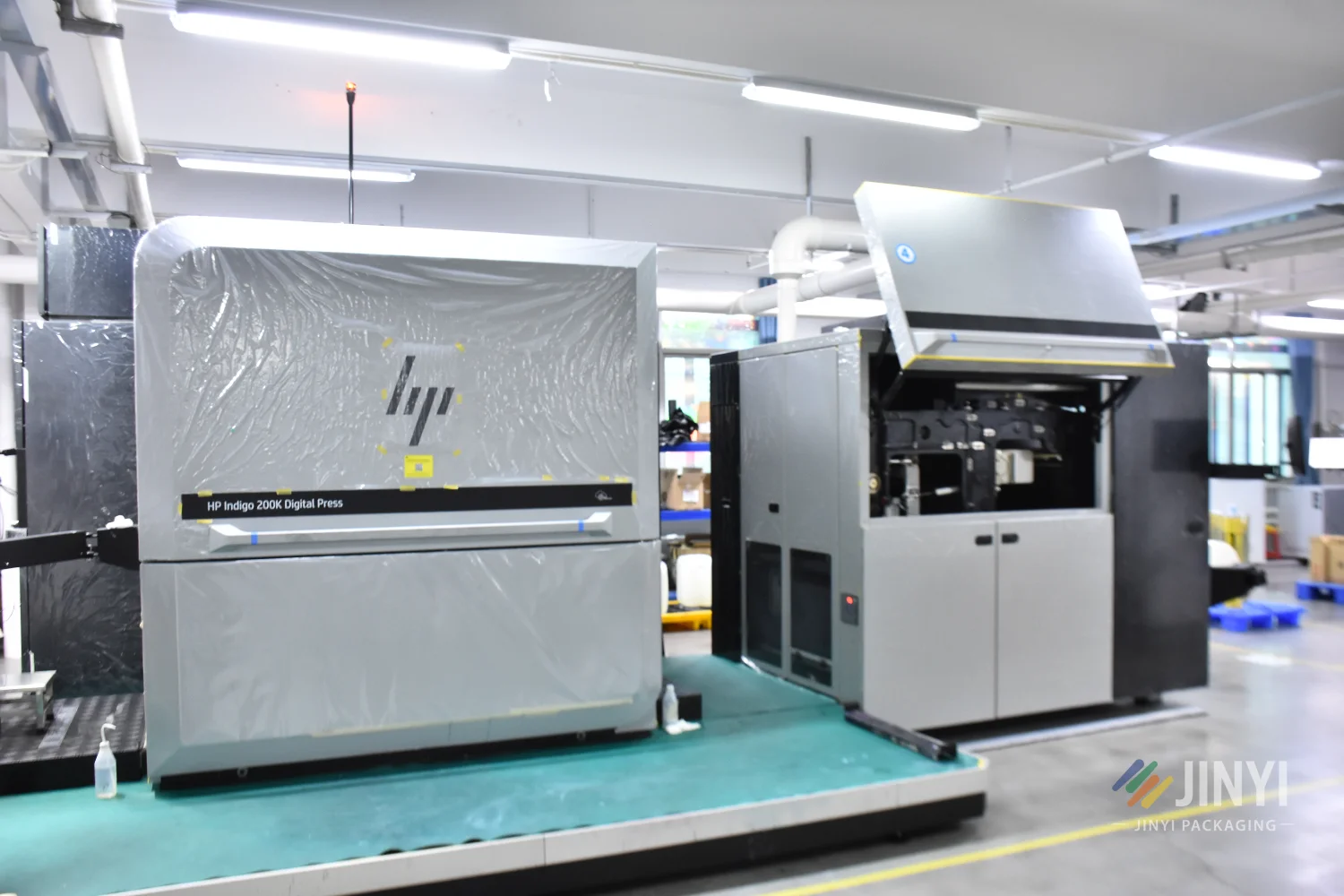
طابعة HP Indigo 200K - أحدث طابعة من إنتاج شركة JINYI، التي تم تشغيلها في عام 2025، لتوسيع سعة الطباعة الرقمية وتقليل فترات الإنتاج
Seal window, dimensions, gusset, opening, attachments
Can the line hold a repeatable production window?
Filled-pouch validation
Product fit, storage, drop, compression, barrier and seals
Does the pouch protect the real product through its route?
Artwork release
Market wording, symbols, component instructions
Can the recycling claim be defended in the sales market?
When I receive only “I need an eco pouch,” there is not enough information to release a structure. Send the product type, fill weight, target shelf life, current structure, OTR or WVTR target if known, filling and sealing method, transport route, sales countries, required closure, print coverage, and the exact environmental claim. I use that brief to settle the performance and recycling trade-offs before artwork and production are locked.
At JINYI, we compare the conventional structure with the PE- or PP-focused recyclable route, prepare the material documentation, and control printing, lamination, slitting, bag making, and finished-pouch inspection as one production chain. We are not replacing one material name with another. We are building a pouch that works from film to finished use and carries a recycling claim we can support with the structure and documentation.
الخاتمة
A flexible pouch is recyclable only when every layer, component, performance requirement, and market pathway works with the intended recycling stream.
JINYI هي مصنع مصدر للتغليف المرن المخصص مع أكثر من 15 عامًا من الخبرة في الإنتاج، حيث تقدم خدمات الأغذية والمكملات الغذائية والقهوة وأغذية الحيوانات الأليفة والعلامات التجارية للسلع الاستهلاكية في أكثر من 70 دولة. نحن ننتج أكياسًا قائمة وأكياسًا ذات قاع مسطح وأكياس وسائد وأكياس مجمعة جانبية من PET/AL/PE وPET/VMPET/PE وغيرها من مواصفات الحواجز - عبر الطباعة الرقمية من HP Indigo من 500 وحدة وطباعة الحفر بكميات كبيرة - مع تضمين وثائق المواد الكاملة كمعيار قياسي مع كل طلب.
هذا ما من الفيلم إلى النهاية - تم إنجازه بشكل صحيح يعني في الممارسة العملية.
مارك
رئيس إدارة الإنتاج · شركة جيني للتغليف
يتولى مارك قيادة عمليات جدولة الإنتاج وتنسيق الطلبات في شركة «جينيي». وبفضل خلفيته في إدارة الأعمال وخبرته العملية في مجال التصنيع، يركز مارك على الحفاظ على استقرار الجودة ومدة التنفيذ والتسليم في جميع طلبات التغليف المخصصة.
تخطيط الإنتاج التسليم في الموعد المحدد التنسيق بين الفرق
No. The complete pouch must be checked, including barriers, inks, adhesives, coatings, closures, size, color, and the target recycling stream.
Can a laminated pouch still be mono-material?
Yes. Several PE-based layers can be laminated or coextruded to handle printing, strength, barrier, and sealing while keeping the main structure within the PE family.
Can a recyclable PE pouch provide oxygen and moisture barrier?
Yes. I set the oxygen and moisture targets from the product and shelf life, select the compatible functional layer or coating, and verify the complete structure against the relevant recycling guideline.
Does a zipper make a pouch non-recyclable?
No—not by itself. I check the zipper polymer, weight, color, seal interface, and proportion in the complete pack against the pouch’s target recycling stream.
What information does a buyer need before requesting a recyclable pouch?
Provide the product, fill weight, shelf life, current structure, filling method, transport route, sales countries, pouch features, artwork coverage, and intended environmental claim.
Is recyclable packaging the same as compostable packaging?
No. They use different material systems and end-of-life routes. Each claim needs its own structure, evidence, certification, and consumer disposal instructions.