تشارك JINYI إرشادات عملية للتغليف والتعبئة والتغليف من أجل قراراتك.
Replacing foil or PET with a PE-based structure is easy to promise. The difficult part is keeping the product protected and the pouch stable on every machine.
Yes, a mono-material PE pouch can provide high barrier when its oxygen, moisture, sealing, and shelf-life requirements are engineered together. The answer depends on the product, the functional barrier layer, the complete film structure, and finished-pouch test results—not the words “mono-material” alone.
When I review this change in our factory, I start with what the product must survive. Then I work backward through the barrier target, printing web, sealant web, functional layer, adhesive, pouch format, filling method, transport route, and recycling guideline. A structure is ready only when it protects the product and runs consistently from film to finished pouch.
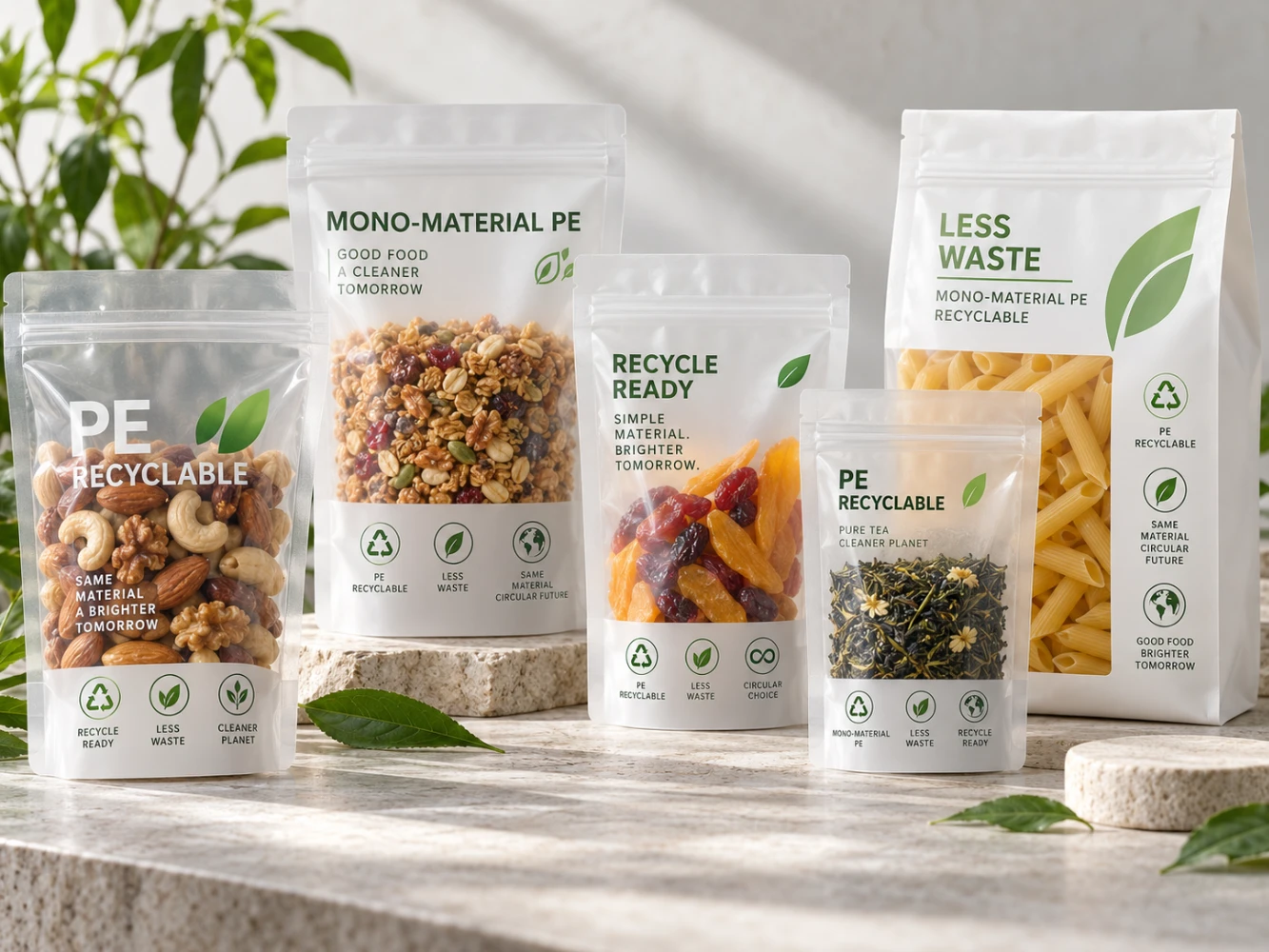
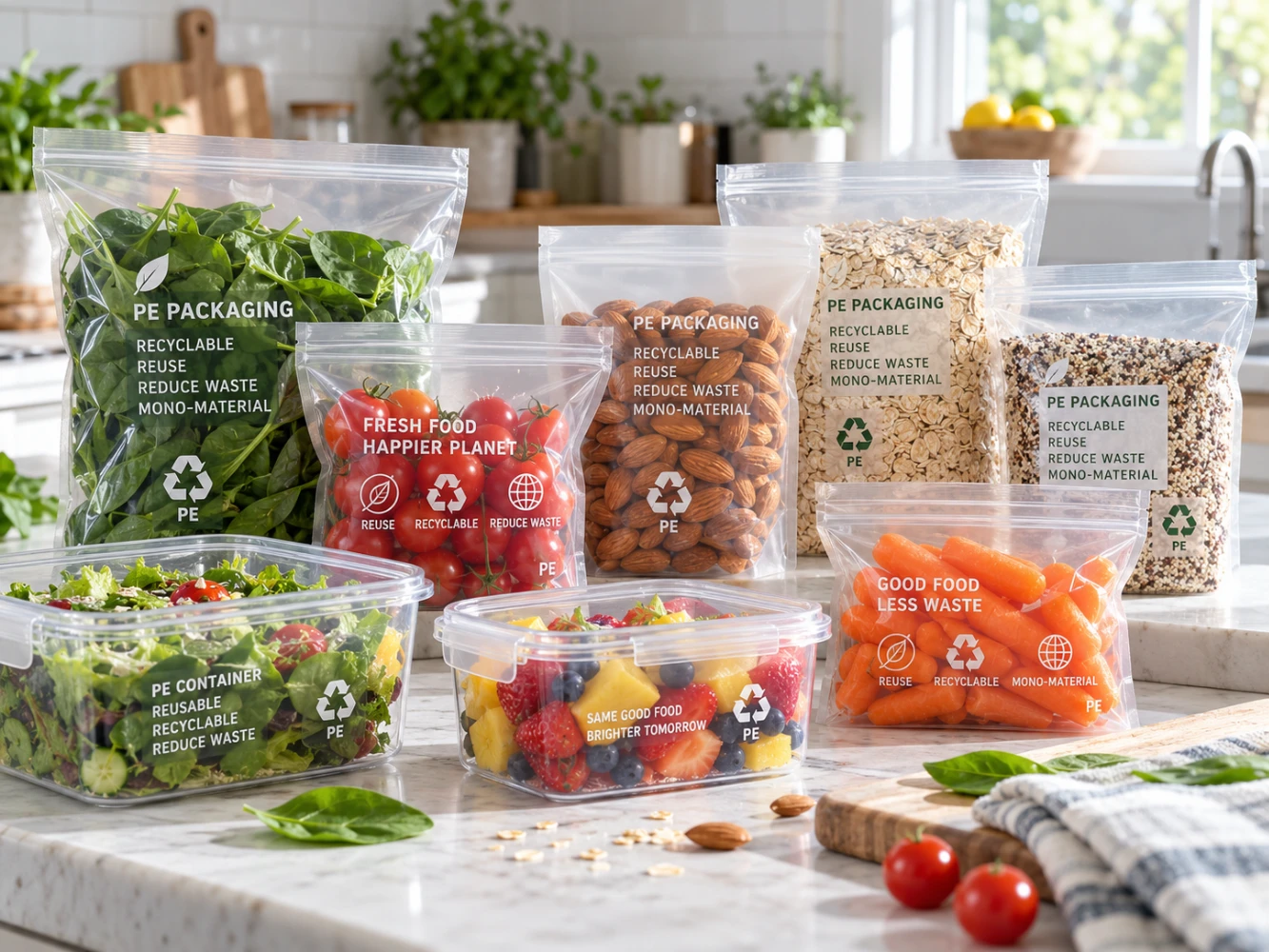
Mono-material does not mean one physical layer. Several PE-based layers can handle printing, stiffness, sealing, and product protection.
PE already handles moisture well. Oxygen-sensitive food normally needs an additional compatible barrier function.
High barrier is a project target. I set oxygen transmission rate and water vapor transmission rate from the real product and shelf life.
EVOH can be compatible with a PE recycling route. Its amount and the complete construction must still be checked against the relevant guideline.
Flat-film data is not final approval. Seams, gussets, flexing, heat, and conversion can change the finished pouch result.
Protection comes before the claim. I do not release a recyclable structure that cannot safely hold the product through filling, transport, storage, and use.
Can a Mono-Material PE Pouch Really Provide High Barrier?
The common mistake is to compare “PE” with “foil” as if each name describes one fixed level of protection.
A PE-dominant pouch can reach demanding oxygen and moisture targets, but the result comes from the complete structure rather than PE resin alone. Different PE grades, oriented PE, coatings, EVOH, tie layers, adhesives, print coverage, and sealant design all influence the final performance.
I approve the job the pouch can perform, not the name on the specification
A mono-material pouch can contain several physical layers. “Mono” describes the main polymer family and the intended recycling route. It does not mean we ask one thin sheet of ordinary PE to carry the artwork, stay flat under printing heat, block oxygen, resist puncture, form a gusset, and seal through the same narrow temperature window.
In a practical PE structure, one web can provide printability and machine direction stability, another can carry the barrier function, and the inner web can provide product contact and heat sealing. The layers are selected so that polyethylene remains the dominant material family and the other functional materials remain compatible with the target recycling stream.
That is why I do not answer a buyer with “PE is high barrier” or “PE is low barrier.” Both statements are too loose. I ask what is being packed, what damages it first, how long it must last, and under which temperature and humidity conditions. Only then does “high barrier” become a usable specification.
A very low number on a film data sheet can look impressive and still be the wrong answer for the order.
High barrier means the package keeps oxygen, moisture, aroma, light, or grease within limits that protect the real product for its intended shelf life. The required level changes with formulation, pack size, headspace, storage, transport, and filling conditions.
I separate oxygen risk from moisture risk before selecting the film
Oxygen transmission rate (OTR) measures how much oxygen passes through a material under stated test conditions. Water vapor transmission rate (WVTR) does the same for water vapor. Lower values mean stronger barrier, but a number without temperature, relative humidity, specimen construction, and test method is incomplete.
Product Risk
ما أتحقق منه
Why the Answer Changes
الأكسدة
OTR, headspace, residual oxygen, closure and seal integrity
Fats, colors, vitamins, and aromas do not react at the same rate
Moisture gain
WVTR, humidity, pack area and dry-product sensitivity
A powder can cake before its flavor changes
Moisture loss
Water activity, seal path and storage temperature
Soft products can harden even when oxygen protection is acceptable
Aroma or odor
Product volatiles, film sorption and whole-pack leakage
A film may pass an oxygen target yet lose or absorb odor
The size of the pouch also matters. Transmission results are normally reported per unit area, while the product experiences the total package area plus leakage through seals and closures. A small sachet and a large stand-up pouch made from the same film do not expose the product to the same total ingress. The fill weight and headspace change the result again.
Evidence · ASTM Barrier Test Methods
ASTM D3985-24 covers oxygen transmission testing through plastic film and sheeting, while ASTM F1249-25 covers water vapor transmission through flexible barrier materials. Both results must be read with the agreed specimen and test conditions. Review ASTM D3985-24 →Review ASTM F1249-25 →
Our separate guide explains how I choose between moisture, oxygen, light, and aroma protection. For this article, the important point is simple: I do not upgrade every product to the lowest available OTR and WVTR. I specify enough protection for the real risk and verify it under relevant conditions.
Why Does PE Handle Moisture Better Than Oxygen?
Many PE pouches already resist water vapor well, but oxygen-sensitive food exposes the weak side of an ordinary PE-only structure.
Polyethylene is naturally useful for moisture resistance and heat sealing, while its oxygen barrier is usually not enough for products with demanding oxidation or aroma requirements. A high-barrier mono-PE design therefore adds oxygen protection without abandoning the PE recycling direction.
I use each PE layer for the job it performs best
The inside layer must seal reliably and protect the product-contact surface. The outer layer must accept print, resist stretching, and stay controlled through registration, lamination, slitting, and bag making. Oriented PE such as MDO-PE can add stiffness and dimensional control, but it does not remove the need to check heat response and barrier performance.
For oxygen-sensitive dry food, nuts, nutritional powders, coffee-related products, or aroma-sensitive ingredients, the film often needs a separate functional barrier. That may be EVOH, a suitable coating, or another tested solution compatible with the selected recycling guideline. I choose it from the target, not from a fashionable material name.
Humidity needs special attention because some oxygen-barrier materials lose performance as moisture exposure rises. The protective PE layers, coating design, layer position, and test condition therefore matter. A dry-condition OTR should not be copied into a humid distribution route without checking whether the number still represents the finished package.
This is also why thickness alone is a poor shortcut. Adding more ordinary PE can improve strength and sometimes moisture resistance, but it does not create the same oxygen protection as a properly designed functional layer. More material can increase cost and resin use without fixing the real risk.
Which Mono-PE Structures Can Provide Higher Barrier?
There is no single “recyclable PE film” that fits every food, pouch machine, and sales market.
The practical options include PE/PE laminates, oriented-PE-to-sealant-PE laminates, coextruded PE structures with a functional barrier, and approved coated PE films. Each route makes a different trade-off between barrier, stiffness, clarity, sealing, recyclability, and production stability.
I choose the structure after I know the converting route
Structure Route
Main Advantage
Production Question
PE / sealing PE
Simple PE-focused construction with good moisture resistance
Is ordinary oxygen protection enough for the product?
MDO-PE / sealing PE
Better stiffness, print control, and pouch handling
Can the webs run without stretch, curl, or heat distortion?
PE-based coextrusion with EVOH
Stronger oxygen barrier inside one engineered web
Does the full composition meet the target recycling guideline?
Barrier-coated PE
Thin functional coating with lower added mass
Will flexing, converting, and seal heat damage the coating?
A two-web laminate can be easier to print and convert than one very complex web. A coextruded film can protect the barrier layer between PE layers and reduce a separate lamination step. A coated structure may reduce added material but needs careful handling because scratches, flex cracks, folds, and heat can affect a thin barrier surface. There is no automatic winner.
The surface finish also changes the route. Heavy matte coatings, tactile varnishes, large ink coverage, and decorative effects add material and can alter friction, blocking, seal contamination, and recycling compatibility. I settle the performance structure before I approve a finish that may make it harder to manufacture or assess.
How Can EVOH Improve Oxygen Barrier Without Breaking the PE Recycling Route?
EVOH is useful, but treating one percentage as permission for every pouch and every country is careless.
EVOH can provide strong oxygen protection in a PE-dominant structure when its proportion, tie layers, total construction, and recycling assessment remain compatible with the intended PE stream. The accepted result belongs to the complete tested design—not to the word EVOH by itself.
I treat the percentage as a control point, not a marketing claim
EVOH performs the oxygen-barrier job at a much lower share than the PE layers that carry most of the package. Tie materials connect it to the surrounding PE because the layers do not naturally bond well enough on their own. Those supporting materials also count when the structure is assessed.
RecyClass reported that EVOH up to 5% of the total PE film weight had a minor impact in its PE film recycling tests, while material above that level produced an immediate impact on extrusion in the reported study. I use that finding as a useful European PE-film design reference. I do not convert it into a universal claim because the full pouch, compatibilizer, other layers, and target market still decide the result.
Evidence · RecyClass PE Film Testing
RecyClass tested EVOH in flexible PE recycling and reported different extrusion behavior below and above its evaluated threshold. This evidence helps set a design boundary, but the complete package still requires market-specific review. Read the RecyClass findings →
The correct engineering question is not “Does it contain EVOH?” It is “How much functional material is present in the complete pack, what supports it, what performance does it deliver, and how is the finished construction classified in the intended recycling route?” That question gives procurement, production, and artwork teams something they can verify.
What Changes on the Printing, Lamination, and Pouch-Making Lines?
A good laboratory film can still become a poor pouch when the webs stretch, curl, block, or seal inconsistently.
Mono-PE structures require tighter control of web tension, heat input, registration, lamination bond, friction, and sealing because PE responds differently from a conventional PET/PE laminate. Production stability must be built into the specification.
I follow the film through every machine before I call it production-ready
On the printing line, I watch registration and web stretch. A softer PE web can move more under tension and heat than PET. Oriented PE improves control, but the line settings still need to match the film. Excessive heat or unstable tension can change repeat length, distort artwork, and make later pouch dimensions harder to hold.
During lamination, the adhesive must bond the selected surfaces without creating curl, bubbles, weak areas, or excessive residuals. Surface treatment, adhesive choice, coating weight, drying, winding, and curing all affect the next operation. I do not shorten the curing window simply because the outside of the roll feels dry. The bond must be ready for slitting and bag making.
At bag making, the outer PE layer must survive the heat needed to activate the inner sealant. If the heat-resistance gap is too narrow, the pouch can shrink, wrinkle, stick to the sealing bar, or lose dimensional control before the inner layer forms a reliable seal. The jaw temperature shown on the machine is only a starting point. Pressure, dwell time, film contact, machine speed, gusset thickness, and product contamination all change the useful window.
The bottom gusset and side seals are especially important on a stand-up pouch because several layers meet in a small area. I check the seal transition, not only the easy flat section. A clean-looking seal can still be weak where the material steps from two layers to four.
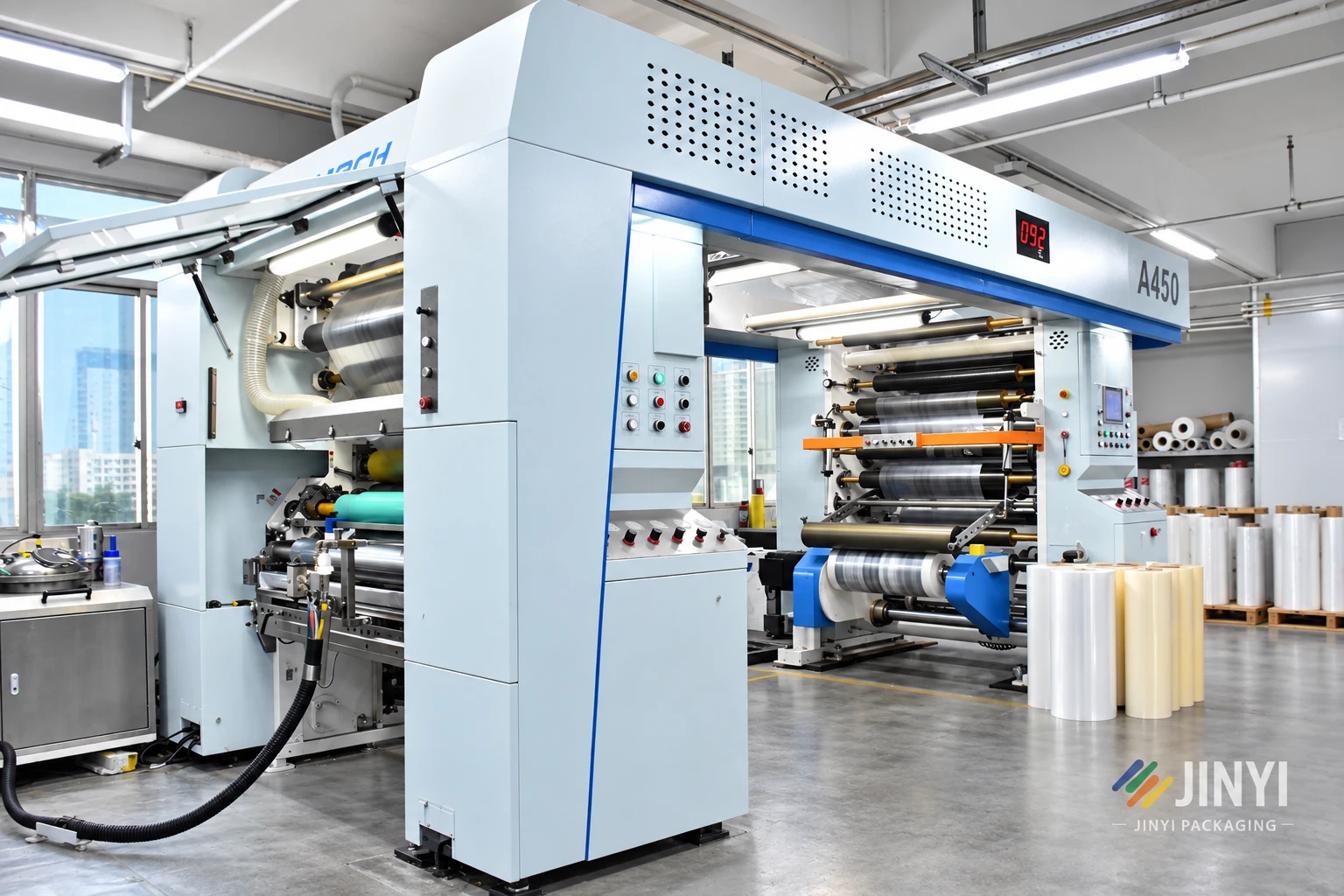
jinyi laminated film curing machine
A Real JINYI Case: A High-Barrier Mono-Material PE Pouch for Food Packaging
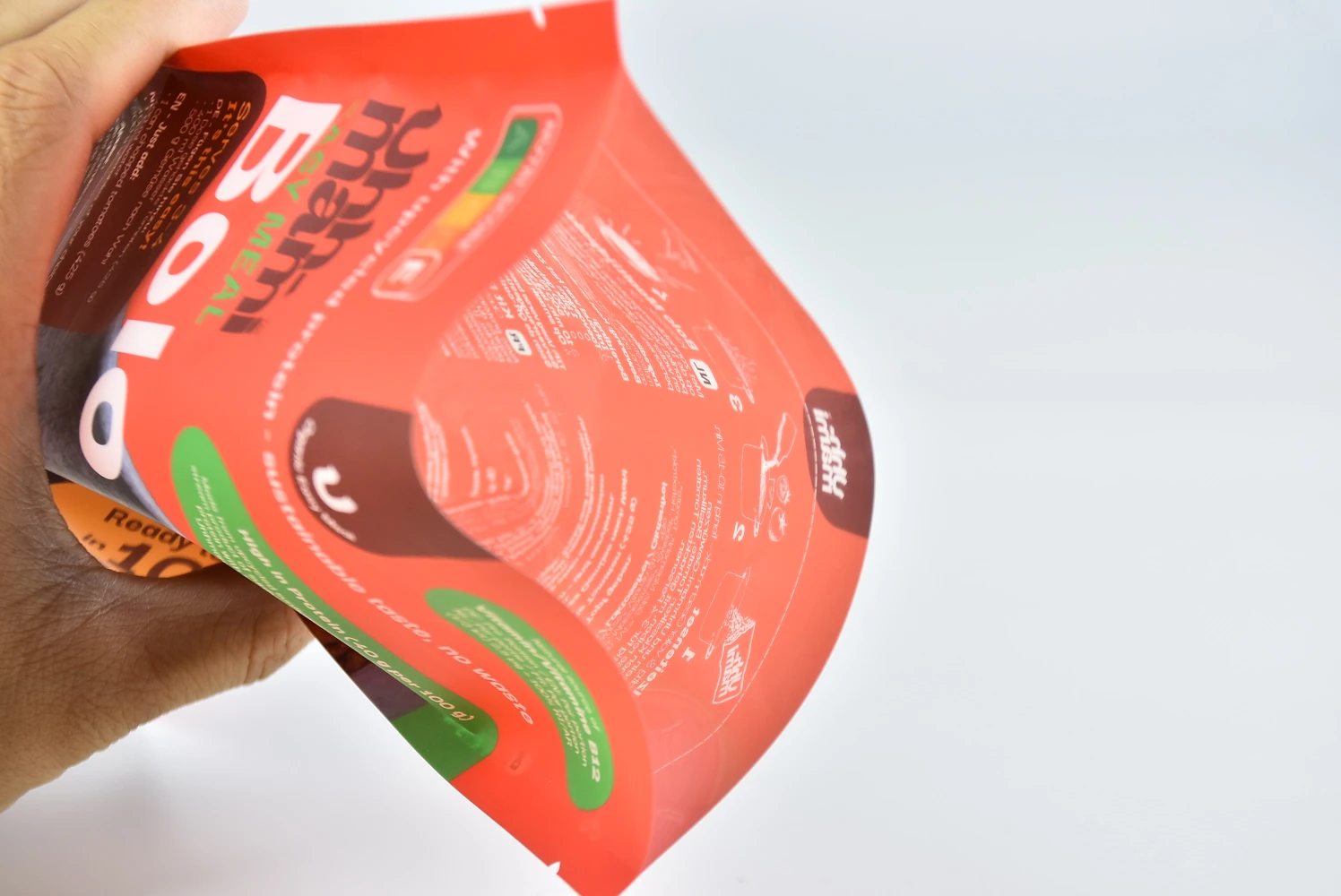
This pouch looks simple and feels soft in the hand. Its job required more than replacing a conventional laminate with PE.
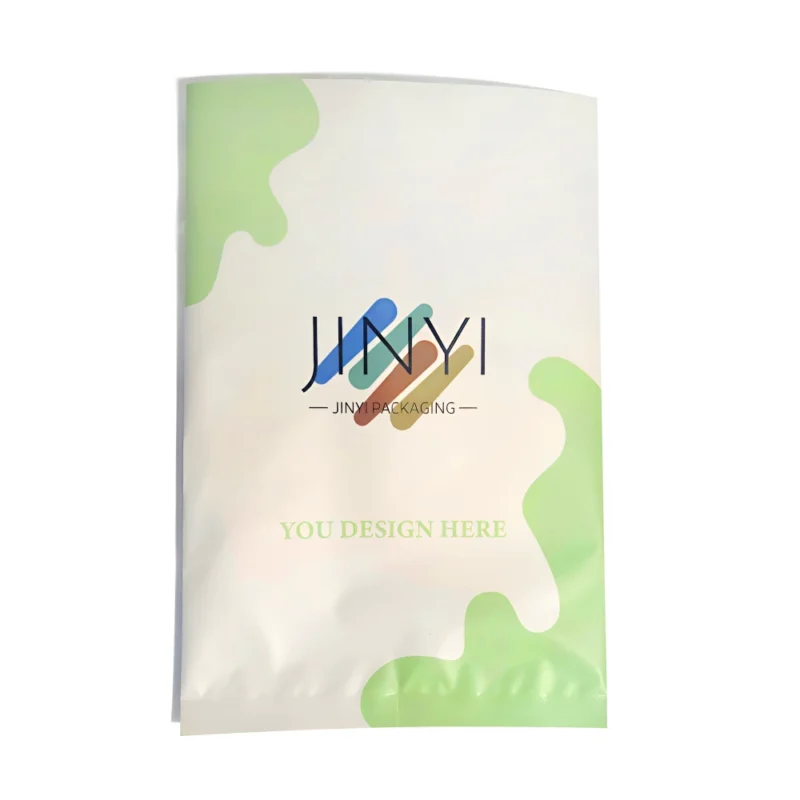
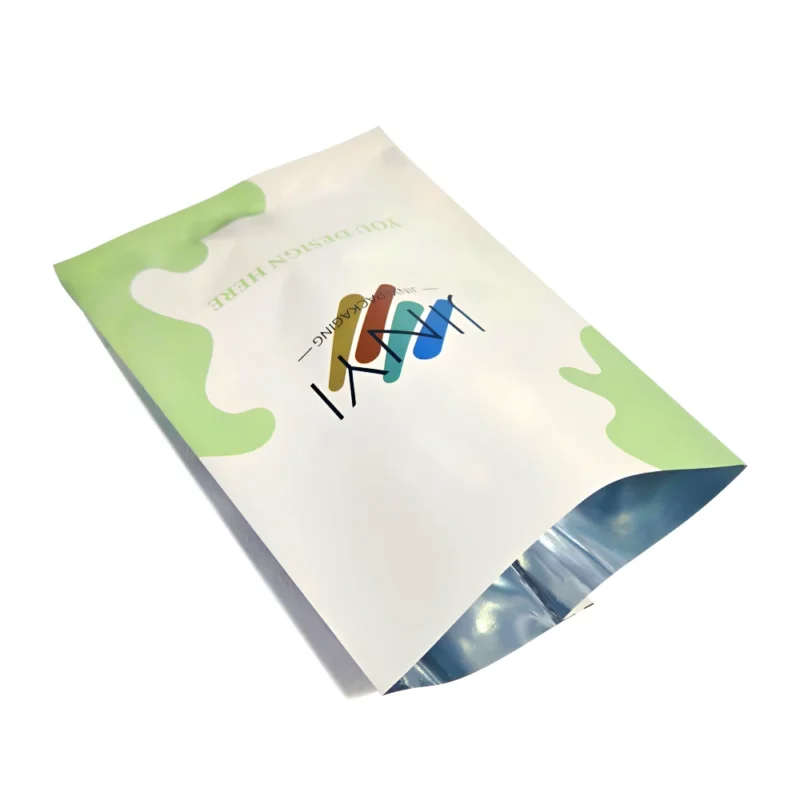
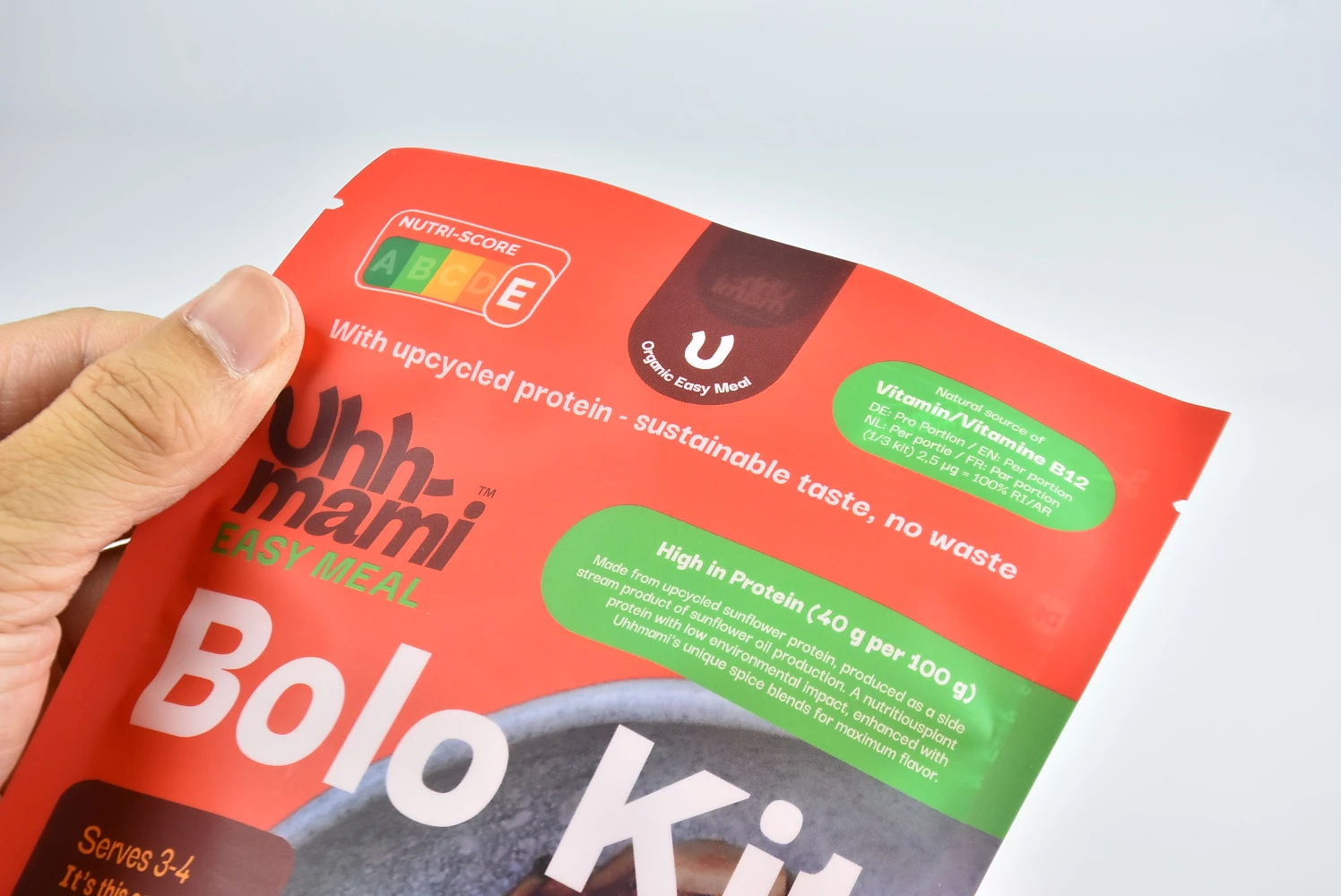
JINYI produced this PE-dominant high-barrier stand-up pouch for an 80 g shelf-stable dry meal base. The finished pack combines a recyclable PE direction with the oxygen, moisture, print, sealing, and handling performance required by the food application.
I kept the structure focused on the product and removed unnecessary components
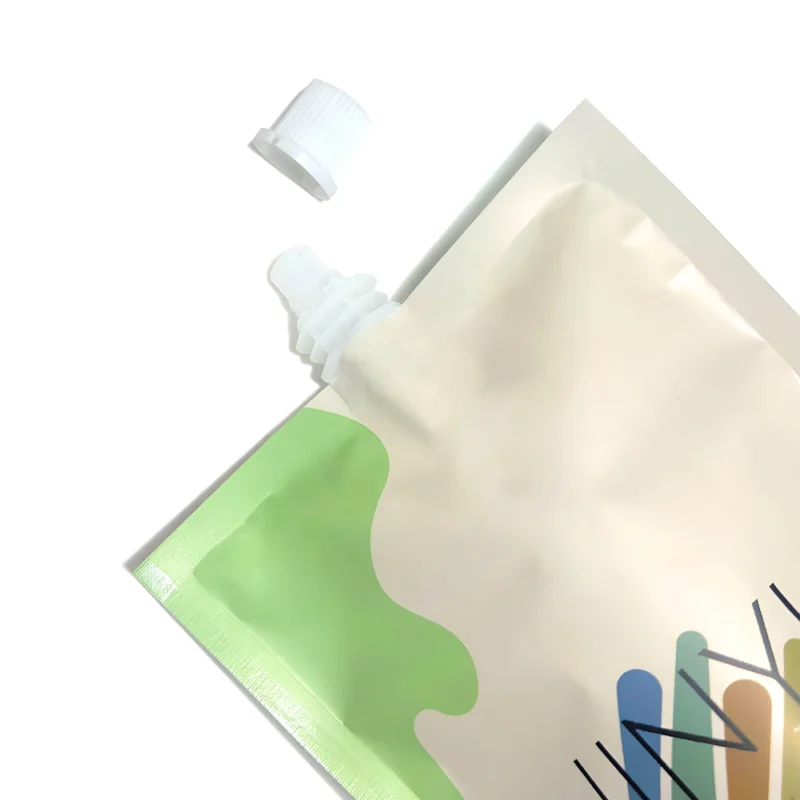
The pouch uses a bottom gusset so the product can stand on shelf. It does not use a zipper, spout, valve, paper layer, PET, aluminum foil, or metallized film. That removes several compatibility questions and keeps the construction focused on the PE route. The body remains flexible because softness is normal for this film family; stiffness is only one part of whether the pouch can run and stand correctly.
We did not try to make the pouch feel like a PET/PE or foil laminate. We designed it to perform as PE. The outer web had to carry the artwork and remain controlled through conversion. The inner structure had to provide the sealing and product-contact functions. The barrier function had to protect the dry food without introducing an incompatible conventional barrier layer.
The production review followed the real weak points: registration during printing, bond quality after lamination, roll condition before slitting, side and bottom seal formation, finished dimensions, stand-up behavior, and the integrity of the completed pouch. The case proves that a soft PE pouch can still carry a demanding food-packaging job when the layers and converting route are designed together.
It does not prove that the same film should be copied for every dry food. A product with more oxidation-sensitive fat, a longer shelf life, a larger pack area, harsher humidity, or a different filling line can need a different barrier target and seal design. I use the case as production evidence, then reopen the specification for the next product.
JINYI inspects the printing and top-seal area at close range before the pouch is approved. A recyclable structure must still maintain clear print registration, stable film handling, and consistent sealing throughout production.At JINYI, we use a hand-flex check to confirm the handling characteristics of this recyclable PE pouch. The soft PE structure remains flexible while providing the strength required for the seals and bottom gusset.
What Tests Must the Finished Pouch Pass?
The film supplier’s result describes a specimen. The customer buys a printed, laminated, slit, sealed, handled, and shipped package.
I release the structure from the finished-pouch risk, not from the flat-film data alone. The test plan must cover barrier, bond, seals, leakage, mechanical handling, filling compatibility, and shelf-life conditions relevant to the product.
I test the areas where real packages fail
تحقق
What It Finds
Release Condition
OTR and WVTR
Whether the structure meets the oxygen and moisture targets
Method, temperature, humidity, and specimen are recorded
Lamination bond
Weak bonding, incomplete cure, or layer separation risk
Result meets the approved structure and release method
Seal-window trial
Narrow settings, distortion, incomplete seals, or burn-through
A stable window exists for the real packing equipment
Leak and compression checks
Channel leaks, gusset leaks, pinholes, and weak transitions
Finished samples pass the agreed method
Drop and transport simulation
Impact, abrasion, flex cracking, and secondary-pack stress
The test reflects fill weight and distribution route
Product trial
Real filling, seal contamination, odor, caking, or product interaction
The customer approves a relevant sample and specification
If the product is new, the shelf-life target is long, or the distribution route is harsh, I also want a real-product storage study. Accelerated work can help compare structures, but the brand still needs a validation plan that reflects the actual food and selling conditions. Packaging cannot create a reliable shelf-life number by itself.
The test result must identify what was tested. “OTR passed” is not enough. I want the film or finished package, thickness or construction, temperature, relative humidity where relevant, method, units, sample condition, and acceptance target. Those details stop two technically different numbers from being treated as equal.
Where Can Mono-PE Replace Foil—and Where Should It Not?
A recyclable direction is valuable, but it is not a reason to lower protection below the product’s safe requirement.
Mono-PE is a strong candidate when its verified barrier, seal, mechanical strength, and filling compatibility meet the full use case. Foil or another conventional high-barrier structure remains the correct choice when the PE route cannot yet meet the risk reliably.
I do not downgrade the package to improve one environmental line on the artwork
Dry products with manageable oxygen sensitivity, suitable moisture targets, realistic shelf life, and controlled distribution are often good candidates for high-barrier mono-PE. The same is true when the product and filling line can work within the PE seal window and the target market has a recognized route for flexible PE.
I reconsider the change when the product needs near-total light protection, extremely low gas transmission, aggressive chemical resistance, severe heat treatment, very long storage in hot and humid conditions, or a seal response the selected PE structure cannot provide. Retort processing is a clear example where temperature resistance and package integrity can set a much harder boundary than a dry ambient-food pouch.
The comparison should include product waste. A lighter or more recyclable package is not a better outcome if barrier loss shortens shelf life, causes returns, or damages food. I first remove unnecessary protection. I do not remove necessary protection.
What Information Should a Buyer Provide Before We Recommend the Structure?
“High barrier recyclable pouch” is a direction. It is not enough information for a production specification.
Send the product, fill weight, shelf-life target, current structure, known OTR or WVTR target, filling method, sealing equipment, transport route, sales market, pouch features, and environmental claim. These details let us decide whether mono-PE is ready for the job.
I need enough detail to choose, test, and release the pouch
Product: ingredients, fat content, moisture sensitivity, aroma, powder or particle behavior, and food-contact requirements.
Pack: fill weight, dimensions, headspace, closure, gusset, window, spout, valve, zipper, and print coverage.
Process: filling temperature, sealing method, machine speed, contamination at the seal, pasteurization or other treatment.
الأدلة: current film specification, barrier report, failed samples, shelf-life observations, and the customer’s acceptance method.
Claim: target country, recycling guideline, label wording, certification or assessment needed, and whether the request is “designed for recycling” or a broader claim.
If those details are incomplete, I can still suggest a starting structure and sample route. I will not present that starting point as final approval. The buyer and JINYI must lock one written specification, relevant sample, test conditions, and acceptance criteria before mass production.
At JINYI, we connect the material decision to the production route. Our team checks printing, lamination, curing, slitting, bag making, seal formation, finished dimensions, and pouch inspection as one chain. That is how a recyclable idea becomes a repeatable packaging order rather than a material claim that only works on paper.
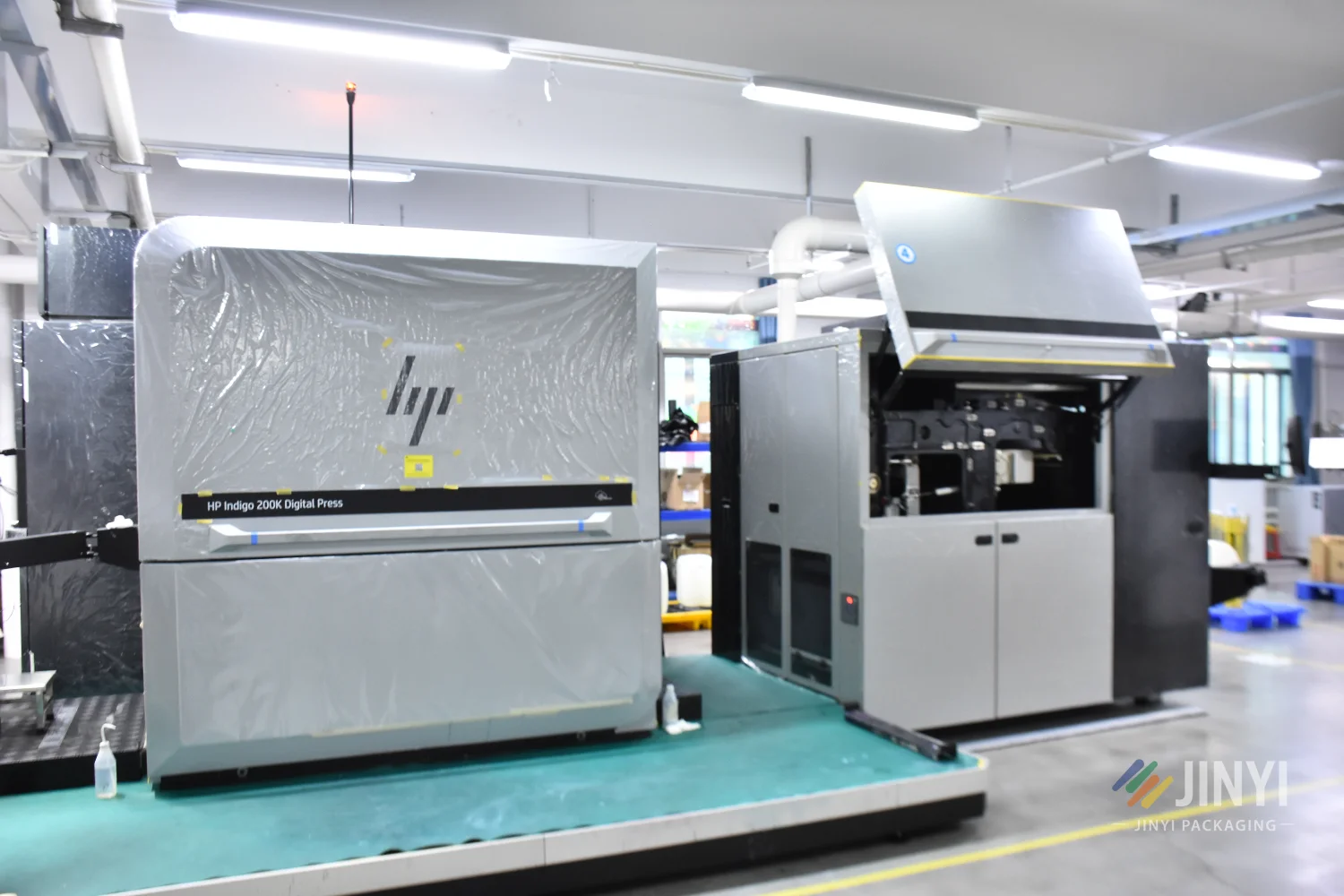
طابعة HP Indigo 200K - أحدث طابعة من إنتاج شركة JINYI، التي تم تشغيلها في عام 2025، لتوسيع سعة الطباعة الرقمية وتقليل فترات الإنتاج
الخاتمة
A mono-material PE pouch can provide high barrier when the structure, recycling route, production process, and finished-pouch tests meet the product’s real requirements.
JINYI هي مصنع مصدر للتغليف المرن المخصص مع أكثر من 15 عامًا من الخبرة في الإنتاج، حيث تقدم خدمات الأغذية والمكملات الغذائية والقهوة وأغذية الحيوانات الأليفة والعلامات التجارية للسلع الاستهلاكية في أكثر من 70 دولة. نحن ننتج أكياسًا قائمة وأكياسًا ذات قاع مسطح وأكياس وسائد وأكياس مجمعة جانبية من PET/AL/PE وPET/VMPET/PE وغيرها من مواصفات الحواجز - عبر الطباعة الرقمية من HP Indigo من 500 وحدة وطباعة الحفر بكميات كبيرة - مع تضمين وثائق المواد الكاملة كمعيار قياسي مع كل طلب.
هذا ما من الفيلم إلى النهاية - تم إنجازه بشكل صحيح يعني في الممارسة العملية.
مارك
رئيس إدارة الإنتاج · شركة جيني للتغليف
يتولى مارك قيادة عمليات جدولة الإنتاج وتنسيق الطلبات في شركة «جينيي». وبفضل خلفيته في إدارة الأعمال وخبرته العملية في مجال التصنيع، يركز مارك على الحفاظ على استقرار الجودة ومدة التنفيذ والتسليم في جميع طلبات التغليف المخصصة.
تخطيط الإنتاج التسليم في الموعد المحدد التنسيق بين الفرق
Yes. A PE-dominant structure can combine moisture-resistant PE layers with a compatible oxygen-barrier layer or coating, then be verified against the product, shelf life, and target recycling guideline.
Does mono-material mean the pouch has only one layer?
No. A mono-material PE pouch can use several physical layers for printing, stiffness, barrier, strength, and sealing while polyethylene remains the dominant polymer family.
Is PE a good oxygen barrier?
Ordinary PE is better known for moisture resistance and heat sealing than for demanding oxygen protection. Oxygen-sensitive products normally need a compatible functional barrier such as EVOH or an approved coating.
How much EVOH can a recyclable PE pouch contain?
There is no universal number for every market. RecyClass reported a minor impact up to 5% EVOH in its tested PE film protocol, but the complete pouch, supporting layers, recycling guideline, and market claim still require review.
Can high-barrier mono-PE replace aluminum foil?
It can replace foil when verified barrier, light protection, seals, mechanical strength, filling conditions, and shelf life meet the full product requirement. It should not replace foil when those conditions cannot be met reliably.
What should be tested before ordering a high-barrier PE pouch?
Confirm OTR, WVTR, lamination bond, seal window, leakage, compression or drop performance, filling compatibility, product interaction, and the finished pouch under relevant storage and transport conditions.