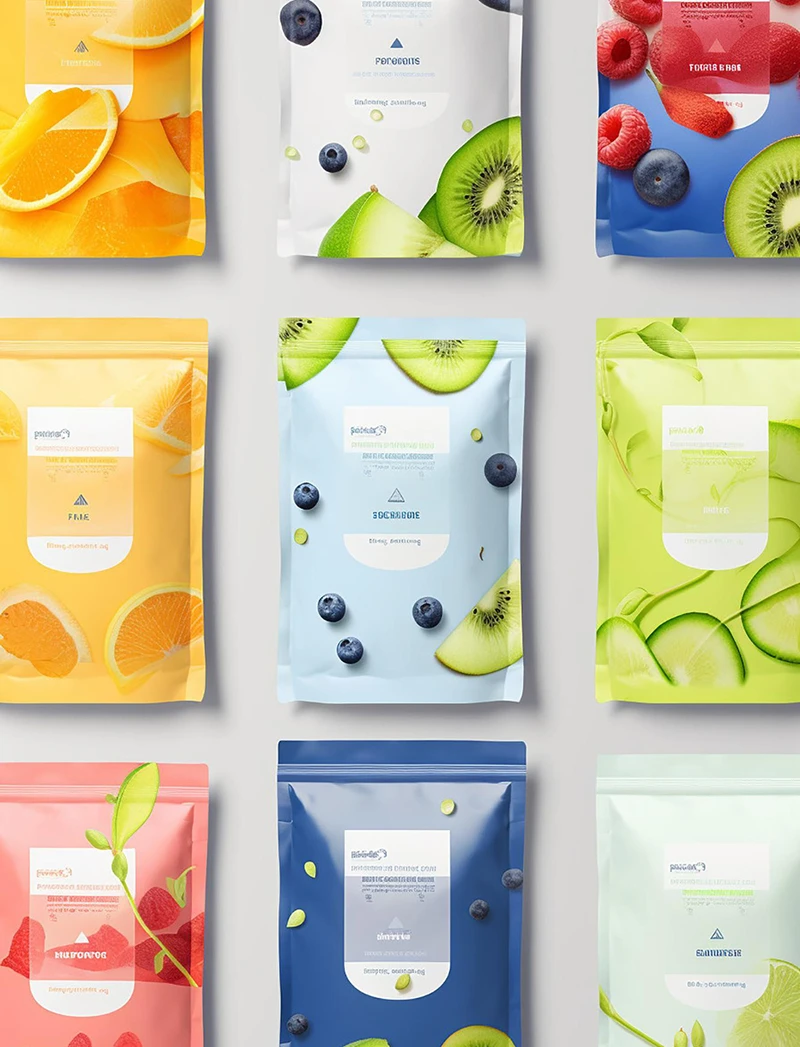
This content is for packaging education. We do not sell any regulated products.
THC numbers, QR codes, and “lab-tested” language make labels feel reassuring. But a label can still look official while leaving the hardest trust questions unanswered.
A cannabis label is useful, but it is not self-proving. A better reading starts by asking what the THC number describes, whether dosage guidance is truly usable, and whether the lab result matches the exact product and comes from a more credible testing system.

That is why cannabis label trust is now a consumer-education problem, not just a compliance problem. Many buyers still read labels like answers. They should read them like evidence that needs checking. A label can help reduce confusion. It can also compress too much information into one number, one phrase, or one QR code. Once that happens, consumers may mistake a partial signal for a complete safety picture. Stronger label judgment begins when each label element is separated by role. THC numbers describe strength in different ways. Dosage claims are supposed to help guide use, but often do not. Lab results can be useful, but only if they match the product in hand and come from a testing system worth trusting.
For cannabis brands, label trust grows faster when packaging helps buyers verify batch identity, potency meaning, and testing access instead of relying on “lab-tested” language alone.
Why Do Cannabis Labels Feel So Trustworthy to Consumers?
Labels look processed, official, and tidy. That creates a feeling that the uncertainty has already been handled for the buyer.
Consumers often trust cannabis labels too quickly because THC numbers, compliance symbols, and QR codes create the appearance of resolved risk, even when the underlying information has not yet been verified.
Why “professional-looking” is not the same as “fully trustworthy”
Labels feel trustworthy because they simplify a complicated product into a clean surface. A percentage, a serving figure, a warning icon, and a QR code can make the product look understood before it is actually understood. That effect is strong because consumers are used to seeing regulated products communicate through packaging. In cannabis, that visual order can create a false finish line. Washington State LCB and New Jersey CRC both treat COAs and test-result access as tools for informed decisions, which means the label is supposed to open a path to better judgment, not replace it. The problem is that many consumers stop too early. They see “lab-tested” and assume the safety work is done. They see a THC number and assume the product has been fully translated into usable information. A stronger reading habit is to treat the label as an entry point. It should trigger more questions about meaning, matching, and system credibility, not fewer.
| Label feature |
Why it feels reassuring |
What it still does not prove |
| THC number |
It looks precise and scientific |
What kind of THC figure it is, and how usable it is |
| QR code |
It suggests transparency |
Whether the document matches the exact product in hand |
| “Lab-tested” wording |
It sounds protective |
Which tests were run and how trustworthy the system is |
Evidence (Source + Year): Washington State LCB, Understanding Test Results (current consumer guidance); New Jersey CRC, How to Read a Certificate of Analysis (2025).
What Does a THC Number Actually Mean on a Label?
Consumers often see one THC number and think they now understand the product. In practice, that one number can describe very different things.
A THC label may refer to percentage concentration, total THC content, per-serving THC, or a standard THC unit. These are not interchangeable, and each answers a different consumer question.
Why THC communication works only when the metric is clear
The same product can display THC in more than one way. A flower jar may emphasize THC concentration as a percentage. An edible package may show total THC in the whole package and also THC per serving. A public-health style label may instead present standard THC units, such as 5 milligrams THC, to support more usable interpretation. This matters because concentration is not the same as dose, and dose is not the same as a use suggestion. A high percentage may help describe how strong a product is in one format, but it does not tell a consumer what one session or one serving really means. The 2026 labeling-preference study is important here because it found that consumers considered THC information important, but preferred standard THC units over concentration-only formats when forced to choose. That result suggests many consumers do not simply want more numbers. They want more usable numbers. A better label is therefore not always the one with the biggest figure. It is the one that makes the figure interpretable.
| THC label format |
What it usually describes |
Main consumer limit |
| % THC |
Concentration or potency by proportion |
It is not the same as per-use dose |
| Total THC content |
Total THC in the full product or package |
It can still be hard to translate into one use event |
| Per-serving THC |
Amount linked to one labeled serving |
It depends on serving clarity and consumer behavior |
| Standard THC units |
A simpler fixed-dose style expression |
Still depends on adoption and label consistency |
Evidence (Source + Year): Dawson et al., Exploring THC Labelling Preferences (2026); ADAI summary of THC labeling preferences (2026).
Why Doesn’t a Higher THC Number Automatically Mean a Better Label?
Higher THC attracts attention fast. That makes it easy to confuse bigger numbers with better information.
A higher THC number is only one label detail. It does not automatically make the label clearer, more accurate, or more useful for lower-risk consumer decisions.
Why strength and label quality should be kept separate
Consumers often read a strong THC number as if it were proof of transparency. That is a mistake. A larger number may say something about the product’s advertised strength, but it says nothing by itself about whether the label explains the number well, whether the number is accurate, or whether the overall package supports safer use. This is especially important because high-THC products already attract stronger consumer attention and often shape willingness to buy. That commercial pressure can make the potency number look like the headline feature of the entire label. But label quality is a different question. A good label helps the consumer interpret what the number means, how it connects to dose, and how it fits with the rest of the product information. A weaker label may use the THC number like a spotlight and leave everything else in the dark. That is why “higher THC” should be treated as a product descriptor, not a trust signal. The number may be large, and the label may still be poor.
| What consumers may assume |
What the number actually does not prove |
| Higher THC means a better product |
It does not prove cleaner labeling or safer interpretation |
| Higher THC means the label is more informative |
It does not explain dose or match quality on its own |
| Higher THC means less need to read anything else |
It can actually increase the need for clearer supporting information |
Evidence (Source + Year): Giordano et al., Accuracy of Labeled THC Potency Across Flower and Concentrate Products (2025); Washington State LCB, Understanding Test Results.
Can Consumers Really Trust Potency Labels?
Potency labels matter because consumers use them to predict experience. The problem is that not all product categories perform equally well on label accuracy.
Consumers should treat potency labels as informative but not perfect. Colorado’s 2025 retail study found much stronger accuracy in concentrates than in flower.
Why label accuracy belongs inside the trust question
The 2025 Colorado retail study is one of the most useful evidence anchors for this article because it tested actual products purchased from dispensaries. It found that only 56.7% of flower products fell within the state’s ±15% accuracy range, while 96% of concentrate products met that standard. It also found that observed THC values were generally lower than labeled values across both categories. This matters because potency labels are not only marketing tools. They shape consumer expectation, dose planning, and perceived product value. If a label is off, the consumer may not just get a weaker product than expected. The consumer may also start trusting the rest of the package less. That is why potency accuracy is not a side issue. It belongs inside the larger question of whether the label deserves belief. The practical lesson is not to ignore potency labels. It is to stop treating them as flawless representations of the product. A label can guide. It should not be mistaken for an unquestionable fact.
| Finding |
Why it matters for consumers |
| Flower accuracy was 56.7% |
Flower labels may deserve more caution than many buyers assume |
| Concentrate accuracy was 96% |
Some categories may support more precise potency communication |
| Observed THC was often lower than labeled THC |
Consumers should read the label as informative, not absolute |
Evidence (Source + Year): Giordano et al., Accuracy of Labeled THC Potency Across Flower and Concentrate Products (2025); University of Colorado Boulder, Can Weed Labels Be Trusted? (2025).
What Do Dosage Claims Really Help Consumers Do?
Consumers often need one answer more than any other: how much am I actually taking at one time?
Dosage guidance helps translate product strength into use behavior. It is not the same as potency, and weak dosage communication can make a product much harder to use more safely.
Why dosage is a behavior tool, not a decoration
THC concentration describes strength in a general way. Dosage guidance is supposed to help consumers convert that information into action. That is why these two label elements should not be merged in the mind. A consumer may know that a product is strong and still have no idea how much one serving represents, how many servings are in the package, or whether the package is designed to support smaller-use decisions at all. The 2026 study on THC labeling preferences reinforces this point because it found that consumers preferred more actionable unit-based THC communication over concentration-only formats. The New York licensed-versus-unlicensed packaging study supports it from another angle: most unlicensed products lacked clear potency and almost none gave usable dosage guidance. That combination is important because it shows dosage is not a cosmetic add-on. It is part of whether a product can support lower-risk use. A label that only signals strength but not usable amount leaves the consumer with a number, not a decision tool.
| Label element |
Main job |
What happens when it is weak |
| Potency figure |
Describes strength |
Consumers still may not know how much they are taking |
| Dosage guidance |
Supports more usable consumption decisions |
Risk rises because the label does not guide behavior clearly |
| Serving unit clarity |
Connects package format to consumer action |
The package becomes harder to interpret in real use |
Evidence (Source + Year): Dawson et al., Exploring THC Labelling Preferences (2026); Becker et al., Labeling of Cannabis Products From Licensed and Unlicensed Retailers in New York (2025).
Why Isn’t a COA Automatically Enough?
A COA can look impressive and still tell the consumer very little about the product in hand. The document only works when the match is real.
A COA is not a trust badge. It only becomes useful when the product name, batch, dates, and lab identity align clearly with the item being sold.
Why “there is a report” is not the same as “this report proves something”
Consumers often scan a QR code, see a PDF, and feel finished. That feeling is understandable, but it gives the document too much credit too quickly. A COA is useful only if it identifies the actual product being purchased. Washington State LCB tells consumers they can ask for test results and use them to make an informed decision. New Jersey CRC goes further by showing what a real, usable COA should contain: product name, batch or lot number, sampling date, testing date, and lab identity. Once those fields do not line up with the label in hand, the report loses much of its practical value. That is why a COA should be treated like a verification document, not like a decorative proof of seriousness. It is possible to have a report and still not have a valid connection between the report and the product. That gap is where a lot of false trust starts. A better consumer habit is to verify the match before reading the numbers.
| COA situation |
What it means for trust |
| Exact product and batch match |
The report can function as evidence for the item being sold |
| Generic report or unclear match |
The COA becomes far less useful for real consumer judgment |
| Missing lab or date information |
The document becomes harder to verify and easier to overtrust |
Evidence (Source + Year): Washington State LCB, Understanding Test Results; New Jersey CRC, How to Read a Certificate of Analysis (2025).
What Should Consumers Check First on a Real COA?
Most buyers jump to THC first. That is easy, but it is often the wrong starting point if the goal is label trust.
Consumers should start with product identity and batch match, then check lab identity, dates, contaminant sections, potency, and pass or fail logic.
Why COA reading works best as a fixed sequence
A COA becomes easier to use when it is read in the right order. First, the product name and batch or lot number should match the product in hand exactly. Second, the sampling or test date should be visible enough to show that the report belongs to a real testing event. Third, the lab name and license or accreditation context should be identifiable. Fourth, the contaminant section should be present and understandable, because safety is not only about potency. Fifth, the potency section and pass or fail logic should be read together, rather than as isolated numbers. New Jersey CRC’s consumer guidance is especially helpful because it turns a dense lab document into a readable sequence. That matters because many consumers otherwise read the report like a brand brochure and focus only on the strongest headline number. A real COA is more useful when the consumer checks the boring parts first. Those are often the parts that decide whether the report is genuinely relevant.
| First-check item |
Why it comes early |
| Product name |
It confirms the report is even about the right item |
| Batch / lot number |
It is the strongest match signal between report and package |
| Sampling / test date |
It shows the report belongs to a real testing event |
| Lab identity |
It helps the consumer judge system credibility |
| Contaminants + potency + PASS / FAIL |
This is where the report becomes useful for actual buying judgment |
Evidence (Source + Year): New Jersey CRC, How to Read a Certificate of Analysis (2025); Washington State LCB, Understanding Test Results.
What Does a More Trustworthy Cannabis Testing System Look Like?
Good labels depend on more than one test result. They depend on whether the testing system deserves belief.
A more trustworthy testing system combines licensed third-party labs, recognized technical standards, transparent reporting, and fewer incentives that reward distorted results.
Why system quality matters as much as document quality
Consumers often judge trust at the product level only. They ask whether this package has a COA. But the system behind the COA matters just as much. California DCC requires cannabis testing laboratories to maintain ISO/IEC 17025 accreditation and explains that this standard is tied to technical competency and reliability of test results. That is a strong quality signal because it points to a structured testing environment. But the 2025 P-BAT paper adds a necessary warning. It argues that cannabis testing operates inside incentives that do not always align with what is best for consumers. That means testing can be real and still be imperfect. It can also mean some results become easier to trust than others depending on the system around them. A better consumer question is therefore not only “Was this tested?” but also “Does the testing environment look built for reliability?” Stronger trust comes from identifiable labs, clearer public access, better-quality systems, and fewer reasons for inflated or selective outcomes to be rewarded.
| System feature |
Why it strengthens trust |
| Licensed third-party lab |
It is easier to verify and more structured than vague testing claims |
| ISO/IEC 17025 context |
It signals technical competency and reliability requirements |
| Transparent reporting |
Consumers can verify rather than simply trust slogans |
| Lower incentive distortion |
It reduces pressure for consumer-unfriendly outcomes |
Evidence (Source + Year): California DCC, Testing Laboratories (current guidance); Procter et al., Peer-review Blinded Assay Test (P-BAT) (2025).
For cannabis packaging, better trust usually comes from clearer batch coding, easier COA access, and stronger warning hierarchy than from adding one more “premium” design layer.
Why Do Licensed and Unlicensed Labels Feel So Different in Risk?
Consumers do not only buy a product. They also buy into an information environment, and that environment changes sharply between licensed and unlicensed channels.
Licensed products usually provide stronger warnings, clearer THC disclosure, and more usable dosage information, while unlicensed products more often leave consumers with weaker guidance and higher uncertainty.
Why information quality is part of the risk profile
The Columbia comparison of licensed and unlicensed cannabis products in New York is especially useful because it makes the information gap visible. The study found that unlicensed products had far less complete warning content and safety features than licensed products. It also found that most unlicensed products did not list THC potency and almost none offered dosage guidance, while licensed products were much more likely to provide those basics. That matters because consumers cannot make lower-risk decisions with missing information. A product may still look polished, well printed, or even highly branded, but that does not make it more interpretable. This is why label trust is not just an aesthetics question. It is a system question. If one channel gives stronger warning structure, clearer potency cues, and more usable product information, it gives the consumer a better chance to judge what they are buying. That difference belongs inside the discussion of safety and label trust.
| Information area |
Why it matters to risk |
| Warning completeness |
It improves the consumer’s basic risk picture |
| THC disclosure |
It supports clearer strength interpretation |
| Dosage guidance |
It helps translate product strength into safer use choices |
| Youth-appealing packaging cues |
They suggest weaker alignment with safer consumer communication |
Evidence (Source + Year): Becker et al., Labeling of Cannabis Products From Licensed and Unlicensed Retailers in New York (2025); Columbia University Irving Medical Center news summary (2025).
What Are the Biggest Label Red Flags Consumers Should Walk Away From?
Consumers do not need advanced lab training to spot obvious trust failures. Some red flags are visible before any deeper technical reading begins.
The biggest label red flags are missing COAs, batch mismatches, missing contaminant sections, weak dosage guidance, unclear lab identity, and unlicensed-looking products with poor warnings or youth-style packaging.
Why practical red flags are often enough to stop a bad purchase
A useful consumer screen should not depend on expert-level chemistry. It should depend on visible warning signs. If no COA is accessible, that already weakens the testing story. If the batch number on the report does not match the package, the document becomes much less useful. If the COA shows potency but no contaminant section, the consumer has not really seen a purity profile. If dosage guidance is vague or absent, the label is not doing enough to support safer use. If the testing lab is not identifiable, the consumer cannot easily judge where the result came from. If the product appears to come from an unlicensed channel and still carries weak warnings or youth-style design cues, the risk environment rises again. These red flags matter because each one removes a layer of verification. A product does not become trustworthy because one feature looks polished. Trust grows when multiple features align clearly and consistently.
| Red flag |
Why it matters |
| No accessible COA |
The testing claim cannot be verified easily |
| COA batch mismatch |
The report may not belong to the product in hand |
| Missing contaminant section |
Purity has not been shown clearly |
| Vague or missing dosage guidance |
Safer use becomes harder to judge |
| Unclear lab identity |
The result becomes harder to trust |
| Weak warnings or youth-style packaging |
Information quality and consumer protections are weaker |
Evidence (Source + Year): Washington State LCB, Understanding Test Results; New Jersey CRC, How to Read a Certificate of Analysis (2025); Becker et al. (2025).
What Should Consumers Compare Before They Buy?
The best comparison is not “Which label looks more premium?” The better comparison is “Which label gives me stronger reasons to believe it?”
Consumers should compare channel transparency, COA access, batch matching, contaminant coverage, and the clarity of potency and dosage information before relying on a cannabis label.
Why verifiability is a better buying rule than polish
Consumers often compare cannabis products like lifestyle products. They look at design, prestige signals, or stronger-sounding numbers. A safer comparison framework asks different questions. Is the product from a licensed and more transparent channel? Can the buyer access a real COA? Does the COA match the exact batch in hand? Does the contaminant section cover the main risks that matter for this product type? Are the potency and dosage statements clear enough to support lower-risk use? These questions work because they force the label to function as evidence rather than image. As a flexible packaging manufacturer, we focus on how packaging can support this kind of verification through clearer batch coding, more usable warning layout, stronger QR access, and better information hierarchy. That packaging role matters because consumers can only verify what the package helps them find. The better label is therefore not the label that looks the most regulated. It is the label that makes checking easier, clearer, and more honest.
| Buying question |
Why it matters first |
| Is the channel licensed and more transparent? |
Channel transparency shapes information quality |
| Can I access a real COA? |
It turns testing from a slogan into something checkable |
| Does the COA match the exact batch? |
Match quality determines document usefulness |
| Does the contaminant section cover the main risks? |
Purity should be shown, not just implied |
| Are potency and dosage statements usable? |
Safer decisions depend on interpretability, not only presence |
Evidence (Source + Year): Washington State LCB, Understanding Test Results; California DCC, Testing Laboratories; Becker et al. (2025).
This content is for packaging education. We do not sell any regulated products.
Conclusion
The best cannabis labels do not ask for blind trust. They make meaning, batch matching, and verification easier.
Talk with us about cannabis packaging
About Us
Jinyi
From Film to Finished—Done Right.
https://jinyipackage.com/
Our Mission
We believe good packaging is more than visual design. It is also a solution that performs reliably in real-world use.
JINYI aims to provide reliable, practical, and production-ready flexible packaging solutions, so brands can reduce communication costs and gain more stable quality, clearer lead times, and structures that better match product and channel needs.
From material selection to finished packaging, we stay focused on how packaging performs in transport, on shelf, and in actual consumer use.
About Us
JINYI focuses on custom flexible packaging solutions and has more than 15 years of production experience serving food, snack, pet food, and consumer-goods brands.
Our factory operates multiple gravure printing lines and HP digital printing systems, which allow us to support both stable large-volume production and flexible small-batch customization.
Through standardized production processes and stable process control, we keep each batch consistent in quality, color, and structure, so packaging performs reliably in shipping, display, and everyday use.
FAQ
1. Does a cannabis label become trustworthy just because it shows THC and a QR code?
No. Those features can be useful, but they still need verification. Consumers should confirm what the THC number means, whether the COA matches the batch, and whether the testing system looks credible.
2. What is the difference between THC percentage and dosage guidance?
THC percentage describes concentration. Dosage guidance is supposed to help consumers understand how much THC they may actually take in one use or serving.
3. Are potency labels always accurate?
No. Colorado’s 2025 retail study found much lower label accuracy in flower than in concentrates, which means potency labels are useful but not perfect.
4. What should consumers check first on a COA?
They should first check product name, batch or lot number, test date, and lab identity before relying on potency or contaminant sections.
5. Why do licensed and unlicensed labels feel so different in risk?
Licensed products usually provide stronger warnings, clearer THC disclosure, and better dosage information, while unlicensed products more often leave consumers with weaker safety guidance and less verifiable information.