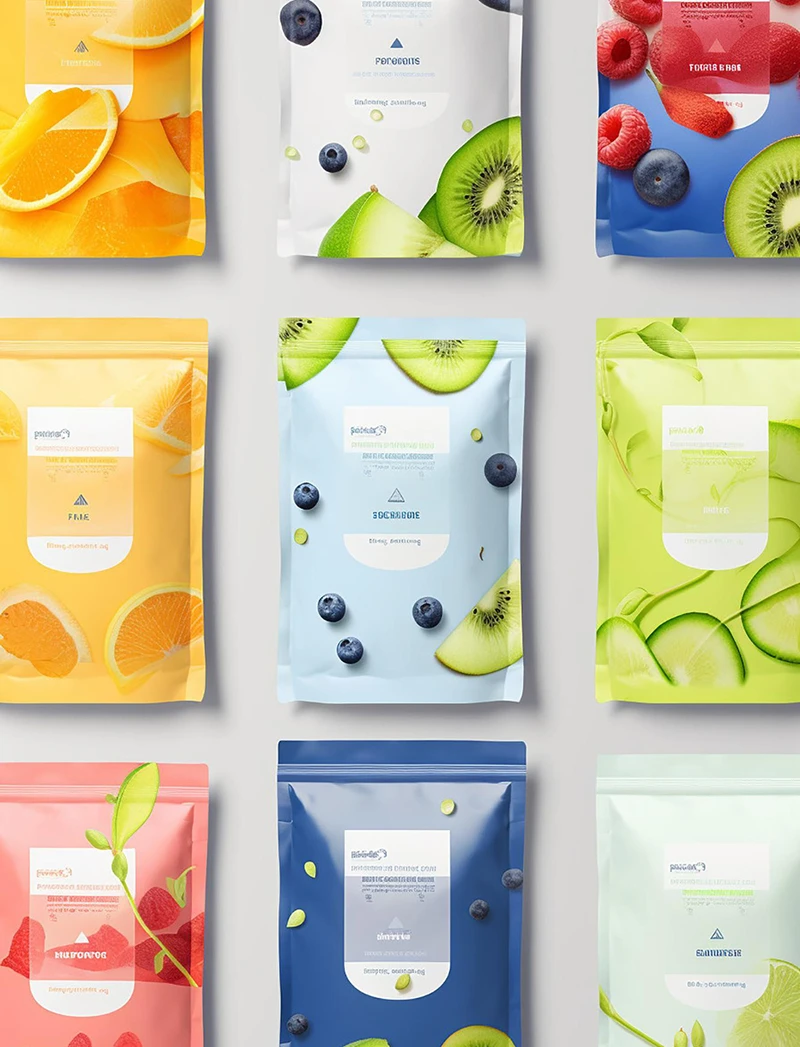
This content is for packaging education. We do not sell any regulated products.
Returns feel random until a “perfect” batch suddenly gets crushed, dries out, or turns sticky. When customers leave angry reviews, the format often explains the failure.
Pre-roll returns are usually driven by mechanical damage and looseness, flower returns are often driven by storage-driven potency/aroma drift, and gummy returns are driven by moisture and oil migration that flips texture. Packaging must match the format’s main failure engine.
See packaging structures that protect shelf life while keeping required information readable

One strategy cannot cover three different product physics. This report breaks shelf risk into measurable drivers, then links each driver to the most common return triggers and complaint keywords.
Why do the three formats fail in different ways?
Many teams use the same “freshness” story for every SKU. That shortcut creates avoidable returns because each format fails by a different mechanism.
Format decides the main risk engine. Pre-rolls break by force and movement, flower drifts by oxygen/light/temperature exposure, and gummies drift by water activity and oil migration.
Shelf risk can be modeled as physical form × exposure pathways × use behavior. Pre-rolls are long and fragile. They fail when compression, vibration, or poor internal fit creates point loads. Flower is a volatile matrix. Cannabinoids and terpenes can change over time, and studies describe how storage conditions such as time, temperature, oxygen, and light contribute to chemical change and perceived freshness drift. Gummies behave like a food system where water activity and migration drive texture change. When moisture moves in or out, gummies can shift toward sticky, sweaty, clumped, or hardened states. The right packaging target depends on the dominant pathway. For pre-rolls, the goal is mechanical constraint and protection. For flower, the goal is limiting oxygen and light exposure while managing moisture exchange. For gummies, the goal is controlling water vapor transfer and limiting oil/aroma migration at the seal and inner layer. A “premium” claim does not fix any of these drivers unless the package design blocks the correct pathway.
Format-to-risk map (what to measure, not what to claim)
| Format |
Main Failure Modes |
Typical Triggers |
Packaging Control Points |
Return/Review Keywords |
| Pre-Rolls |
Crush, break, shake loss, uneven burn |
Compression + vibration, poor internal fit, hard open/close |
Rigid support, gap control, cushioning, reseal integrity |
crushed, broken, loose, uneven burn |
| Flower |
Aroma loss, harsh/dry feel, potency expectation gap |
Oxygen exposure, heat, light, repeated opening |
Seal integrity, headspace control, light protection, barrier choices |
dry, stale, no smell, weak |
| Gummies |
Sticky/sweating, clumping, oiling, texture flip |
Humidity swings, seal leaks, oil/aroma migration |
WVTR priority, seal robustness, anti-migration inner layer, portioning |
sticky, sweating, oily, clumped |
Evidence (Source + Year):
– Zamengo et al., “The role of time and storage conditions on the composition…” (Forensic Sci. Int., 2019).
– Talcott Lab (Texas A&M), “Moisture and Shelf Life in Sugar Confections” (2010).
Why do complaints spike, and what keywords reveal the real root cause?
Most return systems capture the symptom. Most reviews hide the process that caused it. Keywords still reveal the failure engine.
Keyword patterns help teams separate mechanical damage, freshness drift, and texture migration. That separation makes fixes faster and reduces false blame on “bad batches.”
Complaint spikes often appear after promotions, first-time buyers, or packaging changes. Pre-roll spikes cluster around shipping stress and poor internal constraint. Flower spikes cluster around “stale/no smell/weak” language that often matches oxidation and volatilization pathways under heat and light exposure. Gummy spikes cluster around “sticky/sweating/oily/clumped” language that maps to moisture imbalance and migration. A simple review-mining workflow can turn this into action. First, build a three-format dictionary and tag each review by format and symptom keywords. Second, add “timing” tags when the review mentions “first day,” “few days,” or “after a week,” because the time window helps separate shipping damage from shelf drift. Third, correlate spikes with operational events, such as promo surges, seasonal heat, warehouse moves, or closure changes. This approach does not prove causality by itself, but it creates a ranked shortlist of root causes that can be validated with tests. It also reduces misdiagnosis, because “weak” for flower is not the same problem as “loose” for pre-rolls, and “sticky” for gummies is not solved by the same barrier target as flower.
Reduce complaint spikes by aligning barrier, seals, and fit to the format’s main failure mode
Complaint keyword dictionary (use it for review mining)
| Format |
Mechanical Damage Keywords |
Freshness Drift Keywords |
Migration/Texture Keywords |
What to Test Next |
| Pre-Rolls |
crushed, broken, bent, dented |
dry, harsh (secondary) |
n/a |
Compression + random vibration screening |
| Flower |
n/a |
stale, no smell, terps gone, weak |
too dry / too wet |
Light + heat + oxygen exposure study |
| Gummies |
melted, deformed (heat) |
off smell (oxidation) |
sticky, sweating, oily, clumped, texture changed |
Humidity gradient + seal leak challenge |
Evidence (Source + Year):
– ISTA: Test Procedures overview (random vibration screening procedures) (ISTA, accessed 2026).
– Talcott Lab (Texas A&M), “Moisture and Shelf Life in Sugar Confections” (2010).
How does child-resistant (CR) packaging change return risk across formats?
CR is not only a compliance topic. CR design choices change opening friction, reseal reliability, and repeat-use behavior.
CR can reduce risk when it seals reliably and stays usable for adults. CR can increase returns when it forces repeated opening, causes reclose failures, or damages fragile products.
CR requirements are widely framed through standard methods and procedures. ISO 8317 specifies performance requirements and testing procedures for reclosable child-resistant packages and also addresses adult accessibility as part of testing. In the United States, 16 CFR 1700.20 defines the testing procedure for “special packaging” under the PPPA framework. These references matter because they define what teams test, but they do not automatically define what teams protect. The return impact is format-specific. For pre-rolls, high opening force and poor internal fit can cause second-hand damage, such as end crush and bending during repeated access. For flower, complex openings can increase open time and open frequency, which increases oxygen exposure and aroma loss over the product’s life. For gummies, reclose failures and seal fatigue can accelerate moisture exchange and make sticky/clumping outcomes more likely. A strong CR approach balances child resistance with adult usability and reseal stability. A practical plan includes usability checks, reclose cycle checks, and a seal integrity check after repeated open-close cycles, because reclosable performance drives shelf stability for repeat-use products.
CR design choices that reduce returns (by format)
| Format |
CR Risk Path |
Return Trigger |
Better Packaging Target |
Verification Idea |
| Pre-Rolls |
High opening force + poor fit |
Bent, crushed, loose |
Rigid support + controlled gap + smooth access |
Open-close cycles + drop/stack screening |
| Flower |
More openings + longer exposure |
Stale, no smell, weak |
Reliable reseal + light protection + low leak rate |
Headspace/oxygen exposure study |
| Gummies |
Reclose failure + seal fatigue |
Sticky, sweating, clumped |
WVTR-first barrier + robust reseal design |
Humidity challenge after cycle testing |
Evidence (Source + Year):
– ISO 8317:2015, Child-resistant packaging—requirements and test methods for reclosable packages (ISO, 2015).
– 16 CFR 1700.20, Testing procedure for special packaging (eCFR, current text).
Conclusion
Returns follow the format’s failure engine. Match packaging to mechanical damage, freshness drift, or migration risk, and validate it with simple tests. Contact us to reduce returns with format-specific packaging design.
Get a packaging solution quote
This content is for packaging education. We do not sell any regulated products.
About Us
Brand: Jinyi
Slogan: From Film to Finished—Done Right.
Website: https://jinyipackage.com/
Our Mission:
JINYI is a source manufacturer specializing in custom flexible packaging solutions. We aim to deliver reliable, practical packaging that reduces communication cost, improves quality stability, and supports predictable lead times for brands.
About JINYI:
JINYI is a source manufacturer specializing in custom flexible packaging solutions, with over 15 years of production experience serving food, snack, pet food, and daily consumer brands.
We operate a standardized manufacturing facility equipped with multiple gravure printing lines as well as advanced HP digital printing systems, allowing us to support both stable large-volume orders and flexible short runs with consistent quality.
From material selection to finished pouches, we focus on process control, repeatability, and real-world performance. Our goal is to help brands reduce communication costs, achieve predictable quality, and ensure packaging performs reliably on shelf, in transit, and at end use.
FAQ
Why do pre-roll returns often look like “shipping damage”?
Pre-rolls fail mainly by compression and vibration. Poor internal fit and weak support structures turn small impacts into bends, crush, and shake loss.
Why do flower reviews complain about “no smell” or “weak”?
Flower freshness can drift with time and exposure. Oxygen, heat, and light can reduce aroma intensity and change perceived potency.
Why do gummies become sticky or “sweat” inside a bag?
Gummies can shift texture when water activity drifts and moisture migrates. Seal leaks and humidity swings speed up the process.
Does child-resistant packaging reduce returns or increase them?
CR can reduce risk when it reseals reliably and stays usable for adults. CR can increase returns when opening force and reclose failures create damage or faster drift.
What is the fastest way to diagnose the main return driver?
Teams can build a complaint keyword dictionary by format and correlate spikes with heat events, promotions, and packaging changes, then validate with targeted tests.