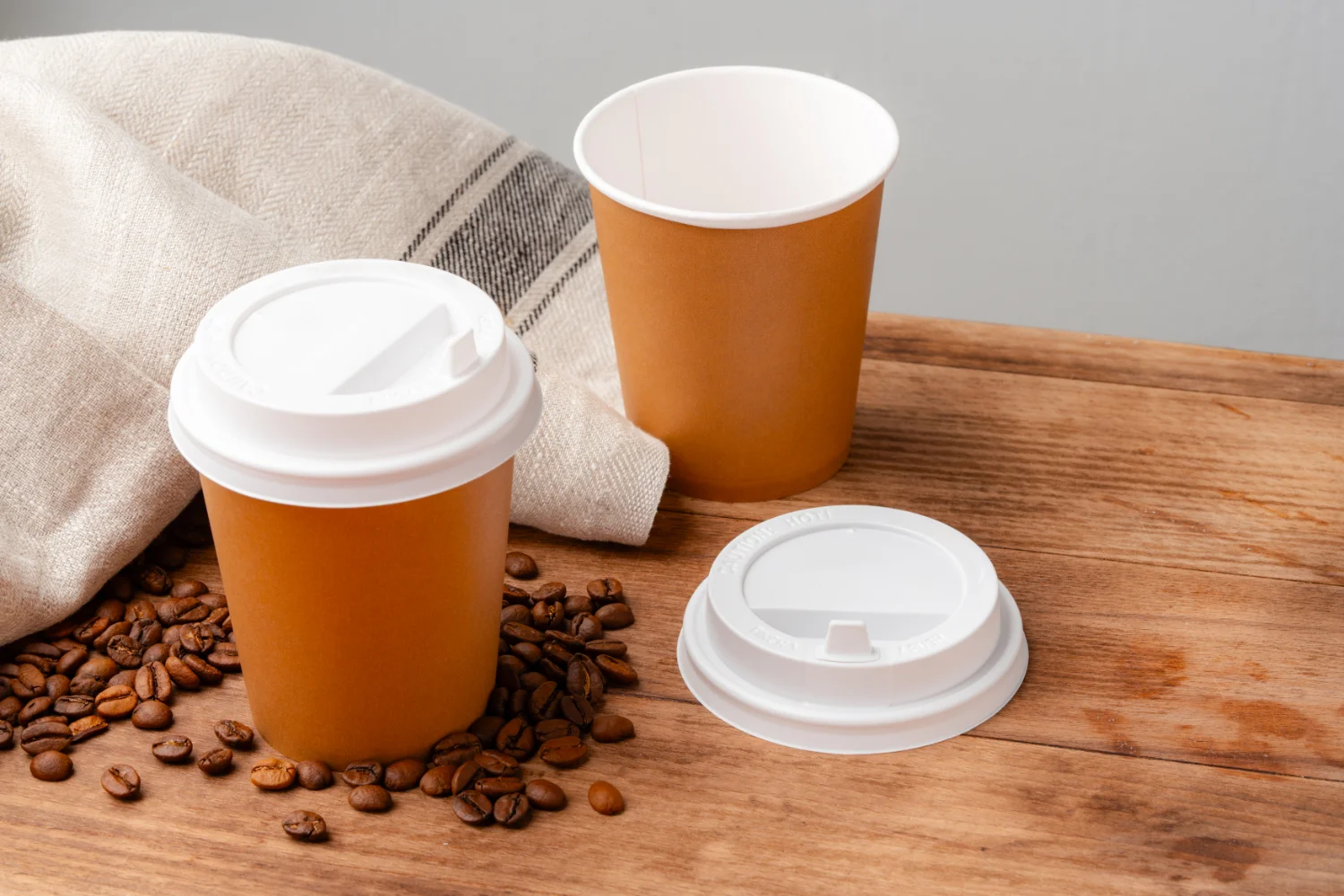
If your coffee lids pop off or drip in delivery, your cup looks cheap and your reviews drop fast.
I stop pop-offs and drips by treating lid fit as a system: rim/curl geometry + tolerance stack-up + temperature/condensation + handling + route stress, then I validate with stress-first tests so failures show up before mass production.
Get the right coffee cup + lid match before you scale

Most “lid problems” are not random. They are repeatable outcomes from small geometry drift, moisture, and delivery handling. I start by naming the failure pattern, then I lock the rim system, then I prove it holds under real route stress.
What do “lid pop-off, drips, and complaints” look like in the market?
If you only label everything as “leak,” you will fix the wrong thing and waste a whole production cycle.
I break complaints into pop-offs, slow drips, sip leaks, and tilt leaks, then I link each to a measurable interface so the fix becomes controllable.
Failure patterns I separate before I quote anything
| Customer complaint language |
What it usually means |
Where I inspect first |
What I measure |
| “The lid popped off in the bag.” |
Loss of bead engagement under squeeze + vibration |
Rim curl height + lid skirt contact |
Pop-off rate under compression |
| “It drips even when closed.” |
Micro-gap at sip spout or vent path |
Sip hole geometry + lid seating uniformity |
Drip count per tilt cycle |
| “It leaks only after delivery.” |
Fit drift after route stress |
Ovalization + rim softening |
Leak trend after vibration + stack load |
| “It feels closed but still leaks.” |
Partial engagement, uneven ring contact |
Top-zone flatness + bead ring |
Engagement uniformity check |
From a production standpoint, this matters because each failure pattern demands a different control point. If I do not name the failure, I cannot design the QC gates. In real manufacturing, this detail often determines whether the next shipment reduces complaints or repeats them.
Why does “same diameter” still fail between lids and cups?
“It’s 90mm” is not a fit guarantee. It is a label. Real fit depends on geometry and stiffness.
I stop mismatch by controlling bead geometry, skirt stiffness, and tolerance stack-up, because most failures come from uneven contact that still feels “clicked.”
Where fit actually breaks
| Variable |
What shifts in production |
What it causes |
My control approach |
| Bead & curl geometry |
Curl height, curl radius, rim thickness |
Uneven seating → drips and pop-offs |
Set curl targets + gauge checks per hour |
| Lid skirt stiffness |
Resin batch, forming temperature, cooling |
Skirt relaxes → engagement loss |
Opening force window + skirt deflection check |
| Tolerance stack-up |
Cup OD drift + lid ID drift add together |
“Works today” → fails next batch |
Match distributions, not one nominal size |
In real manufacturing, a lid can “feel closed” while only part of the bead ring is engaged. That is why I do not chase one perfect sample. I chase stable overlap and stable engagement across lots.
How do I control curl height, rim compression, and top-zone flatness first?
If the rim system is unstable, no lid can save it. A weak curl will collapse, deform, or go oval under handling.
I lock the rim system first so the lid bead always sees the same geometry, even after heat, condensation, and stacking load.
Rim system control points I lock before mass production
| Rim factor |
What can drift |
Failure it triggers |
How I control it |
| Curl height |
Forming pressure, paperboard stiffness, humidity |
Lid pop-off under squeeze |
Gauge target + hourly sampling |
| Rim compression strength |
Board GSM, coating, heat exposure |
Rim collapse → lid loses grip |
Compression test after heat/condensation |
| Top-zone flatness |
Seam area curl, uneven forming |
Uneven seating → sip leaks |
Flatness check + seam-zone monitoring |
From our daily packaging work, we see that the rim system is the first place where “small drift” becomes “big complaint.” I would rather tighten rim controls than keep swapping lids. That saves time and improves OEE.
How do heat and condensation create lid fit drift for hot and iced coffee?
Hot coffee softens the rim and changes compression. Iced coffee adds condensation and cold shock that changes friction and stiffness.
I treat temperature and dwell time as fit variables, because the cup that passes at minute 5 can fail at minute 25 in real service.
How temperature changes the failure path
| Service condition |
What changes |
What I watch for |
How I validate |
| Hot coffee |
Rim softening, coating relaxation |
Rim collapse, lid loosening |
Hot fill + dwell + squeeze test |
| Iced coffee |
Condensation, cold shock, wet surfaces |
Slip, lid “walk,” drip at sip spout |
Ice + condensation + vibration test |
| Hold time |
Stiffness drift over time |
Late-stage leaks |
Time-step checks at 10/20/30 min |
From a production standpoint, this matters because “fit” is not a single moment. It is fit after abuse. I build my acceptance around drift, not around perfect first contact.
How do sleeves, carriers, and COF make lids “walk” during delivery?
If delivery handling is part of your channel, then friction and deformation are part of your packaging spec.
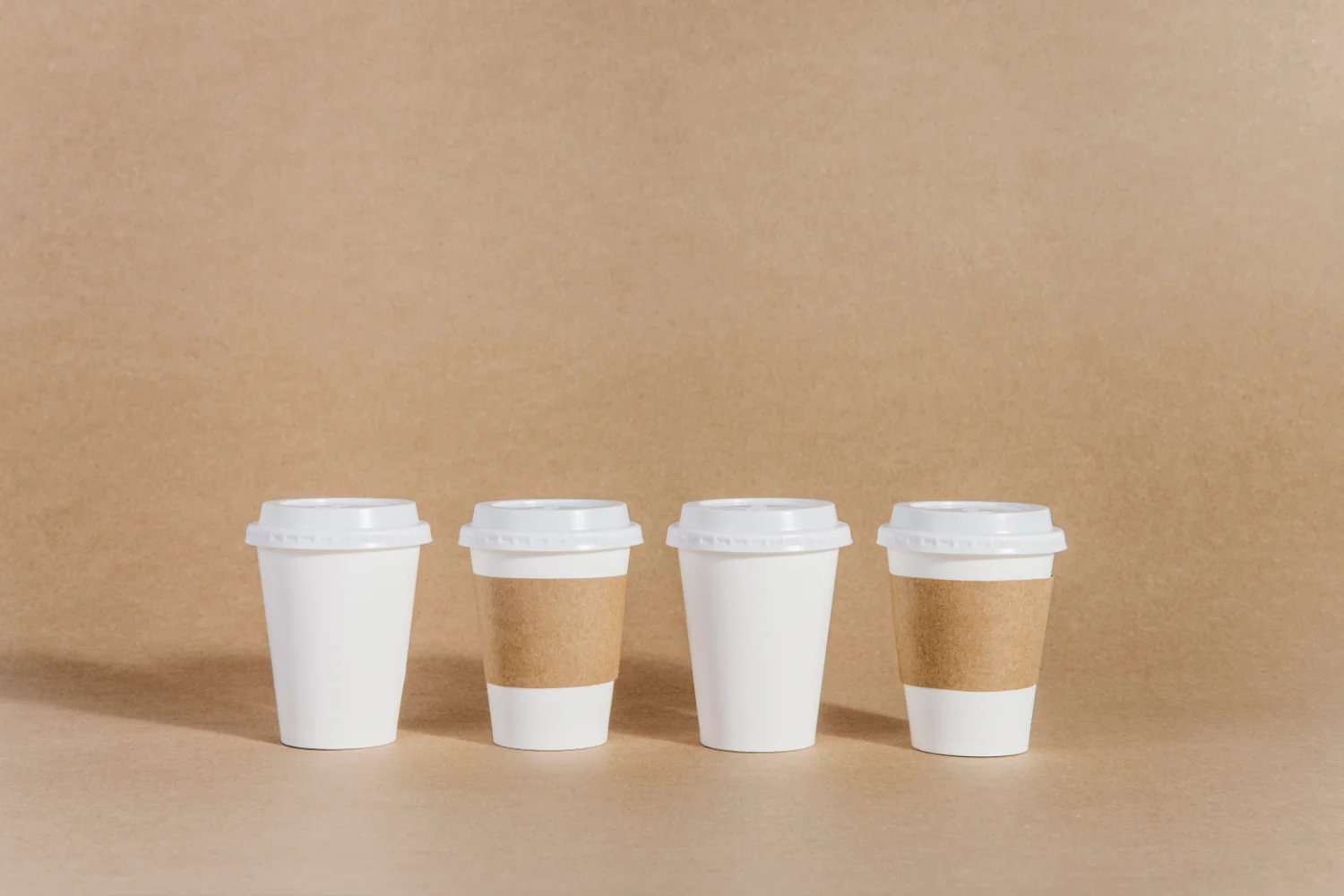
I stop lid walking by controlling COF, sleeve friction, and carrier squeeze, because most pop-offs happen when the cup becomes oval and the bead engagement weakens.
Handling factors I include in the spec
| Handling element |
How it creates movement |
What it triggers |
My control choice |
| Sleeve |
Changes grip and compression points |
Ovalization, rim stress |
Sleeve fit range + friction check |
| 4-cup carrier |
Squeezes cups, forces oval shape |
Pop-offs under vibration |
Carrier squeeze test + pop-off rate |
| COF drift |
Wet surfaces change friction |
Lid “walk” and drips |
Wet COF check + delivery simulation |
In real manufacturing, this detail often determines whether a delivery brand survives review culture. If a lid holds in-store but fails in a carrier, it is still a failure for the customer.
Which route stress triggers pop-offs and leaks in delivery?
Delivery makes cups see compression, vibration, and thermal cycling in the same day. That combination creates fit drift.
I map route stress as a timeline, then I test the weakest point first so pop-offs show up before I scale production.
Route stress map I use for coffee cup + lid systems
| Stress |
Where it happens |
What it does |
Common outcome |
| Compression |
Bags, cartons, stacked loads |
Ovalizes cup, loads rim |
Pop-offs, rim collapse |
| Vibration |
Vehicle delivery, warehouse handling |
Micro-slip, lid walking |
Slow drips, sip leaks |
| Thermal cycling |
Hot drink → cold air → warm car |
Stiffness drift, interface relaxation |
Late-stage leaks |
From our daily packaging work, we see that route stress is the fastest way to expose weak engagement. I do not wait for the market to tell me. I force the failure in testing.
When do print, coatings, and rub points worsen lid performance?
Scuffing is not only a visual problem. It can create dust and change friction at the rim and lid interface.
I treat surface behavior and fit as linked risks, because abrasion can reduce engagement consistency and make drips more likely after delivery.
Surface risks that connect back to lid fit
| Surface issue |
How it happens |
Why it affects lids |
What I do |
| Scuff dust |
Rubbing in cartons, sleeves, carriers |
Dust blocks uniform seating |
Rub-point mapping + cleanliness checks |
| Coating slip drift |
Moisture and heat change friction |
Increases lid walking |
Wet handling validation |
| Rim contamination |
Production residue, packing dust |
Reduces engagement stability |
Top-zone handling SOP + sampling |
From a production standpoint, this matters because surface problems often look “cosmetic” until they become functional. I would rather control rub points and dust than argue about lid models after complaints start.
What stress-first tests do I run before I scale cup + lid production?
If you test cups alone and lids alone, you will pass the lab and fail the market.
I validate the whole system—cup + lid + sleeve + carton—using stress-first sequencing, because I want drift and late leaks to show up early.
My validation checklist (system-based)
| Step |
Stress applied first |
Then I measure |
Pass criteria example |
| 1 |
Stack load + carrier squeeze |
Ovalization, rim compression |
No rim collapse, oval within control range |
| 2 |
Vibration (carton + sleeves) |
Pop-off rate, lid walking |
Pop-off rate below target threshold |
| 3 |
Heat (hot service) or condensation (iced) |
Drip trend, sip leak trend |
No leak trend growth over dwell time |
| 4 |
Thermal cycling |
Fit drift over time |
Opening/closing consistency holds |
I always record results as trends by lot and by time. In real manufacturing, “one pass” is not enough. I want stability, not luck.
Which Baseline, Upgrade, and Premium lid-fit specs do I shortlist fast?
If you want predictable performance, you need spec packages that include geometry, process controls, and validation—not just “a better lid.”
I deliver 2–3 options with clear failure risks, the test plan, and the production control points so scale does not depend on operator feel.
Fast shortlist spec packages (what can still fail included)
| Package |
What I lock |
Best for |
Most likely failure still |
| Baseline |
Rim curl targets + basic fit distribution match |
In-store service, short hold times |
Carrier squeeze pop-offs if delivery is rough |
| Upgrade |
Tighter tolerance + wet/condensation validation |
Delivery, iced coffee, longer dwell |
Lid walking if carton rub points are ignored |
| Premium |
QC gates + change control + stress-first acceptance |
High-volume brands that cannot risk reviews |
Process drift if top-zone SOP is not followed |
Send me your lid model + cup size and I will map your failure risk fast
Conclusion
I stop pop-offs and drips by locking rim geometry, controlling tolerance drift, and proving performance under stress-first delivery tests. If you want fewer complaints, contact me with your cup and lid details.
Talk to Jinyi About a Reliable Cup + Lid System
FAQ
1) Why do lids pop off more in delivery than in-store?
Delivery adds compression and vibration, which ovalizes cups and reduces bead engagement. That stress can also make lids “walk” and lose seating.
2) If my lid is the right diameter, why do I still get drips?
Diameter alone does not control bead geometry, skirt stiffness, or tolerance stack-up. Uneven seating often creates micro-gaps that drip during tilt or sip.
3) Do hot drinks and iced drinks need different lid-fit validation?
Yes. Hot drinks soften the rim and change compression. Iced drinks add condensation and cold shock that changes friction and causes fit drift over time.
4) What is the fastest test to reveal pop-off risk?
I run stack load or carrier squeeze first, then vibration, then heat/condensation. This stress-first order exposes fit drift and false security quickly.
5) What information should I send to confirm compatibility?
I need cup top diameter label, rim/curl profile info if available, lid model, intended drink type (hot/iced), hold time, and your delivery/pack-out method.