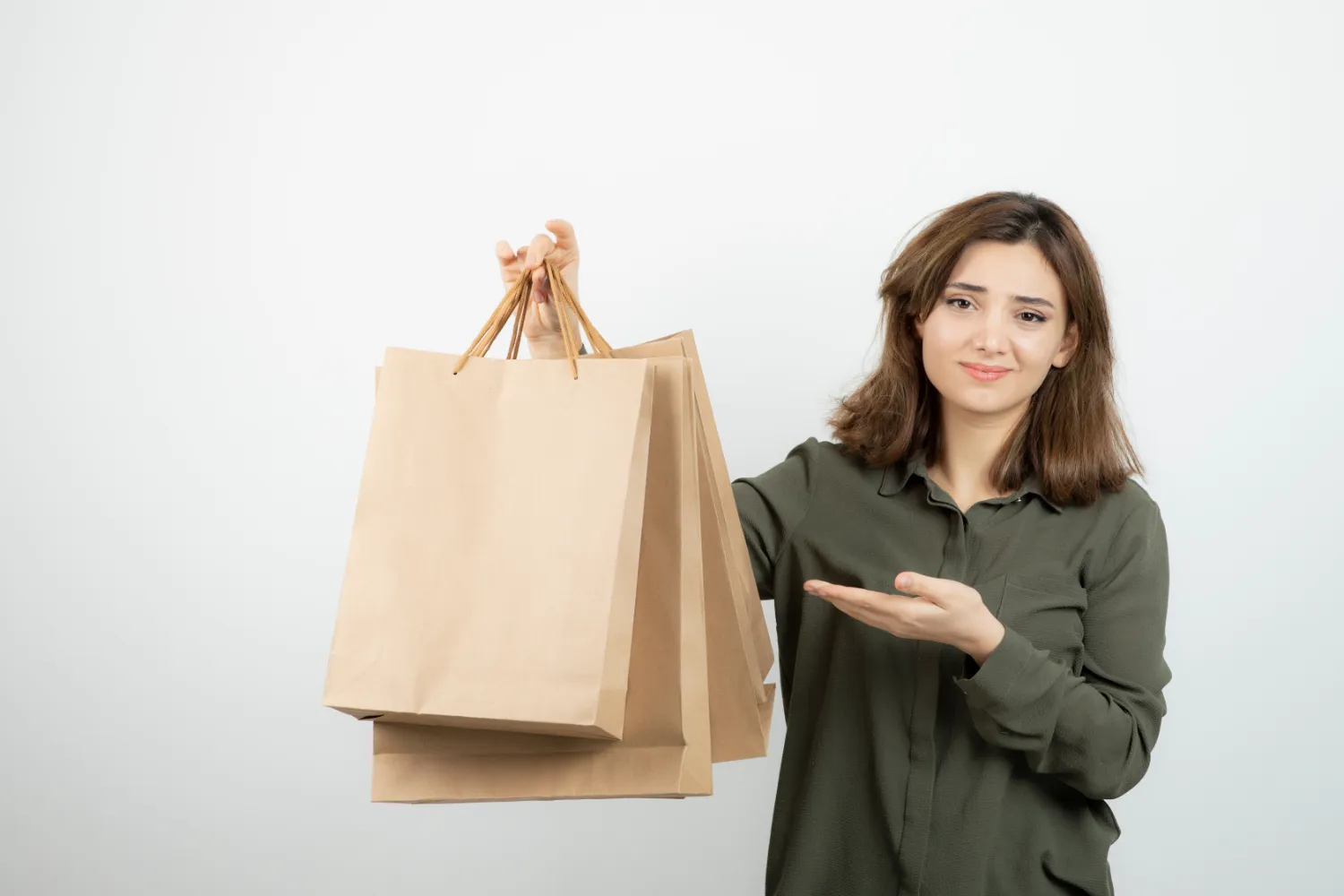
Small bag failures look minor. They become refunds, complaints, and lost trust when a handle snaps or a bottom breaks.
The best paper shopping bag is the one that matches your load, handling route, and moisture risk. I choose paper type, GSM, structure, and handle attachment as one system, then I validate with load and humidity tests before mass production.

I never treat a paper bag as “just a bag.” I treat it like a small logistics tool. I start from what the product does to the bag, then I design for how people carry it in real life.
How do I start with the use case (retail shopping vs takeout vs coffee carry)?
Many brands pick a size and a look first. The bag then fails when the load shifts, the walk is long, or the bag meets steam and condensation.
The right use case defines everything. I map average weight, peak weight, volume, center of gravity, and exposure to moisture. Then I pick the paper, GSM, structure, and handle system that survives that route.
I define the route before I define the bag
I separate retail, takeout, and coffee carry because they break bags in different ways. Retail bags often carry heavier items and travel farther, so dynamic load matters. Takeout bags face steam, grease, and short but harsh handling. Coffee carry is tricky because cups create a high center of gravity. A small swing can pull on the handle patch and deform the side panels. I ask: How many items go inside? How long does the customer carry it? Does the bag sit in a car or a delivery tote? Do cups sit inside without a cup holder? When I have these answers, I can avoid overbuilding and underbuilding at the same time. I also set a “fail-safe” goal. If the bag is used one size above the plan, it should not snap. That is how I protect reviews in U.S. and EU channels.
| Use Case |
Main Failure |
What I Prioritize |
Quick Control |
| Retail |
Handle tear |
Handle patch + fiber strength |
Dynamic load test |
| Takeout |
Softening + bottom break |
Gusset + base + moisture plan |
Humidity hold test |
| Coffee carry |
Side collapse + swing stress |
Side stiffness + stable base |
Shake + carry test |
Which paper types actually make sense (kraft, white kraft, art paper, recycled, FSC options)?
Many buyers choose paper by color or by “eco” messaging. The bag then looks right but feels weak, scuffs fast, or shows inconsistent color.
I choose paper by fiber behavior first, then by print needs. Kraft often wins on tear resistance. White papers win on clean color. Recycled paper needs extra verification. FSC is a trust signal when the paperwork is real.
I treat paper choice as a strength and print decision
Kraft paper usually gives me better tear resistance and a natural look that performs well in Western markets. It also hides small scuffs better. White kraft or white-lined options help when brands need clean color, sharp logos, and photography-friendly surfaces. Art paper can look premium, but I only use it when the bag does not face harsh handling. Recycled paper can be a strong story, but it is not a free upgrade. The fiber mix can vary by mill and by batch. That can change stiffness, crack risk on folds, and shade. I ask for batch consistency and I recommend pre-production samples when the design has large solid ink areas. For U.S. and EU buyers, FSC can support procurement needs, but I always treat FSC as a documentation workflow, not a label on the bag.
| Paper Type |
Best For |
Risk |
My Check |
| Kraft |
Durable retail + takeout |
Muted colors |
Color proof on kraft |
| White kraft / white lined |
Clean branding |
Shows scuffs |
Rub test + coating choice |
| Recycled |
Sustainability story |
Batch variation |
Stiffness + shade control |
| FSC option |
EU/US procurement |
Paperwork gaps |
Traceable documents |
Is GSM a strength guarantee (GSM vs thickness vs fiber)?
Many brands “solve” strength by pushing GSM up. The bag still fails because the fiber is weak, the folds crack, or the handle patch is underbuilt.
GSM is only one input. Strength depends on fiber, stiffness, paper density, fold behavior, and glue performance. I set a load target first, then I choose GSM and structure that meet it.
I use performance targets, not guesses
I treat GSM as “mass per area,” not as a promise of durability. Two papers at the same GSM can behave very differently. One can feel thick but crush easily. Another can feel thinner but hold load better because the fiber network is stronger and the sheet is tighter. I also watch how paper behaves at folds. A bag often fails where the paper was creased, not where it is flat. Humidity changes this too. Paper can lose stiffness when it absorbs moisture. That is why I set a realistic goal such as “carry 6 lb for 10 minutes” or “carry two hot cups without side collapse.” Then I pick GSM ranges that work with the chosen structure and handle patch. If a customer wants to upgrade, I often upgrade the patch and base before I upgrade GSM, because that is where the stress concentrates.
| What Changes |
What It Affects |
Common Mistake |
My Fix |
| Higher GSM |
Stiffness (sometimes) |
Ignores fiber quality |
Specify paper grade + tests |
| Fiber strength |
Tear resistance |
Chosen by color only |
Match to load route |
| Humidity |
Softening |
No humidity testing |
Humidity hold + carry |
How do I choose structure and handles that survive real retail and takeout handling?
Most bad reviews do not blame paper. They blame the moment the handle snaps or the bottom opens in public.
I build the bag around stress points. I choose gussets and base reinforcement for stability. Then I pick handle type and attachment (patch, fold-over, glue) that matches the load and moisture risk.
I engineer the stress points first
I start with structure because structure decides how the load transfers to the bottom and to the handles. Gusseted bags often stand better and carry bulky items more safely than flat bags. For takeout, I pay special attention to the base and the glue zones, because steam and condensation can weaken paper and adhesives. Then I choose handles by function. Twisted paper handles are a stable baseline for many U.S. and EU brands. Flat handles feel clean and comfortable, but they need stronger attachment design. Rope and ribbon can look premium, but I only use them when the customer accepts higher cost and tighter production control. I treat attachment as the real project. I specify patch size, glue coverage, and cure conditions. I also test dynamic load, not just static load. Walking swing is what tears patches. If the bag will carry coffee, I also test with a high center of gravity and a cup holder system when needed.
| Design Choice |
Benefit |
Risk |
My Control |
| Gusset + reinforced base |
Stability + load spread |
More glue zones |
Glue spec + fold QC |
| Twisted paper handle |
Reliable baseline |
Patch tear if small |
Larger patch + dynamic test |
| Flat handle |
Comfort + clean look |
Peel under swing |
Fold-over + stronger adhesive |
| Moisture exposure |
Real takeout reality |
Softening + stains |
Humidity test + base upgrade |
Conclusion
I choose paper bags by route and risk. I lock structure and handle attachment first, then I tune paper and GSM with real tests to protect trust.
About Jinyi
Jinyi — From Film to Finished—Done Right. I work as a packaging manufacturer who cares about stable production, clear specs, and repeatable quality. I help brands reduce communication cost by turning “it should feel strong” into testable requirements.
About Elsa
Elsa is a packaging manager with 10 years of development and supply chain experience. She cares about consistency, lead time control, and real-world performance. She prefers clear parameters, clear trade-offs, and verifiable tests.
FAQ
- What GSM is best for paper shopping bags?
There is no single best GSM. The right GSM depends on load, route, humidity risk, and handle attachment design.
- Why do paper bag handles break?
Most failures come from weak patch size, poor glue coverage, or dynamic swing stress, not from the handle material alone.
- Is kraft stronger than white paper?
Kraft often resists tearing better, but white options can be strong too. I decide by fiber grade and testing, not by color.
- How do I stop takeout bags from getting soft?
I improve structure, base reinforcement, and glue control, and I test under humidity and hot-food conditions.
- What tests should I request before mass production?
I request dynamic load carry tests, humidity holds, and real pack-out simulations that match retail or delivery routes.