Fashion returns rarely feel “technical.” Customers say “creased,” “scratched,” or “looks used.” The cost shows up later as refunds, reships, and trust loss.
Poly mailers often lower shipping cost and dimensional risk, but they can raise presentation and surface-damage returns unless the inner pack controls folds and scuff points. Boxes protect shape and improve unboxing, but they can increase dimensional weight cost and still fail if fit and void control are wrong.
If your returns mention “creased,” “scratched,” or “not as expected,” start with a channel-fit packaging spec (mailer/box/hybrid) instead of guessing.

In this report-style guide, the goal is a repeatable decision. It connects return keywords to failure modes, then ties each option to cost logic and validation tests.
How should “returns” be defined so the packaging decision is not guesswork?
Many teams debate packaging based on a few photos. That approach misses seasonality, route stress, and the channel difference between DTC and retail.
The most reliable method is to map return keywords to failure modes by SKU, packaging configuration, channel, and season. That turns “not as expected” into measurable drivers.
A report-grade returns definition uses at least two sources: return codes and ticket photos, plus review text mining when available. The unit of analysis should be SKU × packaging configuration × channel × season, because a soft knit shipped DTC behaves differently than a structured hat shipped to retail replenishment. Keyword mining should tag creased, wrinkled, scuffed, scratched, dirty, crushed, dented, cheap, and used. Theme clustering then merges synonyms into driver groups such as crease/shape, scuff/transfer, and crush/dent. A time-series view is important because returns often spike during holiday peak and humid/rainy seasons. “Spec-to-returns mapping” is the final step, where a packaging change date is compared to complaint rate changes. This is how a team can prove whether a mailer upgrade or a box change actually lowered returns.
| Return language |
Likely driver |
Where it starts |
Prevention lever |
| Creased / wrinkled |
Fold geometry + over-compression |
Headspace, sharp fold lines |
Fold control + support sheet |
| Scuffed / scratched / dirty |
Surface rub + transfer |
Hardware contact, abrasive inner pack |
Separation wrap + low-transfer inner |
| Crushed / dented |
Route stress (drop, compression) |
Shape-critical zones |
Box or hybrid structure |
| Not as expected |
Presentation mismatch |
Unboxing + “looks used” cues |
Cleaner inner pack + shape control |
Evidence (Source + Year):
– ISTA, Procedure 3A overview for parcel delivery system shipments ≤150 lb (2026 access).
– ASTM D5276-19, free-fall drop testing of loaded containers (scope page updated 2023).
When do poly mailers win, when do boxes win, and when does a hybrid beat both?
Mailers and boxes are not “good vs bad.” They are tools that work when product behavior and route stress match the packaging system.
Mailers usually win on cost and dimensional weight efficiency. Boxes usually win on shape control and premium presentation. Hybrids often win when the product is soft but still needs scuff and fold control.
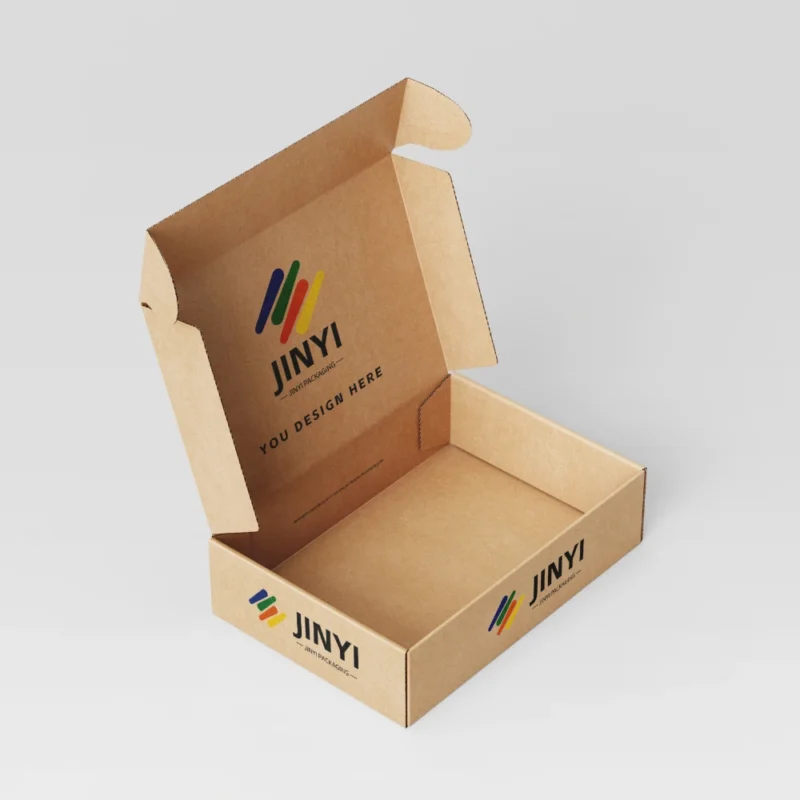
Mailers typically win when the product is soft and compressible and when returns are driven by size/fit or preference rather than damage. Mailers can also reduce cube and avoid dimensional weight penalties in parcel shipping. Boxes typically win when the product is shape-critical, such as hats, sunglasses, and structured handbags, and when “not as expected” is tied to perceived damage or unboxing quality. Hybrids often win in fashion because many SKUs need only local structure. A mailer plus a fold board, corner protectors, or a small inner carton can prevent sharp creases and hardware scuffs without paying the full dimensional cost of a large box. A box can still fail if there is too much void, because product movement creates corner pressure points and scuff contact. The practical rule is to choose the outer pack by route stress and customer expectation, and choose the inner pack by contact risk and fold geometry.
| Product type |
Channel |
Main return risk |
Best pack system |
| Tees, hoodies, socks |
DTC parcel |
Crease + “looks used” dirt/scuff cues |
Mailer + clean inner polybag/tissue + fold board (as needed) |
| Belts, hardware accessories |
DTC / marketplace |
Hardware scuff + transfer |
Mailer + sleeve wrap + corner protection |
| Hats, sunglasses |
DTC parcel |
Crush/dent |
Box or mailer + rigid inner carton |
| Gift-ready accessories |
Retail + gifting |
Presentation mismatch |
Box with minimal void + dust bag/tissue |
Evidence (Source + Year):
– FedEx, dimensional weight is charged based on dimensional or actual weight, whichever is greater (FedEx support page, 2026 access).
– ISTA, Procedure 3A applies to individual packaged-products shipped via parcel delivery systems (ISTA overview page, 2026 access).
How does dimensional weight change the mailer vs box cost math?
Many packaging debates ignore the real shipping bill. A box can cost more because it increases billable weight, even if the product is light.
Dimensional weight pricing charges based on the greater of actual or dimensional weight. That creates structural cost pressure toward mailers unless the box prevents enough returns to justify the cube.
Dimensional weight is the space a package occupies relative to its actual weight. Many parcel shipments are charged on the greater of dimensional weight or actual weight, so a low-weight fashion item can become expensive when it ships in a large box. That is why “box is safer” is not a complete argument. A cost model must include packaging material cost, packing labor, billable weight cost, and return cost. Return cost should include refund handling, reship cost, and inventory rework. The decision is then made on total cost per 1,000 orders, not on packaging cost alone. The best practice is to track billable weight distribution by packaging configuration, then compare it to return rate and damage keywords during a pilot. This approach also prevents overbuilding, where a brand pays dimensional penalties to protect a problem that does not dominate returns.
| Cost element |
Mailer |
Box |
What to measure |
| Material + labor |
Lower |
Higher |
Pack time per unit |
| Billable weight |
Often lower (lower cube) |
Often higher (DIM risk) |
Actual vs DIM billed weight share |
| Damage/returns |
Can rise without inner control |
Can drop for shape-critical SKUs |
Returns per 1,000 orders by keyword |
If your shipping cost is DIM-driven, a hybrid system can protect presentation without paying full box cube.
Evidence (Source + Year):
– FedEx, “What is dimensional weight?” charged on dimensional or actual weight, whichever is greater (FedEx, 2026 access).
– FedEx, DIM weight reflects package space relative to actual weight (FedEx guide page, 2026 access).
How can a team validate the choice before a full rollout?
Teams often switch packaging once and hope for the best. That approach turns customers into the test lab.
A controlled validation plan uses parcel simulation testing plus a short A/B pilot. The pass criteria should score creases, scuffs, and “looks new” presentation.
A validation plan should test the packaging system, not just the outer pack. ISTA Procedure 3A is designed for parcel delivery system shipments and includes elements such as shock, vibration, compression, and conditioning, which makes it a strong baseline for DTC fashion routes. ASTM D5276 covers free-fall drop testing of loaded containers and can be used for controlled comparisons between a box, a mailer, and a hybrid. The most important step is defining “damage” and acceptable tolerance before testing, because fashion damage is often cosmetic and perception-driven. A practical pass/fail uses a photo rubric for crease severity, a hardware scuff score, and a “looks new” presentation score that includes cleanliness and shape. After lab simulation, a short A/B pilot should split shipments by route and season for two to four weeks and track return reasons, review keywords, and reship cost. As a flexible packaging manufacturer, we focus on building packs that survive parcel stress while maintaining presentation, so the net result is lower returns without uncontrolled cube growth.
| Test step |
What it proves |
Pass metric example |
| ISTA 3A simulation |
Route stress survivability |
No crush for shape-critical SKUs; crease score below threshold |
| ASTM D5276 drop comparison |
Shock sensitivity |
No new dents; no hardware scuff increase |
| A/B pilot (2–4 weeks) |
Real-world return impact |
Lower “damaged/used” keywords per 1,000 orders |
Evidence (Source + Year):
– ISTA, Procedure 3A overview for parcel delivery system shipments ≤150 lb (ISTA, 2026 access).
– ASTM D5276-19 scope: free-fall drop testing of loaded containers (ASTM, 2019; page updated 2023).
Conclusion
Mailers can win on cost, and boxes can win on presentation, but hybrids often win on total returns. The lowest-return choice comes from a channel-fit framework plus ISTA-based validation and keyword tracking.
Get a mailer vs box packaging spec checklist
About Us
Brand: Jinyi
Slogan: From Film to Finished—Done Right.
Website: https://jinyipackage.com/
Our Mission:
JINYI is a source manufacturer specializing in custom flexible packaging solutions. We aim to deliver reliable, practical packaging that reduces communication cost, improves quality stability, and supports predictable lead times for brands.
About JINYI:
JINYI is a source manufacturer specializing in custom flexible packaging solutions, with over 15 years of production experience serving food, snack, pet food, and daily consumer brands.
We operate a standardized manufacturing facility equipped with multiple gravure printing lines as well as advanced HP digital printing systems, allowing us to support both stable large-volume orders and flexible short runs with consistent quality.
From material selection to finished pouches, we focus on process control, repeatability, and real-world performance. Our goal is to help brands reduce communication costs, achieve predictable quality, and ensure packaging performs reliably on shelf, in transit, and at end use.
FAQ
1) Are poly mailers always cheaper than boxes?
Poly mailers often reduce cube and billable weight, but total cost depends on returns. A hybrid may beat both when it prevents scuffs and creases without DIM penalties.
2) Why do “not as expected” returns rise with mailers?
Mailers can amplify cosmetic cues like wrinkles, dirt pickup, and hardware scuffs unless the inner pack controls contact and fold geometry.
3) When should boxes be mandatory?
Boxes are usually needed for shape-critical SKUs such as hats, sunglasses, and structured items that can dent or crush in parcel routes.
4) What is the fastest validation approach?
Use ISTA-style simulation to screen failure modes, then run a short A/B pilot by route and season to confirm return keyword reductions.
5) What should be written into a packaging RFQ?
State channel, route assumptions, SKU risk type (crease/scuff/crush), inner-pack requirements, and pass/fail criteria tied to a simple photo rubric.