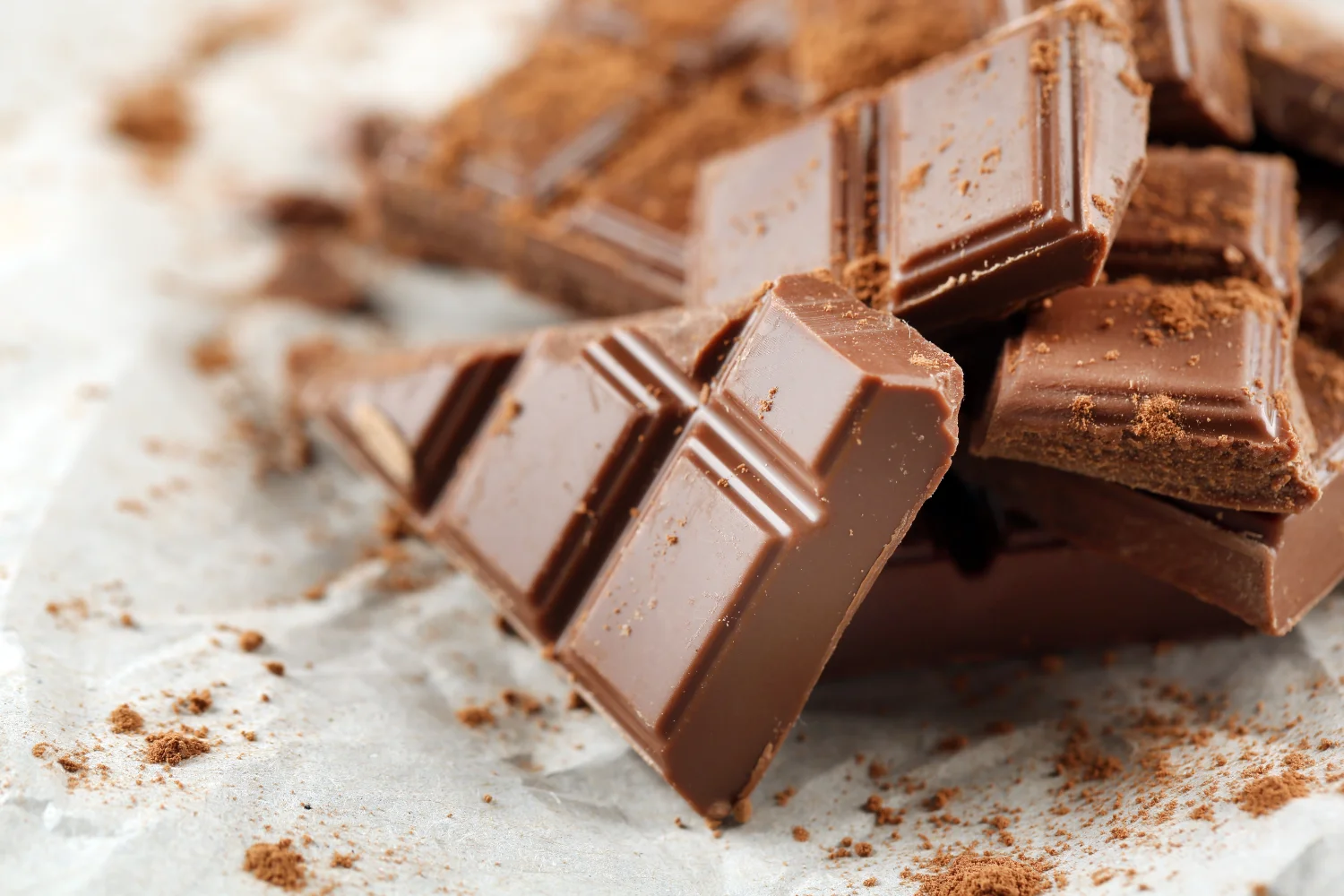
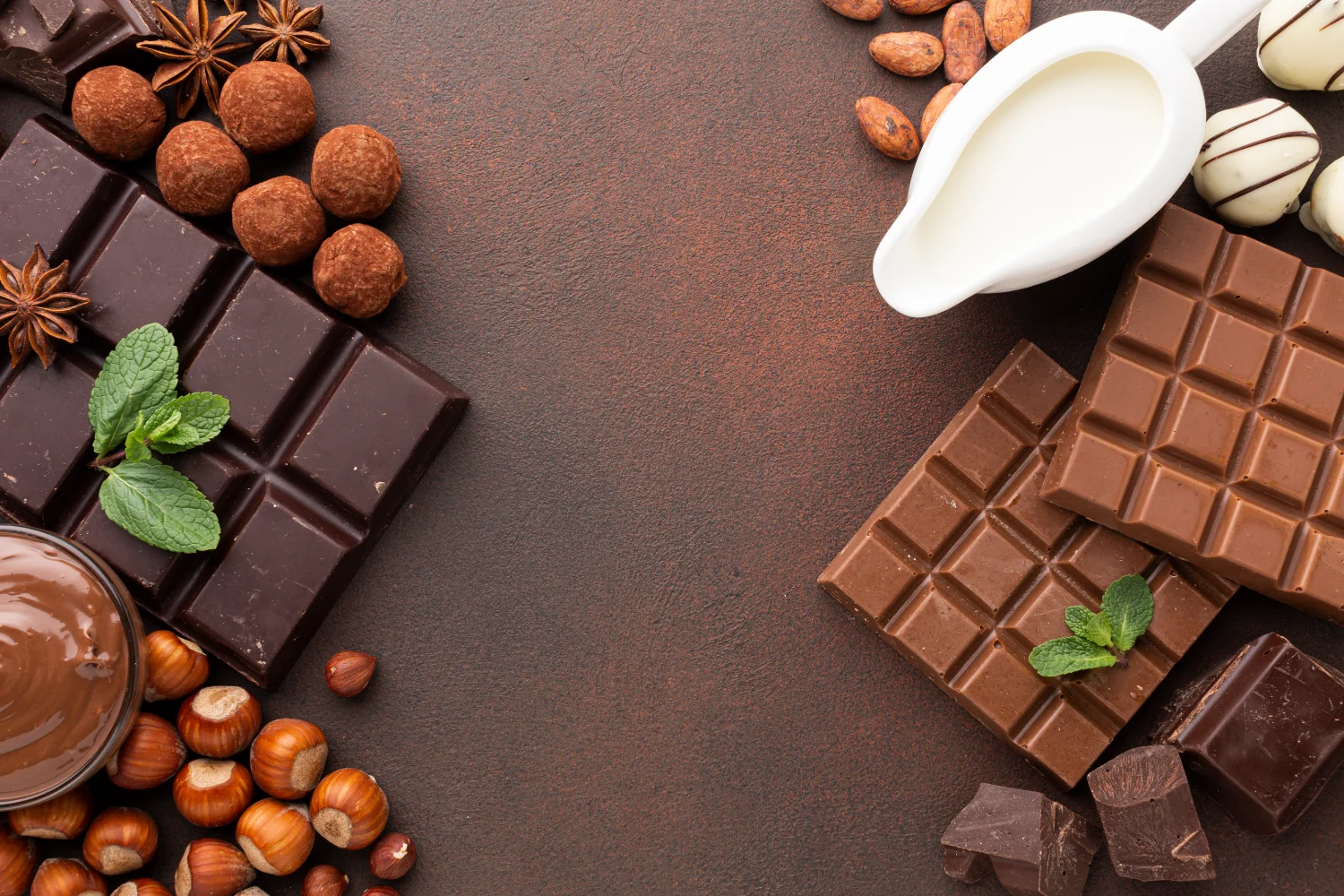
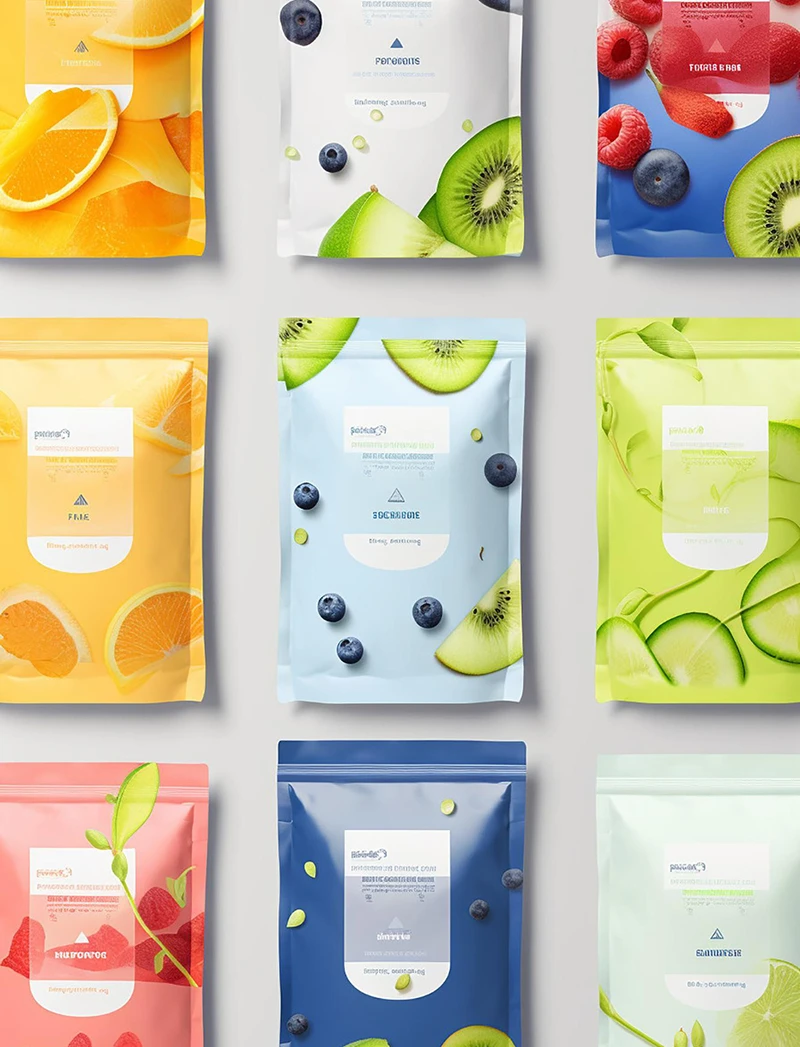
Premium chocolates can look “fine” at ship-out and still arrive dull, oily, or bloomed—then customers blame the bag or box.
Fat migration changes shelf life by moving fats across layers (filling → shell), which can trigger bloom, softening, and greasy surfaces—while packaging mainly controls the outside inputs (heat swings, oxygen, moisture, light, and handling). If you want packaging that reduces complaints without overbuilding, start here: food packaging solutions for shelf stability.

Chocolate shelf life is not one problem. It is a chain of mechanisms. This article separates what happens inside the chocolate from what the package can realistically control outside it.
Which chocolate format has the highest migration risk: bars, truffles, or filled chocolates?
When three products share the same brand, customers still judge them differently—because their defects show up differently on shelf.
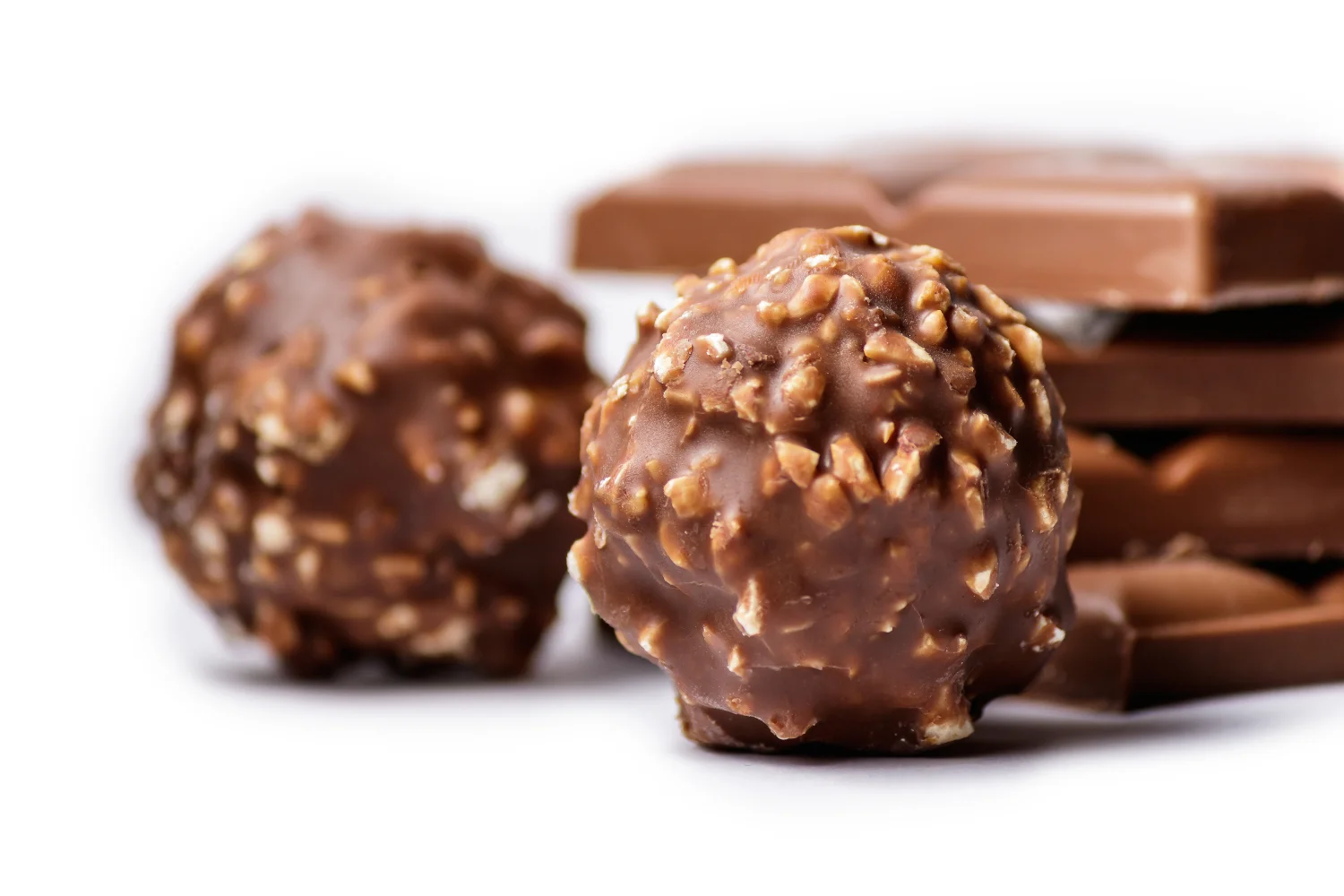
The highest migration risk usually appears in filled chocolates, then truffles, then bars. The key is not shape. The key is how many fat sources and interfaces exist inside the product.
Bars often rely on cocoa butter as the main fat source, so defects are more linked to temperature swings and surface re-crystallization. Truffles add dairy or nut fats and often higher moisture complexity, so texture drift and softening become more likely. Filled chocolates are a classic migration system because filling fats can diffuse into the shell and change the cocoa butter network over time.
Format-to-mechanism map
| Product type |
Main migration driver |
Typical defects |
What packaging can control best |
| Chocolate bar |
Temperature-driven crystal change |
Fat bloom, dull gloss, aroma drift |
Heat buffering, light/oxygen barrier, scuff protection |
| Truffles |
Fat + moisture interactions across layers |
Softening, sweating, texture breakdown |
Moisture/odor barrier, temperature stability, crush protection |
| Filled chocolates |
Filling fat diffusion into shell |
Bloom, oiling, fingerprints, weak snap |
Heat swing reduction, oxygen/moisture control, handling control |
Evidence (Source + Year): Afoakwa (2009) explains how chocolate microstructure and fat crystallization relate to defects such as bloom. Sato et al. (2021) discuss that bloom can occur even without a simple polymorphic “flip,” which supports a mechanism-first explanation.
Why does heat accelerate bloom and “oily” defects more than most brands expect?
Many teams add layers to packaging, but the real enemy is the temperature swing that keeps repeating.
Heat accelerates diffusion and re-crystallization. Temperature cycling (warm day, cool night) repeatedly dissolves and re-forms fat structures, which makes defects appear sooner and more unevenly.
Chocolate shelf life is often set in stable lab conditions, but the channel rarely stays stable. Heat increases molecular mobility, so fat migration becomes faster. Cycling makes the outcome feel “random” because different units see different exposure histories across pallets, store shelves, and customer transport. Truffles and filled products amplify this effect because they contain multiple fat phases with different melting behaviors.
Channel heat map checklist (what causes real drift)
| Hot spot |
Why it matters |
Packaging-relevant control |
| Truck / last-mile van |
High peaks, fast cycling |
Insulated shipper, tighter pack-out, avoid headspace movement |
| Warehouse top racks |
Long dwell at elevated temps |
Outer case selection, pallet wrap strategy, storage SOP label |
| Retail lighting / window shelf |
Local heating + light exposure |
Light barrier, display guidance, secondary carton design |
Evidence (Source + Year): Svanberg (2012) separates storage-driven changes linked to fat migration versus moisture migration in chocolate systems, supporting the “temperature exposure history” framing.
How do truffles and filled chocolates fail differently when moisture and alcohol are involved?
Some chocolates fail quietly: the surface looks acceptable, but texture and structure lose trust fast.
Moisture and alcohol can migrate into the chocolate shell and weaken its structure. Once the shell loosens, fat migration and oxygen exposure effects become easier to trigger and harder to predict.
Truffles and liquor or high-water fillings add a second migration pathway: water (and sometimes ethanol) shifts across layers. This can change sugar-phase binding, soften shells, and increase cracking risk. It also creates a “multiplier effect.” If the shell is compromised, fats can move more easily and oxidation symptoms can show up sooner. Customers usually do not describe this as “moisture migration.” Customers describe it as “stale,” “weird texture,” “old,” or “damaged,” which turns a physical mechanism into a trust problem.
Defect-to-mechanism map for multi-phase chocolates
| What customers see |
Likely dominant mechanism |
What packaging can reduce |
| Shell softening / collapse |
Moisture/alcohol migration + structure loss |
WVTR control, odor barrier, tight storage guidance |
| White haze + oily surface |
Fat migration + re-crystallization |
Heat swing reduction, handling control |
| Off odors / rancid notes |
Oxidation + odor pickup |
OTR control, odor barrier, light reduction |
Evidence (Source + Year): Svanberg (2012) supports the idea that moisture-driven changes can be distinguished from fat migration effects in storage studies.
What can packaging actually control—and how should brands validate it?
Brands often ask packaging to “stop migration,” but packaging works best as an outside-variable filter.
Packaging can strongly control oxygen, moisture, light, odor pickup, and handling damage. Packaging cannot directly stop internal fat diffusion unless the product system adds an internal barrier layer.
As a flexible packaging manufacturer, we focus on reducing outside noise so the product’s internal migration becomes slower, more stable, and easier to manage across real channels. A practical packaging approach starts with barrier targets (OTR/WVTR), then adds mechanical protection and clear storage signals. Brands can also explore internal barrier concepts, such as edible coatings, but that is product-structure engineering, not only an outer pack decision.
Packaging levers and what they reduce
| Packaging lever |
What it reduces |
Best fit |
| Higher oxygen barrier (lower OTR) |
Oxidation-driven flavor loss |
Bars, filled chocolates |
| Moisture barrier (WVTR control) |
Texture drift, shell softening |
Truffles, liquor/high-water fillings |
| Light + odor barrier |
Photo-oxidation, odor pickup |
All, especially gift and retail display |
| Structure + fit (tray, dividers, headspace control) |
Scuffs, cracks, corner damage |
Filled pieces, premium assortments |
Validation should follow the complaint. The minimum set is usually: temperature cycling storage observation, oxygen/moisture exposure alignment to shelf targets, and transit damage simulation for the retail format. If you want a buyer-ready spec and test plan, start with our food packaging validation-focused options.
Evidence (Source + Year): Devi et al. (2024) summarize lipid-based edible coatings as a barrier approach, which supports the “internal barrier is a product-system choice” boundary. Afoakwa (2009) supports linking defects to structure and crystallization rather than only packaging thickness.
Conclusion
Fat migration drives many chocolate shelf-life failures, but packaging wins by controlling heat swings, oxygen, moisture, light, and handling so defects appear later and more consistently.
Talk to JINYI about chocolate-ready packaging
FAQ
- Does a higher barrier film “stop” fat migration?
Higher barrier mainly slows oxygen and moisture effects. Internal fat diffusion usually needs product-side interface design, not only outer packaging.
- Why do filled chocolates bloom faster than bars?
Fillings often contain different fats that can diffuse into the shell and change the cocoa butter network, especially under temperature cycling.
- Is bloom always caused by temperature abuse?
Temperature is a strong accelerator, but fat composition, interface design, and storage history also shape bloom timing and appearance.
- What is the fastest packaging change that reduces complaints?
Reducing heat swings and improving fit/structure often lowers visible damage and bloom variance faster than adding more layers without a channel plan.
- What should a “minimum validation set” include?
Temperature cycling observation, barrier alignment to shelf targets (oxygen/moisture), and a basic transit/handling simulation for the retail format.
About JINYI
Brand: Jinyi
Tagline: From Film to Finished—Done Right.
Website: https://jinyipackage.com/
Our mission:
JINYI is a source manufacturer for custom flexible packaging. We aim to deliver packaging that is reliable, practical, and easy to execute, so brands spend less time coordinating and get more predictable quality and lead times.
Who we are:
JINYI is a source manufacturer specializing in custom flexible packaging solutions, with over 15 years of production experience serving food, snack, pet food, and daily consumer brands.
We operate a standardized manufacturing facility equipped with multiple gravure printing lines as well as advanced HP digital printing systems, allowing us to support both stable large-volume orders and flexible short runs with consistent quality.
From material selection to finished pouches, we focus on process control, repeatability, and real-world performance. Our goal is to help brands reduce communication costs, achieve predictable quality, and ensure packaging performs reliably on shelf, in transit, and at end use.