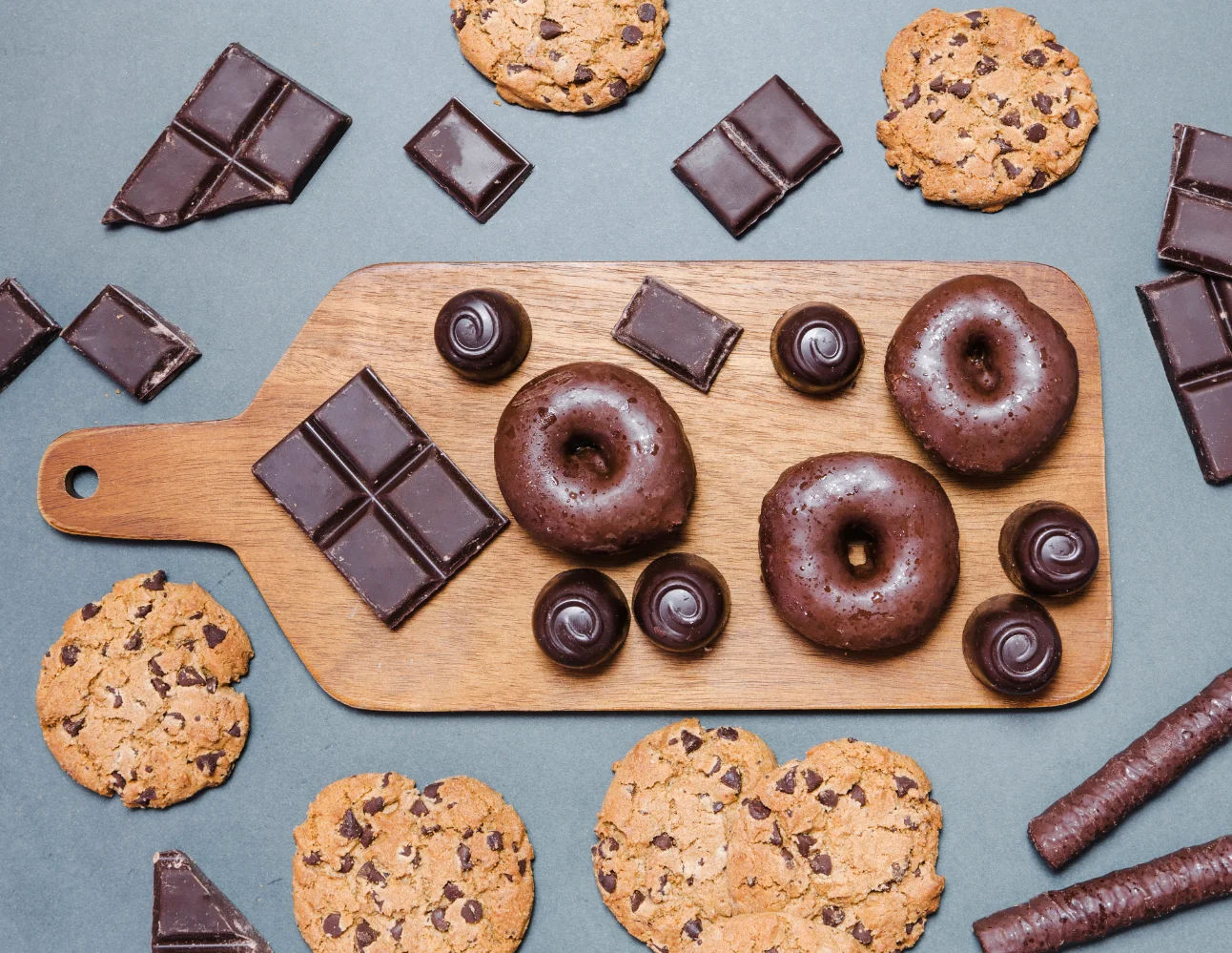
Chocolate can look perfect at packing, then arrive dull, gray, or oily. Heat cycling often causes the first visible defect, not time alone.
Filled chocolates often show defects sooner under heat cycling because fat migration and shell–filling interfaces add extra failure paths. Chocolate bars often fail first through fat bloom and texture changes, especially when cycling crosses sensitive temperature ranges.
See food packaging options that reduce heat-spike damage and protect appearance during distribution.

Heat cycling is a repeated temperature swing. It creates expansion and contraction. It also changes fat crystal behavior. As a flexible packaging manufacturer, we focus on what packaging can measure and control, such as temperature exposure records, sealing integrity, and practical pack-out that reduces peak temperature and light exposure.
What does “failure” mean for chocolate under heat cycling: bloom, cracking, or texture drift?
Many teams treat “failure” as one complaint. Customers do not complain in one way. Customers complain about looks, snap, and greasy surfaces.
Chocolate failure under heat cycling should be defined by measurable signals: bloom and color shift, snap loss, and oiling or micro-cracks. These signals show which mechanism moved first and why.
Define the first visible defect and link it to a mechanism
Chocolate can “fail” in different ways, and each way points to a different root cause. Fat bloom usually shows as a gray or whitish haze, and it often tracks fat crystal reorganization during temperature swings. Micro-cracks often show near corners, edges, or shell interfaces, and they can create shortcuts for fat migration and staining. Texture drift often shows as weaker snap or a coarse mouthfeel, and it can appear even when bloom is mild. A useful method is to set a single “first failure” rule for each test lot, such as the first time L* rises above a threshold, or the first time snap force falls below a limit. A team can then compare bars and filled pieces under the same heat cycling profile. This approach prevents a format decision from becoming a subjective argument. It also aligns with how buyers notice defects in real life, which is usually visual first and tactile second.
| Failure signal |
How it appears |
How to measure |
Most likely driver |
| Fat bloom |
gray/white haze |
L* shift + image area |
crystal changes under cycling |
| Oiling |
greasy film or spots |
surface wipe + mass change |
fat migration or melt–recrystal |
| Snap loss |
soft break |
3-point bend force |
structure and crystal network drift |
Evidence (Source + Year): Barry Callebaut, Top Chocolate Trends 2024 GLOBAL, 2024. | Study on dark chocolate showing heat cycling range and rate can change bloom development and microstructure, 2025.
Why do chocolate bars fail under heat cycling: polymorph change and fat bloom pathways?
Chocolate bars seem simple. Bars still fail fast when heat spikes repeat. The surface shows it first, and customers judge the whole product by that look.
Bars often fail first through fat bloom and snap drift when cycling crosses sensitive temperature zones. Cycling rate and peak temperature often matter more than average temperature.
Bars have fewer interfaces, so bloom and texture drift often lead
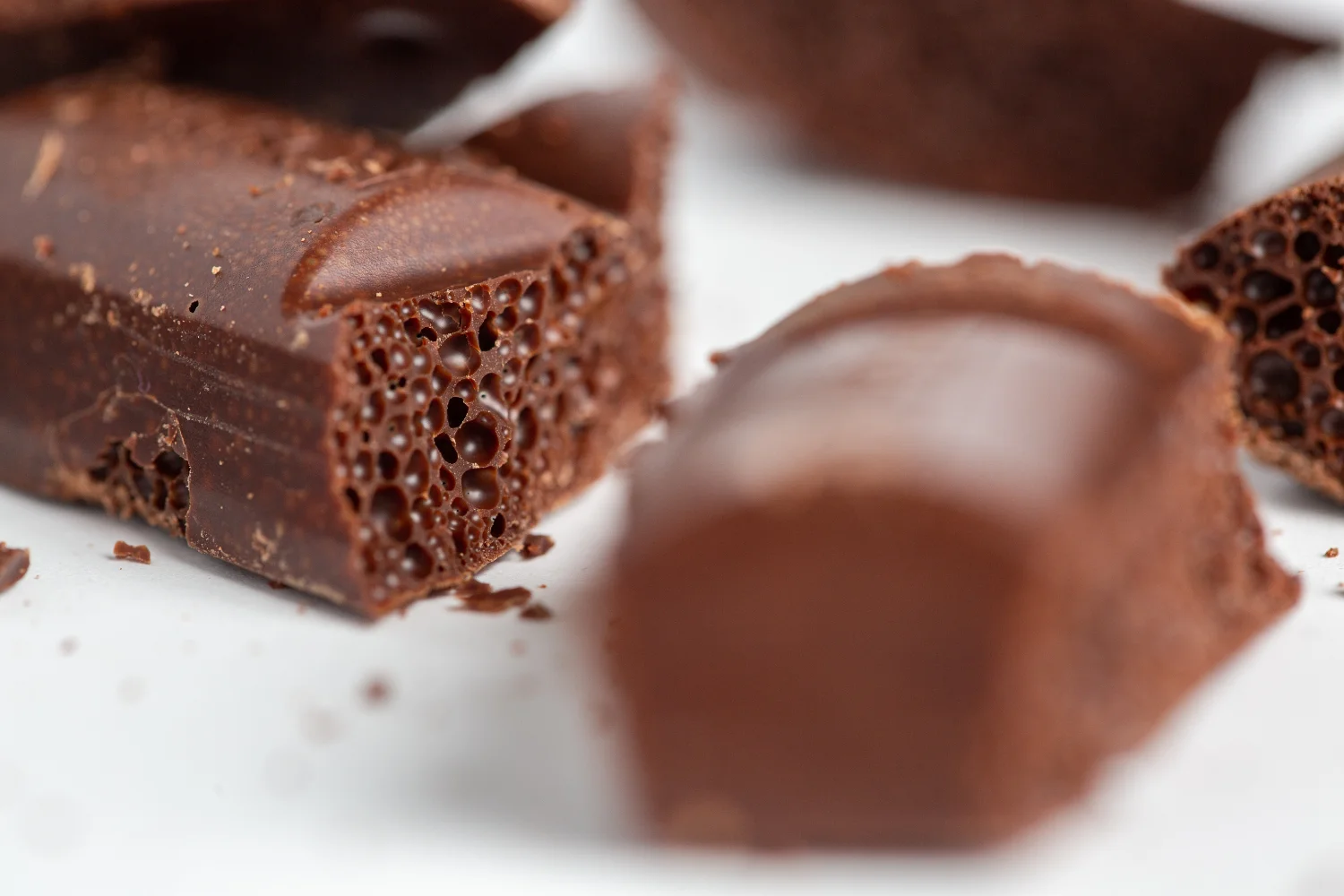
A bar is mostly one continuous chocolate matrix, so the dominant risk is how fat crystals respond to repeated heating and cooling. Heat cycling can shift the crystal balance toward forms that scatter light differently at the surface, which makes bloom more visible. Cycling can also create small melt and re-solidification events at the surface, which can accelerate bloom even when the product never “fully melts.” A team should treat the cycling profile as a dose: peak temperature, time near peak, and the number of cycles all add up. A team should also treat handling as a variable: repeated warming can soften the bar slightly, and that can increase scuff and abrasion marks during shipping. A bar can therefore show dullness from both bloom and surface damage. A good diagnosis separates these. A simple check is to compare a protected, non-contact bar versus a bar that rubs against inner film. If rubbing changes the defect, abrasion plays a role. If defects appear even without rubbing, bloom mechanisms dominate.
| Bar complaint |
Fast check |
What to change first |
| gray haze without oiling |
L* rise under cycling |
reduce peak temperature exposure |
| dull scuffed surface |
compare contact vs no-contact pack |
reduce abrasion and movement |
| weak snap |
snap force trend vs cycles |
tighten thermal handling window |
Evidence (Source + Year): Review discussing temperature fluctuations and bloom risk versus stable storage, 2011. | Study comparing isothermal and cycling storage showing cycling can accelerate bloom pathways, 2017.
If your bars arrive gray or dull, use this food packaging roadmap to reduce peak heat exposure and surface scuff risk.
Why do filled chocolates often fail earlier: fat migration, interfaces, and shortcut defects?
Filled chocolates look premium, but they have more weak points. Heat cycling can turn small interface stress into visible bloom and oily staining.
Filled pieces often fail earlier because fillings add fat migration pathways and shell–filling interfaces. Heat cycling can create micro-cracks that act as shortcuts, which can accelerate bloom and oiling even with good materials.

Fillings add a second engine: migration across a stressed interface
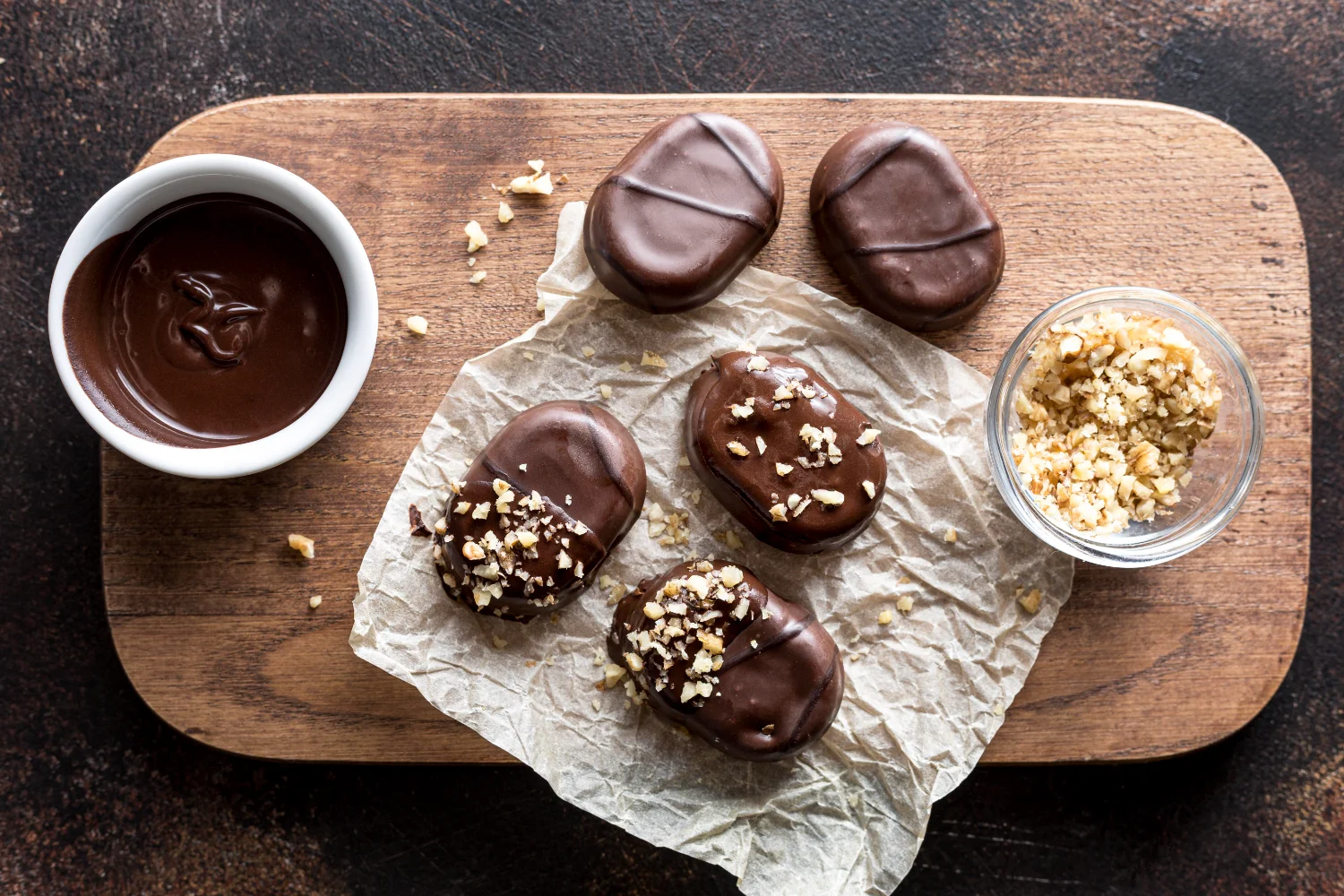
A filled chocolate has at least two fat systems, and the shell–filling boundary matters. If a filling contains a softer or more mobile fat phase, heat cycling can increase diffusion and movement toward the shell. When fat reaches the shell surface, bloom risk rises and oiling becomes possible. Heat cycling also creates repeated expansion and contraction, and that can stress the shell near corners and thin spots. Small cracks can form, and these cracks can become migration shortcuts. A team should therefore test “interface health” and not only “barrier.” A practical proxy is to track oiling and bloom onset side by side. If oiling appears before broad haze, migration likely leads. A team can also add aw checks for some fillings, because some fillings can change texture through moisture gradients, and those changes can weaken the interface during cycling. This set of mechanisms explains why a filled piece can fail first even when the shell chocolate itself is stable.
| Filled-piece signal |
Likely mechanism |
What to verify |
Common shortcut |
| oily spots near seams |
fat migration |
surface fat trend vs cycles |
micro-cracks at thin zones |
| fast surface whitening |
migration + crystal drift |
bloom onset time |
interface debonding |
| collapsed filling texture |
moisture/aw gradient |
aw before/after cycling |
shell damage from stress |
Evidence (Source + Year): Framework review on fat migration and crystallization interactions in filled chocolates, 2022. | Study linking temperature fluctuation storage to accelerated quality deterioration signals in chocolate, 2011.
Which tests predict real shelf outcomes: a minimum proof pack for bars vs filled chocolates?
Many teams test one temperature and call it “heat resistance.” Real channels cycle. Real channels also vary by carton position, light exposure, and dwell time.
A minimum proof pack should compare bars and filled pieces under a defined heat cycling profile, while tracking first-failure signals, migration proxies, and recorded temperature. Packaging can only reduce peak and abrasion, so tests must include real pack-out.
A 2×2×2 matrix turns a debate into data
A simple test plan can produce a clear decision. A team can test two products (bar and filled) under two conditions (stable control and heat cycling), with two pack-outs (basic pack and reinforced pack-out). A reinforced pack-out can mean better carton insulation, reduced headspace movement, and lower light exposure, depending on the channel. Each cell should measure the same signals: L* and bloom area, snap force, and a migration proxy such as surface fat pickup. Each cell should also use a temperature logger or an equivalent record, because a “heat cycling” label is meaningless without actual exposure data. This matrix helps identify whether product design or distribution risk dominates. If both products fail under cycling but not under control, the channel heat map is the driver. If only filled pieces fail early, migration and interfaces dominate. If reinforced pack-out delays defects, packaging and pack-out strategy offer real control, even when materials stay the same.
| Matrix factor |
Level A |
Level B |
Why it matters |
| Product |
bar |
filled |
interfaces add failure paths |
| Thermal condition |
stable control |
heat cycling |
cycling can accelerate bloom and migration |
| Pack-out |
basic |
reinforced |
pack-out can reduce peak and scuff |
Evidence (Source + Year): Study on heat cycling range and rate influencing bloom formation and microstructure, 2025. | Discussion of isothermal vs cycling storage differences in bloom outcomes, 2017.
Conclusion
Filled chocolates often fail first under heat cycling because migration and interfaces add shortcuts. Bars often fail through bloom and snap drift. Brands should map heat exposure and validate with a minimum proof pack.
Request a chocolate heat-cycling packaging review
About Us
Brand: Jinyi
Slogan: From Film to Finished—Done Right.
Website: https://jinyipackage.com/
Our Mission:
JINYI is a source manufacturer focused on flexible packaging. The team aims to deliver reliable, practical packaging that lowers communication cost, stabilizes quality, clarifies lead time, and matches each product’s real use and distribution risk.
Who We Are:
JINYI is a source manufacturer specializing in custom flexible packaging solutions, with over 15 years of production experience serving food, snack, pet food, and daily consumer brands.
We operate a standardized manufacturing facility with multiple gravure printing lines and advanced HP digital printing systems. The facility supports both stable high-volume orders and flexible short runs with consistent quality.
We focus on process control, repeatability, and real-world performance. We help brands reduce rework and protect products on shelf, in transit, and at end use.
FAQ
- Does heat cycling always cause fat bloom?
Heat cycling often increases bloom risk, but the onset depends on peak temperature, dwell time, cycle count, and product fat system.
- Why do filled chocolates often show defects earlier than bars?
Filled pieces add fat migration and shell–filling interfaces, and these features add more shortcut failure paths under stress.
- What is the first measurement a team should take for heat-cycling risk?
A team should log real temperature exposure and track first-failure signals such as L* shift, bloom area, and snap force.
- Can packaging stop heat damage in chocolate?
Packaging cannot remove heat cycling, but packaging and pack-out can reduce peak temperature, light exposure, and scuff that amplify defects.
- What is a minimum proof pack for comparing bars and filled chocolates?
A 2×2×2 matrix with product type, thermal condition, and pack-out can link defects to mechanisms with repeatable data.