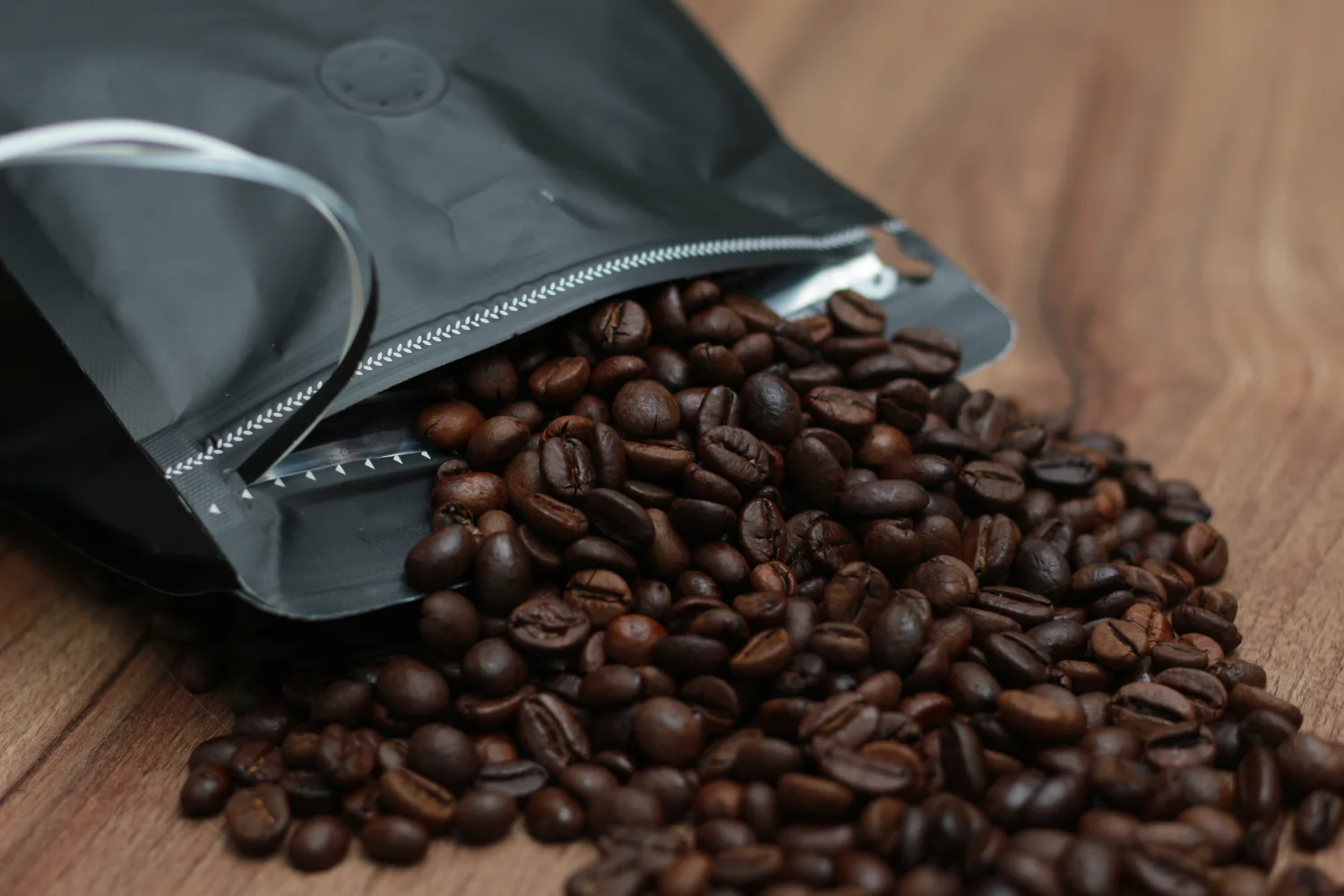
Complaints look random: puffy bags, early staling, or “leaks out of nowhere.” Most brands treat valves like a freshness upgrade and then chase problems batch after batch.
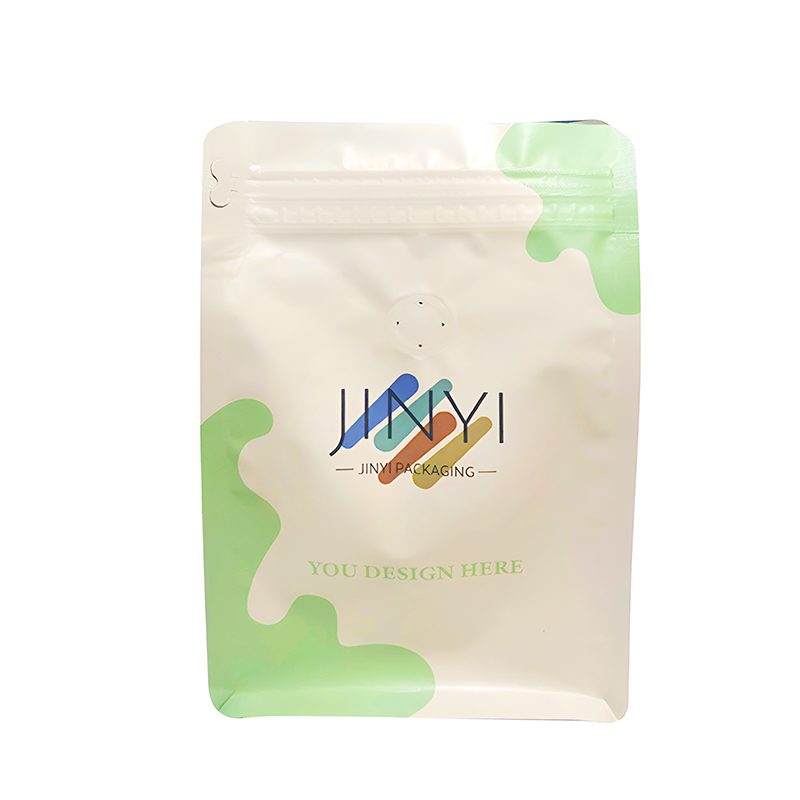
You need a valve only when CO₂ pressure is the dominant risk. If oxygen control and seal/valve integrity are the dominant risks, a coffee venting valve sticker can become an extra failure interface that accelerates aroma fade.
See coffee packaging solution options (valve and no-valve structures)

The clean way to decide is to separate two endpoints: (1) pack stability (swelling and seal stress) and (2) sensory freshness (aroma and staling). A valve can improve one while hurting the other if the system is not designed as one unit.
What does “need a valve” actually mean: pack stability or sensory freshness?
Most teams say “freshness,” but the real trigger is often “stop the bag from swelling.” Those are not the same problem, and they do not share the same fix.
In practice, “need” means CO₂ pressure is high enough to deform panels or load the seal window before the product reaches the customer. Sensory freshness needs tight oxygen control and low leak risk.
Two endpoints, two failure engines
| Endpoint |
What “failure” looks like |
Primary driver |
Best measurement |
| Pack stability |
Puffy bag, panel bowing, seal creep, burst risk |
CO₂ release + temperature cycles |
Package deformation trend, burst/creep test |
| Sensory freshness |
Aroma fade, stale/oxidized notes, flat cup |
Oxygen exposure + volatile loss |
Headspace O₂ trend + sensory checkpoints |
Evidence (Source + Year): Illy & Viani, Espresso Coffee: The Science of Quality (2nd ed., 2005); Robertson, Food Packaging: Principles and Practice (3rd ed., 2013)
How do roast level and grind state change the CO₂ timeline and risk window?
Some coffees are “pressure-loaded” early, while others are “oxygen-limited” from day one. If you ignore the CO₂ timeline, a valve decision becomes guesswork.
Darker roasts and ground coffee typically release CO₂ faster after roasting, so early pack-out can create swelling and seal stress. Whole bean and lighter roasts may show a different pressure profile, but aroma protection still depends on oxygen control.
CO₂ behavior drives when pressure becomes the boss
| Product state |
Typical risk pattern |
What fails first |
What to control first |
| Ground coffee |
Fast early degassing |
Swelling or seal creep if packed too early |
Pack-out timing + pressure path |
| Whole bean |
Slower, longer degassing |
Can still swell if packed very early |
Rest window + seal robustness |
| Darker roast |
Higher early CO₂ release tendency |
Puffy bag complaints show up sooner |
Pressure management (valve or timing) |
Evidence (Source + Year): Baggenstoss et al., “Influence of water quench cooling on degassing and aroma stability of roasted coffee” (2007); Shimoni & Labuza, “Degassing kinetics… in fresh roasted and ground coffee” (Journal of Food Process Engineering, 2000; DOI: 10.1111/j.1745-4530.2000.tb00524.x)
When does a coffee venting valve sticker truly help?
A valve helps when it removes a dominant failure engine: internal pressure that loads seals and deforms the pack before the shelf date even matters.
If the bag is swelling, the “best barrier film” still loses because pressure finds the weakest interface. A valve can buy stability and allow earlier packing—only if the valve bond and seal system stay tight.
Pressure-driven scenarios where valves can win
| Scenario |
Why pressure dominates |
Valve benefit |
What still must be validated |
| Early pack-out after roasting |
CO₂ release peaks while the pack is sealed |
Reduces swelling and seal stress |
Valve bond integrity + leak screen |
| Warm route / temperature cycling |
Gas expands and pressure spikes |
Vents spikes that would creep seals |
Seal creep resistance + thermal cycling |
| Large bag formats |
More gas volume + larger panels |
Improves pack appearance stability |
Panel support + headspace control |
Evidence (Source + Year): Walter et al., “Evaluation of Flexible Packages With Degassing Valves for Roasted and Ground Coffee” (ASIC Proceedings, 2008); Robertson, Food Packaging: Principles and Practice (3rd ed., 2013)
When does a valve create new failure modes: leaks, oxygen ingress, and aroma fade?
Many “mystery staling” cases are not coffee problems. They are interface problems. A valve adds a bonded component, and that component can become the first leak path.
If oxygen ingress is the dominant shelf-life limiter, a valve can backfire unless the laminate OTR, seals, and valve bonding are validated as one system under realistic handling and temperature swings.
Common valve-created failure modes
| Failure mode |
Root cause |
Fast diagnostic |
Corrective direction |
| Early aroma fade with normal-looking bags |
Slow oxygen ingress via valve bond or micro-channels |
Headspace O₂ trend test |
Upgrade system barrier + bonding process control |
| Intermittent leaks |
Weak bond, contamination, or placement into stress zone |
Dye penetration + peel/bond test |
Bond window redesign + cleanliness discipline |
| “Random” failures after hot/cold cycles |
Pressure cycling finds the weakest interface |
Thermal cycling + leak screen |
Seal/valve reinforcement + process repeatability |
Evidence (Source + Year): Robertson, Food Packaging: Principles and Practice (3rd ed., 2013); Smrke et al., coffee atmosphere dynamics and packaging effects (Food Packaging and Shelf Life, 2022)
How should brands choose: valve vs no-valve, without guessing?
“Valve vs no-valve” is not the real decision. The real decision is which failure engine is dominant on your route, and which interface is most likely to fail first.
As a flexible packaging manufacturer, we focus on keeping oxygen low, seals stable, and interfaces repeatable. That is why we treat the valve, laminate, and seal window as one system, not three separate parts.
A practical decision map and a validation checklist
| If your #1 complaint is… |
Most likely engine |
First lever |
Minimum validation |
| Puffy bags / seal creep |
CO₂ pressure |
Valve or pack-out timing |
Burst/creep + thermal cycling |
| Flat aroma / stale taste |
Oxygen ingress + volatile loss |
OTR + interface leak control |
Headspace O₂ trend + sensory checkpoints |
| “Random” leaks in distribution |
Interface weakness |
Seal/valve bond robustness |
Dye penetration + bond peel + drop/vibe |
Get a valve/no-valve spec checklist for your coffee format
Evidence (Source + Year): Illy & Viani, Espresso Coffee: The Science of Quality (2nd ed., 2005); Robertson, Food Packaging: Principles and Practice (3rd ed., 2013)
What is a realistic test plan for coffee valve decisions?
Most teams test only one thing: “does the bag look puffy.” That is incomplete, because a bag can look perfect and still taste stale.
A useful plan tracks pressure behavior, oxygen behavior, and interface integrity together. If you do not measure headspace oxygen and leak risk, you cannot prove the valve is helping freshness.
Minimal, repeatable validation sequence
| Test |
What it proves |
Pass/Fail signal |
Common mistake |
| Thermal cycling |
Pressure spikes and interface stress |
No new leaks, stable deformation |
Testing only at room temperature |
| Headspace O₂ tracking |
Oxygen ingress over time |
O₂ remains low and stable |
Measuring only day-0 oxygen |
| Seal + valve leak screen |
Micro-channels and bond weakness |
No dye penetration, strong peel |
Ignoring contamination and placement |
| Sensory checkpoints |
Real freshness outcome |
No early aroma flattening |
Relying on appearance alone |
Evidence (Source + Year): Nicoli et al., “Shelf-Life Testing of Coffee and Related Products: Uncertainties, Pitfalls, and Perspectives” (Food Engineering Reviews, 2009); Smrke et al. (Food Packaging and Shelf Life, 2022)
Conclusion
A valve is a pressure tool, not a guaranteed freshness upgrade. If you want fewer failures, match roast/timeline to barrier, seals, and a validated valve interface—then contact us to spec it correctly.
Talk to us about coffee valve vs no-valve packaging
About Us
Brand: JINYI
Slogan: From Film to Finished—Done Right.
Website: https://jinyipackage.com/
Our mission: JINYI is a source manufacturer for custom flexible packaging. We deliver reliable, practical packaging specs so brands spend less time on back-and-forth and get predictable quality, lead times, and real-world performance.
Who we are: JINYI specializes in custom flexible packaging solutions with 15+ years of production experience serving coffee, food, snack, pet food, and daily consumer brands. We run standardized production with gravure printing lines and HP digital printing systems to support both stable high-volume runs and flexible short runs with consistent quality.
FAQ
- Do all roasted coffees need a degassing valve? No. Only coffees with pressure-driven risk on your pack-out timeline truly need one.
- Can a valve make coffee stale faster? Yes, if the valve bond or system barrier creates extra oxygen ingress or micro-leaks.
- Is a “no-valve” bag always safer for freshness? Not always. If you pack too early, pressure can damage seals and create leaks that ruin both stability and flavor.
- What is the fastest way to confirm valve leakage? Use a leak screen (dye penetration) and track headspace oxygen over time.
- What matters more: valve brand or laminate structure? The system matters most: laminate OTR, seal window, valve placement, and bonding process repeatability.