Returns feel random until your coffee hits compression, vibration, and temperature swings at scale. Your bag “looks sealed,” but the route teaches it how to fail.
Most e-commerce coffee returns are predictable when I test the full system—pouch + coffee + shipper—using stress-first compression and vibration, then track micro-leak trends and fit drift before launch.
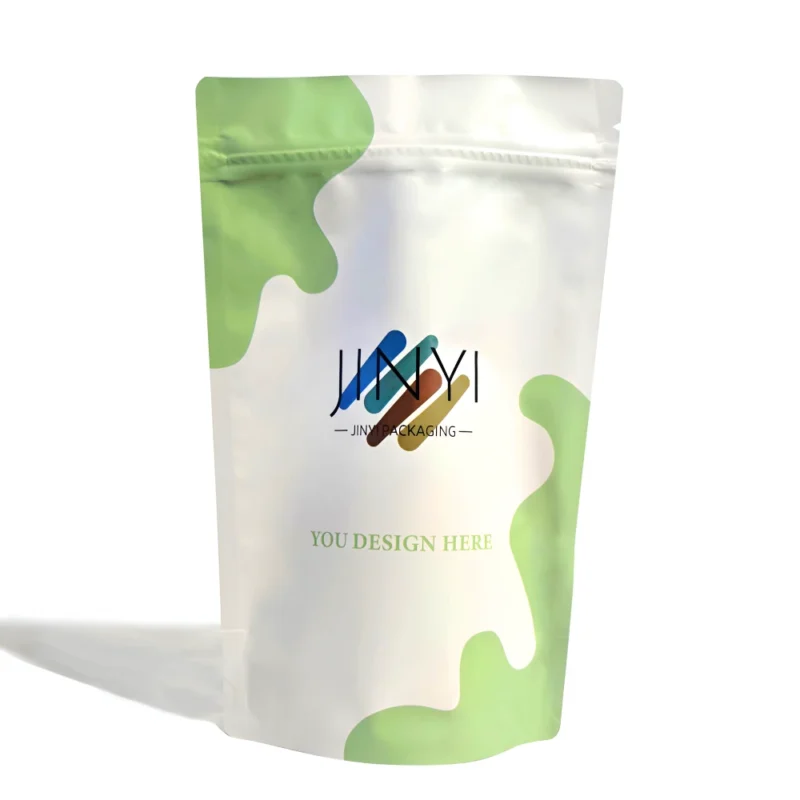
See stand-up pouch options built for e-commerce abuse

I do not start by upgrading film or chasing a single barrier number. I start by defining the return pattern, then I recreate the route stress in the same order it happens. That is how I separate seal problems from barrier problems and lock a spec that survives scale.
What do “returns” actually mean in e-commerce coffee orders?
Returns are expensive because they hide the real failure. Customers rarely say “micro-channel at the corner.” They say “stale,” “flat,” “smells weak,” or “bag arrived messy.”
I translate every return into a specific failure mode, a location, and a trigger. Then I build the test around that trigger instead of guessing.

How I break returns into measurable failure modes
| Return complaint |
What it usually means |
Where I look first |
What I test first |
| “Coffee tastes flat” |
Oxygen ingress or aroma loss path |
Seal edges, corners, zipper zones |
Stress-first leak trend checks |
| “Bag looks fine, but smell is weak” |
Slow micro-leak or valve drift |
Valve bond, top seal land |
Compression + vibration, then odor checks |
| “Box arrived wet/oily” |
Pinholes or seam/channel leaks |
Rub points and fold stress zones |
Rub + compression under real pack-out |
| “Zip opened during shipping” |
Fit drift or tolerance stack-up |
Zipper engagement + top-zone flatness |
Compression cycles + false-open rate |
From a production standpoint, this matters because I can only fix what I can name. If I label everything as “barrier,” I will spend money and still get the same reviews.
Where do compression and vibration actually happen in the parcel network?
Most brands imagine a gentle ride in a box. Real parcels see stacked load, conveyor pinch points, and last-mile squeeze. Vibration is constant and low-level, and it turns small defects into repeatable failures.
I map stress by moments. If I cannot describe where compression happens, I cannot choose the right compression fixture, dwell time, or stacking load.
A simple route-stress map I use for e-commerce coffee
| Network moment |
Dominant stress |
Typical outcome if margin is low |
| Sortation + conveyor handling |
Pinch + short compression spikes |
Top zone warps, zipper engagement drift |
| Line-haul transport |
Long vibration exposure |
Corner rub grows into pinholes |
| Last-mile bag/vehicle squeeze |
Off-axis compression + tilt |
Seal edge fatigue, scuff, false opens |
| Doorstep drops and impacts |
Shock + rebound |
Weak corners become visible leaks |
In real manufacturing, this detail often determines whether your spec survives scale. If the route gives you long vibration plus repeated squeeze, a “lab-perfect” seal can still drift into week-4 complaints.
Why do micro-leaks predict more complaints than barrier numbers (OTR)?
Barrier numbers are not useless, but they are not the first thing I trust. Oxygen does not care about your OTR chart if it can take a shortcut through a micro-channel.
I prove seal integrity under stress first. Only after I see stable seal performance do I optimize barrier targets for the shelf-life you want.
Leak vs barrier: what I use to decide direction
| Signal |
What it suggests |
My next action |
| Complaints spike after shipping, not at packing |
Stress-trained micro-leaks |
Increase seal margin + fix rub points |
| Consistent decline even without shipping abuse |
Barrier-limited shelf life |
Upgrade barrier structure + verify seal stays stable |
| “Looks sealed” but odor is inconsistent by batch |
Process drift and tolerance stack-up |
Lock seal window + QC gates |
From our daily packaging work, we see that “better barrier” is often a costly detour. A small seal window problem can erase any barrier upgrade.
How do I lock seal window, hot tack margin, seal land width, and cooling?
Seal performance is a process margin problem as much as it is a material problem. If the seal window is narrow, small shifts in speed, temperature, or pressure will stack up into weak zones that still look sealed.
I lock the seal system first, because it is the foundation for every feature you add later.
Seal controls I lock before e-commerce launch
| Control point |
What goes wrong at scale |
What I do about it |
| Seal window |
Drift pushes seals to edge of acceptable |
Widen process margin and lock settings by line |
| Hot tack margin |
Early handling leaves micro-channels |
Verify hot-state integrity under real line speed |
| Seal land width |
Thin edges become stress concentrators |
Set minimum land width + monitor variance |
| Cooling + dwell |
Interface stays soft and deforms |
Control cooling time before stacking/boxing |
From a production standpoint, this matters because I cannot “inspect quality into” a weak seal margin. I need the process to be stable before I ship to the parcel network.
How do CO₂ and valves turn “puffy bags” into a testing issue?
CO₂ degassing changes internal pressure and changes how the pouch loads the seal edges. A puffy bag is not only a cosmetic problem. It can amplify corner stress and rub inside the shipper box.
I treat valves as a functional component with its own bond zone and its own drift risk. I test valve bonds after compression and vibration, not only right after production.
What I check for CO₂ + valve systems
| Risk |
What it creates |
How I test it |
| Pressure inflation |
Seal edge loading and panel bulge |
Compression under expected internal pressure state |
| Valve bond drift |
Slow odor loss or sudden bond failure |
Vibration + compression cycles, then bond inspection |
| Feature stack-up |
New stress points and rub zones |
Full-system pack-out test, not pouch-only |
How does pack-out turn small defects into big returns?
The shipper box is not neutral. A tight box pinches seals. A loose box lets the pouch accelerate and rub corners. Headspace and dunnage decide whether the route stress is absorbed or concentrated.
Use a pouch spec + pack-out rule set that is proven under compression and vibration

Pack-out rules I include in the spec
| Pack-out variable |
What happens when it is wrong |
What I standardize |
| Headspace |
Pouch gains momentum and rubs corners |
Target fill + headspace window by SKU |
| Dunnage placement |
Point loads and pinch at seal edges |
Protect corners and top-zone, not just “add filler” |
| Box size |
Too tight pinches, too loose abrades |
Case fit rule that controls movement |
In real manufacturing, this detail often determines whether your “good pouch” stays good after the first 500 shipments.
How do rub points create scuff, pinholes, and “looks damaged” refunds?
Abrasion is both a functional risk and a perception risk. Scuffing creates dust and reduces friction consistency. It also creates corner wear that can grow into pinholes, especially when vibration runs for hours.
I treat rub points as “failure starters.” I locate them inside the shipper and at pouch-to-pouch contact, then I redesign pack-out or add protection where it matters.
Common rub points and what I change
| Rub point |
Typical symptom |
My fix |
| Corner-to-box wall |
Corner whitening, pinholes later |
Corner buffers + tighter movement control |
| Pouch-to-pouch sliding |
Panel scuff and dust |
Stabilize stack and add separators |
| Valve/zipper hard spots |
Print scuff and localized wear |
Reposition, protect, or change orientation |
From our daily packaging work, we see “looks damaged” refunds even when the seal holds. Customers judge quality by appearance first.
What is my stress-first protocol that predicts returns before launch?
I do not run one test and call it done. I run a sequence that mirrors the route: compression exposure, vibration exposure, then temperature swings if your network includes hot/cold. Only after stress do I evaluate leak trends, feature drift, and appearance.
I test the system: pouch + coffee + shipper. I do not let a pouch “pass” on a table and fail in a box.
My stress-first sequence (simple version)
| Step |
Purpose |
What I record |
| Compression exposure |
Load seals and features the way stacking does |
Seal edge deformation, zipper/valve drift |
| Vibration exposure |
Train abrasion and micro-slip failure modes |
Corner wear trend, scuff map |
| Temperature swing (if needed) |
Reveal stiffness drift and bond weakness |
Interface changes, curl, odor retention shifts |
| Post-stress checks |
Find slow failures early |
Micro-leak trend, appearance grade, feature function |
What QC gates do I measure so results don’t drift after scale?
Passing a launch test once is not the goal. The goal is repeatability at scale. That means I need measurable QC gates that track the same risk paths that create returns.
I watch drift by time, by roll, and by operator rhythm. I want the line to stay inside a window, not “make good parts when someone is careful.”
QC gates that match e-commerce failure modes
| QC metric |
Why it matters |
What it prevents |
| Seal strength drift by time |
Shows process margin stability |
Week-later leak complaints |
| Seal land width variance |
Controls edge stress concentration |
Corner micro-leaks |
| Valve bond consistency |
Valves are a new failure path |
Odor loss and bond failures |
| Scuff/rub defect rate |
Predicts perception refunds |
“Looks damaged” returns |
From a production standpoint, this matters because e-commerce returns do not forgive small drift. If your line window is narrow, the parcel network will find it.
Which Baseline, Upgrade, and Premium packages do I shortlist fast?
I do not sell one perfect spec. I give 2–3 packages with clear risks and clear validation. That lets you choose based on budget, return tolerance, and launch timeline.
2–3 spec packages I present (and what can still fail)
| Package |
What it stabilizes |
What can still fail |
| Baseline |
Seal window + hot tack margin + basic pack-out rules |
Heavy abrasion routes if movement is not controlled |
| Upgrade |
Better abrasion control + tighter case fit + feature drift checks |
Valve/zipper changes can reset performance |
| Premium |
Locked validation protocol + QC gates + change-control rules |
Wrong fulfillment pack-out can still create rub starters |
Conclusion
If I can reproduce the route, I can predict the return. I use stress-first compression and vibration to prove seal integrity, then I lock pack-out and QC so scale stays stable.
FAQ
- Do I need better barrier film if coffee tastes flat in week 4?
Not always. I prove seal integrity under stress first, because micro-leaks can defeat great barrier numbers.
- Why do bags pass inspection but fail after shipping?
Because compression and vibration can “train” slow failures. A bag can look sealed and still develop micro-channels over time.
- Are valves always safe for e-commerce?
Valves add a bond zone and a risk path. I test valve bond drift after compression and vibration, not just on day one.
- How important is the shipper box compared to the pouch?
The box can amplify failure. Bad case fit and headspace can create pinch and rub points that turn small defects into returns.
- What should I measure for QC before launch?
I track seal strength drift, seal land width variance, valve bond consistency, and scuff/rub defect rate—because those map to return patterns.