Many buyers ask for “high barrier” first. Then cost rises, sealing gets harder, and the structure still may not match the product.
I choose the best material structure by starting with product risk, then matching barrier, sealant, filling reality, route stress, and budget. The strongest-looking structure is not always the best one.
See pouch structures built around real product risk, not material guesswork.

I do not treat material structure as a list of layer names. I treat it as a working system that must protect the product, seal well, and stay practical in production and distribution.
Why Should Buyers Start with Product Risk Before Choosing Material Structure?
A material choice gets distorted when the product’s real failure path is still unclear.
I start with product risk because moisture, oxygen, light, aroma loss, puncture, and transport abrasion do not threaten every product in the same way.
My engineering view
I never begin by asking how many layers the customer wants. I begin by asking what damages the product first. If the product fears moisture, I think one way. If it fears oxidation, I think another way. If it fears puncture, rough shipping, or aroma loss, the structure logic shifts again. From a production standpoint, this matters because the meaning of the structure comes from the product’s weak point. When that weak point is undefined, buyers often overbuild one function and miss another. I do not choose material first. I define loss first, then choose structure.
What Does “Material Structure” Really Mean in Flexible Packaging?
A material code is only the surface. It does not explain what each layer is doing.
I define material structure as functional division, because each layer usually serves printing, barrier, stiffness, sealability, or durability in a different way.
My engineering view
I do not read PET/VMPET/PE or PET/AL/PE as just a code. I read it as a work assignment. One layer may protect print. One may give stiffness. One may add barrier. One may make the pouch seal reliably. One may improve puncture or flex performance. That is why I do not treat structure as a layer-count contest. I treat it as task allocation. If a buyer only memorizes material abbreviations, the structure stays too flat. When I split the job of each layer, I can see what the structure protects, where it compromises, and what it expects from production.
How Do Moisture, Oxygen, Light, and Aroma Loss Change the Right Structure?
“High barrier” sounds clear, but it often hides four different problems.
I separate moisture, oxygen, light, and aroma loss because each one changes the structure decision differently, and not all of them matter equally for every product.
My engineering view
I do not accept “we need high barrier” as a complete answer. I ask which barrier and why. Products that go soft need better moisture control. Products that oxidize need better oxygen control. Products that fade under light need opacity. Products with sensitive aroma need retention, not only simple barrier language. In real manufacturing, this detail often determines whether a structure is targeted or just expensive. I choose by the first important loss, not by a vague wish to maximize everything at once. Good structure selection is usually less about stacking protection and more about putting the strongest protection in the right place.
When Is an Aluminum Structure Truly Necessary—and When Is It Overbuilt?
Aluminum often looks like the safe answer. It is not always the smart answer.
I choose aluminum only when product sensitivity, shelf-life target, or storage and route conditions justify that level of protection and trade-off.
My engineering view
Many buyers automatically read aluminum as more professional and more secure. I do not use it that way. Aluminum can bring strong barrier value, especially where oxygen, light, and aroma protection matter a lot. But it also removes visibility, can raise cost, and changes how the pouch feels and performs. From our daily packaging work, we see that aluminum becomes wasteful when the product risk does not truly need it. I treat it as a strong-response tool, not a prestige symbol. It earns its place only when the product, shelf life, or environment is demanding enough to justify its cost and its limits.
How Should Buyers Compare Clear, Metallized, and Foil Structures?
These three choices are often treated like a simple ladder from weak to strong.
I compare them as different business choices, because visibility, barrier, feel, shelf effect, and cost all move with the structure type.
My engineering view
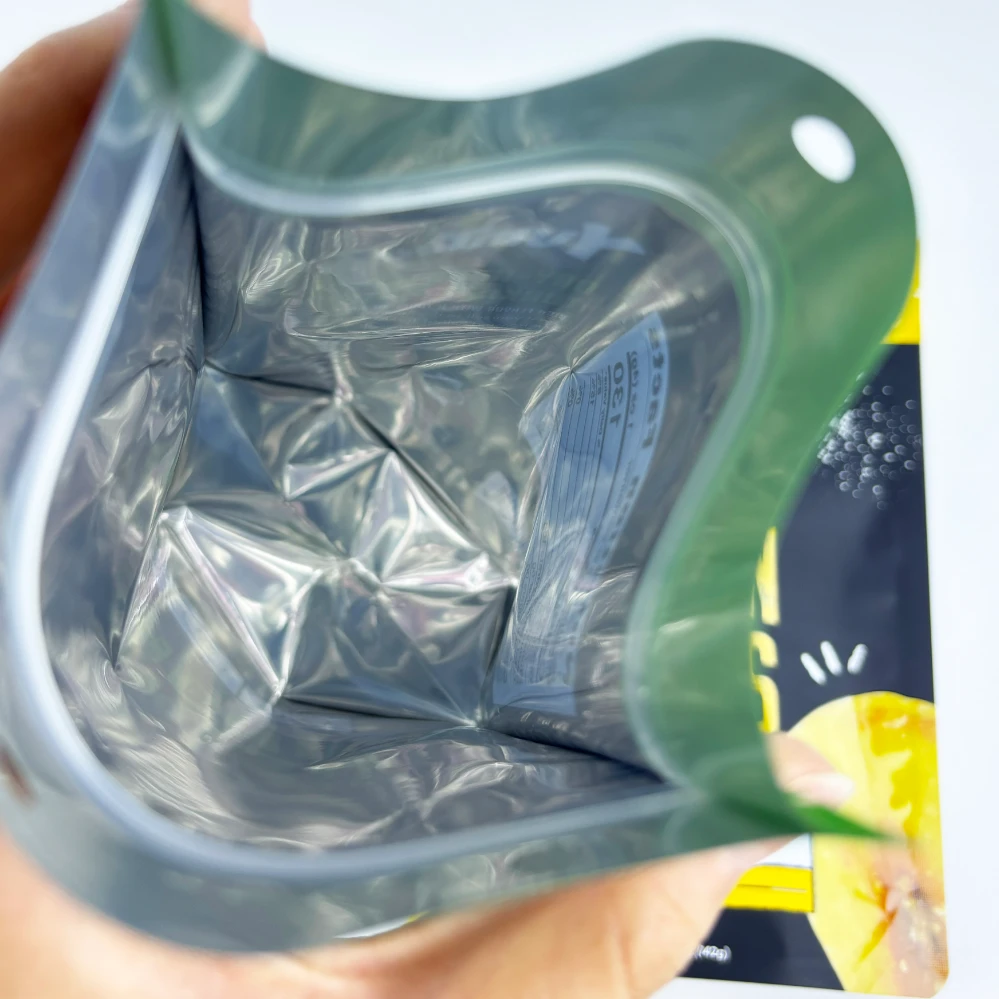
Clear structures support product visibility, but their protection range is usually narrower. Metallized structures often sit in the middle and can offer a useful balance between protection and cost. Foil structures usually push harder toward stronger protection and tighter shelf-life control. But I never read these as high-grade and low-grade choices. I read them as different ways to trade protection, display, cost, and consumer perception. From a production standpoint, this matters because the wrong comparison makes buyers think they are shopping for the strongest format, when they are really shopping for the best fit between product risk and commercial reality.
Why Does Sealant Layer Choice Matter as Much as the Outer Structure?
Many buyers focus on the outer and barrier layers, then ignore the layer that actually has to close the pouch.
I give the sealant layer equal weight because seal window, contamination tolerance, and opening behavior often decide whether the pouch stays reliable in real production.
My engineering view
I pay very close attention to the sealant layer. It affects whether the pouch seals cleanly, whether the process window is forgiving enough, and whether the consumer opens the pouch in a predictable way. From a production standpoint, this matters because a pouch is not judged by barrier data alone. It is judged by whether it can be sealed consistently on real equipment under real conditions. Even a strong outer structure can fail early if the seal layer is poorly matched to contamination risk, heat input, or use behavior. Good structure starts with barrier logic, but it survives through seal performance.
How Do Filling Method and Production Conditions Influence Material Structure?
A structure can look right in theory and still become difficult once it reaches the line.
I judge structure through the filling process because manual, semi-automatic, and fully automatic production place very different demands on stiffness, heat sealing, and abuse resistance.
My engineering view
Material structure does not work for the product only. It has to work for the process too. Powders can contaminate seals. Granules can impact drop zones. Liquids and semi-liquids change stress behavior and sealing risk. Manual filling tolerates some things that automatic lines will not. In real manufacturing, this detail often decides whether a structure remains stable beyond the sample room. I do not trust static barrier thinking by itself. I want to know how the structure behaves when actual filling speed, actual contamination, and actual line pressure enter the picture.
How Do Pouch Size, Product Weight, and Route Stress Affect Structure Choice?
The same product can need a different structure once size, weight, or route conditions change.
I choose structure with size, fill weight, and shipping stress in mind because pressure, flexing, and abrasion do not stay constant across all pouch formats.

My engineering view
A larger pouch changes stress distribution. A heavier fill raises load at the base and seals. A longer route adds more rubbing, compression, and handling damage. That is why I do not read structure as a fixed table. I place it inside the actual distribution chain. Big pouches, heavy fills, e-commerce routes, and long-distance shipments often reveal weaknesses much faster than small, local retail programs do. From our daily packaging work, we see that “enough barrier” is not the same thing as “enough structure.” Route stress can make the difference between a structure that looks sufficient and one that actually survives.
Why Can Two Similar Products Need Different Material Structures?
Similar categories often hide very different operating conditions.
I do not copy structures only by category name because shelf life, route, fill method, window need, and size can create different structure priorities even inside the same product class.
My engineering view
Two snack products may look similar but have different oil levels, different shelf-life targets, different display needs, and different routes. Two powders may differ in fill size, moisture sensitivity, or whether a window is needed. That is why I do not treat structure as a category template. I treat it as a response to specific conditions. In real manufacturing, this detail often explains why one buyer can copy a structure successfully while another cannot. Small differences in the commercial path can create large differences in the structure that actually works.
How Should Buyers Balance Protection, Appearance, and Cost in One Structure?
The strongest technical answer is not always the strongest business answer.
I balance protection, appearance, and cost by asking what the product truly needs and what the business can realistically support without wasted structure.
My engineering view
Some structures protect well but lose transparency. Some print beautifully but have tighter protection limits. Some are cost-friendly but demand a shorter shelf-life target or gentler route. That is why structure selection is not a pure technical exercise. It is also a commercial one. I do not ask only what is safest. I also ask whether the product should pay for that level of protection. The best structure is not the one with every benefit maximized. It is the one with the most stable balance between protection, appearance, and cost.
What Should Buyers Test Before Confirming a Material Structure?
A structure can look convincing in discussion and still fail once it becomes a real pouch.
I confirm structure through testing because seal performance, route abuse, leakage risk, barrier targets, pouch appearance, and opening behavior all need validation before mass production.
My engineering view
I do not treat structure approval as a guess based on experience alone. I want to see how it seals, how it looks after conversion, how it handles transport-like abuse, and whether its barrier and opening behavior still match the target. In real manufacturing, this detail often determines whether a structure stays reliable outside the sample room. A structure is not mature because it sounds reasonable. It is mature because it remains reasonable after testing. Without validation, the structure is still only a well-worded hypothesis.
Which Material Structure Fits Your Product Best: The Strongest One or the Most Suitable One?
Many buyers still search for a universal strong structure. Flexible packaging rarely works that way.
I believe the best structure is usually the most suitable one, because it protects the product’s weak point without adding unnecessary burden in production, use, or cost.
My engineering view
This is the conclusion I come back to most often. The best structure is not the one with the highest-looking specification. It is the one that protects the product, seals consistently, survives the route, fits the shelf plan, and stays within a rational budget. From our daily packaging work, we see that buyers who chase a “universal strong structure” often pay for protection they do not need while still missing the real weak point. I choose structures that are strong enough in the right place and restrained enough everywhere else. That is what makes them commercially and technically useful.
About Us
JINYI — From Film to Finished—Done Right. I believe good packaging is not only about appearance. It should work reliably in transport, on shelf, and in the customer’s hands. I focus on custom flexible packaging with 15+ years of production experience. Our factory runs multiple gravure printing lines and HP digital printing systems, so I can support both stable large-volume production and flexible custom work with clearer lead times and steadier quality.
FAQ
Should I choose structure by the number of layers?
No. I choose by function. I want to know what each layer is doing for protection, sealing, stiffness, or durability.
Does aluminum always mean a better structure?
No. I use aluminum when the product and shelf-life target truly justify that level of protection and cost.
Why does the sealant layer matter so much?
Because the pouch must seal reliably on real equipment. Strong barrier layers cannot save a weak sealing layer.
Can two similar products use different structures?
Yes. Shelf life, route, fill method, size, and display needs can shift the best structure even inside the same category.
What should I validate before mass production?
I validate sealing, leakage risk, route abuse response, barrier fit, finished appearance, and opening behavior before approval.