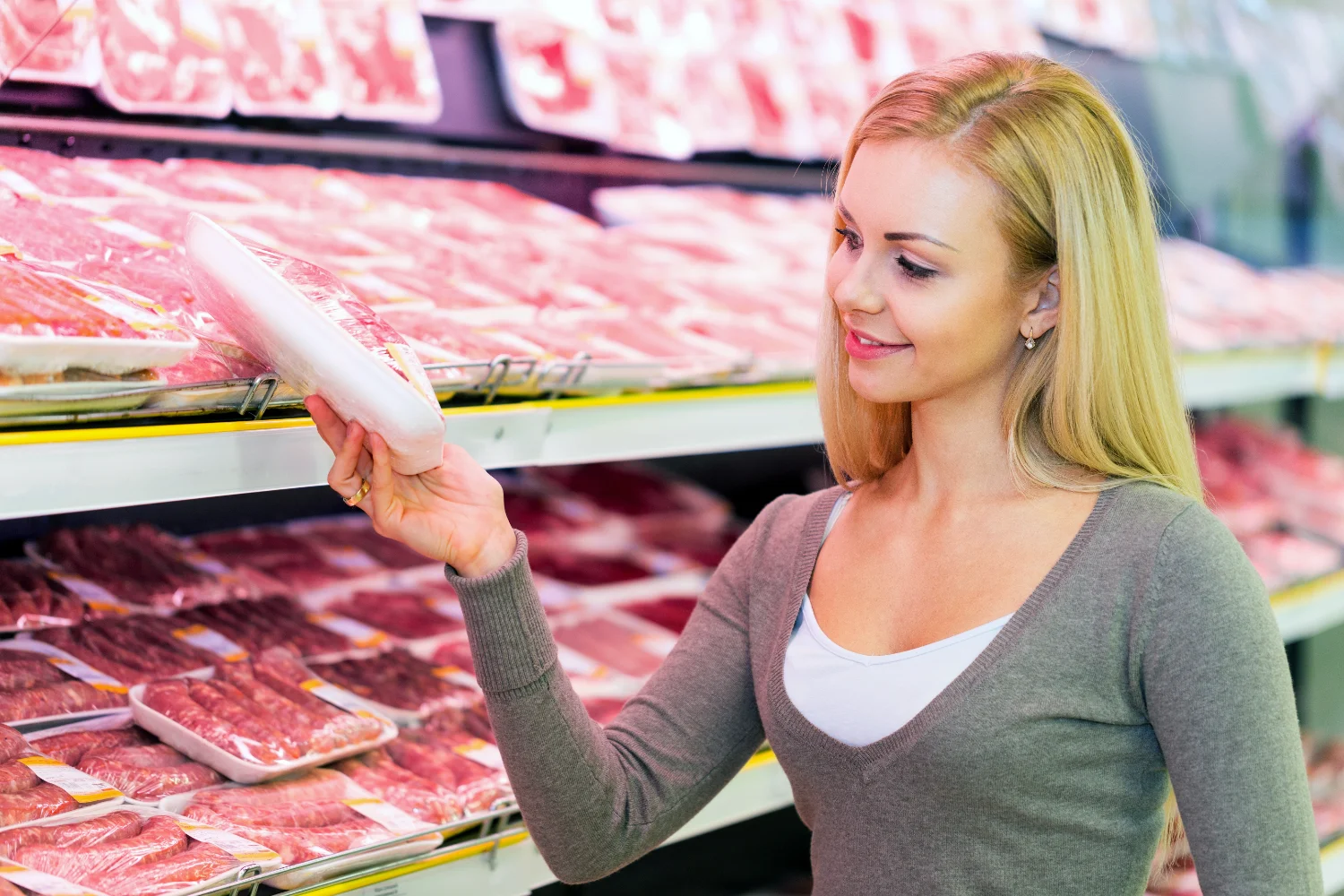
Protein now sells health, fullness, and value in one phrase. That makes “high protein” feel like an easy shortcut, even when the rest of the product tells a weaker story.
A high-protein claim does not automatically mean better nutrition. Better judgment starts by separating protein amount, protein source, what comes with that protein nutritionally, the food’s real role in the diet, and whether the front-of-pack claim is stronger than the evidence on the full label.

That distinction matters because protein has become one of the strongest food signals in the market. Consumers often read “high protein” as healthier, more premium, more satisfying, and more worth the price. Sometimes that instinct points in a useful direction. Sometimes it hides an unbalanced product with too much sodium, too much added sugar, or too much saturated fat. A stronger way to judge a high-protein food is to ask a fuller set of questions. How much protein is actually here? Where does that protein come from? What else comes with it? Is this product solving a real dietary need or simply attaching protein to a familiar snack format? Those questions are more demanding, but they also lead to better buying decisions.
For food brands, better packaging trust comes from helping shoppers understand protein source, nutrition balance, and product role quickly instead of relying on a protein claim alone.
Why Has “High Protein” Become Such a Powerful Food Signal?
Consumers now look for protein with unusual intensity. That has turned one nutrient into a major shopping shortcut.
High protein became a powerful food signal because consumers increasingly associate it with health, satiety, strength, and value, even when many still do not have a clear framework for judging whether more protein is actually needed.
Why protein now shapes first impressions so strongly
The rise of protein as a consumer signal is not a minor trend. It now works as a broad health cue across snacks, breakfast foods, beverages, bars, cereals, desserts, and convenience meals. IFIC’s 2025 findings show that 70% of consumers say they try to consume protein, and 23% report following a high-protein diet in the past year. The same body of survey work also shows that “good source of protein” has become one of the strongest criteria consumers use when defining a healthy food. That matters because it explains why shoppers often approach protein claims with a positive bias before reading deeper. A product that says “high protein” can feel functionally superior before the shopper evaluates sugar, sodium, fat, fiber, or actual dietary need. Protein has become emotionally efficient. It signals discipline, fullness, and modern nutrition in a way many other claims do not. The problem is that a strong signal can still be incomplete. Popularity explains why the claim matters. It does not prove the claim tells the whole nutrition story.
| Why “high protein” feels powerful |
Why that can mislead |
| It suggests strength and fullness |
Those benefits depend on the full product, not the claim alone |
| It sounds modern and functional |
Modern branding can outrun real nutrition quality |
| It gives shoppers a quick rule |
Quick rules often hide the bigger label story |
Evidence (Source + Year): IFIC Protein Perceptions Survey (2025); IFIC Food & Health Survey (2025).
What Does a “High Protein” Claim Actually Mean on a Label?
Many shoppers read “high protein” as a general health verdict. Legally, it is much narrower than that.
A “high protein” claim is a regulated nutrient-content claim. It signals that the product reaches a defined threshold for protein, but it does not automatically mean the full product is nutritionally better.
Why claim boundaries matter
One reason protein claims feel so persuasive is that they sound both scientific and simple. But under FDA rules, they have a technical meaning. In the Food Labeling Guide, FDA explains that a “good source” claim typically applies when a product contains 10% to 19% of the Daily Value for the nutrient, while a “high” claim generally applies when a product contains at least 20% of the Daily Value. This matters because the claim is real, not imaginary. It tells consumers that the product meets a threshold for protein. But the claim still says only one thing. It says nothing by itself about added sugars, sodium, saturated fat, fiber, or whether the product fits the consumer’s actual diet. A label can meet the standard for a protein claim while remaining weak in other nutritional areas. That is why a protein claim should be treated as a narrow fact, not a full verdict. It tells shoppers something useful. It does not tell them everything they need to know.
| Protein claim |
What it generally means |
| Good source of protein |
About 10%–19% Daily Value |
| High protein |
At least 20% Daily Value |
Evidence (Source + Year): FDA Food Labeling Guide; 21 CFR 101.54.
Why Doesn’t More Protein Automatically Mean Better Nutrition?
Consumers often see one stronger nutrient and assume the whole food has improved. That is the central mistake in this category.
More protein does not automatically mean better nutrition because protein quantity is only one feature of a food, while nutrition quality depends on the total package that comes with it.
Why protein grams can hide a weaker product story
A product can legitimately contain more protein and still remain nutritionally disappointing. This happens because the consumer does not eat protein in isolation. A protein-fortified cookie may still be a cookie with significant added sugar or saturated fat. A salty snack with added protein may still be a sodium-heavy snack. Harvard’s recent nutrition writing is helpful here because it emphasizes the “protein package.” That phrase matters. It reminds consumers that protein arrives with other nutrients and other burdens. A steak brings protein, but it may also bring a meaningful amount of saturated fat. Lentils may provide less protein per bite than some meats, but they also bring fiber and virtually no saturated fat. This is why protein quantity and nutrition quality cannot be treated as synonyms. Protein grams answer only one question: how much protein is present. They do not answer whether the food is balanced, whether it is a smart daily staple, or whether the product has become a marketing upgrade more than a nutritional one.
| What “more protein” tells you |
What it does not tell you |
| The product contains more protein |
Whether the full nutrition profile improved |
| The product may support certain needs |
Whether the source and balance are strong |
| The front claim is real |
Whether the product deserves a health halo |
Evidence (Source + Year): Harvard Nutrition Source and Harvard 2025–2026 dietary guidance commentary on the “protein package.”
Why Does the Protein Source Matter as Much as the Protein Amount?
Twenty grams of protein can look identical on a label. Nutritionally, it can still arrive in very different forms.
Protein source matters because animal and plant sources often bring different nutrients, fats, sodium levels, and broader health implications along with the protein itself.
Why source changes the judgment
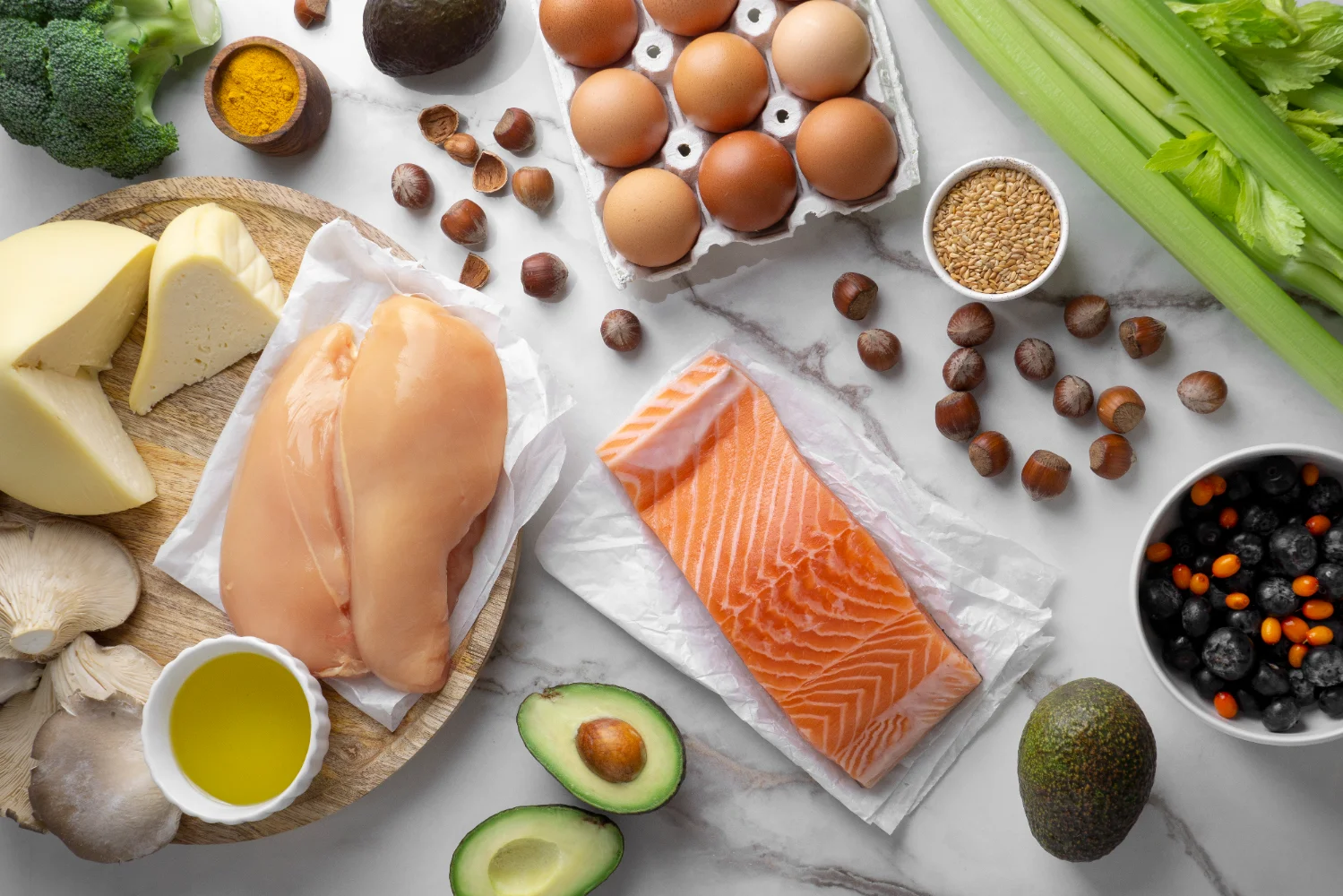
The consumer question should never stop at “How much?” It should continue to “From what?” Protein from fish, beans, lentils, yogurt, eggs, poultry, nuts, or processed meat does not come with the same nutritional company. Harvard Health explains this clearly by emphasizing that strong protein choices should be judged by their broader nutrient profile. Fish may bring omega-3 fats. Beans and lentils bring fiber, folate, potassium, and iron. Nuts and seeds may contribute healthy fats and minerals. Some meats, especially processed meats, may bring higher sodium or more saturated fat. Harvard’s more recent population-level discussion also strengthens this point by showing that a higher plant-to-animal protein ratio is associated with lower cardiovascular and coronary heart disease risk in long-term research. That does not mean all plant protein is automatically superior in every situation or that all animal protein is weak. It means the source changes what the protein package looks like, and that changes the health judgment. Consumers should care about what rides in with the protein, not only the protein itself.
| Protein source |
What often comes with it |
| Fish |
Protein plus omega-3 fats |
| Beans and lentils |
Protein plus fiber, folate, potassium, and iron |
| Processed meats |
Protein, but often also higher sodium and more processed structure |
| Dairy and yogurt |
Protein plus calcium, but the full product can still vary in sugar and fat |
Evidence (Source + Year): Harvard Health (2023); Harvard Chan School commentary on plant versus animal protein (2024).

What Does the Rest of the Nutrition Panel Tell You That the Protein Claim Does Not?
The protein claim highlights one number. The Nutrition Facts panel shows what kind of food that number lives inside.
The rest of the nutrition panel shows whether a high-protein food also carries high sodium, added sugars, or saturated fat, and whether it offers useful nutrients such as fiber, calcium, iron, or potassium.
Why the nutrition panel still carries the real balance story
Consumers sometimes assume that once a food is labeled high protein, they can stop reading. That is exactly when mistakes begin. FDA’s guidance on the Nutrition Facts label makes the broader hierarchy clear. Consumers are encouraged to choose foods lower in saturated fat, sodium, and added sugars, and to favor foods with more fiber, vitamin D, calcium, iron, and potassium. That means a product with more protein can still be nutritionally weak if the rest of the panel leans in the wrong direction. A high-protein cereal bar that also carries substantial added sugar may not deserve the same confidence as a high-protein yogurt with lower added sugar and useful calcium. A high-protein savory snack may still be too sodium-heavy for regular use. This is why the full panel matters so much. It converts the protein claim from a marketing headline into a measurable nutrition context.
| Nutrition check |
Why it matters alongside protein |
| Added Sugars |
A protein boost does not erase a sugar-heavy formula |
| Sodium |
High protein can still come with a salty product structure |
| Saturated Fat |
Protein does not cancel fat quality concerns |
| Fiber and key micronutrients |
These show whether the product gives more than protein alone |
Evidence (Source + Year): FDA Nutrition Facts Label Guidance (2024).
For food packaging, clearer front-to-back hierarchy helps shoppers judge whether the protein story is actually supported by the full nutrition panel.
Do Consumers Even Need More Protein—or Just Better Protein Choices?
Many consumers now chase protein first. Many still do not know whether they personally need more of it.
Consumers may need better protein choices more often than they need more protein overall, because many people focus on increasing intake without a clear view of their actual daily requirement.
Why demand can outpace understanding
One reason protein claims are so effective is that many consumers want to “do better” nutritionally without knowing exactly what better means for them. IFIC’s 2025 protein-perceptions findings show the gap clearly. While many respondents said they had increased protein intake in the past year, most were not confident about how much protein they actually need. More than half said they did not know, and many others said they were unsure. This matters because a nutrient trend can easily become a consumption reflex. Consumers may assume that more is safer or smarter simply because protein currently has a positive reputation. But real need varies by age, health status, activity level, muscle-maintenance goals, and broader diet quality. A shopper who already consumes enough protein may gain little from a premium high-protein snack that also brings unwanted sugar or sodium. Another shopper in a more protein-sensitive situation may benefit from a more deliberate choice. That is exactly why need and source should be considered together.
| Protein trend issue |
Why it matters |
| Many consumers want more protein |
Demand can rise faster than understanding |
| Many do not know actual needs |
A product may solve a trend more than a true dietary gap |
| Protein is treated like a universal positive |
Universal positives often create weaker buying discipline |
Evidence (Source + Year): IFIC Protein Perceptions Survey (2025).
Can High-Protein Foods Really Help With Satiety or Weight Control?
The appeal is understandable: more protein sounds like more fullness and easier weight control. The evidence is useful, but not magical.
High-protein foods can help in some satiety, muscle-maintenance, and weight-management contexts, but those benefits are not universal and do not automatically turn every high-protein product into a strong nutrition choice.
Why functional value should be kept in proportion
Consumers are not wrong to associate protein with satiety and muscle support. Harvard Health notes that higher-protein eating patterns can be useful in certain circumstances, especially when muscle maintenance matters or when appetite control is part of the goal. But the same guidance also avoids making the claim absolute. The longer-term weight-loss advantage of high-protein diets remains debated, and evidence still depends on total diet pattern, sustainability, and product quality. This matters because protein can easily become a nutritional excuse. A snack may be marketed as more satisfying because it has added protein, even if it still carries substantial added sugar or a high sodium load. A better interpretation is that protein may add real functional value in the right context, but it does not rescue a weak product automatically. Satiety is one dimension. Nutrition quality is broader.
| Potential benefit |
Why caution is still needed |
| More fullness |
A fuller feeling does not erase poor nutrition balance |
| Muscle support |
Not every consumer has the same need level or use context |
| Weight-management support |
Long-term advantage still depends on the whole diet, not one claim |
Evidence (Source + Year): Harvard Health (2023) on high-protein foods and healthy diet context.
When Can a High-Protein Packaged Food Still Be a Smart Choice?
Not every high-protein packaged food is hype. Some really do help. The key is understanding the role the product is playing.
A high-protein packaged food can be a smart choice when it supports a real meal, snack, training, or convenience need without weakening the overall nutrition pattern too much.
Why food role matters as much as the protein claim
Packaged foods are judged more fairly when consumers stop asking, “Is this high protein?” and start asking, “What job is this food doing?” A high-protein yogurt may work well as breakfast support. A protein bar may be reasonable as a travel snack or workout-adjacent option. A protein-rich convenience meal may be useful when it prevents a weaker fast-food fallback. These are different roles, and the same product would not be judged the same way in all of them. This is why food role matters so much. A daily staple needs stronger nutritional balance. An occasional helper may tolerate more trade-offs. A snack replacement should still be checked for sugar, sodium, and saturated fat. As a flexible packaging manufacturer, we focus on how packaging can support this clearer role judgment through stronger nutrition hierarchy, product-use clarity, and better front-to-back consistency. That matters because consumers make better choices when the package helps them understand what the product is actually for.
| Product role |
How to judge it |
| Meal support |
Look for stronger overall nutrition balance |
| Snack replacement |
Check whether it improves the usual snack trade-off |
| Workout support |
Protein may matter more, but the full label still matters |
| Convenience helper |
Judge whether it solves a real diet problem or only sells a trend |
Evidence (Source + Year): Harvard Health (2023); FDA Nutrition Facts guidance.
What Are the Biggest Mistakes Consumers Make With High-Protein Labels?
Protein claims often work because they simplify the buying moment. They also create the same kinds of mistakes again and again.
The biggest mistakes are treating more protein as automatically healthier, ignoring source and nutrient package, skipping the rest of the nutrition panel, assuming everyone needs more protein, and trusting front-of-pack language more than back-of-pack evidence.
Why protein mistakes usually come from oversimplifying a useful idea
High-protein labels are not meaningless. They become misleading when consumers let them answer too many questions at once. One common mistake is treating more protein as automatically healthier. Another is ignoring where the protein comes from and what travels with it nutritionally. A third is skipping the rest of the panel, especially sodium, added sugars, saturated fat, and fiber. A fourth is assuming that because protein is trendy, every shopper should pursue more of it. A fifth is trusting the front claim more than the evidence on the back. These mistakes share one root problem: protein has become a halo. Once that halo appears, many shoppers stop reading. Better judgment comes from treating protein as one useful part of a larger label story, not as a shortcut that replaces it.
| Common mistake |
Why it weakens judgment |
| More protein = healthier |
It ignores the rest of the nutrition structure |
| Ignoring protein source |
It misses what the protein package adds or costs nutritionally |
| Ignoring sodium, sugar, and saturated fat |
It lets a single claim hide a weak product balance |
| Assuming everyone needs more protein |
It confuses market demand with personal need |
Evidence (Source + Year): IFIC Protein Perceptions Survey (2025); FDA Food Labeling Guide; Harvard Health and Harvard Nutrition Source.
What Should Consumers Check First Before They Buy a High-Protein Food?
The fastest good decision is not made by grabbing the strongest protein claim. It is made by following a better question order.
Before buying a high-protein food, consumers should check how much protein it provides, what the source is, what else comes with that protein, whether it fits a real need, and whether the claim is stronger than the full package evidence.
Why a better sequence creates better buying decisions
A stronger protein-buying framework can stay simple. First, how much protein does this product actually provide? Second, what is the source? Third, what comes with that protein—fiber, sodium, saturated fat, added sugars, or other useful nutrients? Fourth, is this food helping a real need, or only selling the current protein trend? Fifth, is the front-of-pack claim stronger than the back-of-pack evidence? These questions matter because they force the consumer to move from claim to structure, from fashion to function, and from one nutrient to the full product. They also help restore proportion. Not every high-protein product deserves suspicion, but not every one deserves a health halo either. The strongest products usually survive all five questions without needing the front label to do all the persuasion.
| Better question |
Why it matters |
| How much protein is actually here? |
It grounds the claim in a real amount |
| What is the source? |
Source changes the broader nutrition package |
| What comes with that protein? |
This reveals whether the product is balanced or compromised |
| Does it solve a real dietary need? |
This separates useful products from trend-based purchases |
| Is the claim stronger than the evidence? |
This tests whether the product deserves its halo |
Evidence (Source + Year): FDA Food Labeling Guide; IFIC Protein Perceptions Survey (2025); FDA Nutrition Facts guidance.
Conclusion
Better protein judgment should mean better nutrition judgment, not just more grams. The strongest choices come from checking amount, source, package, role, and whether the back label really supports the front. Talk with us about food packaging
About Us
Jinyi
From Film to Finished—Done Right.
https://jinyipackage.com/
Our Mission
We believe good packaging is more than visual design. It is a solution that performs reliably in real-world use.
JINYI aims to provide reliable, practical, and production-ready flexible packaging solutions, so brands can reduce communication costs and gain more stable quality, clearer lead times, and structures that better match product and sales-channel needs.
From material selection to finished packaging, we stay focused on how packaging performs in transport, on shelf, and in actual consumer use.
About Us
JINYI focuses on custom flexible packaging solutions and has more than 15 years of production experience serving food, snack, pet food, and consumer-goods brands.
Our factory operates multiple gravure printing lines and HP digital printing systems, which allow us to support both stable large-volume production and flexible small-batch customization.
Through standardized production processes and stable process control, we keep each batch consistent in quality, color, and structure, so packaging performs reliably in shipping, display, and everyday use.
FAQ
1. Does high protein automatically mean a food is healthier?
No. A higher protein content does not automatically improve the rest of the nutrition profile. The food can still be high in sodium, added sugars, or saturated fat.
2. What does a “high protein” claim legally mean?
Under FDA labeling guidance, “high” generally means the food provides at least 20% of the Daily Value for that nutrient, while “good source” generally means 10% to 19%.
3. Why does protein source matter?
Because protein does not come alone. Fish, beans, dairy, nuts, meat, and processed meat all bring different nutrients, fats, sodium levels, and broader health trade-offs with the protein.
4. Why should consumers still read the full Nutrition Facts panel?
Because protein grams do not show whether the product is also high in added sugars, sodium, or saturated fat, or whether it offers useful nutrients such as fiber, calcium, iron, or potassium.
5. When can a high-protein packaged food still be a smart choice?
It can be a smart choice when it fits a real dietary role, such as meal support, a stronger snack replacement, workout support, or practical convenience, and when the full label supports the front claim.