Sea freight makes coffee packaging fail quietly. Bags swell, seals micro-leak, cartons soften, and customers blame the coffee when the real issue is the packaging system.
Export-ready coffee packaging uses the right valve strategy, proven seal integrity, and stack-safe cartons that survive humidity swings. The best specs prevent swelling, slow oxygen-driven staling, and reduce transit complaints through measurable tests and layout controls.

Sea freight is slow, stacked, humid, and repetitive. A coffee pouch does not only protect flavor in this route. The pouch also has to survive pressure, friction, temperature change, and long storage time inside a container. This is why sea-freight complaints often look like “coffee problems” on the surface while the real cause is packaging design.
As a flexible packaging manufacturer, we focus on the package as a full export system. We focus on how the valve, seal, laminate, carton, and pallet rules work together, because a strong pouch inside a weak carton still fails in transit.
Get an export coffee packaging spec review (valve + seal + carton system) before sea-freight complaints become customer claims.
Why do sea-freight coffee complaints cluster into swelling, staling, and damage—and what is the real root cause?
A container arrives and the coffee “does not taste fresh,” cartons look tired, and some bags are puffed like balloons. The shipment seems fine at first glance, but the packaging has already lost control.
Swelling usually starts with CO₂ release plus route heat. Staling usually starts with oxygen ingress. Damage usually starts with seal weakness, carton weakness, or moisture stress over time. Coffee must be packed as an export system, not as a pouch alone.
Staling is usually oxygen management failure, not a mystery quality drop
Coffee loses freshness over time no matter what, but oxygen changes the rate of loss in a big way.
This point matters even more in sea freight because sea routes add time.
A short local delivery might hide a weak barrier or a small leak. A sea voyage exposes it.
When oxygen enters the package, aroma compounds degrade faster and off-flavor risk increases.
This means that a coffee bag can arrive with no visible break and still create a stale-cup complaint.
That is why export planning should treat oxygen control as a first-line design target, not a secondary detail.
The package should reduce oxygen entry through two paths at the same time.
First, the laminate should offer a barrier that matches the route length.
Second, the seal system should prevent micro-leaks that bypass the barrier.
If either part fails, the product can lose freshness before the buyer sees visible damage.
Many teams look only at the printed pouch appearance. A better approach is to map “flavor protection time” to route duration, warehousing time, and possible customs delay.
Container humidity swings damage more than cartons—they change the whole protection system
Sea freight adds another quiet risk: condensation inside the container.
This is often called container rain.
When warm, humid air inside the container cools, moisture can condense on the inside surface of the container and drip down.
This moisture can weaken corrugated cartons, reduce label adhesion, and increase the visual “aged” look of the shipment.
It can also create a secondary freshness problem.
A weak carton can collapse, which increases pressure on pouch corners, valves, and seals.
A wet carton can also transfer moisture to outer packaging layers and reduce structural stability during stacking.
This is why a coffee export spec should never treat the pouch and carton as separate decisions.
If the container environment can soften the carton, then the carton must start stronger, and the pallet stack must be more conservative.
If the route includes large climate swings, the shipment may also need moisture controls such as liners or desiccants.
These are not decorative extras. These are system-level controls that reduce downstream complaints.
| Complaint symptom |
What the buyer sees |
Likely packaging root cause |
What to measure |
Spec lever |
| Bag swelling |
Pouches look bloated or overfilled |
CO₂ release is not managed well enough for the route |
Post-roast timing, valve function, headspace behavior |
Valve strategy, roast-to-pack timing, fill and headspace rules |
| Stale flavor |
Coffee tastes flat or oxidized |
Oxygen ingress through barrier limits or micro-leaks |
OTR logic, seal integrity, leak checks |
Laminate selection, seal design, leak validation |
| “Arrived damaged” |
Scuffed pouches, soft cartons, crushed corners |
Carton weakness, abrasion, compression, humidity exposure |
Compression resistance, route test results, moisture exposure |
Carton board grade, pallet rules, protective handling plan |
| Mixed complaints |
Puffed bags plus weak flavor plus ugly cartons |
System-level mismatch across pouch, valve, and shipper carton |
Sequential route simulation |
Integrated export spec instead of single-part fixes |
Evidence (Source + Year):
- Specialty Coffee Association (SCA), “What Is the Shelf Life of Roasted Coffee? A Literature Review on Coffee Staling,” 2012.
- Hillebrand Gori, “How condensation forms during sea freight transport,” 2026.
Valve strategy: When does a degassing valve prevent failures—and when does it create new risks?
A valve prevents bursts, but a poor valve or wrong placement turns into a leak path or a crush point. The feature that protects the bag can also become its weakest point.
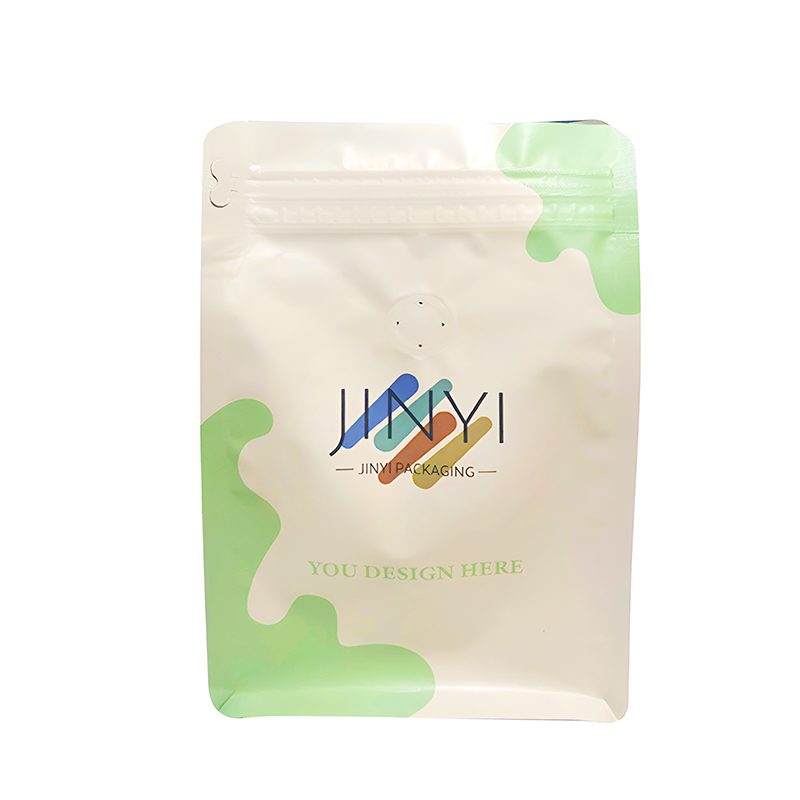
Valves help release CO₂ and reduce swelling risk, but export specs must define valve type, placement, protection, and verification. A valve should control pressure without becoming a damage point or an oxygen-ingress weak spot.

CO₂ management is useful, but it must match roast timing and route duration
Roasted coffee continues to release CO₂ after roasting.
This release is one reason valve bags are widely used.
The valve gives pressure a controlled exit path, so the pouch does not keep building internal pressure until it swells too much or fails.
This is especially important when the product is packed relatively soon after roasting or when the route adds heat, because warmer conditions can make swelling more noticeable.
However, the valve does not solve freshness by itself.
Headspace behavior, oxygen exposure, and time still matter.
If the pouch has weak barrier performance or weak seals, then a valve alone cannot protect the product.
This is why the export spec should define the whole post-roast timeline.
The spec should state when the coffee is packed, how long it rests before shipment, and how much pressure behavior is acceptable at loading and at arrival.
A valve is a control device, not a magic shield.
The best valve program links roast age, fill weight, headspace, and shipping time into one measurable plan.
Valve placement needs a protection zone because cartons and stacking loads create local damage points
Many teams choose a valve and stop thinking.
The better practice is to define a valve protection zone on the pouch and inside the shipper carton.
A valve can be crushed by carton pressure. A valve can be rubbed by adjacent pouches. A valve can also sit at a bad contact point where stacking force repeats over a long trip.
These failures are not always dramatic.
A valve can still look attached while its performance becomes unstable.
This is why export packaging should protect the valve from direct pressure points.
The carton divider pattern, bag orientation, and layer count can all reduce valve stress.
The pouch artwork layout should also reserve a clean mounting area so the valve sits on a stable panel.
A wrinkled or highly curved mounting area increases process variation.
Receiving checks should confirm more than “valve present.”
The check should confirm attachment quality, placement consistency, and visible crush or lift signs after transport trials.
If a route regularly creates valve scuffing, the spec should change before mass export.
| Coffee format |
Valve needed? |
Swelling risk window |
Valve placement rule |
Common failure mode |
Receiving check |
| Fresh roasted whole bean |
Often yes |
Highest early after roast |
Stable panel, away from fold stress |
Swelling, valve crush, attachment lift |
Check shape, attachment, and panel deformation |
| Long-rested whole bean |
Depends on process and route |
Lower than fresh pack, but still route-dependent |
Same protected zone needed if valve is used |
Unnecessary complexity or weak-point creation |
Check whether valve function is still justified by actual pressure profile |
| Ground coffee export |
Case by case |
Can vary with grind and pack timing |
Avoid pressure points in shipper layout |
Crush points and cosmetic damage |
Check valve stability after compression trial |
Evidence (Source + Year):
- Specialty Coffee Association (SCA), “Preserving Freshness: A Race Against Time,” 2025.
Seal integrity: What seal specs prevent micro-leaks that ruin freshness before customers notice?
A seal can look perfect and still leak just enough oxygen to stale coffee over weeks at sea. This is one of the most expensive invisible failures in coffee export.
Export seals need defined seal width, contamination tolerance, and integrity validation. The goal is to stop micro-leak staling, because long transit turns small seal weakness into major freshness loss.
Micro-leaks beat barrier films because they bypass the whole barrier plan
A strong laminate can still fail if the closure path is weak.
This is the core reason seal integrity matters so much in export coffee.
When a seal leaks, oxygen does not need to slowly move through the film structure. It can enter through the defect path.
That means a tiny defect can overwhelm the value of a high-barrier laminate.
The worst part is that many of these defects are not obvious.
A seal can look flat and finished while still having channels, weak fusion, contamination spots, or corner stress damage.
Sea freight makes this worse because vibration repeats over time and compression loads stay in place for long periods.
Small stress repeated over days can enlarge a weak point.
This is why seal specification should be written clearly.
A brand should define seal width, allowable contamination level, corner geometry, and minimum process window control.
A brand should also reject the habit of saying “the seal looked good.”
Export packaging needs measurable acceptance rules that connect sealing performance to route duration.
A good seal plan uses route-style validation, not only one-time bench checks
Seal testing should reflect the journey.
A quick bench seal test has value, but export coffee needs a broader sequence.
A distribution-style plan is stronger because it tests the bag after stress, not only before stress.
A practical method is to build a sequence that mirrors real handling: fill the bag, condition it, apply vibration, apply compression, and then inspect the seal.
This approach follows the logic behind structured shipping test plans, where the package is subjected to a sequence of anticipated hazards.
That sequence matters because seal problems often appear after combined stress, not after one single event.
The brand should also include heat and humidity where relevant, because route climate can change seal behavior and carton pressure at the same time.
Corner seals deserve special attention because corners often carry concentrated stress in stacked cartons.
If a pouch uses a valve, the seal plan should also confirm that valve-area stiffness does not create extra corner strain nearby.
A good export seal program does not ask “Did it seal today?” A good export seal program asks “Did it stay sealed through the route?”
| Seal area |
Typical defect |
Route trigger |
Detection method |
Acceptance rule |
Preventive process control |
| Back seal |
Channel leak or weak fusion |
Long vibration + pressure cycling |
Leak test after route simulation |
No leak after full sequence |
Seal temperature, dwell, pressure control |
| Top seal |
Contamination in seal path |
Product dust + handling stress |
Visual inspection + post-stress leak check |
No contamination-driven defects |
Clean-fill discipline + top-seal cleanliness SOP |
| Corner seal |
Corner split or stress whitening |
Compression + carton impact |
Compression test + corner inspection |
No split, no active leak |
Corner geometry and seal margin control |
Evidence (Source + Year):
Request a sea-freight damage and staling prevention checklist for your coffee pouch, seal, and shipper carton system.
Barrier + materials: Which laminate specs slow oxygen-driven staling without causing valve or seal tradeoffs?
Teams chase high barrier, then discover the film seals poorly or the laminate curls and creates new failures. Barrier helps only when the rest of the structure can still run well.
Export films must balance oxygen barrier, sealability, puncture resistance, and scuff resistance. OTR thinking under controlled humidity and temperature helps compare materials, but barrier alone is never the full answer.
Barrier selection should compare route time against oxygen exposure, not just chase the lowest number
High barrier matters because oxygen drives staling, but material selection should stay practical.
Some teams ask for the “best barrier” without defining route length, warehouse time, or customer shelf expectation.
That creates poor decisions because the most aggressive barrier structure is not always the best production structure.
A better process starts with route demand.
The team defines expected transit time, delay risk, and target freshness at arrival.
Then the team compares materials using standardized oxygen transmission concepts.
OTR measured under controlled temperature and humidity is useful because humidity can change oxygen transmission behavior in many materials.
This point matters in sea freight because humidity swings are common.
A film that looks good under dry assumptions can perform differently in a more humid context.
This is why supplier comparison should request controlled-condition OTR data, not only generic “high barrier” language.
The data should then be matched to the actual route and the actual coffee type, because grind type, roast level, and desired shelf life can change the appropriate target.
Seal-layer choices decide whether the barrier can survive production and transit
Barrier-only thinking often fails in the converting room.
A laminate may offer strong oxygen resistance, but if the sealing layer has a narrow process window, the finished pouch becomes risky.
The export pouch must seal consistently and resist puncture and scuffing.
This means the sealing layer, overall stiffness, and outer-face durability all matter.
A very stiff laminate can create curl and handling issues. A soft structure can reduce carton efficiency and increase scuffing.
A weak outer layer can make the product look aged before the buyer opens the box.
The right export structure is therefore a balanced structure.
The supplier should provide barrier data, but the brand should also ask for sealing behavior, puncture resistance, and surface durability guidance.
If the coffee uses a valve, the structure should also support reliable valve attachment.
If the structure is too unstable at the valve mounting area, valve performance becomes less consistent.
The best export material program does not ask one question. It asks four: Can it slow oxygen, can it seal well, can it survive contact, and can it stay stable in production?
| Material focus |
Barrier direction |
Seal behavior risk |
Scuff risk |
Recommended use case |
What to request from supplier |
| High oxygen barrier laminate |
Strong freshness protection |
Can create narrow sealing window if mismatched |
Depends on outer face |
Long sea routes with strict arrival freshness targets |
Controlled-condition OTR data + seal guidance |
| Balanced export structure |
Moderate to high barrier |
More forgiving for conversion |
Can be optimized for scuff resistance |
Standard export programs with mixed handling risk |
OTR + sealing window + puncture and rub data |
| Appearance-first structure |
May be acceptable only for short routes |
Can run well but may under-protect flavor |
May look good initially but age fast in transit |
Short local distribution, not long ocean routes |
Proof that performance matches route, not only print quality |
Evidence (Source + Year):
- Industrial Physics, “ASTM F1927 testing,” accessed 2026.
- Specialty Coffee Association (SCA), freshness and staling references, 2012 and 2025.
Carton and unitization: How do carton specs prevent crush, panel scuffing, and “arrived damaged” claims after sea freight?
A good pouch inside a weak carton still arrives looking bad, and the buyer marks it as a quality issue. The shipper carton often decides the first impression at receiving.
Cartons must survive stacking loads, humidity softening, and vibration. Compression logic, pallet rules, and moisture control should be set together, because sea-freight damage usually starts as a system weakness.
Carton strength should be set by stacking reality, not by habit
Many export cartons are chosen by habit, not by measured need.
This creates risk because sea freight adds storage time, stacked loads, and changing humidity.
Corrugated strength drops when moisture rises, so a carton that feels strong in a dry warehouse may soften during the voyage.
A defensible export program sets a compression target before production.
That target should reflect storage height, pallet pattern, transit dwell, and safety margin.
Carton compression testing helps because it gives a measurable way to compare designs.
The point is not to chase the highest possible number.
The point is to choose a carton that can survive real compressive forces without crushing the pouches, deforming valves, or causing the front panels to rub excessively.
The carton should also fit the pouch correctly.
Too much empty space allows movement and scuffing. Too little space creates pressure points and distorted valve contact.
The best carton spec therefore links board grade, box size, inner arrangement, and expected stack height into one practical performance target.
Unitization and route simulation turn a “good carton” into a reliable export pack
A strong carton alone is not enough.
The pallet pattern, stretch wrapping, top load, and unit movement all influence the final outcome.
A bag can survive perfectly inside one carton and still fail when the pallet load shifts in transport.
This is why unitization rules matter.
The export specification should define pallet overhang limits, layer pattern, interlayer needs, and maximum stack height.
It should also define when moisture controls are used inside the container, because container condensation can weaken outer boxes and reduce stack performance.
A structured distribution test plan is useful here because it forces the team to test the full shipping unit, not only the empty box.
The best practice is to test the pouch, inside the carton, on the pallet logic that reflects the real route.
If the cargo may later move through parcel channels after arrival, a second simulation layer can be added for that downstream leg.
The goal is simple: the receiving team should open the carton and see clean, stable bags, not crushed corners, rubbed panels, or soft walls.
| Failure mode |
Sea-freight trigger |
Carton spec lever |
Pallet rule |
Validation test |
Pass/fail definition |
| Crushed carton walls |
Long stacking time + humidity softening |
Board grade and compression target |
Set safe stack height |
Compression test |
No structural collapse under planned load |
| Valve crush or bag distortion |
Poor inner arrangement + pressure concentration |
Correct box size and inner spacing |
Orient bags away from direct load points |
Filled-carton compression and inspection |
No valve damage, no pouch distortion that affects saleability |
| Panel scuffing |
Movement inside box + vibration |
Fit and internal restraint |
Stable pallet wrap to reduce movement |
Vibration sequence |
Acceptable appearance after test |
| Mixed transit damage |
Sea + port + truck handling |
Integrated pouch/carton design |
Unitized load control |
Sequential distribution simulation |
No leaks, no severe cosmetic damage, cartons remain stable |
Evidence (Source + Year):
- ASTM International, ASTM D642 standard page, 2025.
- ASTM International, ASTM D4169 standard page, 2024.
Conclusion
Sea-freight coffee complaints usually start in the packaging system, not in the bean. Build valve, seal, laminate, and carton specs as one export program, then validate the full route. Contact JINYI to review your export packaging plan.
About Us
Brand: Jinyi
Slogan: From Film to Finished—Done Right.
Website: https://jinyipackage.com/
Our Mission:
JINYI is a source manufacturer for flexible packaging. The team aims to deliver reliable, practical, and production-ready packaging solutions so brands can reduce communication cost, keep quality stable, protect lead times, and match the right packaging structure and print result to each product.
About Us:
JINYI is a source manufacturer specializing in custom flexible packaging solutions, with over 15 years of production experience serving food, snack, pet food, and daily consumer brands.
We operate a standardized manufacturing facility equipped with multiple gravure printing lines as well as advanced HP digital printing systems, allowing us to support both stable large-volume orders and flexible short runs with consistent quality.
From material selection to finished pouches, we focus on process control, repeatability, and real-world performance. Our goal is to help brands reduce communication costs, achieve predictable quality, and ensure packaging performs reliably on shelf, in transit, and at end use.
FAQ
Do roasted coffee exports always need a degassing valve?
Not always. The need depends on roast timing, coffee format, route length, and pressure behavior. A valve is usually most useful when post-roast CO₂ release still creates meaningful swelling risk during shipment.
What seal failures cause stale-coffee complaints even when the bag looks intact?
Small channel leaks, weak fusion points, contamination in the seal path, and corner-stress damage can let in oxygen without obvious visual damage. These defects often create “stale” complaints before they create obvious leak complaints.
How do exporters set carton compression targets for sea-freight stacking and humidity risk?
The target should reflect real stack height, dwell time, pallet pattern, and the fact that corrugated strength can drop when moisture rises. A measured compression target is stronger than a generic “export carton” claim.
What is container rain, and why does it damage cartons and labels in sea freight?
Container rain is condensation that forms when warm, humid air in the container cools and reaches its dew point. The moisture can drip onto packaging, weaken cartons, reduce label adhesion, and make the shipment look old or damaged.
What is the minimum validation plan for pouch + carton export packaging?
A practical minimum plan includes seal checks after stress, a route-style distribution simulation, carton compression testing, and a moisture-risk review for the planned route. If downstream parcel shipping is possible, a parcel-style test can be added.
Send your bag size, roast timeline, and shipping route for a defensible export coffee packaging spec plan