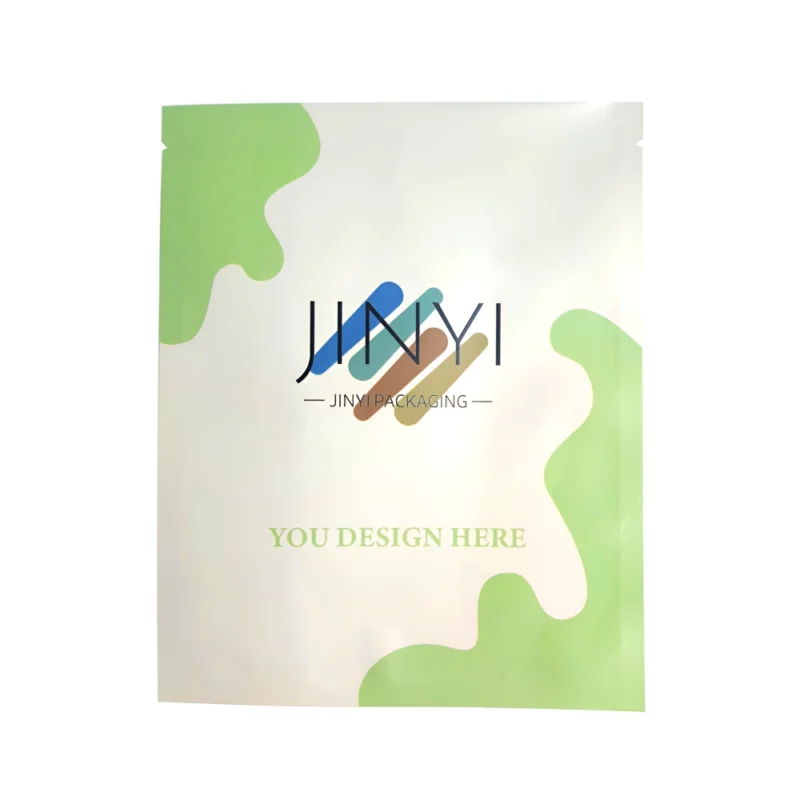
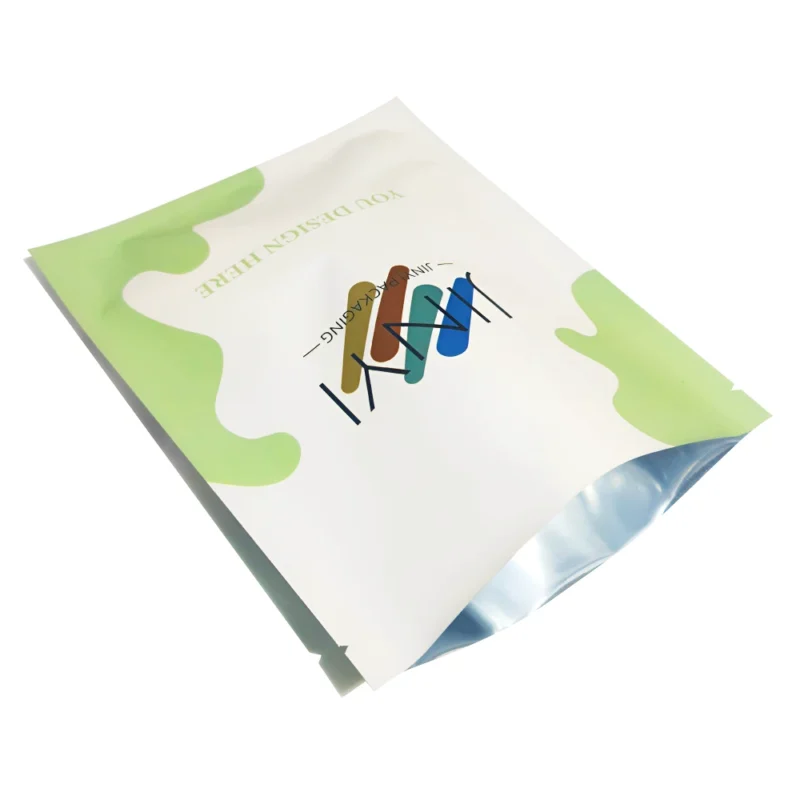
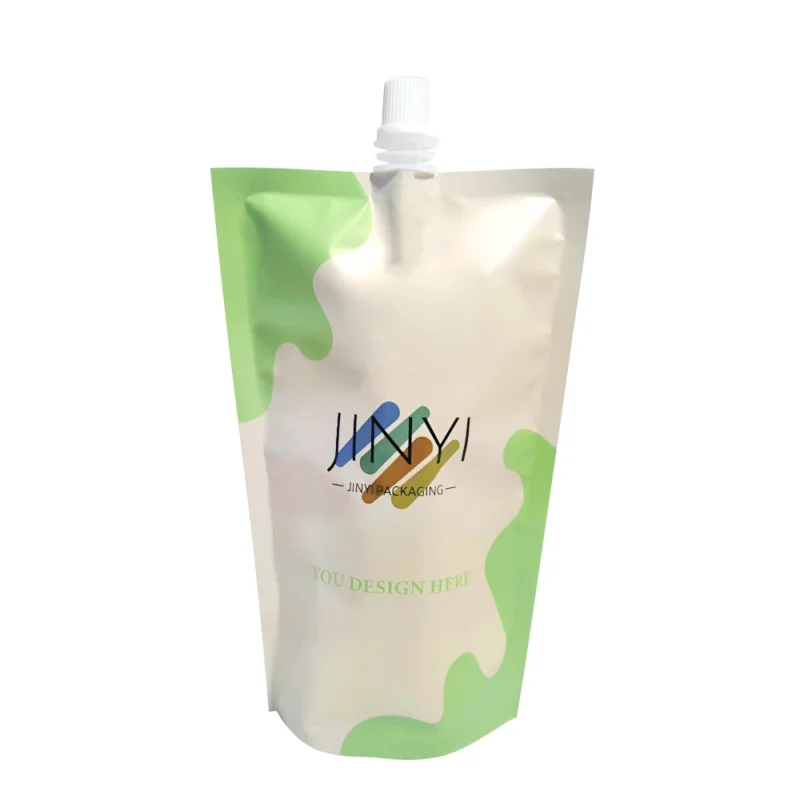
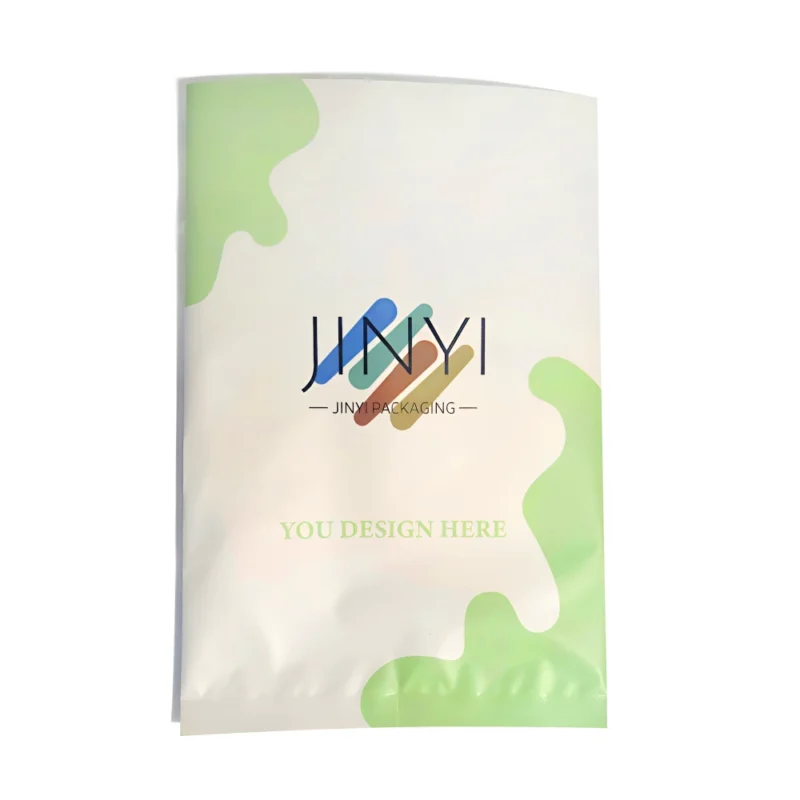
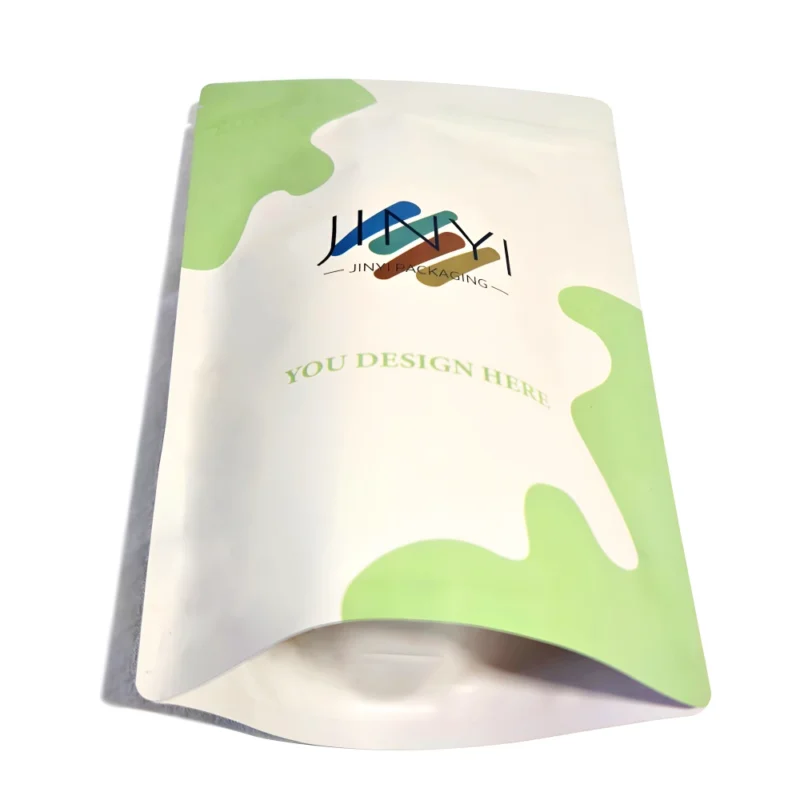
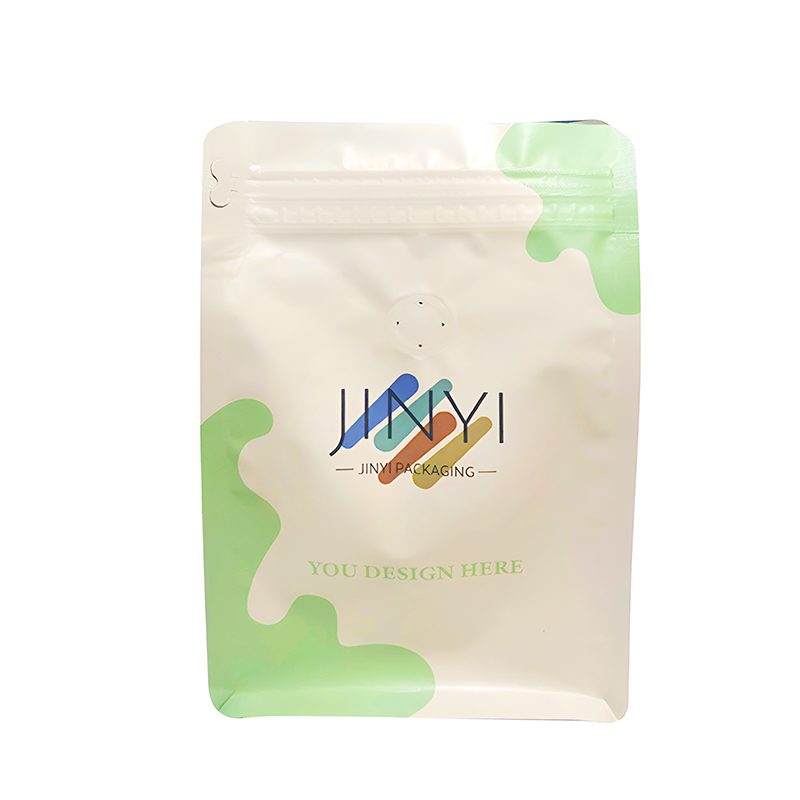
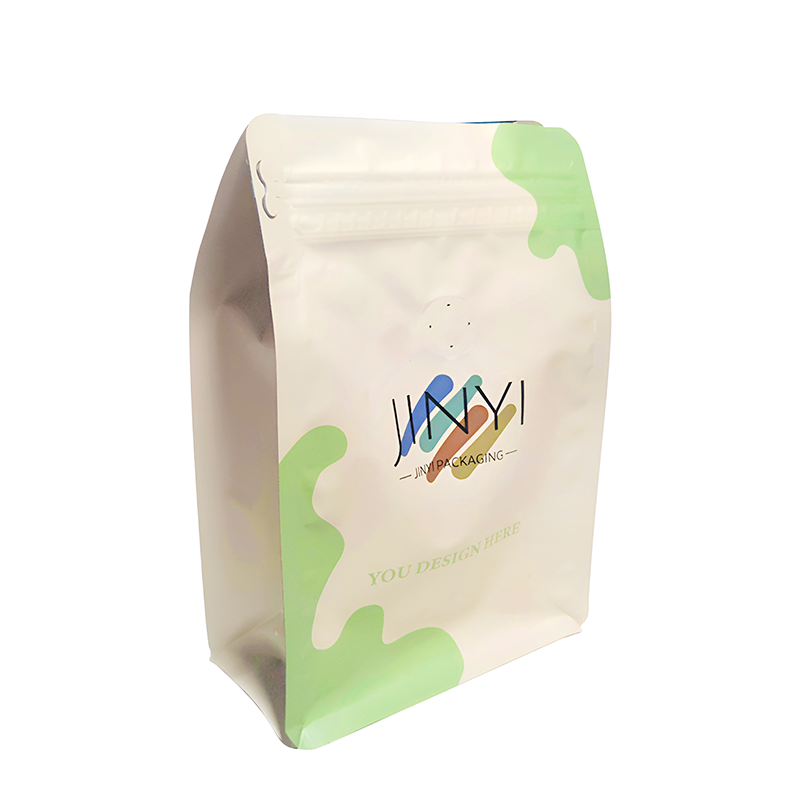
Many pouch projects look fine at the sample stage. Then filling, sealing, shipping, or daily use starts exposing what nobody checked deeply enough.
Before ordering a flexible pouch, I check fit, not just options. A pouch works only when product risk, size, structure, sealing, printing, route, and supplier understanding all point in the same direction.
See pouch options built for real production, shipping, and shelf use.

I do not treat ordering as the end of the buying process. I treat it as the point where loose assumptions become locked risks.
Why Do Buyers Often Order Too Early in Flexible Packaging Projects?
Many buyers do not fail because they know nothing. They fail because they move before the important checks are finished.
I slow the project down before I speed it up. If size, seal, filling, and route are still vague, ordering early only pushes the real cost into mass production.
A sample can look close enough. A quote can look acceptable. A supplier can say everything is possible. But the real problems usually appear later: the pouch looks wrong after filling, the seal window feels narrow, the bag scuffs in transport, or the customer finds it awkward to use. I do not read “ready to order” as a mood. I read it as proof that the key unknowns are already smaller than the production risk.
| Early signal |
Later problem |
| “Looks close enough” |
Shape, seal, or use issues |
| “Supplier says OK” |
Project logic still unclear |
What Should Buyers Confirm About the Product Before Checking the Pouch?
I never start with the bag. I start with what the product fears and how the product is used.
If the product type is still vague, every later pouch decision becomes weaker, because size, structure, closure, and artwork all depend on that first layer of truth.
I want to know whether the product is powder, granule, solid piece, liquid, or semi-liquid. I also want to know whether it fears moisture, oxygen, light, aroma loss, puncture, or route abuse. Then I ask whether the product is single-use or reused after opening. Those answers shape the pouch more than any menu of options ever will. If I do not define the product first, the pouch conversation becomes decorative too early.
| Product question |
Why it matters |
| What is it? |
Changes pouch logic first |
| What does it fear? |
Changes protection and use path |
How Should Buyers Check Whether the Pouch Size Is Really Right?
A pouch can hold the product and still be the wrong size.
I check size through filled shape, not just volume, because the customer will judge the pouch after filling, not as a flat spec line.
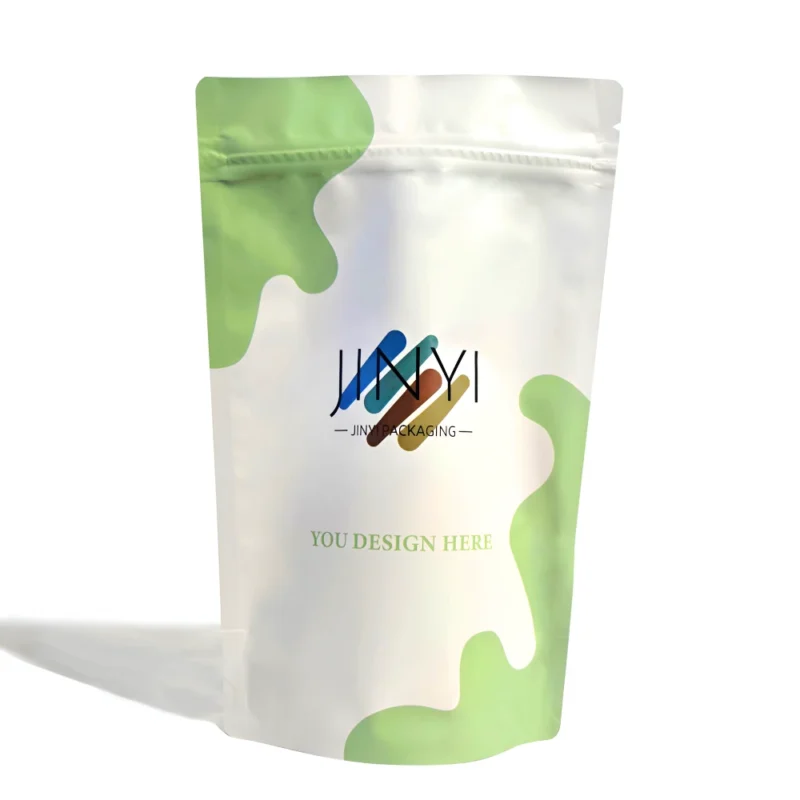
I look at standing balance, top empty space, front-face proportion, grip feel, and carton efficiency together. A pouch that is too tall and narrow may lean. A pouch that is too short and wide may crowd the front panel. Too much top space can make the pack feel weak on shelf. Size is not a simple capacity answer. It is a filled-form decision. If the filled pouch does not look like a stable retail unit, the size is not really correct yet.
| Size issue |
What happens |
| Too tall / narrow |
Weak standing |
| Too much headspace |
Loose shelf look |
What Should Buyers Check in the Material Structure Before Ordering?
Layer count alone does not explain whether the structure is actually right.
I check what the structure is doing, not just what it is called, because each layer should be solving a specific problem.
I want to know whether the structure is protecting against moisture, oxygen, light, aroma loss, puncture, or flex stress. I also want to know whether it is helping print appearance, stiffness, and sealing stability. Clear, metallized, and foil structures are not simply weak, medium, and strong. They are different trade-offs between visibility, protection, feel, and cost. If a buyer treats structure as a material code instead of a task system, the project becomes easy to overbuild or underprotect.
| What to check |
Real question |
| Barrier role |
What is it protecting? |
| Structure type |
What trade-off does it create? |
Why Does Seal Performance Need to Be Checked Before Price Becomes the Focus?
Price becomes meaningless very quickly when the seal is unstable.
I check seal performance early because pouch reliability depends more on stable sealing than on impressive material words.
I want to know whether the heat seal window is wide enough, whether the product may contaminate the seal area, whether seal strength is appropriate, and whether opening behavior stays normal. A pouch is not successful because it can be made once. It is successful because it can be sealed again and again under real production conditions. This is why I do not let the price discussion dominate too early. If the seal is still uncertain, the project is still uncertain.
| Seal check |
Why it matters |
| Seal window |
Production stability |
| Seal contamination risk |
Real-world reliability |
How Should Buyers Check Whether the Pouch Fits the Filling Process?
A pouch that looks right in the hand can still run badly on the line.
I check the filling process because the pouch must be more than presentable. It must also be producible.
I want to know whether the product is filled by hand, semi-automatic equipment, or full automatic line. I want to know whether the product hangs near the seal, hits the bottom hard, or needs a wider mouth to feed properly. Bag stiffness, mouth opening, seal contamination, and line rhythm all change here. In real manufacturing, this detail often decides whether the pouch stays clean and consistent or becomes a daily source of friction. A bag that is good for photos but hard to run is not a ready bag.
| Filling reality |
Pouch check |
| Dusty or messy fill |
Seal contamination risk |
| High-speed line |
Mouth and stiffness consistency |
What Pouch Features Should Buyers Double-Check Before Adding?
Extra features make samples more exciting. They do not always make the project better.
I add a feature only when it solves a real problem in use, protection, merchandising, or filling.
A zipper should answer repeat opening. A spout should answer cleaner control for liquids or semi-liquids. A window should only stay if visibility is worth the protection trade-off. A hang hole should fit the channel. A valve should fit the product, not just the look of the category. Each feature changes cost, structure, process, and user action. This is why I do not ask whether one more feature can be added. I ask whether one more feature earns its place.
| Feature |
Question before adding |
| Zipper |
Will it really be reused? |
| Window |
Can protection still hold? |
How Do Printing, Artwork Space, and Label Information Affect Order Readiness?
Many projects look clean on the front panel and collapse the moment the back panel starts carrying real information.
I treat print layout as part of pouch readiness because the bag has to hold the message as well as the product.

Ingredients, nutrition, instructions, warnings, barcode, and brand information take real space. This becomes more obvious in food, snacks, supplements, and pet products. If the size was chosen only for visual taste, the artwork stage often exposes the mistake. I want to know whether the information hierarchy can still stay readable after the mandatory content is placed. A pouch is not ready just because the hero design looks good. It is ready when the full information system still fits cleanly.
| Layout issue |
What it causes |
| Too little back-panel space |
Crowded information |
| Weak hierarchy |
Poor readability |
What Should Buyers Check About Shipping, Carton Packing, and Route Stress?
A pouch that survives the sample room may still fail the route.
I check route stress early because rubbing, pressure, puncture, and poor carton logic can damage a good pouch faster than many buyers expect.
Long export routes, e-commerce handling, heavy fills, and poor packing patterns expose weaknesses quickly. I want to know whether the pouch may wrinkle badly, scuff, leak, burst at the seal, or suffer too much base pressure. I also want to know whether the carton count, stacking, and inner pack logic are helping or hurting. Good packaging decisions can still look bad if the pack-out logic is careless. That is why I do not check the pouch alone. I check the pouch inside its route.
| Route check |
Why it matters |
| Carton pattern |
Can magnify pouch stress |
| Transport abuse |
Can expose weak seals or film |
How Can Buyers Tell Whether a Supplier Really Understands the Project?
A supplier’s questions often tell me more than a supplier’s brochure.
I trust a supplier more when the supplier starts asking about product type, fill weight, route, use pattern, and line conditions, not just print and quantity.
A supplier who truly understands the job usually wants more than dimensions and artwork. I expect questions about product behavior, closure need, shelf life, filling method, route, and whether the pouch needs to be reused. If the supplier only talks price and says everything is possible, I become more cautious, not less. Many later problems are already visible in the depth of the supplier’s questions. A strong supplier is not just selling a pouch. A strong supplier is helping the buyer reduce future disagreement.
| Supplier style |
What it suggests |
| Only quotes fast |
Weak project depth |
| Asks project logic |
Better solution thinking |
What Should Buyers Finalize Before Approving Mass Production?
Mass production becomes risky when the key details are still only “understood,” not fixed.
I finalize the project through written alignment, because many mass-production disputes come from assumptions that were never locked clearly enough.
Before approval, I want final size, structure, thickness range, closure setup, print file status, color confirmation, pouch sample state, filling method, pack-out logic, delivery checkpoints, and acceptance standard to be clearly aligned. This is not bureaucracy. This is protection against later confusion. The final approval step is not “close enough.” It is the point where both sides stop speaking in general ideas and start speaking in exact results.
| Must-finalize item |
Why it must be locked |
| Structure and size |
Prevents physical mismatch |
| Acceptance standard |
Prevents later dispute |
Before Ordering, What Matters Most: More Options or Fewer Mistakes?
Buyers rarely need more menu items. They usually need fewer hidden errors.
I care more about alignment than about abundance, because a pouch project becomes strong when the big mistakes are removed before production begins.
The best project is not the one with the most features, the most expensive material, or the lowest quote. It is the one where product logic, pouch size, structure, seal behavior, artwork, route, and supplier understanding already agree well enough that later surprises become smaller. That is what real order readiness looks like to me. Ordering should not mean “now we start finding out.” It should mean “we already solved most of the expensive questions.”
| Focus |
Better result |
| More options |
Often more noise |
| Fewer mistakes |
Usually stronger ordering decision |
About Us
JINYI — From Film to Finished—Done Right. We believe good packaging is not only about appearance. It should work reliably in real shipping, shelf, and consumer-use conditions. I focus on custom flexible packaging with 15+ years of production experience. Our factory runs multiple gravure printing lines and HP digital printing systems, so I can support both stable large-volume production and flexible custom work with clearer lead times and steadier quality.
FAQ
What is the most common mistake before ordering a pouch?
I see buyers move too fast before the project logic is fully checked, especially around size, sealing, and filling fit.
Should I focus on price before seal performance?
No. If sealing is still uncertain, the quote is not the real risk picture yet.
How do I know if the pouch size is correct?
I judge it by the filled result, not just by whether the product fits inside.
What makes a supplier more trustworthy in pouch projects?
I trust suppliers more when they ask deeper questions about the product, line, route, and use case instead of only sending a fast quote.
What should be finalized before mass production?
I finalize size, structure, closure, artwork status, filling method, pack-out logic, delivery checkpoints, and acceptance standards before approval.