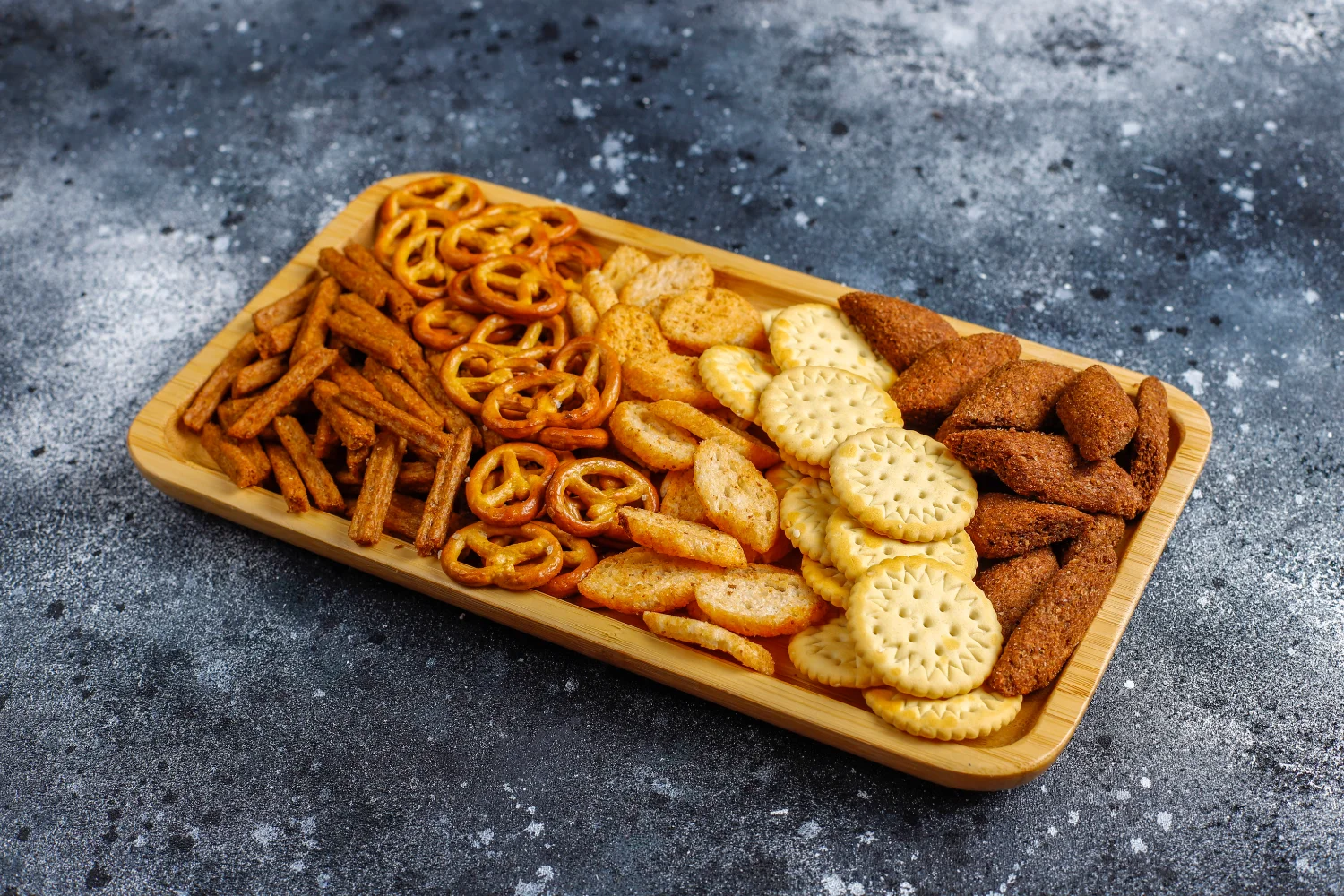
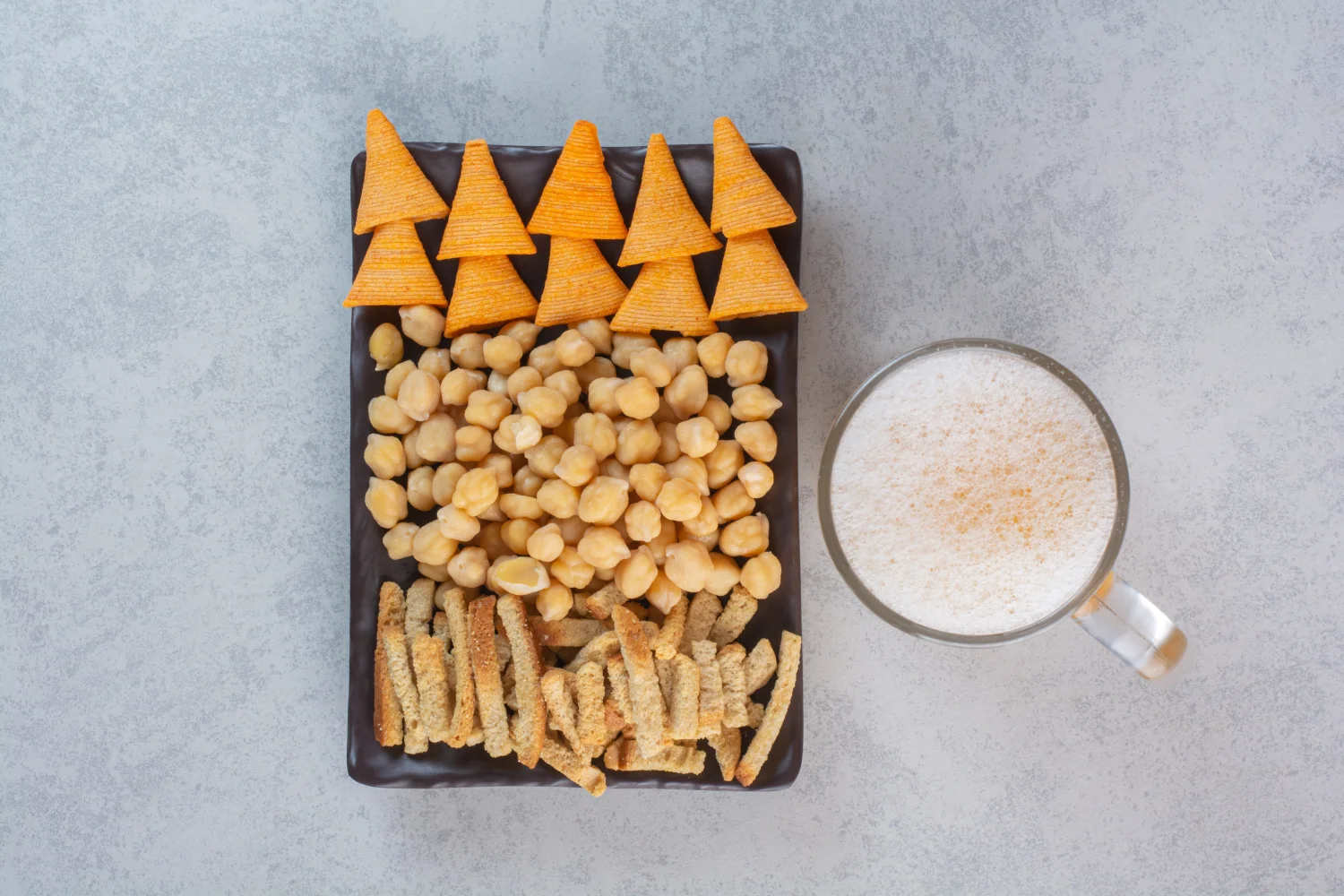
Cookies can taste “old” fast. They lose crunch. They lose aroma. The worst part is that the problem often shows up after shipping or after the first opening.
Flow wrap usually performs best before first open, because it can hold WVTR/OTR within target limits. Resealable pouches can win after first open, but only if the reclose stays truly closed and clean across repeated use.
Explore food packaging solutions that protect crispness and aroma across real shelf and home use.

The most useful comparison is not “which looks better.” It is “which format controls the two drivers that actually move quality: water activity drift and oxygen exposure.” As a flexible packaging manufacturer, we focus on measurable controls: barrier performance, seal integrity, and what happens after the first opening.
What makes cookies go stale: why do they lose crunch first?
Crunch loss feels random to buyers. It is not random. It is usually moisture finding a path into the pack, then changing the cookie’s structure from brittle to soft.
Most crisp cookies stale when water activity (aw) rises enough to shift texture state. Packaging helps by slowing moisture ingress (WVTR) and by preventing “shortcuts” like micro-leaks that bypass barrier films.
Moisture-driven staling follows an aw-and-time curve, not a calendar date
Cookie staling is often an “aw drift” problem. Ambient humidity pushes moisture through the package over time. Once the cookie absorbs enough water, its structure moves away from a glassy, brittle state. That is when crispness drops fast. The critical insight is that WVTR is a slow variable, but leaks and pinholes are fast variables. A small seal defect can dominate the moisture budget and make an otherwise good material look “bad.” This is why a staling diagnosis should start with aw tracking and package integrity checks, not with material names. A practical approach is to measure initial aw and texture, then store samples at controlled RH steps that represent warehouse and retail swings. If aw climbs sharply in early days, the root cause is often a seal shortcut rather than film permeability. If aw rises steadily and predictably, WVTR is the likely limiter, and the format choice becomes more important.
| What changes first? |
How to measure it |
What packaging can control |
Common “shortcut” failure |
| aw drift and moisture pickup |
aw meter + moisture % |
WVTR under the right RH/temperature |
seal micro-leak bypassing barrier |
| crispness / brittleness |
texture analyzer + simple sensory panel |
headspace stability and integrity until opening |
pinholes from handling or folds |
Evidence (Source + Year): ASTM International, ASTM E96/E96M-24 (Water Vapor Transmission of Materials), 2024. | García-Segovia et al., wafer cookies: aw, texture, and sensory acceptance under storage and packaging comparisons, 2023.
What drives flavor loss in cookies: is it oxygen, aroma escape, or both?
Cookies can stay “crisp” and still taste flat. Many teams only watch moisture, then miss the oxygen and aroma side until customers complain about smell and aftertaste.
Flavor loss is usually a combined oxygen budget issue: headspace oxygen plus OTR over time plus any leaks. Oxidation markers (like aldehydes) rise, while key aroma compounds also migrate out or get absorbed by packaging surfaces.
Think in “oxygen budget,” then verify with a marker and a simple sensory test
Many cookies contain fats that can oxidize, especially in warm retail conditions and during temperature cycling in logistics. Oxygen enters through the film at a predictable rate (OTR), but leaks can dominate. That is why “oxygen budget” is a better model than “material rating.” The budget has three parts: initial headspace oxygen at packing, oxygen permeation through films over time, and oxygen entering through defects. A practical minimum proof pack is to track one oxidation marker (often hexanal in many systems) alongside a simple sensory check (triangle test or ranked freshness). If oxidation markers rise faster than predicted by OTR, the team should suspect seal leakage or high headspace oxygen rather than blame the film. If markers match OTR-driven predictions, then improving barrier or adding oxygen management tools becomes the rational path. This also explains why a resealable pouch can lose flavor quickly after opening: each opening refreshes headspace oxygen unless the reclose truly seals and the user follows it consistently.
| Flavor-loss driver |
What it looks like |
How to verify |
Packaging control point |
| oxygen exposure and lipid oxidation |
flat aroma, rancid notes, faster staleness perception |
OTR + oxidation marker (e.g., aldehydes) + sensory |
OTR, headspace control, seal integrity |
| aroma migration or absorption |
weaker “fresh-baked” notes even without rancidity |
GC-MS or controlled sensory comparison |
material selection + internal surfaces + closure behavior |
Evidence (Source + Year): ASTM International, ASTM D3985-17 (Oxygen Gas Transmission Rate Through Plastic Film and Sheeting), 2017. | Study on biscuits stored in flexible composite packaging showing physical/chemical changes during storage, 2019.
If your cookies lose aroma after opening, use this food packaging solution framework to map oxygen budget and sealing risk.
When does flow wrap beat resealable pouches, and when is it the opposite?
Teams often pick a format for speed or shelf look, then discover the real risk later: repeated opening, messy crumbs, and imperfect reclosing that turns “resealable” into “leaky.”
Flow wrap tends to win for single-serve or short consumption windows because it protects well until first open. Resealable pouches can win for multi-serve use, but only if the closure remains clean, easy to press, and measurably airtight after repeated cycles.
The decisive variable is post-open exposure frequency, not just pre-open barrier
Format selection should start with a channel timeline. Before first open, both formats can be engineered to meet WVTR and OTR targets, but their typical risk profiles differ. Flow wrap is usually consumed quickly after opening, so post-open exposure is small. That makes pre-open control and seal repeatability the main concern. Resealable pouches are designed for multi-serve behavior, so post-open exposure becomes dominant. Every opening can replace headspace with humid air and oxygen, and crumbs can prevent full zipper engagement. The closure might “feel closed” but still leak. This is why a decision matrix should include expected consumption window (hours vs days), humidity conditions, and crumb contamination risk. The best practice is a 2×2 test: both formats, stored unopened and repeatedly opened under a defined schedule. Track aw drift, texture, and one oxidation marker. If results diverge after opening but not before opening, the closure system and user behavior are the real drivers. If results diverge even before opening, barrier or seal integrity is the driver.
| Use case |
Most likely winner |
Why |
What must be validated |
| single-serve / eat soon after opening |
flow wrap |
strong pre-open protection; low post-open time |
seal integrity + WVTR/OTR targets |
| multi-serve / repeated opening over days |
resealable pouch (if reclose works) |
reduces exposure frequency if airtight after cycles |
reclose leakage after crumbs + user cycle test |
Evidence (Source + Year): Mintel, The Future of Biscuits, Cookies and Crackers, 2024. | ASTM International, ASTM D3985-17, 2017 (for verifying oxygen exposure assumptions).
Conclusion
Flow wrap protects best until first open. Resealable pouches only win if the reclose stays truly sealed after real use. For stable results, measure aw drift, oxygen budget, and leak shortcuts, then choose format.
Get a cookie packaging risk review (WVTR/OTR + seal integrity)
About Us
Brand: Jinyi
Slogan: From Film to Finished—Done Right.
Website: https://jinyipackage.com/
Our Mission:
JINYI is a source manufacturer focused on custom flexible packaging. The goal is to deliver reliable, practical packaging that reduces communication cost, improves repeatable quality, and keeps lead times predictable for brands.
Who We Are:
JINYI is a source manufacturer specializing in custom flexible packaging solutions, with over 15 years of production experience serving food, snack, pet food, and daily consumer brands.
We operate a standardized manufacturing facility equipped with multiple gravure printing lines as well as advanced HP digital printing systems, supporting both stable large-volume orders and flexible short runs with consistent quality.
From material selection to finished pouches, the team focuses on process control, repeatability, and real-world performance, so packaging holds up on shelf, in transit, and at end use.
FAQ
- Does resealable always mean better shelf life for cookies?
No. It can be better after opening, but only if the zipper stays clean and measurably airtight across repeated cycles.
- Why do cookies go soft even with a “high barrier” film?
A small seal micro-leak or pinhole can bypass barrier performance and dominate moisture ingress.
- What is the fastest way to diagnose staling: WVTR data or aw tracking?
Start with aw tracking and a basic leak check. Then use WVTR to predict the slow, long-term trend.
- What is the fastest way to diagnose flavor loss?
Use an oxygen budget approach: headspace oxygen, OTR, and leak risk, then confirm with one oxidation marker plus a simple sensory test.
- How should a team compare flow wrap and resealable pouches fairly?
Run a 2×2 test: both formats unopened storage and repeated open-close cycles, measuring aw, texture, and one oxidation marker.