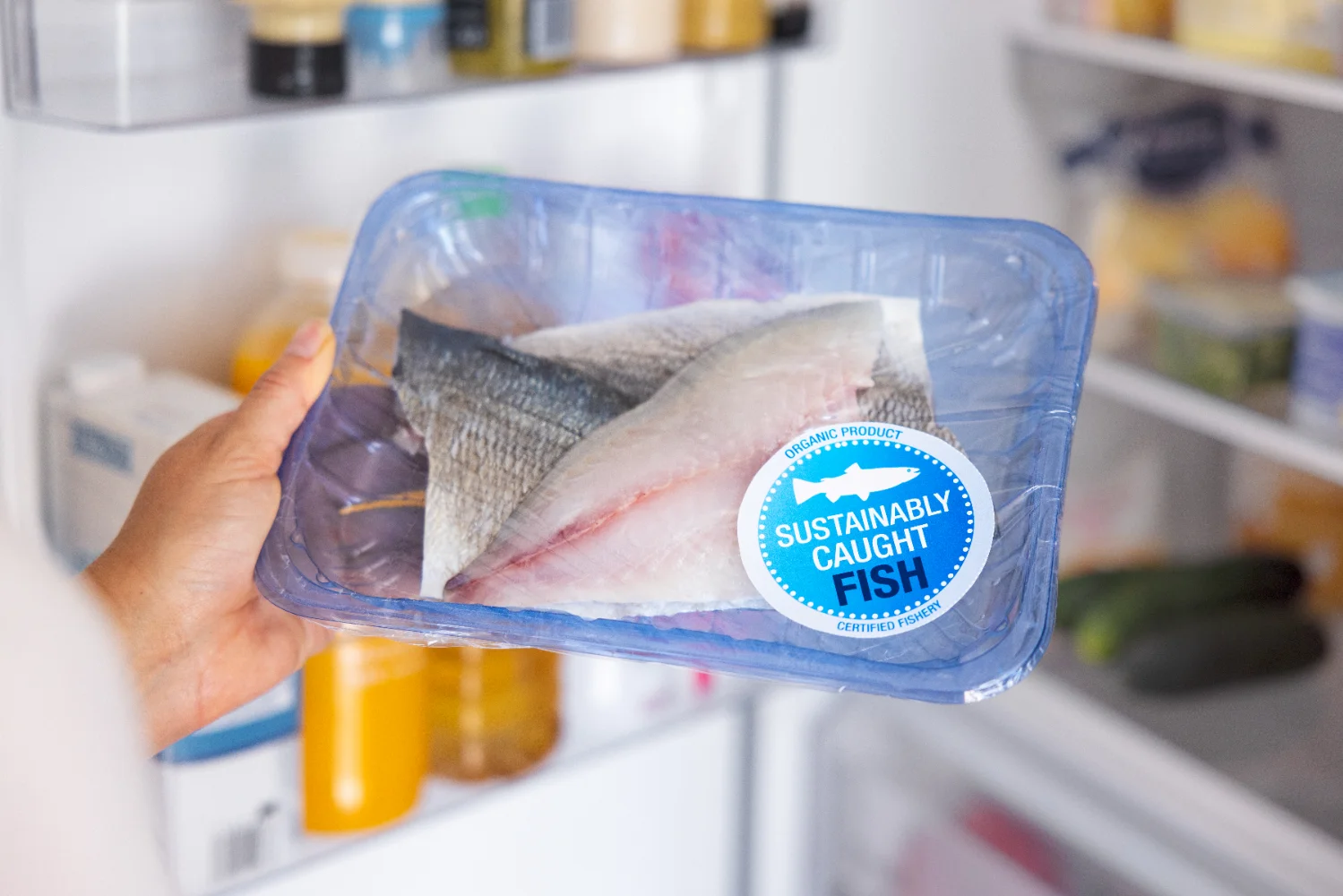
Your seafood pouch can pass QC and still come back as a wet carton return. That failure looks small, but it spreads fast across reviews, distributors, and pallets.
I stop wet-carton returns by separating punctures vs corner micro-leaks vs seal cracks, then locking the seal system (seal window, hot tack, seal land, cooling) and validating the full shipping system (pouch + seafood + brine + case) under stress-first freeze–thaw testing.
Check my food packaging solution for shipping-grade pouch specs

I do not start with “use thicker film.” I start with the real failure path, then I turn it into controllable parameters and repeatable tests. That is how I prevent one bad route from becoming a full-season recall risk.
What do “wet carton” returns actually look like in frozen seafood pouches?
Wet cartons do not tell you the cause. They only tell you the system failed somewhere between freezer, truck, and pallet stacking.
I define three failure types first: (1) pinhole slow leaks, (2) corner micro-leaks, and (3) seal-line cracking. Each one needs a different fix, a different test order, and a different production control reminder.

How I translate a “wet carton” into a measurable root cause
From a production standpoint, this matters because operators cannot improve what they cannot name. So I refuse to call everything “leak.” I ask where the first wet spot appears and when it appears. If the carton is damp only after thaw, I suspect pinhole slow leaks or micro-channels that stay quiet while frozen. If the pouch looks fine but corners seep under squeeze, I suspect corner micro-leaks caused by fold geometry, seal land variation, or case pinch points. If the seal edge turns white and then opens after cycling, I suspect brittle seal edges created by a narrow seal window or rushed cooling. I also mark the location on the pouch, because location tells me the stress. Fold lines often point to repeated bending under stiffness. Corners often point to geometry and pressure distribution. Random mid-panel wetness usually points to puncture or abrasion. Once I define the failure type, I can choose the right stress-first validation sequence and lock the right process control points for mass production.
| Return symptom |
Most likely failure type |
Where I inspect first |
What I change first |
| Damp carton after thaw |
Pinhole slow leak |
Rub points / contact points |
Pack-out + abrasion control |
| Corner weeping under squeeze |
Corner micro-leak |
Corner transitions / seal land |
Seal land + cooling + case pinch |
| Seal edge whitening then opening |
Seal cracking |
Seal line and fold stress zones |
Seal window + cooling margin |
Why is seafood a high-risk product for pouches, even before shipping starts?
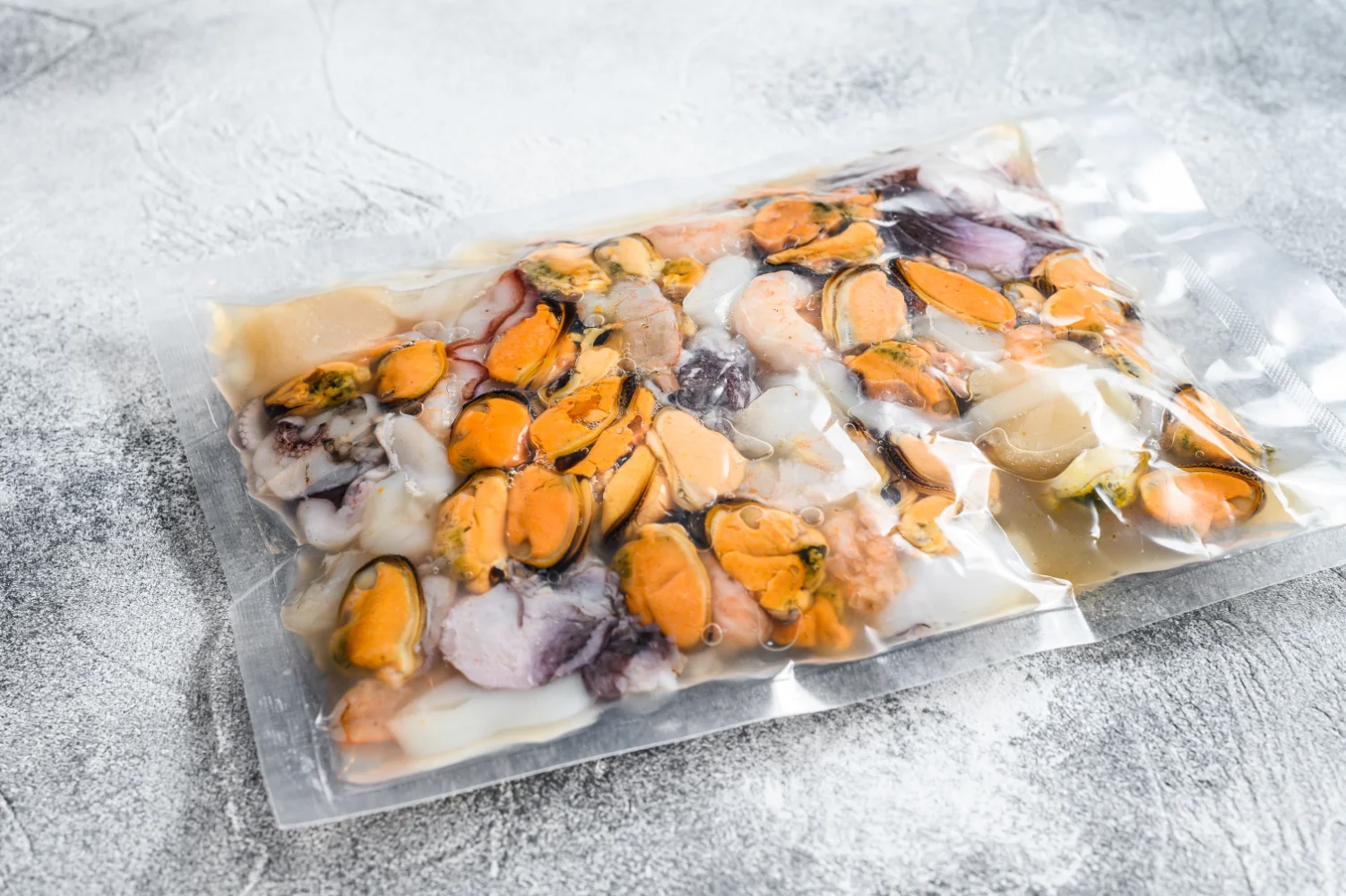
Seafood is not only cold. Seafood is sharp, wet, and odor sensitive. That combination punishes weak details.
I treat seafood as high-risk because sharp shells or bones create point loads, brine keeps pushing on seals under compression, and odor sensitivity makes small leaks feel like big failures.
Product reality that changes the failure path
In real manufacturing, this detail often determines whether a pouch survives the route or fails on the first distributor pallet. Seafood often includes shells, fins, bones, or hard frozen corners. Those features concentrate force onto tiny areas during vibration. That is where punctures begin. Seafood also often includes brine, sauce, or melt water. Liquids do not “sit there.” Under compression they keep loading the seal edge and corners. That loading makes micro-channels grow. I also treat odor sensitivity as a business risk multiplier. A small slow leak can turn into a strong odor complaint, even when the liquid loss is tiny. That means my target is not only “no visible leaks.” My target is “no slow leaks and no seal drift after stress.” So I map the product form: sharp points, hard blocks, liquid level, and headspace. Then I decide which risk dominates: puncture, abrasion, corner micro-leak, or seal cracking. I do not guess. I use the product form to decide what I must control and what I must validate before mass production.
| Seafood feature |
What it does in transit |
What failure it grows |
My first control focus |
| Shells / bones / fins |
Point loads under vibration |
Punctures, pinholes |
Contact-point mapping + pack-out |
| Brine / sauce |
Continuous seal loading |
Corner weeping, micro-channels |
Seal system margin + cooling |
| Strong odor sensitivity |
Small leaks become big complaints |
Returns, distributor blocks |
Stress-first micro-leak validation |
How do freeze–thaw cycles “grow” punctures and corner micro-leaks over time?
One cold event can be survivable. Repeated freeze–thaw is fatigue, and fatigue creates surprises.
I treat thermal cycling as the main failure engine because it makes films stiffer and less forgiving, and it repeatedly loads seals and corners. Small scratches become pinholes, and micro-channels become real leaks.
Why cycling is worse than “one time cold”
From our daily packaging work, we see that many “wet carton” failures do not happen on day one. They happen after the pouch experiences a loop: frozen storage, truck transfer, a warmer dock, then back to cold. That loop changes mechanics. The film becomes stiffer in the freezer, so bending concentrates stress at fold lines and corners. If there is a tiny scratch at a rub point, stiffness makes it more likely to grow. Liquids also behave differently. Brine expands and contracts with temperature shifts, and it keeps pushing on seal edges under compression. That repeated push can “train” a micro-channel into a leak. Many corner failures are not random. Corners are geometry amplifiers. A small seal land variation or a cut-edge burr can become a leak path when cycling adds fatigue and compression adds load. That is why I never validate frozen seafood pouches without cycling. If I only test a static pouch at room temperature, I will miss the failure that happens after the third thaw in a real distribution chain.
| Stress factor |
What it does |
What it reveals |
| Freeze–thaw cycling |
Stiffness + fatigue growth |
Seal edge cracking trend |
| Compression during cycling |
Loads seal edges and corners |
Corner micro-leaks, weeping |
| Vibration between cycles |
Turns rub into abrasion |
Pinhole start zones |

What is my stress-first validation plan (pouch + seafood + brine + case + cycles) before mass production?
I do not validate an empty pouch. I validate what ships: product weight, brine level, headspace, and final cartons.
I run stress-first tests in the same order failures grow in real life: freeze–thaw cycling first, then compression and vibration in final pack-out, then targeted inspections for puncture zones and corner micro-channels.
The exact checklist I use to catch “hidden” failures early
From a production standpoint, this matters because test order changes outcomes. If I test seal strength first, I can get a “pass” and still fail later. So I start with stress. I pack seafood and brine in the final pouch. I place pouches in the real carton configuration. Then I run freeze–thaw cycles that match the route pattern the customer expects. After cycling, I apply compression that matches stacking load and dwell time, because cartons can sit under load for days. Then I apply vibration because the case rub points are where pinholes start. After stress, I do targeted inspections. I inspect known contact points for abrasion and pinholes. I inspect corners for seal land irregularities and micro-channels. I inspect seal edges for whitening and cracking trends. I record trend, not only pass/fail, because “barely passing” becomes “failing” when line speed drifts. I finish by locking the seal system controls that keep the result stable: seal window margin, hot tack holding, seal land consistency, and cooling timing.
| Step |
What I do |
What I measure |
What I lock for production |
| 1) Freeze–thaw cycling |
Cycle temperatures on packed pouches |
Seal edge drift, corner weeping trend |
Seal window + cooling margin |
| 2) Compression + dwell |
Simulate pallet stacking pressure |
Seal-line cracking, corner pinch effects |
Seal land consistency + pack-out rules |
| 3) Vibration in cartons |
Simulate transport rub points |
Pinhole start zones, scuff maps |
Case fit + rub point elimination |
If you want this validation flow for your SKU, use my food packaging solution page
Conclusion
I prevent wet-carton returns by separating punctures vs corner micro-leaks vs seal cracks, then locking seal system margin and validating the real shipping system under stress-first freeze–thaw testing. Contact me to spec it right.
Get a Frozen Seafood Pouch Spec That Stops Wet Carton Returns
FAQ
1) Why do wet cartons appear only after thawing?
Many leaks are slow pinholes or micro-channels that stay quiet while frozen. Thawing lets liquid flow and exposes the weak point.
2) What is the biggest difference between punctures and corner leaks?
Punctures often start at product contact points and rub zones. Corner leaks often start at corner geometry, seal land variation, or case pinch under compression.
3) How does brine change the seal risk?
Brine keeps loading the seal edge under compression and cycling. That repeated load can grow micro-channels into real leaks over time.
4) Is thicker film enough for frozen seafood pouches?
Not always. If pack-out creates rub points or if the seal system margin is weak, thicker film can still fail after cycling and compression.
5) What is the fastest test plan to catch failures before mass production?
I run stress-first validation on the full system: freeze–thaw cycling on packed cartons, then compression and vibration, then zone inspections for pinholes and corner micro-channels.
About Me
Brand: Jinyi
Tagline: From Film to Finished—Done Right.
Website: https://jinyipackage.com/
Our Mission:
JINYI is a source manufacturer specializing in flexible packaging. I deliver packaging plans that are reliable, usable, and scalable. I help brands reduce communication costs, achieve predictable quality, clear lead times, and ensure packaging performs reliably on shelf, in transit, and at end use.
About me:
JINYI is a source manufacturer specializing in custom flexible packaging solutions, with over 15 years of production experience serving food, snack, pet food, and daily consumer brands.
We operate a standardized manufacturing facility equipped with multiple gravure printing lines as well as advanced HP digital printing systems, allowing us to support both stable large-volume orders and flexible short runs with consistent quality.
From material selection to finished pouches, we focus on process control, repeatability, and real-world performance. Our goal is to help brands reduce communication costs, achieve predictable quality, and ensure packaging performs reliably on shelf, in transit, and at end use.