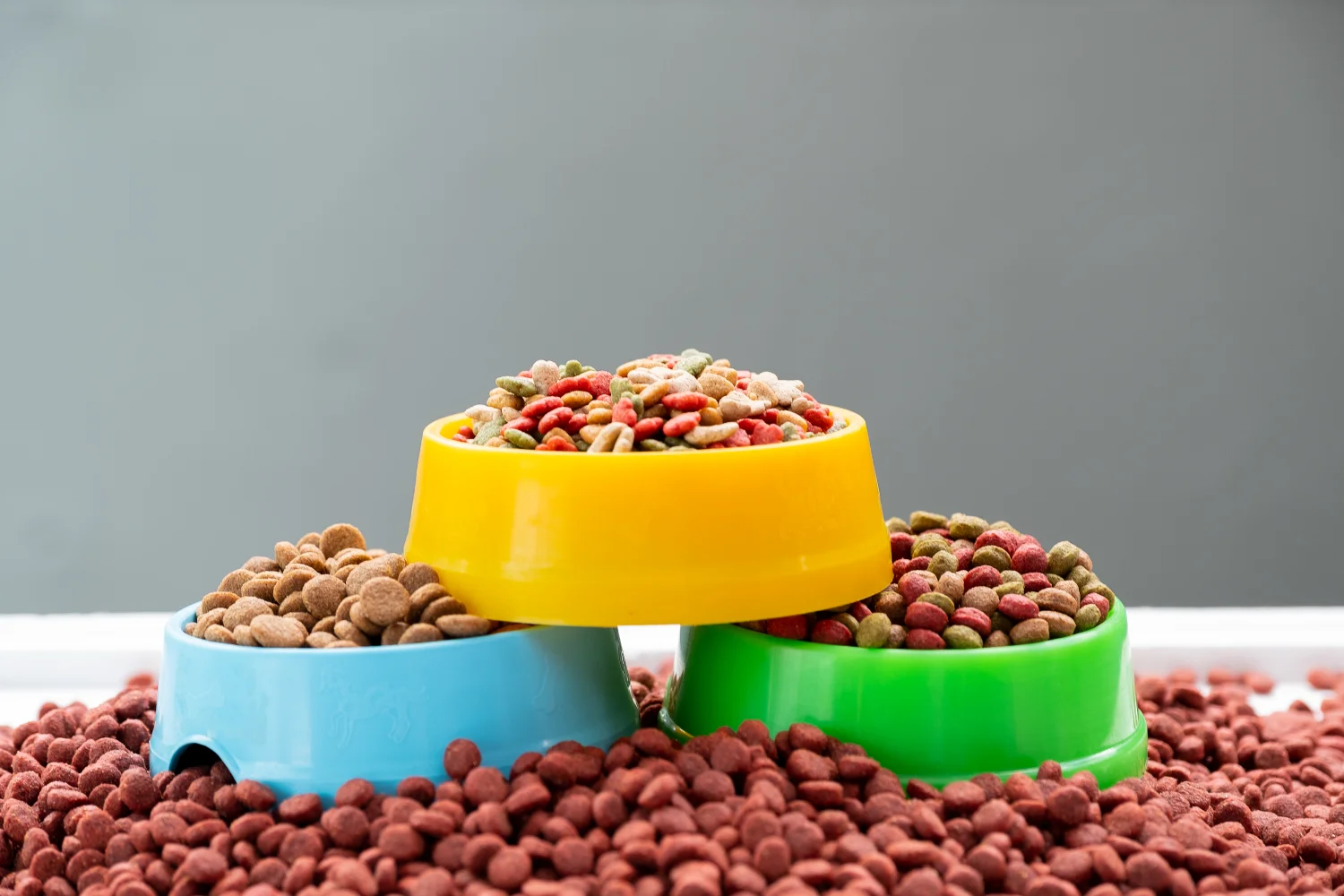
Strong labels sell fast. Weak evidence still travels fast. That gap leaves many owners choosing a food by story first and by proof second.
In 2026, no pet food label wins by default. The strongest evidence still favors diets that are complete and balanced, fit the pet’s life stage and health status, and come from stronger safety and quality-control systems.

This is why the debate keeps returning. Grain-free is often sold as cleaner. Raw is often sold as more natural. Traditional diets are often dismissed as processed or outdated. But evidence does not judge food by identity words alone. Evidence asks harder questions. Does the diet meet nutritional needs? Is the safety profile realistic for the pet and the household? Can the manufacturer show stronger control over formulation, testing, and labeling? Those questions matter more than tribe language. They also help explain why this debate is still active in 2026, even after years of consumer discussion, veterinary caution, and product repositioning.
For pet food brands that need clearer claim communication and more reliable pouch execution, explore pet food packaging solutions built for shelf clarity and daily use.
Why Is This Debate Still So Strong in 2026?
Owners hear simple promises. Science gives slower answers. That mismatch keeps the argument alive and makes labels feel easier than evidence.
The debate remains strong because the market sells identity, while nutrition science studies outcomes, risk, and fit. Those are not the same thing.
Why labels keep winning attention
Grain-free, raw, and traditional are easy to remember because they sound like worldviews, not just feeding options. Grain-free can suggest purity. Raw can suggest instinct and ancestry. Traditional can suggest stability or, to critics, old thinking. These signals are emotionally strong. They work fast on crowded shelves and social media. Evidence moves more slowly because it has to separate formulation from marketing, owner perception from objective outcomes, and one diet type from another diet inside the same label category. A 2026 evidence collection from RCVS Knowledge notes that there is still limited published research on long-term effects across these diet types, and that many studies rely on owner-reported impressions rather than long-term objective assessment. That matters because owner experience is real, but it is not the same as controlled evidence. The debate also stays active because broad terms hide major variation. A “raw” diet can differ greatly from another raw diet. The same is true for grain-free and traditional products. So the real question is not which tribe sounds better, but which evidence is stronger and which product is better controlled.
| Why the debate persists |
What it means |
| Labels are simple |
Owners can act on them fast |
| Evidence is slower |
Science must separate many variables |
| Categories are broad |
Products inside each category can differ a lot |
Evidence (Source + Year): RCVS Knowledge, Unconventional Diets for Dogs and Cats (2026); WSAVA, Frequently Asked Questions & Myths (2018).
What Should “Better Pet Food” Actually Mean?
“Better” sounds useful, but it hides the real issue. Better for what pet, at what life stage, under what health and household conditions?
Better pet food should mean four things first: nutritional adequacy, individual fit, stronger manufacturer control, and evidence that the claimed advantage is real.
Four harder standards that matter more
Once the tribe language is removed, the standard becomes clearer. A pet food is stronger when it is complete and balanced for the intended species and life stage, when it fits the pet’s health condition, when the manufacturer can show stronger formulation and quality control, and when the claimed benefit is supported by something more than preference language. FDA’s guidance on “complete and balanced” explains why this phrase matters so much: if a product is intended to be the pet’s sole diet, that statement is one of the most useful signals on the label. This point also matters because ingredient beauty and premium language can distract from the basics. A food can sound cleaner but still fail as a main diet if the nutritional profile is wrong for the animal or the life stage. A kitten, an adult indoor cat, a large-breed puppy, and a dog with a urinary issue are not asking the same nutritional question. Better therefore means better matched, not better marketed. This is also why adequacy statements and manufacturer discipline often matter more than lifestyle labels.
| Hard standard |
Why it matters |
Common mistake |
| Complete and balanced |
Supports use as the main diet |
Treating “premium” as enough |
| Life-stage fit |
Needs differ by age and condition |
Using one formula for every pet |
| Manufacturer control |
Reduces formulation and process risk |
Judging by design and language only |
| Evidence-backed claim |
Separates real benefit from positioning |
Assuming a trend equals proof |
Evidence (Source + Year): FDA, “Complete and Balanced” Pet Food (2020); WSAVA, Frequently Asked Questions & Myths (2018).
What Does the Evidence Actually Say About Grain-Free?
Grain-free sounds cleaner and more natural. But a label can rise faster than the evidence behind the health promise.
Current evidence does not support treating grain-free as automatically healthier. The main concern has shifted toward full formula design, especially when pulses rank high.
What grain-free can and cannot claim
Grain-free became powerful because it was often framed as closer to ancestral feeding or as a cleaner answer to modern pet health concerns. That framing was commercially effective. But the evidence base is more mixed. A 2025 review on grain-free diets describes wide variability across products and does not support the idea that grain-free is automatically superior. FDA’s 2024 update on non-hereditary DCM in dogs is even more important here. FDA states that reported cases have involved both grain-free and grain-containing diets, while many reports involved diets with non-soy legumes or pulses high in the ingredient list. That shifts the discussion away from a simple “grain yes or no” question and toward a harder formulation question. It suggests that ingredient replacement logic, nutrient bioavailability, processing, and full dietary structure matter more than the absence of grains alone. This does not mean all grain-free diets are unsafe. It means that grain-free should not be used as shorthand for higher quality or lower risk. It is best understood as a formulation choice that requires the same scrutiny as any other diet style.
| Claim around grain-free |
What evidence supports |
What remains weak |
| More natural |
Marketing appeal |
Not a direct health guarantee |
| Better for all pets |
No broad evidence |
Overgeneralizes many products |
| Safer because grain is absent |
Not supported by FDA framing |
Misses full-formula issues |
Evidence (Source + Year): FDA, Questions & Answers: FDA’s Work on Potential Causes of Non-Hereditary DCM in Dogs (2024); Zhang et al., Grain-Free Diets for Dogs and Cats: An Updated Review (2025).
Are Grains Really the Problem?
“Grains are fillers” is easy to repeat. It is much harder to support when the full nutritional role of grains is examined.
Current veterinary nutrition guidance does not support the idea that grains are useless fillers. Properly cooked grains can provide energy, fiber, fatty acids, vitamins, and minerals.

Why the filler claim is too simple
WSAVA’s nutrition FAQ addresses this point directly. It states that nothing in a pet food is truly a filler and that cereal grains can have nutritional purpose. Properly cooked grains provide starch-based energy, and many also contribute fiber, fatty acids, vitamins, and minerals. That does not mean every grain-based formula is strong. It means grain presence alone does not prove poor quality. The filler accusation also tends to ignore the main nutritional question: what matters is the final diet the animal eats, not whether one ingredient fits a social media narrative. A poor diet can be grain-inclusive or grain-free. A strong diet can also be grain-inclusive or grain-free. The practical mistake happens when grain removal is confused with nutrient improvement. Removing one ingredient group does not automatically improve digestibility, balance, palatability, or health outcomes. For many healthy pets, the debate should move away from “with grain versus without grain” and toward “well-formulated versus poorly reasoned.” That is a much less marketable message, but it is more useful.
| Question |
Evidence-based answer |
| Are grains only fillers? |
No. They can serve real nutritional functions. |
| Can dogs and cats digest grains? |
Yes, when grains are properly cooked and the diet is balanced. |
| Does removing grains upgrade a diet by itself? |
No. The whole formula still decides quality. |
Evidence (Source + Year): WSAVA, Frequently Asked Questions & Myths (2018); Sanderson, Pros and Cons of Commercial Pet Foods, Including Grain/Grain Free (2021).
What Does the Evidence Actually Say About Raw?
Raw feeding often promises nature, vitality, and simplicity. The evidence is less romantic and much more focused on safety, balance, and handling.
Raw diets still have weaker proof for broad health advantage and clearer proof for contamination, household exposure, formulation imbalance, and handling risk.
What raw claims usually run into
Raw diets remain popular because many owners see them as closer to canine or feline ancestry. That emotional logic is strong. However, the current evidence base does not show a broad, settled health advantage that applies across pets or products. A 2025 review on raw meat diets notes that owners often report benefits, but most of those claims still lack strong scientific substantiation. By contrast, the risk profile is easier to document. Raw products can carry pathogens. Nutrient balance can drift if the formulation is poor. Safe handling becomes part of the feeding system, not an optional extra. CDC’s 2025 pet food safety guidance takes a clear position and does not recommend feeding raw pet food or treats to dogs and cats. It also reminds owners that “raw” does not automatically mean healthier and that both raw and cooked products can be high quality or low quality. This is an important correction. The useful evidence distinction is not raw versus cooked in theory. It is whether the product is nutritionally adequate, how it is manufactured, and what realistic exposure risks come with it in daily life.
| Raw diet issue |
Evidence direction |
Why it matters |
| Claimed health gains |
Often owner-reported, less settled |
Hard to generalize |
| Pathogen risk |
Well documented |
Affects pets and people |
| Nutrient imbalance |
Recognized concern |
Can affect long-term health |
Evidence (Source + Year): CDC, About Pet Food Safety (2025); Lyu et al., Current Evidence on Raw Meat Diets in Pets (2025).
Why Is Raw Not Just a Personal Preference Issue?
Raw feeding is often framed as a personal choice. But contamination risk does not stay personal once a pet, a home, and shared surfaces are involved.
Raw feeding is also a household exposure question. The main issue is not taste or philosophy alone, but foodborne risk that can spread through pets, bowls, waste, and surfaces.
Why the household matters as much as the pet
CDC’s current guidance makes the public-health angle clear. Raw pet food can make both animals and people sick, and the risk extends beyond the bowl. Hands, kitchen surfaces, thawing practices, waste, pet saliva, and simple daily contact all matter. This is why the issue cannot be reduced to “my dog does well on it.” One household may see no obvious problem, while another may face far higher exposure risk because of young children, older adults, pregnancy, immune compromise, or weak food-handling routines. FDA’s 2025 advisory on certain Darwin’s raw pet food lots shows how real this remains. The agency described E. coli O157:H7 and Salmonella findings, and it noted a genetic match between a closed product sample and a stool sample from a four-year-old child who became ill. That kind of event shows why anecdote cannot replace risk assessment. A raw product can appear normal, be stored in a home freezer, and still become part of a serious contamination pathway. So the relevant question is not only whether the pet likes or tolerates the diet. The stronger question is whether the entire household can responsibly carry the exposure burden.
| Household factor |
Why raw risk rises |
| Children under 5 |
Higher vulnerability to foodborne germs |
| Adults 65+ |
Higher risk from exposure |
| Immune compromise or pregnancy |
Lower tolerance for contamination mistakes |
Evidence (Source + Year): FDA, Darwin’s Natural Pet Products Advisory (2025); CDC, About Pet Food Safety (2025).
What Does “Traditional” Still Get Right?
Traditional diets are often criticized as boring or processed. Yet boring can sometimes mean more visible standards, more repeatability, and easier verification.
Traditional pet food still matters because it is usually easier to verify for adequacy, labeling, routine manufacturing control, and long-term use experience.
What “traditional” means in practical terms
In this discussion, traditional pet food means mainstream commercial dry or wet diets, often grain-inclusive but not always, that sit inside a more familiar labeling and manufacturing system. The point is not that traditional always means best. The point is that traditional often means easier to check. FDA and WSAVA both point owners back to adequacy, labeling, and manufacturer discipline. CDC also describes cooked commercial options such as kibble and canned food as common safe choices because they are processed at temperatures designed to kill germs. This does not make every conventional product strong. It does mean the control framework is easier to understand. Labels are more standardized. Responsibility is easier to locate. Routine quality systems are more visible. Long-term use is more common. In short, traditional products usually offer a clearer verification path, and that matters when owners are trying to reduce uncertainty rather than purchase ideology. Their advantage is not tradition for its own sake. Their advantage is that they often fit the evidence system more easily.
| Traditional strength |
Why it helps owners |
| More familiar labeling structure |
Easier to check suitability |
| Routine cooked processing |
Lower foodborne exposure risk than raw |
| Longer use history |
More practical experience across many households |
Evidence (Source + Year): CDC, About Pet Food Safety (2025); FDA, Pet Food (2024).
For pet food brands converting nutritional positioning into shelf-ready packs, see pouch formats that help keep claims clear, feeding information readable, and daily handling more practical.
Why Are Labels Alone a Weak Decision Tool?
Natural, premium, ancestral, clean. These words feel informative, but they often describe image more than verified nutritional performance.
Labels alone are weak because they do not prove adequacy, digestibility, quality control, pathogen control, or objective health outcome.
Why attractive ingredient stories can still mislead
WSAVA’s guidance makes a useful point that is easy to miss in consumer marketing: the ingredient list alone is not a strong way to determine pet food quality. Ingredient names do not tell the full story about digestibility, nutrient bioavailability, processing effects, expert formulation, or final-product testing. This is why “beautiful ingredient panels” can mislead owners. A list can look simple and human-like, yet still leave the main question unanswered: does the final food meet the pet’s real nutritional needs, and is that outcome consistently controlled? Label language such as natural, premium, holistic, or even grain-free can influence perceived quality, but these words do not stand in for adequacy or evidence. This is also where concept buying and evidence buying separate. Concept buying asks whether the food matches a preferred lifestyle story. Evidence buying asks whether the product is appropriate, safe, and verifiable. The two can overlap, but they are not the same. Owners and brands both benefit when they are not confused.
| Label word |
What it may signal |
What it does not prove |
| Natural |
Cleaner brand image |
Complete nutrition or lower risk |
| Premium |
Higher price positioning |
Better formulation control |
| Grain-free |
Alternative formula style |
Universal health advantage |
Evidence (Source + Year): WSAVA, Frequently Asked Questions & Myths (2018); RCVS Knowledge, Unconventional Diets for Dogs and Cats (2026).
So What Should Owners Compare Instead?
When labels confuse, the comparison method must improve. Better questions usually solve more than louder food identities ever can.
Owners should compare five things first: adequacy, life stage, manufacturer verification, realistic safety risk, and whether the promised benefit has actual evidence.
A more useful comparison checklist
This is the most practical part of the debate. If the goal is better decision-making, the owner should ask a tighter set of questions. First, is the food complete and balanced for the intended species and life stage? Second, who is making the food, and how is nutritional adequacy shown or maintained? Third, what are the realistic safety risks for this pet and this household? Fourth, is the claimed advantage backed by stronger evidence or mainly by positioning language? Fifth, if the pet has a specific medical or suspected food issue, is the food choice being made with the right veterinary framework rather than social media logic? These questions force the discussion back to measurable things. They also work across all three camps. A grain-free product can be held to them. So can a raw product. So can a conventional wet or dry diet. This is why the most useful comparison tool in 2026 is not a tribe chart. It is a risk-and-fit checklist.
| Question to ask |
Why it matters |
| Is it complete and balanced? |
Determines whether it can serve as the main diet |
| For which life stage? |
Needs change across growth, adulthood, and disease states |
| Who makes it and how is it verified? |
Shows whether control is visible |
| What are the realistic safety risks? |
Protects both pet and household |
| Is the benefit evidence-backed? |
Separates proof from promise |
Evidence (Source + Year): FDA, “Complete and Balanced” Pet Food (2020); CDC, About Pet Food Safety (2025).
Which Diet Fits Which Type of Pet and Household?
No label fits every case. The right question is always narrower: which option best fits this pet, this home, and this risk level?
Diet choice should return to context. Health status, household vulnerability, and the need for reliable nutritional control matter more than food ideology.
Fit beats identity
This is where the debate becomes more useful. A healthy adult pet may do well on different diet styles if the food is complete and balanced and well controlled. A pet with a suspected food allergy should not default to grain-free just because grain sounds suspicious. The evaluation has to be more precise. A pet with gastrointestinal or urinary issues may need an evidence-led diet decision tied to the clinical goal, not a broad consumer trend. A household with children, older adults, or immunocompromised members has a different safety threshold than a lower-risk household, which changes how raw feeding should be judged. And an owner who strongly values lower processing still needs to ask whether the chosen product remains nutritionally adequate and whether the handling burden is realistic. This is why no label category can claim universal victory. The useful answer is always conditional. Different pets and different homes create different nutrition and safety priorities. Once that is accepted, the debate becomes less ideological and more honest.
| Pet or household situation |
Main priority |
Common mistake |
| Healthy adult pet |
Balanced daily nutrition |
Buying by trend alone |
| Suspected food intolerance or allergy |
Accurate diagnostic pathway |
Assuming grain is the default problem |
| GI or urinary concerns |
Clinical suitability |
Using lifestyle labels as treatment logic |
| Home with vulnerable people |
Lower contamination risk |
Treating raw as only a pet preference |
Evidence (Source + Year): CDC, About Pet Food Safety (2025); RCVS Knowledge, Unconventional Diets for Dogs and Cats (2026).
Conclusion
In 2026, the best answer is not a camp. It is the diet that is nutritionally adequate, risk-aware, evidence-aligned, and appropriate for the specific pet.
Talk with us about pet food packaging
About Us
Jinyi
From Film to Finished—Done Right.
https://jinyipackage.com/
Our Mission
JINYI is a source factory for flexible packaging. The goal is to deliver packaging solutions that are reliable, practical, and easier to execute, so brands can get more stable quality, clearer lead times, and structures that fit the product and print result more precisely.
About JINYI
JINYI is a source manufacturer specializing in custom flexible packaging solutions, with over 15 years of production experience serving food, snack, pet food, and daily consumer brands.
We operate a standardized manufacturing facility equipped with multiple gravure printing lines as well as advanced HP digital printing systems, allowing support for both stable large-volume orders and flexible short runs with consistent quality.
From material selection to finished pouches, we focus on process control, repeatability, and real-world performance. Our goal is to help brands reduce communication costs, achieve predictable quality, and ensure packaging performs reliably on shelf, in transit, and at end use.
FAQ
1. Does grain-free mean healthier pet food?
No. Current evidence does not support grain-free as an automatic health upgrade. The whole formula matters more than the absence of grains alone.
2. Is raw food proven to be better for dogs or cats?
No broad, settled evidence shows that raw diets are generally superior. Risk evidence is clearer than benefit evidence, especially around contamination and handling.
3. Are grains just fillers in pet food?
No. Properly cooked grains can provide energy, fiber, fatty acids, vitamins, and minerals. Their presence does not prove that a diet is lower quality.
4. What matters most on a pet food label?
The most useful starting point is whether the food is complete and balanced for the intended species and life stage, followed by who makes it and how the product is controlled.
5. Which type of pet food should owners choose?
The best choice depends on the specific pet, the household risk profile, and whether the product is nutritionally adequate, well controlled, and supported by stronger evidence.