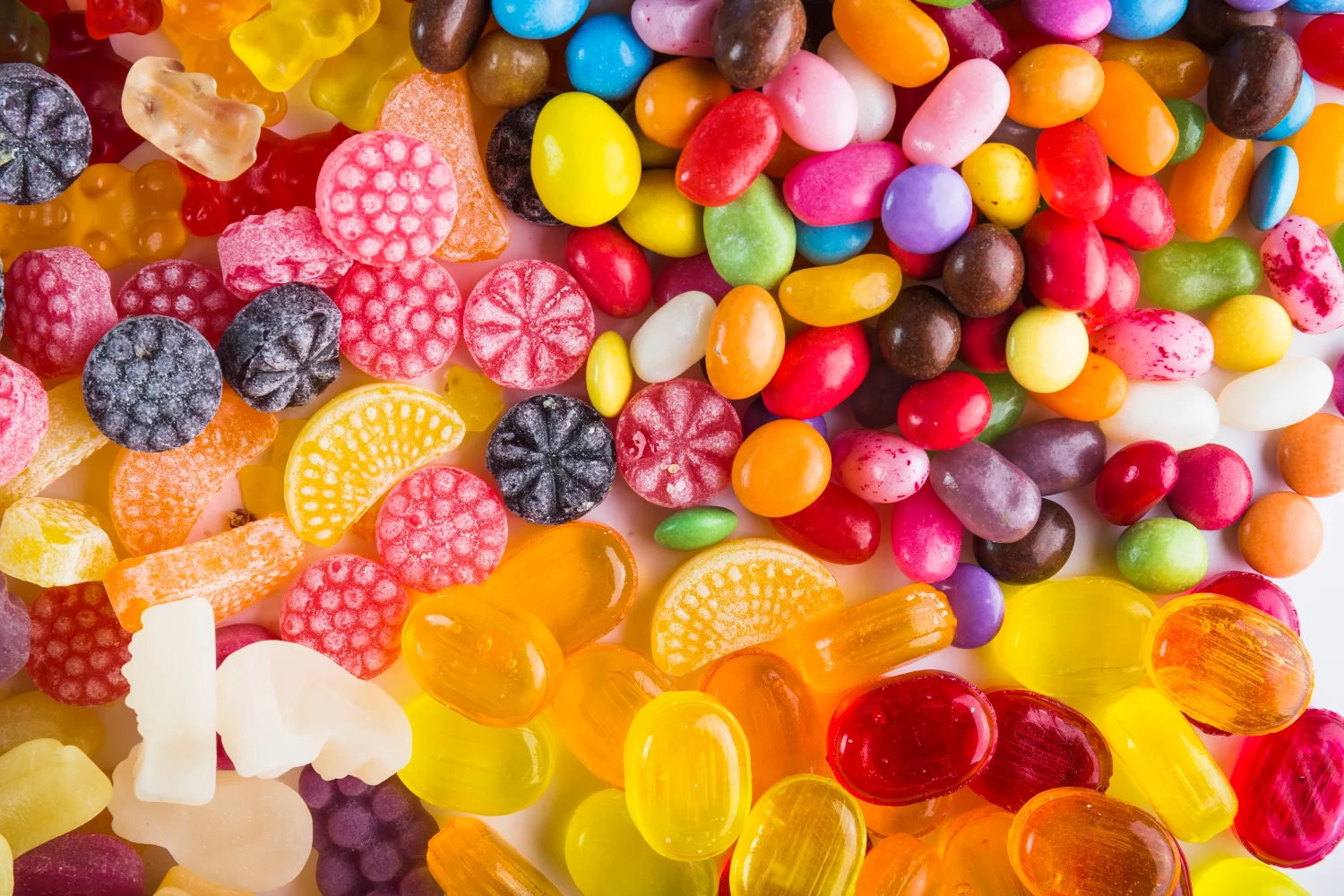
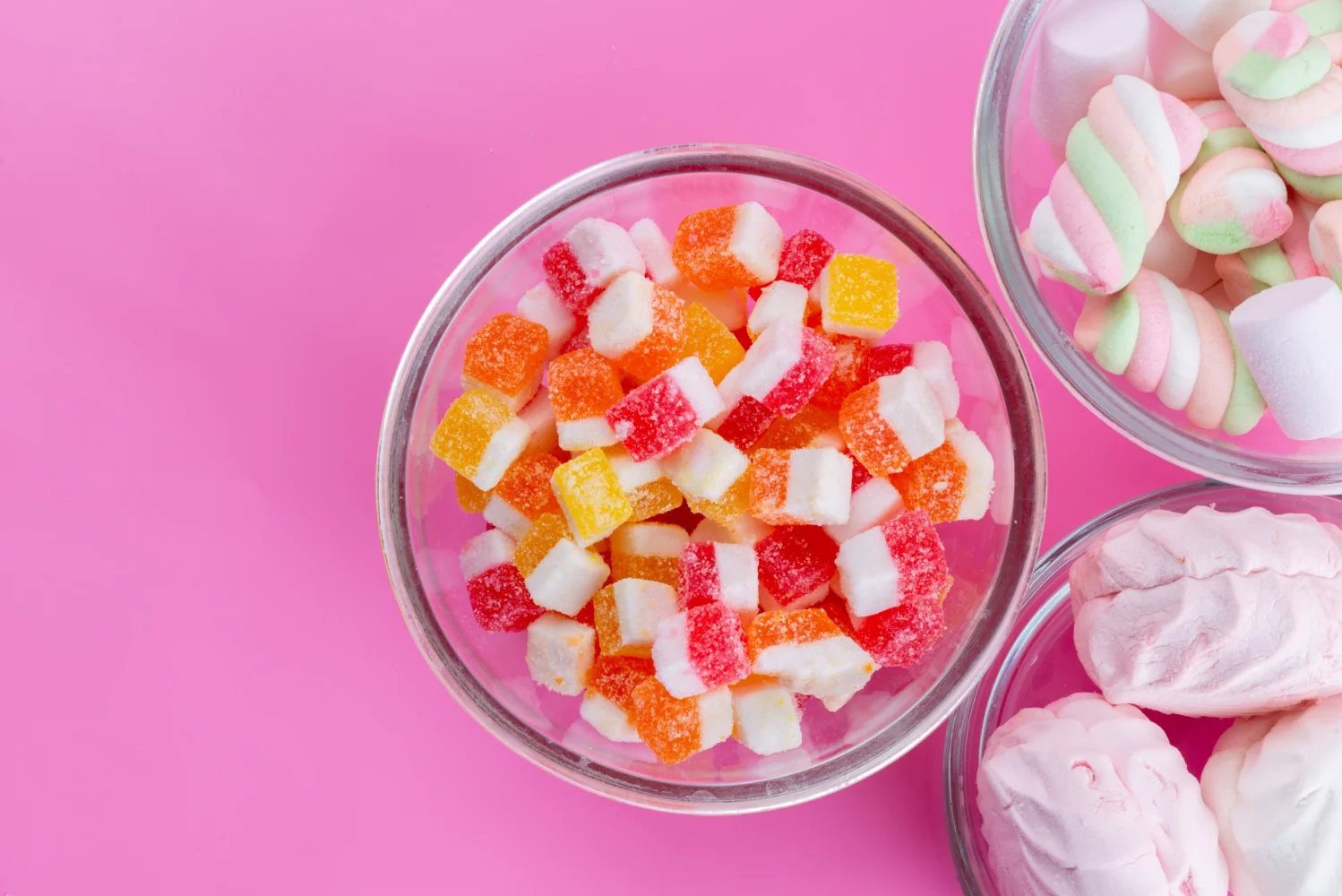
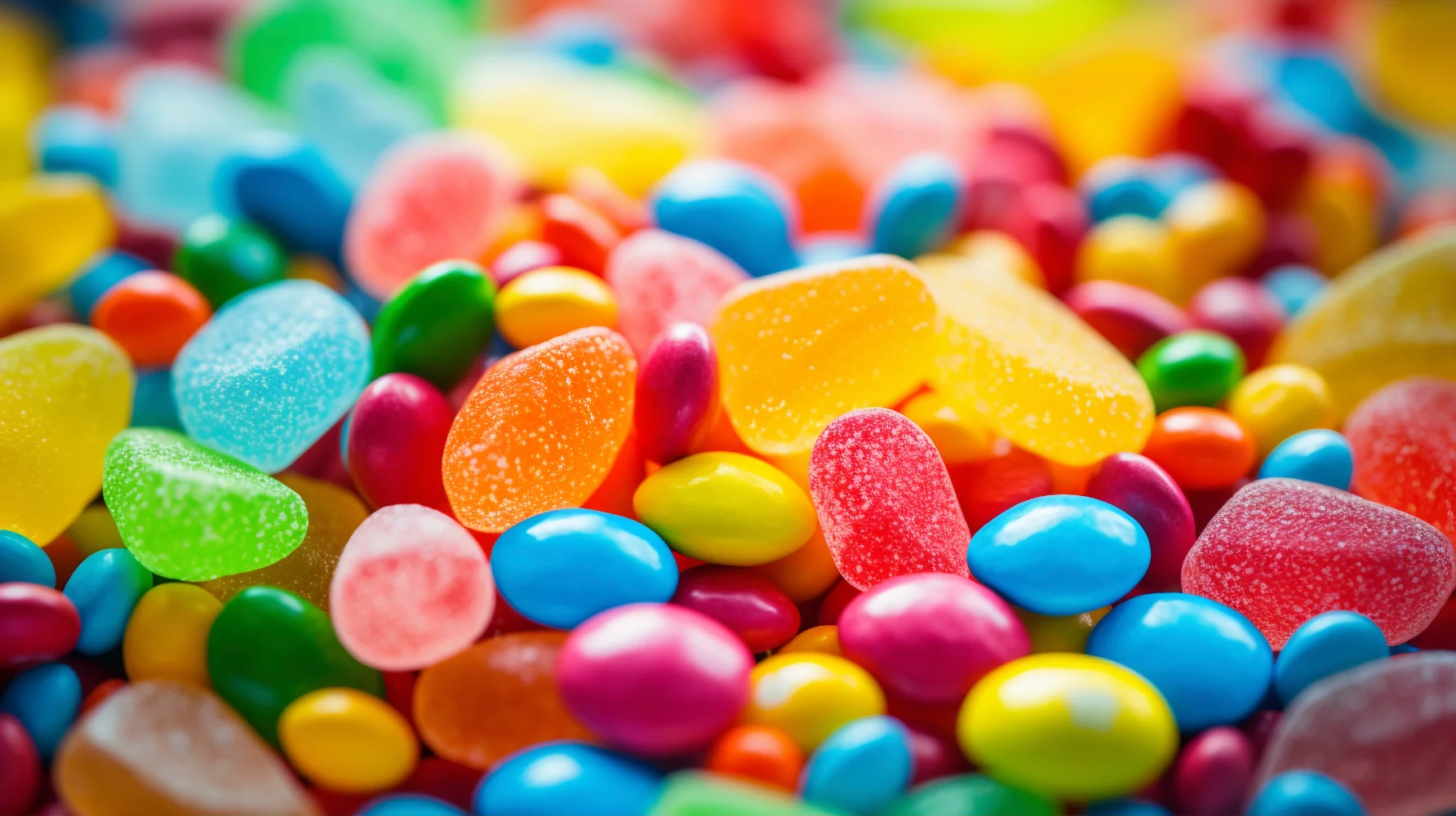
Sticky, clumped candy can wreck reviews fast, and many teams blame the film first. That guess often misses the real driver: water activity and the channel humidity that pushes it over a threshold.
Water activity (aw) often drives candy shelf life because it controls how fast texture flips from “dry/crisp/chewy” to “sticky/hard/clumped.” Packaging cannot rewrite the product’s internal state, but it can reduce moisture exchange and seal leaks that speed up aw drift.

For buyers, the practical question is simple: can the pack keep aw drift below the complaint threshold across your real humidity and handling timeline? If you want a spec that is built around that risk model, start here: Food Packaging Solutions for Texture-Sensitive Snacks.
Are gummy, hard candy, and chewy candy different mainly because of aw ranges and structure?
Many teams treat candy types as “soft vs hard.” That shortcut can lead to the wrong pack choice and the same complaints repeating every rainy season.
Gummy, hard candy, and chewy candy behave differently because they sit in different aw and structure zones. Those zones decide whether the dominant risk is moisture gain, moisture loss, or gradient migration inside the piece.
Hard candy often behaves like a low-moisture glassy system that hates humid air. It can stay “perfect” and then suddenly become tacky when absorbed moisture pushes its physical state toward a rubbery zone. Gummy often carries more internal moisture and uses a gel network, so it can fail in two directions: it can absorb humidity and go sticky, or it can lose moisture and become firm and less elastic. Chewy candy and soft filled chews often show a third pattern: internal gradients. The surface and the core can drift in different directions when the channel swings between dry and humid conditions.
How the buyer should reframe the decision
| Product type |
Typical texture complaint |
Most common trigger in the channel |
Packaging control lever |
| Hard candy |
Sticky surface, clumping, “wet” look |
Humidity spikes + time |
Lower WVTR + tight seal integrity |
| Gummy |
Sticky OR hard/less elastic |
High RH or very dry storage |
WVTR matched to channel + good reseal plan |
| Chewy |
Uneven bite, surface tack, core softness drift |
Humidity cycling and long dwell time |
Reduce channel swings + robust seals |
Evidence (Source + Year): Slade & Levine (1991) describe how glassy-to-rubbery behavior links to stability outcomes in low-moisture foods. Hartel (2010/2011) summarizes phase/state thinking that confectionery teams use to explain threshold-style texture failures.
Why does candy quality “flip fast” instead of slowly getting worse?
Teams often expect a slow decline. Customers often see a sudden failure: “It was fine last week, and now it is sticky and clumped.”
Texture can flip fast because moisture can act like a plasticizer. Small moisture gains can drop the product into a different physical state, where stickiness and adhesion rise quickly.

This is why a “slightly more humid” week can look like a manufacturing problem. In a threshold model, the system can cross a boundary where the surface becomes tacky enough to grab other pieces, grab dust, and grab the inside of the bag. Once that happens, clumping accelerates because contact area increases and the pack interior becomes a transfer surface. A brand also sees a second layer of cost: staff distrust at receiving. If two cartons look different, staff start treating the issue as a batch quality problem, even when the real cause was a late-stage humidity spike in storage or last-mile delivery.
A simple way to validate the “threshold” risk
| Test design |
What to record |
What the result means |
| Fixed temperature, 3–5 RH points |
Clumping rate, tack score, “sticks to film” area |
Identifies the RH zone where complaints surge |
| Same RH, two pack systems |
Time-to-fail (days) distribution |
Separates “film budget” vs “seal leak” effects |
Evidence (Source + Year): Slade & Levine (1991) explain why state change concepts can create non-linear stability outcomes. Hartel (2010/2011) supports using phase/state transitions to interpret sudden confectionery texture failures.
Is WVTR the main moisture budget, or do seal leaks dominate in real complaints?
A high-barrier film can still fail if the seal path becomes the shortcut for moisture exchange. Many brands learn this only after repeated “some bags are fine” complaints.
WVTR sets the steady moisture budget through the film, but seal leaks can dominate because they create a faster path. The fastest fix often starts with sealing repeatability, not thicker film.
WVTR describes a controlled, slow exchange through the film area. Real channels are not controlled. They include dusty filling environments, seal jaws that drift, and corners that create micro-channels when web tension is not stable. Those issues do not always create an obvious “leaking bag.” They can create localized moisture entry that starts near a corner or a fin seal, then spreads to the whole bag as pieces stick and smear residue onto the interior.
As a flexible packaging manufacturer, we focus on reducing two failure probabilities at the same time: the probability that moisture can enter faster than the WVTR budget, and the probability that the seal window is too narrow to stay stable across normal production variance. If you want a packaging plan that starts from that risk model, use this page as the handoff point: Build a Moisture-Safe Candy Packaging Spec.
Complaint-to-path map (fast diagnosis)
| What buyers see |
Likely path |
First verification move |
Fix direction |
| Stickiness starts at seal edge/corner |
Seal channel, wrinkles, contamination |
Gross leak screen + seal inspection |
Widen seal window, improve hygiene, maintain jaws |
| Uniform drift across the whole bag |
WVTR budget too high for channel RH |
RH storage A/B + weight gain trend |
Upgrade moisture barrier or add secondary pack |
| Random bag-to-bag failures |
Process drift (temperature/pressure/dwell) |
Seal strength distribution |
Process control + sealant layer tuning |
Evidence (Source + Year): ASTM F88/F88M is the standard method for seal strength testing, useful for checking seal consistency. ASTM F2096 is commonly used for gross leak detection, useful for identifying “shortcut” leak paths that beat WVTR budgets.
What should packaging control for gummy specifically: moisture gain, moisture loss, or both?
Many teams only fear humidity. Gummies can also fail in dry conditions, and that can surprise brands that ship across climate zones.
Gummy packaging should match the channel because gummies can drift in two directions. High RH pushes stickiness, while low RH can push firmness and lower elasticity.

A gummy system often lives in a narrower “comfort band” than buyers expect. If a pack blocks moisture too weakly, external humidity can push the surface toward tack and adhesion. If a pack blocks moisture too strongly in a very dry channel, the product can lose enough moisture to feel tougher and less bouncy. This is why the “best” structure is not universal. The best structure is the one that keeps the product inside its acceptable texture band across your channel’s typical RH swings and time-on-shelf.
Two-scenario validation that is easy to run
| Scenario |
Primary risk |
What to measure |
Packaging emphasis |
| Humid storage |
Surface tack, sticking, clumping |
Tack score, stick-to-film area, clump rate |
Lower WVTR + better seal integrity |
| Dry storage |
Hardening, lower elasticity |
Firmness and bounce score over time |
Prevent moisture loss + realistic reseal plan |
Evidence (Source + Year): Slade & Levine (1991) support the idea that moisture changes can shift physical state and change texture quickly. Hartel (2010/2011) supports using phase/state thinking to explain why confectionery stability depends on water-driven transitions.
What is the minimum “proof pack” a buyer should request to prevent sticky or clumped candy on shelves?
Many specs list materials and features. Few specs prove the pack can hold texture under real humidity and sealing variance.
A buyer-ready proof pack should show three things: the moisture budget (WVTR level), the seal repeatability (seal window and strength distribution), and the leak risk (gross leak screening focused on weak zones).
A proof pack is not a lab project. It is a short set of checks that predicts complaint risk. WVTR is the budget, but seals enforce the budget. This is why buyers should ask for sealing evidence, not only film names. The proof pack should also fit the product’s use case. If the candy is multi-serve, the reseal interface becomes the dominant risk after opening, especially when sugar dust contaminates closures. If the candy is single-serve, the brand often wins by reducing exposure events, even if per-unit packaging cost rises. In both cases, a clear proof pack aligns internal teams and reduces “batch blame” when the true cause is channel humidity.
Minimum Proof Pack template
| Proof item |
What it answers |
How it is commonly verified |
| WVTR level aligned to shelf days |
Can the film slow moisture exchange enough? |
Supplier WVTR data + storage A/B trend |
| Seal strength distribution |
Are seals consistent, not just “passed once”? |
ASTM F88/F88M sampling across a run |
| Gross leak screen + localization |
Are there shortcut paths at corners/fin seals? |
ASTM F2096 bubble emission checks |
| RH accelerated storage tied to channel |
Will texture drift cross complaint thresholds? |
Tack/clump/firmness scoring over time |
Evidence (Source + Year): ASTM F88/F88M (seal strength) and ASTM F2096 (gross leak detection) support a repeatable verification set that ties sealing quality to real-world moisture risk. Slade & Levine (1991) support the logic that water-driven state changes can create threshold-style failures.
Conclusion
Water activity often sets the shelf-life clock for candy, and packaging wins by controlling moisture exchange and seal leak shortcuts. If you want a spec built around your channel humidity risk, talk to Jinyi.
Request a Moisture-Safe Candy Packaging Plan
FAQ
What is the practical difference between moisture content and water activity (aw)?
Moisture content is how much water is present. Water activity reflects how “available” that water is to drive texture change and reactions. Two candies can have similar moisture but behave differently if their aw differs.
Why do some bags in the same batch go sticky while others look fine?
That pattern often points to seal variability or micro-leak paths. WVTR is a slow budget through the film, but a shortcut path at a corner, wrinkle, or contaminated seal can dominate the moisture entry rate.
Should a brand always choose the lowest WVTR film to prevent stickiness?
No. Gummies can also fail by drying out and losing elasticity in dry channels. The correct WVTR target depends on whether the dominant risk is moisture gain, moisture loss, or humidity cycling.
Which quick checks are most useful before scaling a production run?
Buyers usually get the most value from seal strength distribution, gross leak screening with localization, and an RH accelerated storage check that matches the real channel conditions.
Does reseal performance matter for texture shelf life?
Yes. After opening, the closure becomes the dominant interface. Sugar dust and fragments can prevent full closure, which can speed up aw drift in humid environments.
About Me
Brand: Jinyi
Slogan: From Film to Finished—Done Right.
Website: https://jinyipackage.com/
Our Mission:
JINYI is a source manufacturer specializing in flexible packaging. We aim to deliver reliable, practical, and production-ready packaging solutions so brands can reduce communication costs, achieve stable quality, and receive clearer lead times with structures and printing that match the product.
About Us:
JINYI is a source manufacturer specializing in custom flexible packaging solutions, with over 15 years of production experience serving food, snack, pet food, and daily consumer brands.
We operate a standardized manufacturing facility equipped with multiple gravure printing lines as well as advanced HP digital printing systems, allowing us to support both stable large-volume orders and flexible short runs with consistent quality.
From material selection to finished pouches, we focus on process control, repeatability, and real-world performance. Our goal is to help brands reduce communication costs, achieve predictable quality, and ensure packaging performs reliably on shelf, in transit, and at end use.