Many buyers ask for high barrier first. Then cost rises, visibility disappears, and the pouch still may miss the real risk.
I choose barrier by asking what fails first. The right barrier is not the strongest in every direction. It is the one that protects the product’s first real weak point.
See pouch options built around real barrier priorities, not vague “high barrier” requests.

I do not treat barrier as one number. I treat it as a decision about which threat deserves to be stopped first, and how much trade-off the project can carry.
Why Do Buyers So Often Ask for “High Barrier” Before Defining the Real Risk?
“High barrier” sounds safe because it hides uncertainty behind one phrase.
I do not begin with “high barrier.” I begin with “what damages this product first,” because moisture, oxygen, light, and aroma loss are not interchangeable threats.
A product can fear moisture much more than oxygen. Another can fear oxygen but not light. Another may lose its selling value through aroma fade before any major texture or oxidation problem appears. If I do not define the first real risk, then “high barrier” becomes an expensive shortcut that may still be pointed in the wrong direction.
| Weak starting point |
Better starting point |
| Need high barrier |
Need protection against what first? |
What Usually Fails First: Moisture, Oxygen, Light, or Aroma?
These all sound like freshness issues, but they are not the same failure path.
I sort them early because a product that softens from moisture is not asking the pouch the same question as a product that oxidizes, fades under light, or loses aroma.
This is the real foundation of barrier selection. If the product gets stale because it absorbs moisture, I should not let oxygen dominate the whole discussion. If the product loses aroma before anything else, then “freshness” is really an aroma-retention problem. Barrier logic becomes much clearer once I stop treating all loss mechanisms as one blurred category.
| Failure path |
Main barrier focus |
| Moisture pickup |
WVTR |
| Oxidation |
OTR |
When Does Moisture Barrier Matter More Than Everything Else?
Some products do not fail because of oxygen first. They fail because water vapor changes them faster.
I push moisture barrier to the front when crispness, powder flow, clumping behavior, or texture collapses quickly once the product picks up moisture.
Snacks, powders, granules, and some dry mixes often make this obvious. Once the product absorbs moisture, the customer sees the damage quickly through softness, clumping, or poor pour behavior. In those projects, WVTR matters more than a general fear of “not enough protection.” I would rather defend the product against the thing that defeats it fastest than pay for a more abstract barrier story.
| Product signal |
Barrier priority |
| Softening or clumping first |
Moisture barrier first |
Why Does Oxygen Barrier Matter So Much in Some Products—and Much Less in Others?
Oxygen gets discussed often because it sounds serious. That does not mean it is always the lead threat.
I prioritize oxygen barrier when oils, flavors, actives, or aroma-sensitive ingredients lose value mainly through oxidation.
For high-fat foods, oxidation-sensitive supplements, and products whose flavor degrades through oxygen exposure, OTR can become the main conversation. But if the product is not especially oxygen-fragile, driving OTR lower and lower may not pay back much in real product quality. Oxygen is important in the right project. It is not automatically first in every project.
| When oxygen matters most |
Why |
| Oxidation-driven products |
Flavor or quality drops first through oxygen |
When Does Light Barrier Become the Hidden Priority?
Light can damage a product more quietly than moisture or oxygen, which is why it gets missed so often.
I raise light barrier higher when color, flavor, or sensitive ingredients decline over time even though moisture and oxygen control look acceptable on paper.
This often matters more in longer shelf-life programs or where formula stability is visually or sensorially important. If the product still degrades even when WVTR and OTR look fine, the hidden priority may actually be light. I do not like solving the wrong problem more aggressively. I would rather recognize when the protection gap is in the direction of light exposure instead.
| Missed signal |
Possible hidden priority |
| Color or quality fades over time |
Light barrier |
Why Is Aroma Barrier Different from Simple Moisture or Oxygen Control?
Aroma loss is not just one more barrier spec. It changes how the product is experienced.
I treat aroma as a product-value issue, because for coffee, tea, spices, and some snacks, the first impression at opening is part of what the customer is buying.

Aroma does not behave exactly like a simple moisture or oxygen discussion. It is about what escapes, what weakens, and what the customer notices when the pouch is opened. That means aroma barrier should be judged through structure, shelf time, and sensory outcome together. If I only say “I want better aroma protection” without saying how important aroma is to the product experience, then the structure choice stays too vague to be useful.
| Aroma matters most when |
Why |
| Opening impression sells the product |
Loss is immediately noticeable |
Why Can One Product Need Strong Moisture Barrier but Only Moderate Oxygen Barrier?
Barrier priorities do not have to rise together.
I do not design barrier as a single wall that must grow equally in every direction. I design it as a priority system.
One product may be very vulnerable to humidity but only moderately sensitive to oxygen. Another may be the opposite. This is why I resist the habit of looking for a “strong in everything” answer. That usually adds cost and structure weight without improving the part that fails first. I get much better results when I raise the most relevant barrier first and then decide how much the other directions truly need.
| Wrong habit |
Better habit |
| Push all barriers up together |
Rank barrier priorities first |
How Do Shelf Life Goals Change the Barrier You Actually Need?
Barrier cannot be judged honestly without time.
I need the shelf-life target early, because a barrier that is enough for weeks may be far from enough for months.
This is where many barrier discussions stay too abstract. If I do not know whether the product must stay stable for a short retail cycle or a much longer one, I cannot judge whether the current protection is appropriate, excessive, or weak. Barrier is not a detached technical property. It is a time-based promise. It is my answer to how long the product needs to stay acceptably stable.
| Unknown input |
Why it breaks the decision |
| Shelf-life target |
Barrier adequacy cannot be judged clearly |
How Do Filling, Sealing, and Production Conditions Affect Barrier Performance in Real Life?
A material can have strong barrier data and still become a weak pouch after conversion and filling.
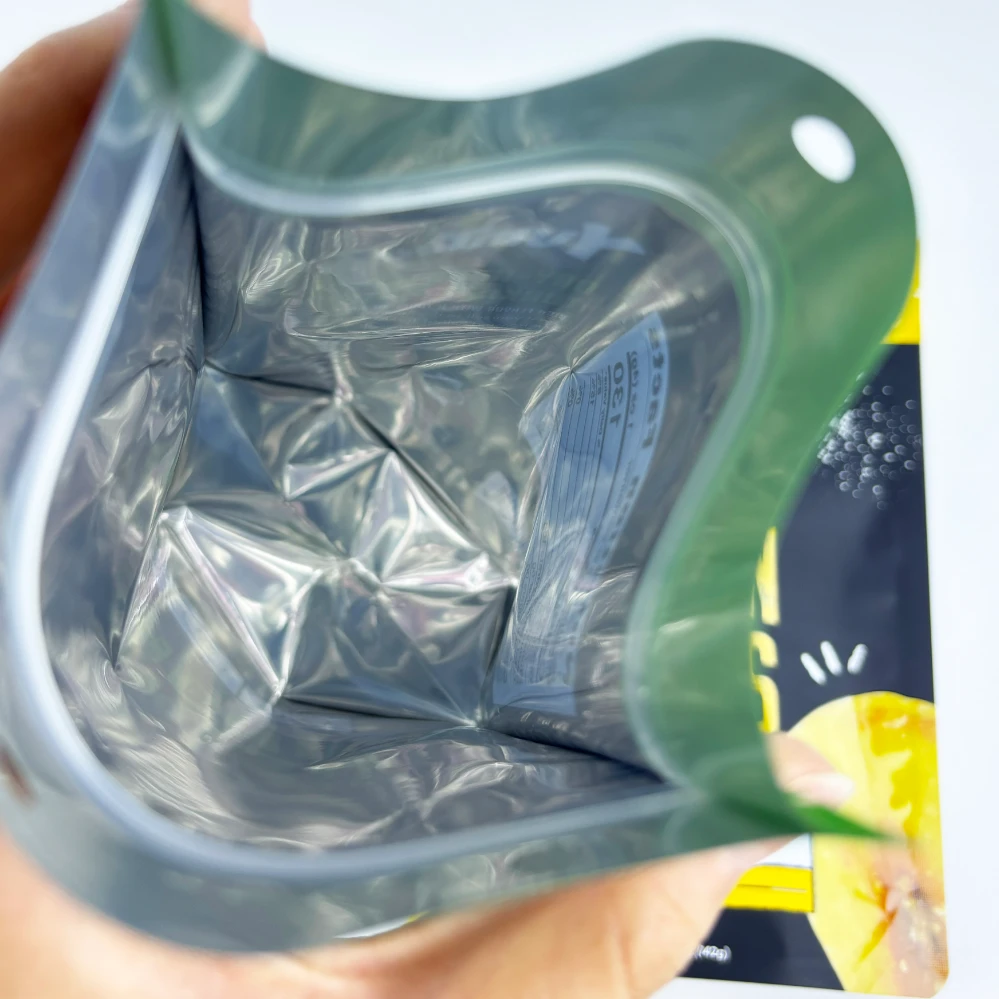
I judge barrier in the finished pouch, not only in the film, because seals, folds, zippers, contamination, and route abuse can create the real weakness.
This is one of the easiest points for buyers to miss. The barrier of a material is not the same thing as the barrier of the final pouch after it has been made, filled, sealed, and shipped. A strong film can still lose performance through a weak seal zone, a contaminated mouth, or stress from rubbing and transport. In real manufacturing, this detail often determines whether a “high barrier” structure stays strong outside the lab.
| Real-life weak point |
Why it matters |
| Seal zone or fold area |
Can override film-level strength |
Why Can a “Higher Barrier” Structure Still Be the Wrong Choice?
More barrier can still be wrong if it solves the wrong problem and adds new costs everywhere else.
I reject “higher is always better” because stronger barrier can also mean higher cost, lower visibility, harder processing, and less commercial flexibility.
A higher-barrier structure can make the pack heavier in cost and tougher in production. It can reduce transparency, narrow processing comfort, and complicate the project without creating a matching product benefit. Packaging is not a contest to maximize every metric. It is a decision about which trade-off is actually worth carrying. If the stronger barrier does not protect the most relevant risk, then it is not really the better structure.
| Higher barrier can cause |
Commercial effect |
| More cost and less visibility |
Weaker overall project balance |
What Should Buyers Test Before Deciding Which Barrier Matters Most?
Barrier judgment gets stronger only after the project survives real checks.
I do not trust barrier choice by theory alone. I want to see how the finished pouch behaves over time, after sealing, and after transport-like stress.
I want the target shelf period, the finished seal state, the post-transport appearance, the product condition, and the opening experience to stay acceptable together. A barrier claim becomes real only when the pouch still works in practice. Without that step, the decision is still mostly confidence, not proof.
| Test focus |
What it confirms |
| Finished pouch condition |
Barrier choice still holds in practice |
How Should Buyers Balance Barrier, Visibility, Processability, and Cost?
A better barrier answer is rarely free. It usually changes something else that the buyer also cares about.
I balance barrier by looking for the fewest painful trade-offs, because the project still has to look right, run right, and stay inside a rational budget.
Stronger barrier may mean losing transparency. It may mean more cost. It may mean a structure that feels heavier or less forgiving on the line. That is why I do not look for a barrier with no downside at all. I look for the one whose downside hurts the project least while its upside protects the product most meaningfully. That is a much more useful goal.
| What I balance |
What can be sacrificed |
| Barrier strength |
Visibility, process ease, or cost |
Which Barrier Matters Most for Your Product: the Strongest One, or the Most Relevant One?
The strongest-looking barrier can still be the wrong answer if it is protecting the wrong direction first.
I choose the most relevant barrier because the best result usually comes from protecting the first real weak point without adding unnecessary burden everywhere else.
This is the main conclusion I come back to. I do not look for a universal high-barrier formula. I look for the barrier that matters most for this exact product, this exact shelf target, and this exact commercial setup. The best barrier is rarely the biggest one. It is the one that is most precisely aimed.
| Selection mindset |
Likely result |
| Most barrier everywhere |
Can overbuild the project |
| Most relevant barrier first |
Usually more efficient and accurate |
If you are comparing barrier routes now, start by naming the first real product risk instead of asking for a vague “high barrier” pouch.
About Us
JINYI — From Film to Finished—Done Right. We believe good packaging is not only about appearance. It should work reliably in transport, on shelf, and in the customer’s hands. I focus on custom flexible packaging with 15+ years of production experience. Our factory runs multiple gravure printing lines and HP digital printing systems, so I can support both stable large-volume production and flexible custom work with clearer lead times and steadier quality.
FAQ
Should I always ask for high barrier?
No. I ask what fails first, then I match the barrier to that risk.
When does moisture barrier matter more than oxygen barrier?
I push moisture barrier first when texture, flow, or clumping changes faster through humidity than through oxidation.
Can light be the main hidden barrier issue?
Yes. Some products degrade more through light exposure than buyers realize at the start.
Why is aroma barrier not just another oxygen question?
Because aroma loss affects the customer’s opening experience and sensory value, not only the technical freshness story.
What should I test before locking a barrier route?
I test the finished pouch through shelf target, seal condition, transport response, product state, and opening performance together.