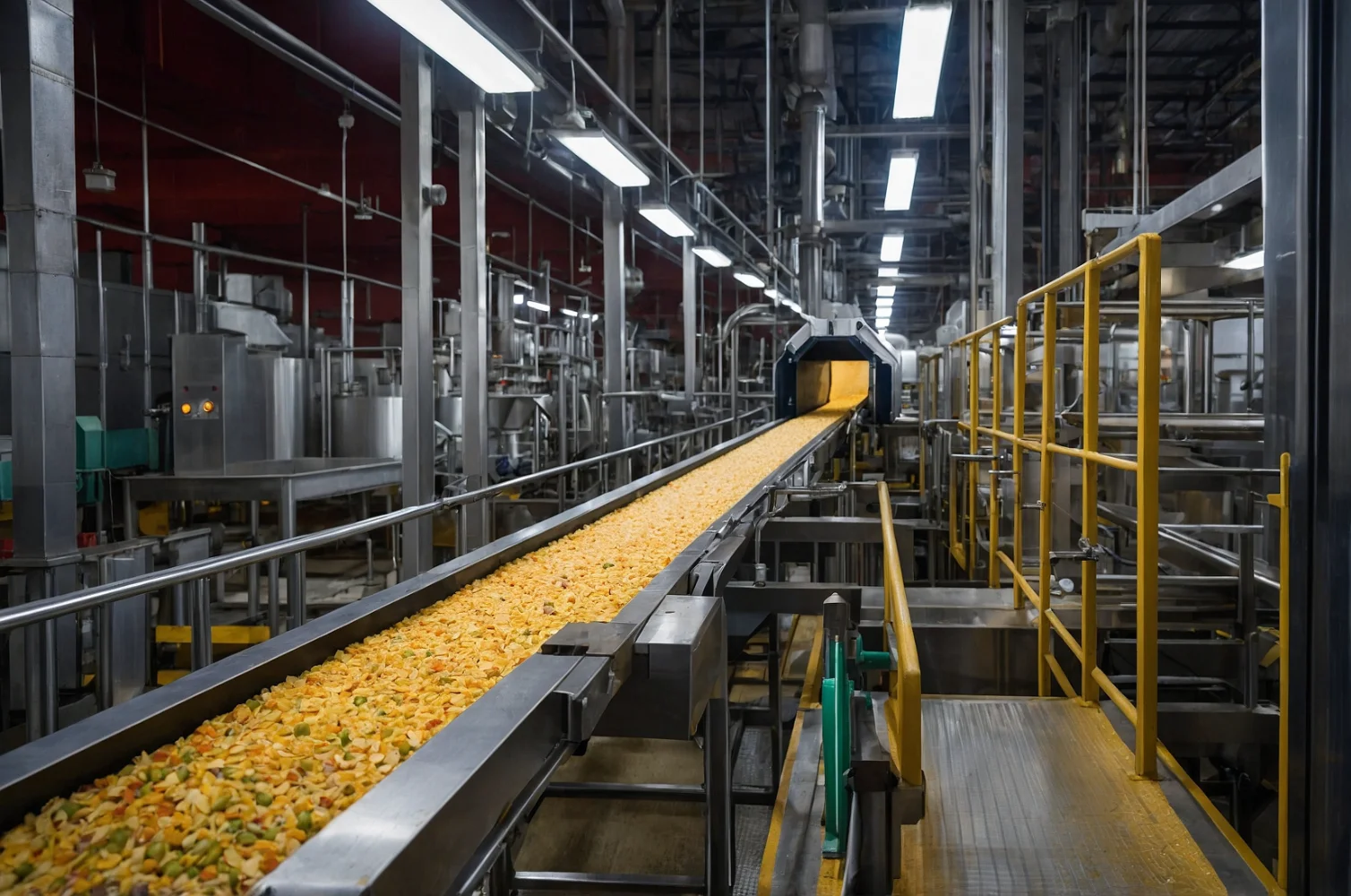
Busy shoppers see “processed” warnings everywhere. That can make every convenient food feel suspicious, even when the real nutrition story is more complicated.
A food is not automatically unhealthy because it is convenient, and it is not automatically healthy because it looks simpler. A better judgment separates processing level, nutrition profile, ingredient function, and the product’s real role in the diet.

That is why this question deserves a calmer and more useful answer. The term “ultra-processed” now appears in headlines, wellness content, and everyday shopping conversations. Many consumers have started to use it like a shortcut for “bad.” At the same time, many foods that save time, reduce prep work, extend shelf life, or improve access to nutrients also get pulled into the same conversation. The result is confusion. A stronger way to judge a food is to ask not only how processed it is, but also what the ingredients are doing, what the nutrient profile looks like, how often the product is likely to be eaten, and whether it supports or replaces healthier eating habits in real life.
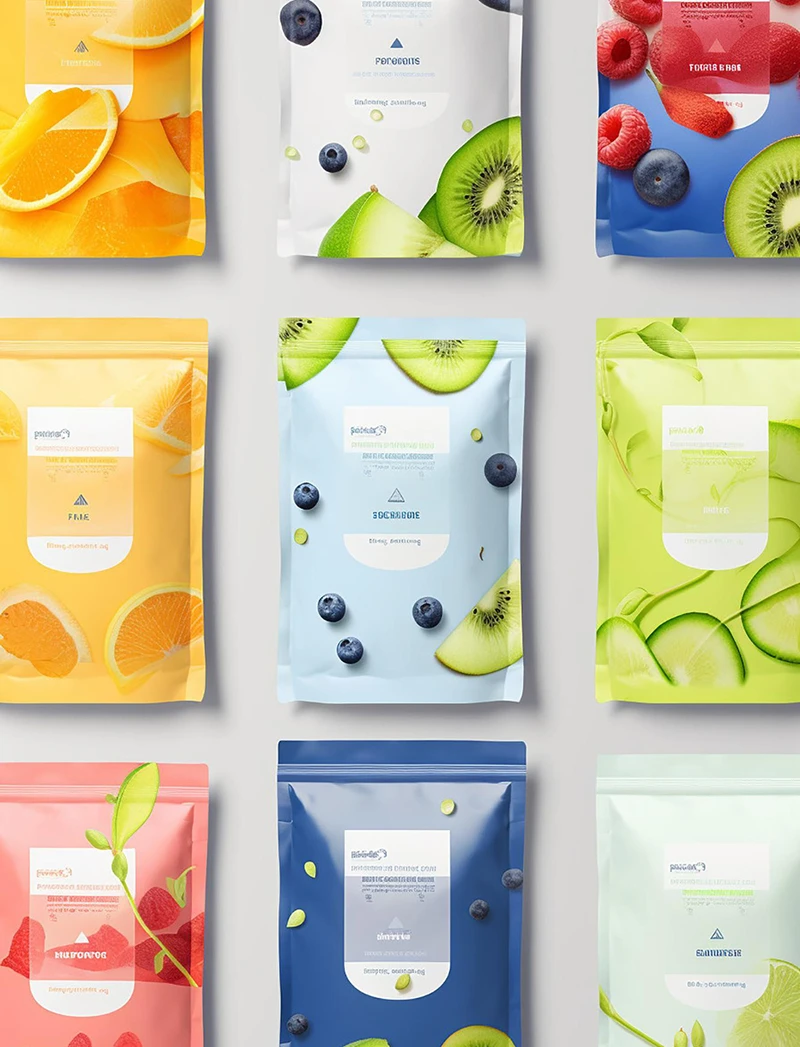
For food brands, packaging earns more trust when it helps shoppers quickly understand ingredients, product role, and nutrition context instead of relying on a simple “healthy” mood.
Why Has “Ultra-Processed” Become Such a Big Consumer Question?
Consumers now think about food processing far more than they did a few years ago. Interest rose faster than understanding.
“Ultra-processed” became a big shopping question because consumers increasingly notice processing, but many still do not have a stable framework for using the term well.
Why attention to processing rose so quickly
Processing has become a mainstream consumer concern because the topic now sits at the intersection of health anxiety, label reading, and everyday convenience. IFIC’s 2025 Food & Health Survey shows that eight in ten Americans consider whether food has been processed before purchasing it. The same survey also found that familiarity with the term “ultraprocessed food” rose from 32% in 2024 to 44% in 2025. That change matters because it shows the phrase is no longer limited to academic or policy circles. It is now a real shopping filter. But wider awareness does not automatically create better judgment. Many consumers know the term before they know the framework behind it. That gap explains why a frozen vegetable mix, a protein yogurt, a packaged snack cake, and a canned bean product can all feel suspicious in the same emotional category even though they do not deserve the same nutritional or functional judgment. The rise of the term created a stronger consumer question. It did not yet create a clearer consumer method.
| Consumer trend |
Why it matters |
| More people notice food processing |
Processing is now part of everyday purchase decisions |
| More people recognize “ultra-processed” |
The phrase is now shaping real consumer search and label behavior |
| Understanding still lags behind awareness |
Consumers can overuse the term as a quick moral judgment |
Evidence (Source + Year): IFIC Food & Health Survey (2025).
What Does “Ultra-Processed” Actually Mean—and What Does It Not Mean?
The term sounds precise, but its practical use is messier than many people assume. That is where confusion starts.
“Ultra-processed” is usually discussed through NOVA, which classifies foods by the nature, extent, and purpose of processing. But it is still not a perfect, universal health verdict.
Why NOVA is useful but not absolute
NOVA is the main framework behind most public discussion of ultra-processed foods. FAO materials explain that NOVA groups foods into four broad categories: unprocessed or minimally processed foods, processed culinary ingredients, processed foods, and ultra-processed foods. That framework is useful because it asks a different question from the usual nutrient-only approach. Instead of looking only at sugar, salt, fat, or calories, it asks how industrially formulated the product is and what kinds of processing steps and ingredients define it. That shift helped consumers and researchers focus on how modern food products are designed, not only on their nutrient numbers. But this still does not make NOVA the same thing as a final health ruling. The American Heart Association’s recent advisory notes that there is no universally accepted definition of ultra-processed foods, and it also acknowledges that some foods with positive nutritional value may still fall within that category. This is exactly why the term should be treated as a useful framework, not as a complete verdict.
| NOVA group |
Basic idea |
| Group 1 |
Unprocessed or minimally processed foods |
| Group 2 |
Processed culinary ingredients |
| Group 3 |
Processed foods |
| Group 4 |
Ultra-processed foods |
Evidence (Source + Year): FAO NOVA materials; American Heart Association Science Advisory (2025).
Why Is “Convenient” Not the Same as “Ultra-Processed”?
Many people now hear “convenient” and assume “industrial” or “bad.” That jump is often too blunt to be useful.
Convenience and ultra-processing overlap sometimes, but they are not the same idea. A food can become easier to use without becoming nutritionally reckless or heavily formulated.
Why convenience can improve access without proving harm
A food becomes convenient for many reasons. It may be cleaned, frozen, canned, chopped, fermented, dried, or pre-portioned. Those changes can reduce prep time, cut waste, extend shelf life, improve safety, or make healthy foods easier to use on busy days. None of those features automatically turns a product into an ultra-processed food, and none automatically makes it unhealthy. A bag of frozen vegetables, canned beans, plain yogurt, or quick oats may all make healthier eating easier while still involving processing. This matters because many consumers now react to convenience as if it were a moral warning sign. That reaction is too simple. The real question is not whether a product saves time. The real question is what was done to create that convenience and whether the nutritional and ingredient consequences are meaningful. If convenience supports more consistent access to fiber, protein, vegetables, whole grains, or balanced meals, it may be helping the diet rather than harming it. Convenience is a function. It is not a verdict.
| Convenience feature |
Why it does not automatically mean “bad” |
| Freezing |
It can preserve foods and reduce waste without destroying usefulness |
| Canning |
It can improve access and shelf life while still supporting a balanced diet |
| Pre-cut or ready-to-cook formats |
They may help people eat healthier foods more often |
Evidence (Source + Year): FAO NOVA materials; AHA Science Advisory (2025); Harvard Nutrition Source, Processed Foods and Health.
What Does the Current Evidence Actually Say About Ultra-Processed Foods and Health?
Strong headlines make it sound settled. The evidence is serious, but the scientific picture is more careful than many headlines suggest.
Current evidence links higher ultra-processed food exposure with many adverse health outcomes, especially cardiometabolic, common mental disorder, and mortality outcomes. But much of that evidence is still observational.
Why the risk signal is strong but the interpretation still needs care
The most important summary point for consumers is that the current risk signal is real and not minor. The 2024 BMJ umbrella review pooled evidence from 45 meta-analyses and found that higher exposure to ultra-processed foods was associated with a higher risk of multiple adverse outcomes, especially cardiometabolic outcomes, common mental disorder, and all-cause mortality. This is one reason the public-health discussion around ultra-processed foods has become so strong. At the same time, the AHA’s 2025 advisory also emphasizes that many unanswered questions remain around definition, measurement, and mechanism. Much of the available evidence is observational. That means researchers see a strong and repeated association pattern, but they are still working to clarify how much of the apparent harm comes from the processing itself, how much comes from nutrient composition, and how much may reflect broader dietary patterns or lifestyle clustering. Consumers can responsibly treat ultra-processed food exposure as a meaningful warning sign without pretending every causal detail is already fully settled.
| What the evidence supports |
What still needs caution |
| Higher UPF exposure tracks with worse health outcomes |
Many studies are observational, not definitive proof of every mechanism |
| Risk patterns are especially notable in cardiometabolic health |
Definitions and measurements still vary across studies |
| Mental health and mortality signals also appear repeatedly |
Processing itself and poor nutrient profile are not always fully separated |
Evidence (Source + Year): BMJ umbrella review (2024); American Heart Association Science Advisory (2025).
Why Is “Ultra-Processed” Alone Too Weak as a Buying Rule?
A single label can help start the conversation. It usually cannot finish it well.
“Ultra-processed” can be a useful flag, but it is too weak by itself as a buying rule because it does not fully capture nutrient quality, ingredient purpose, eating frequency, or dietary role.
Why processing level needs company from other questions
A shopper who uses only one question, “Is it ultra-processed or not?” will often miss what matters most in real eating. Processing level matters, but it should sit beside several other checks. A product may be technically ultra-processed yet still provide fiber, protein, or useful nutrients in a way that fits a busy diet. Another product may look less industrial but still deliver a lot of added sugar, sodium, or saturated fat with very little nutritional value. This is why the strongest judgment starts to look more like a matrix than a slogan. Consumers should consider the degree of processing, the sugar, sodium, and saturated fat burden, the amount of fiber or protein, the portion size and likely frequency, and the product’s real role in the overall diet. The AHA’s 2025 advisory is especially useful here because it emphasizes how much overlap exists between ultra-processed foods and poor nutrient profiles, while also noting that some nutritionally positive foods may still sit inside the category. That is the key. The category is helpful, but it is not sufficient by itself.
| Question beyond UPF status |
Why it matters |
| How much added sugar, sodium, and saturated fat? |
These often drive meaningful health risk |
| Does it deliver fiber or protein? |
Useful nutrients can change how the product fits in the diet |
| How often will it be eaten? |
Frequency changes whether a weakness is minor or meaningful |
| What role does it play? |
A staple replacement and an occasional convenience food are not the same |
Evidence (Source + Year): BMJ umbrella review (2024); American Heart Association Science Advisory (2025).
For food packaging, the most helpful packs do not only look clean. They help shoppers see product role, nutrition context, and ingredient logic fast enough to make a better decision.
What Should Consumers Actually Check on the Label Before They Decide?
Front-of-pack mood can guide attention. It should not replace actual label reading.
Before deciding a food is healthy or unhealthy, consumers should check product role, ingredient logic, sugar-sodium-fat profile, fiber or protein contribution, and how often the product is likely to appear in the diet.
Why the label should be read as a decision tool, not a vibe
The best label-reading framework for this topic is practical rather than ideological. First, what is the product’s main role in the diet? A breakfast staple, a snack, a meal shortcut, and a treat should not be judged the same way. Second, is the ingredient list mainly food-based or heavily formulation-driven? Third, how much added sugar, sodium, and saturated fat does the product carry? Fourth, does it provide fiber, protein, or meaningful nutritional value that supports satiety or dietary adequacy? Fifth, is this likely to be a daily staple, an occasional convenience product, or a frequent replacement for healthier meals? These questions matter because they move the consumer beyond front-of-pack emotional cues like “natural,” “simple,” or “wholesome.” A product can look emotionally healthy and still be nutritionally weak. Another product can look more industrial and still function reasonably well inside a healthy dietary pattern. The label matters most when it helps the consumer answer role, composition, and frequency questions together.
| Label check |
What it reveals |
| Product role |
Whether it is a staple, supplement, snack, or replacement |
| Ingredient structure |
Whether the product is mainly food-based or heavily formulation-driven |
| Sugar, sodium, saturated fat |
Whether the product carries the main nutrient burdens linked to concern |
| Fiber and protein |
Whether it contributes anything useful nutritionally |
| Likely frequency |
Whether the product is a small issue or a repeated pattern |
Evidence (Source + Year): AHA Science Advisory (2025); Harvard Nutrition Source, Processed Foods and Health.
Which Foods Most Deserve More Caution Under the Ultra-Processed Debate?
Not every ultra-processed food deserves the same level of concern. Some categories show up again and again in the risk discussion.
Consumers should be especially cautious with products where ultra-processing overlaps strongly with high added sugar, sodium, saturated fat, low satiety, and easy overconsumption.
Why some UPF categories are harder to defend nutritionally
One of the most useful ways to make this debate practical is to identify the categories where concern is usually less controversial. The AHA’s recent advisory notes that many ultra-processed foods overlap with products high in saturated fat, added sugars, and sodium. In real shopping terms, that often points toward sugary drinks, processed meats, sweet packaged snacks, chips, confectionery, and many mass-produced baked goods. These products tend to combine weak nutrient density with strong convenience, high palatability, and easy overconsumption. That combination helps explain why they sit at the center of the ultra-processed debate more often than products like frozen vegetables or fortified whole-grain foods. Harvard’s guidance also points out that some categories, especially soda-like products, are less controversial because the nutritional weaknesses are more obvious. The consumer lesson is not that every packaged product deserves the same suspicion. It is that some categories deserve much more caution because both the processing level and the nutrition profile point in the same risky direction.
| Higher-caution category |
Why it deserves more caution |
| Sugary drinks |
High sugar with little nutritional return |
| Processed meats |
Frequent overlap with sodium, saturated fat, and broader health concerns |
| Sweet packaged snacks and confectionery |
High palatability, easy overuse, weak nutrient quality |
| Mass-produced baked goods and chips |
Often combine refined ingredients with salt, fat, or sugar burdens |
Evidence (Source + Year): American Heart Association Science Advisory (2025); Harvard Nutrition Source, Processed Foods and Health.

When Can a Convenient Food Still Fit a Healthy Diet?
Healthy eating fails in real life when convenience is ignored. A food can help a better diet even if it is not emotionally “pure.”
Convenient foods can still fit a healthy diet when they support access, reduce prep barriers, add useful nutrients, and do not crowd out better staples too often.
Why real diets need practicality as well as ideals
One reason this topic becomes so emotionally loaded is that people confuse dietary aspiration with dietary reality. In theory, a person may want every meal to begin from minimally processed ingredients. In practice, work schedules, cost, family logistics, storage limits, and cooking skills all change what is realistic. That is why some processed and even some ultra-processed foods can still fit into a healthy diet, as Harvard and the AHA both acknowledge in different ways. A food that adds convenience can support healthier eating if it helps someone eat more beans, more whole grains, more vegetables, more protein, or fewer restaurant meals and impulse snacks. It becomes more problematic when it mainly delivers excess sugar, sodium, saturated fat, and easy overconsumption without much nutritional support. This is why the better question is not “Should convenience be rejected?” It is “Does this convenience help the person eat better overall, or does it mainly make weaker eating patterns easier to repeat?” Healthy eating needs realism. Convenience can be part of that realism.
| Convenient food can fit when it… |
Convenient food is harder to defend when it… |
| Makes vegetables, beans, or grains easier to use |
Mainly adds empty calories and displaces better staples |
| Supports meal building on busy days |
Encourages frequent overeating with little satiety |
| Adds useful nutrients or protein |
Adds mostly sugar, salt, fat, and weak nutritional return |
Evidence (Source + Year): American Heart Association advisory and related AHA communication (2025); Harvard Nutrition Source, Processed Foods and Health.
What Are the Biggest Consumer Mistakes in the Ultra-Processed Debate?
When a food idea gets popular quickly, consumers usually make two opposite mistakes: overreacting or ignoring it completely.
The biggest mistakes are treating all processing as equally bad, using NOVA as the only rule, ignoring nutrition facts, and judging food by front-of-pack emotional cues instead of full context.
Why better judgment matters more than stronger opinions
The ultra-processed debate is useful only when it improves buying decisions. It becomes much less useful when it turns into a new form of food absolutism. One common mistake is treating all processing as equally bad, which can lead consumers to fear reasonable convenience products that support healthier eating. Another is treating convenience as automatically unhealthy, even when that convenience lowers prep barriers and increases access to useful foods. A third is using NOVA alone as the final rule, without checking sugar, sodium, fiber, protein, or realistic frequency. A fourth is ignoring the distinction between a daily staple and an occasional product. A fifth is judging the package by mood instead of by full label context. A simple-looking front panel can hide a weak nutrient profile. A more industrial-looking product may still play a helpful role in the diet. The goal is not to become more suspicious of every package. The goal is to become better at sorting products into the right level of caution.
| Consumer mistake |
Why it weakens judgment |
| Treating all processing as equally bad |
It blurs meaningful differences between products |
| Using NOVA as the final rule |
It can hide important nutrition and dietary-role differences |
| Ignoring fiber, protein, sugar, sodium, and fat |
It replaces useful label reading with category shorthand |
| Judging by front-of-pack mood only |
Packaging emotion can hide a weak product structure |
Evidence (Source + Year): AHA Science Advisory (2025); FAO NOVA materials; Harvard Nutrition Source.
What Should Consumers Compare Instead of Only Asking “Is It Ultra-Processed”?
A better shopping framework does not ignore ultra-processing. It simply refuses to stop there.
Instead of only asking whether a product is ultra-processed, consumers should ask whether it is nutritionally useful, how it fits real eating patterns, and whether its convenience helps or hurts the diet overall.
Why smarter comparison beats stronger fear
The best question set for this category is practical and behavior-based. Is this product nutritionally helpful or mostly empty calories? Is it convenient in a useful way, or just easy to overconsume? What do the ingredient list and nutrient profile actually show? How often would this realistically appear in the diet? Does it replace a healthier staple, or does it help make healthy eating easier on real days with real time limits? These questions shift the consumer away from one-word judgments and toward diet quality in context. That matters because health does not happen through ingredient anxiety alone. It happens through patterns. A frozen entrée, high-protein yogurt, canned soup, or packaged grain bowl can have very different value depending on who is eating it, how often, and what it is displacing. A stronger consumer framework should help answer those pattern questions clearly enough that “healthy” becomes a better judgment, not just a cleaner-looking label.
| Better comparison question |
Why it improves the decision |
| Is it nutritionally helpful or mostly empty calories? |
It connects the product to real dietary value |
| Is the convenience useful or just easy to overeat? |
It separates helpful convenience from harmful convenience |
| How often will it appear in the diet? |
Frequency turns a small weakness into either a minor issue or a big one |
| Does it replace a healthier staple? |
Diet role matters more than category fear alone |
Evidence (Source + Year): American Heart Association Science Advisory (2025); Harvard Nutrition Source; IFIC Food & Health Survey (2025).
Conclusion
Healthy food judgment should be clearer than “less processed equals better.” The better question is whether the product’s processing, nutrients, ingredients, and role support the way real people actually eat. Talk with us about food packaging
About Us
Jinyi
From Film to Finished—Done Right.
https://jinyipackage.com/
Our Mission
We believe good packaging is more than visual design. It is a solution that performs reliably in real-world use.
JINYI aims to provide reliable, practical, and production-ready flexible packaging solutions, so brands can reduce communication costs and gain more stable quality, clearer lead times, and structures that better match product and sales-channel needs.
From material selection to finished packaging, we stay focused on how packaging performs in transport, on shelf, and in actual consumer use.
About Us
JINYI focuses on custom flexible packaging solutions and has more than 15 years of production experience serving food, snack, pet food, and consumer-goods brands.
Our factory operates multiple gravure printing lines and HP digital printing systems, which allow us to support both stable large-volume production and flexible small-batch customization.
Through standardized production processes and stable process control, we keep each batch consistent in quality, color, and structure, so packaging performs reliably in shipping, display, and everyday use.
FAQ
1. Does “ultra-processed” automatically mean unhealthy?
No. The term can be a useful warning flag, but it does not replace a full judgment about nutrition profile, ingredient purpose, frequency of use, and the food’s role in the diet.
2. Is every convenient food a problem?
No. A food can be convenient because it is frozen, canned, chopped, or pre-portioned. Convenience becomes a concern when it mainly supports excess sugar, sodium, saturated fat, or easy overconsumption without much nutritional return.
3. What should consumers check first on the label?
They should check the product’s role, ingredient structure, added sugar, sodium, saturated fat, and whether it contributes meaningful nutrients such as fiber or protein.
4. Which foods deserve more caution in this debate?
Products such as sugary drinks, processed meats, sweet packaged snacks, chips, confectionery, and many mass-produced baked goods usually deserve more caution because poor nutrition profile and higher processing often overlap strongly.
5. Can some processed or ultra-processed foods still fit a healthy diet?
Yes. Some can fit when they improve access, save time in a useful way, add real nutrients, and support healthier eating patterns rather than displacing them.