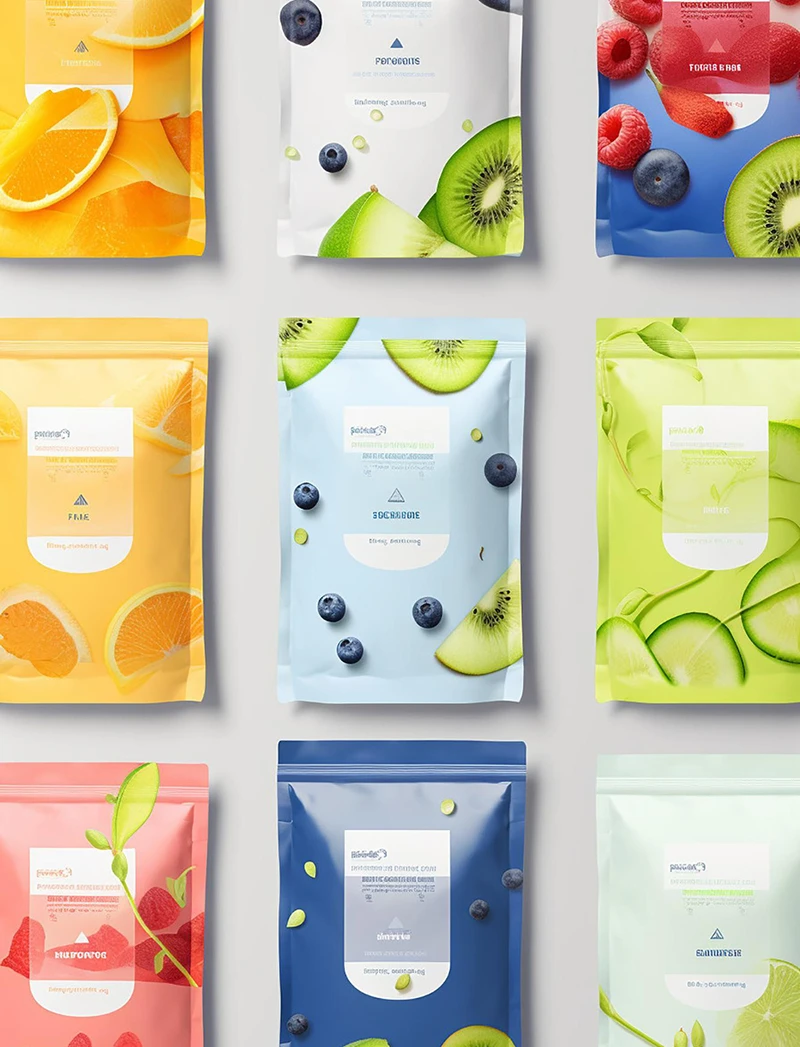
Parents want an easy “yes,” but kids snacks can feel like a trap: sugar, additives, allergens, and school rules collide in one small pouch.
Parents try new gummies, fruit snacks, and crackers when claims reduce uncertainty with checkable facts (grams of sugar, allergen scope, portion control). Skepticism rises when brands use vague health halos, implied benefits, or “no sugar” shortcuts without boundaries.

In this report-style outline, the goal is simple: map the claims parents search for to the risks they fear, then translate those risks into proof cues that hold up in reviews and customer service tickets.
What do parents actually “buy” when they choose kids snacks?
Parents do not buy nutrition poetry. Parents buy risk control for real moments: lunchboxes, car rides, screen time, and picky phases.
Parents usually trial a new snack when it reduces one worry without creating a new one (like “less sugar” that later causes stomach upset).
Deep dive
Parents make fast decisions with a short checklist. Parents often start with the front claim, but parents confirm it with the Nutrition Facts panel and the ingredient list. Parents also translate claims into “school reality”: can this go into a nut-free classroom, does it make a mess, and will my child actually eat it? This means “trial” is triggered by claims that are easy to verify and easy to execute. In practice, the strongest drivers are simple numbers (added sugar grams), clear boundaries (what “free-from” covers), and a portion format that fits routines (single-serve packs). The backfire happens when the claim creates an expectation that the product cannot reliably meet. For example, broad words like “healthy” can trigger a comments war because they do not define a measurable attribute. The same is true for benefit language that feels medical or outcome-guaranteed. A safer approach is to describe what the product is designed for (lunchboxes, portion control, allergen-aware choices) and show the evidence parents already use (label facts and scope statements). Added sugars limits in dietary guidance also shape parent expectations, so sugar claims must stay precise and qualified.
| Parent job-to-be-done |
What parents check fast |
What triggers trial |
What triggers skepticism |
| Pack a safe school snack |
Allergen statement + facility note |
Clear “free-from” scope |
Vague “school safe” with no scope |
| Reduce sugar anxiety |
Added sugars (g) per serving |
Quantified “reduced/lower” |
“No sugar” with hidden trade-offs |
| Avoid mess + manage portions |
Single-serve pack size |
Portion packs + simple calories |
Oversized packs + “guilt-free” words |
Evidence (Source + Year): Dietary Guidelines for Americans 2020–2025 (Executive Summary) (2024 PDF hosting for the 2020–2025 edition). :contentReference[oaicite:0]{index=0}
How do gummies, fruit snacks, and crackers create different “risk checks”?
Each subcategory triggers different fear words. Parents do not evaluate all kids snacks the same way.
Gummies raise sugar and dental worries. Fruit snacks raise “fruit halo” skepticism. Crackers raise sodium and refined-carb concerns.
Deep dive
Gummies usually trigger two fast checks: sugar source and stickiness risk. Parents often associate gummies with higher sweetness, dental concerns, and overeating. This is why portion packs, clear added sugars, and “no artificial colors” can convert—because the proof is visible on-pack. Fruit snacks trigger a different skepticism loop. The word “fruit” is a magnet for doubt because parents know “fruit flavor” does not equal whole fruit. Parents often verify if the product uses fruit puree, juice concentrate, or flavoring, and then parents match that reality against the sugar line. Crackers are more “everyday,” but crackers are not low-risk. Parents check sodium, allergens (wheat, dairy, sesame), and whether “whole grain” is meaningful or just a headline. The practical writing implication is important: do not reuse one generic claim set across all three categories. A claim that converts in crackers (“whole grain”) can sound like a dodge in gummies if sugar stays high. A claim that converts in gummies (“no artificial colors”) does not address the main cracker complaint if sodium remains unchanged. Each category needs a different proof cue stack that leads parents to the same end state: “I can explain why I chose this.”
| Category |
Top worry words |
Highest-converting proof cue |
Most common backfire |
| Gummies |
Sugar, additives, dental |
Added sugars (g) + portion packs |
“No sugar” with GI backlash |
| Fruit snacks |
“Fruit” halo, sugar |
Clear fruit source definition + sugar line |
“Real fruit” with unclear meaning |
| Crackers |
Sodium, refined carbs, allergens |
Quantified sodium + allergen scope |
“Whole grain” without context |
Evidence (Source + Year): Dietary Guidelines for Americans 2020–2025 (added sugars context within the edition). :contentReference[oaicite:1]{index=1}
Which claims drive trial, and what proof cues make them believable?
Trial claims work when they map to one clear worry and give a fast way to verify it.
Parents respond best to quantified sugar signals, clear allergen scope, and portion formats that fit routines.
Deep dive
Four claim families usually drive trial. First, sugar control claims. Parents do not need “healthy,” parents need numbers. “Lower sugar” converts when the pack shows added sugars per serving and the serving size is realistic. Second, ingredient simplicity claims. These convert when they name what is excluded (“no artificial colors”) and when the ingredient list matches the headline. Third, allergen and school-safety claims. These convert when the statement has scope (“free from peanuts and tree nuts”) and includes a careful boundary note about shared facilities if applicable. Fourth, convenience claims. These convert when they describe a real routine: lunchbox-friendly, portion packs, reseal, and low mess. The trust pattern is consistent: parents do not reward adjectives, parents reward consistency between front-of-pack language and the label facts. If you want a buyer-friendly landing page, you should show the three proof cues parents already trust: Nutrition Facts, ingredient list highlights, and allergen statement scope. You can then bridge to packaging performance by focusing on usability proof (portion packs, reseal features, clean opening) without turning the page into a process story. If you want a packaging solution page that supports this, you can position it as “portion control + hygiene + school compliance support.”
| Claim family |
Parent worry |
What they verify |
Safer wording pattern |
| Lower sugar |
Too sweet, daily intake |
Added sugars (g) + serving size |
“Xg added sugars per pack” |
| No artificial colors/flavors |
Additives |
Ingredient list match |
“No artificial colors (see ingredients)” |
| Allergen-aware |
School rules, reactions |
Allergen statement scope |
“Free from A/B; made in…” |
| Portion packs |
Overeating, mess |
Pack weight + calories |
“Single-serve packs for lunchboxes” |
Explore food packaging solutions that support portion packs, allergen-aware labeling, and clean opening for kids snacks.
Evidence (Source + Year): U.S. FDA Nutrition Facts Label resources (Daily Value context used in sugar communication) (page updated 2022; hosted 2025). :contentReference[oaicite:2]{index=2}

Which claims backfire and trigger “misleading” parent reviews?
Backfire happens when claims inflate expectations, blur definitions, or hide trade-offs parents discover after purchase.
Parents often leave “did nothing” or “misleading” reviews when the claim is broad, unqualified, or disconnected from label reality.
Deep dive
Five claim patterns backfire repeatedly. First, broad health halos like “healthy,” “good for kids,” and “guilt-free.” These words invite debate because they do not define a measurable attribute. Second, function-like benefits (“immune,” “brain,” “focus”) can feel like medical promise language to parents, and parents react strongly when daily-life outcomes do not change. Third, “no sugar” can become a trap when the product relies heavily on sugar alcohols or other sweeteners that some children do not tolerate well. Parents then write stomach-related complaints and label the claim as deceptive. Fourth, “real fruit” can backfire when the product uses concentrates or flavors in a way parents interpret as “not really fruit.” This is not a legal argument in the article. This is a trust argument: parents want the claim to match the mental picture. Fifth, missing boundaries can cause safety backlash. Parents are sensitive to age-appropriateness and choking concerns for certain textures and shapes, especially around candy-like snacks. A safer brand approach is to replace outcome language with design language and boundaries: “designed for lunchboxes,” “portion packs,” “made without artificial colors,” and “contains Xg added sugars per pack.” The goal is not to sound timid. The goal is to be specific and consistent so parents do not feel tricked.
| Backfire claim |
Why it fails |
What parents say |
Safer alternative |
| “Healthy / guilt-free” |
No measurable scope |
“Marketing” |
State one attribute with numbers |
| “No sugar” |
Trade-offs feel hidden |
“Stomach upset” |
Explain sweetener source + portion |
| “Real fruit” |
Definition confusion |
“Not really fruit” |
Clarify fruit source and role |
| “School safe” |
Allergen scope unclear |
“Misleading label” |
List free-from scope + facility note |
Evidence (Source + Year): HealthyChildren.org (American Academy of Pediatrics) consumer safety guidance and public education content on choking risk (includes candy/gummy context in seasonal guidance) (2023). :contentReference[oaicite:3]{index=3}
How can brands write kid snack claims that feel credible and still convert?
Credible copy converts when it reduces risk with boundaries and proof, not when it tries to “win” with bigger promises.
The safest structure is: claim → what it means → what parents can verify → how to use it in a real routine.
Deep dive
A practical claim-writing framework has three layers. Layer one is specificity. You should replace vague words with a single attribute that can be checked on the label. “Lower sugar” becomes “Xg added sugars per pack.” “Allergen-aware” becomes a scoped list of what is excluded and where it is made. Layer two is boundary conditions. You should qualify claims that depend on context. For example, “reduced sugar” should reference serving size and should not imply a medical outcome. “School friendly” should define allergens and include a careful facility statement where needed. Layer three is execution support. You should tell parents how to use the product to get the promised benefit. Portion packs matter because they are actionable. Reseal features matter because they reduce mess and help parents stick to the plan. This is where packaging becomes a legitimate, non-hype value point. As a flexible packaging manufacturer, we focus on packs that make portion control and hygiene easy (single-serve, clean tear, reliable seals, and optional reclose). This is not a “premium” story. This is a “fewer complaints” story. If you build pages around proof cues and routines, you reduce “misleading” reviews and increase repeat buying because parents can explain the choice to themselves and to others.
| Write it like this |
Not like this |
Parent verification |
| “Xg added sugars per pack” |
“Healthy snack” |
Nutrition Facts |
| “Free from peanuts/tree nuts (scope)” |
“School safe” |
Allergen statement |
| “Single-serve lunchbox packs” |
“Perfect for kids” |
Pack size + routine fit |
Build a kids-snack packaging spec that supports portion packs, clear claims, and fewer “misleading” reviews.
Evidence (Source + Year): Dietary Guidelines for Americans 2020–2025 (edition context for added sugars expectations) (2024 PDF hosting for the 2020–2025 edition). :contentReference[oaicite:4]{index=4}
Conclusion
Kids snacks win when claims reduce risk with checkable facts, clear boundaries, and routine-ready portions. If you want fewer skepticism reviews, write claims as proof cues and build packs that execute them.
Get a food packaging plan for portion packs & trust-ready claims
About Us
Brand: Jinyi
Slogan: From Film to Finished—Done Right.
Website: https://jinyipackage.com/
Our Mission:
JINYI is a source manufacturer for flexible packaging. We aim to deliver reliable, practical, and scalable packaging solutions so brands spend less time on back-and-forth and get more consistent quality, clearer lead times, and better-fit structures and print outcomes.
About Us:
JINYI is a source manufacturer specializing in custom flexible packaging solutions, with over 15 years of production experience serving food, snack, pet food, and daily consumer brands.
We operate a standardized manufacturing facility equipped with multiple gravure printing lines as well as advanced HP digital printing systems, allowing us to support both stable large-volume orders and flexible short runs with consistent quality.
From material selection to finished pouches, we focus on process control, repeatability, and real-world performance. Our goal is to help brands reduce communication costs, achieve predictable quality, and ensure packaging performs reliably on shelf, in transit, and at end use.
FAQ
- Is “no added sugar” the same as “no sugar”?
“No added sugar” means sugars were not added as an ingredient, but the product may still contain sugars from juices or concentrates. Parents still verify total sugar and added sugars on the label.
- What claim is most likely to convert for school snacks?
Portion packs plus a clear allergen scope statement usually converts better than broad “healthy” language because it is easy to verify and act on.
- Why do “real fruit” claims get skepticism?
Parents often see “fruit” as a health halo. Parents check whether fruit is puree, concentrate, or flavor and compare it to sugar on the Nutrition Facts panel.
- What is the safest way to write “lower sugar” without overpromising?
State the number per pack (added sugars grams) and keep the claim tied to serving size. Avoid outcome claims like “prevents cavities.”
- How can packaging reduce “misleading” reviews for kids snacks?
Packaging can support portion control, hygiene, and clean opening (single-serve, reliable seals, optional reclose). These features make the promise executable in daily routines.