Many foods taste “flat” long before they look spoiled, and teams often blame recipes instead of packaging physics. That mistake drives avoidable complaints and short shelf life.
No atmosphere strategy wins by default. MAP, vacuum, and standard air packs only slow flavor loss when they match the dominant engine: oxidation, aroma scalping, respiration, or microbial off-notes. See food packaging formats built for real barrier and seal control.

This article explains why “best” depends on what is actually removing flavor, and it maps each atmosphere strategy to the foods it fits and the risks it cannot fix.
What does “flavor loss” mean here: oxidation, aroma drift, or biology?
Many comparisons fail because “flavor loss” is treated as one problem. That framing hides the real engine and makes MAP or vacuum look inconsistent.
Flavor loss usually comes from oxidation, volatile aroma scalping/permeation, respiration/enzymatic change, or microbial metabolites. The best pack is the one that targets the dominant engine first.
A clear definition prevents false winners
Flavor loss is not only rancidity. Oxidation can dull aromatics and create cardboard notes, but aroma can also disappear without oxidation when volatiles diffuse out or get absorbed into packaging polymers. Fresh produce adds a third engine because respiration and enzymatic activity can shift sugar–acid balance and generate off-notes even if microbes stay low. Fresh meat and fish add a fourth engine because microbial metabolites can create odor before a product becomes unsafe. A correct comparison therefore starts with a simple question: “Is oxygen the main driver, or are volatiles leaving the food, or is the food still biologically active?” This definition also protects decisions from being biased toward appearance. Some MAP mixes are designed to protect color, but they can accelerate oxidation and reduce flavor if oxygen is high. The same product can also switch engines over time, so packaging must keep headspace stable, not only reduce oxygen on day one.
| Flavor-loss engine |
What drives it |
Best measurement |
| Oxidation |
Headspace O₂ + O₂ ingress |
Headspace O₂, TBARS/peroxide, sensory |
| Aroma drift/scalping |
Volatile diffusion + polymer sorption |
VOCs in headspace, aroma intensity tests |
| Produce respiration |
O₂/CO₂ balance alters metabolism |
Gas composition, texture, flavor balance |
| Microbial off-notes |
Growth + metabolites under storage |
Micro counts, TVB-N (seafood), sensory |
Evidence (Source + Year):
Caleb et al., “Modified Atmosphere Packaging Technology of Fresh and Fresh-Cut Produce” (2012). :contentReference[oaicite:0]{index=0}
Hur et al., “Effect of Modified Atmosphere Packaging and Vacuum Packaging on Quality Characteristics of Meat” (2013). :contentReference[oaicite:1]{index=1}
When oxidation is the main enemy, which strategy wins: MAP, vacuum, or air?
Many foods lose flavor because oxygen keeps reacting in the pack. If oxygen stays high, the best recipe still tastes stale.
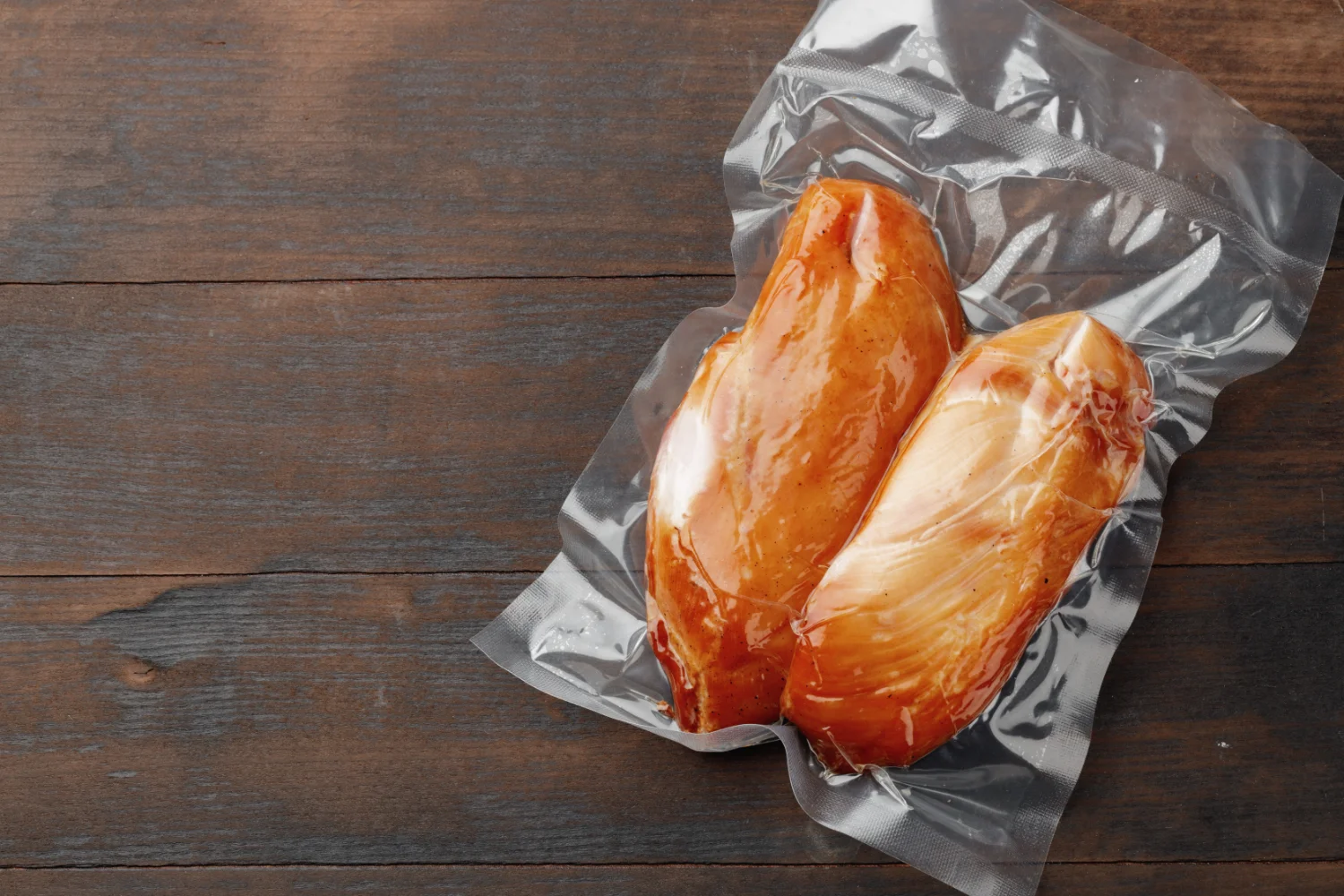
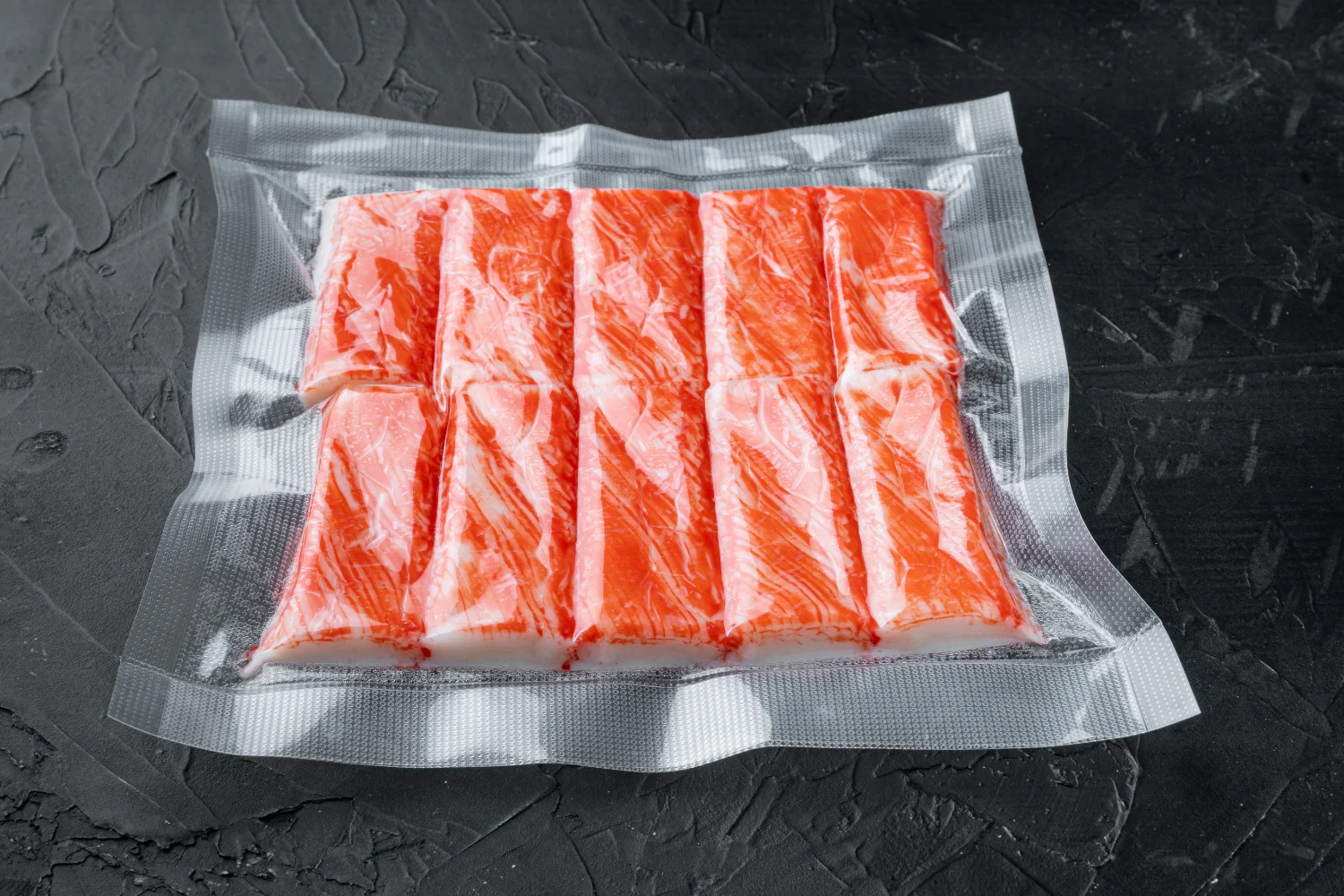
Vacuum and MAP usually beat air packs for oxidation-led foods because they reduce headspace oxygen. MAP can outperform vacuum when nitrogen flush and high-barrier films keep oxygen low over time.
Oxygen control is a system, not a label
Oxidation-led foods include nuts, fatty snacks, roasted products, and many cooked proteins. In these foods, oxygen in headspace and oxygen ingress through the film drive oxidation markers and sensory decline. Vacuum packaging reduces headspace oxygen, but it does not guarantee near-zero oxygen because residual oxygen remains and oxygen can still enter through the film over time. MAP can improve outcomes when nitrogen flush reduces initial oxygen and when the film has a low oxygen transmission rate so oxygen stays low during distribution. Standard air packs often fail fastest because headspace oxygen remains high and acts as a large oxygen reservoir. Evidence from meat packaging shows that lipid oxidation can be significantly lower in vacuum and MAP than in air-like control packs, which is consistent with oxygen being the primary lever. The practical takeaway is that “MAP” is not automatically better than vacuum. The winner depends on residual oxygen, barrier stability, and how well the pack holds that headspace condition through storage and handling.
| Strategy |
How it controls oxidation |
Typical weak point |
Best-fit foods |
| Standard air pack |
No oxygen reduction |
High O₂ reservoir |
Short shelf life only |
| Vacuum pack |
Lower headspace O₂ |
Residual O₂ + film ingress |
Cooked meats, cheese, roasted items |
| MAP (N₂/CO₂ mixes) |
Flush O₂ down + maintain shape |
Wrong film OTR or gas mix |
Snacks, meat/fish, sensitive aromatics |
Evidence (Source + Year):
Hur et al., MAP vs vacuum vs control showing lower lipid oxidation in vacuum and MAP (2013). :contentReference[oaicite:2]{index=2}
Parra et al., vacuum vs modified atmospheres with TBARS and sensory results in refrigerated slices (2010). :contentReference[oaicite:3]{index=3}
When aroma is the main enemy, why can atmosphere control still fail?
Some products still lose aroma even when oxygen looks controlled. That usually means the aroma is leaving the food or being absorbed by the package.
MAP and vacuum cannot save flavor if volatiles diffuse through the film, get scalped by polymers, or leak through seals. Aroma retention often depends more on material selection and seal integrity than on gas choice.
Volatile scalping and permeation can dominate flavor decline
Aroma-driven foods include spices, teas, herbs, coffee-adjacent snacks, and products with delicate top notes. These products can taste flat without clear oxidation markers because the key volatiles are lost by diffusion or sorption. Packaging polymers can absorb certain aroma compounds, which shifts the aroma balance and reduces intensity. This effect is sometimes called “flavor scalping,” and it can vary by polymer type and by the chemical polarity of the aroma compound. Even strong oxygen control cannot prevent scalping if the film has high sorption for the target volatiles. Seal leaks also erase benefits because a small leak becomes an uncontrolled aroma vent and an oxygen entry point. The correct decision is to treat atmosphere strategy as one layer, and to choose a laminate and seal system that reduces aroma transmission and absorption under expected temperature and humidity. In practice, teams should test aroma intensity and headspace VOC evolution, not only oxygen numbers.
| Aroma risk |
Typical packaging risk |
Mitigation focus |
| Delicate top notes |
High aroma permeation |
Higher aroma barrier laminate |
| Oil-based aromas |
Polymer sorption (scalping) |
Material screening + storage tests |
| Long distribution |
Seal micro-leaks |
Seal window + integrity validation |
Evidence (Source + Year):
Suffield et al., “Scalping of aroma compounds … into packaging materials” (2019). :contentReference[oaicite:4]{index=4}
You et al., aroma compound absorption/diffusion into different can-lining polymers (2017). :contentReference[oaicite:5]{index=5}
For fresh produce, when does MAP beat vacuum and standard packs?
Fresh produce keeps breathing after packing. A pack that ignores respiration can protect appearance for a moment but lose flavor fast.
MAP often beats vacuum and air packs for produce when gas balance slows respiration without causing anaerobic off-notes. Vacuum is often a poor fit because it can drive damage, purge, or oxygen-starved quality loss.
MAP works when it stays inside the respiration window
Fresh and fresh-cut produce remains metabolically active, so flavor loss can come from respiration-driven changes in sugars, acids, and aroma precursors. MAP can slow these changes by shifting oxygen and carbon dioxide around the product, which can retard respiration rate and delay enzymatic degradation. The key is that “MAP” is not one setting. Produce has a safe range where oxygen is low enough to slow metabolism but not so low that anaerobic metabolism creates off-odors and texture damage. Vacuum packaging can push oxygen too low and can also physically stress delicate tissues, which can increase purge and accelerate quality decline. Standard air packs often allow faster respiration and water loss, which can change sweetness and aroma perception. The practical decision is to map the product’s respiration sensitivity and then match film permeability and pack design so the headspace stabilizes in the intended range during storage temperature swings. This is why produce MAP is a film-plus-gas design problem, not only a gas recipe.
| Produce type |
MAP goal |
Typical gas direction |
Failure mode to avoid |
| Fresh-cut greens |
Slow respiration |
Lower O₂, higher CO₂ |
Anaerobic off-odors |
| Cruciferous cuts |
Maintain freshness notes |
Careful O₂ control |
Off-odor buildup |
| High-respiration fruit cuts |
Delay softening |
Moderate O₂ reduction |
Fermented notes |
Evidence (Source + Year):
Caleb et al., MAP retards respiration and extends fresh produce shelf life (2012). :contentReference[oaicite:6]{index=6}
Dai et al., example MAP gas impact on fresh-cut quality (2023). :contentReference[oaicite:7]{index=7}
What stops working first: gas mix, barrier, headspace, or seals?
Many “MAP failures” are not gas failures. The pack often fails because the headspace condition cannot stay stable in real distribution.
The first thing to break is usually barrier stability, headspace ratio, or seal integrity. Residual oxygen and oxygen ingress can erase vacuum or MAP benefits if the system is not designed as one unit.
Headspace stability decides whether atmosphere control lasts beyond day one
Atmosphere strategy depends on what the product sees over time, not only at packing. Residual oxygen can remain after vacuum or MAP, and oxygen can enter through the film if the oxygen barrier is not strong enough for the target shelf life. Headspace ratio also matters because large headspace increases the oxygen reservoir and slows the benefit of oxygen reduction, while very small headspace can increase compression damage and increase purge in wet products. Seal integrity is often the fastest “stop working” point because micro-leaks behave like a permanent vent that allows oxygen in and aroma out. Temperature and humidity swings can further change film performance and accelerate drift. As a flexible packaging manufacturer, we focus on keeping the headspace condition stable with appropriate barrier laminates and repeatable seal windows, because a perfect gas recipe cannot compensate for an unstable package system.
| Failure mode |
Root cause |
Fix priority |
| O₂ rises over time |
Film OTR too high |
Upgrade barrier + confirm OTR conditions |
| Flat aroma profile |
Scalping/permeation |
Material screening for VOC retention |
| Unexpected staleness |
Seal micro-leak |
Seal design + integrity testing |
Evidence (Source + Year):
Hur et al., oxidation differences linked to oxygen content across packaging types (2013). :contentReference[oaicite:8]{index=8}
Martin et al., discussion of packaging compositions for VP/MAP and barrier behavior for VOCs (2023). :contentReference[oaicite:9]{index=9}
Which strategy should be chosen first for common food archetypes?
Teams often choose vacuum or MAP because it “sounds premium.” That habit can waste cost if the dominant engine is aroma scalping or moisture migration.
The right first choice comes from the product’s dominant engine. Oxidation-led foods usually need oxygen control, respiration-led foods need MAP windows, and microbial/off-odor-led proteins need CO₂ strategies plus barrier and seals.
A decision map converts “it depends” into repeatable choices
Oxidation-led foods like nuts and roasted snacks often benefit from nitrogen-flush MAP or vacuum because oxygen control is the main lever, but the pack must also be a low-OTR system to hold that benefit. Respiration-led foods like fresh-cut produce often benefit from MAP because the gas mix and film permeability can slow respiration, while vacuum can increase damage and off-notes. Microbial/off-odor-led foods like fresh meat and fish may use CO₂-containing MAP to suppress microbial growth, but teams must separate color/appearance goals from flavor goals because certain MAP settings can accelerate oxidation and degrade aroma. Standard air packs are often acceptable only when the shelf-life target is short or when flavor loss is driven mainly by other controls outside packaging. The practical output is a clear strategy plus a packaging priority: oxygen barrier, aroma barrier, seal integrity, and headspace design must match the selected strategy.
| Food archetype |
Primary strategy |
Packaging priority |
Validation test |
| Oxidation-led (nuts, fatty snacks) |
N₂-MAP or vacuum |
Low OTR + seal integrity |
Headspace O₂ + sensory + oxidation marker |
| Respiration-led (fresh-cut produce) |
MAP window |
Film permeability match + moisture control |
O₂/CO₂ tracking + texture/flavor checks |
| Off-odor-led proteins (meat/fish) |
CO₂-MAP or vacuum |
Seal stability + oxygen control |
Micro + TVB-N/TBARS + sensory |
Evidence (Source + Year):
Caleb et al., MAP as a tool to retard respiration in produce (2012). :contentReference[oaicite:10]{index=10}
Babic Milijasevic et al., VP/MAP effects on TBARS and rancid odor in fish under storage (2023). :contentReference[oaicite:11]{index=11}
How can a team validate flavor retention without guessing?
Flavor claims often rely on “it tasted fine last month.” That approach misses oxygen drift, seal leaks, and aroma scalping that appear later.
A simple validation plan tracks headspace gases, runs sensory checkpoints, measures oxidation markers where relevant, and confirms package integrity under realistic temperature swings and handling.
A minimal test plan links headspace to real sensory outcomes
A practical validation plan starts with a baseline: define the dominant engine by product type and by early failure signals. The team should then measure headspace oxygen and carbon dioxide over time because many packs look correct on day one but drift due to residual oxygen, film ingress, or leaks. For oxidation-led foods, the team should pair headspace tracking with an oxidation marker such as TBARS or peroxide value and then confirm results with sensory checkpoints. For aroma-led foods, the team should test aroma intensity and, when possible, headspace VOC evolution because oxygen data alone does not capture scalping. For produce, the team should track gas composition plus texture and flavor balance, because respiration control is the goal. The team should also include package integrity checks after handling because micro-leaks erase atmosphere control. The best practice is a comparison test across two packaging constructions and two headspace strategies to identify which lever actually moves flavor retention.
| Metric |
Tool |
Pass/fail logic |
Common mistake |
| Headspace O₂/CO₂ |
Gas analyzer |
Stays in target range through storage |
Testing only at day 0 |
| Oxidation marker |
TBARS/peroxide method |
Correlates with sensory stability |
Ignoring film ingress over time |
| Seal integrity |
Leak test + seal inspection |
No leaks after handling stress |
Assuming “sealed” means “tight” |
Evidence (Source + Year):
Hur et al., oxidation differences across vacuum/MAP/control linked to oxygen conditions (2013). :contentReference[oaicite:12]{index=12}
Babic Milijasevic et al., rancid odor detection aligned with TBARS changes under different MAP/VP conditions (2023). :contentReference[oaicite:13]{index=13}
Conclusion
MAP, vacuum, and air packs only slow flavor loss when they match the dominant engine and keep headspace stable through barrier and seals. Contact us to align gas strategy with film, seals, and shelf targets.
Get Food Packaging Recommendations
About Us
Brand: Jinyi
Slogan: From Film to Finished—Done Right.
Website: https://jinyipackage.com/
Our Mission:
JINYI is a source manufacturer specializing in custom flexible packaging solutions. We deliver practical, production-ready packaging systems so brands get predictable quality, clear lead times, and reliable performance on shelf and in transit.
About Us:
JINYI is a source manufacturer specializing in custom flexible packaging solutions, with over 15 years of production experience serving food, snack, pet food, and daily consumer brands. We operate a standardized manufacturing facility equipped with multiple gravure printing lines as well as advanced HP digital printing systems, allowing us to support both stable large-volume orders and flexible short runs with consistent quality. From material selection to finished pouches, we focus on process control, repeatability, and real-world performance.
FAQ
1) Is MAP always better than vacuum for flavor?
MAP is only better when the gas mix and film barrier keep headspace stable for the dominant failure engine, especially oxygen-driven oxidation or produce respiration control.
2) Why does a vacuum-packed product still taste stale?
Residual oxygen, oxygen ingress through the film, or aroma loss through permeation/scalping can still flatten flavor even when the pack looks tight.
3) When does standard air packaging make sense?
Air packs can be acceptable for short shelf-life targets or when flavor loss is controlled mainly by other factors, but they often lose fastest in oxidation-led foods.
4) What packaging factor ruins atmosphere control the fastest?
Seal micro-leaks often erase benefits first because they vent aroma and allow oxygen entry, which can override the intended gas strategy.
5) What tests best predict flavor retention for MAP or vacuum?
Headspace O₂/CO₂ tracking plus sensory checkpoints is the core. Oxidation-led foods should also measure oxidation markers, and aroma-led foods should consider VOC changes.