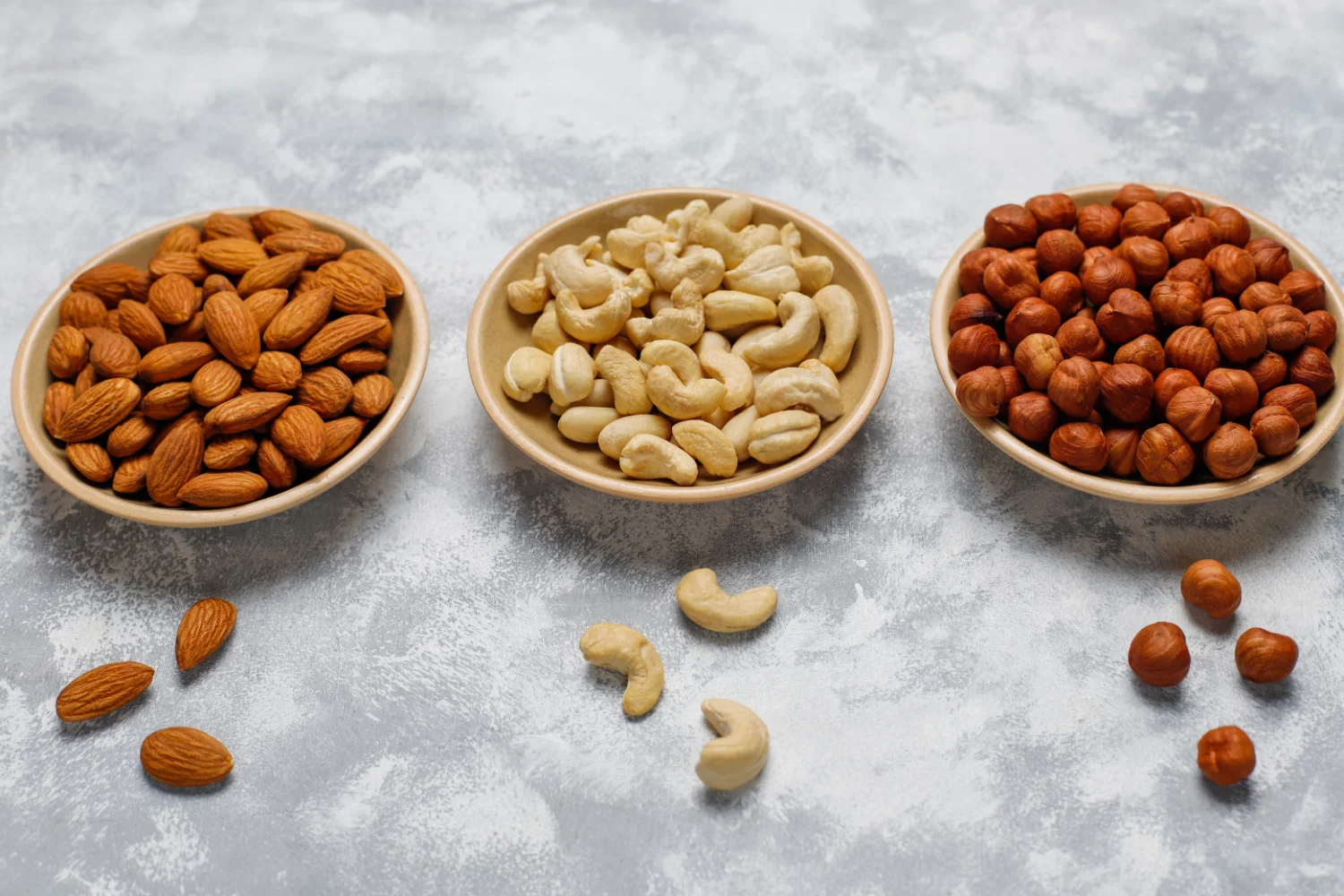
Nuts can taste “rancid” even when the date code looks safe. Customers do not argue about chemistry. Customers just stop buying.
Nuts fail early when oxygen and heat push lipid oxidation past a sensory threshold. The date code often assumes ideal storage, but real routes add oxygen exposure, warm warehouses, and repeated opening.
If your nut SKUs lose flavor early, start by controlling oxygen ingress and seal integrity

Early rancidity is not “mystery spoilage.” It is a predictable chain: oxygen enters, oxidation starts, primary products rise, secondary volatiles build, and the flavor suddenly crosses the “unacceptable” line.
Why do nuts taste rancid before the date code?
Date codes are time-based. Rancidity is chemistry-based. Chemistry moves faster when oxygen and heat rise.
Many nut systems stay acceptable during an “induction period,” then off-flavors accelerate once secondary oxidation products accumulate. That is why flavor can collapse before the printed date.
Rancidity is a threshold event, not a linear countdown
Lipid oxidation is commonly described as a free-radical chain reaction that accelerates under oxygen exposure and higher temperatures. In nuts, the first stage forms lipid hydroperoxides, which can be tracked by peroxide value (PV). The second stage forms volatile aldehydes and other compounds that drive “cardboard” and “painty” notes. Hexanal is widely used as a marker because it is a major product of linoleic acid oxidation and often rises as sensory quality declines. The key point is that consumers do not notice early chemical drift. Consumers notice the moment aroma and aftertaste cross their tolerance threshold. A date code can be correct under the assumed conditions and still be wrong for real storage and shipping.
| Stage |
What changes |
What it looks like |
| Primary oxidation |
Hydroperoxides form |
PV rises before obvious off-flavor |
| Secondary oxidation |
Volatile aldehydes increase |
Hexanal rises, aroma turns stale/rancid |
| Sensory threshold |
Off-notes dominate |
“Rancid” complaints spike |
Evidence (Source + Year):
Bakkalbaşı et al., “Effects of packaging materials, storage conditions and variety on oxidative stability of vacuum-packaged walnut kernels” (Food Chemistry) (2012).
Vera et al., “Monitorization of Hexanal Released by the Nuts…” (multilayer packaging study) (2018).
What does oxygen really do: from peroxides to hexanal?
Oxygen is not a “nice-to-have” variable. Oxygen is a reactant.
When oxygen enters the pack, it shortens the induction period and increases both primary oxidation (PV) and secondary volatiles like hexanal that drive rancid aroma.

Four oxygen pathways decide how fast flavor degrades
Brands often focus on one variable and miss the system. Oxygen can enter through (1) material transmission (OTR), (2) seal defects or micro-leaks that bypass film barrier, (3) headspace oxygen that remains without nitrogen flushing or vacuum, and (4) repeated exposure after opening when the reclose system is weak. Research on raw almonds compared nitrogen flushing, oxygen absorbers, and higher vs lower oxygen-barrier pouches over storage. The results show that oxygen management choices change quality retention across time. In simple terms, the nut can only oxidize as fast as oxygen is available. Lower oxygen availability slows the conversion from primary to secondary oxidation and delays the point where consumers notice rancidity.
| Oxygen source |
What it causes |
What to check first |
| High OTR film |
Slow oxygen gain over shelf life |
Match barrier to target shelf life |
| Seal micro-leak |
Fast oxygen shortcut |
Seal contamination + seal strength |
| Residual headspace O2 |
Early oxidation start |
Flush/vacuum validation |
| After-opening exposure |
Use-life oxidation spike |
Reclose design + consumer use |
Evidence (Source + Year):
Mexis et al., “Effect of oxygen absorber, nitrogen flushing, packaging material oxygen transmission rate and storage conditions on quality retention of raw whole unpeeled almonds” (Food Chemistry) (2010).
Pleasance et al., “Effects of Storage Conditions on Consumer and Chemical Assessment of Almond Quality” (Foods) (2018).
Why does heat accelerate rancidity so fast in real storage and shipping?
Many nut products are stable in a cool, steady warehouse. Many routes are not cool or steady.
Higher temperature speeds oxidation and can rapidly increase PV and hexanal. A few warm weeks can erase months of shelf-life margin.
Temperature shortens the induction period and increases volatile off-notes
Temperature is a strong accelerator because it increases reaction rates and can change oxygen solubility and mobility in the food matrix. In vacuum-packaged walnut studies, storage at higher temperature produced significantly higher peroxide values and hexanal over time, and sensory quality declined faster. This matters because distribution often includes warm containers, summer last-mile delivery, and store backrooms that run hotter than the consumer environment. Brands should treat “heat exposure” as a route stress factor, not a rare exception. A practical way to reduce early rancidity is to set temperature limits in storage guidance and to validate the product under realistic warm conditions rather than assuming constant room temperature.
| Heat scenario |
What typically changes |
Risk outcome |
| Warm storage (weeks) |
PV and hexanal rise faster |
Earlier rancid aroma |
| Temperature cycling |
Oxidation rate fluctuates |
Hard-to-predict failures |
| Hot last-mile exposure |
Short, high-impact spike |
Flavor collapse near shelf |
Evidence (Source + Year):
Bakkalbaşı et al. (Food Chemistry) (2012).
Shafiei et al., “Estimation of oxidative indices in raw and roasted hazelnuts using ASLT and Arrhenius modeling” (2020).
Which nut formats fail faster: sliced, roasted, or high-PUFA varieties?
Not all nuts fail at the same speed. Format changes the oxidation engine.
Higher surface area, higher polyunsaturated fat content, and more processing stress usually shorten time-to-rancid under the same oxygen and heat exposure.
Intrinsic composition and format can dominate packaging choices
Oxidation risk is driven by internal factors and external factors. Internally, fatty acid composition matters because polyunsaturated fats oxidize more readily. Natural antioxidants like tocopherols can slow oxidation, but their levels vary by nut type and condition. Format also matters because surface area and structural damage change oxygen contact and reaction sites. Sliced or chopped nuts often expose more lipids and can fail faster than whole kernels. Roasting can create desirable flavors but can also change antioxidant balance and increase susceptibility if storage is hot or oxygen-rich. Externally, light, humidity, and repeated opening amplify the differences. This is why a “one packaging spec fits all nuts” approach often fails across a mixed SKU line.
| Format |
Why it can fail faster |
What to do |
| Chopped / sliced |
More surface area and exposed lipids |
Stronger oxygen control + shorter use-life |
| Roasted |
Changed antioxidant profile and aroma sensitivity |
Protect aroma with low oxygen + cooler storage |
| High-PUFA nuts |
Higher oxidation propensity |
Barrier + headspace control + validation |
Evidence (Source + Year):
Mitcham et al., “Storage Temperature, Relative Humidity, and Time Effects…” (Journal of the American Society for Horticultural Science) (2022).
Ampofo et al., “Oxidative Stability of Walnut Kernel and Oil” (review/analysis) (2022).
How can brands lock flavor: oxygen control, testing, and barrier packaging?
Brands do not need perfect chemistry control. Brands need repeatable, validated flavor life.
The fastest path is a simple validation stack: PV + secondary markers like hexanal + sensory thresholds, tested under realistic heat and oxygen conditions.
A practical “predict + accept” program aligns date code with real storage
A strong program uses both chemical and sensory signals. PV can flag early oxidation, while secondary indicators like hexanal often track closer to rancid aroma. Sensory acceptance should define the failure point, because customers buy with their senses. Accelerated shelf-life testing (ASLT) can help compare packaging and storage scenarios quickly, but real-condition verification is still necessary. Packaging comparisons should include at least two barrier levels plus a headspace strategy (vacuum or nitrogen flushing) and, when appropriate, oxygen absorbers. As a flexible packaging manufacturer, we focus on oxygen and moisture as boundary conditions: low OTR structures, stable seals, and designs that reduce oxygen shortcuts during distribution and after opening.
| Step |
What to measure |
Decision output |
| Set targets |
PV range + hexanal trend + sensory threshold |
Define “acceptable” end-of-life |
| Stress the system |
Room + warm storage, plus opening simulation |
Find the true weak point |
| Compare packaging |
Two OTR levels + seal integrity + headspace control |
Select the lowest-risk spec |
Evidence (Source + Year):
Mexis et al. (Food Chemistry) (2010).
Shafiei et al. (ASLT for hazelnuts, PV/anisidine/Arrhenius) (2020).
If you need a barrier pouch spec for nuts, start with OTR targets, headspace oxygen, and seal validation
Conclusion
Nuts taste rancid early when oxygen and heat push oxidation past a sensory threshold. Align date codes to real routes with PV/hexanal + sensory testing and oxygen-control packaging. Contact us to reduce early flavor failures.
Get a nut packaging barrier plan to slow rancidity
About Me
Brand: Jinyi
Slogan: From Film to Finished—Done Right.
Website: https://jinyipackage.com/
Our Mission:
JINYI is a source manufacturer specializing in custom flexible packaging solutions. We aim to deliver packaging that is reliable, usable, and ready for real production and real shipping. Our goal is to help brands reduce communication costs, achieve predictable quality, and ensure packaging performs reliably on shelf, in transit, and at end use.
About Us:
JINYI is a source manufacturer specializing in custom flexible packaging solutions, with over 15 years of production experience serving food, snack, pet food, and daily consumer brands.
We operate a standardized manufacturing facility equipped with multiple gravure printing lines as well as advanced HP digital printing systems, allowing us to support both stable large-volume orders and flexible short runs with consistent quality.
From material selection to finished pouches, we focus on process control, repeatability, and real-world performance. Our goal is to help brands reduce communication costs, achieve predictable quality, and ensure packaging performs reliably on shelf, in transit, and at end use.
FAQ
- Is rancid flavor a safety issue or a quality issue?
Rancidity is primarily a flavor and quality failure from oxidation. Safety depends on separate controls like microbiology and allergens.
- Which indicator is better for rancidity, PV or hexanal?
PV helps track early oxidation, while hexanal often aligns more directly with rancid aroma. Many brands use both plus sensory thresholds.
- Does vacuum packaging always beat nitrogen flushing?
Both can reduce oxygen. The best choice depends on product format, pack geometry, and seal integrity, and it should be validated with storage tests.
- Why do nuts taste fine in the factory but fail in stores?
Warm backrooms, distribution heat spikes, oxygen ingress, and repeated opening can shorten the induction period and accelerate off-flavor formation.
- What packaging change usually gives the fastest improvement?
A lower-OTR structure plus tighter seal control often delivers the biggest step change, because micro-leaks can defeat film barrier performance.