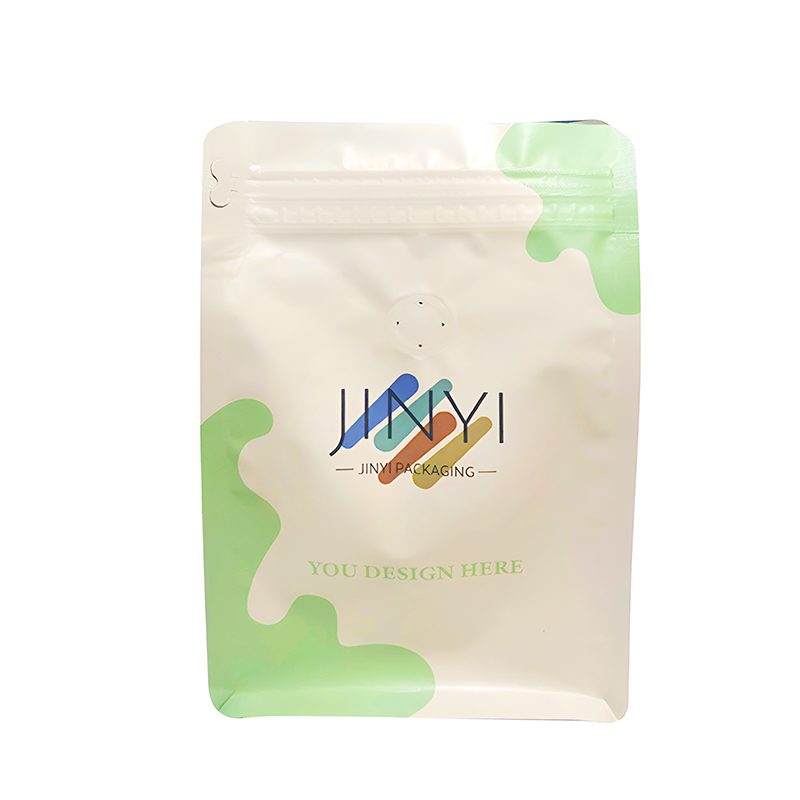
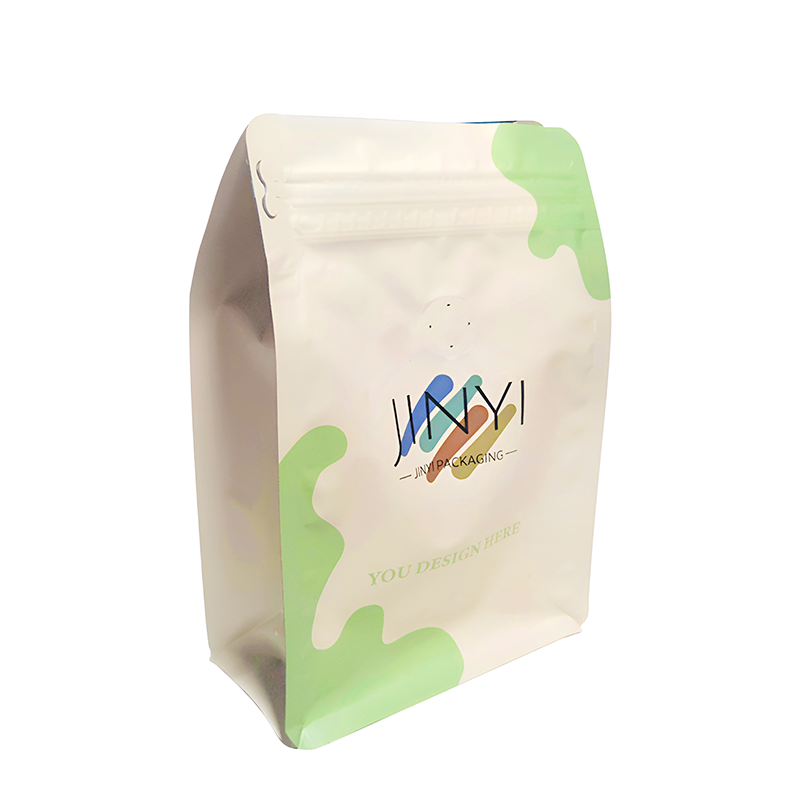
Fresh coffee can inflate bags, trigger complaints, and force rework. A valve sticker can reduce pressure, but it can also become a leak path. Buyers often learn this the hard way.
A one way degassing valve sticker is most useful when the CO₂ peak occurs inside the sealed pack and pressure is the dominant failure risk. If bonding or seal control is weak, the valve sticker can become an oxygen shortcut and accelerate aroma loss.
See coffee packaging structures that match roast timelines

Many brands treat “valve or no valve” as a style choice. A better approach treats it as a timing and risk problem. This article maps roast timeline signals to practical packaging decisions.
Where is the CO₂ peak after roasting, and how does it move with grind and time?
CO₂ release can feel unpredictable when brands only look at “days after roast.” The peak shifts with roast level, grind, and temperature. The right question is whether the peak lands inside the bag.
The CO₂ peak window usually moves earlier with finer grind and warmer storage. The peak window usually moves later when coffee stays as whole beans and stays cooler. Packaging decisions should follow that window, not a blanket rule.
How can brands describe the roast timeline in measurable signals?
CO₂ release follows diffusion-driven behavior, so the “timeline” can be treated as a controllable curve instead of a story. A brand can define a simple internal spec that ties roast timeline to pack timing. A team can log roast date, pack date, format (whole bean or ground), and storage temperature. A team can then track whether bags show puffing, whether seals creep, and whether valve areas show micro-leaks. A team can also align sensory notes with time since roast because aroma intensity can change as CO₂ and volatiles evolve. This approach does not require a lab to start. A team needs consistent records and a repeatable comparison between lots. When the CO₂ peak occurs inside a sealed bag, pressure becomes the dominant risk. When the peak occurs before packing, oxygen control and aroma retention usually become the dominant risks.
| Variable |
What it shifts |
What to log |
| Grind size |
Earlier CO₂ release |
Whole vs ground, target grind |
| Storage temperature |
Faster diffusion and release |
Typical warehouse and route temps |
| Time before packing |
Peak inside vs outside bag |
Roast date, pack date, hours/day gap |
Evidence (Source + Year):
Anderson, Shimoni & Labuza — “The diffusion kinetics of carbon dioxide in fresh roasted and ground coffee” (2003).
When does a one way degassing valve sticker reduce risk—and when does it add new leak paths?
Brands often add a valve to prevent puffing. A valve helps most when pressure is the main failure driver. A valve can hurt when oxygen entry and aroma loss are the main failure drivers.
A valve sticker reduces risk when CO₂ peak pressure would otherwise stress seals, distort bags, or trigger transit complaints. A valve sticker adds risk when bonding is unstable, when seals are marginal, or when the pack is already low-pressure due to sufficient degassing time before packing.

How should brands decide between pressure risk and oxygen risk?
A practical decision uses two questions. A team should ask whether CO₂ pressure inside the bag is likely to cause physical failures during shipping and stacking. A team should also ask whether the valve sticker and seal system can be controlled with consistent bonding and leak performance. If pressure is high and bonding is stable, a valve sticker often reduces total risk. If pressure is low and bonding is unstable, a valve sticker can increase total risk because oxygen can bypass the film barrier through micro-channels at the bonding zone. This trade-off matters because oxygen exposure can reduce aroma quality even when bags look fine. A team can make the decision “report-like” by defining pass/fail rules and comparing valve vs no-valve lots under the same route conditions. A team should avoid absolute promises because real routes include heat spikes and compression cycles.
| Scenario |
Dominant risk |
Typical safer direction |
| Packed near roast, high CO₂ window |
Pressure and seal stress |
Valve sticker + strong seal control |
| Packed after sufficient degassing |
Oxygen and aroma retention |
No valve, improve OTR + headspace oxygen control |
| Unstable bonding process |
Leak paths at valve zone |
Avoid valve until bonding is validated |
Evidence (Source + Year):
Anderson, Shimoni & Labuza (2003).
ASTM D3985-24 — Oxygen Gas Transmission Rate (OTR) test method (2024).
What fails first in mass production: valve bonding, seal window, or headspace oxygen control?
Many failures do not come from the valve itself. Many failures come from the bonding zone, the seal window, or oxygen left in the headspace. Those failures can look “random” without a checklist.
Mass production fails first where variability is highest. Bonding contamination, seal contamination, and headspace oxygen variation can all dominate. A brand should identify the first failure with simple inspections and controlled tests.
Which failure modes are most common for a valve sticker system?
A valve sticker system behaves like a component plus an adhesive system plus a handling environment. A team should treat the bonding zone as the primary risk surface. Dust, oil, and static-charged particles can reduce initial adhesion. Temperature cycling can change adhesive behavior and increase edge lift. Transit rubbing can turn the sticker edge into a shear point, which can open micro-channels. A team should also protect the seal window because seal contamination can create micro-leaks that mimic valve failures. A team should control headspace oxygen because residual oxygen can reduce freshness even when OTR is low. A team can organize root causes by asking what bypassed the barrier first: film permeability, seal integrity, valve bonding integrity, or headspace oxygen control. A valve sticker is only as good as its bonding zone, so bonding validation must come before scale.
| Complaint |
Likely root cause |
First check |
| Puffy bags |
CO₂ peak inside pack |
Pack timing vs roast date, headspace |
| Flat aroma / “stale fast” |
Oxygen entry or high residual O₂ |
Seal leaks, valve bonding, gas flushing settings |
| Random leaks near valve |
Bonding zone micro-channels |
Edge lift, contamination, rub marks |
| Leaks at top seal |
Seal contamination or weak hot tack |
Seal window cleanliness and seal strength checks |
Evidence (Source + Year):
ASTM D3985-24 (2024).
ASTM F1249-13 — Water Vapor Transmission Rate (WVTR) test method (2013).
Request a valve-zone risk checklist for coffee bags with valve
How should brands match roast timeline to packaging decisions?
Many teams switch packaging after complaints. A more stable method uses a decision matrix and a simple validation plan. That method reduces rework and reduces “trial-and-error” cost.
A decision matrix should link CO₂ peak timing to process capability. The matrix should also force a team to validate bonding before the team depends on a valve sticker for safety.

What does a practical 2×2 decision matrix look like?
A brand can use two axes that buyers can understand. Axis one is whether the CO₂ peak likely occurs inside the sealed pack. Axis two is whether the valve bonding process is proven and repeatable. If CO₂ peaks inside the pack and bonding is proven, a valve sticker often reduces pressure failures. If CO₂ peaks inside the pack and bonding is not proven, a team should first adjust pack timing, headspace, and seal robustness before adding the valve sticker at scale. If CO₂ peaks outside the pack and bonding is proven, a valve can be optional, and oxygen control can take priority. If CO₂ peaks outside the pack and bonding is not proven, a team should avoid the valve sticker because it adds a new leak path that can defeat barrier film performance. This matrix converts debates into actions that can be tested and repeated.
| CO₂ peak inside sealed bag? |
Bonding process proven? |
Recommended direction |
| Yes |
Yes |
Use valve sticker + validate seal window and transit compression |
| Yes |
No |
Fix process first: pack timing, sealing margin, cleanliness, headspace |
| No |
Yes |
Valve optional; prioritize OTR/WVTR and residual O₂ control |
| No |
No |
Avoid valve; reduce leak paths; stabilize seals and handling first |
Evidence (Source + Year):
Anderson, Shimoni & Labuza (2003).
ISO 15105-2:2025 — Gas-transmission rate method (2025).
Which proof cues build trust on-pack: tested limits, standards language, and realistic claims?
Buyers distrust vague claims like “keeps coffee fresh.” Buyers trust limits, test language, and clear boundaries. Proof cues reduce disputes because they make expectations measurable.
Trust grows when a brand shows what was tested and what was controlled. Trust falls when a brand uses absolutes like “never stale” or “zero oxygen.” A brand can communicate like a report without sounding complicated.
How can brands write proof cues without overpromising?
A brand can focus on three proof cues. First, a brand can describe the decision logic, such as “valve sticker used for lots packed in the high CO₂ window.” Second, a brand can describe the control method, such as “valve bonding zone validated for edge lift and leak checks.” Third, a brand can reference recognized test frameworks for barrier properties, such as OTR and WVTR methods. A brand should avoid claims that guarantee outcomes under all conditions because real shipping includes heat spikes, long dwell time, and compression. A brand can also provide simple handling guidance that reduces failure risk, such as “store cool and dry” and “reclose tightly after opening.” These cues improve credibility because buyers can repeat them and verify them.
| Good proof cue |
Why it works |
Risky claim to avoid |
| OTR/WVTR tested methods referenced |
It is measurable and standard-aligned |
“Zero oxygen” |
| Valve used for high CO₂ window lots |
It shows a defined scope |
“Valve always makes coffee fresher” |
| Bonding zone checks stated |
It addresses the main leak risk |
“Leak-proof forever” |
Evidence (Source + Year):
ASTM D3985-24 (2024).
ASTM F1249-13 (2013).
Conclusion
A valve sticker should match the CO₂ peak window and a proven bonding process. Brands can reduce disputes by using test-aligned proof cues and clear boundaries. Contact JINYI to align packaging to your roast timeline.
Get a Coffee Packaging Risk Check
About Us
Brand: Jinyi
Slogan: From Film to Finished—Done Right.
Website: https://jinyipackage.com/
Our Mission:
JINYI is a source manufacturer for flexible packaging. The team focuses on reliable, usable, and practical packaging delivery. The team helps brands reduce communication cost, stabilize quality, clarify lead times, and match structure and print to real product needs.
About JINYI:
JINYI is a source manufacturer specializing in custom flexible packaging solutions, with over 15 years of production experience serving food, snack, pet food, and daily consumer brands.
JINYI operates a standardized manufacturing facility with multiple gravure printing lines and advanced HP digital printing systems. The facility supports stable large-volume orders and flexible short runs with consistent quality.
From material selection to finished pouches, the team focuses on process control, repeatability, and real-world performance. As a flexible packaging manufacturer, we focus on predictable quality and packaging that performs on shelf, in transit, and at end use.
FAQ
- Do all coffee bags need a one way degassing valve sticker?
Not all bags need one. The need depends on whether the CO₂ peak occurs inside the sealed pack and whether bonding control is validated.
- Are coffee bags with valve always fresher than no-valve bags?
A valve can reduce pressure risk, but it can add oxygen leak risk if bonding fails. Freshness depends on oxygen control and storage, not the valve alone.
- What is the most common valve sticker failure mode?
Many failures start at the bonding zone, including edge lift, contamination-related weak adhesion, and micro-channel leaks after rubbing.
- How can a brand test valve vs no valve decisions?
A brand can compare lots under the same roast, pack timing, and route profile, then track puffing, leak indicators, and sensory outcomes.
- What proof cues should be shown on packaging or product pages?
Buyers trust measurable cues such as OTR/WVTR test references, defined use scope, and clear bonding-zone validation language. Buyers distrust absolutes.