Premium words stack up fast on matcha packs. Many buyers then assume they point to one clear winner. They do not.
Buyers should first separate certification, milling cues, ingredient reality, and intended use. Organic, stone-ground, and premium blend do not answer the same buying question.
This matters because these three expressions often sit together on the same package and sound equally premium. Yet they point in different directions. Organic speaks to a certification system and a production standard. Stone-ground points to a milling approach that may affect particle feel and sensory experience. Premium blend is usually much softer. It may describe a recipe style, a commercial tier, or a broad quality impression, but it often needs help from the ingredient list and the use guidance before buyers can know what it really means. Better judgment starts when buyers stop asking which word sounds best and start asking which signal is hardest, which is softest, and which one actually fits the way the matcha will be used.
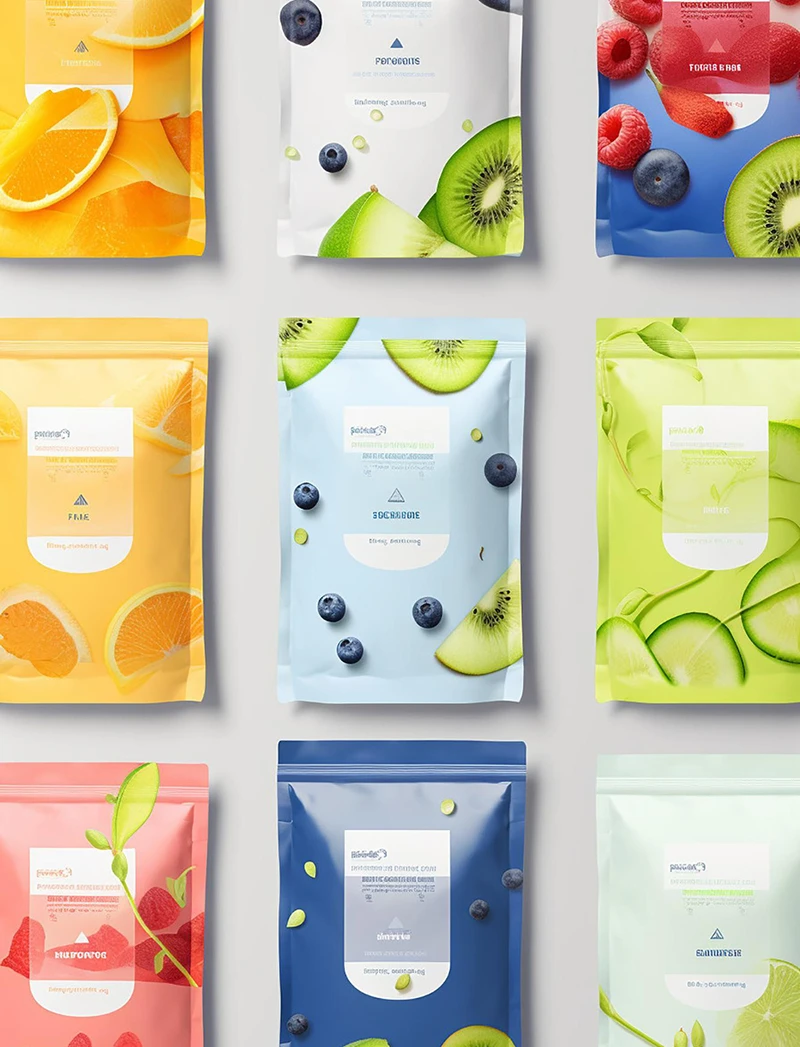
Use stand-up pouches that make matcha certifications, usage cues, and ingredient signals easier for buyers to understand at first glance.
Do Organic, Stone-Ground, and Premium Blend Mean the Same Kind of Quality Signal?
These words sit side by side on shelf. Buyers then read them as one shared badge of excellence. That is the first mistake.
No. These words sit on different levels of proof. Organic is a certification signal, stone-ground is a process cue, and premium blend is usually a softer commercial description.
Why buyers should separate proof strength before judging quality
This is the most important split in the whole article. Organic, stone-ground, and premium blend do not function the same way, even if they all sound attractive. USDA explains that the USDA organic seal is an official mark protected by federal regulation and overseen by the National Organic Program. MAFF says the Organic JAS logo can only be used by certified business entities. Those are strong signs because they are tied to formal rule systems. By contrast, stone-ground tells buyers something about how the tea was milled. That can matter, but it is not the same category of proof as a certification mark. Then there is premium blend, which is usually even softer. It often works as a positioning term, a quality tier term, or a recipe term. Buyers may still find it useful, but it does not carry the same built-in verification structure as USDA Organic or Organic JAS.
A better judgment framework starts by ranking these signals by hardness. Organic usually tells buyers something about compliance with a defined standard system. Stone-ground may tell them something about milling and mouthfeel. Premium blend may tell them something about how the seller wants the product to be perceived. These are not competing answers to one question. They are answers to different questions. Once buyers understand that, confusion drops quickly.
| Term |
Main Type of Signal |
What It Usually Cannot Prove Alone |
| Organic |
Certification and standards compliance |
Best taste, best texture, or best use for every buyer |
| Stone-ground |
Milling and process cue |
Certification status, purity, or sweetness level |
| Premium blend |
Commercial or recipe description |
That the formula is purer, better, or more suitable without label support |
Evidence (Source + Year):
USDA AMS, The Organic Seal, 2026.
MAFF, Organic JAS, 2025.
What Does Organic Matcha Really Verify, and What Does It Not Verify?
Organic often sounds like a full quality verdict. It is not. Buyers gain something real, but not every answer they want.
Organic mainly verifies compliance with an organic standard system. It does not automatically verify the brightest color, the smoothest cup, or the best fit for direct drinking.
Why organic is a stronger claim, but a narrower one, than many buyers assume
Organic matters because it is not just a flattering adjective. USDA describes organic as a labeling term that indicates a product was produced under the authority of the Organic Foods Production Act and according to USDA organic regulations. USDA also explains that labels using the USDA organic seal must be reviewed and approved by a USDA-accredited certifying agent. MAFF makes the same general point in the Japanese system. Organic JAS labeling is tied to a certification structure, and products cannot be sold as organic in that framework without the relevant logo. For buyers who want a harder and more checkable signal, this is meaningful.
Still, organic should be kept in its lane. It speaks more clearly to production and certification standards than to cup quality. It does not automatically prove that the powder will be more vibrant green, more umami-rich, less bitter, or more suitable for usucha-style direct whisking than a non-organic matcha. Those are sensory and use questions, not certification questions. A buyer who cares most about farming standards may place organic first. A buyer who cares most about mouthfeel or color in a latte may place it lower. This is why better judgment comes from asking not only whether the claim is strong, but also whether it answers the buyer’s actual priority.
| If a Pack Says Organic |
What Buyers Can Read with More Confidence |
What Buyers Still Need to Check Elsewhere |
| USDA Organic seal |
The product is tied to a formal organic labeling system |
Taste quality, texture, bitterness, and best-use fit |
| Organic JAS logo |
The product is tied to certified Organic JAS labeling |
Whether the powder is smoothest or best for direct drinking |
| Organic wording without wider context |
A stronger clue than a soft marketing phrase |
Ingredient purity, sweetness, and intended use still matter |
Evidence (Source + Year):
USDA AMS, Organic Basics, 2026.
MAFF, Organic JAS, 2025.
What Does Stone-Ground Matcha Suggest About Texture and Sensory Experience?
Stone-ground sounds traditional and refined. Buyers often hear that and assume the rest of the story is settled. It is not.
Stone-ground can be a useful process cue. It may suggest finer texture and a distinct mouthfeel, but it still does not prove certification, purity, or universal superiority.
Why milling method matters without becoming a winner-take-all rule
Stone-ground matters because milling changes the powder itself. JETRO’s matcha material explains that tencha is traditionally ground in a stone mill to produce matcha, while some matcha today is processed by powdering machine and can still be classified as matcha. JETRO also includes a producer interview stating that carefully stone-mortar-ground matcha has finer grain and a mouthfeel difference that is immediately noticeable. Food Chemistry research supports the broader point. A 2022 study comparing cyclone-, bead-, and stone-milled matcha found differences in particle size, surface morphology, chemical composition, volatile compounds, and sensory quality. That means milling is not just a romantic story. It can affect what buyers see and feel.
Still, stone-ground should be read as a process-and-texture signal, not as a universal winner word. A 2023 study on matcha quality components notes that air mill, ball mill, and stone mill methods can all produce matcha with fine and relatively uniform particle size. So the more mature conclusion is not “stone-ground always wins.” It is “stone-ground may be especially meaningful for buyers who care about a traditional process, finer feel, and direct-drinking texture, but it still needs to be read together with purity, use case, and label reality.” For a latte, smoothie, or baked application, the best value judgment may look different.
| If a Pack Says Stone-Ground |
What Buyers Can Reasonably Infer |
What Still Needs Confirmation |
| Traditional milling emphasis |
The maker is signaling process and texture importance |
Whether the product is organic, pure, or unsweetened |
| Finer mouthfeel claim |
There may be a sensory basis for that claim |
Whether that difference matters most for this buyer’s intended use |
| Premium traditional language |
The brand is pushing a process story |
Whether the ingredient list and use case support the full premium impression |
Evidence (Source + Year):
JETRO, From a Small Family-Run Tea Farm to the World!, 2025.
Why Is Premium Blend Usually the Softest Claim of the Three?
Premium blend sounds expensive and polished. That is exactly why buyers should slow down. The phrase often needs the most checking.
Premium blend is usually the softest claim because it often describes positioning or recipe style, not a formal certification or a clearly bounded process claim.
Why the ingredient list matters more than the premium mood
This is where label-reading discipline matters most. Premium blend can sound persuasive because it suggests curation, refinement, and higher value. Yet the phrase itself often leaves key questions unanswered. Is the product a pure matcha blend of different origins or cultivars? Is it a matcha base blended with sugar, milk powder, creamer, flavor, or sweetener for café-style use? Is it a recipe blend designed for lattes rather than direct drinking? FDA does not ask buyers to settle these questions by trusting mood language. FDA requires ingredients on product labels to be listed in descending order by weight. So if buyers want to know what premium blend really means, the first few ingredients matter more than the premium tone of the front panel.
This is why premium blend is softer than organic and usually softer than stone-ground. Organic is anchored in a certification system. Stone-ground is anchored in a milling story that may affect the powder. Premium blend often still needs the ingredient list to reveal its actual content. A buyer may discover that the blend is still 100% matcha and uses the phrase to describe origin or taste balance. Or the buyer may discover that the product is closer to a sweetened beverage base. That is exactly why the phrase should be handled carefully rather than rejected or trusted automatically.
| If a Pack Says Premium Blend |
What Buyers Should Ask Next |
Why It Matters |
| Premium blend on front |
Blend of what, exactly? |
The phrase may refer to recipe style, not pure tea quality alone |
| Strong premium visual language |
What are the first ingredients by weight? |
Ingredient order usually tells buyers what the product mainly is |
| Soft quality cues without hard details |
Is it pure matcha, or is it a beverage-style mix? |
This changes both use case and value judgment |
Evidence (Source + Year):
FDA, Types of Food Ingredients, 2023.
Luo et al., Variations of Main Quality Components of Matcha from Different Regions in the Chinese Market, 2023.
Choose stand-up pouches that help buyers separate pure matcha, certified matcha, and recipe-style blends before premium wording creates confusion.
What Should Buyers Check First When These Three Words Appear Together?
When all three words appear together, the pack can feel authoritative. That is when buyers most need a sequence, not a reaction.

Buyers should first identify their priority, then rank the claims by proof strength, then confirm the formula and intended use before deciding what matters most.
How to turn premium wording into a practical buying order
The best buying framework is simple enough to use in real shopping. Step one is to identify the buyer’s top priority. Is the main concern certified production standards, direct-drinking texture, or practical recipe performance? Step two is to rank the signals by hardness. Organic is usually the hardest because it ties back to certification. Stone-ground is next because it gives a process cue that may affect mouthfeel. Premium blend is usually the softest because it needs ingredient support to mean something concrete. Step three is to check the ingredient list. This is where buyers find out whether the product is pure matcha, a blend of matcha sources, or a broader beverage-style mix. Step four is to match the product to intended use. Straight drinking, latte preparation, smoothies, and baking do not ask for the same thing from the powder.
This buying order works because it keeps each signal in its lane. A buyer who cares most about formal standards may put organic first. A buyer who cares most about mouthfeel in plain whisked tea may put stone-ground higher. A buyer who mainly wants a practical café-style mix may accept premium blend language, but only after the ingredient list confirms what kind of blend it is. Consumers do better when they do not ask which word sounds most premium first. They do better when they ask which signal is hardest, which is softest, and which one actually matches the way they plan to use the matcha.
| Step |
Buyer Action |
Why It Helps |
| 1 |
Decide the main priority |
It prevents irrelevant premium words from taking over the decision |
| 2 |
Rank claim strength: organic, then stone-ground, then premium blend |
It separates harder proof from softer wording |
| 3 |
Read the first ingredients |
It shows what the product mainly is |
| 4 |
Match the powder to intended use |
It turns premium language into practical judgment |
| 5 |
Decide what matters most for this purchase |
It keeps one product from being forced to do every job |
Evidence (Source + Year):
USDA AMS, The Organic Seal, 2026.
FDA, Types of Food Ingredients, 2023.
About Us
Jinyi — From Film to Finished—Done Right.
https://jinyipackage.com/
Our Mission
We believe good packaging is not only surface design. It should work as a stable solution in real conditions. Jinyi aims to provide reliable, practical, and production-ready flexible packaging solutions so brands can reduce communication cost and gain more stable quality, clearer lead times, and packaging structures that truly match product and channel needs.
Who We Are
Jinyi focuses on Custom Flexible Packaging and brings more than 15 years of production experience to tea, food, snack, pet food, and other consumer product projects. The factory runs multiple gravure printing lines and HP digital printing systems, which support both stable large-volume production and flexible short-run customization.
As a flexible packaging manufacturer, we focus on how packaging performs in transport, shelf display, and consumer use. For matcha powders, that often means helping brands show certifications clearly, organize ingredient hierarchy better, and match pouch structure to freshness, filling, and daily use demands without confusing the buyer.
FAQ
Is organic matcha always the best matcha?
No. Organic is a strong certification signal, but it does not automatically prove the smoothest taste, brightest color, or best use for every buyer.
Does stone-ground always mean better quality?
Not always. Stone-ground can be a meaningful process cue, especially for texture and mouthfeel, but buyers still need to check purity, intended use, and the rest of the label.
Why is premium blend usually weaker than the other two terms?
Because it often acts as a softer commercial or recipe description. Buyers usually need the ingredient list to understand what the blend actually contains.
What should buyers check first if all three terms appear together?
They should first decide their priority, then read the claims by proof strength, then check the first ingredients and intended use before choosing.
Can a premium blend still be pure matcha?
Yes. It can be, but the phrase alone does not prove that. Buyers need the ingredient list to confirm whether the blend is pure matcha or a broader beverage-style formula.