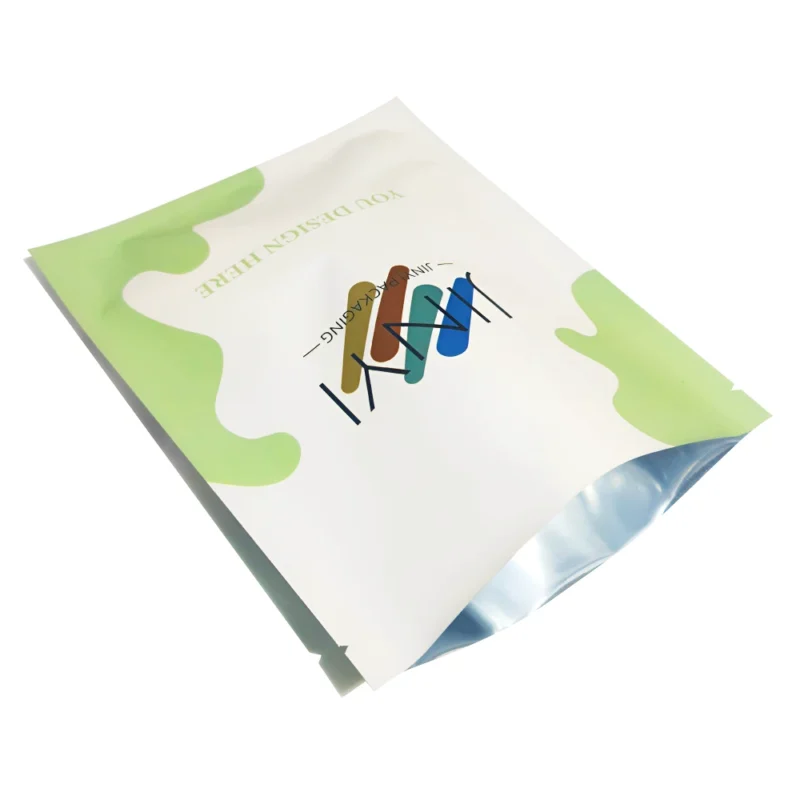
Small pillow packs can tear badly, burst powder, or leak after shipping. That damage looks “minor,” but it kills repeat orders fast.
I set barrier, COF, and tear notch as one system. I balance moisture protection, controlled friction, and a stable tear path, while keeping a wide seal window so “easy-open” never becomes “easy-leak.”
I treat “opens cleanly” and “stays sealed” as the same engineering goal. I do not tune one and hope the other survives. I design around how people tear, how powder behaves, and how shipping stresses a tiny pack.
Define “Opens Cleanly” First: What Users Actually Mean by “Easy Tear”?
Many brands chase “easy tear” and get messy openings. That mess becomes powder burst, jagged edges, and customer frustration.
I define “opens cleanly” as one controlled tear with a predictable mouth. I aim for no run-away tears, no seal-layer peel, and minimal powder puff, even for fine electrolyte and collagen powders.
My “clean open” checklist before I touch materials
I do not treat “easy tear” as “it can be opened.” I treat it as a user experience spec. I want a tear that starts where the user expects, follows a stable path, and stops where the mouth is wide enough to pour. I also want the tear edge to stay smooth, because jagged edges can shed tiny film fragments and make the pack look cheap. For powders, I add one more rule: I do not want a sudden pop that blows powder upward. In real manufacturing, this detail often determines how many complaints you get, because notch geometry alone cannot fix a tear path if the film stiffness and lamination balance are wrong. From a production standpoint, this matters because a small pack has less “forgiveness.” The user’s fingers are closer to the opening, and the powder is closer to the tear zone.
What users say
What I translate it to
What I measure
“Easy to open”
Low start force, stable tear
Tear start consistency
“No mess”
No powder burst
Powder puff and spillage
“Looks premium”
Smooth edge, no run-away tear
Edge quality and tear stop
Route Stress Still Matters: Why Small Packs Fail Differently Than Big Pouches?
Teams often assume small packs are “simple.” Shipping treats them like sandpaper and clamps them like a stack of cards.
Small pillow packs face high-frequency rubbing and repeated squeezing, especially inside cartons or outer polybags. That stress can change surface feel, create pinholes, and fatigue seals faster than on bigger pouches.
Why tiny packs get damaged quietly
I see small packs fail in ways that do not look dramatic. A carton full of sachets can act like a grinder in transit. Each vibration event causes micro-movements, and micro-movements create abrasion. Over time, coatings can scuff, slip additives can bloom, and the surface friction can shift. From our daily packaging work, we see that a COF choice that is “fine on the line” can become risky in shipping because sachets slide more and hit seal edges repeatedly. I always ask if the packs are single-serve loose in a carton, arranged in strips, or placed inside an outer bag. I also ask if the route is e-commerce small parcel, because small parcels have rough handling and many drops. When I map those details, I can decide if I need higher abrasion resistance, tighter COF control, or more seal geometry margin.
Pack-out style
Main stress
Typical failure
Loose sachets in carton
Rubbing + squeeze
Scuffs, pinholes, seal fatigue
Strips or bundled packs
Bend + edge pressure
Corner fatigue, curl
E-commerce small parcel
Drops + vibration
Micro-leaks, tear-notch damage
Barrier Strategy: Moisture Is Usually the Real Enemy for Powders?
Powders do not need a big leak to degrade. A small moisture gain can turn a “fresh” powder into a clumpy complaint.
I treat moisture protection as the first barrier goal for electrolyte and collagen powders. I match barrier level to shelf-life and storage reality, because overbuilding can raise fold and pinhole risk.
How I choose “enough barrier” without creating new weak points
I start by asking where the product lives: humid gyms, coastal warehouses, hot trucks, or climate-controlled storage. If moisture exposure is likely, I push for a stable moisture barrier and a seal system that does not leak under fatigue. I do not chase the highest barrier number if the structure becomes too stiff or too fragile at folds, because that can backfire. In real manufacturing, this detail often determines whether you get silent failures: a high barrier film does not help if micro-leaks occur at seals. From a production standpoint, this matters because laminated structures are not only about barrier, they are also about runnability and fold behavior. I keep the structure simple when I can, and I protect fold zones by controlling film stiffness, seal widths, and abrasion resistance. My goal is a pouch that stays stable across time, not just a pouch that tests well on day one.
Condition
What I prioritize
What I watch closely
Humid storage risk
Moisture barrier + seal integrity
Seal contamination and fatigue
Long shelf-life target
Balanced moisture/oxygen barrier
Fold-zone pinholes
Rough shipping
Abrasion resistance
Surface scuff to pinhole pathways
COF (Friction) Is a Hidden Lever: When Too Slippery or Too Grippy Creates New Failures?
COF problems often look like random defects. In reality, friction changes how packs move, rub, and load the seals.
I set COF as a controlled range, not a “more slip is better” choice. Too slippery increases sliding and seal shear in transit, while too grippy can cause feeding instability and seal distortion on high-speed lines.
How I tune COF for both machines and shipping
I treat COF as a three-way balance: machine handling, shipping abrasion, and consumer hand feel. If COF is too low, sachets slide inside cartons and repeatedly hit seal edges. That repeated shear can turn a small weak point into a micro-leak. If COF is too high, sachets can stick during forming and filling, which creates tension spikes that stretch seals and cause curl. From our daily packaging work, we see that many COF issues appear only after the first production run, because additives can bloom and surfaces can change over time. So I lock a COF target range and ask suppliers to confirm how they control slip. From a production standpoint, this matters because COF drift creates unstable output and unstable field performance. I also check abrasion resistance, because abrasion can change friction and create pinholes.
Tear Notch Design: How I Prevent Run-Away Tears, Powder Burst, and Jagged Edges?
A notch can make opening easier, but it can also create a crack starter. If the tear runs wild, the pack becomes a mess.
I design notch geometry around tear direction, mouth width, and seal safety margin. I keep enough top seal width, set the notch distance correctly, and avoid “pop-open” tears that blow powder out.
My notch rules that protect both opening and sealing
I decide the tear path first. I want the user to tear across a predictable direction and create a mouth wide enough to pour. Then I choose notch type and depth. I never put a notch too close to the top seal, because that can cut into the functional seal width and raise micro-leak risk. I also avoid over-deep notches because they can become crack starters during shipping. In real manufacturing, this detail often determines whether “easy-open” becomes “easy-ruin,” because deep notches can be damaged in cartons and start tearing early. From a production standpoint, this matters because sachets are small and handled in bulk. The notch can catch on other packs, carton edges, or guides. I prefer a controlled start that tears smoothly, even if it takes a slightly higher force, because that reduces powder burst and keeps the mouth shape clean.
Notch variable
What I control
What it prevents
Notch position
Distance from top seal
Seal-layer tearing
Notch depth
Moderate, not aggressive
Run-away tears, early cracks
Top seal width
Enough safety margin
Micro-leaks at weak edges
Seal Window + Hot Tack: Why “Easy-Open” Should Not Shrink the Seal Safety Margin?
Some easy-open builds fail because they quietly reduce sealing robustness. That trade is not worth it.
I keep sealing performance stable by defining a wide seal window and minimum hot tack. I make sure the pack survives immediate handling, carton loading, and early compression without seal shear.
How I keep seal robustness while improving opening
I separate “opening design” from “seal reliability.” I never accept an easy-open concept that forces a narrow seal window or a thin seal width. I write the seal window as a practical range of temperature, dwell, and pressure that still meets minimum seal strength. I also require hot tack, because sachets are handled fast. If hot tack is weak, a seal can shear before it cools, and that defect can hide until later. From our daily packaging work, we see that many micro-leaks come from early handling damage, not from long storage. From a production standpoint, this matters because operators may increase speed, reduce dwell, or face temperature drift. A wide seal window absorbs that reality. I treat hot tack as insurance that protects the seal while the pack is still warm and vulnerable.
Seal factor
What I specify
Failure I reduce
Seal window
Workable range, not a single point
Random weak seals
Hot tack
Minimum hot tack requirement
Early shear micro-leaks
Seal width
Safety margin for easy-open
Edge peel and tear-through
Powder Dust, Static, and Seal Contamination: Why Micro-Leaks Are Predictable at Scale?
Powder contamination is not a rare event. It becomes normal when speed increases and output grows.
I design for contamination by controlling fill-side dust and by choosing sealant layers that tolerate small particles. I also ask suppliers to explain their dust-control capability before I approve the quote.
My two-sided control plan for dust and static
I assume powder will reach the seal zone. So I control what I can on the filling side and on the material side. On the filling side, I ask for realistic measures like dust extraction, air knives, and stable vibration settings. For static, I consider ionizing solutions when powder clings to film or guides. On the material side, I prefer sealant layers that can flow and “push out” fine particles instead of locking them into micro-channels. In real manufacturing, this detail often determines whether your first samples look fine but your mass run leaks. From a production standpoint, this matters because higher speed increases powder turbulence and increases contamination frequency. From our daily packaging work, we see that teams often blame the pouch, but the real cause is the pouch + line interaction. I solve it as a system, not as a single-variable tweak.
Contamination driver
Fill-side control
Material-side control
Fine dust
Dust extraction, air knife
Sealant wet-out tolerance
Static cling
Ionizing, humidity control
Stable surface treatment
Higher speed
Process stability
Wider seal window + hot tack
The Real Failure Modes: Micro-Leaks, Pinholes, Edge Curl, and Corner Fatigue?
Most failures are invisible at first. A sachet can look fine and still leak or degrade the powder slowly.
I track four common failures: micro-leaks, pinholes, edge curl, and corner fatigue. I tie each one to a controllable variable, so the fix is repeatable, not guesswork.
How I link each failure to a design lever
I treat failures as patterns, not mysteries. Micro-leaks often come from a narrow seal window, seal contamination, or early handling shear. Pinholes often come from abrasion in cartons, thin films, or scuffed coatings. Edge curl can come from film imbalance, tension issues, or poor process control that bends the sachet and distorts the seals. Corner fatigue can come from repeated squeezing and vibration that concentrates stress at seal corners. From our daily packaging work, we see that cartons that are too tight can turn seal edges into “hard ribs,” which then grind against other packs. In real manufacturing, this detail often determines the complaint rate when the product is bundled or boxed. From a production standpoint, this matters because the best material choice still fails if pack-out geometry is wrong. I fix outcomes by adjusting both the pouch spec and the pack-out rules.
Failure mode
What it looks like
What I adjust
Micro-leaks
Clumping, moisture gain, flat taste
Seal window, hot tack, seal width
Pinholes
Tiny holes, slow ingress
Abrasion resistance, thickness, pack-out
Edge curl
Wavy edges, seal distortion
Film balance, tension, process stability
Corner fatigue
Cracks near corners
Seal geometry, carton clearance
My RFQ Spec Checklist: What I Lock So the Supplier Can’t Downgrade COF or Seal Performance?
Many “same-looking” sachets are not the same. If the RFQ is loose, the supplier can downgrade what you cannot see.
I lock structure, thickness range, COF target range, notch geometry, seal widths, seal window targets, hot tack minimums, and pack-out assumptions. That prevents hidden trade-offs that raise micro-leak risk.
My RFQ items that stop quiet downgrades
I write RFQs like contracts for performance. I do not only list size and print. I specify the structure and thickness range, and I include the barrier goal. I also set a COF target range because “slippery” and “grippy” both cause problems. I define top and side seal widths, and I describe notch type and position. Then I include seal window targets for temperature, dwell, and pressure, plus a minimum hot tack requirement. I also write the pack-out method: single packs, multi-packs in cartons, or e-commerce parcels. In real manufacturing, this detail often determines whether the supplier quotes a structure that runs on their machine but fails in your route. From a production standpoint, this matters because suppliers optimize for quoting, and unclear specs invite substitutions. Clear specs protect you.
RFQ item
What I lock
Why it matters
Structure & thickness
Film stack + thickness range
Prevents weak, thin builds
COF target
Range, not “as supplier standard”
Stops sliding or sticking failures
Notch + seal widths
Geometry and safety margin
Easy-open without easy-leak
Seal window + hot tack
Targets + minimum requirement
Stable sealing at scale
nutritional supplement packaging 3
Validation Plan: The Tests I Run Before Mass Production (Open Feel + Leak + Transit)?
A quick tear test is not enough. A quick pull test is not enough. I want proof across user, seal, and route.
I validate in three lines: opening feel, seal reliability, and transit durability. If one line fails, I stop the project from scaling until the root cause is fixed.
My 3-track validation plan for sachets
I separate validation into what the user feels, what the seal can survive, and what shipping will do. For opening feel, I check tear start consistency, tear path control, edge smoothness, and powder burst. I run multiple samples because one “good tear” means nothing. For seal reliability, I test seal strength, hot tack, and micro-leaks using air-leak or dye methods, because micro-leaks are the silent killer for powders. For transit durability, I simulate carton abrasion, vibration, compression, and temperature/humidity cycling. From our daily packaging work, we see that many sachet failures happen only after vibration and humidity combine. From a production standpoint, this matters because the worst failures are delayed and expensive. When I validate all three tracks, I can scale with confidence instead of luck.
Track
What I test
What it catches
Open feel
Tear path, edge quality, powder puff
Run-away tears, messy opening
Seal reliability
Seal strength, hot tack, leak tests
Micro-leaks and early shear
Transit durability
Abrasion, vibration, compression, humidity
Pinhole risk, fatigue cracks
Conclusion
I keep sachets easy to open and hard to leak by tuning barrier, COF, notch geometry, and a wide seal window together. If you want a safer spec, contact me.
Our mission:
JINYI is a source manufacturer specializing in flexible packaging. I want to deliver packaging solutions that are reliable, practical, and easy to execute for brands. I focus on predictable quality, clear lead times, and structures that match the product and printing goals.
About me:
JINYI is a source manufacturer specializing in custom flexible packaging solutions, with over 15 years of production experience serving food, snack, pet food, and daily consumer brands.
We operate a standardized manufacturing facility equipped with multiple gravure printing lines as well as advanced HP digital printing systems, allowing us to support both stable large-volume orders and flexible short runs with consistent quality.
From material selection to finished pouches, we focus on process control, repeatability, and real-world performance. Our goal is to help brands reduce communication costs, achieve predictable quality, and ensure packaging performs reliably on shelf, in transit, and at end use.
FAQ
1) What is the most common reason sachets get micro-leaks after shipping?
I usually see a narrow seal window combined with rubbing and shear in cartons. Powder contamination in the seal area also raises micro-leak risk fast.
2) Should I focus more on oxygen barrier or moisture barrier for electrolyte and collagen powders?
I usually focus on moisture first because moisture drives clumping and flow loss quickly. I then add oxygen protection if the formula is sensitive or shelf life is long.
3) Why do my packs sometimes tear into jagged edges or rip downward?
I often see notch geometry that is too aggressive or too close to the top seal, plus film stiffness or lamination balance that makes the tear path unstable.
4) How do I choose the right COF so packs run well but do not slide and fail in transit?
I set a COF target range and confirm how the supplier controls slip. I also test after abrasion simulation because friction can drift over time.
5) What tests should I require before I approve mass production?
I recommend a 3-track plan: opening feel tests, leak tests (air or dye) plus hot tack, and transit simulation with abrasion, vibration, compression, and humidity cycling.