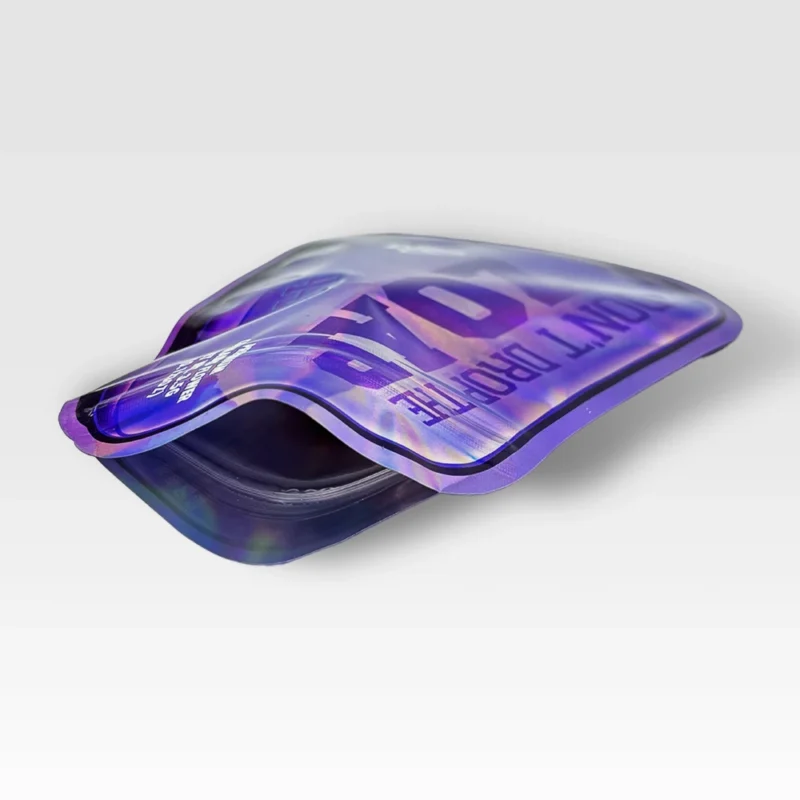
A pillow pouch can look flawless at pack-out, then arrive soft, clumpy, or stale. That gap destroys trust, and it is usually preventable.
I do not treat “good-looking seals on the line” as proof of shipping success. I spec a seal window with margin, require hot tack, and validate against route stress so micro-leaks do not show up at the customer’s door.

I build my pouch specs around real logistics, not just a clean pull test. If you need a faster, safer path to a stable spec, start here:
see my coffee packaging solution workflow.
What “Perfect on the Line” Really Means—and Why It’s Not Proof of Transit Success?
A pouch can pass visual checks and still fail later. That delayed failure is the most expensive kind, because it hits after shipment.
“Perfect on the line” usually means the seal held for minutes, not weeks. Transit adds repeated compression, vibration, and humidity swings that expose micro-channels, weak fin seals, and powder-contaminated seals.
How I define “success” beyond the packaging line
I separate “line pass” from “route pass.” I see many projects where the sealing jaws and settings look correct, the seal looks straight, and the first pull test passes. I still assume risk exists until I stress the pouch the way logistics will. In real manufacturing, this detail often determines whether you get a complaint: a seal can look closed while a micro-channel remains open, especially when powder dust sits in the seal area. I also treat fin seal zones as high-risk because fold memory and layered thickness can create uneven pressure. From a production standpoint, this matters because line conditions are short and controlled, while shipping is long and chaotic. I only approve a spec when it survives “time + motion + climate,” not just a clean sample at the machine.
| Check |
What it proves |
What it does NOT prove |
| Visual seal |
Alignment and appearance |
Micro-leak resistance |
| Quick pull test |
Short-term bond strength |
Fatigue under vibration |
| One-day hold |
Basic closure |
Humidity-driven caking risk |
| Route simulation |
Real failure exposure |
Nothing left to guess |
Route Stress Map: Where Pillow Pouches Get Punished (Compression, Vibration, Heat/Humidity)?
If you do not map route stress, you will spec the wrong “safety margin.” The pouch will pay the price later.
Pillow pouches get hit hardest by case compression, truck vibration, and humidity swings. Tight case packs and long routes turn fin seals and end seals into fatigue points, and they amplify abrasion and pinhole risk.
Where failures start in real shipments
I start with three questions: is it ocean or air, how many cases per pallet layer, and does it cross climate zones. These three inputs predict most failures. A tight case pack increases constant pressure on the seals and corners. Vibration then adds micro-slip, which can “work” a small defect into a bigger leak path. Humidity swings can push moisture into any weak spot, and instant coffee reacts fast: it cakes, loses flow, and smells flat. From our daily packaging work, we see fin seals fail in two common ways: uneven pressure creates a thin line of weak bonding, and fold memory creates a stress line that cracks under fatigue. I also watch abrasion inside the case, because repeated rubbing can create pinholes in thin structures or scuff coatings that later become weak points.
| Route factor |
What it attacks |
Most common symptom |
| Case compression |
End seals, seal edges |
Slow micro-leaks |
| Vibration |
Fin seal fold line |
Fin-seal fatigue cracks |
| Heat/humidity cycling |
Any weak channel |
Caking, aroma loss |
| Case abrasion |
Outer film surface |
Scuffs, pinholes |
Seal Window First: How I Specify Temperature Range, Dwell Time Margin, and Hot Tack?
A single sealing temperature is a trap. Production drift is real, and a narrow window turns drift into defects.
I spec a seal window as a workable range, not a point. I require dwell-time margin and hot tack so seals survive immediate handling, case packing, and early compression before full cooling.
How I write a seal-window spec that factories can actually run
I write specs so an operator can succeed even when conditions drift. In real manufacturing, temperatures fluctuate across jaws, lines run at different speeds, and powder dust is never zero. So I do not chase the highest seal strength at one temperature. I chase stability across a range. From a production standpoint, this matters because a “strong but narrow” window produces random rejects and hidden micro-leaks that pass inspection. I also insist on hot tack margin because the pouch gets loaded, dropped, and packed almost immediately. If hot tack is weak, the seal can shear before it cools, and you will never see the defect until later. I define minimum acceptable seal strength, a target range, and the test conditions, so everyone measures the same way. I also call out fin seal and end seal separately, because they behave differently.
| Spec item |
What I define |
Why I care |
| Seal window |
Temperature range + pressure + speed |
Handles normal drift |
| Dwell-time margin |
Minimum dwell at target speed |
Prevents weak bonds |
| Hot tack |
Minimum hot tack strength |
Survives immediate handling |
| Separate zones |
Fin seal vs end seal limits |
Stops “one setting fits all” |
Product Reality: Coffee Powder Dust, Static, and Why Seal Contamination Is Predictable?
Powder in the seal area is not bad luck. It is physics, and it shows up more when you scale volume and speed.
Instant coffee powder is fine and can carry static. That dust can sit in the seal interface and create micro-channels, even when the seal looks clean. I design the spec to tolerate predictable contamination.
My contamination-control rules that protect the seal window
I assume some powder will enter the seal zone, especially at higher speeds. So I manage contamination from two sides: process and structure. On the process side, I push for simple controls that operators will actually use, such as dust extraction near the fill point, air knives, and stable vibration settings that reduce powder bounce. On the structure side, I prefer sealant layers that “wet out” and flow enough to push small particles away instead of trapping them as permanent channels. From a production standpoint, this matters because contamination risk scales with speed, and many brands only discover the issue after they increase output. I also watch static, because static makes powder cling to film and guides. If static is high, I discuss ionizing bars or humidity control. When I combine a forgiving sealant layer with realistic line controls, micro-leaks drop sharply.
| Risk driver |
What I change |
Result I want |
| Fine dust |
Dust control at fill + better sealant wet-out |
Fewer micro-channels |
| Static cling |
Ionizing or humidity control |
Less powder in seal zone |
| High speed |
Wider seal window + hot tack margin |
Stable output at scale |
If your team is fighting dust-related seal issues, I usually start from the product + line reality, then lock the pouch spec around it:
get the coffee pouch spec checklist I use.
Barrier & Shelf Life: How Oxygen/Moisture Ingress Turns Into Caking and Aroma Loss?
A tiny leak can still ruin instant coffee. Moisture does not need a big hole to cause caking and dull aroma.
Moisture ingress often hurts instant coffee faster than oxygen. I confirm the target shelf life and route climate, then choose a barrier level that is stable, not just “maximum,” to avoid new risks like pinholes and fold damage.
How I balance barrier strength with real-world durability
I do not treat barrier as a trophy. I treat it as a tool. If I overbuild the structure, I can create new issues: stiff films can crease harder, folded zones can fatigue, and some complex laminations can be more sensitive to pinholes or stress whitening. From our daily packaging work, we see that instant coffee complaints often start with moisture, because moisture changes texture and flow fast. I confirm whether the product sits in humid warehouses, crosses coastal routes, or faces long storage before sale. Then I set a barrier target that matches that reality. I also connect barrier back to sealing, because a high barrier film is meaningless if the seal window is narrow or contamination is uncontrolled. My goal is a package that is “boringly stable” for the whole route, not a spec sheet that looks impressive but fails in the field.
| Goal |
What I optimize |
What I avoid |
| Stop caking |
Moisture barrier + seal integrity |
Overbuilding that adds fold risk |
| Protect aroma |
Oxygen barrier + low micro-leak rate |
Complex structures with weak fatigue |
| Ship safely |
Durable film + abrasion resistance |
Thin films that pinhole easily |
My Spec Checklist: What I Put in the RFQ So the Factory Can’t Quote a Weak Seal System?
If the RFQ is vague, the quote will be vague. A vague quote is how weak seal systems sneak into “same-looking” pouches.
I lock the seal system in the RFQ: pouch format, seal widths, seal window targets, hot tack minimums, route conditions, and validation tests. That removes hidden downgrade options and makes outcomes predictable.
My RFQ + validation bundle for instant coffee pillow pouches
I write RFQs like I am trying to prevent misunderstandings, because I am. I specify pouch type, size, thickness range, and sealing geometry, including fin seal width and end seal width. I also define the seal-window target as a workable range, not a single point, and I set minimum hot tack. From a production standpoint, this matters because suppliers can meet “appearance” while still selecting a structure with a narrow window that is fragile at scale. Then I add route details: ship mode, pallet pattern, and climate exposure. Finally, I require validation tests that match the route. I do not rely on one pull test. I ask for air-leak or dye tests for micro-leaks, vibration or abrasion simulation in cases, humidity cycling, and drop or compression checks. When a supplier agrees to these up front, I see fewer surprises after production.
| RFQ field |
What I write |
Why it blocks weak quotes |
| Seal geometry |
Fin seal + end seal widths and alignment |
Prevents “looks same” downgrades |
| Seal window |
Target range + dwell + pressure |
Forces runnability, not luck |
| Hot tack minimum |
Minimum hot tack requirement |
Protects early handling |
| Validation plan |
Leak + vibration + humidity + drop/compression |
Matches real failure modes |
Conclusion
I stop “perfect on the line, failed in transit” by spec’ing a wide seal window, requiring hot tack, and validating against route stress. If you want me to review your pouch spec, contact me.
Get My Coffee Pillow Pouch Spec Checklist
My Role
About Me
Brand: Jinyi
Slogan: From Film to Finished—Done Right.
Website: https://jinyipackage.com/
Our mission:
JINYI is a source manufacturer specializing in flexible packaging. I want to deliver packaging solutions that are reliable, practical, and easy to execute for brands. I focus on predictable quality, clear lead times, and structures that match the product and printing goals.
About me:
JINYI is a source manufacturer specializing in custom flexible packaging solutions, with over 15 years of production experience serving food, snack, pet food, and daily consumer brands.
We operate a standardized manufacturing facility equipped with multiple gravure printing lines as well as advanced HP digital printing systems, allowing us to support both stable large-volume orders and flexible short runs with consistent quality.
From material selection to finished pouches, we focus on process control, repeatability, and real-world performance. Our goal is to help brands reduce communication costs, achieve predictable quality, and ensure packaging performs reliably on shelf, in transit, and at end use.
FAQ
1) What is the biggest hidden cause of micro-leaks in pillow pouches?
I usually see seal contamination from fine powder and a seal window that is too narrow for real production drift.
2) Do I always need the highest barrier structure for instant coffee?
I do not always choose the maximum barrier. I match barrier to shelf-life target and route climate, because overbuilding can increase fold and pinhole risk.
3) Why does the fin seal crack more than the end seal?
The fin seal has fold memory and layered thickness. That geometry can concentrate stress and create fatigue cracks under vibration and compression.
4) What does “seal window” mean in a quote or RFQ?
I define it as a workable temperature, dwell, and pressure range that still meets minimum seal strength and hot tack requirements at the target line speed.
5) Which tests catch failures before mass production?
I rely on leak testing (air or dye), case vibration or abrasion simulation, humidity cycling, and drop/compression checks, not only a quick pull test.