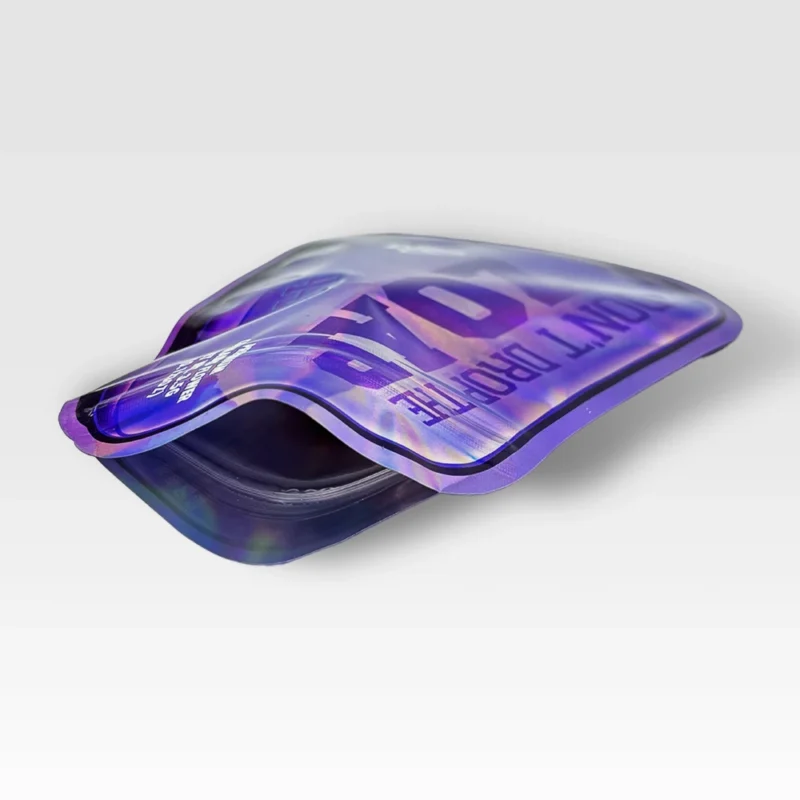
Powder pouches fail quietly, then explode into refunds. One humid day can turn matcha into rocks, seasoning into lumps, and protein into sticky mess. Your brand pays the price.
To stop clumping and moisture damage, I design a system: start with the powder’s moisture risk, set WVTR targets, lock seal integrity, then validate with humidity cycling and shipping stress tests—before scaling.
Most brands try to solve powders with “thicker film” or “higher barrier” words. I do the opposite. I trace the failure path: where moisture enters, where seals weaken, and what happens after the first real-world humidity spike. If I can stop that spike from becoming a complaint, everything gets easier—production, reviews, and repeat orders.
seasoning powder packaging 3
Introduction: Why Powder Pouch Failures Turn Into Refunds Fast in the U.S. & EU?
Powder issues look small until customers open the pouch. A little lump becomes “expired” in reviews. A slightly soft pouch becomes “cheap” in photos.
Pouches for powders often fail because humidity exposure is unavoidable. Warehouses sweat, delivery routes get wet, and kitchens are not clean labs. If you do not design for those moments, the refund is not a surprise—it is the default outcome.
What makes powders harsher than many foods?
Powder reality
What customers see
What I design against
Humidity spikes are common
Clumps, caking, “stale” texture
WVTR + seal integrity + humidity cycling
Dust contaminates seals
Soft pouch, leaks, messy opening
Seal window + contamination control + wider seal land
Frequent open/close use
Re-seal fails, moisture enters
Zipper selection + reseal cycle tests
Start With the Powder: Matcha vs Seasoning vs Protein—What Does Your Product Fear Most?
If I start with “What material do you want?” I waste time. I start with one question: “What moisture event ruins your powder fastest?” That one answer sets the structure.
Matcha, seasoning, and protein powders do not behave the same. They absorb moisture differently, they cake differently, and they trigger complaints for different reasons. If I treat them as one category, I will design the wrong pouch.
My first-pass risk map
Powder type
Typical failure
Primary driver
Packaging focus
Matcha / tea powders
Dull aroma, clumps, color loss
Moisture + oxygen + light
WVTR + OTR + light protection + seal stability
Seasoning / spice blends
Clumping, flavor fade, odor transfer
Moisture + aroma migration
WVTR + aroma barrier + anti-contamination sealing
Protein / functional powders
Caking, stickiness, “old” taste
Moisture + fat/sugar interactions
WVTR + strong seals + good zipper reseal performance
Clumping vs Caking vs Hardening: What’s the Real Difference and Root Cause?
Customers use one word: “clumped.” I separate it into three problems. Each one points to a different root cause and a different fix.
When I diagnose, I do not guess. I look at the texture, the distribution, and how quickly it happened. That tells me whether the pouch needs better moisture barrier, better seals, or a better usage design.
How I classify the complaint in minutes
Complaint
What it looks like
Most common root cause
Fastest fix path
Clumping
Small soft lumps
Humidity exposure after opening
Better zipper + reseal tests + usage guidance zone
Caking
Dense pack, hard chunks
Moisture ingress over time (micro-leaks)
Seal integrity upgrade + WVTR target + cycling test
Hardening
Brick-like block
Severe moisture event + storage stress
High barrier structure + stronger seals + route/storage validation
seasoning powder packaging 1
Moisture Is the #1 Enemy: WVTR Targets, Humidity Spikes, and Real Storage Reality?
For powders, I usually care more about WVTR than OTR. Oxygen matters for some powders, but moisture destroys texture fast. Once texture is gone, customers stop trusting the brand.
I plan for humidity spikes because they are guaranteed. A warehouse in summer, a cold-to-warm transition, or a rainy delivery day can push moisture into weak spots. If the pouch depends on “perfect storage,” it will fail in the U.S. and EU.
Where moisture really enters
Ingress path
Why it happens
What I change first
Micro-leaks at seals
Seal window too narrow or contaminated
Seal land width + parameters + contamination control
Structure choice + fold-safe design zones + route testing
Barrier Structures That Work for Powders: PET/PE, Metallized, Foil, AlOx/SiOx—When to Use Which?
I do not pick barrier by trend. I pick barrier by the failure I cannot afford. For many powders, PET/PE is a stable baseline, but “PET/PE” is only a name. Two PET/PE pouches can perform very differently.
When a powder is aroma-sensitive or long shelf life is required, I move to metallized, foil, or clear high-barrier (AlOx/SiOx). Then I test fold durability and sealing behavior because lab barrier numbers do not survive bad folds and rough routes.
My practical structure shortlist
Structure
Where it wins
Common failure risk
How I control it
PET/PE (baseline)
Most dry powders, shorter cycles
Moisture creep if seals are weak
WVTR target + strong seals + cycling test
Metallized
Better aroma/light protection
Scuffing, flex cracks at folds
Fold-safe zones + compression tests + surface protection
Foil
Maximum barrier, long storage
Pinholes if creased hard
Design away from high-fold areas + route-based testing
AlOx/SiOx
Clean look + high barrier balance
Durability varies by handling
Test-first: fold + scuff + sealing validation
Seal Integrity Matters More Than Film: Contamination, Seal Window, and Leak Paths?
When powder pouches fail, the leak usually starts at the seal. Film gets blamed, but seals cause most real refunds. A perfect barrier film still loses if the seal is weak or contaminated.
Powders make sealing harder because dust is everywhere. If dust lands in the seal area, the seal looks closed but has micro-channels. Moisture enters slowly, and the first sign is clumping. This is why I treat seal integrity as a system: resin choice, sealing window, jaw design, dwell time, pressure, and clean seal zones.
Seal failures I see most often
Seal problem
What it causes
Fix that actually works
Seal contamination (powder dust)
Micro-leaks → moisture ingress → caking
Dust control + wider seal land + process discipline
Closures & Features Without Mess: Zippers, Tear Notches, Spouts—What Breaks Barrier First?
Convenience sells, but it also creates leak paths. Zippers, tear notches, and spouts add user value, yet each feature changes how the pouch seals and how moisture enters after opening.
I do not add features until I know the route and the usage pattern. If customers open daily in a humid kitchen, a zipper must reseal reliably after compression in a backpack or delivery bag. If the pouch is used by staff in a café, tear behavior must be predictable, or powder spills become a hygiene problem and a review problem.
Feature risk map
Feature
Why brands want it
New failure risk
Validation I require
Zipper
Reseal convenience
Leak path + misalignment
Reseal cycles + compression + humidity exposure
Tear notch / laser score
Fast opening
Tear propagation + edge weakness
Tear control tests + drop/handling simulation
Spout
Clean dispensing
Cap leak or loosening
Tightness + torque + transport vibration
Fill & Packing Reality: Dust Control, Headspace, Nitrogen Flush, and Line Speed Compatibility?
I treat filling as part of packaging design. If the line throws dust into the seal area, the best film still fails. That is not a theory. It is a predictable outcome. So I align filling angles, dust extraction, and sealing parameters early.
Headspace also matters. Too much headspace lets powder move and abrade seal zones. Too little headspace can distort the pouch and stress seals during packing. If the product is sensitive to oxygen, nitrogen flush can help, but it only works when the pouch has strong seals and stable barrier. Otherwise, you flush today and leak tomorrow.
Line realities I check before recommending a structure
Line factor
What goes wrong
What I standardize
Dust at the seal zone
Micro-leaks, moisture ingress
Dust control steps + seal cleanliness checks
Speed vs dwell time
Weak seals at high speed
Seal window + dwell/pressure lock
Headspace choice
Abrasion, deformation, poor stack
Target fill height + pack-out rules
Design Rules That Prevent Failure: Safe Zones, Fold Lines, Scuff Areas, and Barcode Readability?
Many failures are designed into the pouch. Not because the designer is careless, but because they did not know where stress concentrates. Fold lines, gussets, and scuff zones are real. If you put critical text, barcodes, or reseal cues in those areas, you increase returns.
I design for manufacturing and for real handling. That means I reserve fold-safe areas, keep barcodes away from high distortion zones, and avoid placing high-coverage ink where scuffing will make the pack look “old” within days. In the U.S. and EU, that “old look” becomes a review photo quickly.
Simple layout rules I apply to powder pouches
Design element
What can go wrong
Rule I follow
Barcode / QR
Wrinkles, scuffs, scan failure
Keep away from folds, gussets, and high scuff areas
Real-World Tests That Predict Complaints: Humidity Cycling, Drop/Compression, and Shelf Simulation?
Lab numbers are not enough. Powder complaints come from real life: humidity cycling, shipping compression, and repeated opening. So I validate with tests that recreate those moments.
I like humidity cycling because it tells the truth fast. A pouch that survives stable room conditions can still fail when humidity swings. I also use drop and compression tests because e-commerce handling is rough. Then I do shelf simulation: not only to see if the powder stays free-flowing, but also to see if the pouch still feels “new” after weeks of handling.
My minimum validation checklist
Test
What it reveals
Pass condition (practical)
Humidity cycling
Moisture ingress, seal weakness
No new clumping pattern, pouch stays firm
Compression + vibration
Gusset stress, zipper leakage
No seal creep, zipper reseals after stress
Drop test
Corner failures, burst risk
No burst, no new leak path
Open/close cycles
Real reseal behavior
Reseal remains reliable, no powder in zipper track
Compliance & Claims in the U.S. & EU: Food Contact, Migration, and “Recyclable” Messaging Pitfalls?
In the U.S. and EU, compliance is part of brand trust. For powders, I pay close attention to food contact documentation, adhesive and ink migration control, and odor management. If the pouch smells “plastic” or transfers odor, customers will blame the product.
I also treat sustainability claims carefully. “Recyclable” is not just a polymer name. It is a system reality, and it depends on local infrastructure and labeling rules. If a claim pushes you into a structure that reduces shelf stability, the claim backfires. More refunds and more wasted product is not sustainable in real terms.
Claim-first mistakes I avoid
Mistake
What happens
My correction
Choosing “recyclable” before sealing proof
More moisture damage and returns
Prove performance first, then write claims carefully
Ignoring odor and migration
Off-notes, customer distrust
Lock compliant materials and printing systems early
Putting compliance info in fold zones
Unreadable labels, scan failures
Reserve stable information zones in dielines
seasoning powder packaging
My Practical Shortlist Framework: How I Deliver 2–3 Options Fast (Baseline / Upgrade / Premium)?
I do not present ten choices. I present two or three options with clear trade-offs and a validation plan. That is how brands decide fast and scale safely. The inputs are simple: powder risk, shelf-life target, and channel stress.
Then I lock the system: structure + seal design + features + tests. If the baseline passes, the upgrade is easy. If the baseline fails, I already know where to strengthen—barrier, seal window, or feature design. This method reduces communication cost, prevents redesign loops, and protects reviews in U.S. and EU channels.
My standard 3-option output
Option
Best for
What I prioritize
Validation focus
Baseline
Shorter shelf cycle, stable channels
Seal integrity + WVTR target
Humidity cycling + seal tests
Upgrade
Longer storage, more humidity risk
Better barrier + stronger corners
Compression + route simulation
Premium
High-sensitivity powders, premium brands
Maximum stability + best user experience
Full shelf simulation + open/close cycles
Conclusion
For powders, the fix is a system: seal integrity first, then WVTR targets, then real humidity and shipping tests. If you control those, clumping stops and reviews stabilize.
For most powders, yes. Moisture changes texture fast, so WVTR plus seal integrity usually controls refunds more directly than oxygen.
2) Why do powders clump even when the pouch looks sealed?
Micro-leaks at contaminated seals and weak zipper reseals can let moisture enter slowly. The pouch can look fine but still fail after a humidity spike.
3) Do I need foil for matcha or seasoning?
Not always. I choose foil when long shelf life, strong aroma retention, or harsh routes make maximum barrier the safest business decision.
4) What is the most common sealing issue for powder pouches?
Dust in the seal zone. It creates invisible channels that defeat even high-barrier films.
5) What tests should I run before mass production?
I recommend humidity cycling, compression/vibration, drop tests, and open/close reseal cycles—because they predict real complaints better than lab specs alone.