Channel-Scenario — Packaging Engineer View
Retail Shelf, Café Use, or Cross-Border Shipping? How I Decide Which Packaging Spec Really Fits the Channel
One pouch spec feels efficient. Then shelf, counter, and export transit each expose a different weakness, and the “safe” structure suddenly stops looking safe.
I decide the right packaging spec by channel, not by product name alone. Retail shelf changes face and shape needs. Café use changes handling rhythm. Cross-border shipping changes route stress, seal tolerance, and structure priorities.

I do not treat this as a material quiz. I treat it as a job-matching exercise. The same pouch can protect the same product, but it still may be the wrong answer if it stands badly on shelf, slows staff during daily use, or loses integrity across a long shipping route.
Why Do Buyers Often Start with the Product, While I Start with the Channel?
Buyers usually start with the product label. That feels logical. In real packaging work, it is usually incomplete.
I start with the channel because the channel tells me where the pouch has to work, who handles it first, and what kind of failure will show up before the product reaches the user.
How I frame the job first
When a buyer says “this is coffee” or “this is powder,” I still do not have enough information to lock a spec. I want to know where it sits, who moves it, how often it gets touched, and what pressure it sees before the customer opens it. A pouch on retail shelf has to stand, look clean, and keep value in front of the buyer. A pouch in café use has to support speed, repeat opening, and clean pouring. A pouch in cross-border shipping has to survive time, compression, vibration, and route uncertainty. From a production standpoint, this matters because the same laminate can feel excellent in sampling and still be the wrong fit once the channel changes the job. I do not choose by product category alone. I choose by the first real failure risk the channel creates.
| What Buyers Ask |
What I Ask First |
| What product is this? |
Where does this pouch have to perform? |
| Which structure is common? |
Which failure mode comes first? |
Why Does Retail Shelf Push Me to Care More About Face, Shape, and Shelf Value?
Shelf packaging does not win just because it protects. It also has to look right while it sells.
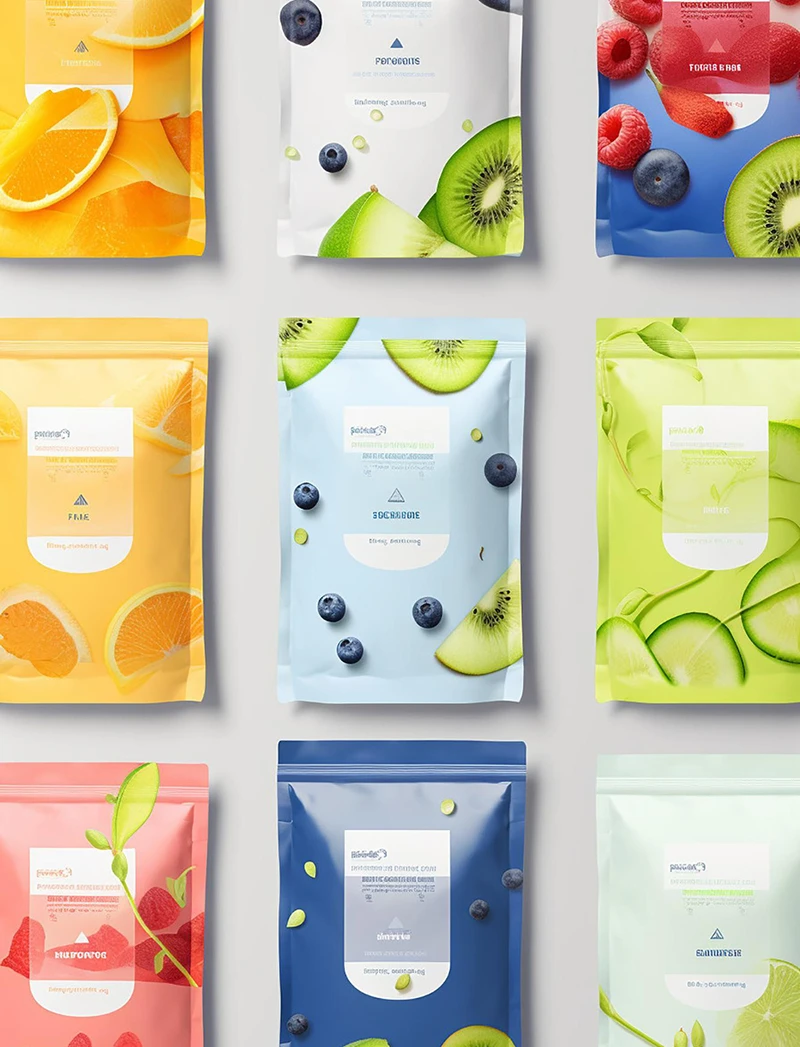
On retail shelf, I care more about stand-up stability, front-face presentation, surface feel, and scuff behavior because weak shelf performance quietly destroys value before the product is even touched.
Where shelf pressure changes my spec
I do not treat retail as a soft channel. I treat it as a visible channel. The pouch has to hold its face, its shape, and its value under repeated touching, moving, and visual comparison. I look at whether the bag stands cleanly, whether the front panel looks flat enough, whether the finish still feels premium after handling, and whether the body goes soft too easily. In real manufacturing, this detail often determines whether I adjust the bottom structure, the body stiffness, the surface finish, or the balance between window and print. A pouch that survives e-commerce can still look tired on shelf. That is why I do not assume a working transport pack is automatically a good retail pack. On retail shelf, packaging has to protect the product and hold value in front of the buyer at the same time.
| Shelf Risk |
What I Change First |
| Poor stand-up performance |
Bottom structure and body balance |
| Cheap look after handling |
Finish, stiffness, and front panel control |
Why Is Café Use Usually More About Speed, Handling, and Reclose Logic Than Buyers Expect?
Café packaging looks simple until staff has to open it fast, pour cleanly, and close it again all day.
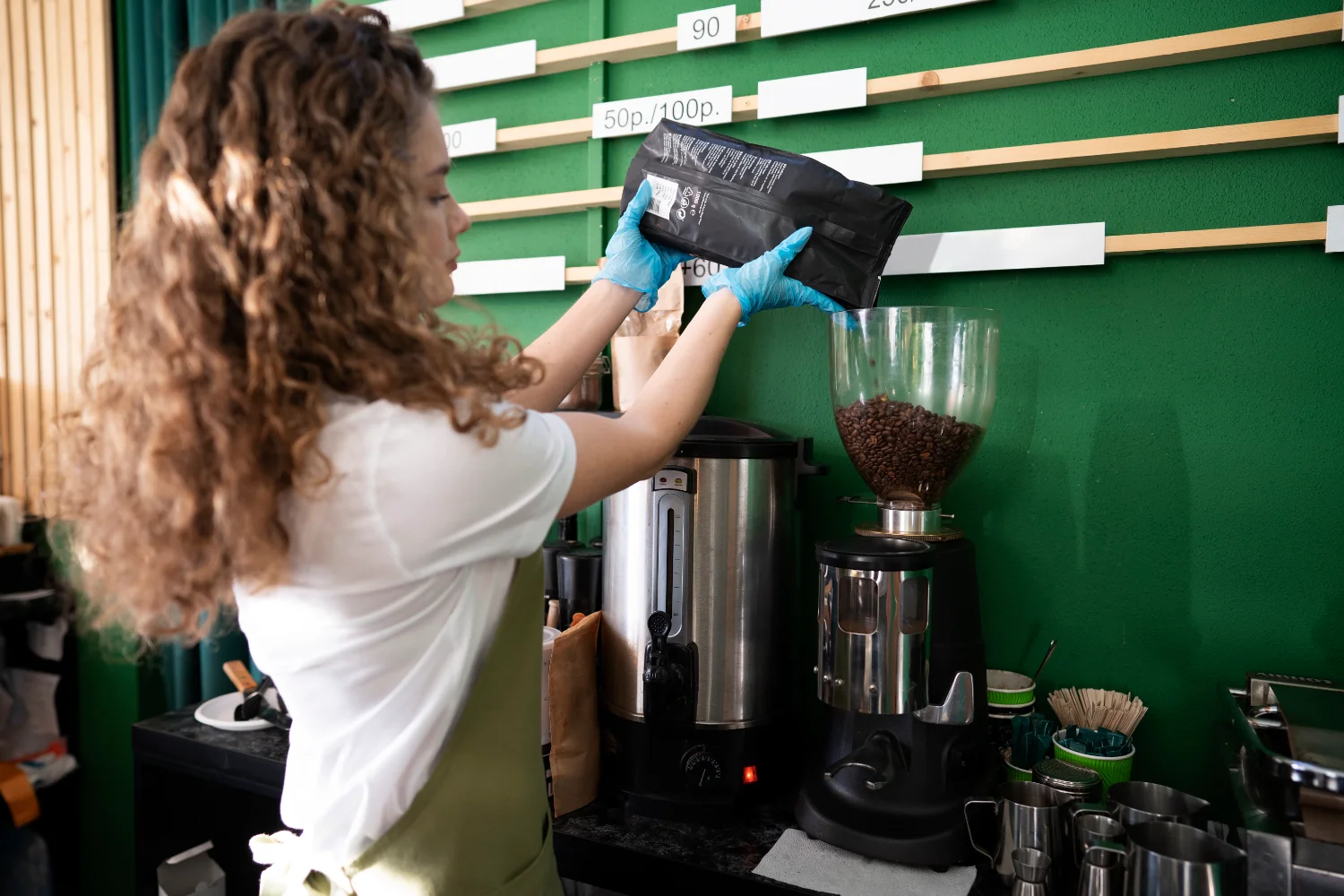
In café use, I usually care more about opening rhythm, pouring control, and reclose behavior than buyers expect, because daily handling waste can hurt performance faster than unopened-life overdesign.
Why convenience becomes part of protection
I treat café packaging as a working tool, not just a sales bag. I want to know how often staff opens it, whether it has to pour cleanly during busy hours, whether it needs repeated close-and-open cycles, and whether it sits on a counter or on a storage shelf. From our daily packaging work, we see that buyers often focus too much on general barrier language and too little on handling friction. A pouch that is awkward to open, messy to pour, or unreliable to reclose creates waste, slowdowns, and irritation every day. That is why this channel often pushes me to rethink zipper logic, tear notch position, pack size, mouth opening, and overall proportions before I talk about higher barrier. For café use, convenience and handling rhythm often matter more than unnecessary unopened-life overdesign.
| Café Risk |
What I Change First |
| Slow or awkward opening |
Tear notch, zipper, mouth design |
| Messy repeated use |
Pack size and reclose logic |
Why Does Cross-Border Shipping Force Me to Think About Route Stress First?
Cross-border shipping is not just longer delivery. It is more handling, more uncertainty, and more chances for small weaknesses to show up.
In cross-border projects, I usually trust route stress before I trust ideal lab assumptions, because real transit pressure exposes seal weakness, crease damage, and size-to-carton mistakes very quickly.
Why route conditions change my priorities
I do not see cross-border shipping as a simple “ship it farther” problem. I see longer transit, more handling points, more carton compression, more vibration, and more climate uncertainty. That combination changes what I check first. I look at seal reliability, laminate toughness, fold and crease behavior, puncture tolerance, and how the pouch fits the secondary pack. In real manufacturing, this detail often determines whether a bag arrives stable or arrives with hidden fatigue that only shows up later. Buyers often overspend on barrier here while still missing seal risk, route damage, or carton mismatch. I would rather solve the real mechanical and route problem first than pretend a more premium barrier layer automatically makes the structure safer. Cross-border packaging has to survive the route honestly, not just sound strong on paper.
| Route Risk |
What I Watch First |
| Compression and vibration |
Seal strength and laminate toughness |
| Long route uncertainty |
Crease behavior and carton compatibility |
About Us
JINYI Packaging
From Film to Finished—Done Right.
At JINYI, we focus on custom flexible packaging with 15+ years of production experience. We run gravure lines and HP digital printing, so we support both stable volume production and flexible short runs.
We believe good packaging is not just about appearance. We see it as a working solution that has to perform in transport, on shelf, and in real consumer use. Visit jinyipackage.com.
FAQ
Can one pouch spec work for retail shelf, café use, and export?
Sometimes it can, but only when the real risks stay close enough. I do not force one answer when the job is clearly different.
What usually changes first for retail shelf packaging?
I usually look first at bottom structure, body stiffness, finish, and front-face presentation.
Why is café packaging often a handling problem?
Because speed, clean pouring, and repeated opening create daily friction that buyers often underestimate.
What do you trust first in cross-border packaging?
I trust route stress first. I want the structure to survive real handling, compression, and transit uncertainty before I trust ideal lab assumptions.