Senior dogs slow down, and owners feel pressure to “fix it” fast. The wrong joint treat claim can create false hope, wasted money, and distrust.
Confidence comes from verifiable labels, clear boundaries (support, not cure), and practical use guidance. “Too good to be true” claims usually rely on absolute promises, disease-style language, or vague value words that cannot be checked.
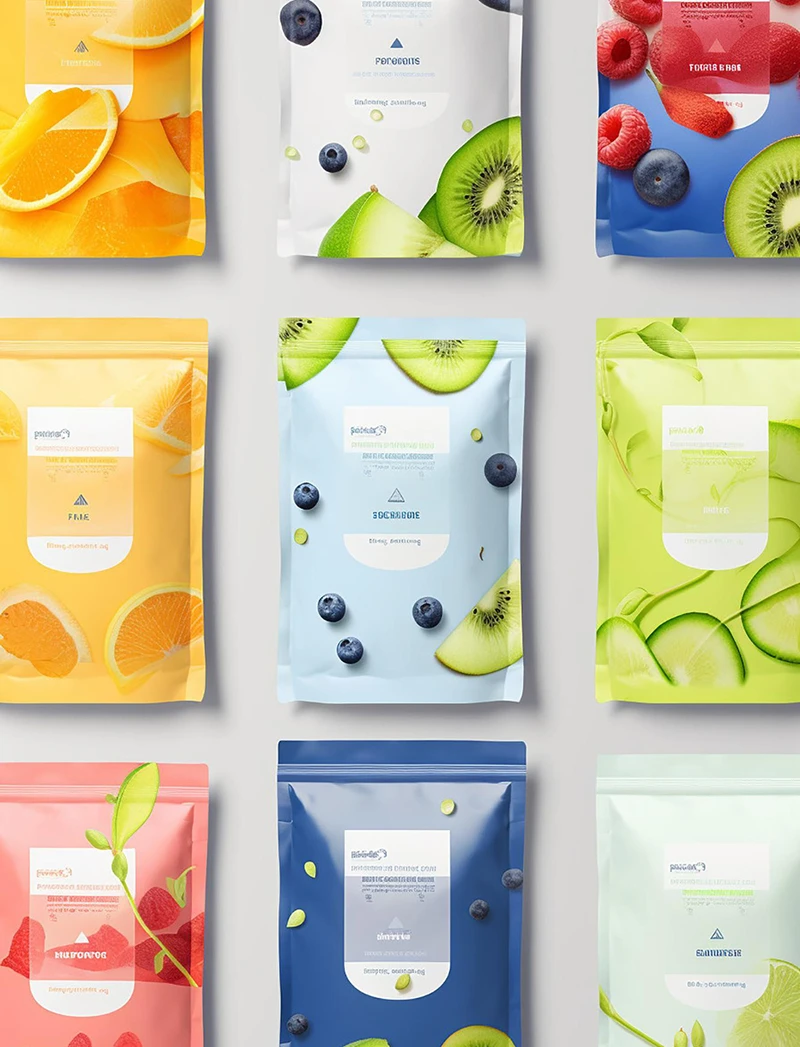
Explore pet food packaging that keeps dosage and safety guidance readable on every pouch

Joint support treats sit in a hard spot. Owners want relief. Labels want attention. Evidence and regulation demand clear limits. This report focuses on what owners can verify and what claims can safely mean.
Why do senior dog owners buy joint support treats in the first place?
Owners do not usually look for a miracle. Owners look for stability, comfort, and fewer bad days.
Owners often buy joint treats to manage uncertainty. Many owners want a simple add-on that supports mobility while they also adjust weight, exercise, and veterinary care.
Senior dog joint concerns are often chronic. Chronic problems usually need a plan, not a single product. The 2022 AAHA Pain Management Guidelines describe chronic pain management as a structured process that includes assessment, monitoring, and a multimodal approach. The guideline also highlights the role of owner input and pain assessment instruments, which matters because owners often decide whether a treat “works” based on daily function. This context helps explain why “supports mobility” can be a reasonable goal, while “cures arthritis” is not realistic for a treat label. It also explains why time windows matter. A claim that suggests instant, guaranteed results sets an expectation that does not match how chronic joint issues behave. A more credible label gives owners a practical way to monitor change over weeks, not days.
What owners want vs what a treat can responsibly promise
| Owner Goal |
Responsible Claim Style |
What to Measure |
What to Avoid |
| Maintain daily mobility |
Supports joint health / mobility |
Willingness to walk, rise time |
“Reverses joint damage” |
| Reduce bad-day frequency |
Helps maintain comfort |
Stiffness after rest, stairs |
“Eliminates pain” |
| Confidence and control |
Clear dose + time-to-assess |
Weekly notes, simple scores |
“Results in 3 days” |
Evidence (Source + Year):
– AAHA: 2022 AAHA Pain Management Guidelines for Dogs and Cats (2022).
– COAST Development Group: International consensus guidelines for canine osteoarthritis treatment by COAST stage (2023).
Where is the regulatory line between “support” and “drug-like” promises?
Some labels sound like medicine. That language can confuse buyers and raise compliance risk.
The safest boundary is simple: “support normal structure and function” is different from “diagnose, treat, cure, or prevent disease.” Joint treats should stay on the support side.

FDA guidance for dog and cat food diets explains how the agency addresses products that are labeled or marketed for diagnosing, curing, mitigating, treating, or preventing disease. Disease-oriented positioning can move a product into drug-like territory. Even when a product is “only a treat,” strong disease claims can still create the same consumer confusion and enforcement concern. AAFCO’s Pet Food Labeling Guide also frames what counts as a claim and provides structured explanations for common claim categories and descriptive terms. For buyers, this boundary matters because it changes what a claim can reasonably mean. “Supports joint health” can be interpreted as a maintenance signal. “Treats arthritis” implies a clinical outcome that should be supported in a very different way. The most trustworthy labels stay explicit about role, limits, and use context. They also avoid outcome guarantees that cannot be verified at shelf.
Claim boundary map: wording that is safer vs wording that crosses the line
| Claim Type |
Example Wording |
Why It Is Lower or Higher Risk |
Better Alternative |
| Structure/function support |
Supports joint health |
Maintains normal function framing |
Add dose + time-to-assess |
| Maintenance of mobility |
Helps maintain mobility |
Sets a realistic goal |
Define “mobility” measures |
| Disease treatment claim |
Treats arthritis / cures pain |
Implies medical treatment |
Use “supports comfort” with limits |
Evidence (Source + Year):
– FDA: CPG Sec. 690.150 on dog/cat food diets intended to diagnose, cure, mitigate, treat, or prevent disease (Issue date: 2016).
– AAFCO: Pet Food Labeling Guide (updated with PFLM model regulations; page published 2022).
Which joint treat claims build confidence, and which feel “too good to be true”?
Owners can accept modest support claims. Owners reject claims that sound magical or guaranteed.
Confidence rises when labels show the “how” (dose, use limits, time). Skepticism rises when labels sell outcomes instead of controllable steps.
Trust-building claims have three traits. First, they are verifiable. The label gives per-serving amounts and weight-based feeding directions. Second, they are bounded. The wording stays in support language and prompts veterinary evaluation when signs are severe or persistent. Third, they are executable. The label tells owners when to reassess, often in a 4–8 week window, and it suggests simple function measures (rising, stairs, walk duration). “Too good to be true” claims usually break these rules. They promise instant results, universal success, or disease reversal. They also lean on vague value words like “miracle” or “doctor-approved” without a way to verify. Ingredient evidence also adds nuance. A 2022 systematic review and meta-analysis reported little to no overall effect for glucosamine-chondroitin nutraceuticals for pain management in canine and feline osteoarthritis, while some individual trials report benefit after longer use windows, such as 70 days in a randomized trial. This disagreement makes claim discipline even more important. When evidence is mixed, labels should be more specific about limits and time, not more dramatic.
Improve trust by printing clear dose panels that resist scuff and stay readable through shipping and handling
Quick buyer checklist: what to trust on-pack
| Check Item |
What “Good” Looks Like |
Red Flag |
Buyer Action |
| Claim boundary |
Support / maintain language |
Treat/cure/prevent arthritis |
Choose bounded wording |
| Dose transparency |
mg per treat + weight-based use |
Ingredients listed with no amounts |
Ask brand for per-serving dose |
| Time-to-assess |
4–8 week monitoring window |
“Results in 3 days” |
Track weekly function notes |
| Safety limits |
Feeding limits + vet prompt |
“Works for every dog” |
Escalate to veterinary review |
As a flexible packaging manufacturer, we focus on label stability and legibility. We help brands keep dosage panels, caution text, and feeding directions consistent, so owners can follow a safe trial plan instead of guessing.
Evidence (Source + Year):
– Barbeau-Grégoire et al.: Systematic review and meta-analysis of therapeutic diets and nutraceuticals in canine/feline OA (2022).
– McCarthy et al.: Randomized double-blind trial of glucosamine/chondroitin in dogs with OA (2007).
Conclusion
Joint treats build confidence when claims are verifiable, bounded, and executable. Avoid cure-style promises and instant guarantees. Contact us to strengthen on-pack clarity and trust.
Get a pet food packaging solution quote
About Us
Brand: Jinyi
Slogan: From Film to Finished—Done Right.
Website: https://jinyipackage.com/
Our Mission:
JINYI is a source manufacturer specializing in custom flexible packaging solutions. We aim to deliver reliable, practical packaging that reduces communication cost, improves quality stability, and supports predictable lead times for brands.
About JINYI:
JINYI is a source manufacturer specializing in custom flexible packaging solutions, with over 15 years of production experience serving food, snack, pet food, and daily consumer brands.
We operate a standardized manufacturing facility equipped with multiple gravure printing lines as well as advanced HP digital printing systems, allowing us to support both stable large-volume orders and flexible short runs with consistent quality.
From material selection to finished pouches, we focus on process control, repeatability, and real-world performance. Our goal is to help brands reduce communication costs, achieve predictable quality, and ensure packaging performs reliably on shelf, in transit, and at end use.
FAQ
Are joint support treats the same as arthritis treatment?
No. Treats are usually positioned for support and maintenance. Arthritis diagnosis and treatment should be handled with a veterinarian.
Which claim wording is safest to trust on a joint chew label?
Support-style wording like “supports joint health” or “helps maintain mobility” is safer than disease-style wording like “treats arthritis.”
Should a joint treat list exact amounts of glucosamine or chondroitin?
Dose transparency helps owners compare products and follow a plan. A label that only lists ingredients without amounts is harder to verify.
How long should owners wait before judging whether a joint treat helps?
Owners should expect weeks, not days. Many plans use a 4–8 week monitoring window with simple function notes.
What signals suggest an owner should stop guessing and see a vet?
Owners should seek veterinary evaluation for persistent limping, obvious pain, rapid decline, or any sudden change in mobility.