Many coffee brands lose trust at the shelf. They say “single-origin” or “blend,” but buyers read hidden meaning into those words.
Single-origin usually signals traceability and distinct flavor, while blends usually signal consistency and supply control. Buyers often assume “single-origin = higher quality” and “blend = cheaper,” but the truth depends on proof cues like traceability fields, sensory language, and clear standards.
Explore coffee packaging built for freshness, consistency, and shelf trust

In the market, these labels do two jobs at once. They describe sourcing and they imply quality. The problem is that implication travels faster than facts. This article separates brand strategy from buyer assumptions, and it lists proof cues that reduce confusion without turning a label into a lecture.
What do buyers assume when they see “single-origin” vs “blend”?
Buyers do not treat these words as neutral. They treat them as shortcuts for quality, transparency, and price.
Many buyers assume single-origin means “better” and more ethical, while blends mean “mass market” and less transparent. These assumptions are common, but they are not always correct.
How assumptions form at shelf
Most buyers cannot taste-test before purchase. They use signals. “Single-origin” often implies a narrower source story, which feels more traceable. “Blend” implies mixing, which can feel less knowable. This is also why value labels matter. Research on ethical labels in coffee shows buyers often express positive attitudes toward fairness, but actual willingness to pay can be lower than attitudes suggest. That gap pushes buyers to rely on simple cues rather than deep verification. If a brand does not provide concrete information, buyers fill the gap with stereotypes. A single-origin can still be inconsistent or poorly roasted, and a blend can still be carefully designed and responsibly sourced. The label alone does not guarantee either outcome.
| Label |
Common buyer assumption |
What is actually true |
| Single-origin |
Higher quality, more ethical, more traceable |
Can be excellent, but still varies by lot, roast, and freshness |
| Blend |
Cheaper, generic, less transparent |
Can be premium, engineered for consistency, and still traceable |
Evidence (Source + Year):
De Pelsmacker et al., “Do Consumers Care about Ethics? Willingness to Pay for Fair-Trade Coffee” (2005). :contentReference[oaicite:0]{index=0}
Why do brands choose single-origin: distinctiveness, traceability, or pricing power?
Single-origin looks simple. But it is a full business model choice, not only a flavor choice.
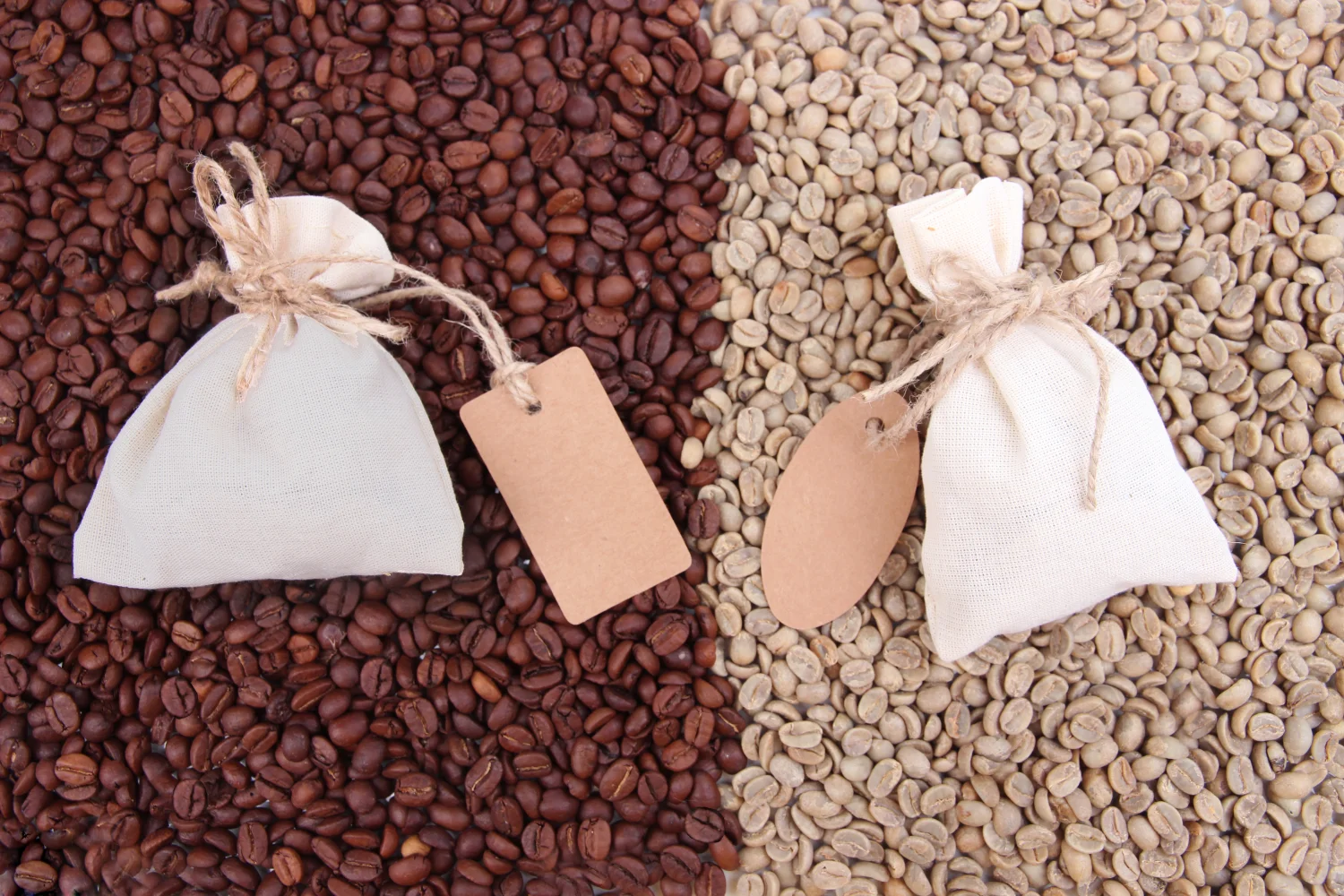
Brands choose single-origin when they want distinct positioning, clearer traceability narratives, and the option to price around rarity. The trade-off is higher variability and higher execution pressure.
Distinctiveness needs a shared flavor language
Single-origin value depends on being explainable and repeatable. Otherwise, “origin character” becomes story-only. This is why the industry relies on structured sensory vocabulary. The SCA Coffee Taster’s Flavor Wheel was created using the World Coffee Research Sensory Lexicon, which was developed with sensory science methods to measure coffee attributes. When a brand uses this kind of vocabulary, it can describe differences in a way that feels less like poetry and more like a standard. That matters because origin alone does not create value. The value comes from clear taste expectations that the product can consistently deliver. If a brand cannot align the origin story with a stable sensory profile, buyers will treat the claim as marketing, even if the origin is real.
| Single-origin advantage |
What must be true to deliver it |
| Distinct flavor identity |
Sensory descriptors align with what buyers taste |
| Traceability story |
Origin fields are specific and verifiable |
| Premium pricing potential |
Quality and freshness control match the story |
Evidence (Source + Year):
SCA Coffee Taster’s Flavor Wheel (2016). :contentReference[oaicite:1]{index=1}
World Coffee Research Sensory Lexicon (First edition 2016). :contentReference[oaicite:2]{index=2}
Why do brands choose blends: consistency, supply stability, and cost control?
Many buyers hear “blend” and think “cheap.” Many brands choose blends for the opposite reason: control.
Brands choose blends to hold a stable taste target across seasons, manage supply shocks, and protect margins. In volatile coffee markets, consistency is a design outcome.
Consistency is an engineered target
Green coffee supply changes by season and by country. Prices, exports, and production forecasts also change over time. ICO Coffee Market Reports track market conditions and price movements, and USDA Coffee: World Markets and Trade reports provide biannual production, trade, and stock analysis. When supply shifts, a brand that sells one fixed blend can adjust components while holding a similar sensory profile. This is not deception when it is disclosed honestly. It is a stability strategy. The common mistake is that brands explain blends as “balanced” without showing how balance is defined. If a blend is positioned as consistent, it should be supported by a repeatable taste target, a clear roast date, and stable handling rules. Otherwise, buyers experience drift and conclude the blend label means “random.”
| Blend goal |
What buyers notice |
What brands should control |
| Flavor consistency |
“It tastes the same as last time” |
Component flexibility + fixed sensory target |
| Supply stability |
Fewer stock-outs |
Multiple origin options and inventory planning |
| Price stability |
Less price surprise |
Cost structure and sourcing mix |
Evidence (Source + Year):
International Coffee Organization, Coffee Market Report (Dec 2024). :contentReference[oaicite:3]{index=3}
USDA FAS, Coffee: World Markets and Trade (Dec 2025). :contentReference[oaicite:4]{index=4}
Reduce flavor drift complaints by matching your coffee to the right pouch structure
Which assumptions are wrong, and how can brands correct them without sounding defensive?
Brands often try to “educate” buyers and accidentally sound like they are arguing. That approach usually fails.
The better approach is to replace assumptions with simple, verifiable fields. Brands can correct myths by showing standards, not by saying “trust us.”
Use standards and fields, not opinions
One common myth is “single-origin equals specialty.” The SCA defines specialty coffee as a coffee or coffee experience recognized for distinctive attributes that create higher value. That definition emphasizes attributes and experience, not the single-origin label itself. Another myth is “blend equals low grade.” A blend can be specialty if it meets the quality and experience expectations. The correction should be calm and factual. Brands can show roast date, sensory notes using standardized vocabulary, and quality framing that does not overclaim. If a brand uses ethical or sustainability language, it should attach it to a specific system, not to the origin format. Studies on coffee sustainability labels show consumers do pay attention to certification signals, but they also vary in willingness to pay. This makes clear labeling more important than emotional promises.
| Wrong assumption |
Low-friction correction |
| Single-origin = specialty |
Define quality by standards, scoring, and freshness controls |
| Blend = cheap |
State the blend goal: consistency target and flavor profile |
| More story = more truth |
Show verifiable fields: origin, process, roast date, lot/batch |
Evidence (Source + Year):
Specialty Coffee Association, “What is Specialty Coffee?” (definition page) (n.d.). :contentReference[oaicite:5]{index=5}
Merbah et al., “Consumer Willingness-to-Pay for Sustainable Coffee” (2024). :contentReference[oaicite:6]{index=6}
What proof cues build trust: traceability fields, sensory language, and credible signals?
Trust is not built by adding more claims. Trust is built by adding the right fields and keeping them consistent.
Brands build trust when they show a minimum traceability set, use shared sensory language, and avoid vague moral claims that cannot be checked. This also protects premium positioning.
A practical proof-cue checklist buyers can recognize
A simple checklist works because it turns “story” into “information.” The minimum traceability set usually includes origin at a meaningful level (country plus region), processing method, and a roast date. A batch or lot reference helps repeatability. Sensory language should use shared terms rather than invented metaphors, because shared terms reduce the feeling of exaggeration. Regulation pressure can also raise the value of traceability. EU deforestation rules have pushed companies toward stronger due diligence and traceable supply chains, and the EU has also delayed implementation timelines, which adds uncertainty and operational cost. As a flexible packaging manufacturer, we focus on barrier performance, seal integrity, and real shipping durability so your freshness signals stay true after transport. If the coffee stales early, the best story will not save repeat purchase.
| Proof cue |
Minimum version |
Stronger version |
| Traceability |
Country + region |
Co-op/farm, harvest window, lot ID |
| Freshness |
Roast date |
Pack date + storage guidance |
| Sensory language |
Flavor wheel-aligned terms |
Internal cupping notes tied to a target profile |
Evidence (Source + Year):
European Commission, “Regulation on Deforestation-free Products” overview (n.d.). :contentReference[oaicite:7]{index=7}
Associated Press, EU delays deforestation law by one year (Dec 2024 start shifted to Dec 30, 2025; small firms to June 30, 2026) (2024). :contentReference[oaicite:8]{index=8}
Conclusion
Single-origin sells distinctiveness and traceability. Blends sell engineered consistency. Replace stereotypes with proof cues buyers can verify, then protect freshness so experience matches the label. Contact us to align packaging with your coffee promise.
Get a coffee packaging spec that protects freshness and repeat purchase
About Me
Brand: Jinyi
Slogan: From Film to Finished—Done Right.
Website: https://jinyipackage.com/
Our Mission:
JINYI is a source manufacturer specializing in custom flexible packaging solutions. We aim to deliver packaging that is reliable, usable, and ready for real production and real shipping. Our goal is to help brands reduce communication costs, achieve predictable quality, and ensure packaging performs reliably on shelf, in transit, and at end use.
About Us:
JINYI is a source manufacturer specializing in custom flexible packaging solutions, with over 15 years of production experience serving food, snack, pet food, and daily consumer brands.
We operate a standardized manufacturing facility equipped with multiple gravure printing lines as well as advanced HP digital printing systems, allowing us to support both stable large-volume orders and flexible short runs with consistent quality.
From material selection to finished pouches, we focus on process control, repeatability, and real-world performance. Our goal is to help brands reduce communication costs, achieve predictable quality, and ensure packaging performs reliably on shelf, in transit, and at end use.
FAQ
- Is single-origin always higher quality than a blend?
Single-origin can be excellent, but quality depends on standards, roasting, and freshness controls, not the label alone.
- Can a blend be “specialty coffee”?
A blend can be specialty if it delivers distinctive attributes and higher value as defined by the Specialty Coffee Association.
- What is the minimum traceability information buyers should see?
Country plus region, processing method, roast date, and a lot or batch reference are strong baseline fields.
- Why do blends often taste more consistent across months?
Brands can adjust blend components as supply changes while holding a fixed sensory target profile.
- How does packaging affect trust in origin or blend claims?
If packaging allows early staling, buyer experience contradicts the label, and repeat purchase drops even if sourcing is strong.