Packaging Format Guide
Choosing the wrong format affects shelf performance, shipping cost, and fill consistency. This guide breaks down both options so you can decide before you lock the spec.
I see buyers choose a pouch format based on how it looks in a mockup. That is the wrong starting point. The format you choose determines how your product fills, how it ships, and how it performs at the point of sale. Before you compare prices, you need to compare formats.
Stand-up pouches and
flat pouches
are both widely used — but they solve different problems for different products and channels.
This guide breaks down both formats based on structure, cost, channel fit, and real production behavior — so you can make the right sourcing decision before you commit to a spec.
What Is a Stand-Up Pouch?

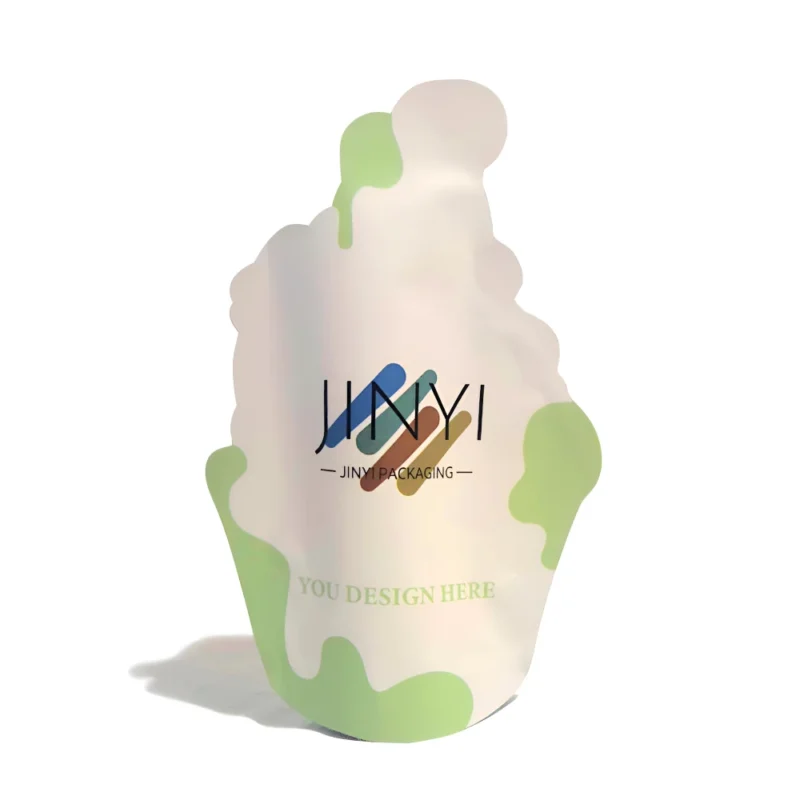
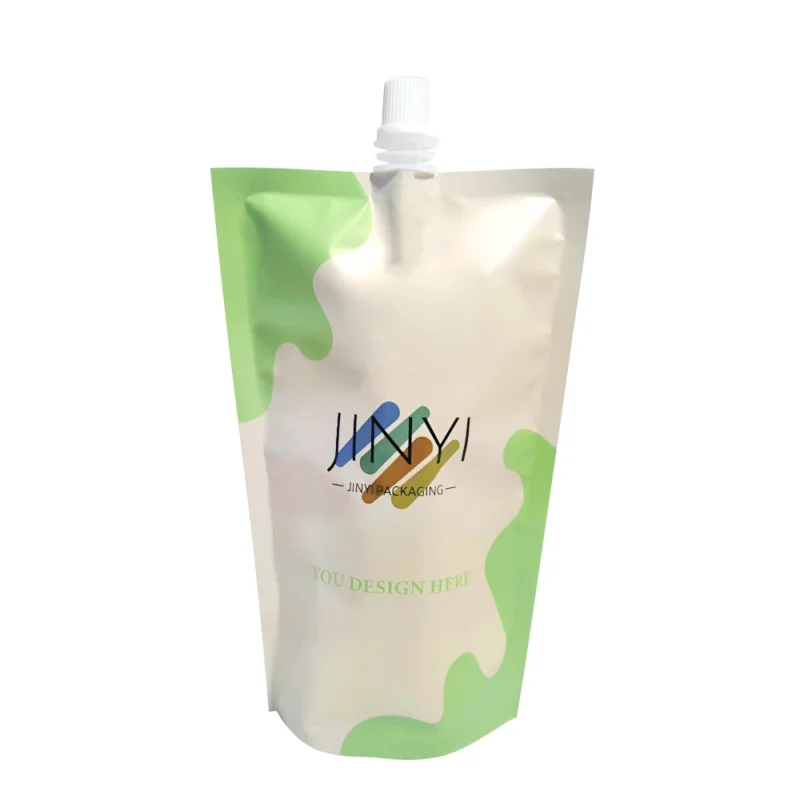
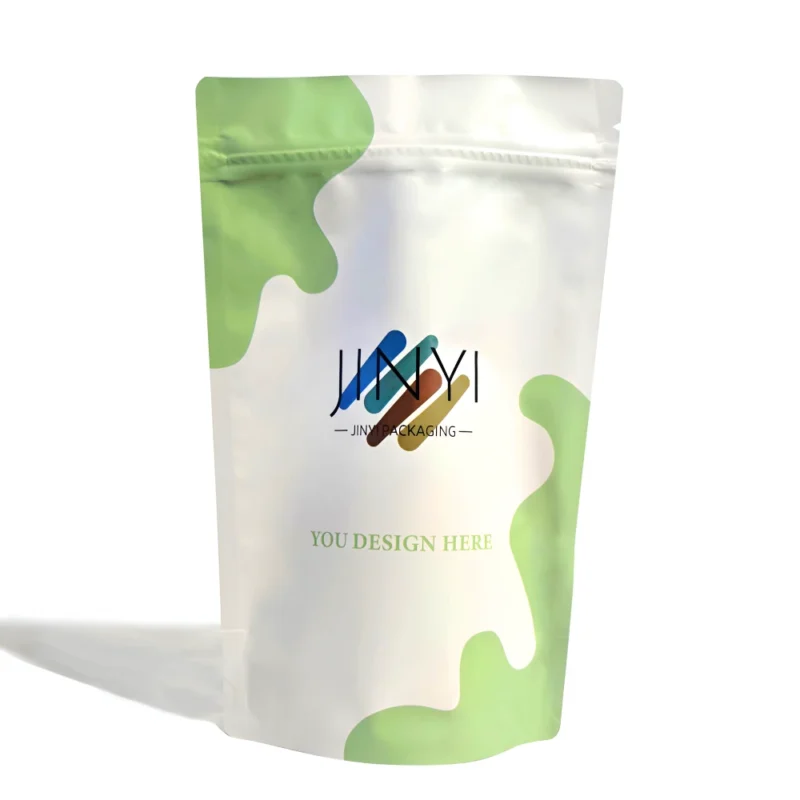
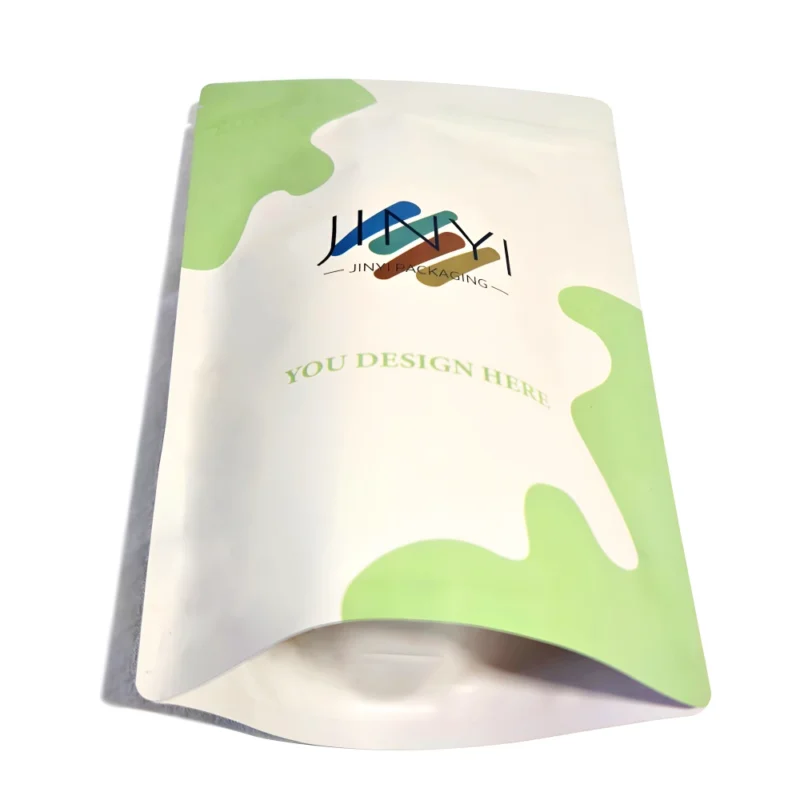
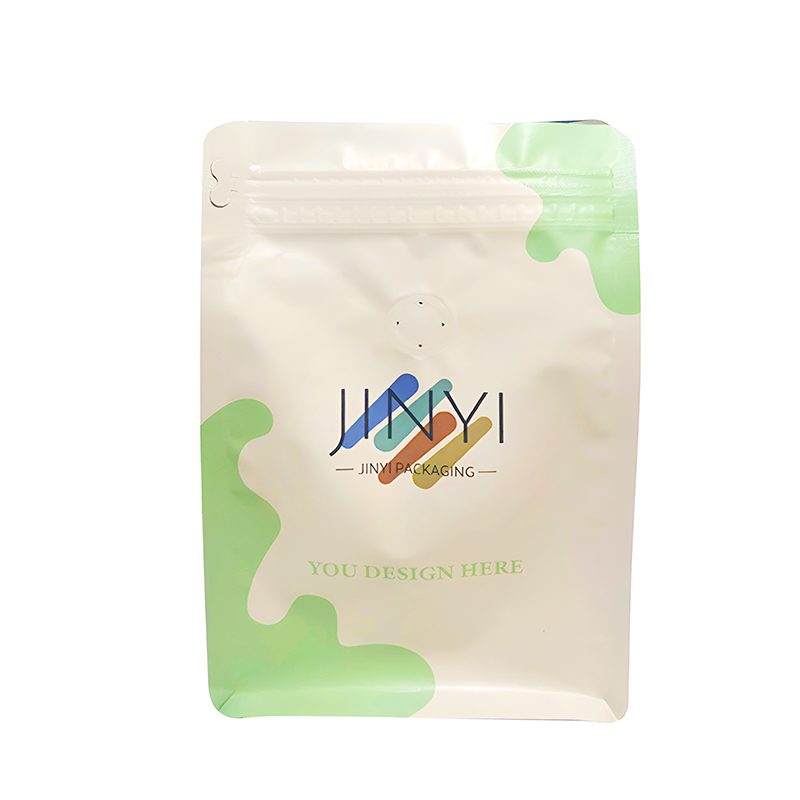
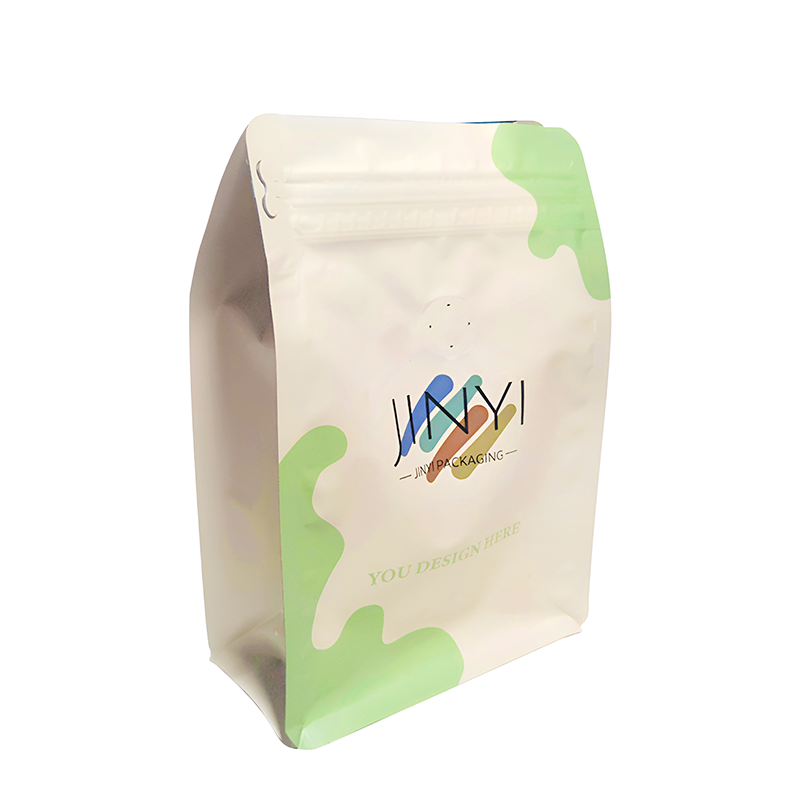
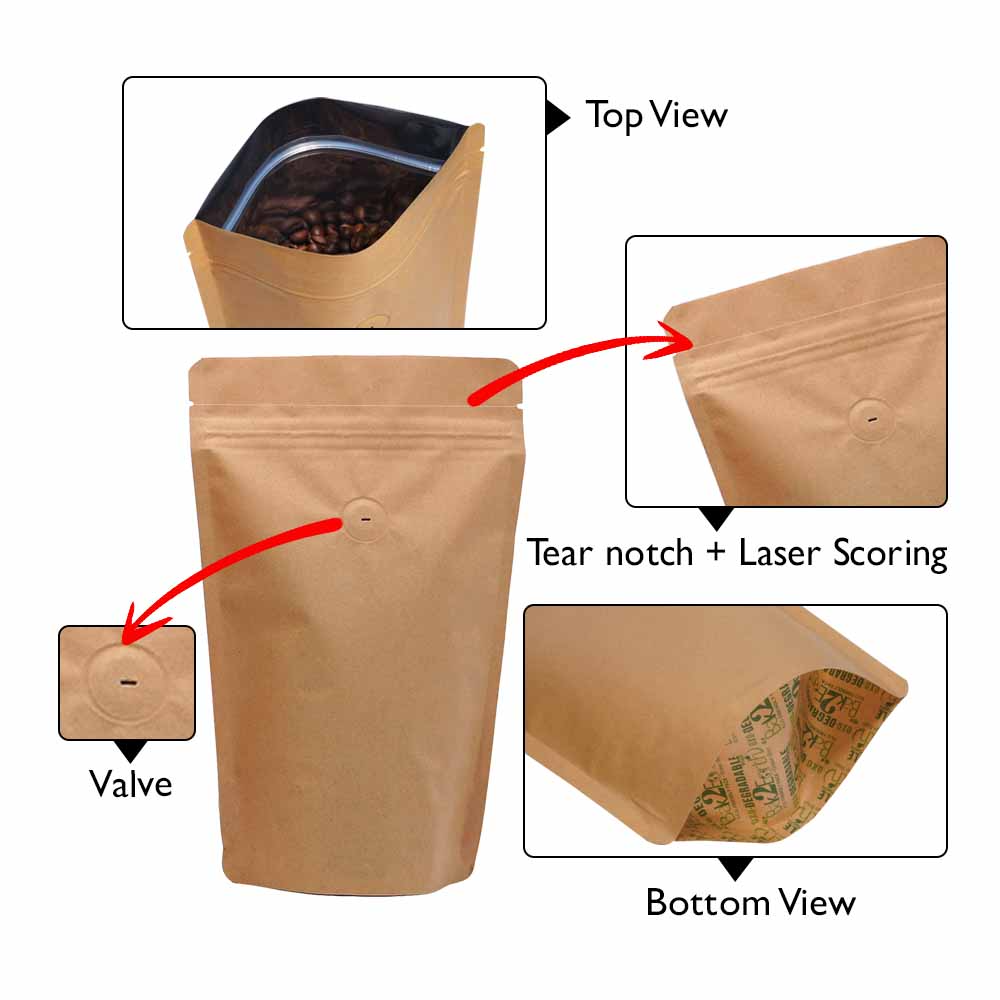
A stand-up pouch — also called a Doypack — uses a gusseted bottom that expands when filled, letting the bag stand on its own without any external support. I work with this format every day, and the reason it dominates retail is straightforward: it gives a brand full visual control at the point of sale. The front panel is large enough to carry branding, compliance text, and product imagery in a way that no flat format can match. The structure supports zippers, one-way degassing valves, spouts, tear notches, and hang holes — making it one of the most versatile formats in flexible packaging.
From a production standpoint, stand-up pouches use more film per unit than flat pouches because the gusset requires additional material. This raises unit cost by roughly 20–40% compared to equivalent flat pouches. But for most retail applications, this trade-off is justified. The format handles a fill range of 50g to 5kg well, and the gusset base distributes product weight evenly — reducing stress on the bottom seal during transport and storage. All standard barrier structures apply: VMPET, aluminum foil, and transparent laminates are all compatible, so your barrier choice stays independent of the format choice.
One detail I always flag to buyers: the gusset fold introduces one additional seal interface that a flat pouch does not have. On high-speed automated lines — especially with fine powders — this area needs controlled QC attention. Powder contamination on the gusset seal zone is a real and predictable failure mode. If your filling line is not set up to manage this, a flat pouch will often give you more consistent seal integrity at the same filling speed.
What Is a Flat Pouch?

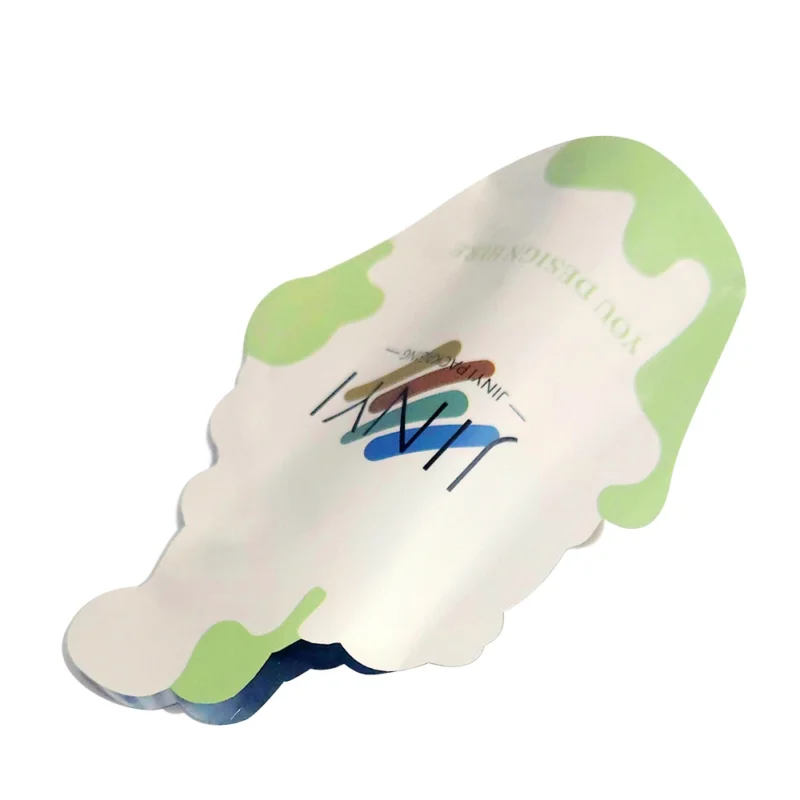
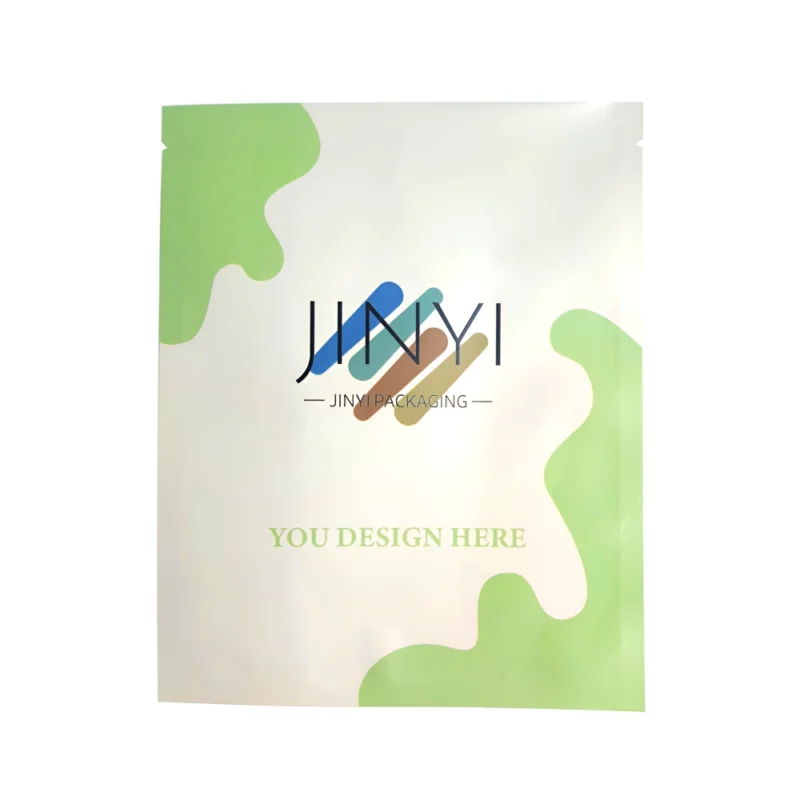
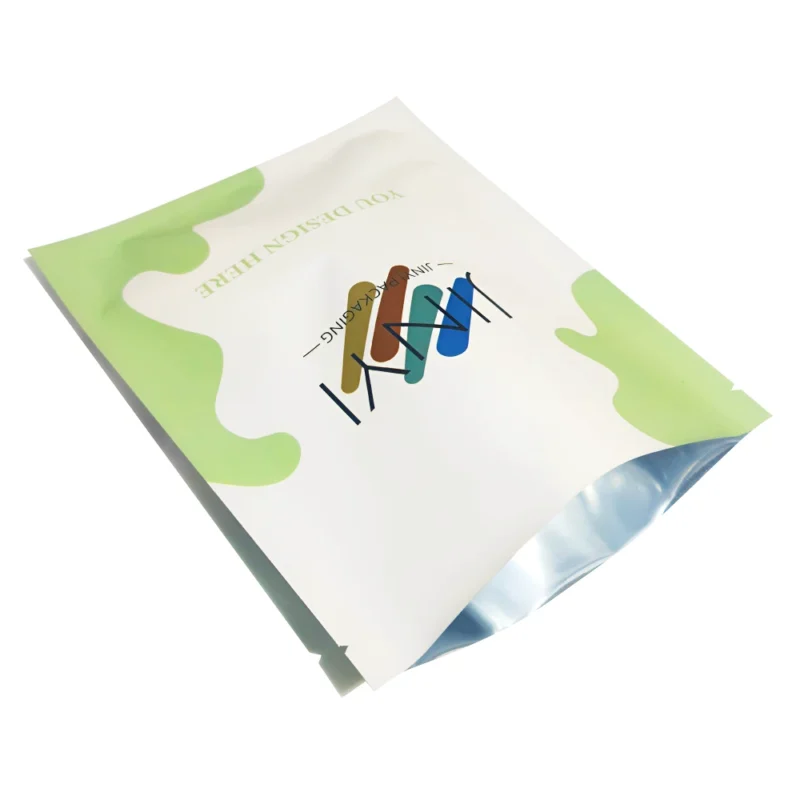
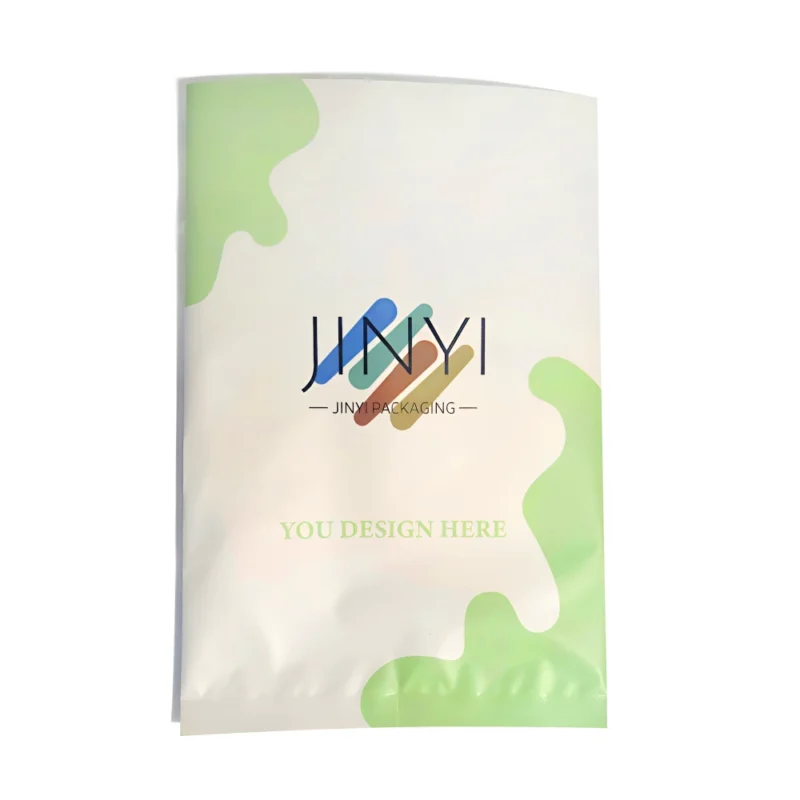
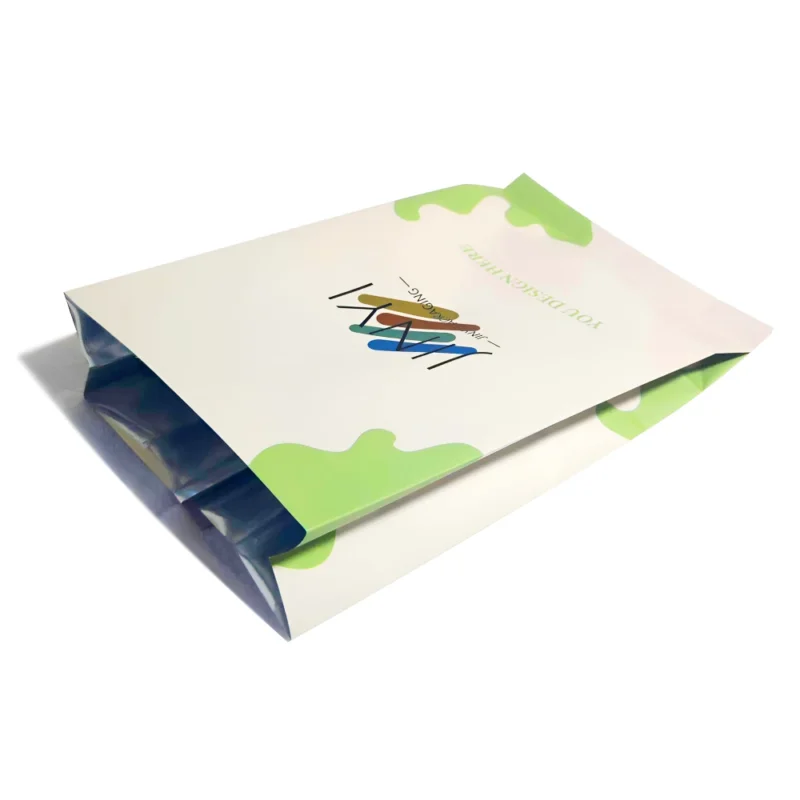
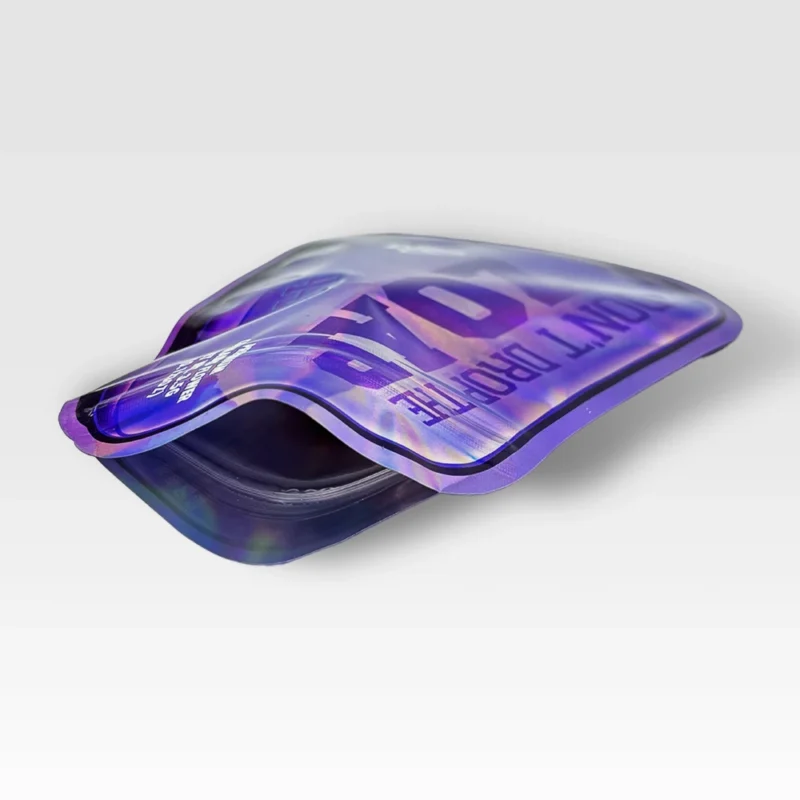
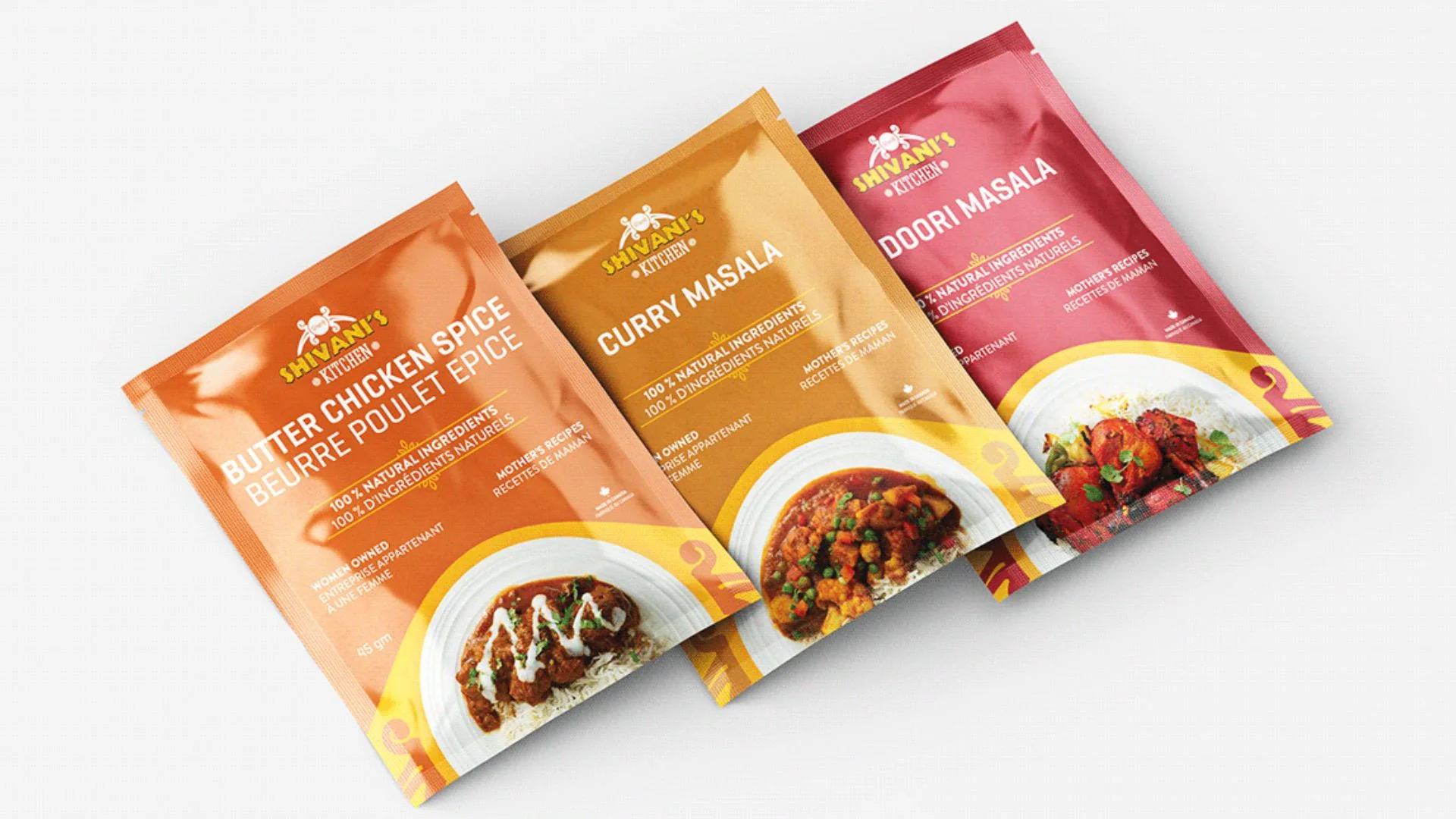
A flat pouch — also called a pillow bag or three-side seal pouch — has no gusset. It seals flat on all sides and lies flat when filled. This is the most cost-efficient flexible packaging format available. It dominates in high-volume food processing, single-serve applications, sample packs, and any scenario where shipping efficiency matters more than shelf display. The structure is simple. That simplicity is exactly why it works so well at scale.
From a production perspective, flat pouches use less film per unit and run faster on automated filling lines because there is no gusset expansion step. Seal geometry is simpler — all seals are flat — which makes consistency easier to control and reduces the risk of fill contamination on the seal zone. For powders, granules, and high-speed applications, this format often delivers better real-world seal integrity than a stand-up pouch at comparable filling speeds. This is not a preference statement. It is a geometry fact.
The clear limitation is display. A flat pouch cannot stand on its own. It requires shelf hooks, bins, or secondary packaging to present well in a retail environment. But if your product lives inside a display box, a gifting kit, a subscription shipment, or a foodservice bulk pack — this limitation disappears entirely. The flat pouch is not inferior to a stand-up pouch. It is optimized for a different job. Choosing it for the wrong channel is the mistake, not the format itself.
Side-by-Side Comparison
| Factor |
Stand-Up Pouch |
Flat Pouch |
| Shelf display |
Stands independently |
Requires support |
| Unit cost |
Higher (20–40% more film) |
Lower baseline |
| Reseal zipper |
Works well |
Less reliable |
| Typical fill range |
50g – 5kg |
1g – 2kg |
| Seal consistency |
More variables (gusset fold) |
Simpler, more consistent |
| Filling speed |
Moderate |
Fast |
| Barrier options |
All structures |
All structures |
| Best channel |
Retail, specialty, cannabis |
E-commerce, foodservice, bulk |
I always tell buyers to decide channel first — then format, then barrier, then print. Getting this order wrong costs more than the price difference between the two formats. If you need
stand-up pouches
for retail or
flat pouches
for high-volume filling, start with your channel — and let the spec follow from there.
Which One Should You Choose?
| Your Situation |
Recommended Format |
| Product sells on retail shelf |
Stand-Up Pouch |
| Product ships DTC or via e-commerce |
Flat Pouch |
| Single-serve or sachet format |
Flat Pouch |
| Needs resealable zipper for home use |
Stand-Up Pouch |
| Cost is the primary constraint |
Flat Pouch |
| Coffee, cannabis, or pet treat brand |
Stand-Up Pouch |
| Product goes inside a secondary display box |
Flat Pouch |
| Testing market — unsure about final channel |
Stand-Up Pouch (more flexible) |
Conclusion
Stand-up pouches win on shelf presence and consumer experience. Flat pouches win on cost and production efficiency. Match the format to your channel — not your visual preference — and you avoid the most expensive sourcing mistake in flexible packaging. Not sure which format fits your product? Share your fill weight, channel, and target unit cost with our team and we will recommend the right structure.
About Us
JINYI — From Film to Finished — Done Right.
I work with a team at JINYI focused on Custom Flexible Packaging. We have 15+ years of production experience serving food, snack, pet food, and consumer goods brands worldwide. Our factory runs multiple gravure printing lines and HP digital systems — supporting both stable large-volume production and flexible small-batch custom orders. We believe good packaging is not just about appearance. It needs to perform reliably in transport, on shelf, and in real consumer use.