Your tea can smell “flat” before the best-by date. Many brands upgrade barrier numbers, then still see aroma drift, moisture pickup, and repeat complaints.
Effective aroma protection is not one OTR/WVTR value. It is a spec stack: barrier performance under real humidity, seal integrity that avoids micro-leaks, low scalping risk, and storage validation that proves volatile retention over time.
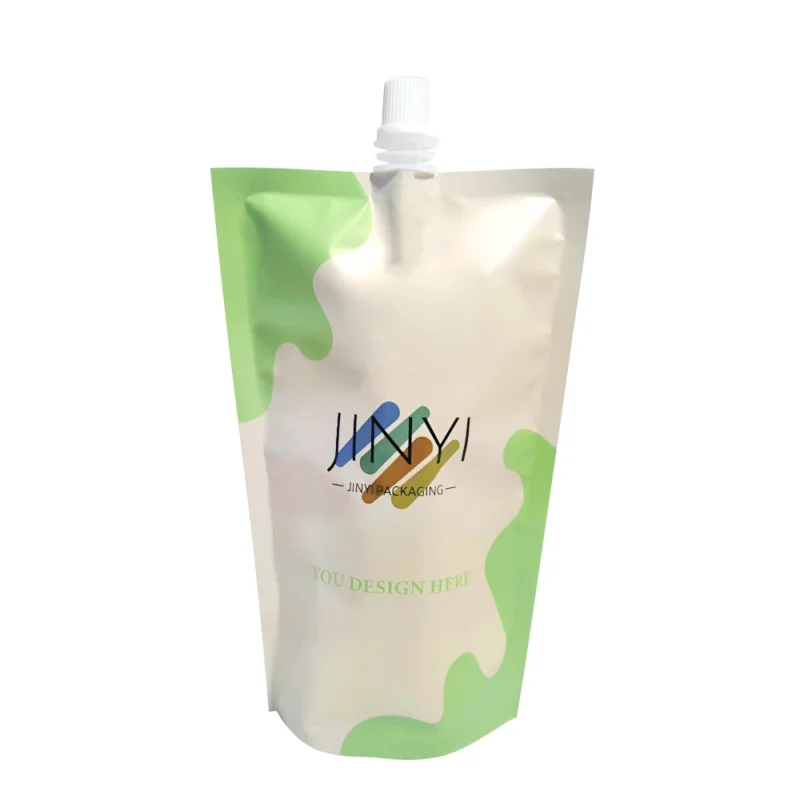
Check stand-up pouch options designed for aroma retention and moisture control

Tea aroma loss has multiple pathways. This article explains which specs map to real failure modes, which specs often mislead, and what validation plan can prove performance before scale-up.
Why do “good OTR/WVTR numbers” still fail to protect tea volatiles?
Many packs pass material specs and still deliver dull aroma. The problem is that aroma loss does not travel through only one door.
OTR and WVTR describe permeation through a material under stated conditions. Tea aroma also fails through micro-leaks, after-opening exposure, and flavor scalping, so the best-looking number can still lose volatiles.
Barrier specs measure permeation, but tea loses aroma through multiple pathways
OTR and WVTR are useful, but they only cover the “through the film” pathway. Tea aroma can also change when oxygen enters through small seal channels, zipper interfaces, or pinholes created during converting and transport. When a micro-leak exists, the effective barrier becomes the leak, not the laminate. Tea also faces after-opening reality. A consumer opens and closes the pack many times, and humidity and odors enter through imperfect reclose performance. In addition, packaging materials can absorb or interact with volatile compounds. This effect is often called flavor scalping. Scalping is not permeation. It is a “volatiles get trapped or transferred” pathway, and it can remove aroma even if oxygen barrier looks strong on paper. Studies on packaged green tea and Longjing tea show that oxygen conditions and packaging choices can change freshness perception and volatile profiles during storage, which supports the idea that real-world aroma protection needs a system view, not a single barrier figure.
| Failure pathway |
What it looks like |
Why OTR/WVTR alone misses it |
What to add to the spec |
| Micro-leaks |
Fast aroma fade, inconsistent lots |
Leak bypasses film permeation |
Seal integrity checks + leak screening |
| After-opening exposure |
Aroma drops after 1–2 weeks opened |
OTR/WVTR tests are usually unopened |
Open/close simulation + humidity exposure |
| Flavor scalping |
Aroma “missing,” not just oxidized |
Scalping removes volatiles without “leak” |
Material compatibility screening |
| Light exposure |
Quality drift in window packs |
OTR/WVTR ignores light |
Opacity rules and window limits |
Evidence (Source + Year): Fan et al., “Impact of oxygen scavenger, temperature, and packaging materials on freshness quality of packaged green teas” (2024); Bai et al., “Flavor scalping in green tea caused by plastic packaging materials” (2025).
Which barrier specs actually protect volatiles, and which specs often mislead buyers?
Many RFQs ask for “high barrier,” but they do not define test conditions or package-level leakage risk. That gap is where aroma protection usually fails.
The most effective specs describe conditions and outcomes: humidity-based OTR/WVTR, seal integrity requirements, light control rules, and a scalping-screen step. The most misleading specs are vague, unconditioned, or material-name-only.

Write specs as a stack: conditions, package integrity, and aroma outcome
Aroma-protective specs start by fixing test conditions. Oxygen transmission can change with relative humidity for many materials, so a “dry” OTR value can be a poor predictor in humid storage or sea freight. ASTM F1927 exists to measure oxygen transmission at controlled relative humidity, which helps teams avoid zero-humidity assumptions. WVTR needs the same discipline, because tea is hygroscopic and moisture pickup can dull aroma and raise off-note risk. ASTM F1249 is widely used for WVTR on flexible barrier materials. Next, the spec must include package-level integrity. It should require seal strength targets and leak screening on finished pouches, not only on flat film. Finally, the spec should address scalping risk. Research on green tea and plastic packaging materials highlights that interactions during storage can change volatile composition, which supports adding a compatibility screen when changing structures. When these elements are written together, purchasing can compare suppliers on the same logic and avoid “good numbers, bad aroma.”
| Spec style |
Example |
Why it helps (or fails) |
Better rewrite |
| Misleading |
“OTR: X” (no RH, no temp) |
Real humidity can change performance |
OTR at stated temp and %RH (e.g., RH-controlled) |
| Misleading |
“Aluminum foil / high barrier” |
Does not control micro-leaks |
Film + finished-pack seal integrity requirements |
| Effective |
OTR + WVTR with conditions |
Controls permeation under realistic storage |
Reference ASTM methods and test conditions |
| Effective |
Leak screening on finished packs |
Prevents bypass of barrier via seals |
Define sampling plan + acceptance criteria |
| Effective |
Scalping compatibility screen |
Detects volatile loss not explained by OTR |
Side-by-side storage + sensory/GC marker set |
Evidence (Source + Year): ASTM F1927-20, controlled RH oxygen transmission testing (2020); ASTM F1249-20, water vapor transmission testing (updated 2025).
If you are switching structures, request a humidity-based barrier + seal integrity spec pack
What is the minimum validation ladder that proves aroma protection before you scale?
Many teams validate only the film. Then the finished pouch, real storage humidity, and repeated opening introduce the real failures.
A practical ladder proves performance in five steps: material barrier under conditions, finished-pack seal integrity, storage validation, after-opening simulation, and sensory or volatile fingerprints tied to acceptance criteria.
Use a five-step validation ladder to link specs to aroma outcomes
A validation ladder keeps the work focused and scalable. The first step is bench testing: confirm OTR and WVTR under stated temperature and humidity. This creates a comparable baseline across suppliers. The second step is package-level verification: test finished pouches, including seal areas, zipper interfaces, and any windows, because converting and sealing can create micro-channels. The third step is storage validation: run time × temperature × humidity studies that match your real distribution, including warm warehouses and sea freight exposure if relevant. The fourth step is after-opening simulation: repeat open/close cycles and expose packs to ambient humidity, because this is where many teas lose aroma in consumer use. The fifth step is outcome measurement: define sensory scoring or a small volatile marker set, and tie it to acceptance criteria. Research on Longjing tea shows that oxygen control interventions can mitigate aroma quality loss at elevated temperatures, which supports using storage validation rather than relying on one-point barrier values.
| Step |
What to test |
What it catches |
Output |
| 1) Bench |
OTR/WVTR at stated temp and %RH |
Material mismatch to humidity reality |
Comparable barrier baseline |
| 2) Package-level |
Seal strength + leak screening on finished packs |
Micro-leaks and weak seal windows |
Integrity pass/fail + process window |
| 3) Storage |
Time × temperature × humidity |
Realistic aroma drift patterns |
Shelf-life confidence band |
| 4) After-opening |
Open/close cycles + ambient humidity |
Reseal weakness and user reality |
After-opening guidance and spec updates |
| 5) Outcome |
Sensory + volatile markers |
Scalping and non-obvious losses |
Acceptance criteria tied to product quality |
Evidence (Source + Year): Wang et al., oxygen scavenger impact on Longjing tea aroma quality at elevated storage temperature (2024); ASTM E96/E96M, gravimetric WVTR method framework (2024).
Conclusion
Tea aroma protection needs a spec stack, not one number. Use humidity-based barrier specs, seal integrity controls, anti-scalping checks, and a validation ladder. Contact us to build your pouch spec.
Get a tea pouch barrier + validation checklist
About Us
Brand: Jinyi
Slogan: From Film to Finished—Done Right.
Website: https://jinyipackage.com/
Our Mission:
JINYI is a source manufacturer specializing in custom flexible packaging solutions. We aim to deliver reliable, practical packaging that reduces communication costs, improves repeatability, and performs on shelf, in transit, and at end use.
About JINYI:
JINYI is a source manufacturer specializing in custom flexible packaging solutions, with over 15 years of production experience serving food, snack, pet food, and daily consumer brands.
We operate a standardized manufacturing facility equipped with multiple gravure printing lines as well as advanced HP digital printing systems, allowing us to support both stable large-volume orders and flexible short runs with consistent quality.
From material selection to finished pouches, we focus on process control, repeatability, and real-world performance. Our goal is to help brands reduce communication costs, achieve predictable quality, and ensure packaging performs reliably on shelf, in transit, and at end use.
FAQ?
Is a lower OTR always better for tea aroma?
A lower OTR can help, but it is not sufficient. Seal integrity, humidity effects, and scalping risk can still cause aroma loss even with strong film barrier values.
Why does humidity matter when reading OTR specs?
Some materials show different oxygen transmission behavior at higher relative humidity. A dry-condition value can underpredict oxygen ingress in humid storage or transport.
What is flavor scalping in tea packaging?
Flavor scalping is volatile loss caused by absorption or interaction with packaging materials. It can remove aroma even when oxygen barrier looks strong.
Should I test film or finished pouches?
You should test both. Film data helps compare materials, but finished pouches reveal seal leaks, zipper interfaces, and converting effects that often decide real aroma performance.
What is the simplest validation plan a small brand can run?
A simple plan includes humidity-based OTR/WVTR confirmation, a seal leak screen on finished pouches, a short storage test, and a basic sensory check tied to an acceptance rule.