Vitamin C serums can oxidize fast. Color shifts and potency drops frustrate customers. Many brands change packaging, but the real driver often stays untouched.
Airless pumps often slow oxidation after opening by reducing oxygen exchange. Droppers often speed oxidation through repeated air refresh and contamination risk. Barrier materials mainly help before opening by reducing oxygen ingress and light exposure.
Explore cosmetic packaging solutions that reduce oxidation risk in real bathroom use.

Packaging choices work best when the problem is written as a testable model. Oxidation usually comes from three coupled drivers: oxygen exposure, light exposure, and catalysis from trace metals and formulation conditions. As a flexible packaging manufacturer, we focus on what packaging can control and verify, such as exposure pathways, sealing integrity, and a realistic use simulation.
What does “oxidation” look like in Vitamin C serums, and how should it be measured?
Many teams label oxidation as “it turned yellow.” That description is not enough. A team needs measurements that link appearance to potency loss.
Oxidation should be defined with a minimum set: active content over time, color shift, and pH drift for water-based L-ascorbic acid (LAA). These signals make packaging comparisons repeatable.
Measure potency, color, and pH together to avoid false conclusions
Oxidation in Vitamin C serums is often reported as discoloration, but color alone can mislead. A team should track active content, because customers buy results, not just a clear liquid. HPLC is a common method to follow LAA kinetics over time, and it can show whether a packaging change actually slowed degradation. A team should also track color in a standardized way, such as L*a*b* or controlled photos with the same lighting, because small color changes can occur before large potency loss. A team should add pH tracking for water-based LAA, because pH drift can change stability and can also signal formulation changes triggered by oxygen or contamination. If a team only tracks color, a “better-looking” pack can hide a potency drop. If a team only tracks potency, a pack can look unacceptable even when potency remains high. The best comparison uses all three signals.
| Failure signal |
What it shows |
How to measure |
What it can reveal about packaging |
| Active content drop |
real efficacy loss |
HPLC or validated assay |
oxygen exchange and catalyst effects |
| Color shift |
early oxidation cue |
L*a*b* or controlled photo scale |
light exposure and oxygen exposure |
| pH drift |
system instability |
pH meter |
contamination risk and formulation sensitivity |
Evidence (Source + Year): S. Kim et al., Stabilization of L-ascorbic acid in cosmetic emulsions, 2018. | X. Yin et al., Chemical Stability of Ascorbic Acid Integrated into Systems, 2022.

Is oxygen exposure the main driver, or do light and trace metals dominate in real bathrooms?
Some serums oxidize in dark storage. Some oxidize on a sunny vanity. Some oxidize faster after a few uses. These patterns often point to different drivers.
Oxygen often dominates after opening, while light and trace metals can dominate even before opening. The correct answer depends on formulation type, storage habits, and exposure frequency.
Use a three-axis risk model to map real-world exposure
A useful model assigns risk to three budgets. The oxygen budget includes oxygen in headspace, oxygen entering through materials over time, and oxygen refreshed during use. The light budget includes transmittance, spectrum, and exposure time on a countertop. The catalysis budget includes trace metals, pH, water phase, and antioxidants that can slow chain reactions. This model explains why one packaging improvement can fail in real life. A higher-barrier bottle can reduce slow oxygen ingress before opening, but it cannot stop daily air refresh if the user opens a dropper twice a day. An amber bottle can reduce light dose, but it cannot stop metal-catalyzed oxidation if the formula is sensitive. A team should identify which budget dominates by testing one variable at a time. A team can compare light-protected storage versus light-exposed storage. A team can compare sealed storage versus simulated daily use. This structure prevents packaging decisions from becoming brand preference arguments.
| Risk budget |
Main driver |
Packaging lever |
Typical trap |
| Oxygen budget |
air refresh + ingress |
airless design + tight closure |
ignoring post-open use cycle |
| Light budget |
transmittance + exposure |
amber/opaque + secondary pack |
testing only extreme UV, not daily light |
| Catalysis budget |
metals + pH + water phase |
compatibility and process control |
blaming packaging for formula instability |
Evidence (Source + Year): X. Yin et al., Chemical Stability of Ascorbic Acid Integrated into Systems, 2022. | ISO, ISO 22716:2007 (Cosmetics GMP Guidelines), 2007.
Do airless pumps slow oxidation by reducing oxygen exchange after opening?
Many brands switch to airless and expect a guaranteed win. Some products still discolor quickly. Those cases usually have a driver that airless cannot fix alone.
Airless pumps can reduce oxidation when oxygen exchange during use is a major driver. They help most with water-based LAA systems that are sensitive to repeated air refresh and contamination.
Airless reduces the “use-cycle” oxygen term, but only if the system stays sealed
Airless packaging is often effective because it changes the daily exposure pattern. A dropper invites full opening, headspace refresh, and longer contact with air during dosing. An airless pack can reduce that exchange because the product dispenses through a valve system and does not require the user to open the container repeatedly. The benefit is strongest when post-open use dominates the oxygen budget. This is common for LAA in low pH water systems, where oxygen and catalysts can quickly reduce potency. A team should still verify sealing integrity over the full use life. A pump can leak at the valve, and a cap can leak at threads or liners. A team should also verify that the pump materials do not introduce compatibility issues. A team can detect a weak seal by comparing potency loss in an unopened control versus a daily-use simulation. If daily-use loss collapses toward the unopened curve, the airless design likely reduced oxygen exchange.
| Claim |
What to verify |
Simple test design |
What failure looks like |
| Airless slows oxidation |
post-open potency slope |
daily use simulation vs sealed control |
no difference between airless and dropper under use |
| Airless stays sealed |
closure and valve integrity |
mass loss + leak check + cap fit |
unexpected fast color shift in dark storage |
Evidence (Source + Year): S. Kim et al., Stabilization of L-ascorbic acid in cosmetic emulsions, 2018. | ISO, ISO 22716:2007 (production, control, storage, shipment guidance), 2007.
If your Vitamin C serum oxidizes after opening, review airless and closure options designed for real use cycles.
When do droppers fail first, and what user behaviors make the damage worse?
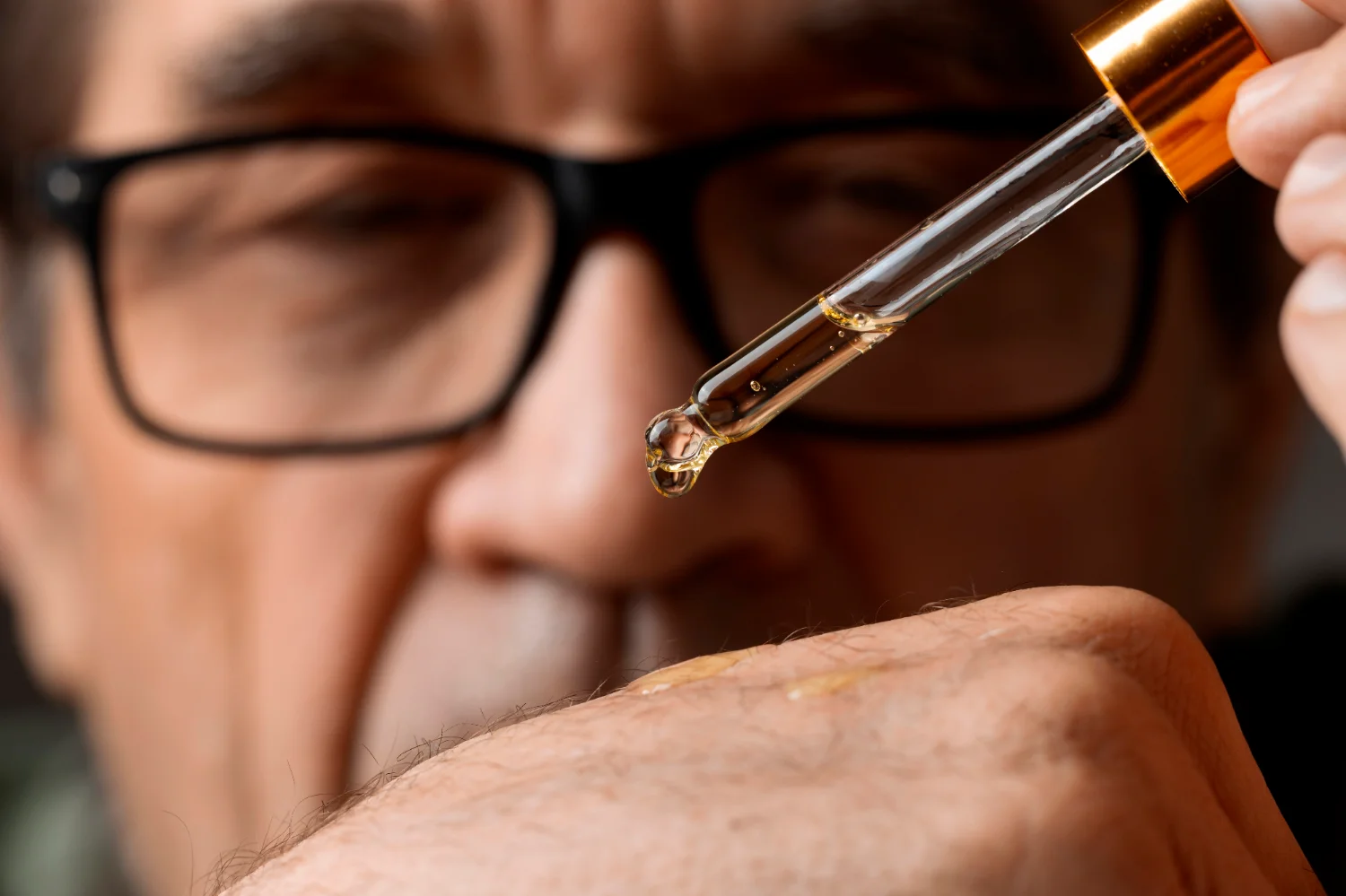
Droppers can look premium and feel precise. Many failures start at home, not in the lab. Users leave caps off, touch droppers to skin, and store bottles in bright bathrooms.
Droppers tend to fail first when oxygen refresh and contamination dominate. They can perform acceptably when the formula is inherently stable and the user cycle is gentle and short.
Droppers amplify exposure frequency, exposure time, and contamination probability
A dropper system encourages repeated opening and longer air contact during dosing. Each opening can replace headspace air, and each squeeze can pull air into the bottle. A dropper also has a wet surface that can carry product residues and external contaminants back into the bottle. This behavior can increase catalysis risk if trace metals or impurities enter the formula. This is why droppers often show faster color change after a few uses, even when the unopened product looks stable. Droppers can still work for more stable Vitamin C derivatives or for oil-based systems where oxidation pathways are slower, but the decision should be based on data. A team should test a “worst-normal” scenario, not a perfect-user scenario. A team can simulate daily opening with defined dwell time, and a team can include a light exposure condition that mirrors a vanity. If droppers fail early only under use simulation, the driver is oxygen refresh and behavior, not bottle wall barrier.
| User behavior |
What it increases |
Why it matters |
| long cap-off time |
oxygen exchange |
faster potency loss in LAA systems |
| dropper touches skin |
contamination and catalysis risk |
faster discoloration and instability |
| bright bathroom storage |
light dose |
faster color drift and degradation |
Evidence (Source + Year): X. Yin et al., Chemical Stability of Ascorbic Acid Integrated into Systems, 2022. | C. Lamie et al., review on ascorbic acid derivatives and stability considerations, 2025.
Do barrier materials matter more before opening, and how can brands quantify the benefit?
Some brands upgrade to thicker glass or “high barrier” plastics and expect oxidation to stop. Many of those products still oxidize after opening, because the dominant driver moved to the use cycle.
Barrier materials matter most before opening and during long storage. They help by reducing slow oxygen ingress and reducing light transmission. They show the clearest benefit when unopened storage time is long and post-open use time is short.
Barrier is a slow-variable control, so quantify it with an unopened-storage test
Barrier materials and light-protective designs can reduce the pre-open oxidation slope. This benefit is most visible when products sit in distribution or retail for weeks or months. A clear bottle can also increase light budget risk if it sits on a bright shelf or a vanity. A team should quantify barrier benefit with an unopened storage test under controlled temperature and defined light exposure. A team should then separate that from use-cycle risk with a second test that simulates daily opening. If barrier changes improve unopened stability but not post-open stability, the product likely needs a design that reduces oxygen refresh, such as airless. If barrier changes improve both unopened and post-open stability, the system likely had meaningful ingress or light dose even during use. This structure prevents a brand from overpaying for barrier when the main loss comes from daily air refresh.
| What barrier change targets |
Best test condition |
Expected signal if it works |
| oxygen ingress (slow variable) |
unopened storage |
slower potency drop over weeks |
| light dose |
controlled light exposure |
slower color shift at equal potency |
Evidence (Source + Year): Grand View Research, Vitamin C Serum Market Size, Share & Trends Report, 2030 (2024 market estimates and 2024–2030 forecast), 2024. | ISO, ISO 22716:2007, 2007.

What is the minimum proof pack to choose between airless, droppers, and higher-barrier containers?
Many brands run one stability test and pick a pack. That approach misses the real-world driver: repeated use in light and humidity. It also misses closure shortcuts.
A minimum proof pack uses a small matrix that separates unopened storage risk from post-open use risk. This matrix can show whether oxygen exchange, light dose, or catalysis dominates your formula.
A 2×2×2 matrix answers “what actually slows oxidation” with the least cost
A practical minimum proof pack compares two dispensing systems, two barrier/light conditions, and two use modes. A team can test airless versus dropper, amber or opaque versus clear, and unopened storage versus daily use simulation. The daily use simulation should define opening frequency, cap-off dwell time, and storage location light. Each cell should measure active content, color shift, and pH for water-based LAA. Each cell should also include a simple closure integrity check, because leakage or poor reseal can create a shortcut that dominates all barrier assumptions. This matrix produces a clean interpretation. If airless beats dropper only in daily use, oxygen exchange dominates. If amber beats clear in both modes, light budget dominates. If all packs fail similarly, catalysis and formula sensitivity likely dominate, and packaging can only reduce, not eliminate, oxidation risk.
| Factor |
Level A |
Level B |
Primary question it answers |
| Dispensing |
airless pump |
dropper |
does oxygen exchange after opening dominate? |
| Barrier / light |
amber/opaque |
clear |
does light dose or ingress dominate? |
| Use mode |
unopened storage |
daily use simulation |
is the risk mostly pre-open or post-open? |
Evidence (Source + Year): S. Kim et al., 2018 (HPLC kinetics and pH/color sensitivity in cosmetic emulsions). | X. Yin et al., 2022 (stability challenges and stabilization strategies).
Conclusion
Airless pumps usually slow oxidation by reducing post-open oxygen exchange. Droppers often amplify oxygen refresh and contamination risk. Barrier materials mostly help before opening. Contact us to validate your minimum proof pack.
Get a Vitamin C packaging oxidation review
About Us
Brand: Jinyi
Slogan: From Film to Finished—Done Right.
Website: https://jinyipackage.com/
Our Mission:
JINYI is a source manufacturer focused on custom flexible packaging. We aim to deliver reliable, practical packaging solutions so brands can reduce communication cost, receive stable quality, keep lead times clear, and match packaging structure and print results to real use conditions.
Who We Are:
JINYI is a source manufacturer specializing in custom flexible packaging solutions, with over 15 years of production experience serving food, snack, pet food, and daily consumer brands.
We operate a standardized manufacturing facility equipped with multiple gravure printing lines as well as advanced HP digital printing systems, allowing us to support both stable large-volume orders and flexible short runs with consistent quality.
From material selection to finished pouches, we focus on process control, repeatability, and real-world performance. Our goal is to help brands reduce communication costs, achieve predictable quality, and ensure packaging performs reliably on shelf, in transit, and at end use.
FAQ
- Is an airless pump always better than a dropper for Vitamin C?
An airless pump often wins when post-open oxygen exchange drives oxidation. A dropper can work when the formula is stable and the use cycle is short.
- Does amber packaging matter if the serum is stored in a dark drawer?
Amber matters most when the product sees repeated daily light on a vanity or shelf. If storage is truly dark, oxygen and catalysis often dominate instead.
- Why does a serum look fine unopened but oxidize after a week of use?
Many droppers refresh headspace oxygen with every use, and some behaviors add contamination risk. Post-open exposure can dominate the whole oxygen budget.
- Which test is the fastest way to compare packaging options?
A small matrix with unopened storage versus daily use simulation, tracked by active content and color, gives the clearest answer with minimal cost.
- Do Vitamin C derivatives need the same packaging strategy as LAA?
Many derivatives are more stable than LAA, so the dominant risk can shift toward light dose, volatility, and user convenience rather than only oxygen exchange.