High-protein is “winning,” but many brands cannot explain why. When the driver is misread, budgets go to the wrong SKUs, and the next quarter disappoints.
High-protein growth is usually one of three engines: price-led value growth, claim-led conversion and premium, or convenience-led frequency. Brands can verify which engine dominates by separating value vs volume, measuring claim lift, and tracking format-led repeat.
See how snack and functional food packaging choices protect repeat purchase and reduce complaint risk →

“Growing faster” sounds simple, but it often mixes three different stories: higher prices per pack, higher units sold, and a channel or format shift. The goal of this article is not to guess. The goal is to make the growth claim falsifiable and decision-ready.
What does “growing faster” mean, and which metrics must stay comparable?
Brands argue about “growth” because they compare different definitions. Some track revenue only. Some track units only. Some treat “protein” as a nutrition threshold, while others treat it as a front-of-pack claim.
“Growing faster” must be defined with a minimum set: value growth, volume growth, and at least one behavior metric (penetration or frequency). When value rises but volume is flat, price is likely the story. When penetration rises, more households are entering the segment. When frequency rises, convenience and habit are usually involved.
Use one consistent definition of “high-protein” across the period you compare. If the definition changes, label it and stop the comparison. This protects the conclusion from becoming a marketing line.
Minimum metric set (the non-negotiables)
| Metric |
What it proves |
Common mistake |
| Value growth (revenue) |
Pricing power or mix shift |
Calling value growth “demand” without volume |
| Volume growth (units / kg / servings) |
More consumption, not just higher prices |
Ignoring pack-size changes |
| ASP (average selling price) |
Price-led vs demand-led split |
Not separating promo vs base price |
| Penetration / Frequency |
New buyers vs repeat behavior |
Using one-time launch spikes as “trend” |
Evidence (Source + Year): International Food Information Council — Americans’ Perceptions of Protein (2025). :contentReference[oaicite:0]{index=0}
Is growth price-led, and how can brands prove it without guessing?
Many “high-protein” wins are value-led. That is not a bad thing, but it is a different business than demand-led growth. Price-led growth typically appears as revenue rising faster than volume. It is often supported by a higher ASP, a premium tier expanding, or less reliance on deep promotions.
To test price-led growth, brands should split sales into: (1) units/servings, (2) ASP, and (3) promo intensity. A simple rule works: if ASP is rising and volume is not, the market is paying more per unit, not necessarily consuming more. If volume is rising while ASP is stable or falling, demand is doing the heavy lifting.
Brands should also compute “price per gram of protein.” If the segment is growing because protein is a value-per-nutrient proposition, then price-per-protein may be stable or improving even when pack ASP rises. If price-per-protein worsens while growth continues, the story is likely premiumization, not affordability.
Fast falsification checks for price-led growth
| If you see… |
Likely driver |
What would disprove it next quarter? |
| Value ↑, volume ↔/↓, ASP ↑ |
Price-led / mix-led |
Volume rebounds while ASP flattens |
| Value ↑, volume ↑, ASP ↔ |
Demand-led |
Promo depth rises sharply to hold volume |
| Value ↑, volume ↑, ASP ↓ |
Promo-led expansion |
Growth collapses when promo normalizes |
Evidence (Source + Year): Innova Market Insights — Protein Market Trends: Growth and Global Shifts (2025). :contentReference[oaicite:1]{index=1}
Do label claims drive growth, and how can brands measure “claim lift” cleanly?
Protein claims can work because they compress a complex benefit into a simple decision cue. However, claim-led growth is often over-attributed. A label claim may correlate with growth because it appears more often on convenient formats or premium SKUs. A clean test must isolate the claim from everything else.
Brands can treat “protein/high protein” as a measurable variable and test it like a conversion lever. The cleanest approach is an A/B pair within the same price band and similar format, where the claim strength differs but the base product remains comparable. If the protein claim is the driver, then the claimed SKU should show higher conversion or better price tolerance, not just higher trial.
Brands should also check consumer attention patterns. Many consumers look for a clear grams-per-serving number. When claims are vague or inflated, trust drops, and repeat purchase weakens. The claim is only valuable if it survives repurchase behavior.
Claim verification plan (minimum viable)
| Test |
Setup |
Pass signal |
| Claim lift A/B |
Same format + similar price tier |
Higher conversion or higher ASP tolerance |
| Search/assortment share |
Track % of shelf/search with protein claim |
Claim share ↑ before sales ↑ |
| Repeat-rate check |
Trial vs repeat cohorts |
Repeat holds without promo escalation |
Evidence (Source + Year): International Food Information Council — Americans’ Perceptions of Protein (2025). :contentReference[oaicite:2]{index=2}
Is convenience the real engine, and which formats prove it fastest?
Convenience-led growth usually shows up as frequency-led growth. It is not only “more people buying,” but “people buying more often” because the product fits more occasions. High-protein has benefited from formats that match commuting, office snacking, gym timing, and portion control.
To validate convenience as the main engine, brands should rank growth by format: RTD drinks, bars, single-serve cups, pouches, and multipacks. If convenience is the driver, single-serve and ready-to-consume formats should outgrow bulk formats, and frequency should climb even when ASP is stable.
Convenience-led growth has an execution risk. If the product is portable, the package becomes part of the eating experience. Leaks, stickiness, crushed units, or stale texture complaints destroy repeat. Packaging must protect the “second purchase,” not just the first shelf impression.
If your high-protein SKUs ship through e-commerce, packaging needs to protect repeat purchase—not only survive delivery →

Convenience signals checklist
| Signal |
What it suggests |
What to measure next |
| Single-serve grows fastest |
Occasion expansion |
Frequency + repeat rate by cohort |
| More “on-the-go” channels |
Impulse + routine capture |
Damage/complaint rate by channel |
| Stable ASP with volume ↑ |
True demand growth |
Out-of-stock and capacity pressure |
Evidence (Source + Year): C.S. Mott Children’s Hospital — Teens and Protein (2024). :contentReference[oaicite:3]{index=3}
How should brands run a minimum “proof pack” to verify the driver in 30 days?
Brands do not need a perfect model. Brands need a repeatable proof pack that forces clarity. A simple 2×2×2 test can separate the three engines without turning into a research project.
Factor 1 is growth type: value-led vs volume-led (based on your latest period split). Factor 2 is claim strength: strong protein claim vs weaker claim within the same price band. Factor 3 is format: convenient single-serve vs traditional multi-serve. The outputs are not “opinions.” The outputs are: ASP movement, promo dependency, penetration, and frequency.
When brands run this proof pack, they can stop debating which narrative is true and start investing in the engine that is actually paying. They can also set “disproof triggers” for the next quarter, so the strategy stays falsifiable instead of becoming a slogan.
2×2×2 proof pack (minimum viable)
| Factor |
Level A |
Level B |
Primary output |
| Growth type |
Value-led |
Volume-led |
ASP vs units split |
| Claim |
Strong protein claim |
Weaker/neutral claim |
Conversion lift + price tolerance |
| Format |
Convenient single-serve |
Traditional multi-serve |
Frequency + repeat rate |
Evidence (Source + Year): Innova Market Insights — Protein Market Trends: Growth and Global Shifts (2025). :contentReference[oaicite:4]{index=4}
What can packaging reduce, and where should brands avoid “overbuilding”?
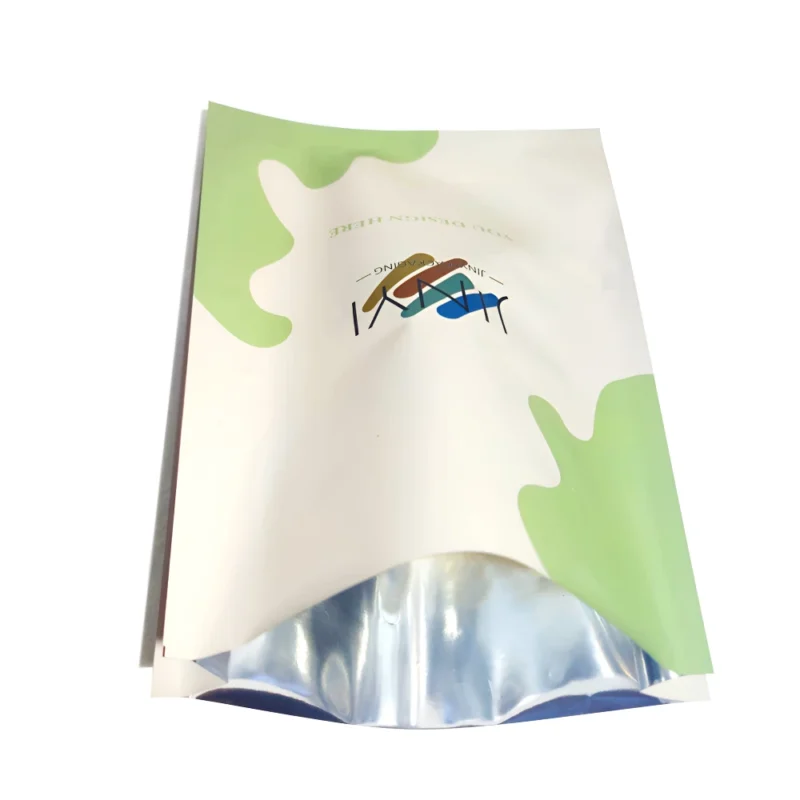
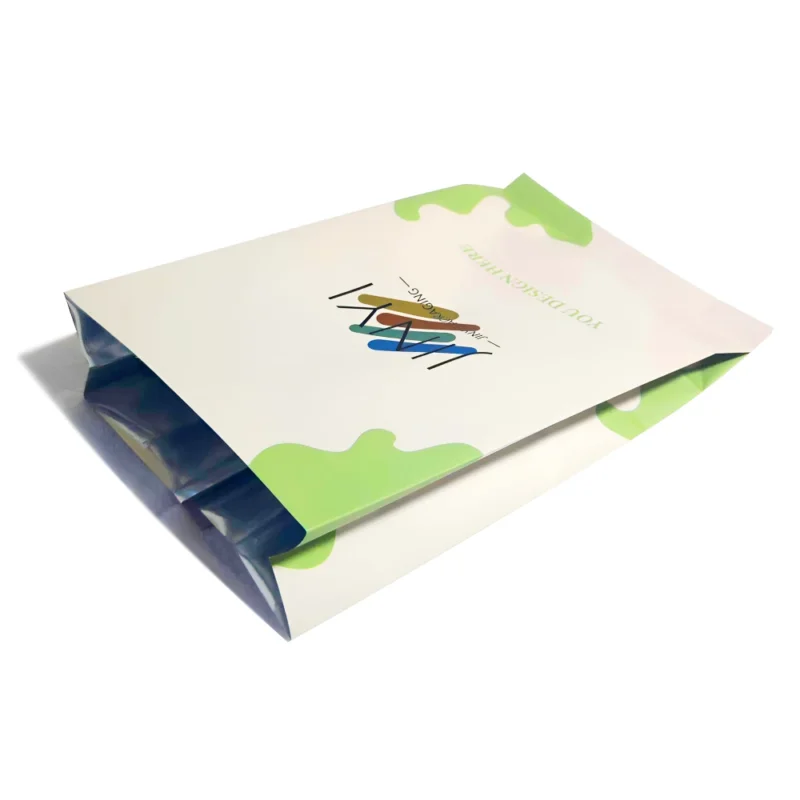
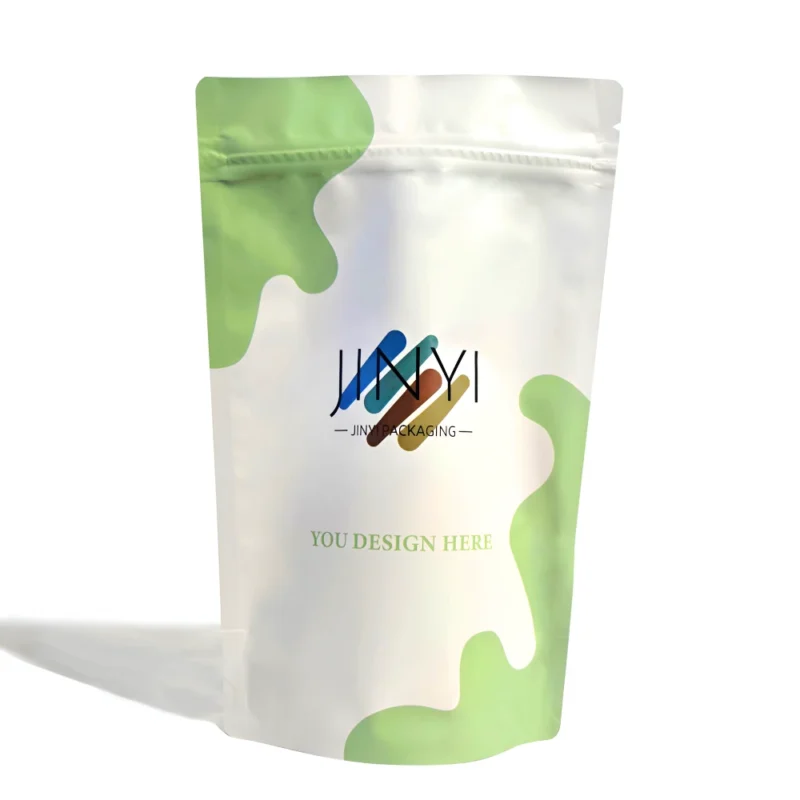
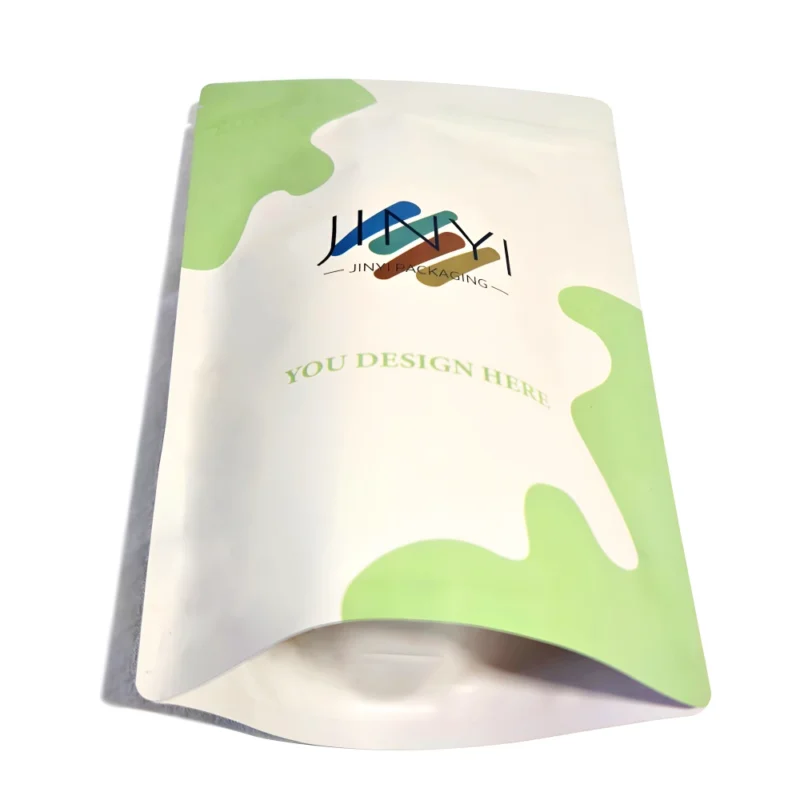
Packaging does not create category demand, but packaging can protect the behaviors that confirm demand: repeat purchase, frequency, and channel expansion. Convenience-led protein growth is especially sensitive to route stress and consumer handling. Leaks, crushed portions, staling, and messy opening events turn “trial” into “never again.”
As a flexible packaging manufacturer, we focus on practical controls that protect repeat purchase without unnecessary cost. We prioritize seal integrity under real handling, scuff resistance for retail-ready presentation, and barrier choices that match shelf life goals. We also discourage overbuilding. Overbuilt packaging inflates cost, slows pack-out, and can worsen the consumer experience if it becomes hard to open or bulky to store.
The right approach is to match packaging to the verified growth engine. If growth is price-led, packaging should protect margin through efficient structures and low rework. If growth is claim-led, packaging must protect trust with clear, durable information and consistent appearance. If growth is convenience-led, packaging must protect function first: easy open, clean dispense, and durability through shipping.
Packaging translation (driver → packaging priority)
| Verified driver |
Primary packaging risk |
Priority control |
| Price-led |
Margin leakage from waste/rework |
Process stability + efficient structures |
| Claim-led |
Trust loss from label/print failures |
Print durability + legibility + consistency |
| Convenience-led |
Repeat loss from leakage/staling/damage |
Seal integrity + barrier fit + route durability |
Evidence (Source + Year): Innova Market Insights — Protein Market Trends: Growth and Global Shifts (2025). :contentReference[oaicite:5]{index=5}
Conclusion
High-protein grows faster for different reasons in different portfolios. Brands win faster when they verify the engine with value vs volume, claim lift, and convenience-led repeat—then build execution around that truth. Contact us to align packaging with your verified driver.
Talk to JINYI about packaging that protects repeat purchase →
FAQ
- How do I know if high-protein growth is real demand or just higher prices?
Split value vs volume and track ASP and promo intensity over the same period.
- What is the fastest way to test whether a protein claim drives conversion?
Run an A/B within the same format and price band, and compare conversion and price tolerance.
- Which metric best indicates convenience-led growth?
Frequency and repeat rate by format, especially single-serve versus multi-serve.
- How should brands define “high-protein” to keep comparisons fair?
Use one clear rule (claim-based or threshold-based) and do not mix definitions across periods.
- When does packaging matter most for high-protein products?
When convenience and e-commerce expand the route stress, and repeat purchase depends on leak-free, fresh, and clean use.
About Us
Brand: Jinyi
Slogan: From Film to Finished—Done Right.
Website: https://jinyipackage.com/
Our Mission:
JINYI is a source manufacturer specializing in custom flexible packaging solutions. We aim to deliver reliable, usable, and execution-ready packaging so brands can reduce communication cost, achieve predictable quality, and ship with clearer timelines and better-fit materials and print results.
About Us:
JINYI is a source manufacturer specializing in custom flexible packaging solutions, with over 15 years of production experience serving food, snack, pet food, and daily consumer brands.
We operate a standardized manufacturing facility equipped with multiple gravure printing lines as well as advanced HP digital printing systems, allowing us to support both stable large-volume orders and flexible short runs with consistent quality.
From material selection to finished pouches, we focus on process control, repeatability, and real-world performance. Our goal is to help brands reduce communication costs, achieve predictable quality, and ensure packaging performs reliably on shelf, in transit, and at end use.