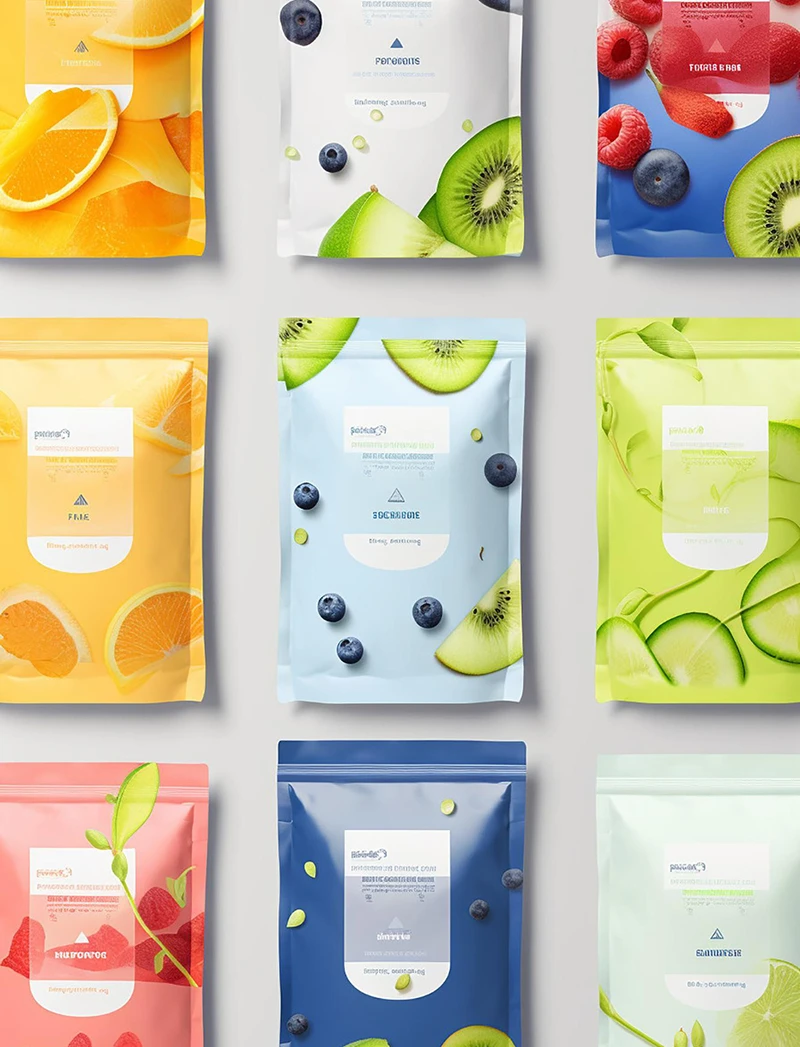
Many products look similar on shelf. Then buyers copy a pouch structure and discover later that the project logic was never actually the same.
I do not choose pouch materials by product category name alone. I choose them by shelf life, barrier priority, fill weight, production reality, route stress, display goals, use pattern, and budget together.
See pouch options with structure logic in mind, not just product similarity.

This is why I never ask only, “What is the product?” I also ask, “What are the conditions around the product?” That second question often changes the structure much more than buyers expect.
Why Do Buyers So Often Assume Similar Products Should Use Similar Pouch Materials?
Similar appearance creates false confidence very quickly.
I see buyers confuse product similarity with packaging-condition similarity, and that is usually where the structure judgment starts drifting.
The shortcut that causes trouble
Two products may both be snacks, powders, supplements, or pet food, but that still does not tell me enough. Product category is only a label. It does not explain what fails first, how the pouch is filled, how far it travels, or how the customer uses it after opening.
| What looks similar |
What may still differ |
| Product category |
Real packaging conditions |
Why Is Product Category Only the Starting Point, Not the Final Answer?
The category tells me the world. It does not tell me the final structure.
I use product type as a starting point, but the final material answer comes from finer risk and commercial details.
Category is not structure logic
A category can narrow the discussion, but it cannot finish it. Buyers who stop there often skip the real work. I still need to know risk path, route, shelf target, fill behavior, and display need before I trust the structure direction.
| Useful for |
Not enough for |
| Starting the discussion |
Locking the structure |
How Can Shelf Life Goals Split the Material Choice for Similar Products?
Shelf life often separates two similar-looking projects faster than buyers expect.
If one product only needs a short cycle and another must hold much longer, the structure logic can split immediately.
Time changes the barrier answer
A pouch that is enough for a short selling cycle may not be enough for a long one. This is why I always ask how long the product must remain stable, not only what the product is. Time quietly changes everything.
| Shorter shelf goal |
Longer shelf goal |
| May allow lighter structure |
Usually needs tighter control |
Why Can the Same Product Type Need Different Barrier Priorities?
The same product family can still lose quality in different ways.
I do not assume one barrier logic fits all similar products, because one may fear moisture first while another fears oxygen, light, or aroma loss first.
Same type, different weak point
This is where copied structures fail. The product name may match, but the first failure point may not. If I do not identify that difference early, I can easily choose a structure that is technically strong but pointed in the wrong direction.
| Possible first failure |
Structure consequence |
| Moisture / oxygen / light / aroma |
Barrier priorities change |
How Do Fill Weight, Pack Size, and Product Density Change the Right Structure?
Structure is not only about what goes inside. It is also about how much and how big.
I change structure logic when weight, size, or density change because stress distribution, base load, and seal burden change with them.
Format changes stress
Two similar contents can ask for different structures if one pouch is larger, heavier, or denser. Once the load rises, the pouch experiences different pressure at the base, edges, and seal area. This is a very practical split point.
| Variable |
What it changes |
| Weight / size / density |
Load and route stress |
Why Do Filling Method and Production Conditions Create Different Material Answers?
A similar product can still behave very differently once it reaches a different line.
I never isolate structure from production, because hand fill, semi-automatic fill, and high-speed fill do not ask the same thing from the pouch.
Production is a quiet split point
One product may hang powder at the seal. Another may hit the pouch bottom harder. A third may run fine by hand but struggle on a faster line. These conditions can change stiffness need, seal window need, and conversion stability even when the contents themselves look close.
| Production difference |
Structure effect |
| Machine type and fill behavior |
Different processing demands |
How Do Sales Channels and Shipping Routes Quietly Change the Structure Logic?
A pouch is not only chosen for the product. It is also chosen for the journey.
I often see similar products split into different structures once the selling channel and shipping route become different.
Route stress changes the answer
Retail shelf, e-commerce delivery, export shipping, and bulk warehousing do not stress a pouch in the same way. One project may reward better display and feel. Another may need more toughness and seal security. The content did not change, but the route did, and that is enough to shift the material answer.
| Channel type |
Material pressure |
| Retail vs e-commerce vs export |
Display vs durability balance changes |
Why Can Window Needs and Display Goals Push Similar Products into Different Structures?
Display goals are not cosmetic leftovers. They can change the whole material route.
I factor display in early because one project may need visibility and consumer trust through a window, while another may need a more protected, closed, premium expression.
Display is a structure variable
If one pouch must show the product and another must feel more complete, more protected, or more controlled, the materials can split even when the contents are close. That is why I never dismiss display goals as just design preference. They are part of structure logic too.
| Display goal |
Material direction |
| Window / visibility vs full coverage |
Structure route can split |
How Do Consumer Use Patterns Create Different Material Decisions for Similar Products?
The pouch still has a job after purchase.
I include use pattern because one product may be finished once, while another must survive repeated opening, handling, and home storage.

Use changes material demands
If a pouch is opened once and finished immediately, the demands can be lighter than a pouch that must keep performing through repeated use. Carrying, reclosure, softness, and daily handling all influence whether one structure still feels better than another. That difference is easy to miss when buyers stop at the product itself.
| Use pattern |
Why it matters |
| Single use vs repeated use |
Changes durability and user feel |
Why Do Budget Boundaries and Commercial Positioning Also Change Material Structure?
Structure is not only technical. It is also commercial.
I do not choose materials in a vacuum, because the strongest theoretical route is not always the most stable commercial route.
Positioning changes what is sensible
Two similar products can land in different structures if one brand has more packaging budget and a more premium market position while the other has tighter pricing and a more volume-driven model. Material logic has to fit the business model, not fight it.
| Commercial model |
Structure effect |
| Premium vs cost-sensitive |
Different material tolerance |
What Should Buyers Compare Before Copying Another Product’s Structure?
I do not copy structures first. I compare conditions first.
Before I copy another pouch material route, I compare risk path, shelf life, size, fill method, route, window need, use pattern, and price band.
Copy the question list, not the answer
This is the most useful habit in the whole article. If I only copy the structure, I copy the conclusion without checking whether I share the same conditions. I get much safer results when I compare the variables first and only then decide whether the copied answer still makes sense.
| Compare first |
Do not copy blindly |
| Conditions and constraints |
Structure code alone |
Why Is “Looks Similar” One of the Most Dangerous Shortcuts in Pouch Material Selection?
“Looks similar” feels efficient. It is often the fastest way to miss the real structure logic.
I treat visual similarity as the start of curiosity, not as proof of structural similarity.
The shortcut that hides the variables
Packaging responds to a full condition set, not to surface resemblance. That is why this shortcut is dangerous. It makes buyers feel informed before they have checked the real differences. In pouch material selection, early certainty can be more harmful than honest uncertainty.
| Shortcut |
Risk |
| Looks similar |
Misses real condition differences |
What Buyers Often Miss in Structure Selection: the Product Itself, or the Conditions Around It?
Buyers often think they are judging the product. In reality, they are often missing the conditions around it.
For me, the product is only half the answer. The other half comes from shelf life, filling reality, shipping path, display strategy, use pattern, and budget.
The real structure lesson
The best structure choice does not come from finding the product that looks most similar to mine. It comes from finding the project whose conditions are most similar to mine. That is the shift that makes buyers better. Materials follow conditions much more faithfully than they follow category names.
| Half of the answer |
Other half of the answer |
| The product itself |
The conditions around the product |
If you are comparing another product’s pouch now, compare the conditions first and the structure second.
About Us
JINYI — From Film to Finished—Done Right. We believe good packaging is not only about appearance. It should work reliably in transport, on shelf, and in the customer’s hands. I focus on custom flexible packaging with 15+ years of production experience. Our factory runs multiple gravure printing lines and HP digital printing systems, so I can support both stable large-volume production and flexible custom work with clearer lead times and steadier quality.
FAQ
Can similar snacks really need different pouch materials?
Yes. Shelf life, route, fill size, display goals, and production conditions can all change the right answer.
What is the first thing I should compare before copying another structure?
I compare the risk path and shelf-life goal first, because those two often split the structure fastest.
Why does channel matter so much in structure choice?
Because retail, e-commerce, and export routes create different kinds of stress on the pouch.
Can display strategy really change material structure?
Yes. A window-driven project and a full-coverage protection-driven project can easily end up on different material routes.
What do buyers most often miss in structure selection?
I see buyers miss the conditions around the product more often than the product itself.