Your snack pouch can look perfect on day one, then taste flat in week four. That “invisible failure” triggers refunds and repeat-purchase loss.
I prevent week-4 failures by treating micro-leak as the first suspect, locking a stable seal system (seal window, hot tack, seal land, cooling), and validating the full shipping system (pouch + snack + case) under stress-first testing.
See how I spec food pouches for real route stress

I do not start with a material name. I start with the failure path. Then I convert it into controllable parameters and repeatable validation actions.
What does “week-4 failure” look like in snack pouches?
A pouch can stay closed and still “fail.” The consumer does not always see a leak. The consumer tastes it.
I define week-4 failure as odor loss, staling, soft texture, and early rancid notes. I translate those complaints into measurable paths, so I can control them in production.
How I translate complaints into failure paths
| Customer complaint |
What it often means |
What I measure |
| “Smells weaker” |
Oxygen ingress or aroma loss |
Leak trend + barrier target alignment |
| “Not as crunchy” |
Moisture gain or seal drift |
WVTR target + seal stability checks |
| “Tastes stale” |
Micro-leak pathway dominates |
Stress-first micro-leak screening |
Micro-leak vs OTR: Why do tiny leaks beat good barrier every time?
A great barrier number cannot save a bad seal path. Oxygen will take the shortcut.
I treat micro-leak as the primary risk because a micro-channel can overwhelm your planned OTR/WVTR. I prove the seal system is truly closed before I trust barrier data.
Why “barrier” loses when the seal has a shortcut
From a production standpoint, this matters because OTR is usually measured on flat film under controlled conditions. In real manufacturing, the weakest link is often a seal edge, a corner transition, or a cooling drift that creates a micro-channel. I do not claim “your pouch is safe” because the film OTR is low. I claim “your pouch is safe” only after stress-first testing shows stable seal integrity. I also separate two decisions: (1) barrier target for the product’s shelf-life goal, and (2) seal system margin for real line variation. If I skip the seal system margin, the barrier target becomes irrelevant. That is why I start with “Can we keep the seal closed after stress?” and only then I tune OTR/WVTR to match the product.
Micro-leak vs OTR, in one table
| Risk |
What drives it |
What I control |
| Micro-leak |
Seal window drift, micro-channels |
Seal system margin + stress-first checks |
| OTR |
Film structure, thickness, defects |
Barrier target matched to product |
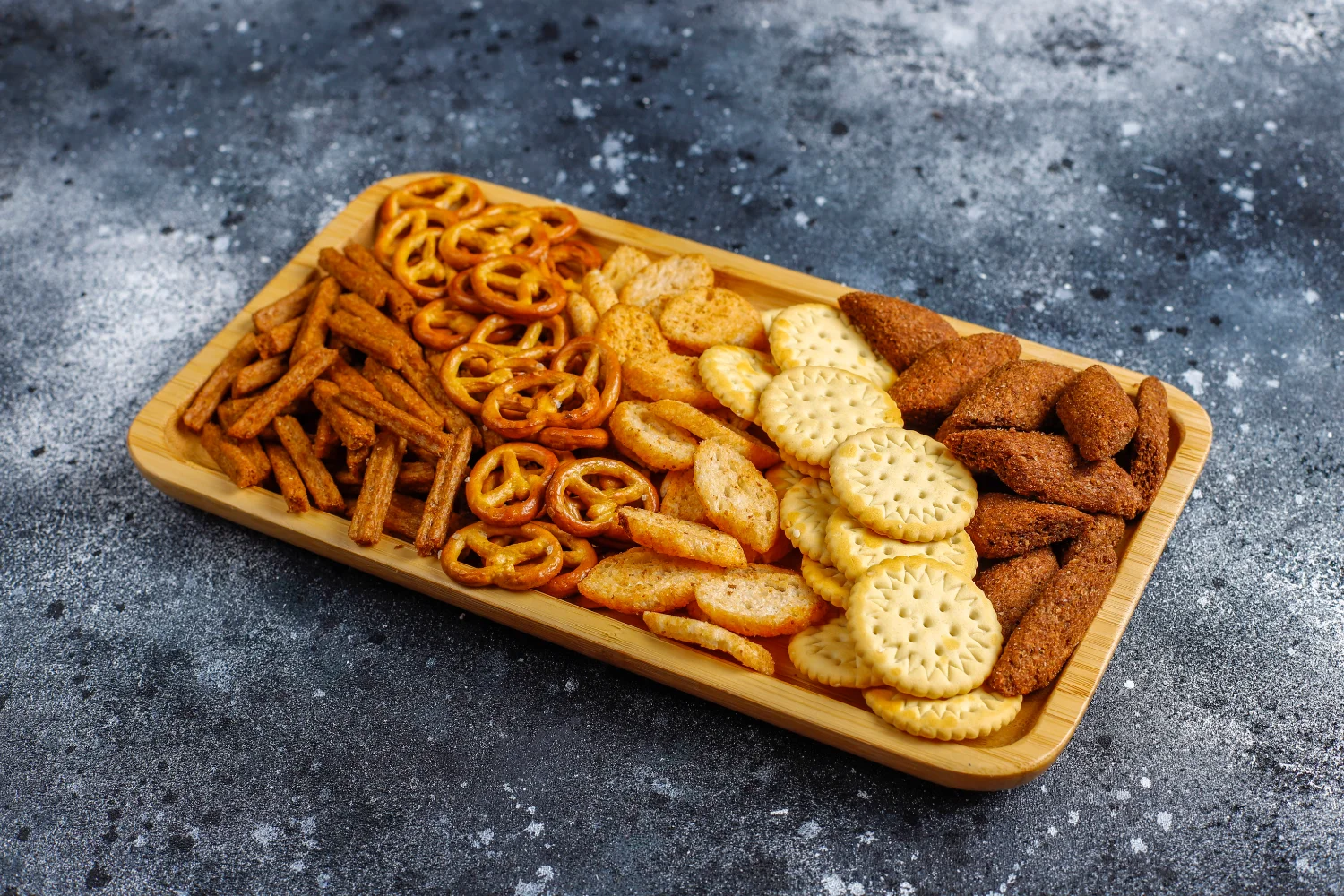
Which snacks amplify week-4 drop (oily, crunchy, flavored powders)?
Not every snack fails the same way. The product shape and surface behavior decide the weakest link.
I map snack reality first: oils contaminate seals, sharp pieces create abrasion, and seasoning powders migrate into seal zones. Product form tells me whether I should fight contamination, wear, or oxygen sensitivity first.
Product form → risk path
| Snack type |
Main risk |
Typical “week-4” symptom |
| Oily snacks |
Seal interface contamination |
Slow seep + rancid notes |
| Crunchy / sharp |
Inner wear and corner stress |
Micro-leak + scuff |
| Seasoned powders |
Powder in seal zone |
Seal drift + odor loss |
How do I lock seal window, hot tack, and seal land width?
“It sealed” is not the goal. “It stays sealed across real production variation” is the goal.
I lock the seal system first because it decides whether you can mass-produce consistent seals. I focus on seal window margin, hot tack holding, seal land width consistency, and cooling timing that prevents micro-channels.
The seal system controls I lock before I scale
In real manufacturing, this detail often determines whether your line runs smoothly or chases leaks all day. I do not set one perfect temperature and hope it holds. I map a seal window that survives normal speed drift. I also verify hot tack because early handling and stacking can damage seals while they are still hot. I keep seal land width consistent because a narrow land is a built-in weak point, especially at corners. I standardize cooling timing because cooling is not “extra.” Cooling is where the interface sets. When cooling is rushed, micro-channels can form even when seal strength looks fine in a calm test. I then document the settings and the checks so production teams can repeat the result without guessing.
| Parameter |
What it protects |
Failure it prevents |
| Seal window |
Process margin under speed drift |
Random micro-leak spikes |
| Hot tack |
Early handling stability |
Micro-channels after stacking |
| Seal land width |
Edge robustness |
Corner leak paths |
| Cooling timing |
Interface set and closure |
Slow leaks in week 2–4 |
How does headspace and pack-out create corner wear and micro-channels?
Headspace is not always safety. Too much space can create more internal movement and more corner hits.
I treat headspace and pack-out as part of the pouch spec because product movement can “train” corner wear over weeks. If the carton fit is wrong, you can reproduce week-4 failures even with good film.
Why pack-out is a seal risk, not only a logistics topic
From our daily packaging work, we see that many week-4 failures start inside the case. If the case is too loose, the pouch moves and rubs. If the case is too tight, the case pinches seals under compression. Both conditions can create micro-channels at corners and seal edges. I set pack-out rules early: how the pouches sit, where contact points are, and where corner transitions should not be forced. I also consider headspace because more free movement increases impact energy. My goal is simple: I want a pouch that stays calm inside the case. That reduces scuff, reduces corner wear, and keeps seal edges stable. When I include pack-out in the plan, I can replicate the field conditions and fix the real cause instead of changing materials blindly.
| Pack-out condition |
What it creates |
What I change |
| Too loose |
Rubbing + corner fatigue |
Case fit and internal positioning |
| Too tight |
Seal pinch under compression |
Box dimensions and stacking plan |
| High headspace |
Product impact and abrasion |
Fill strategy and pack pattern |
Why does compression + vibration “train” a slow leak over weeks?
Week-4 is not a magic number. It is stress accumulation that finally becomes noticeable.
I treat slow leaks as a timeline: compression repeatedly loads the seal edge, vibration turns micro-slip into wear, and temperature swings make interfaces “breathe.” A micro-channel grows until the consumer senses staling.
What stress-first tests do I run (pouch + snack + case) before mass production?
I do not validate an empty pouch and call it done. I validate what actually ships.
I validate the system with stress-first tests: I apply compression, vibration, and temperature swings on packed cases, then I measure micro-leak trend and inspect seal edges and corners.
My stress-first validation checklist
From a production standpoint, this matters because it forces slow failures to show up early. I do not want to “pass” in the lab and fail in week four. I pack the product in the real case configuration. I apply compression that matches stacking. I apply vibration that matches transport. I add temperature swings if the route has day-night or warehouse shifts. Then I check three things: (1) micro-leak trend, not just pass/fail, (2) seal edge and corner micro-channel indicators, and (3) appearance downgrade points that trigger complaints. I keep records that link results back to one control knob: seal window settings, hot tack margin, cooling timing, or pack-out changes. That approach makes the fix repeatable and protects OEE during scale-up.
| Step |
What I do |
What I record |
| Compression first |
Simulate stacking load in cartons |
Seal creep and edge wetting signs |
| Vibration next |
Simulate transport with real contact points |
Corner wear and scuff zones |
| Thermal swings when needed |
Cycle temperatures based on route reality |
Seal drift and micro-channel growth |
If you want my food-pouch validation flow, start here
How do I shortlist Baseline / Upgrade / Premium specs (and what can still fail)?
I keep the shortlist small so teams can decide fast. Each option includes the likely failure, the test, and the control plan.
I deliver 2–3 specs by stabilizing seal system margin first, then adding controls for contamination, wear, and pack-out. I also state what can still fail, so the launch is based on risk, not hope.
Baseline / Upgrade / Premium, in one view
| Option |
Main goal |
Most likely failure |
How I expose it |
| Baseline |
Stable sealing in real production |
Slow micro-leak from window drift |
Compression + vibration, then leak trend |
| Upgrade |
Control contamination and corner risk |
Seal interface contamination |
Stress-first test + seal edge inspection |
| Premium |
Lock pack-out + QC gates for scale |
Pack-out pinch or rub amplification |
Full system validation in final cartons |
Conclusion
I stop week-4 snack pouch failures by treating micro-leak as the first suspect, locking seal system margin, and validating pouch + snack + case under stress-first tests. Contact me to spec it right.
Get a Snack Pouch Spec That Stays Fresh in Week 4
FAQ
1) Why does a snack pouch fail in week 4 if it looks sealed?
Many failures are micro-leaks or seal drift that do not show visually on day one. Oxygen and moisture changes become noticeable over time.
2) Is low OTR enough to prevent staling?
No. A micro-channel at the seal can bypass good barrier performance. I validate seal integrity first, then tune barrier targets.
3) What snack types most often cause seal problems?
Oily snacks can contaminate seal interfaces, sharp snacks can create inner wear, and seasoning powders can migrate into seal zones.
4) What is the fastest test plan to catch slow micro-leaks?
I run stress-first tests on the real system (pouch + snack + case), then I measure micro-leak trend and inspect corners and seal edges.
5) Can carton fit really cause freshness complaints?
Yes. Loose cartons increase rubbing and corner wear. Tight cartons pinch seals under compression. Both can grow micro-channels over time.
About Me
Brand: Jinyi
Tagline: From Film to Finished—Done Right.
Website: https://jinyipackage.com/
Our Mission:
JINYI is a source manufacturer specializing in flexible packaging. I deliver packaging plans that are reliable, usable, and scalable. I help brands reduce communication costs, achieve predictable quality, clear lead times, and ensure packaging performs reliably on shelf, in transit, and at end use.
About me:
JINYI is a source manufacturer specializing in custom flexible packaging solutions, with over 15 years of production experience serving food, snack, pet food, and daily consumer brands.
We operate a standardized manufacturing facility equipped with multiple gravure printing lines as well as advanced HP digital printing systems, allowing us to support both stable large-volume orders and flexible short runs with consistent quality.
From material selection to finished pouches, we focus on process control, repeatability, and real-world performance. Our goal is to help brands reduce communication costs, achieve predictable quality, and ensure packaging performs reliably on shelf, in transit, and at end use.