Soft stool feels simple, but owners often solve the wrong problem. Fast switching and strong label claims can make a manageable issue more confusing.
Soft stool on some foods usually reflects a mix of feeding management, formula fit, digestibility, and sometimes health issues. Before switching, owners should judge the cause first and the “digestive support” claim second.

Many owners assume that a soft stool means one food is bad and another food is good. That conclusion feels neat, but it is usually too narrow. Stool quality responds to more than one variable. Transition speed matters. Feeding amount matters. Treats matter. Formula structure matters. Individual tolerance matters. Underlying disease can matter too. This is also why “digestive support” has become such a powerful label phrase. It sounds like a direct answer to an uncomfortable symptom. But a useful answer needs more than a comforting phrase. A useful answer asks what is most likely driving the soft stool, whether the current food is complete and balanced for the pet’s life stage, and whether the next food offers a clearer and more evidence-based fit instead of just a cleaner story.
For pet food brands, digestive claims only work when the pack helps owners read feeding guidance, claim limits, and stool-related support messages clearly on shelf and at home.
Why Does Soft Stool Happen on Some Foods but Not Others?
Owners often blame one ingredient first. Real stool response is broader and less dramatic than that.
Soft stool can change across foods because stool quality reflects formula structure, feeding practice, and individual tolerance together, not one label word alone.
Why one food can look worse without being universally “bad”
Soft stool is a result, not a diagnosis. The same pet can pass firm stool on one food and soft stool on another because the total digestive load has changed. A richer formula may carry more fat. A “sensitive” formula may use a different fiber pattern. A highly palatable food may lead to overfeeding. A fast transition may disturb stool even when the new formula is reasonable. Owners often compare foods as if the outcome came from one ingredient alone, but digestion does not work that way. Digestibility, moisture intake, fiber fermentation, stool water content, treat load, topper use, and the pet’s own gut tolerance all shape the result. This is why the same “natural” or “premium” promise can lead to different stool quality in different pets. It is also why soft stool does not automatically prove that a food is poor quality in general. It may only show that the formula, the feeding method, or the transition plan did not fit this pet under these exact conditions.
| Factor |
How it can change stool |
| Transition speed |
A fast switch can disturb stool even when the formula is acceptable |
| Feeding amount |
Too much food can reduce digestive tolerance and loosen stool |
| Formula richness |
Higher fat or richer ingredients can increase digestive burden |
| Individual tolerance |
One pet may handle the same formula very differently from another |
Evidence (Source + Year): MSD Vet Manual, Overview of Diarrhea in Small Animals (2025); WSAVA, Frequently Asked Questions & Myths (2018).
What Does Soft Stool Actually Tell You—and What Does It Not?
Soft stool can be useful information, but owners often ask more of it than it can honestly prove.
Soft stool can suggest poor digestive tolerance, overfeeding, transition stress, or GI issues, but it cannot directly prove allergy, brand failure, or that one trend diet is better.
Why a symptom should not be treated like a verdict
Soft stool can tell owners that something in the current feeding situation deserves a closer look. It can suggest that the pet is under digestive stress, that stool water is higher than usual, or that the current diet and feeding pattern are not landing well. It can also signal a health issue that has nothing to do with a marketing label. However, soft stool cannot directly prove several things that owners often assume. It cannot prove food allergy by itself. It cannot prove that a certain ingredient is the only problem. It cannot prove that grain-free, fresh, raw, or “gentle digestion” options are automatically the right next move. It also cannot prove that the current brand is poor across the board. These are larger conclusions than the symptom can support. A good evaluation therefore separates observation from interpretation. Observation asks what the stool looks like, how long it lasts, and what else is happening. Interpretation asks what factors could explain it. That order matters because soft stool is a clue, not a final answer.
| What soft stool may suggest |
What soft stool does not prove |
| Transition stress |
A true food allergy |
| Overfeeding |
That one brand is broadly “bad” |
| Low formula fit |
That a trend diet is automatically better |
| Possible GI disease |
That one ingredient is the only cause |
Evidence (Source + Year): MSD Vet Manual, Overview of Diarrhea in Small Animals (2025); FDA, “Complete and Balanced” Pet Food (2020).
What Feeding Mistakes Commonly Cause Soft Stool Before Formula Problems Do?
Many stool problems start in the feeding routine, not in the ingredient list.
Before blaming the formula, owners should first check transition speed, feeding amount, treat load, toppers, table foods, and day-to-day consistency.
Why feeding management often deserves the first check
Feeding mistakes are common because they are easy to make and hard to notice. A pet may be getting more calories than the owner thinks because training treats, chew products, broth toppers, and table scraps feel small on their own. A new food may look gentler, but the owner may also be mixing in several extras at the same time. A fast transition can produce loose stool even when the target food is appropriate. Some owners react by switching again too quickly, which creates another round of stool instability and makes the pattern harder to read. In practice, this means the first useful question is often not “Which digestive support food should replace this one?” but “Has the feeding routine stayed controlled enough to judge the food fairly?” This matters because a good formula can look bad under sloppy management, while a mediocre formula can look fine for a short time under tightly controlled feeding. Stool response becomes easier to interpret once the routine is stable, the feeding amount is realistic, and the extras are stripped back.
| Common feeding mistake |
Why it matters |
| Fast food transition |
The gut may not adapt smoothly to a sudden change |
| Overfeeding |
Excess intake can overwhelm normal stool formation |
| Too many treats or toppers |
They can change fat, moisture, and total digestive load |
| Table foods |
They can disrupt stool quality and confuse pattern tracking |
Evidence (Source + Year): MSD Vet Manual, Overview of Diarrhea in Small Animals (2025); AAHA, Nutritional Assessment Guidelines for Dogs and Cats (2021).
Which Formula Factors Most Often Affect Stool Quality?
Owners often chase one ingredient villain. Stool quality usually responds to the whole formula and how heavy that formula feels to the gut.
Fat level, fiber type, protein tolerance, overall digestibility, and ingredient replacement logic often affect stool quality more than simple “with” or “without” ingredient debates.

Why the formula structure matters more than one ingredient fight
Stool quality often changes when the formula changes how the gut handles water, fermentation, and nutrient load. Fat can matter because richer diets can be harder for some pets to tolerate. Fiber matters because not all fiber behaves the same way. Some fiber helps normalize stool bulk. Some fiber ferments more actively. Some patterns help one pet and not another. Protein source can matter when a pet shows poor tolerance to a certain formula design, but that still does not mean the protein is universally bad. Overall digestibility matters because less digestible food can leave more material in the gut to influence stool. Ingredient substitutions matter too. When a formula removes one component, something else has to replace it, and the replacement can change the stool response even if the front label sounds cleaner. This is why owners should be careful with easy debates such as grain versus grain-free or natural versus processed. The stronger question is how the full formula behaves in the pet, not how the label identity sounds in theory.
| Formula factor |
Possible stool effect |
| Higher fat |
Can make stool softer in sensitive pets |
| Fiber amount and type |
Can shift stool water, bulk, and fermentation pattern |
| Protein source and tolerance |
May affect stool fit for some individuals |
| Overall digestibility |
Can change stool volume and consistency |
Evidence (Source + Year): Hall et al., Canine and Feline Gastrointestinal Nutrition Reviews (2022); WSAVA, Frequently Asked Questions & Myths (2018).
Is It Really Food Intolerance or Allergy—or Just Poor Fit?
Owners often jump from soft stool to “allergy.” That jump feels efficient, but it usually skips the hardest diagnostic part.
Soft stool alone does not establish food allergy. It may reflect intolerance, low formula fit, poor feeding control, or a medical issue that still needs a proper workup.
Why these three ideas should not be blended together
Food intolerance, food allergy, and poor formula fit are not interchangeable ideas. A pet can dislike or poorly tolerate a formula without having a true immune-mediated food allergy. A pet can also struggle on one formula because the fat level is too rich, the feeding amount is too high, or the transition was rushed. Owners often call all of these “allergy” because the word feels practical and memorable. However, that language can send the decision in the wrong direction. It can lead owners to chase novel proteins or premium “sensitive stomach” labels without actually narrowing the cause. It can also create the false idea that a food failed in a universal sense, when the better conclusion is simply that the food was a poor fit for this individual animal. This is why the most useful concept is fit. A food may be complete and balanced, professionally made, and still not land well for one pet. That outcome deserves attention, but it does not justify oversimplified claims about the food, the brand, or one ingredient alone.
| Term |
What it means in practice |
| Poor fit |
The food does not suit this pet well under current conditions |
| Food intolerance |
A non-immune adverse response or poor tolerance pattern |
| Food allergy |
A specific diagnosis that needs a more careful evaluation path |
Evidence (Source + Year): MSD Vet Manual, Adverse Food Reactions in Small Animals (2025); WSAVA, Global Nutrition Guidelines (2021).
What Do “Digestive Support” Claims Usually Mean on Pet Food?
These claims sound precise, but they often describe a direction rather than a proven performance result.
“Digestive support,” “gut health,” and “sensitive stomach” are weak by themselves. They become meaningful only when they point to clear formula logic and measurable support.
Why the claim is only the start of the evaluation
Digestive support claims usually sell reassurance. They signal that the food was designed to feel lighter, gentler, or more suitable for stool-sensitive pets. That can be a reasonable goal. The problem is that the phrase alone says almost nothing about how the formula tries to achieve it. Does the food rely on a certain fiber approach? Does it use probiotics, and if so, are the strains identified? Does it use prebiotics, and are the sources named? Does the brand explain digestibility logic or feeding evidence? If none of that is clear, then the claim remains a general comfort phrase, not a strong evidence marker. This distinction matters because owners often compare digestive claims the way they compare proven features. In reality, the claim is better treated as an invitation to ask for specifics. It can point toward a useful formula, but it can also sit on a pack that offers little measurable information. The owner should therefore judge the explanation behind the claim, not the claim tone by itself.
| Claim style |
What owners should ask next |
| Digestive support |
What specific formula features support that claim? |
| Sensitive stomach |
Is there any clear feeding logic or stool-quality endpoint? |
| Gut health |
Are fiber, prebiotic, or probiotic details actually disclosed? |
Evidence (Source + Year): FDA, “Complete and Balanced” Pet Food (2020); AAFCO, Selecting the Right Pet Food (2024).
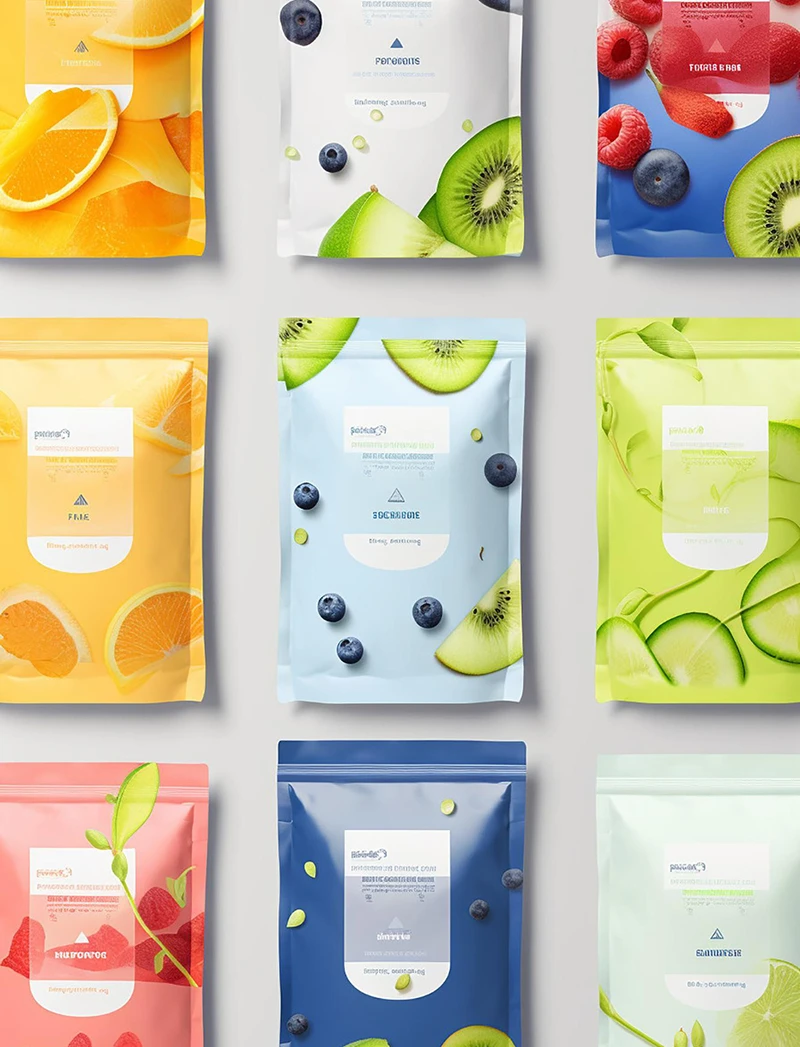
If a digestive claim is part of your pet food positioning, the pouch also needs to support readable feeding directions, realistic claim framing, and cleaner owner decision-making.
How Should Owners Evaluate Fiber, Probiotics, and Prebiotics Before Switching?
These are the three most common support words in stool-sensitive formulas, yet they are often explained in the weakest way.
Owners should look for named fiber logic, strain-level probiotic detail, and clear prebiotic rationale. A vague mention is much weaker than a specific explanation.
Why detail beats impressive wording
Fiber should not be judged only by whether it appears in the formula. The more useful question is what type of fiber seems to be used and what role it is supposed to play. Some fibers support stool bulk. Some shape fermentation differently. Some may suit one stool pattern better than another. Probiotics should not be judged by the presence of the word alone. Owners should ask whether the brand identifies strains or just uses the category term as a marketing halo. Prebiotics should also be judged by source and logic, not by a broad microbiome story that sounds scientific but says little. This does not mean owners need to demand a clinical dossier from every food. It means they should reward clarity. The clearer the explanation, the easier it is to separate thoughtful digestive design from vague premium language. This is especially important before switching foods, because a more specific formula rationale gives the owner a better basis for deciding whether the new food is actually more likely to help the pet’s stool.
| Support feature |
Weak signal |
Stronger signal |
| Fiber |
“Added fiber” only |
Clear role or stool-related rationale |
| Probiotics |
Category word only |
Specific strain disclosure and product logic |
| Prebiotics |
General microbiome language |
Named source and clearer function explanation |
Evidence (Source + Year): FDA, “Complete and Balanced” Pet Food (2020); Schmitz & Suchodolski, Understanding the Canine and Feline Intestinal Microbiome (2016).
Why Is “Sensitive Stomach” Not the Same as Evidence-Based Digestive Support?
“Sensitive stomach” is comforting because it feels personal and gentle. It is also one of the easiest claims to over-trust.
“Sensitive stomach” can describe a marketing position, but it does not prove stool outcomes, stronger digestibility, or superior suitability for every pet with loose stool.
Why comfort language can outrun proof
Some labels are designed to reduce owner anxiety. “Sensitive stomach” does this very well because it feels like a practical translation of what the owner is already seeing. But that emotional fit is not the same as evidence. The phrase does not tell the owner whether the diet is complete and balanced for long-term use, whether the support comes from a different fat level, whether fiber was changed in a meaningful way, or whether the food has any measurable stool-related results behind it. It may still be a useful product. The point is that the phrase does not settle the question on its own. This is also why owner impression and evidence need to be kept separate. A pet may look better on a food, and that observation matters. However, the food claim itself still needs to be judged by what it explains and what it leaves vague. Evidence-based support is not about how soft the wording feels. Evidence-based support is about whether the support logic can be described, checked, and tied to a realistic feeding reason.
| Label style |
Why it attracts owners |
What it still does not prove |
| Sensitive stomach |
Feels tailored to the symptom |
That the formula is the right fit for this pet |
| Gentle digestion |
Suggests lower digestive burden |
That the support is measurable or well explained |
Evidence (Source + Year): WSAVA, Frequently Asked Questions & Myths (2018); AAFCO, Selecting the Right Pet Food (2024).
What Should Owners Compare Before They Switch Foods?
Most switching decisions improve when owners stop comparing stories and start comparing harder questions.
Before switching, owners should compare adequacy, life stage fit, formula features that may affect stool, evidence behind the claim, and whether the real problem is feeding management.
Five questions that are more useful than a label promise
A practical comparison framework should be simple enough to use and strict enough to cut through marketing. First, is the food complete and balanced, and can it serve as the main diet for the intended pet? Second, for which species and life stage is it designed? Third, what formula features could reasonably explain better or worse stool response, such as fat level, fiber design, or digestibility logic? Fourth, what actual proof supports the digestive claim? Fifth, is the current stool problem more likely to come from feeding management than from formula failure? These questions help owners move from emotion to structure. They also keep the next purchase grounded in evidence. A food that answers these questions clearly is easier to trust than a food that relies on soft language and attractive ingredient stories. In many cases, the owner does not need the “best digestive claim.” The owner needs the food that offers the clearest and most appropriate fit for the pet’s actual situation.
| Question to compare |
Why it matters |
| Is it complete and balanced? |
It decides whether the food is suitable as the main diet |
| For which life stage? |
Nutritional needs change across age and health context |
| What formula features matter? |
They may explain stool response better than label identity |
| What proof supports the claim? |
It separates evidence from reassurance language |
| Is management the real issue? |
It prevents unnecessary switching |
Evidence (Source + Year): FDA, “Complete and Balanced” Pet Food (2020); WSAVA, Global Nutrition Guidelines (2021).
When Should Owners Stop Switching Foods and Talk to a Vet?
Not every soft stool case should become a home trial. Some situations need a clinical decision, not another retail decision.
Owners should stop repeated switching when soft stool persists, recurs, or appears with blood, vomiting, low energy, dehydration, weight loss, young age, old age, or known medical risk.
Why a responsible food discussion must include red flags
Repeated switching can waste time when the main issue is no longer a feeding experiment. Stool that stays soft for too long, keeps returning, or appears with blood, vomiting, poor energy, dehydration, reduced appetite, or weight loss deserves more than another label comparison. The same is true for young pets, older pets, and animals with known medical conditions. Owners should also be more cautious when raw foods, contamination concerns, parasites, or obvious infection risks are part of the picture. A careful article on digestive support should say this clearly, because good education should reduce delay, not encourage it. Food can be part of the answer, but food should not be used to postpone a proper evaluation when the symptom pattern has crossed into a higher-risk zone. This is especially important because the same stool sign can come from very different causes. Some are mild and temporary. Some are not. The job of a better decision framework is to tell those paths apart earlier, not later.
| Red flag |
Why switching alone is not enough |
| Soft stool that lasts or keeps returning |
The cause may be more than simple formula fit |
| Blood, vomiting, or poor energy |
These signs raise the need for direct medical review |
| Weight loss or dehydration |
The risk profile is higher than a normal transition issue |
| Young, old, or medically fragile pets |
Tolerance and safety margins may be lower |
Evidence (Source + Year): MSD Vet Manual, Overview of Diarrhea in Small Animals (2025); CDC, About Pet Food Safety (2025).
Which Diet Is More Likely to Work for Which Type of Pet?
No single stool-support food works for every case. Fit matters more than trend, and context matters more than category.
The most likely successful diet depends on the pet’s age, symptom pattern, management stability, household limits, and whether the problem is occasional softness or a more serious GI pattern.
Why matching the diet to the situation is more honest than picking a winner
A healthy adult pet with occasional soft stool may only need a more controlled feeding routine and a clearer formula fit. A pet that changes foods often, gets many treats, or eats irregular extras may need less formula drama and more routine discipline. A clearly stool-sensitive pet may benefit from a food with better explained digestive logic, but that still does not mean the most expensive or trendiest “gut health” option is automatically the answer. A pet with suspected food intolerance may need a more careful and structured diet choice than a casual retail switch. A young pet, an older pet, or a pet with chronic GI concerns may need veterinary guidance sooner because the cost of guessing is higher. Some households also do better with simple feeding systems they can actually follow. That matters because a theoretically good plan can fail in daily life if the routine is too complex. The strongest final rule is simple: the best food is not the one with the loudest digestive claim. It is the one that fits the pet, the household, and the real cause of the stool problem most honestly.
| Pet or household situation |
Main priority |
| Healthy adult pet with occasional soft stool |
Check management first, then judge formula fit |
| Frequent food changes and many treats |
Stabilize routine before evaluating food claims |
| Clearly GI-sensitive pet |
Prefer clearer formula logic and better evidence |
| Young, old, or medically fragile pet |
Escalate to veterinary review sooner |
Evidence (Source + Year): WSAVA, Global Nutrition Guidelines (2021); MSD Vet Manual, Overview of Diarrhea in Small Animals (2025).
Conclusion
Soft stool should trigger better diagnosis thinking, not faster label chasing. Choose foods by adequacy, fit, and evidence. Talk with us about pet food packaging
About Us
Jinyi
From Film to Finished—Done Right.
https://jinyipackage.com/
Our Mission
JINYI is a source factory for flexible packaging. The goal is to deliver packaging solutions that are reliable, practical, and easy to execute, so brands can get more stable quality, clearer lead times, and structures that better match the product and print result.
About JINYI
JINYI is a source manufacturer specializing in custom flexible packaging solutions, with over 15 years of production experience serving food, snack, pet food, and daily consumer brands.
We operate a standardized manufacturing facility equipped with multiple gravure printing lines as well as advanced HP digital printing systems, allowing us to support both stable large-volume orders and flexible short runs with consistent quality.
From material selection to finished pouches, we focus on process control, repeatability, and real-world performance. Our goal is to help brands reduce communication costs, achieve predictable quality, and ensure packaging performs reliably on shelf, in transit, and at end use.
FAQ
1. Does soft stool always mean the current pet food is bad?
No. Soft stool can come from overfeeding, fast switching, treats, low formula fit, or an underlying health issue. It should not be treated like a full verdict on the food.
2. Should owners switch foods as soon as soft stool appears?
Not always. Owners should first check feeding amount, transition speed, treats, toppers, and routine consistency. Quick repeated switching can make the pattern harder to read.
3. Do “digestive support” or “sensitive stomach” claims prove a food will help?
No. These phrases are only useful when they come with clearer formula logic, such as fiber role, probiotic detail, prebiotic rationale, or better explained suitability.
4. What should owners compare before buying a new food?
They should compare whether the food is complete and balanced, which life stage it is for, what formula features may affect stool, what proof supports the claim, and whether feeding management is the real issue.
5. When should owners talk to a vet instead of trying another food?
Owners should seek veterinary help when soft stool lasts, keeps returning, or appears with blood, vomiting, low energy, dehydration, weight loss, or higher-risk age and medical situations.